
Reviewed · KYOTO BUS & SIGHTSEEING TOURS
Private Highlights of Kyoto Tour
Kyoto’s highlights, mapped for real life. I really like the private guide setup, because explanations make temples and neighborhoods click fast. I also like that you get a one-day Kyoto city bus pass you can keep using after the tour, which helps you keep moving without stress. The only real drawback to plan around is the pace: it’s a 7-hour highlight circuit, with plenty of walking and a few stair-and-hill moments.
You meet near Kyoto Station at Hotel Granvia Kyoto (JR Kyoto Station Central Entrance) and then ride public transport like locals do. In the past, guides such as Mia/Mie, Chako/Choko, Mai, and Hiseko have been praised for clear English, good pace, and lots of helpful context (not just facts read off a card).
There are two itinerary styles—a northwest route that leans into Arashiyama and Kinkakuji, and a southeast route that leans into Fushimi Inari and Kiyomizu—both ending in Gion. If you’re the type who wants to linger for long photo sessions or extended museum time, you’ll need to manage expectations and treat this as a best-of, not a slow day.
In This Review
- Key Things to Know Before You Go
- Starting at Kyoto Station: Easy Meet-Up and Smart Transit
- Two Routes, One Private Day: Northwest Highlights vs Southeast Highlights
- Northwest route: Arashiyama → Ryoan-ji → Kinkakuji (Golden Pavilion)
- Southeast route: Gekkeikan → Fushimi Inari → Sanjusangendo → Kiyomizu → Ninenzaka/Sannenzaka → Gion
- Kinkakuji Golden Pavilion: Gold Leaf and Forest Reflections
- Kiyomizu-dera and the Ninenzaka/Sannenzaka Slopes: Views With Stairs Attached
- Arashiyama Park, Togetsukyo, and Bamboo Forest Street: The Kyoto Photo Loop
- Ryoan-ji Rock Garden: Calm Thinking for 30 Minutes
- Nijo Castle and Sanjusangendo: Tokugawa Power Meets 1,001 Statues
- Nijo Castle
- Sanjusangendo Temple
- Fushimi Inari-taisha and Gekkeikan Sake Museum: Torii Gates and Rice-Wine Secrets
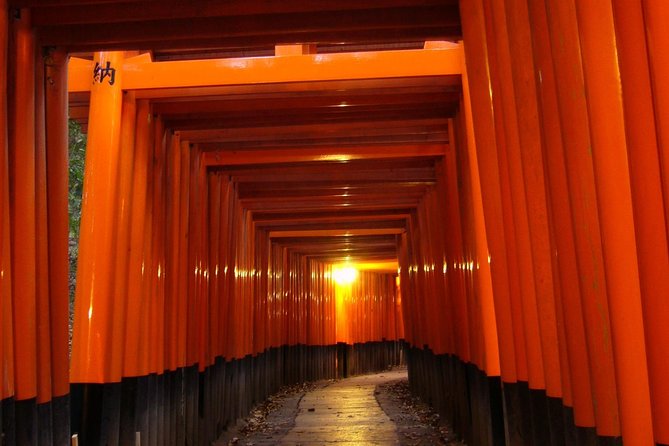
- Fushimi Inari-taisha
- Gekkeikan Sake Museum
- Gion Finish: A Good Place to Keep Wandering
- Walking, Crowds, and Lunch Timing: How to Stay Comfortable on Day One
- Price and Value at $151.20: What You’re Actually Buying
- Who This Kyoto Highlights Tour Is For (and Who Should Skip It)
- Should You Book This Private Kyoto Highlights Tour?
- FAQ
- How long is the Kyoto highlights private tour?
- Where do I meet the guide?
- What are the two route options?
- Are admission tickets included?
- Is lunch included?
- How big is the group?
- What if the weather is bad?
Key Things to Know Before You Go
- Two route choices: pick the mix that matches your mood—Arashiyama/Kinkakuji/Nishiki vs Fushimi Inari/Kiyomizu/Gekkeikan.
- A private-guide feel with a small cap: the group stays small (up to 8), so you’re not lost in a crowd behind a big bus schedule.
- City transit + a bus pass: you start at Kyoto Station and keep the pass for continued rides after your tour.
- Major “icon” sights with included entries: several top stops include admission tickets.
- Gion as the finish line: you end in the best place to keep exploring on your own or jump into an evening Gion-focused outing starting around 6 pm.
Starting at Kyoto Station: Easy Meet-Up and Smart Transit
This tour begins at Hotel Granvia Kyoto, right by JR Kyoto Station. That’s a big deal if you’re arriving by train or staying near the station area. You’re not hunting for a meeting point across town—you’re already in the hub.
From there, you use public transportation, with the guide helping you stay oriented. You’ll also get a one-day city bus pass that you can keep using after the tour. Practically, this helps you avoid the “now what?” problem—especially if your next stop is somewhere you’d normally take a bus to.
Why this works: Kyoto’s sights are scattered, but the transit system is workable when you’re not figuring it out mid-day. A guide means you spend your energy on the temples and streets, not on route-planning.
Loop the big Kyoto sights in one run

Two Routes, One Private Day: Northwest Highlights vs Southeast Highlights
The tour offers a choice of itineraries that both hit big-name Kyoto, then funnel you toward Gion at the end.
Northwest route: Arashiyama → Ryoan-ji → Kinkakuji (Golden Pavilion)
This version starts with the Arashiyama Park area, then flows to Ryoan-ji, famous for its rock garden. After a lunch break you handle on your own expense, you continue to Kinkakuji (the Golden Pavilion).
From there, you’ll choose between Nishiki Food Market (food-and-stall Kyoto energy) and Nijo Castle (Tokugawa-era power and decorative interiors).
If you love nature scenes plus iconic temple sights—and you want the day to feel like a full “Kyoto postcard” sweep—this is the route to pick.
Southeast route: Gekkeikan → Fushimi Inari → Sanjusangendo → Kiyomizu → Ninenzaka/Sannenzaka → Gion
This option begins with Gekkeikan Sake Museum, then heads to Fushimi Inari-taisha Shrine, the mountain covered with red torii gates. You then visit Sanjusangendo Temple (the 1,001 Kannon statues stop), and move uphill toward Kiyomizu-dera.
After Kiyomizu, you ascend/experience the historic streets of Ninenzaka and Sannenzaka, which are known for those classic Kyoto walking-photo vibes. The day ends in Gion.
If you want the most famous shrine experience (the torii maze) plus the Kiyomizu hill views and the historic lanes leading into Gion, pick this route.
Kinkakuji Golden Pavilion: Gold Leaf and Forest Reflections
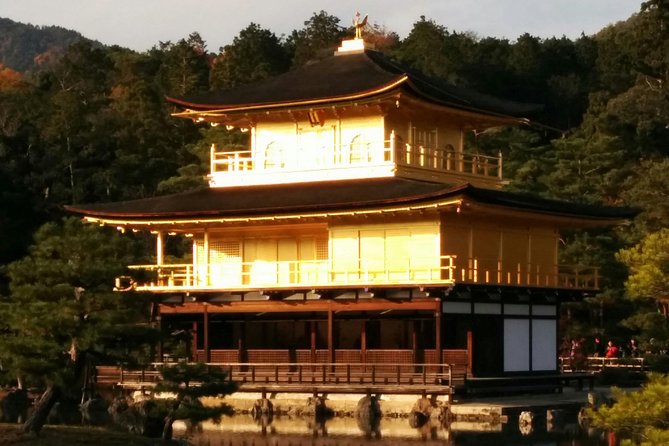
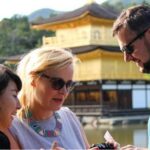
Kinkakuji Temple (Golden Pavilion) is usually your first big “wow” stop. The tour allots about 50 minutes, with admission included. Kinkakuji is a three-story pagoda covered in gold leaf, set beside a reflective pond area, with forest around it.
What matters here is how you look. The best results usually come from not just grabbing one front view, but also noticing how the pavilion reads from different angles around the pond area. A guide’s value is time-saving: they can point you toward the right viewpoints without you wandering in circles.
Crowd note (the practical kind): even with a guide, this is a top Kyoto magnet. Wear shoes you can stand in, and plan to work with people-flow rather than against it.
Other Kyoto tours and experiences to compare
Kiyomizu-dera and the Ninenzaka/Sannenzaka Slopes: Views With Stairs Attached
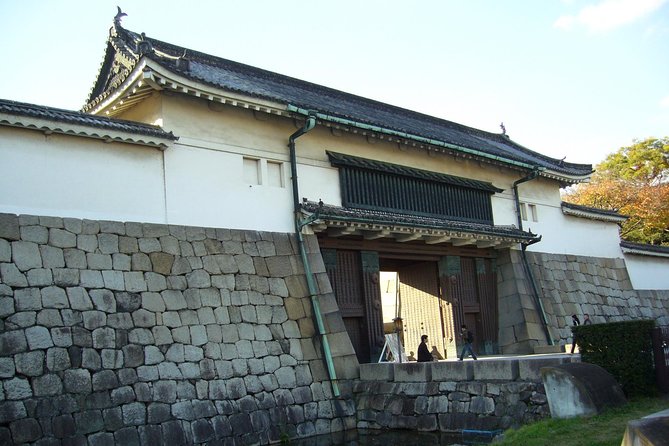
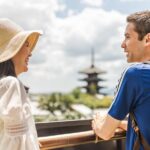
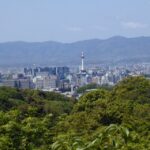
Kiyomizu-dera is one of Kyoto’s hilltop anchors. You get about 50 minutes, with admission included. The signature feature is the temple’s expansive balcony views over Kyoto.
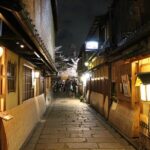
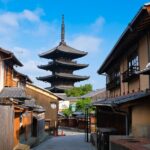
The tour also includes the walk up through historic paths like Ninenzaka and Sannenzaka. These streets are steep, and that’s part of the experience. You’ll feel Kyoto’s old-street rhythm—shops, snack smells, and the slow tightening of the atmosphere as you climb toward the temple zone.
A heads-up that keeps you comfortable: bring water and expect your legs to work. Even if the tour is well paced, Kiyomizu is not a flat stroll.
Arashiyama Park, Togetsukyo, and Bamboo Forest Street: The Kyoto Photo Loop
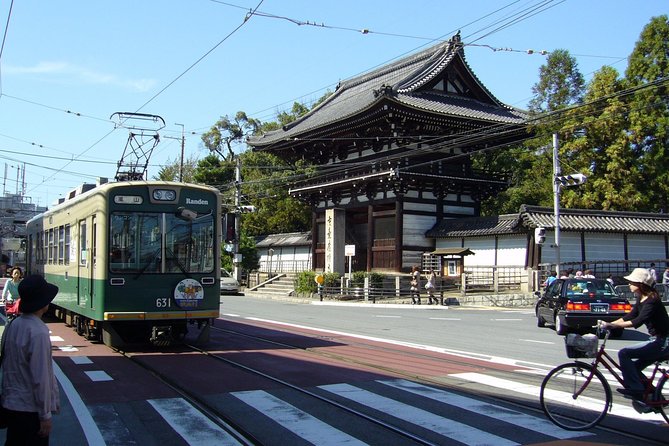
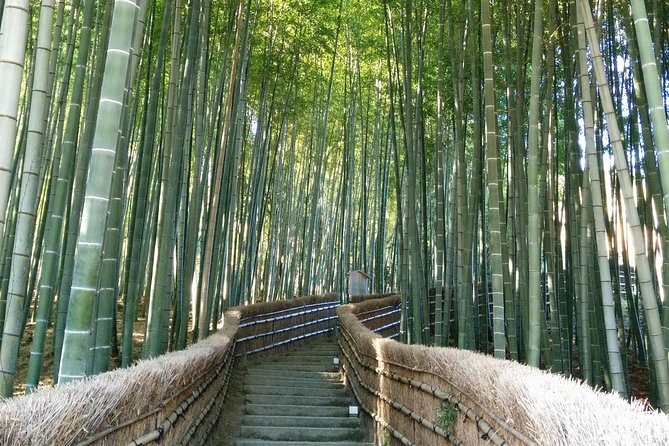
On the northwest route, you’ll spend time in the Arashiyama area. Highlights include walking near the Togetsukyo Bridge, which sits by the bamboo forest zone, plus time on Bamboo Forest Street.
The tour gives about 30 minutes for Bamboo Forest Street, and that stop is listed as free admission. This is also where you’ll likely see the famous bamboo look that shows up on guidebook covers—tall stalks, narrow visual corridors, and that slightly magical feeling when the light hits just right.
Practical tip: go slow enough to enjoy it, but don’t freeze. Bamboo zones can get crowded and stall your momentum. A guide helps here by keeping you moving at the right rhythm so you don’t lose the rest of your day.
Ryoan-ji Rock Garden: Calm Thinking for 30 Minutes
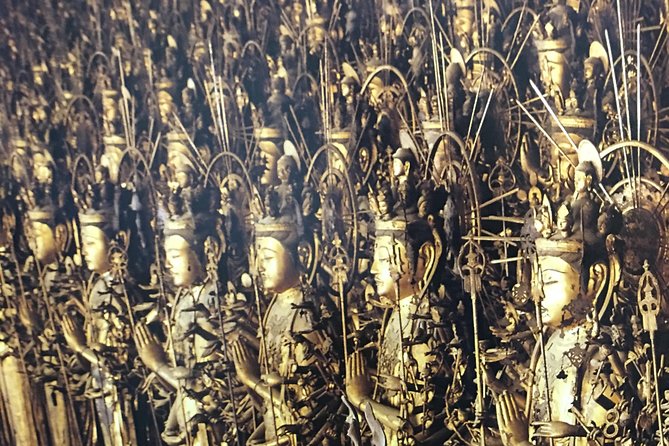
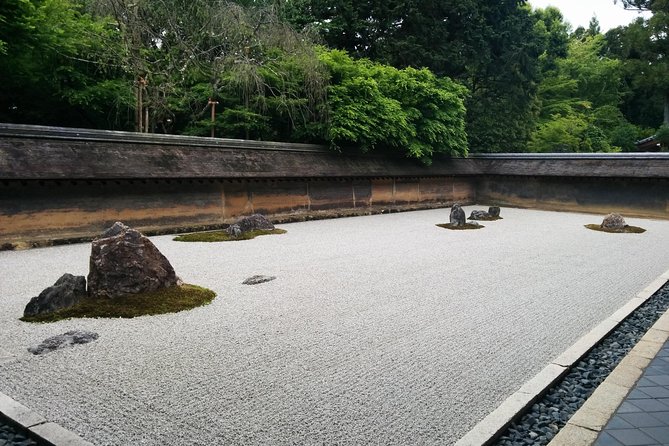
Ryoan-ji is a zen stop built for focused looking. The tour allots about 30 minutes, with admission included. The rock garden is known for its 15 stones and the way the layout challenges your eye.
This is one of those places where you can either rush and miss the point—or sit for a bit and notice how your perspective changes. Because you only get a short window, this is another “guide helps” moment: they can explain what you’re actually seeing so the garden feels less like random rocks.
If you want a mental reset during a long day of Kyoto icons, Ryoan-ji is a great place to do it.
Nijo Castle and Sanjusangendo: Tokugawa Power Meets 1,001 Statues
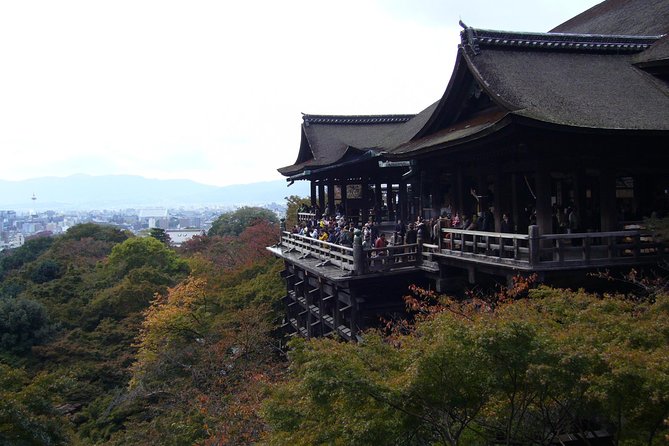
Nijo Castle
Nijo Castle is tied to the Tokugawa Shogunate, built in the early 17th century. You’ll spend about 50 minutes, with admission included.
The standout is touring original interiors connected to the shogun’s living quarters. The messaging here is clear: architecture as authority. Even if you’re not a history buff, Nijo gives you a “how rulers lived” feeling that’s different from temple-and-torii sightseeing.
Sanjusangendo Temple
Sanjusangendo is allotted about 50 minutes, with admission included. The key draw is the hall of 1,001 Kannon statues.
When you walk into a space built around repetition at that scale, it stops being just sightseeing and becomes pattern recognition. A guide’s role is to help you understand what to look for—so you’re not just counting statues, you’re noticing the devotional design.
Fushimi Inari-taisha and Gekkeikan Sake Museum: Torii Gates and Rice-Wine Secrets
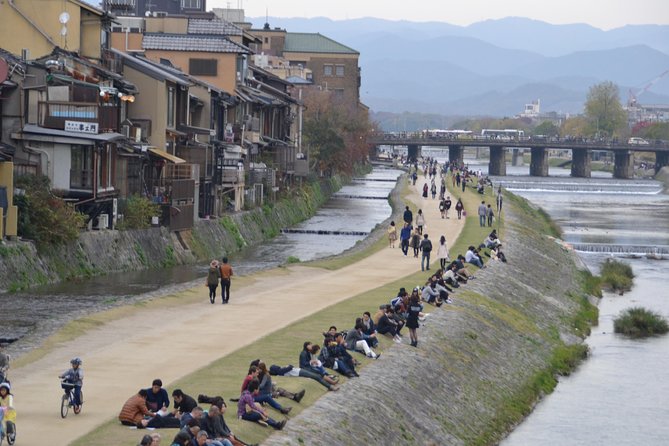
Fushimi Inari-taisha
This is one of Kyoto’s most visited Shinto shrines, and the famous part is obvious the moment you arrive: thousands of red torii gates covering a mountain path, lined with stone foxes and small shrines.
You get about 50 minutes, with admission listed as free. The practical part is how to manage the walk. The gates don’t just look pretty; they pull you forward. But your legs (and your schedule) matter. A guide can help you decide how far to go so you don’t sacrifice later stops for one more turn of the torii path.
Gekkeikan Sake Museum
On the southeast route, you’ll visit Gekkeikan Okura Sake Museum for about 50 minutes, with admission included. This is a structured change of pace: less walking-in-temple-spaces, more learning about Japan’s iconic rice wine.
If you’ve ever wondered how sake becomes sake beyond the bottle label, this is a good break. It also gives you something sensory to carry back into the evening—taste memories, not just sight memories.
Gion Finish: A Good Place to Keep Wandering
The tour ends in Gion, with about 50 minutes there, listed as free admission. Gion is Kyoto’s famed district associated with geisha tradition.
This is a smart finish because you’re ending where you can slow down and choose your own pace: wander side streets, grab a snack, or just watch the light shift on old wooden facades.
Also, there’s an option to continue with a Gion-focused experience starting around 6 pm. If you like the idea of staying in that atmosphere into the evening, this tour sets you up well.
Walking, Crowds, and Lunch Timing: How to Stay Comfortable on Day One
This is a highlight tour, so it comes with a highlight-tour reality: you’ll walk.
- Expect frequent transitions via public transport.
- Expect temple staircases and hill paths, especially near Kiyomizu-dera and in the Fushimi Inari area.
- Plan on lunch not being included. You’ll have a lunch break where food is on your own expense.
Here’s how I’d make it easier on yourself:
- Wear comfortable shoes with grip. Kyoto sidewalks can be smooth-but-slippery in places.
- Bring water. The schedule gives you short windows at each stop, so you don’t want to spend time searching for drinks.
- If it rains, don’t panic. You may still be able to keep going, but wet stone and steep slopes mean you should slow down.
One more practical note: the tour is described as requiring good weather. If weather forces a cancellation, you’ll be offered a different date or a full refund. That flexibility is worth paying attention to.
Price and Value at $151.20: What You’re Actually Buying
At $151.20 per person, you’re paying for three main things:
- Time savings
Without a guide, you’d still visit icons—but you’d spend more energy figuring out routes, what to prioritize, and how to move between far-apart areas.
- A private-guide approach
The tour is capped at up to 8 travelers, but it’s positioned as private-focused with personal attention. That matters most at temples: the difference between seeing and understanding is often what the guide explains in the first few minutes.
- Included admission at several top stops
Major entries listed as included include places like Kinkakuji, Kiyomizu-dera, Nijo Castle, Sanjusangendo, Ryoan-ji, and the Gekkeikan Sake Museum. Stops like Gion, Bamboo Forest Street, and parts of Fushimi Inari are listed as free admission, which helps keep your cost predictable.
Is it pricey? It can be, especially if you’re a solo traveler comparing everything as if it were only ticket costs. But if you want a structured “first Kyoto day” that hits the icons and helps you understand them, the value holds up.
Who This Kyoto Highlights Tour Is For (and Who Should Skip It)
This tour fits best if:
- You’re visiting Kyoto for the first time and want a smart “greatest hits” layout.
- You want a guide who helps you read the sites, not just follow a route.
- You like the idea of two route styles and can pick based on your preferences (Arashiyama/nature vs Inari/shrine icons).
- You’d rather handle logistics once (meeting point + transit + pacing) than constantly re-plan.
You might skip it if:
- You want to spend half a day at one place without moving on.
- You’re set on doing only off-the-beaten-path neighborhoods and long shopping detours.
- You don’t like walking on uneven stone or climbing hills.
Should You Book This Private Kyoto Highlights Tour?
If you want your first Kyoto day to feel organized and meaningful, I think this is a strong choice. The two-route options make it easier to match your interests, and the combination of major landmarks plus explanatory guidance is the main reason people get real value out of it.
Book it if you:
- have limited time,
- want a guided first pass at Kinkakuji, Kiyomizu, Fushimi Inari, Arashiyama, and Gion,
- and prefer a plan you can trust.
Consider another approach if you want a slower, more independent day with zero set schedule. But if you’re okay with a packed 7-hour hit list, this tour is built for exactly that.
FAQ
How long is the Kyoto highlights private tour?
It’s about 7 hours.
Where do I meet the guide?
You meet at Hotel Granvia Kyoto, at the JR Kyoto Station Central Entrance. The start time is 9:00 am.
What are the two route options?
You can choose a northwest route (Arashiyama Park area, Ryoan-ji, Golden Pavilion, plus either Nishiki Food Market or Nijo Castle) or a southeast route (Gekkeikan Sake Museum, Fushimi Inari-taisha, Sanjusangendo, Kiyomizu-dera, then Ninenzaka/Sannenzaka, ending in Gion).
Are admission tickets included?
Admission is included for several stops (such as Kinkakuji, Kiyomizu-dera, Nijo Castle, Sanjusangendo, Ryoan-ji, and the Gekkeikan museum). Some areas are listed as free admission (like Gion, Bamboo Forest Street, and parts of Fushimi Inari).
Is lunch included?
No. Food and drinks and lunch are not included, so you’ll need to buy lunch on your own during the break.
How big is the group?
The tour has a maximum of 8 travelers.
What if the weather is bad?
The experience requires good weather. If it’s canceled due to poor weather, you’ll be offered a different date or a full refund.
If you want, tell me which route you’re considering (northwest or southeast) and where you’re staying, and I’ll help you pick the best option based on your priorities.
More Tours in Kyoto


More Tour Reviews in Kyoto


More Kyoto Sightseeing Loops
Just added: more Kyoto tours to browse








Kyoto Bus & Sightseeing Tours, compared.
 ★ 5.0PERFECT KYOTO 1-Day Bus TourFrom $12913,518 reviews
 ★ 4.8Fushimi Inari, Kinkakuji, Bamboo Grove 1 Day Bus TourFrom $1224,316 reviews
 ★ 4.9Best of Kyoto: Gion, Geisha, Pagodas & CobblestonesFrom $242,058 reviews
 ★ 3.9Hop-on Hop-off Sightseeing Bus TicketFrom $272,034 reviews
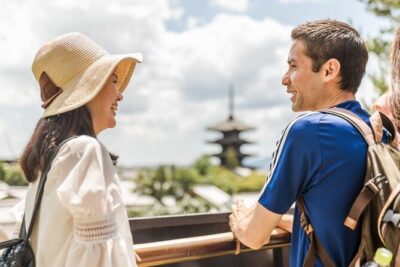 ★ 5.0Private Kyoto Tour with a Local, Highlights & Hidden Gems, PersonalisedFrom $1021,543 reviews
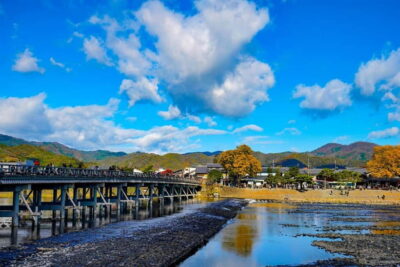 ★ 4.7Kyoto/Osaka: Nara, Fushimi Inari Taisha, Arashiyama Bus TourFrom $521,275 reviews
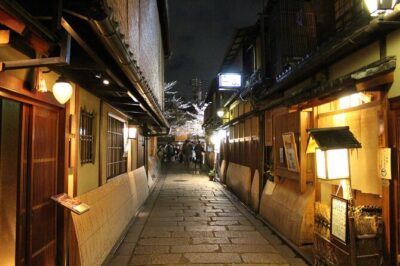 ★ 5.010 Must-see Spots in Kyoto One Day Private Tour (up to 7 people)From $1791,108 reviews
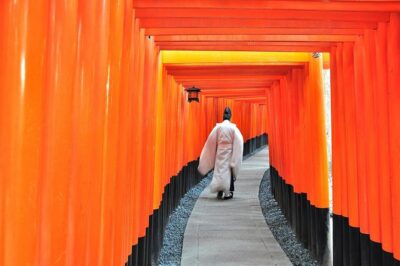 ★ 4.5One-Day Tour of Kyoto’s Highlights from Osaka/KyotoFrom $661,092 reviews
Browse the lists this tour appears in