
Reviewed · KYOTO BUS & SIGHTSEEING TOURS
Kyoto: Hop-on Hop-off Sightseeing Bus Ticket
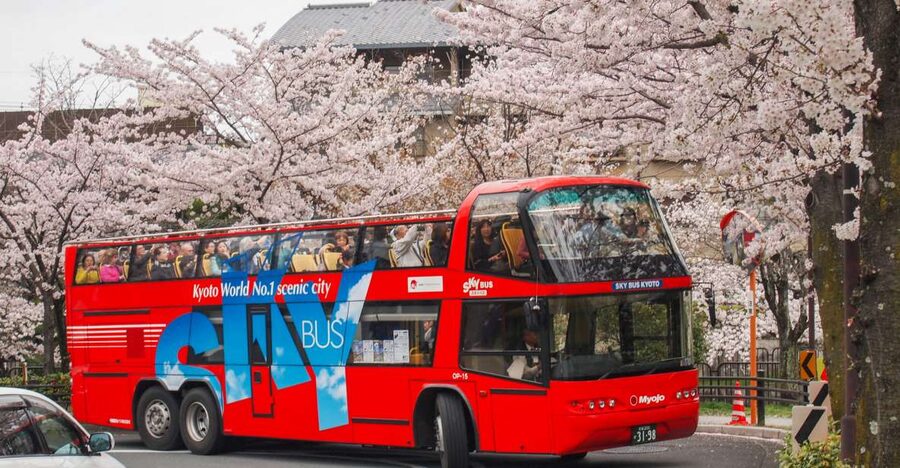
Kyoto is spread out; this bus helps. This hop-on hop-off ticket lets you jump on and off at key stops around the city using a mobile voucher, with pre-recorded audio in 7 languages as you ride.
I like two things most. First, the double-decker open-top design gives you panoramic views from the move. Second, the route strings together Kyoto’s big hitters, including UNESCO World Heritage stops like Nijo Castle, Kinkakuji, and Kiyomizu-Dera. The main drawback is simple: the commentary is an on-the-go overview, not a deep history lecture, and the most famous sites can get crowded when you arrive.
In This Review
- Key Points at a Glance
- Kyoto at Your Pace With a Hop-On Hop-Off Ticket
- Price and Value: Why This $27 Pass Can Work
- Where You Board in Kyoto: Kyoto Station to the First Temple Stops
- Open-Top Comfort: Sun, Raincoats, and Audio in 7 Languages
- Stop-by-Stop: How the Route Stitches Kyoto Together
- Kyoto Station (Start Point for the Whole Day)
- Nishihonganji (Near Kyoto Tokyu Hotel)
- Shijo Karasuma / Nishiki-ichiba Market (Shopping and Street Life)
- Nijo-jo Castle (Nijo Castle, UNESCO)
- Kitano-tenmangu Shrine / Kamishichiken
- Kinkakuji (Golden Pavilion, UNESCO)
- Daitokuji Temple
- Kyoto Imperial Palace (Doshisha University)
- Ginkakuji (Silver Pavilion)
- Heian-jingu Shrine / Okazaki Park
- Gion (Kotowa-Kyoto Yasaka)
- Gojozaka (Kiyomizu-Dera Temple / Gion)
- Sanjusangendo / Kyoto National Museum (Hyatt Regency Kyoto)
- How to Plan Day One vs Day Two Without Rushing
- Common Gotchas: Crowds, Audio Limits, and What Not to Bring
- Should You Book This Kyoto Bus Ticket?
- FAQ
- How long is the ticket valid?
- Where can I board the bus?
- What languages are available for the audio guide?
- Is Wi-Fi available on the bus?
- Are there restrictions on what I can bring on the bus?
- Is the bus open-top, and what happens in rainy weather?
Key Points at a Glance
- Hop on and off using your mobile voucher at any stop along the route for the ticket duration
- 7-language pre-recorded audio to orient you as you move between neighborhoods
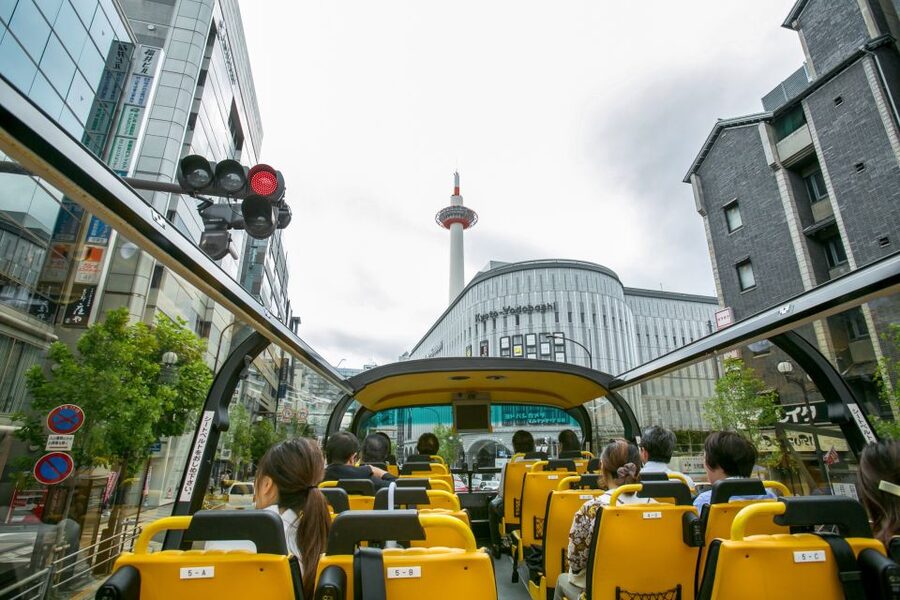
- Open-top double-decker views for quick photo angles and a “Kyoto from above” feel
- UNESCO sites on the route, including Nijo Castle, Kinkakuji, and Kiyomizu-Dera
- 1-day or 2-day validity so you can choose between a quick scan or a calmer pace
- Practical onboard rules like no umbrellas, no selfie sticks, and no food inside the bus
Kyoto at Your Pace With a Hop-On Hop-Off Ticket
Kyoto can be tricky when you’re juggling temples, neighborhoods, and timing. This bus pass is built for the kind of sightseeing where you want flexibility, not pressure.
You can ride as much as you want during your 1-day or 2-day ticket window. That matters because Kyoto’s best moments often come from staying a little longer in the spot that grabs you, then moving on when you’re ready. The bus doesn’t force you to commit to one fixed tour order.
The route passes major attractions across the city, so you’re not piecing together trains and transfers just to get from one “must-see” to the next. Instead, you hop off, walk your own way, then return to the stop when you’re ready.
Loop the big Kyoto sights in one run

Price and Value: Why This $27 Pass Can Work
The price is about $27 per person, and you can choose 1 day or 2 days. That’s the whole value story: this is a way to buy back time and mental effort.
A single taxi ride in Kyoto can swallow far more than the cost of a hop-on hop-off ticket, especially when you’re moving between distant areas like central Kyoto and the temple belt. Even if you only use the bus for part of your day, the cost can start to make sense fast.
You should also factor in what isn’t included: entrance fees to attractions are separate. That means the bus gets you to the doors, but you’ll still pay to step inside (when sites require tickets). Think of it as transport + orientation, not admission.
Where You Board in Kyoto: Kyoto Station to the First Temple Stops
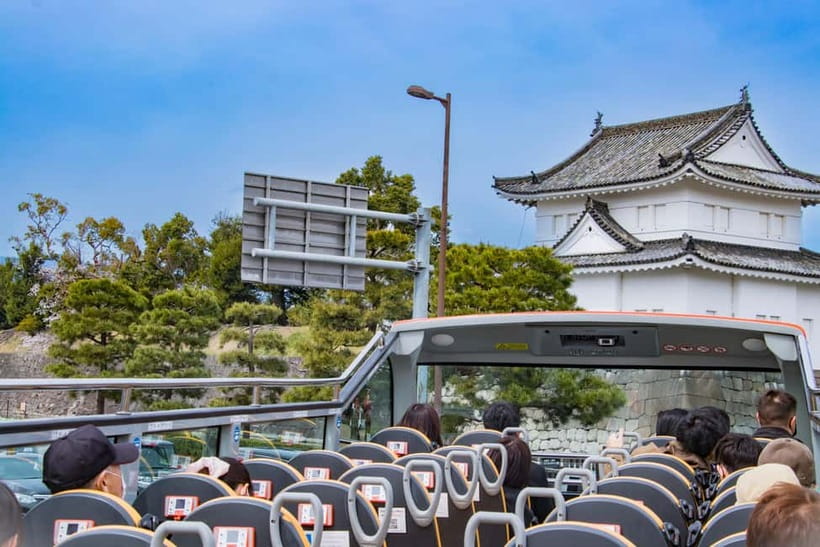
You can board at any stop along the route, but Kyoto Station is the easiest anchor point for most plans. The first stop is at Kyoto Station, using the north central exit. The bus stop is directly in front of the Isetan department store.
This is useful because Kyoto Station is where most people end up at least once per day. You don’t need a complicated starting point, and you can reshape your day around what looks best once you’re on the ground.
From there, the route moves you through a mix of classic sightseeing areas, from shopping streets and markets to the major temple districts and historic neighborhoods.
Open-Top Comfort: Sun, Raincoats, and Audio in 7 Languages
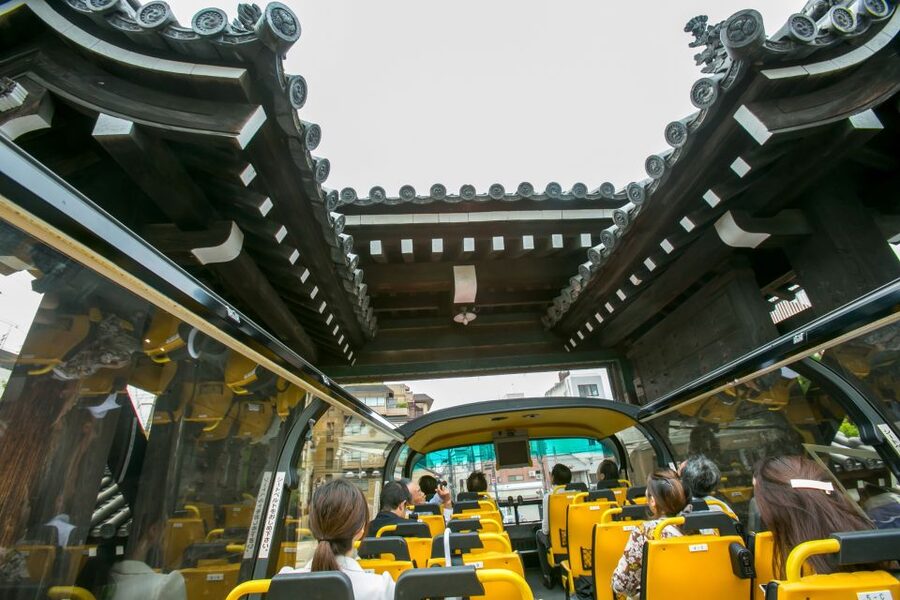
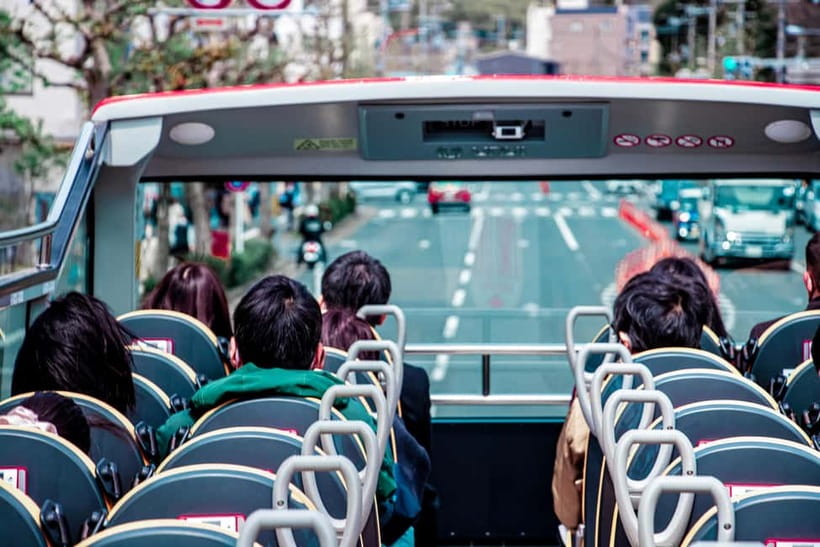
The ride itself is a big part of the appeal. The bus is an open-top double-decker, so you get panoramic views as you travel between spots. It’s a nice way to get the feel of Kyoto’s layout without constantly checking directions.
Here’s the reality check: with an open top, you’re in direct sunlight. Plan for heat, glare, and wind. If you’re sensitive to sun, bring a hat and some sunscreen. On rainy days, raincoats are provided, but umbrellas are not allowed, so you won’t have that handheld shield to work with.
Inside the experience, the bus offers pre-recorded audio guidance in 7 languages: English, French, Japanese, Korean, Chinese, Spanish, and German. It’s there to help you place what you’re seeing as you approach stops.
A fair warning from real-world usage: some visitors find the audio more like a quick orientation than a deep, uninterrupted story. So treat it as a way to understand what you’re looking at and why it matters, not as your only source of context.
Also note the included amenities: Wi‑Fi is temporarily suspended. If you were counting on onboard internet, plan around that and use your phone data (or save the map use for offline time).
Stop-by-Stop: How the Route Stitches Kyoto Together
This pass works best when you think in “clusters.” You don’t need to jump off at every stop. Use the bus like a connector, then spend real time where you want to slow down.
Other Kyoto tours and experiences to compare




Kyoto Station (Start Point for the Whole Day)
Kyoto Station is where you reset your plan. You can board easily, then get moving without figuring out local routes block by block. It’s also a practical place to return to between temple visits if you need food, restrooms, or just a breather.
Nishihonganji (Near Kyoto Tokyu Hotel)
This stop is handy because it drops you close to a major hotel landmark. It can be a good option for a lighter schedule day when you want to explore nearby sights without committing to a long walk.
Shijo Karasuma / Nishiki-ichiba Market (Shopping and Street Life)
This is a smart stop for people who want Kyoto’s everyday energy. Shijo Karasuma is a key central junction, and Nishiki Market (often called a must for food browsing) is right in the mix. Even if you don’t buy much, it’s a good place to stretch your legs and get a feel for how busy Kyoto gets.
Nijo-jo Castle (Nijo Castle, UNESCO)
Nijo Castle is one of the standout stops because it’s a UNESCO World Heritage site on the route. This is a classic “photo and wander” destination: you’ll likely want extra time here compared with shorter stops.
One practical tip: because the bus covers the distance for you, it’s tempting to rush inside. If you want the best experience, treat this stop as a main event and give yourself enough time to actually move through the grounds.
Kitano-tenmangu Shrine / Kamishichiken
This stop brings you into a different side of Kyoto than the temple-heavy stretches. It’s a good move if you want variety rather than only the most famous postcard sites.
It’s also a reminder that Kyoto isn’t one single “temple zone.” Using the bus for these cross-city jumps helps you avoid the stress of rebuilding transit plans.
Kinkakuji (Golden Pavilion, UNESCO)
Kinkakuji is a centerpiece. It’s listed as a UNESCO World Heritage site on this route, and it’s the kind of place that draws big crowds.
Plan for money logistics too. One important real-world note: Kinkakuji may require cash for admission, and a visitor specifically warned that there isn’t an ATM on the premises. If you’re going to this stop, keep some cash on you just in case.
Also, don’t assume you’ll get a perfect shot with zero people. If you want photos, go when you can and expect other visitors in the frame.
Daitokuji Temple
This stop adds another temple atmosphere to your day. It’s a good option if you want a calmer, more temple-focused rhythm after the intensity of the most famous sites.
Kyoto Imperial Palace (Doshisha University)
This is a nice contrast stop because it connects you to an important civic area rather than only temple scenery. It can work well if you want a break from nonstop crowds.
The stop name also includes Doshisha University, which makes it easier to recognize the area when you’re getting your bearings on the ground.
Ginkakuji (Silver Pavilion)
Ginkakuji is another major temple stop on the route. Since the pass covers transport, you can focus on timing your arrival rather than spending your energy on how to get there.
Give this one enough time to wander. Even if you don’t know the details, you’ll still appreciate the visual style and the sense of place.
Heian-jingu Shrine / Okazaki Park
This stop is great for combining shrine time with park time. If you like a little breathing space between indoor attractions, Okazaki Park can help you reset your pace.
It’s also a natural fit for a day that includes several major stops back-to-back. The park element makes the overall plan feel less rushed.
Gion (Kotowa-Kyoto Yasaka)
Gion is the neighborhood people associate with Kyoto’s historic streets. Getting there by bus is convenient because you can arrive when you want, then walk the area and return to the stop later.
If your goal is evening atmosphere, this stop is the kind of place you may want to revisit on a second day.
Gojozaka (Kiyomizu-Dera Temple / Gion)
Gojozaka is a very useful connector stop because it’s explicitly paired with Kiyomizu-Dera Temple / Gion. That means you can structure your day so you see Kiyomizu and then keep exploring the surrounding area without needing a brand-new transit plan.
Sanjusangendo / Kyoto National Museum (Hyatt Regency Kyoto)
This stop is built around two “indoors-or-walkable” anchors: Sanjusangendo and the Kyoto National Museum. It’s a smart place to head when you want to break up the day with something less weather-dependent than only outdoor temple viewing.
The Hyatt Regency Kyoto marker helps you find your way back to the bus stop area.
How to Plan Day One vs Day Two Without Rushing
If you only have 1 day, use the pass like a reconnaissance mission. I like the way a first day works when it’s about selecting which sites deserve deeper time. You can ride the circuit, get your bearings, then decide what you’ll prioritize.
If you have the 2-day option, you can slow down in a way that feels more Kyoto. Day two becomes less about checking boxes and more about enjoying what you liked on day one. This also helps with crowds, because you’re not forced to hit every top site at its peak moment.
A practical rhythm: do one or two “big UNESCO” stops on the first day, then mix in markets and neighborhoods. On the second day, return to the places that still feel like a good match for your pace.
Also keep in mind that the bus schedules can have gaps. One person reported around 45-minute intervals during a busy midday window, and another mentioned waiting closer to an hour after missing a bus. That’s not fatal, but it’s why I prefer a 2-day mindset if you can swing it.
Common Gotchas: Crowds, Audio Limits, and What Not to Bring
This is a straightforward experience, but Kyoto reality still applies. The biggest issue isn’t the bus. It’s the fact that the top sights draw heavy foot traffic.
Crowds can reduce the “I’ll stroll around slowly” feeling at the most famous stops. The bus helps you get there efficiently, but it can’t control how busy it will be once you step out.
Onboard audio is also worth setting expectations for. Some visitors noted the narration can cut off mid-sentence and switch to an announcement as you get near stops. A few also said the background music can be loud compared to the voice. In other words, treat audio like a helpful orientation. If you want a thorough history, you’ll want your own reading too.
Finally, follow the onboard rules so you don’t get blocked or delayed:
- No smoking
- No selfie sticks
- No food in the vehicle
- No umbrellas
- No alcoholic drinks
You’re allowed soft drinks with lids (like plastic bottles or coffee). If you plan to snack, save it for off-bus time.
Should You Book This Kyoto Bus Ticket?
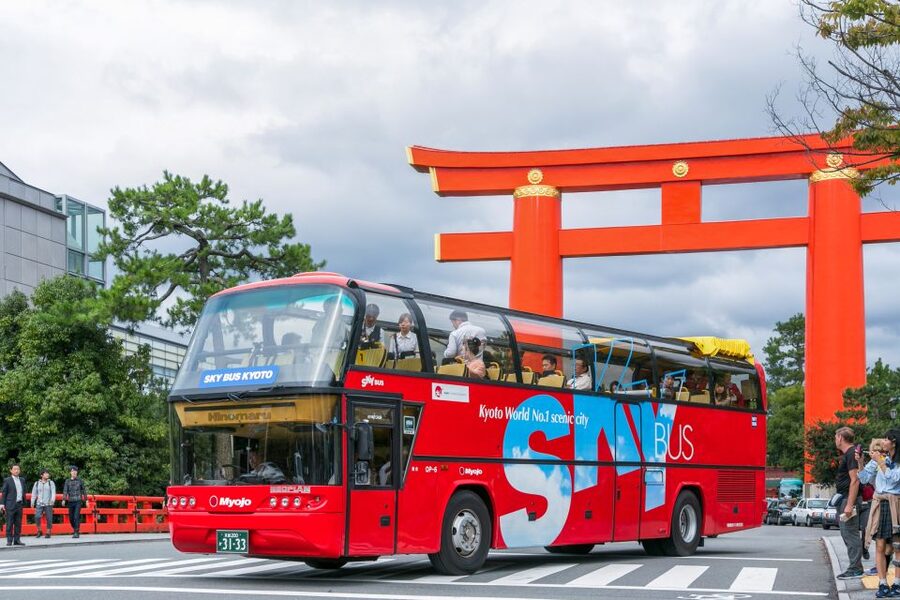
Book it if you want an easy, low-stress way to cover Kyoto’s top areas without learning transit maps on the fly. It’s especially appealing for short stays where you need an efficient route between Kyoto Station, major temple districts, and neighborhoods like Gion. The UNESCO stops and the open-top views are a strong combo for first-timers and anyone who hates wasting hours on transfers.
Pass on it (or use it lightly) if you want a deep, uninterrupted guided history. The audio is there, but it’s best treated as a quick orientation tool. Also think about sun and weather: the open top is fun for views, but it can be intense in direct sunlight.
If your priority is to see more of Kyoto with less planning strain, this ticket is a practical buy. It doesn’t replace walking the streets, but it does a great job of getting you to the places where walking matters.
FAQ
How long is the ticket valid?
You can choose a 1-day or 2-day bus ticket. The hop-on hop-off rides are valid for the duration you select.
Where can I board the bus?
You can board at any stop along the route. The first stop is Kyoto Station at the north central exit, in front of the Isetan department store.
What languages are available for the audio guide?
The onboard audio commentary is available in English, French, Japanese, Korean, Chinese, Spanish, and German.
Is Wi-Fi available on the bus?
Wi-Fi is listed as included, but it is temporarily suspended.
Are there restrictions on what I can bring on the bus?
Yes. Smoking, selfie sticks, food, umbrellas, and alcohol are not allowed. Soft drinks with lids (like bottled drinks) are allowed.
Is the bus open-top, and what happens in rainy weather?
The bus has an open top, so you’ll be in direct sunlight. In wet weather, raincoats are provided.
More Tickets in Kyoto
More Tour Reviews in Kyoto
More Kyoto Sightseeing Loops
Just added: more Kyoto tours to browse





Kyoto Bus & Sightseeing Tours, compared.
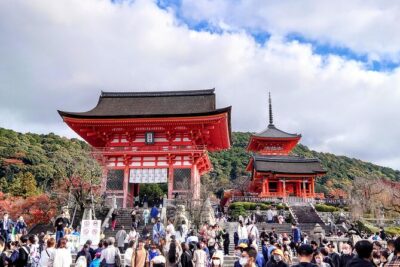 ★ 5.0PERFECT KYOTO 1-Day Bus TourFrom $12913,518 reviews
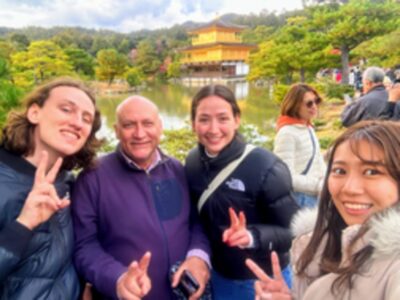 ★ 4.8Fushimi Inari, Kinkakuji, Bamboo Grove 1 Day Bus TourFrom $1224,316 reviews
 ★ 4.9Best of Kyoto: Gion, Geisha, Pagodas & CobblestonesFrom $242,058 reviews
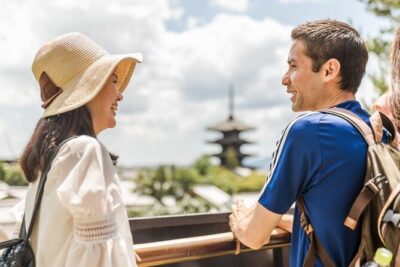 ★ 5.0Private Kyoto Tour with a Local, Highlights & Hidden Gems, PersonalisedFrom $1021,543 reviews
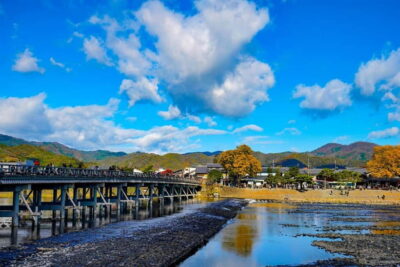 ★ 4.7Kyoto/Osaka: Nara, Fushimi Inari Taisha, Arashiyama Bus TourFrom $521,275 reviews
 ★ 5.010 Must-see Spots in Kyoto One Day Private Tour (up to 7 people)From $1791,108 reviews
 ★ 4.5One-Day Tour of Kyoto’s Highlights from Osaka/KyotoFrom $661,092 reviews
 ★ 5.05 Top Highlights of Kyoto Full Day Bike Tour (E-bike option)From $172511 reviews
Browse the lists this tour appears in