
Reviewed · GION & GEISHA DISTRICT TOURS
One Hour Geisha Show in Kyoto
Kyoto’s Maiko magic lasts one hour. You’re in for a close-up performance with a real Maiko, plus Q&A and photos that actually let you ask questions. I also like that the culture rules are respected—this isn’t a nonstop spectacle—and the only real drawback is that she won’t be performing continuously for the whole hour.
This is a rare chance because Kyoto still has only around 40 Maikos. One show can be a memorable snapshot of a world you’d normally only see from far away in Gion.
Before you go, plan for the practical bits: bring socks, choose between the tea house and Gion Theater option, and expect a short, graceful program rather than a long show.
In This Review
- Key Things I’d Highlight Before You Book
- Why This Maiko Show Feels Special in Kyoto
- Tea House vs Gion Theater: Two Different Vibes, Two Different Days
- Tea House Option (Kyoto-style Kyo-machi-ya)
- Gion Theater Option (Showhouse)
- Your 105-Minute Window: What Actually Happens
- 1) Meet at your starting point
- 2) Traditional dance segment (first performance)
- 3) Two more dances, then a Q&A break
- 4) Photo time and the traditional game
- 5) Optional extra: Kitano Tenmangū Shrine session (tea house option only)
- How the Maiko Interaction Works (and What to Ask)
- Photos and Videos: Allowed, But Use Them Smart
- Tea House Comfort vs Showhouse Simplicity
- Price and Value: Why $50 Can Be Fair Here
- Timing, Group Size, and Small Practical Tips
- Who This Kyoto Maiko Show Is Best For
- Should You Book This One Hour Geisha Show in Kyoto?
- FAQ
- How long is the Kyoto Maiko show experience?
- Where does the tour take place?
- What’s included in the ticket price?
- Is there a Q&A with the Maiko?
- Can I take photos and videos?
- Are socks required?
- What is the difference between the tea house and Gion Theater options?
- Is wheelchair access available?
- How big are the groups?
- What’s the cancellation policy?
- What languages are offered for the live guide?
Key Things I’d Highlight Before You Book
- Real Maiko access: You meet and watch an apprentice geisha up close.
- Short, intentional performances: The timing protects the art’s exclusivity.
- Photo and video welcome: You’re allowed to take pictures and film during the show time.
- Q&A and a traditional game: You’re not just watching—you’re interacting.
- Two different formats: Tea house option includes a Kitano Tenmangū shrine session; the Gion Theater option focuses on the showhouse.
Why This Maiko Show Feels Special in Kyoto
Kyoto is the place where you can experience the geisha world in a way that still feels traditional and specific. And because Maiko are rare—only about 40 in Kyoto—the odds of seeing one are simply not high if you’re relying on luck.
What I like most is that the show isn’t built like a theme-park performance. It’s structured around a real exchange: a short dance program, a question window, and time to take photos and play a traditional game. That format matters because it turns the experience from sightseeing into something closer to respectful cultural viewing.
Also, the guide component is part of the value. You’re not left guessing what you’re looking at. The show is run by English or Korean-speaking staff, and that translation support is what helps you get more meaning out of the gestures, costume details, and answers during Q&A.
More evenings along the lantern-lit lanes of Gion

Tea House vs Gion Theater: Two Different Vibes, Two Different Days
You get two booking options, and they are not the same experience.
Tea House Option (Kyoto-style Kyo-machi-ya)
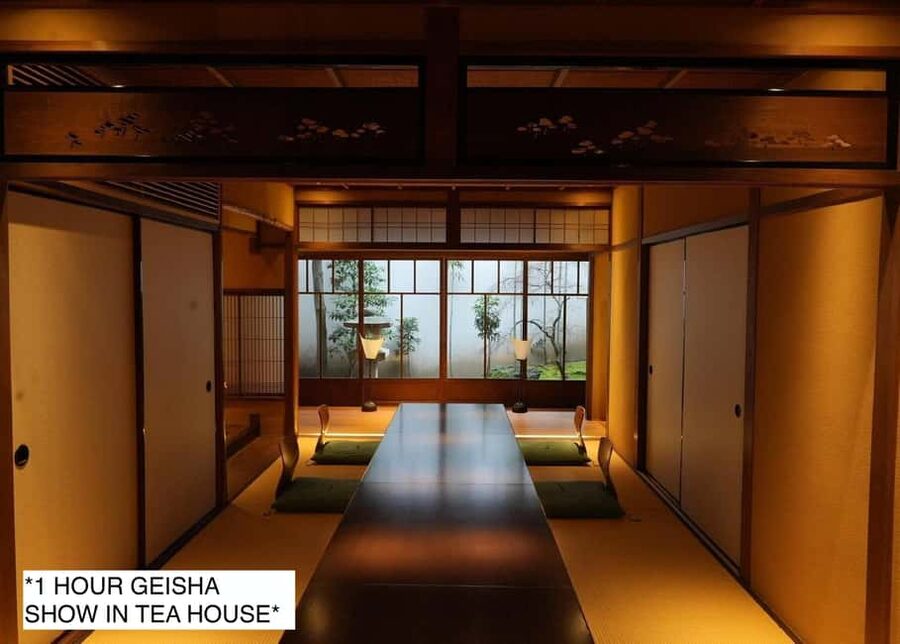
If you pick the tea house route, the show happens in a traditional Kyoto-style house (a Kyo-machi-ya). It’s also the option that pairs with a Kitano Tenmangū Shrine session plus a guided walk component. The group size cap is smaller here (up to 23 people), which often helps keep the interaction feel less rushed.
One important note: the tea house option does not allow wheelchairs. If that affects you, it’s better to choose the Gion Theater format.
Gion Theater Option (Showhouse)
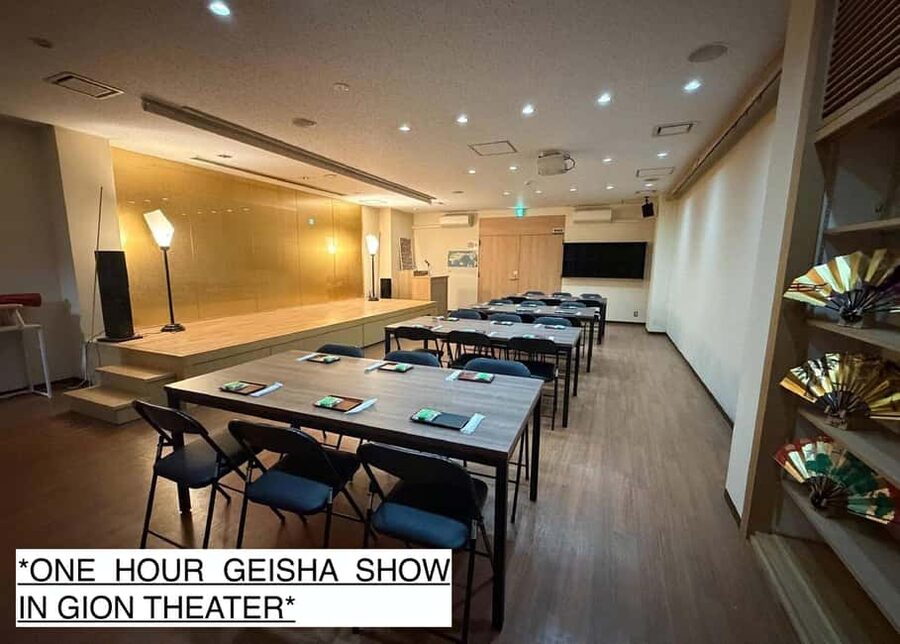
The Gion Theater option is held in a showhouse. It’s set up more like a dedicated performance space, with a larger group limit (up to 30). The big plus is wheelchair access on this option.
If you’re traveling with mobility needs, or you just prefer the clarity of a showhouse setting, this is the easier fit. And if you don’t want the shrine component, this route avoids that extra walking time.
Your 105-Minute Window: What Actually Happens
Even though the listing calls it a one-hour show, the full block is about 1 hour to 105 minutes. That time includes meeting up, getting settled, and doing the program in chunks. The key thing to understand is that the Maiko won’t be performing continuously the whole time. The dances are short by design, and the rest of the schedule is about Q&A and interaction.
Here’s the flow you should expect:
Other Kyoto tours and experiences to compare


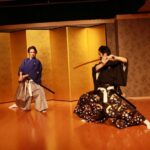


1) Meet at your starting point
Your meeting point can vary by option. One listed starting location is 梅乃 (UMENO) at 302-2 Daikokuchō, and drop-offs include UMENO and Kitano Tenmangu Shrine (again, depending on the option).
Do yourself a favor and arrive a bit early. In small cultural settings, the pacing depends on everyone being ready.
2) Traditional dance segment (first performance)
The Maiko performs a traditional dance lasting around 10 minutes. This first segment is the foundation of the show: you’ll see the movement style, the controlled rhythm, and how the costume and gestures work as a visual language.
3) Two more dances, then a Q&A break
After that first dance, you’ll see two additional dances, each about 5 minutes. Then the program shifts into Q&A, photo-taking, and a chance to play a traditional Japanese game with her.
This is where you get the real payoff. Watching is one thing. Asking questions and getting direct answers turns it into a lived cultural moment.
4) Photo time and the traditional game
You’ll have welcome time for photos and videos. You also get time to play a traditional game with the Maiko, which is a fun change from the typical passive tourist routine.
I’ve seen people talk about playing Konpira Fune Fune during this kind of game portion. Even if you don’t win, the game is a great icebreaker because it shifts the mood from audience to participant.
5) Optional extra: Kitano Tenmangū Shrine session (tea house option only)
If you choose the tea house format, you add a 30-minute Kitano Tenmangū Shrine session. It’s guided, and the program is designed so you can connect the performance to Kyoto’s broader cultural rhythm.
How the Maiko Interaction Works (and What to Ask)
The emotional center of this experience is the meeting and Q&A with a real Maiko, apprentice geisha. That matters because you aren’t “watching geisha culture” from a distance. You’re seeing how the art is explained, discussed, and responded to.
The show typically begins with a short explanation of the Maiko’s attire and presentation—things like dress, hair, and accessories and what they mean. Then the dancing does the rest.
During Q&A, I’d keep your questions simple and sincere:
- Ask what a specific part of the costume represents.
- Ask what training looks like, in plain terms.
- Ask how she approaches dance practice and performance.
The guides also play a real role here. Names that show up as hosts in this program include Rin, Genki, Chihiro, Akari, and Ai. Whoever is assigned to you, their job is basically to bridge the language gap so you can actually understand answers—not just nod politely.
And because the program is short, keep in mind that you won’t have endless time. Having 1–2 good questions ready helps you get the most from that window.
Photos and Videos: Allowed, But Use Them Smart
It’s a relief that you can take pictures and videos. Many people come to Kyoto expecting a “no cameras” vibe in cultural spaces, so being allowed to capture the moment is a big reason this show is so popular.
That said, you’ll get the best results if you treat it like a respectful performance:
- Be ready before the dance starts so you’re not scrambling.
- Hold your phone steady; the dances move quickly.
- Use video for the parts you really want, not for everything.
In the tea house set-up, the layout can help too. One described format has the dances done on both sides of a table, so more people get a clear view. That setup makes it easier to photograph without everyone constantly leaning or turning.
Tea House Comfort vs Showhouse Simplicity
Both options include tea and traditional Japanese snacks, which is a nice detail. It turns the wait time into something pleasant instead of standing around with nothing to do.
The tea house option also benefits from setting. A Kyo-machi-ya house has a different feel than a modern theater: the closeness and the domestic character can make the interaction feel more natural. The show becomes a conversation happening in a room, not just a performance happening on a stage.
Also, in at least some tea house experiences, the tea house staff adds a short explanation to help you understand Maiko culture. It’s not long, but it adds context right when you’re paying attention most.
If you prefer efficiency and predictable sightlines, the Gion Theater option can feel more straightforward. You’ll trade that homey setting for a dedicated show space.
Price and Value: Why $50 Can Be Fair Here
At $50 per person, you’re paying for three things at once:
1) A real Maiko dance performance in Kyoto
2) Interaction time (Q&A, photos, and a traditional game)
3) A guide who handles translation and keeps the program moving
You’re not buying a generic cultural talk. You’re paying for proximity and access—plus the cultural rules that keep the performance short and meaningful. The value is strongest if you care about understanding what you’re seeing, not just capturing a photo.
One subtle value point: small group limits. The tea house option caps at 23 people; the Gion Theater option caps at 30. That upper limit matters because it affects how comfortably you can ask questions and how much personal attention the guide can manage.
If you’re the type who gets restless with long shows, the short dance format is also a plus. You get focused time with a clear structure, and then you’re out.
Timing, Group Size, and Small Practical Tips
This isn’t an all-day event, but timing still matters. Your total time on-site runs roughly from 1 hour to 105 minutes. The most important thing to remember is that the Maiko does not keep performing continuously for that entire period.
Also, plan your clothing for the rules:
- Bring socks and plan to wear them.
- Bare feet are not allowed.
- Strollers are not allowed.
- Alcohol and drugs are not allowed.
If you’re sensitive to movement and crowding, the tea house option’s smaller group size can feel easier to manage. If you need wheelchair access, the Gion Theater option is the one that supports it.
And if you’re traveling with someone older than 95, note that this experience is not suitable for people over 95.
Who This Kyoto Maiko Show Is Best For
This tour is a great fit if:
- You want a real, up-close cultural encounter rather than a passive show
- You like asking questions and learning the meaning behind what you see
- You care about Kyoto’s geisha world as a living tradition, not a costume parade
It’s also a strong choice if you’re wrapping up a day in Gion. Many people pair it with other nearby cultural stops, because it functions like a focused finale: short dances, conversation, then you’re done.
You might consider skipping it if:
- You want a long performance with continuous dancing
- You’re uncomfortable with a small group interaction format
- Mobility needs require the Gion Theater option, and you’re already committed to the tea house route
Should You Book This One Hour Geisha Show in Kyoto?
Yes—if you can handle the idea that the performance is intentionally short and that the real experience includes Q&A, photos, and a traditional game. The $50 price feels most reasonable when you value access to a real Maiko and guidance that helps you understand what the show represents.
If you’re deciding between the two options, use this rule of thumb:
- Choose the tea house if you want the Kyoto-style house setting and the added Kitano Tenmangū Shrine session.
- Choose Gion Theater if you need wheelchair access or you prefer the simplicity of a showhouse format.
If Kyoto’s geisha culture is high on your list, this is one of the cleaner, more respectful ways to experience it up close—and walk away with actual memories, not just photos.
FAQ
How long is the Kyoto Maiko show experience?
The show lasts about 1 hour, but the total experience time can run 1 hour to 105 minutes depending on the option and start time.
Where does the tour take place?
It’s in Kyoto, and the experience happens either in a Japanese Kyo-machi-ya tea house setting or in a Gion Theater showhouse, depending on which option you book.
What’s included in the ticket price?
The experience includes the Geisha Show (1 hour), tea and traditional Japanese snacks, and a professional tour guide. For the tea house option, it also includes a 30-minute Kitano Tenmangū Shrine session.
Is there a Q&A with the Maiko?
Yes. After the dances, there is time for Q&A, along with photo-taking and a chance to play a traditional Japanese game.
Can I take photos and videos?
Yes. You’re welcome to take pictures and videos during the show.
Are socks required?
Yes. You should wear socks, and bare feet are not allowed.
What is the difference between the tea house and Gion Theater options?
The tea house option includes the Kitano Tenmangū Shrine session and is held in a Kyoto-style house. The Gion Theater option is held in a showhouse and does not include the shrine session.
Is wheelchair access available?
Wheelchair access is not available for the tea house option, and it is available for the Gion Theater option.
How big are the groups?
Maximum group size is 23 people for the tea house option and 30 people for the Gion Theater option.
What’s the cancellation policy?
You can cancel up to 24 hours in advance for a full refund.
What languages are offered for the live guide?
The live guide is available in English and Korean.
More Show in Kyoto
More Tour Reviews in Kyoto



Still in Gion? Keep Going



Just added: more Kyoto tours to browse








Gion & Geisha District Tours, compared.
 ★ 4.7Kyoto Geisha Walking Tour: Gion District & Hidden GemsFrom $253,273 reviews
 ★ 4.9Gion Magical Night Walking Tour with Geisha TriviaFrom $242,393 reviews
 ★ 4.7Gion Geisha District Walking Tour – Stories of GeishaFrom $202,187 reviews
 ★ 4.9Best of Kyoto: Gion, Geisha, Pagodas & CobblestonesFrom $242,058 reviews
 ★ 4.5Night Walk in Gion: Kyoto’s Geisha DistrictFrom $212,003 reviews
 ★ 5.0Kyoto Night Foodie Tour in Gion (9+ dishes + 6 Sake tastings)From $1631,762 reviews
 ★ 5.0Kyoto Gion Geisha District Walking Tour – The Stories of GeishaFrom $251,441 reviews
 ★ 5.0Kyoto Gion: 2-Hour Geisha Culture & History Walking TourFrom $231,186 reviews
Browse the lists this tour appears in