
Reviewed · GION & GEISHA DISTRICT TOURS
MEET MAIKO: Meet-&-Greet, Maiko Show & Experience in Kyoto
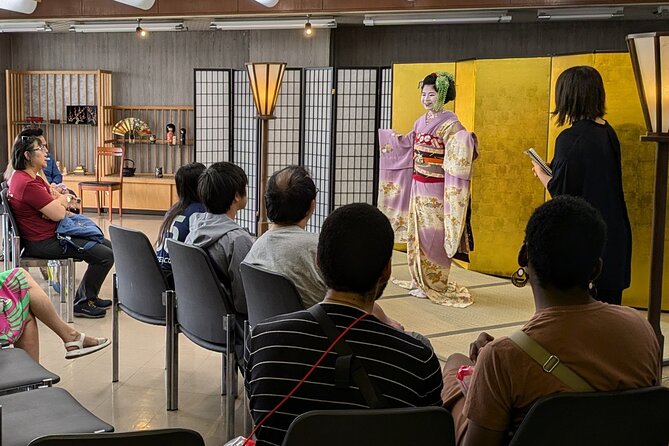
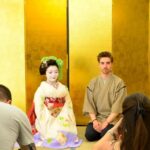
A maiko in front of you, close and real. I like this experience because it pairs traditional dance with English-friendly Q&A, so you get more than just a pretty performance. The other big win is the chance to interact and capture photos at a Kyoto venue designed for crafts and shopping.
The main thing to plan for is that the dancing portion is short. The program includes two traditional dances totaling about 8–10 minutes, with most of the 45 minutes going to questions and conversation time.
In This Review
- Key Points at a Glance
- Meet-&-Greet Basics at Kyoto Handicraft Center
- The 45-Minute Program: Dance, Q&A, Photos
- The Maiko Moment: What You Learn in Real Time
- Photo Session and Hanameishi: Small Souvenirs With Big Meaning
- Value vs. Cost: Is $50.08 a Good Deal?
- Getting There in Kyoto Without Stress
- Group Size, Seating, and How to Make It Enjoyable
- Who This Maiko Experience Is Best For
- A Quick Practical Checklist Before You Book
- Should You Book This Meet-&-Greet Maiko Show?
- FAQ
- FAQ
- How long is the maiko experience?
- Where does the event start and end?
- Is this a private tour?
- What happens during the 45 minutes?
- Can I take photos during the event?
- What is included in the price?
- What is not included?
- What if I arrive late?
Key Points at a Glance
- Two dance performances that total about 8–10 minutes
- English-speaking staff provide a brief intro to the Maiko and Geiko world
- Question-and-answer time that’s built into the schedule, not tacked on
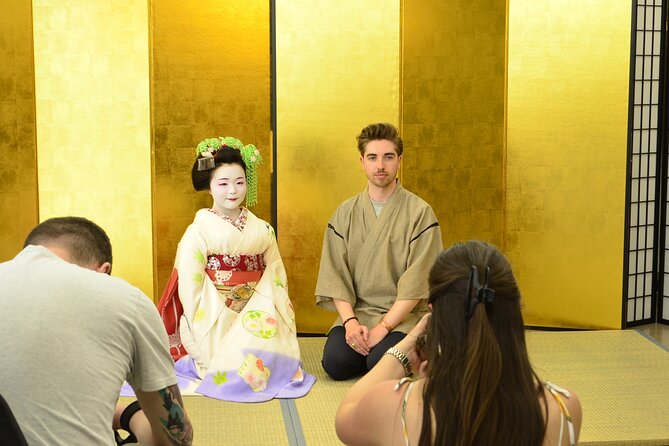
- Photo session with your own smartphone/camera during a dedicated window
- Hanameishi (a personalized name card) presented by the maiko
- 30-person max with free seating, plus reception opens 30 minutes early
Meet-&-Greet Basics at Kyoto Handicraft Center
This activity is set up as a close-up encounter with a Kyoto maiko, with a short performance and structured interaction. It runs at the Kyoto Handicraft Center, which is a practical choice: you get a cultural moment first, and then you’re right where you can browse Japanese crafts afterward.
You’ll want to know the format before you go. This is not a private experience. You’ll be part of a group, with a maximum capacity of 30 people, and the seating is free seats. That usually means less stress once you arrive: you don’t need to hunt for assigned seats or race to a specific row.
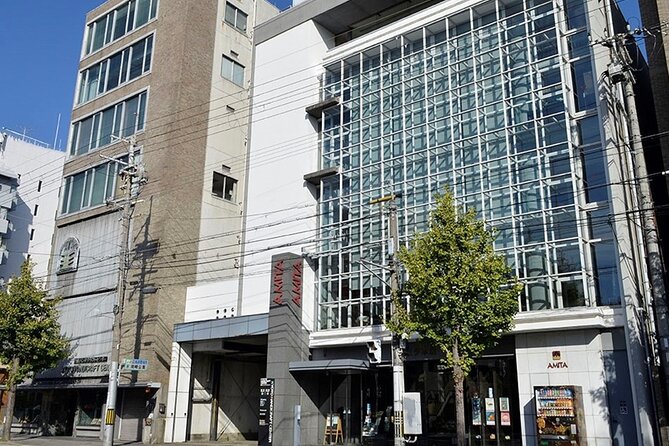
Another practical detail that matters in Kyoto: taxis can be hard to catch in high season, and buses get crowded. The tour starts at Kyoto Handicraft Center (17 Shōgoin Entomichō, Sakyo Ward, Kyoto). Build in extra buffer time so you aren’t sprinting across the city while trying to stay calm.
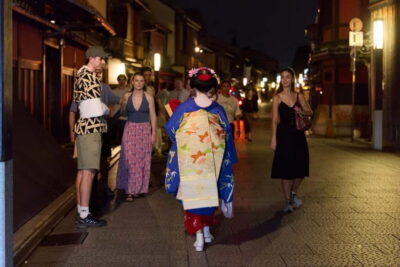
More evenings along the lantern-lit lanes of Gion

The 45-Minute Program: Dance, Q&A, Photos
The schedule is tight and intentionally paced. The whole event runs about 45 minutes, and it follows a clear order so you’re not left wondering what happens next.
Here’s the typical flow:
1) You start with an introduction
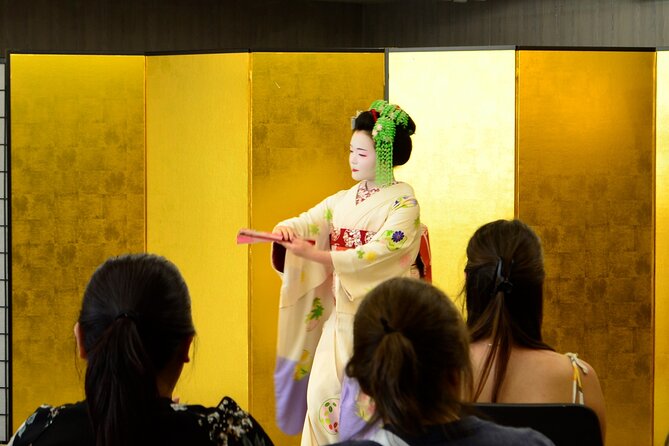
2) You watch two traditional dance performances that add up to about 8–10 minutes
3) English-speaking staff provide brief background on Maiko and Geiko culture
4) You get a Q&A window where you can ask questions
5) You move into a 10–15 minute photo session with the maiko (using your own camera or smartphone)
6) The maiko presents a Hanameishi to you
7) You leave with a small souvenir gift, and you may shop right after at the Kyoto Handicraft Center
What makes this structure work is that it balances attention. The dances are short, but they’re the focus of the opening section. Then the experience shifts from performance mode to conversation mode. That means your questions aren’t competing with long stretches of stage time.
One timing note that can surprise people: even though the activity is described as 45 minutes, the dance itself is brief. If you’re hoping for a longer solo dance, keep your expectations aligned with the 8-minute performance window and treat the rest as the real value—learning and interaction.
The Maiko Moment: What You Learn in Real Time
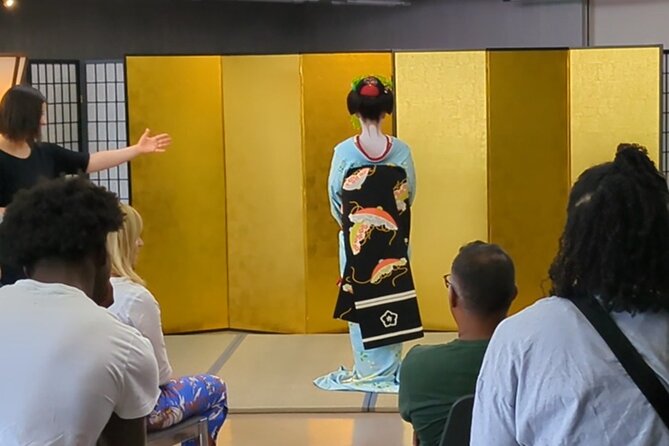
You’re not just watching from a distance. The point here is to see a maiko or geiko of Kyoto in action while also learning what you’re looking at. English-speaking staff give a brief introduction to the world of Maiko and Geiko, and that context can help you enjoy the dance more instead of just catching motions.
Then comes the part many people really want: Q&A. This is your chance to ask questions directly, in a setting designed for interaction rather than a stiff one-way viewing. If you care about etiquette, roles, training, costume details, or general cultural context, this portion is where the experience becomes personal.
From the feedback you can glean the biggest emotion people walk away with: a sense of grace and maturity. Even in a structured, short session, the maiko’s composure and poise come through. That kind of presence is hard to capture through videos alone. Seeing her in the room helps you understand why this tradition is so carefully practiced and respected.
Photo Session and Hanameishi: Small Souvenirs With Big Meaning
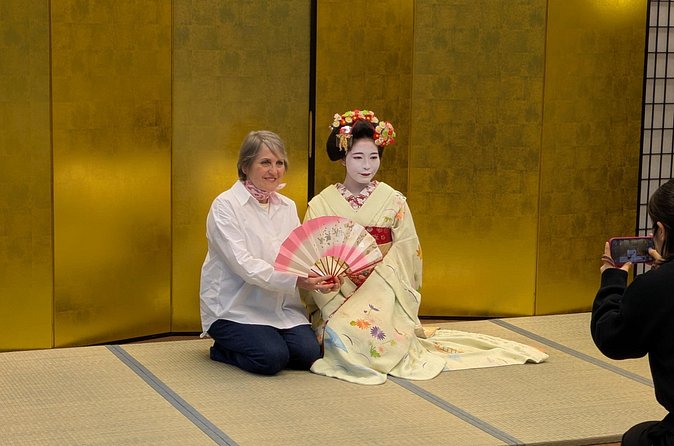
The photo time is built in on purpose. You get a dedicated 10–15 minutes for taking photos with the maiko using your own camera or smartphone. Photography is allowed during the event, so you won’t be trying to sneak shots. That said, plan for the practical side: you may share space with other participants, so keep your camera ready and be respectful of the flow.
Then there’s the Hanameishi. This is the maiko’s cheerfully customized name card, and it’s presented by the maiko as part of the wrap-up. Think of it as a tangible memento of the interaction—something that feels connected to the moment, not like a generic souvenir.
You also receive a small gift when you depart, with an opportunity to shop for high-quality Japanese goods right after the show at the Kyoto Handicraft Center. That’s a nice touch because you can turn the cultural experience into a practical takeaway: if something catches your eye, you’re already in the right place to buy it.
Value vs. Cost: Is $50.08 a Good Deal?
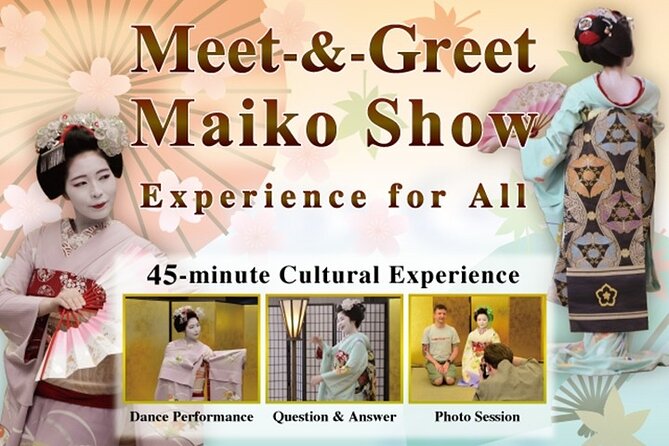
At $50.08 per person, this isn’t a bargain-basement activity. But it also isn’t priced like a private performance or a long guided tour. The value comes from what’s included.
What you get for your money:
- English-speaking staff
- Viewing two traditional dances (about 8–10 minutes total)
- A Q&A session
- A commemorative photo session using your own camera/phone
- Hanameishi (personalized name card)
- A small souvenir gift
What you do not get:
- Transportation or shuttle fee
- Photographer
- Local guide
- Meal and drinks
So the math is simple. If you’re coming to Kyoto for cultural variety and you want more than just sightseeing photos, this can be a good spend. The biggest reason is that the included interaction (Q&A plus photo time) costs extra time and planning in most other settings.
If you’re strictly a performance lover who wants a longer dance program, the dance window might feel short. But if you want context and conversation, the structure is a strength.
Other Kyoto tours and experiences to compare




Getting There in Kyoto Without Stress
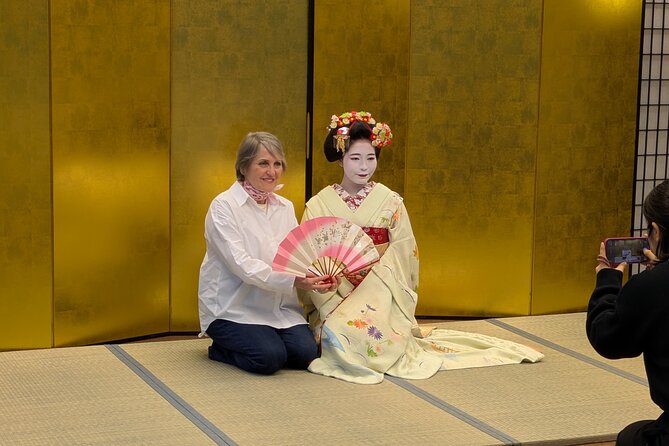
Kyoto can be charming and chaotic in the same breath. Even if the venue is near public transportation, you should still plan for travel time. The tour itself advises extra buffer because taxis are difficult to catch during high season and city buses can be crowded.
Here’s how to make this smoother:
- Arrive early. Reception opens 30 minutes before show time, and you should aim to be at the venue at least 10 minutes before the start.
- Don’t rely on last-minute transport. If you’re scheduling this on a busy day, allow extra time for bus delays or taxi scarcity.
- Know that late entry is possible. If you arrive late, you can still enter during the event. Still, showing up on time keeps the experience calm instead of rushed.
Inside, seating is free. That helps. It means you’re not stuck with a stressful scramble for assigned spots.
Group Size, Seating, and How to Make It Enjoyable
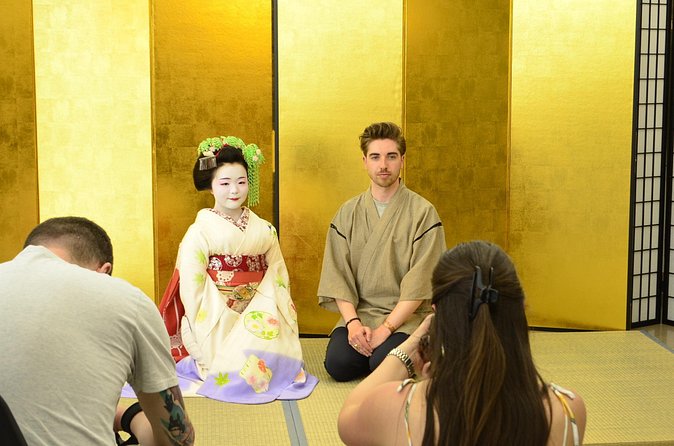
With a capacity of 30 people, you’ll share the space with other guests. The show isn’t private, so you’ll want to approach it with patience and good manners—especially during the photo window. Even when photography is allowed, it’s still a set time block, and everyone’s trying to get a shot.
If you want the best experience, I’d treat the session like a small cultural moment rather than a loud attraction. Keep your questions thoughtful, and don’t wait until the last second to think them through. The Q&A window is a real part of the schedule, but it’s also time-bound.
A helpful mindset: you’re there to learn how the tradition is presented, not just to check off an activity. When you go in with that attitude, even the short dance section feels more meaningful.
Who This Maiko Experience Is Best For
This is a strong fit if you:
- Want a short, focused cultural experience that doesn’t require a full day
- Enjoy asking questions and learning directly rather than only watching from afar
- Like interactive moments—Q&A and a dedicated photo session
- Are interested in a Kyoto setting that includes shopping after the event
It may not be the best fit if you:
- Expect a long dance performance by itself
- Are looking for a guided deep-dive itinerary with more walking and museum-style storytelling
- Need meals and drinks included (they are not provided)
Budget-wise, it works best as a single highlight day activity. Pair it with other nearby Kyoto sights, but don’t stack it so tightly that you risk being late.
A Quick Practical Checklist Before You Book
Before you lock in your date, keep these points in mind so you get the experience you want:
- Bring your own camera or smartphone for photos
- Plan for about 45 minutes total, with most of the time after the dances spent on Q&A and interaction
- Arrive early: reception opens 30 minutes early, and being 10 minutes early is recommended
- Expect a group setting with free seating and a 30-person max
- Plan transport with extra time; Kyoto can be slow at peak hours
- Wear something comfortable for standing and moving during the photo window
Also, you’ll get confirmation at booking, and your ticket is mobile. That’s convenient if you hate printing paper tickets.
Should You Book This Meet-&-Greet Maiko Show?
Book it if you want a rare, structured chance to meet a maiko or geiko type figure in Kyoto and you value interaction as much as performance. The design is practical: dance first, then learning, then questions, then photos, then mementos like the Hanameishi. For many people, that combo is what makes the visit feel special.
Skip it or reconsider if your top priority is a long solo dance performance. The dancing is real, but it’s brief. You’re paying for the full experience package—context, conversation, photos, and souvenirs—not for an extended stage show.
If you’re choosing between this and another Kyoto activity, I’d pick this when you want a calm, guided-feeling moment without a lot of walking, and when you’re excited to ask questions and bring back photos you actually took during the event.
FAQ
FAQ
How long is the maiko experience?
It lasts about 45 minutes.
Where does the event start and end?
It starts at Kyoto Handicraft Center (17 Shōgoin Entomichō, Sakyo Ward, Kyoto, 606-8323) and ends back at the same meeting point.
Is this a private tour?
No. It’s a meet-and-greet with other guests. Capacity is up to 30 people.
What happens during the 45 minutes?
You’ll get an introduction, watch two traditional dance performances, hear brief background information from English-speaking staff, have a Q&A session, take photos during a dedicated time window, receive the Hanameishi, and leave with a small gift.
Can I take photos during the event?
Yes. Photography is allowed, and there is a 10–15 minute commemorative photo session using your own camera or smartphone.
What is included in the price?
Included items are English-speaking staff, viewing the dance performances, the question-and-answer session, a commemorative photo session, a small souvenir gift, and the Hanameishi.
What is not included?
Transportation or shuttle fees, a photographer, a local guide, and meals and drinks are not included.
What if I arrive late?
If you arrive late, you can still enter during the event. Still, it’s recommended that you arrive at least 10 minutes before the show starts.
More Show in Kyoto
More Tour Reviews in Kyoto

Still in Gion? Keep Going



Just added: more Kyoto tours to browse







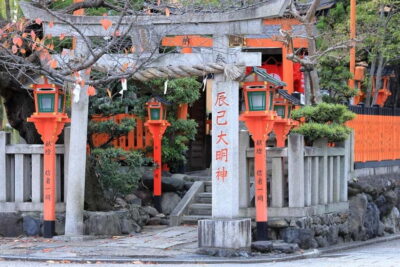
Gion & Geisha District Tours, compared.
 ★ 4.7Kyoto Geisha Walking Tour: Gion District & Hidden GemsFrom $253,273 reviews
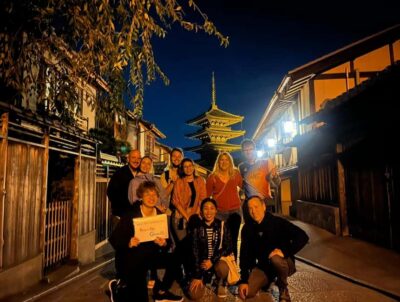 ★ 4.9Gion Magical Night Walking Tour with Geisha TriviaFrom $242,393 reviews
 ★ 4.7Gion Geisha District Walking Tour – Stories of GeishaFrom $202,187 reviews
 ★ 4.9Best of Kyoto: Gion, Geisha, Pagodas & CobblestonesFrom $242,058 reviews
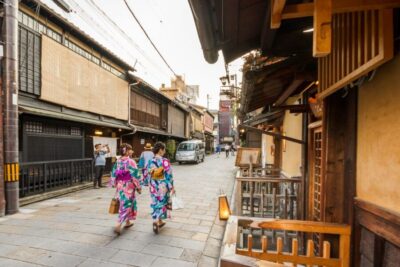 ★ 4.5Night Walk in Gion: Kyoto’s Geisha DistrictFrom $212,003 reviews
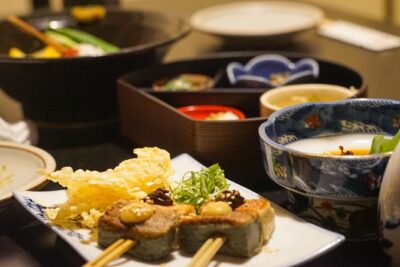 ★ 5.0Kyoto Night Foodie Tour in Gion (9+ dishes + 6 Sake tastings)From $1631,762 reviews
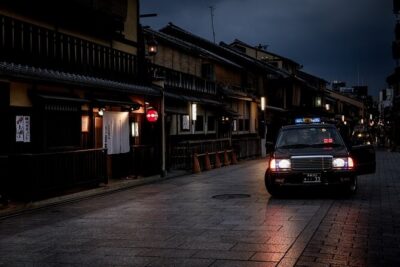 ★ 5.0Kyoto Gion Geisha District Walking Tour – The Stories of GeishaFrom $251,441 reviews
 ★ 5.0Kyoto Gion: 2-Hour Geisha Culture & History Walking TourFrom $231,186 reviews
Browse the lists this tour appears in