
Reviewed · GION & GEISHA DISTRICT TOURS
Kyoto: Tea Ceremony with Maiko Premium
A Maiko teaches matcha and dance at once.
This 90-minute Kyoto experience pairs a tea ceremony with a close, personal meet-up with a Maiko (or sometimes a Geiko) who explains training, daily life, and traditions. I love how interactive it feels: you’re not stuck watching in silence.
Two moments really won me over: learning how to make matcha step-by-step, and getting a Q&A right up close. My only heads-up: the setting is not a traditional tatami tea room, and the photo background can feel a bit commercial.
In This Review
- Key points to know before you go
- Kyoto Tea Ceremony with Maiko Premium: what this is really like
- Price and value: is $50 fair for matcha, dances, and a close photo?
- Getting there near Gojo Station (and what to do with your arrival time)
- Entering the building: the room setup reality check
- The 90-minute flow: greeting, matcha, Q&A, and photos
- Start: greeting from the Maiko/host
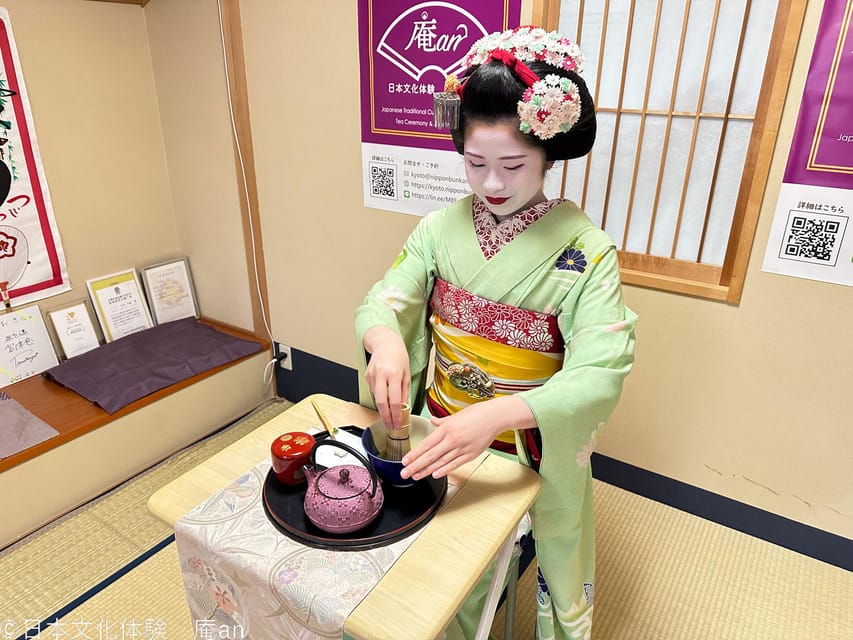
- Matcha ceremony with Maiko (you make it)
- The big payoff: Q&A time
- Photo with Maiko up close + Senjyafuda charm
- The dances: seasons, stories, and why the movements matter
- The fun part: interactive game with Maiko (and the cheering energy)
- Premium seats and what first row actually changes
- Who should book this Maiko tea ceremony (and who might not)
- Quick tips to get better photos (without losing the moment)
- So, should you book Kyoto: Tea Ceremony with Maiko Premium?
- FAQ
- FAQ
- How long is the Kyoto Maiko Premium tea ceremony?
- Where is the meeting point?
- What do you make during the experience?
- Are Japanese sweets included?
- Do you get to take photos with the Maiko?
- Will I definitely meet a Maiko?
- What performances are included?
- Is there an English translation?
- Is the venue a traditional tea house?
- Is the venue accessible by elevator?
Key points to know before you go
- Maiko-led matcha: you make your own tea, plus you get two Japanese sweets.
- Ask anything time: a real Q&A where you can talk directly to her.
- Close photo + Senjyafuda: you’ll pose right beside her and receive a lucky charm.
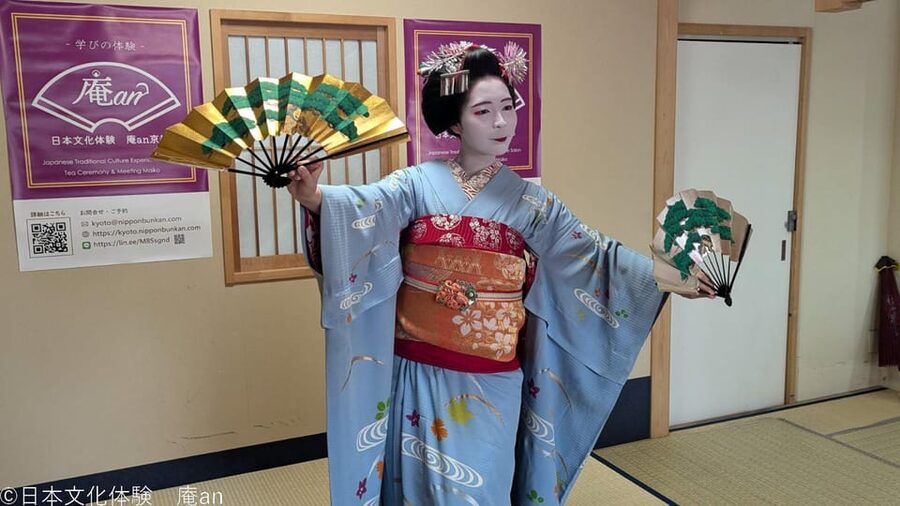
- Two dances: performances tied to seasons and stories, followed by a game.
- Not an ochaya venue: it’s in a building, on stairs only, with a more casual room setup.
Kyoto Tea Ceremony with Maiko Premium: what this is really like
If you’ve ever wondered what life is like inside Kyoto’s geisha world, this experience gives you a direct line in. You’re there for tea, but the real draw is meeting the person behind it: a Maiko who talks, demonstrates, and performs.
The “premium” format matters because it stacks the best parts together. You get matcha practice, a Q&A, dances, and a playful game. Reviews consistently mention how much fun it is when the session turns from lecture mode into conversation mode.
And yes, sometimes you won’t get a Maiko. Depending on timing and circumstances, the program may feature a Geiko instead. That’s not a downgrade. Some people see it as a bonus.
More evenings along the lantern-lit lanes of Gion


Price and value: is $50 fair for matcha, dances, and a close photo?
At about $50 per person, you’re paying for access: time with a Maiko/Geiko, plus structured cultural elements you can’t easily replicate on your own. You also get tangible extras that make the price feel more concrete than a “show only” ticket:
- Matcha tea ceremony experience, including what you make
- Two Japanese sweets
- A photo opportunity right beside her
- A Senjyafuda lucky charm
- Two traditional dances
- A game that mixes audience participation and cheering energy
Value also depends on what you want from Kyoto. If your goal is “see pretty kimono and learn a little,” you might feel it’s more about the encounter than a traditional tea-house formality. If your goal is “I want to understand the culture and talk to the person,” the price starts to look more reasonable fast.
Getting there near Gojo Station (and what to do with your arrival time)
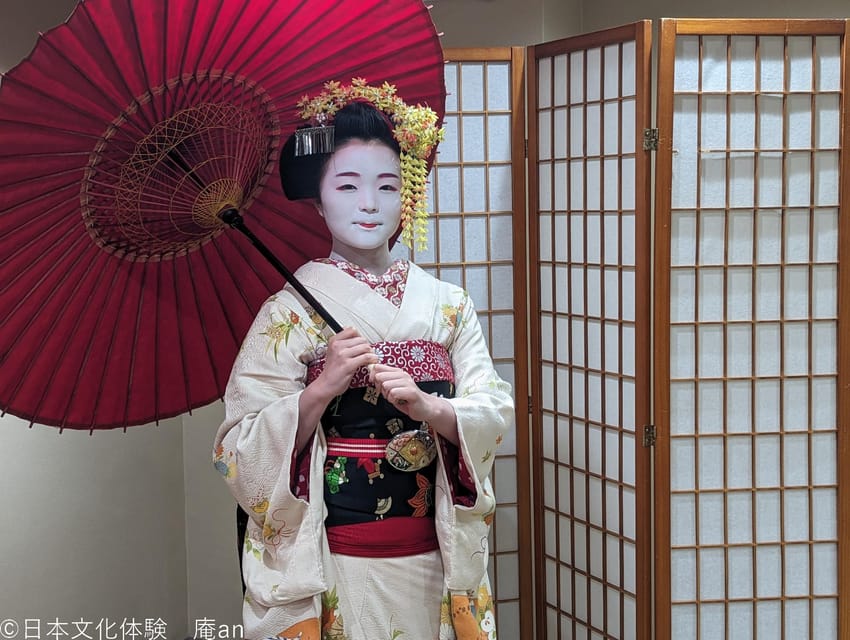
The meeting point is wonderfully simple: it’s a 1-minute walk from Exit 1 of Gojo Station on the Karasuma Line. The store entrance faces the main street, Gojo-dori.
Here’s a practical tip from real-world timing: arrive a little early. People have noted you may be able to see Maiko arrive by taxi before the start. Even if you don’t catch that moment, getting there 10–15 minutes early reduces stress when you’re heading to a place with stairs and a group start time.
One caution: the program won’t adjust for late arrivals. So don’t treat this like a flexible museum stop.
Entering the building: the room setup reality check
This isn’t an ochaya (traditional tea-house) experience. It’s in a building, and the room setup is more casual—tables and chairs rather than the classic quiet tatami atmosphere.
A couple of photo notes from feedback that you should take seriously:
- Backgrounds can include vendor signage or posters, which may show up in your pictures.
- Some people found the room backdrop plain, which can make photos feel less “cinematic” than you’d hope.
Still, the mood in the room is described as relaxed, and the staff is friendly. The trade-off here is clear: easier access and a smoother schedule, but not the hushed, traditional interior design you might picture.
Also: there’s no elevator. Plan on stairs.
The 90-minute flow: greeting, matcha, Q&A, and photos
The program runs for about 90 minutes and follows a structured sequence, with time built in for interaction rather than just performances.
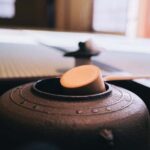
Sit for another bowl of matcha in a Kyoto tea house


Start: greeting from the Maiko/host
You’ll begin with a greeting and introduction. This is your warm-up moment—expect kimono presentation, brief orientation, and then you shift into tea-making.
Matcha ceremony with Maiko (you make it)
The core activity is the matcha tea ceremony led by the Maiko. You’ll learn how matcha is prepared and then make your own tea. Alongside it, you receive two dried-type Japanese sweets.
What I like about this format is that it doesn’t hide the process. You’re not just watching whisking magic; you’re doing the steps and tasting the result.
The big payoff: Q&A time
Then comes the part that makes the experience feel personal: a question-and-answer session. This is where people get the real understanding of what makes Maiko culture special—training, daily routine, and how tradition continues even though the old samurai world is long gone.
A key detail: the instructor/host is Japanese, and English translation is provided as much as possible. If you want specific language support, the info says you can contact them.
Photo with Maiko up close + Senjyafuda charm
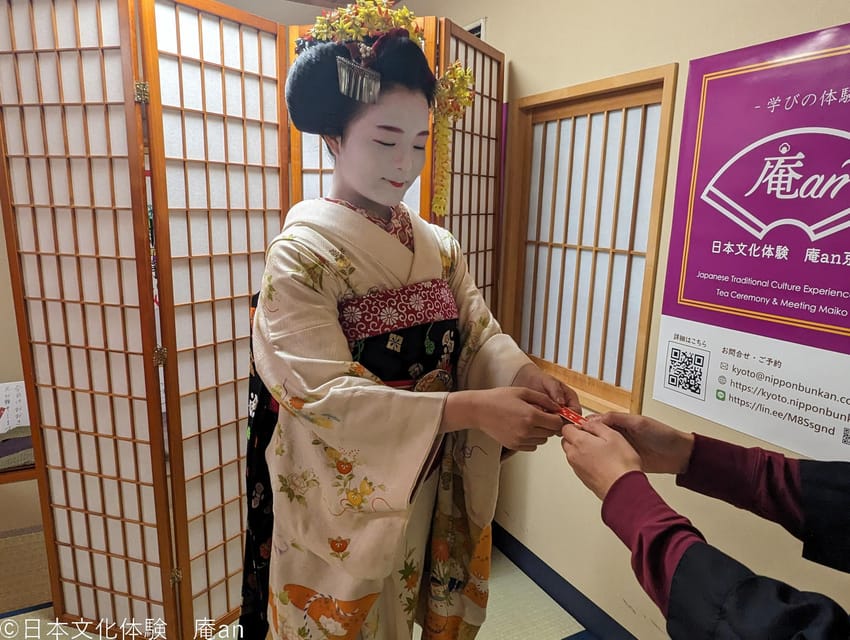
After Q&A, you take a commemorative photo right beside her. You also receive a lucky charm called a Senjyafuda as a gift.
This is the moment to think like a photographer for 10 seconds: choose your angle before you sit down, and watch for that signage background. If you’re aiming for clean portraits, position yourself carefully.
The dances: seasons, stories, and why the movements matter
You’ll see two traditional dances as part of the session. They’re described as dances that express Japan’s seasons, love stories, or everyday life.
Why this matters: dance in this context is not random entertainment. It’s a structured way of communicating emotion, timing, and cultural storytelling. When the movements get close to the room you’re in, the details read better than they would on a distant stage.
Some feedback stood out for emotional impact—people reported goosebumps from the elegance of the performances. Whether you’re super into Japanese arts or just curious, it’s the part that most clearly feels like Kyoto’s tradition in motion.
The fun part: interactive game with Maiko (and the cheering energy)
After the dances, the program includes an interactive game with the Maiko. It’s usually simple, but that’s the point: the game is part of the hospitality rhythm, not a test of anything.
Volunteers can join, but even watching is fun. The room often turns into a cheering section, and the vibe can feel like the group is temporarily one team instead of a crowd waiting their turn.
If you’re traveling with kids, this is often a highlight. Family-friendly reviews mention adults and children enjoying it about equally.
Premium seats and what first row actually changes
The experience offers paid seating upgrades:
- SS seat (First row): 3,300 JPY
- S2 seat (Second row): 2,200 JPY
- S3 seat (Third row): 1,100 JPY
Should you pay for premium seating? If your priority is photos and video, closer rows give you better angles and less obstruction. Also, since the venue isn’t a classic tatami room, distance and camera position can matter more than you expect.
If you care more about the matcha-making and chatting, you may not need the closest seat. The core interaction happens when you’re guided and when the Maiko talks to the group, not only when you’re watching from afar.
Who should book this Maiko tea ceremony (and who might not)
This experience is a strong fit if you want:
- A guided matcha experience
- A chance to ask questions directly
- A close photo and a small souvenir charm
- A program that moves from learning to performance to interaction
It may feel less ideal if you want:
- A strictly traditional tea-house setting with tatami quiet and ceremony-only pacing
- Photos that look like they were shot in a perfect, non-branded backdrop
If you’re the type who likes structured cultural experiences that still leave room for conversation, this hits the sweet spot.
Quick tips to get better photos (without losing the moment)
A few practical moves can help you out:
- Get there early to settle in and scout your photo spot.
- Think about background before you lift your phone. Some signage can show up in shots.
- If you’re filming, do it during matcha and Q&A moments when the backdrop is less likely to distract.
- After the main event, stick around briefly. People have suggested watching the Maiko depart and wave goodbye, which can feel surprisingly special.
Also, keep expectations realistic: you’re in a shared room setup designed for a smooth experience, not a museum-grade set.
So, should you book Kyoto: Tea Ceremony with Maiko Premium?
I’d book this if you want a mix of hands-on matcha, real conversation in a Q&A, and performances that make you feel the elegance of the tradition. For many visitors, it’s the kind of Kyoto memory you can’t easily recreate on your own.
I would hesitate if you’re picky about venue aesthetics or you’re chasing the most “traditional-looking” tea-house atmosphere. The setting is more modern and casual than a classic ochaya, and the photo background can be less than picture-perfect.
If you’re trying to choose, I’d make the call based on your top goal:
- Want to talk and learn? Book it.
- Want only a cinematic traditional setting? You might prefer a different tea experience in Kyoto.
FAQ
FAQ
How long is the Kyoto Maiko Premium tea ceremony?
The duration is 90 minutes.
Where is the meeting point?
It’s a 1-minute walk from Exit 1 of Subway Karasuma Line Gojo Station.
What do you make during the experience?
You make matcha tea yourself during the ceremony.
Are Japanese sweets included?
Yes. You get two dried-type Japanese sweets with the tea.
Do you get to take photos with the Maiko?
Yes. You’ll have a chance to take a commemorative photo right beside the Maiko.
Will I definitely meet a Maiko?
It’s possible you may meet a Geiko instead of a Maiko, depending on the situation.
What performances are included?
You’ll enjoy two traditional dance performances.
Is there an English translation?
English translation is provided as much as possible. If you want to add it, you can contact the operator.
Is the venue a traditional tea house?
No. It’s located in a building and is not an ochaya or traditional Japanese house.
Is the venue accessible by elevator?
No elevator is available, and you’ll need to take stairs.
More Tour Reviews in Kyoto



One More Bowl of Matcha
Still in Gion? Keep Going


Just added: more Kyoto tours to browse








Gion & Geisha District Tours, compared.
 ★ 4.7Kyoto Geisha Walking Tour: Gion District & Hidden GemsFrom $253,273 reviews
 ★ 4.9Gion Magical Night Walking Tour with Geisha TriviaFrom $242,393 reviews
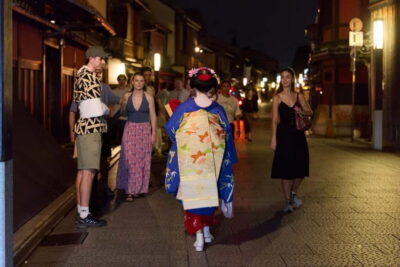 ★ 4.7Gion Geisha District Walking Tour – Stories of GeishaFrom $202,187 reviews
 ★ 4.9Best of Kyoto: Gion, Geisha, Pagodas & CobblestonesFrom $242,058 reviews
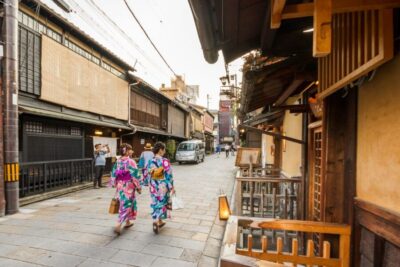 ★ 4.5Night Walk in Gion: Kyoto’s Geisha DistrictFrom $212,003 reviews
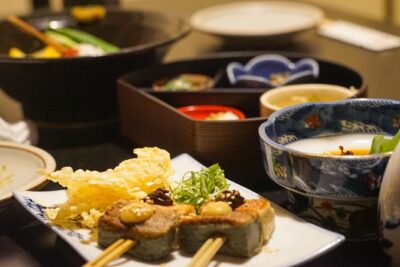 ★ 5.0Kyoto Night Foodie Tour in Gion (9+ dishes + 6 Sake tastings)From $1631,762 reviews
 ★ 5.0Kyoto Gion Geisha District Walking Tour – The Stories of GeishaFrom $251,441 reviews
 ★ 5.0Kyoto Gion: 2-Hour Geisha Culture & History Walking TourFrom $231,186 reviews
Browse the lists this tour appears in