
Reviewed · NIJO CASTLE TOURS
Nijo Castle and Imperial Palace Visit with Guide
Two palaces, one power story. You’ll connect the Edo-era shogunate at Nijo Castle with the later imperial authority at Kyoto’s Imperial Palace—with an English-speaking guide guiding the whole arc. I really like the small-group feel and the way guides like Mia (and sometimes Mie/Miya) make symbolism feel concrete, not academic.
What I love most is the tight time use: about 2 hours 30 minutes total, with entrances and public transport costs rolled in. I also appreciate that your guide’s explanations keep pace with what you can actually see inside the buildings and in the grounds. One drawback to plan for: there’s a fair amount of walking, and the Imperial Palace portion can be affected if an area is closed due to events.
In This Review
- Key points at a glance
- Meeting at Nijō Castle: Where the Tour Starts Fast
- Nijo Castle: The Edo Shogunate in Wood, Doors, and Floors
- What to watch for at Nijo (practical tips)
- A fair consideration
- The Transfer to Kyoto Imperial Palace: Public Transit, Less Hassle
- Kyoto Imperial Palace: The Power Shift You Can Walk Through
- If part of the Imperial Palace is restricted
- Price and Value: Why $79.18 Can Be a Smart Move
- Who Should Book This Tour (and Who Might Skip It)
- My Booking Recommendation: Should You Take It?
- FAQ
- How long is the Nijo Castle and Imperial Palace tour?
- Is this tour private?
- Do I get to choose a morning or afternoon time slot?
- What’s included in the price?
- What’s not included?
- Where do we meet and where does the tour end?
- Do I need to buy tickets?
- What happens if the weather is bad?
- How flexible is cancellation?
Key points at a glance
- Small group size: max 11 travelers, with Nijo Castle described as under 8 guests
- Tickets + transit included: entrance fees and public transportation are covered
- Two time slots: morning or afternoon option to fit Kyoto days
- Guide-driven interpretation: Edo shogunate-to-Meiji imperial context, plus practical answers in English
- Easy meetup: start at Nijo Castle’s main gate; end near the Imperial Palace area
Meeting at Nijō Castle: Where the Tour Starts Fast
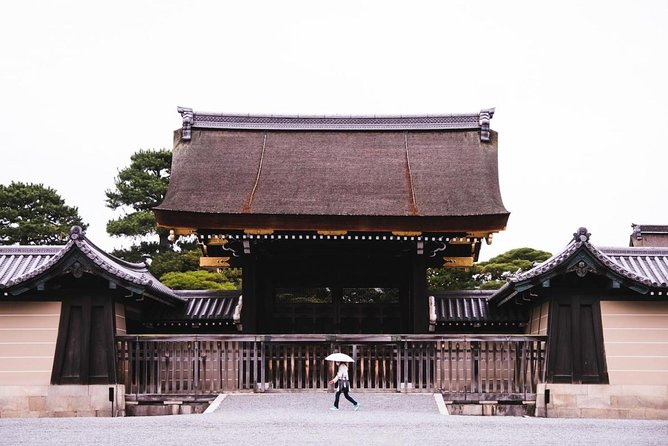
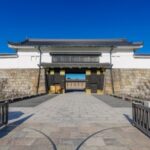
This tour begins at Nijō Castle, at 541 Nijōjōchō, Nakagyo Ward—you meet the guide in front of the castle’s large white main gate. That matters more than it sounds. Kyoto sites can sprawl, and a clear meeting point helps you avoid the usual first-day confusion.
The format is built for a smooth first transition: you start at Nijo, then you move to the Imperial Palace by public transportation with the guide. The payoff is you don’t waste time figuring out ticket lines, train routes, or how long each stop should take. You also get the benefit of a guide who can keep the story moving—Edo politics, Kyoto’s status, and why these spaces are designed the way they are.
If you’re traveling with kids or older folks, you’ll still want to consider pace. One recurring note from previous participants: bring comfortable shoes because you’ll do plenty of walking between highlights and indoor/outdoor areas.
More of shogun-era Kyoto, starting at Nijo Castle

Nijo Castle: The Edo Shogunate in Wood, Doors, and Floors
Nijo Castle is where the tour earns its keep. You spend about 1 hour here with guided attention, starting right at the entrance and then moving through the main sights. This isn’t just a photo stop. You’re there to understand how the Tokugawa shogunate presented power—visually, spatially, and through the way people were meant to move inside.
What makes Nijo special is that it’s not only architecture. It’s political theater in timber form. With the guide leading you, the castle stops feeling like a museum with labels and starts feeling like a machine that organized hierarchy. When you’re hearing explanations in English—especially from a guide like Mia—the details you might otherwise miss become the point: what certain designs communicate, how rooms relate to authority, and how the shogunate era shaped Kyoto’s identity.
You’ll also get a sense of the Edo period context—how the shogunate operated, how control was maintained, and how that sets up the later shift toward imperial rule. People who care about the shogun era often love this stop because it makes the whole subject feel readable. One participant even described it like the shogun comes to life, which is exactly what a good guide can do here: give you context so the building tells its own story.
What to watch for at Nijo (practical tips)
- Look for the symbolic choices in layout and presentation, not just the biggest rooms.
- Expect time inside the castle areas, not only exterior views.
- If you’re a fan of political history or power rituals, this is your main payoff.
A fair consideration
If you’re the type who prefers maximum time in one place, the 1-hour Nijo portion might feel a bit tight. The tour is designed to cover both Nijo and the Imperial Palace within the same half-day, so the pacing is efficient rather than slow and lingering.
The Transfer to Kyoto Imperial Palace: Public Transit, Less Hassle
After the first hour at Nijo Castle, you transfer to the Kyoto Imperial Palace using public transportation with the guide. This is one of those conveniences you’ll really notice in Kyoto, where routes are manageable but can be tricky if you’re juggling maps, stations, and time.
Because the guide handles the transition, you can stay in the story. You’re not stuck with dead time. You also avoid the common problem of getting separated from your group right at the moment the tour needs to stay on schedule.
This section also means you’re not paying extra for private cars. The tour includes the public transport costs, so you get a practical route plan without doing it yourself. For solo travelers or couples, this often turns into real savings compared with piecing together tickets, transit, and a guide separately.
More temples and shrines to slow down in across Kyoto



Kyoto Imperial Palace: The Power Shift You Can Walk Through
At the Imperial Palace area, you get another 1 hour of guided exploration with entrance and transportation costs included. If Nijo is about the shogunate’s world, the Imperial Palace portion is about the imperial side of authority—how rule changes, and what that means for the spaces people occupy.
The guide’s job here is especially important because the palace setting can be easy to misread if you only look at what’s pretty. The interpretation helps you connect the dots between eras: why the imperial institution matters, how political power transitioned over time, and why the layout and atmosphere feel distinct from Nijo.
People often highlight that the guide keeps the right balance: not drowning you in facts, but still answering questions with enough detail to feel satisfying. And there’s a real bonus if your guide uses visuals—some guides in past groups have used visual aids to explain historical points without overloading you.
If part of the Imperial Palace is restricted
There’s one reality check. One participant noted the Imperial Palace was closed due to an event during their visit. That’s not something you can plan around, but it’s a good reminder that historic sites can have occasional access changes. If you’re booking around a very specific day, you might feel more confident if you keep a flexible attitude and treat the guided narrative as the main value.
Price and Value: Why $79.18 Can Be a Smart Move
At $79.18 per person, the headline question is simple: is it worth it?
For me, the answer comes down to what’s included and how much time you’re saving:
- Professional English-speaking guide
- Entrance fees at both stops
- Public transportation during the tour
- A small group size (max 11 overall; Nijo described as under 8)
If you tried to do this on your own, you’d be paying for at least one major component you might not want to coordinate: a guide who can explain the shogunate-to-imperial transition and point out what to notice. You’d also spend time figuring out transport between the two sites, plus figuring out exactly where you should be at what time.
Also, two hours and thirty minutes is a sweet spot for many Kyoto itineraries. It’s long enough to get meaningful context, but short enough to still leave room for a meal, a walk, or another neighborhood.
Where the value can be less obvious: if your travel style is mostly self-guided and you’re happy reading on your own at a slow pace. In that case, you might prefer independent exploring. But if you want the story explained while you’re standing in the right rooms and corridors, this price often feels fair.
Who Should Book This Tour (and Who Might Skip It)
This tour is a strong fit if you:
- Want English interpretation rather than guessing what you’re looking at
- Like history that connects people, power, and buildings
- Prefer small groups over big-bus crowds
- Want a tidy, timed itinerary without mapping hassles
It’s also a good match for first-time Kyoto visitors who want the Edo-to-imperial thread in just a few hours. Nijo Castle and the Imperial Palace are both major names, but the guided framing is what turns them from checkboxes into understanding.
You might consider skipping or swapping if:
- You want more time at just one site and hate time pressure
- You strongly dislike walking (this itinerary involves enough movement that comfortable shoes matter)
- You’re visiting mainly for scenery and don’t care much about historical context
My Booking Recommendation: Should You Take It?
If your goal is to understand Kyoto’s political timeline—how the shogunate era shaped the city and how imperial authority later mattered—then I’d book this tour. The big win is the guide-driven connection between the two places, paired with the practical convenience of entrance fees and transit included.
The only reason not to book is if your schedule is ultra tight and you’d rather spend extra hours alone at one site. Otherwise, you’ll likely appreciate the structure: start at the Nijo main gate, see the castle with interpretation, travel together to the Imperial Palace, and finish with a clearer sense of how these power systems changed.
FAQ
How long is the Nijo Castle and Imperial Palace tour?
It runs about 2 hours 30 minutes total, with around 1 hour at Nijo Castle and about 1 hour at the Kyoto Imperial Palace.
Is this tour private?
It’s presented as a private tour for just you and your party, and the group size is kept small. The tour listing also notes a maximum of 11 travelers, and Nijo Castle is described as a small group of fewer than 8 guests.
Do I get to choose a morning or afternoon time slot?
Yes. You can choose a morning or afternoon tour to match your schedule.
What’s included in the price?
The price includes a professional English-speaking guide, entrance fees, and public transportation during the tour.
What’s not included?
Food and drinks are not included, and there’s no hotel pickup or drop-off.
Where do we meet and where does the tour end?
You meet at Nijō Castle (in front of the huge white main gate) at 541 Nijōjōchō, Nakagyo Ward, Kyoto. The tour ends in front of Imperial Palace, near Kyoto Gyoen National Garden.
Do I need to buy tickets?
No. Entrance tickets are included in the tour price.
What happens if the weather is bad?
The tour requires good weather. If it’s canceled due to poor weather, you’ll be offered a different date or a full refund.
How flexible is cancellation?
You can cancel for free up to 24 hours in advance for a full refund. Canceling less than 24 hours before the start time isn’t refunded.
More Tour Reviews in Kyoto


More Kyoto Temples and Shrines
More of Castle-Era Kyoto
Just added: more Kyoto tours to browse








Nijo Castle Tours, compared.
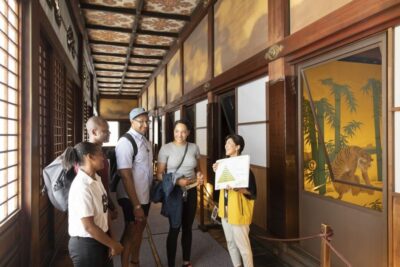 ★ 4.7Nijo-jo Castle and Ninomaru Palace Guided TourFrom $161,020 reviews
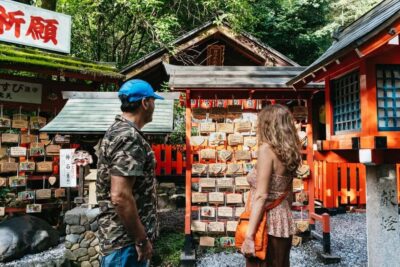 ★ 4.7Nijo Castle, Kiyomizu & Fushimi Inari Guided TourFrom $54700 reviews
 ★ 5.0Nijo, Kinkaku-ji, Arashiyama, Kiyomizu & Fushimi InariFrom $51699 reviews
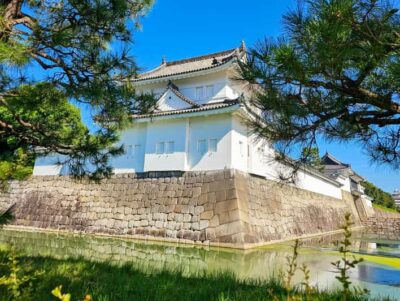 ★ 4.7Imperial Palace & Nijo Castle Guided Walking TourFrom $49453 reviews
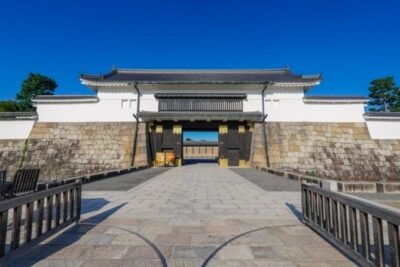 ★ 5.0Nijo Castle World Heritage Guided Tour with AdmissionFrom $39128 reviews
 ★ 4.5Kyoto Imperial Palace & Nijo Castle Guided Walking Tour – 3 HoursFrom $55106 reviews
 ★ 4.6Nijo Castle and Kyoto Imperial Palace Guided TourFrom $6398 reviews
 ★ 5.0Golden Pavilion, Nijo Castle, & Nishiki Market Half day tourFrom $9029 reviews
Browse the lists this tour appears in