
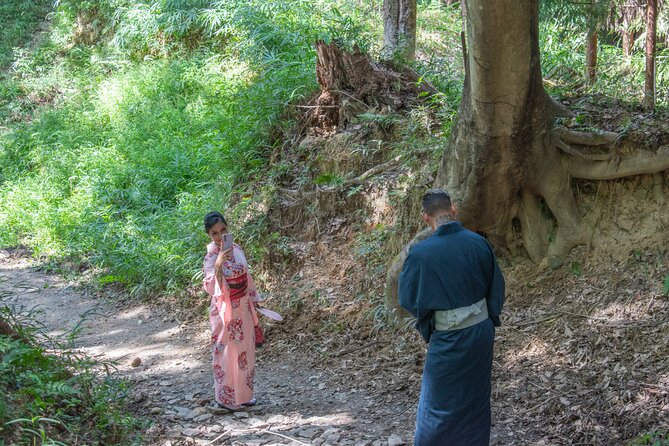
Reviewed · NARA DAY TRIPS FROM KYOTO
Kyoto, Nara and Osaka private up to 9 pax picked up from Kyoto
A one-day loop across three cities pays off. You get a private Kyoto–Nara–Osaka plan (up to 9 people) that trades random wandering for a tight route plus standout stops like Fushimi Inari and the Kinkakuji golden pavilion, guided by Takashi’s calm, photo-friendly approach. I also like the food moments built into the day, including Kyoto-style sweets at Nakamuraken and matcha tasting in serene temple settings. One consideration: this is a long, packed day in practice, especially in the classic “3-cities” format that can run close to 12 hours.
I’m particularly impressed by Takashi’s communication and the way he steers you toward quieter, less-trafficked places. One review even calls out how he was a great photographer, and another thanks him for the pickle samples and the time spent at a food stand.
If you hate being on the move, this may feel like too much. But if you want maximum value—major sights plus peaceful corners, with pickup and dropoff options—this is a smart way to do it.
In This Review
- Key highlights at a glance
- Why a one-day Kyoto–Nara–Osaka private plan makes sense
- Pickup, dropoff, and the comfort factor (what you actually gain)
- Takashi’s secret-temple approach: why the quieter places matter
- Fushimi Inari-taisha: torii gates, bamboo air, and a slow start
- Rengeji, Myomanji, Koryu-ji, and Koetsuji: Kyoto’s garden-and-stone side
- Kinkakuji golden pavilion: the big icon, timed right
- Nakamuraken sweets and Matsuo Shrine: where the day tastes like Kyoto
- The Nara shift: Todai-ji scale and Nara Park deer time
- Osaka in a hurry: Dotonbori street food and Abeno Harukas views
- Price and value for a private group (what $329.02 really buys)
- Who this tour suits best (and who might prefer a different plan)
- Should you book this Kyoto–Nara–Osaka private day?
- FAQ
- Is this a private tour?
- Where does pickup happen, and can I choose where to end?
- How long is the tour?
- What are the main stops in the Kyoto portion?
- Are tickets included for the temples and shrines?
- What’s the cancellation policy for a full refund?
Key highlights at a glance
- Private group up to 9: only your group participates, so the pace stays manageable.
- Hotel pickup from Kyoto: you skip hassle and head straight to the sites.
- Secret-temple style stops: quiet gardens like mossy Rengeji and rock-garden Myomanji.
- Food built into the route: Kyoto sweets at Nakamuraken, plus matcha tasting and other local treats.
- Osaka viewpoints and street food time: Dotonbori walking and Abeno Harukas observatory.
Why a one-day Kyoto–Nara–Osaka private plan makes sense
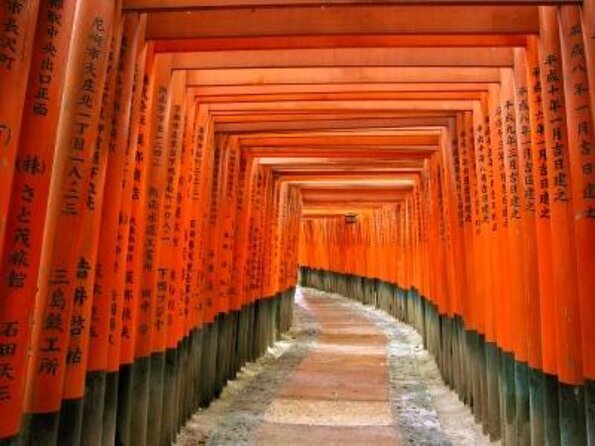
Doing Kyoto, Nara, and Osaka in one day sounds ambitious—because it is. But a private setup helps you solve the real problem: switching cities efficiently without turning your vacation into a transit spreadsheet.
This works best when you want big highlights plus calmer stops. Fushimi Inari’s thousands of torii gates, Kinkakuji’s gold pavilion, Todai-ji’s colossal Buddha hall, and Osaka’s street energy are all “headline” sights. Then the day adds softer moments: moss garden quiet, rock-garden patterns, and a matcha pause in a serene temple setting.
Just know the timing reality. The overall experience is listed at about 7 hours, but the example “3 cities tour” route is described as roughly 12 hours. In other words: you’ll likely be out for most of the day.
More day trips out to Nara and its bowing deer
Pickup, dropoff, and the comfort factor (what you actually gain)
Hotel pickup from Kyoto is a big deal if you’re trying to see a lot. It means you don’t start with train transfers, platform hunts, and the “where is that entrance again?” stress.
The tour also lets you choose your dropoff location. That’s useful because the end of a long day should feel like a landing, not another chore. You can aim for an easy connection or just head to dinner without doing extra planning.
You’ll also get a mobile ticket, which helps you stay organized. And because it’s “near public transportation,” you’re not totally isolated if you need to adjust—though the point is that you’re mostly riding with your guide.
Takashi’s secret-temple approach: why the quieter places matter
The standout theme in the reviews is Takashi’s “inside knowledge” and his ability to steer you to places that feel calm instead of crowded. When someone knows where to position your stops, you spend more time looking and less time line-waiting or power-walking through bottlenecks.
Another practical advantage: his English and communication get called out clearly. That matters because these sites aren’t just scenery. Shrines and temples are visual, yes—but they’re also systems of meaning. Even a short explanation about what you’re looking at can turn a quick photo stop into something you remember.
And then there’s the little stuff that makes a day smoother. One review response thanks someone for enjoying pickle samples and for what they bought at a stand. That hints at a guide who pays attention to the on-the-ground experience—food cues, small tastings, and where to go for things that actually feel local.
Fushimi Inari-taisha: torii gates, bamboo air, and a slow start
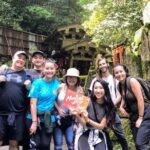
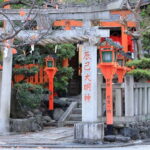
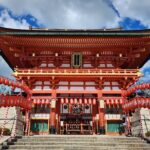
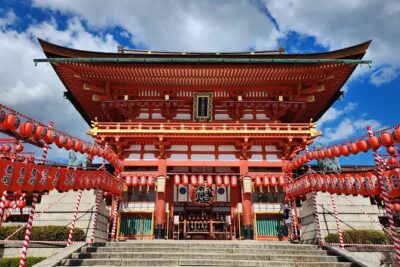
The day often begins at Fushimi Inari-taisha, the shrine famous for thousands of vermilion torii gates. The main draw is the visual rhythm: one gate after another, climbing up the hill like a tunnel you can walk through.
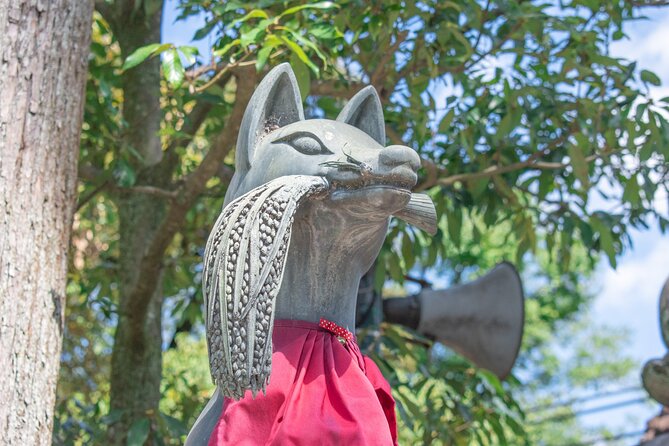
What I like about this stop is that it doesn’t feel one-dimensional. The shrine grounds include more than just the gates—you’ll also see a long stretch of bamboo forest and a calmer, quieter atmosphere where birds can be heard. That’s a nice contrast if you come in expecting only crowds and photos.
The schedule gives you around 2 hours here. That’s enough time to get your bearings, walk at a comfortable pace, and still enjoy the atmosphere instead of treating it like a race.
Rengeji, Myomanji, Koryu-ji, and Koetsuji: Kyoto’s garden-and-stone side
After Fushimi Inari, the itinerary shifts toward temple environments that reward a slower mind.
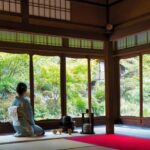
Rengeji Temple is described as having an extremely gorgeous moss garden. It’s not visited by many people due to its location, so it can feel like a pause button. You’ll also find wide open tatami mat flooring inside—useful if you want a breather before continuing.
Myomanji Temple is where the day gets visually “designed.” The grounds feature millions of tiny rocks arranged into a large garden composition. This is also where the tour messaging connects you to the broader story of Buddhist sects in Japan—so it’s not just decoration, it’s interpretation.
Next comes Koryu-ji Temple, connected to the Hatashi group (described as having Korean-rooted ethnic roots) in the 5th–6th century. The site also notes a past burnout in the 8th century, but the temple didn’t vanish afterward. It’s a reminder that many of these places carry survival stories, not just postcard beauty.
Finally, Koetsuji Temple leans into arts and ritual: it was property of an art master connected to tea ceremony and calligraphy, and the garden features elements tied to those practices. Even with limited time (about 30 minutes in the example), it’s the kind of stop where you feel the space was made for attention.
One minor drawback: this Kyoto block is dense. You’ll be moving from one special environment to another, so bring water and plan to keep your pace relaxed.
Other Kyoto tours and experiences to compare

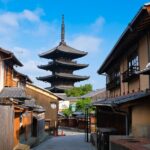
Kinkakuji golden pavilion: the big icon, timed right
Kinkakuji is the golden pavilion everyone recognizes from photos. The building’s two top floors are covered with gold leaf, and it began as a villa for Shogun Yoshimitsu Ashikaga (1358–1408) before becoming a temple after his death.
The value here isn’t only the sight. It’s the way it frames your day. After moss, rock patterns, and quieter corners, Kinkakuji gives you a more dramatic, high-impact moment—almost like changing camera lenses.
In the example route, you’ll get about 1 hour at Kinkakuji. That’s usually enough time to see the key views without turning it into a rushed checkmark.
Nakamuraken sweets and Matsuo Shrine: where the day tastes like Kyoto
A good private tour doesn’t just show you temples; it feeds you in-between.
There’s a planned stop at Nakamuraken, a local dessert shop with Kyoto-styled sweets. The descriptions include mochi variations (called Mochifu, with different textures), and shaved ice flavored with yuzu (Japanese citrus) or matcha. Even if you’re not a “sweet person,” this is a great way to reset your energy mid-route.
Then comes Matsuo Shrine, which is described as the biggest shrine erected by the Hatashi noble family and loved by the local neighborhood. The standout practical moment: there’s a koi fish pond where you can feed the koi. It’s simple, it’s fun, and it breaks up the serious temple mood without needing a long sit-down meal.
If you’re traveling with kids, these two stops often do the trick: one for the treat, one for the hands-on experience.
The Nara shift: Todai-ji scale and Nara Park deer time

In the classic “3-cities” style format, after Kyoto you’ll move on to Nara.
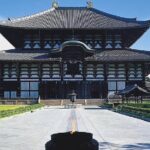
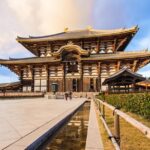
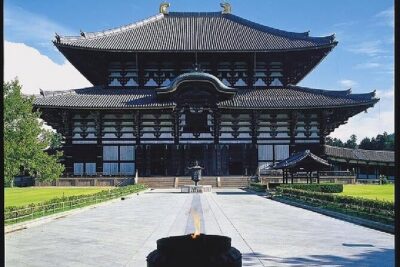
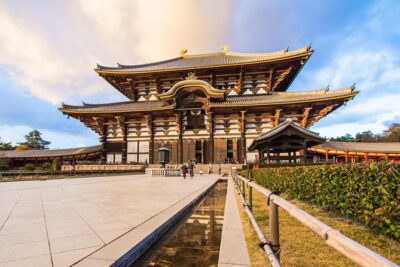
Todai-ji is the headline stop: the Great Buddha Hall with a massive statue. This is where your brain recalibrates from “beautiful buildings” to “scale beyond what you expect.” Even when you’ve seen pictures before, it tends to hit differently in person.
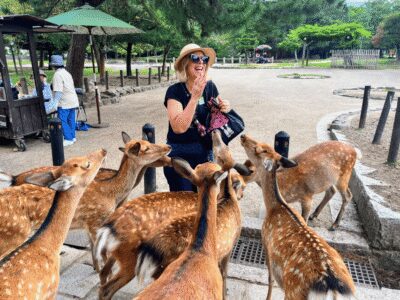
Then you’ll head to Nara Park, where you can feed the deer with crackers. This is one of those experiences that can feel a little chaotic on your first minute, but it’s also one of the most memorable, low-pressure things to do during a multi-city day. The key is to stay calm and follow your guide’s timing.
The example itinerary also includes a “secret temple” in Nara with matcha tasting. That combination—big icon, park energy, and then a calm tea moment—works because it structures your emotions instead of leaving you to self-manage.
Osaka in a hurry: Dotonbori street food and Abeno Harukas views
Osaka can easily swallow your whole evening. In this tour, you get a concentrated taste of it.
Dotonbori is the walking-and-eating block. The focus is on local dishes eaten on the streets, which is exactly the kind of experience that’s hard to replicate if you’re just trying to figure things out on your own after a long day.
Then you’ll go up to Abeno Harukasu, described as the highest skyscraper with an observatory. Even for people who aren’t big on heights, an observatory time is useful because it gives you an orientation view after hours of walking on street level.
One consideration: by the time Osaka arrives, your legs will be ready for a rest. If you’re sensitive to long standing and walking, plan a slower dinner pace after dropoff.
Price and value for a private group (what $329.02 really buys)
The listed price is $329.02 per person, and the tour is booked on average about 113 days in advance. You’re also dealing with a private setup for up to 9 people, with pickup from Kyoto.
So what’s the value?
- You’re paying for transport and timing. Multi-city days are about efficiency, not just seeing places.
- You’re getting a guide who knows how to place you at the right kind of sites—especially quieter, “secret treasure” style stops.
- You’re getting built-in food and breaks, not just a slideshow of monuments.
- Many of the listed Kyoto stops are marked with admission as free in the schedule (Fushimi Inari-taisha, Rengeji, Myomanji, Koryu-ji, Kinkakuji, Koetsuji, Nakamuraken, and Matsuo Shrine).
That last point matters. If you’re comparing against tours that pack in paid attractions, the day’s cost can feel more reasonable because you’re not constantly paying additional entry fees for the temple portion.
The main “price risk” is the day length. If you end up wanting a slower, less crowded experience, you might wish you had allocated two separate days instead. But if your goal is maximum highlights with minimal hassle, the private format is where the money makes sense.
Who this tour suits best (and who might prefer a different plan)
This is a strong match if you:
- Want Kyoto plus Nara plus Osaka in one shot, without doing your own routing.
- Care about visiting less-crowded temple settings, not only the top 10 icons.
- Like photo-friendly guidance and clear English explanations.
- Travel as a small group (up to 9) and want a shared, private pace.
It may be less ideal if you:
- Want a fully relaxed day with lots of long breaks.
- Don’t like structured itineraries or moving between neighborhoods frequently.
- Prefer to spend evenings unhurried at one city instead of splitting time.
In the sweet spot, this tour feels like a well-designed highlight reel with enough calm stops to keep it interesting.
Should you book this Kyoto–Nara–Osaka private day?
If you want a single, efficient day that hits the classics and adds quiet temple moments, I’d book it. The private pickup from Kyoto plus the route planning is the core win, and the reviews around Takashi’s English, his inner knowledge, and his photography help explain why the day feels more meaningful than a basic sightseeing bus.
Book it sooner rather than later if you can—this one gets planned in advance. And when you decide, be honest about your tolerance for a long day. If you’re good with a packed schedule and want maximum value, you’ll likely love how the day flows from shrine gates to moss gardens to Buddha-scale awe to Osaka streets and skyline views.
FAQ
Is this a private tour?
Yes. It’s a private tour/activity, and only your group participates.
Where does pickup happen, and can I choose where to end?
Pickup is offered from Kyoto. You can also choose any dropoff location so you can head to restaurants after the tour.
How long is the tour?
The experience is listed at about 7 hours. The 3-cities example route is described as roughly a 12-hour day, so plan for a long day depending on the option.
What are the main stops in the Kyoto portion?
The example Kyoto route includes Fushimi Inari-taisha Shrine, Rengeji Temple, Myomanji Temple, Koryu-ji Temple, Kinkakuji Temple, Koetsuji Temple, Nakamuraken (dessert stop), and Matsuo Shrine.
Are tickets included for the temples and shrines?
In the example itinerary, the listed Kyoto stops show admission ticket free for those specific sites.
What’s the cancellation policy for a full refund?
You can cancel for a full refund up to 24 hours in advance of the experience start time.
More Private in Kyoto

More Tour Reviews in Kyoto

More Nara Day Trips

Just added: more Kyoto tours to browse





Nara Day Trips from Kyoto, compared.
 ★ 4.7Kyoto/Osaka: Nara, Fushimi Inari Taisha, Arashiyama Bus TourFrom $521,275 reviews
 ★ 4.4Osaka/Kyoto: Arashiyama, Nara & Fushimi Inari Shrine w/LunchFrom $61754 reviews
 ★ 4.5Kyoto and Nara Day Trip from KyotoFrom $194445 reviews
 ★ 5.0Full Day Guided Tour to Kyoto and Nara from Osaka by VanFrom $106420 reviews
 ★ 4.5Nara Afternoon Tour from Kyoto or OsakaFrom $102390 reviews
 ★ 4.6From Kyoto: Nara Guided Morning TourFrom $77335 reviews
 ★ 4.6Kyoto/Osaka: Kyoto and Nara Customized Private Guided TourFrom $477258 reviews
 ★ 5.0Nara Park, Osaka & Kobe from Kyoto Full Day tourFrom $90207 reviews
Browse the lists this tour appears in