
Reviewed · NARA DAY TRIPS FROM KYOTO
Kyoto and Nara Day Trip from Kyoto
Gold leaf, deer, and shogun-era castles—on one day. I love the contrast between Nijo Castle’s grand exterior and intricate interior, and I love how Kinkaku-ji’s Golden Pavilion turns into an instant photo stop. The trade-off is time: it’s a 10 to 11 hour day, so you’re moving at a steady clip and won’t fully “soak” in every site.
What makes it easier (especially in summer or rainy weather) is the included air-conditioned transport, plus a licensed English-speaking guide to connect the dots between Kyoto’s imperial past and Nara’s early religious power. You’ll also get a mobile ticket, which cuts down on last-minute fuss. One more thing to consider: the day ends back at Kyoto Station, not at your hotel.
In This Review
- Key highlights worth planning for
- Kyoto to Nara by bus: what this day trip really trades
- Getting from stop to stop with included air-conditioned comfort
- Morning in Kyoto: Nijo Castle, Kinkaku-ji, and Imperial Palace grounds
- Nijo Castle (about 50 minutes, admission included)
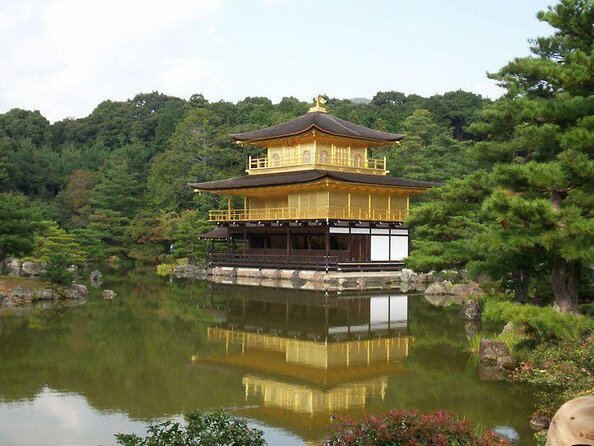
- Kinkaku-ji Golden Pavilion (about 45 minutes, admission included)
- Kyoto Imperial Palace (about 40 minutes, admission-free)
- Nara’s Todai-ji: the Great Buddha and a huge wooden world
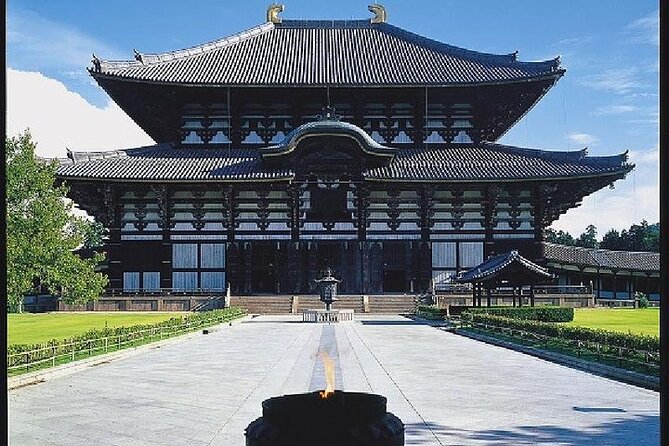
- Todai-ji Temple and the Great Buddha Hall (about 1 hour 10 minutes, admission included)
- Kasuga Grand Shrine lanterns and the deer park finish
- Kasuga Grand Shrine (about 1 hour, admission included)
- Nara Park and the deer (end of day)
- Price and value: is $194.85 worth it for your time?
- Pacing, walking, and how to avoid feeling rushed
- Your guide makes a difference: what to listen for on this tour
- Who should book this Kyoto and Nara day trip?
- Should you book this Kyoto and Nara day trip?
- FAQ
- How long is the Kyoto and Nara day trip?
- What major sights are included in the day?
- Is transportation included?
- Is lunch provided?
- What if Kyoto Imperial Palace is closed?
- What if Nijo Castle is closed?
- Where does the tour end?
Key highlights worth planning for
- UNESCO-hit Kyoto and Nara in one shot: Nijo Castle, Kinkaku-ji, Todai-ji, plus Kasuga Shrine/Grand Shrine areas.
- Stops chosen for meaning, not just selfies: Tokugawa-era politics at Nijo, Buddhist scale at Todai-ji.
- Air-conditioned rides between sites: real relief when you’re stacking temples back-to-back.
- Kasuga Shrine lantern atmosphere: 3,000-plus lanterns lining the shrine interior area you can enter.
- Nara’s deer park finish: iconic deer close to your last stop, plus that classic Nara “free-roaming” vibe.
Kyoto to Nara by bus: what this day trip really trades
This is a classic “best-of” day. You’re checking major Kyoto and Nara sights without having to plan buses, tickets, and train transfers on your own. The organizer also keeps the group focused with a set flow and guided timing, which matters because Kyoto crowds can turn a simple walk into a slow crawl.
The downside of a highlights route is simple: depth takes a back seat. Each location gets a defined window (for example, Nijo Castle is about 50 minutes and Kinkaku-ji about 45 minutes). If you love sitting quietly for a long time in one temple garden, you’ll feel the schedule here.
Still, for many first-timers, this is the efficient approach. You’ll leave with a real sense of how Kyoto functioned as a political center, and how Nara became a religious heavyweight in Japan’s earlier eras.
More day trips out to Nara and its bowing deer
Getting from stop to stop with included air-conditioned comfort
The transport is one of the biggest practical wins. You’re not fighting heat, rain, or transfers across town for each leg. That means more energy for the actual walking—shrines, temple halls, and those crowded garden paths.
The group size is capped at 40 people, which is large enough to feel like a group tour, but small enough that you generally won’t disappear behind a wall of people. Seats aren’t designated, so if you care about seeing out the window, you’ll want to board promptly when the bus fills.
One more logistics reality: the day ends at Kyoto Station around 6:30pm, and there’s no hotel drop-off. Plan your evening accordingly—if your hotel is far from the station, you’ll want a simple return plan (subway/taxi booked in advance or an easy transit route you already know).
Morning in Kyoto: Nijo Castle, Kinkaku-ji, and Imperial Palace grounds
This tour keeps Kyoto in the morning, when you usually get a better chance of moving through major sights before the biggest waves.
Nijo Castle (about 50 minutes, admission included)
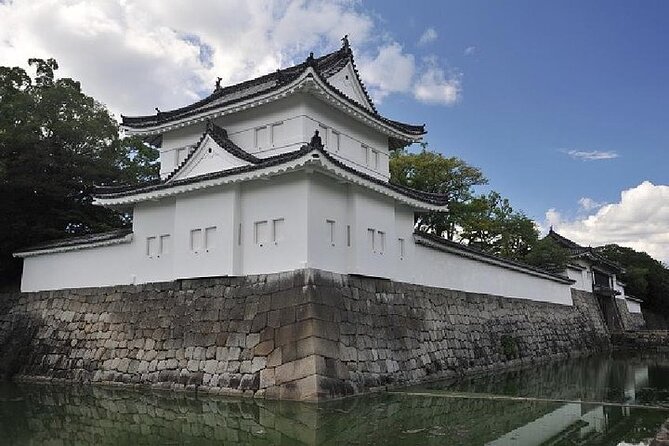
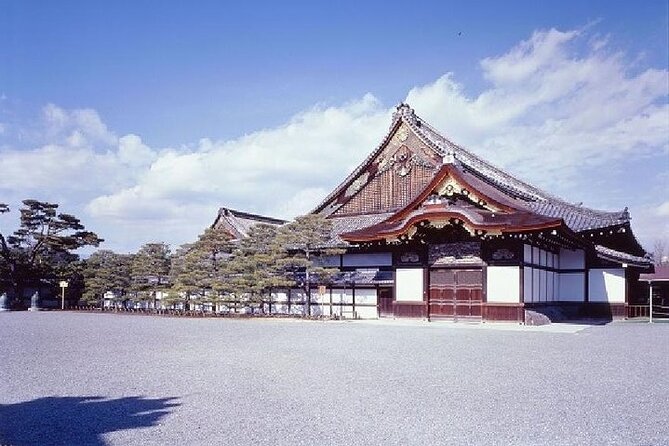
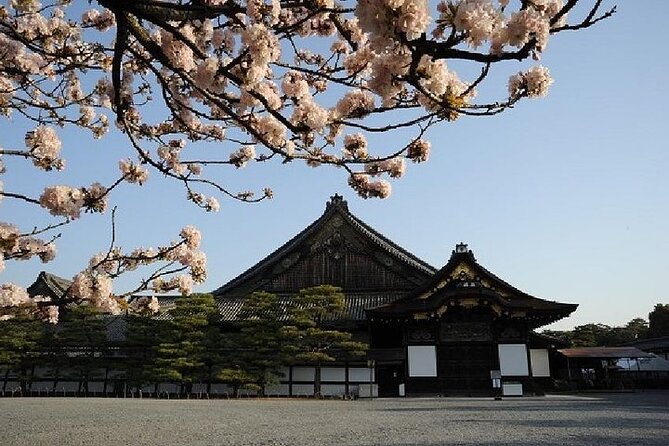
Nijo Castle is the kind of place where the outside makes you expect “old fortress”… and the interior surprises you with detail and craftsmanship. It was completed in 1626 and is tied to the Tokugawa Shogun—used as lodging, and also positioned like a guardrail near Kyoto Imperial Palace.
A practical tip: at Nijo Castle, you’ll be dealing with shoe rules. One of the clearest notes from past participants is that you should expect to remove shoes here. Bring socks you don’t mind getting slightly dusty, and wear shoes that are easy to slip on and off.
If Nijo Castle is closed on your departure (the tour notes specific closure windows), the itinerary swaps in Ryoan-ji Temple.
Kinkaku-ji Golden Pavilion (about 45 minutes, admission included)
Next comes Kinkaku-ji, Kyoto’s rock-star temple for good reason. The Golden Pavilion is a three-story wooden structure covered in thin layers of gold leaf, and it sits beside a pond that makes the reflection shots possible (when the angles cooperate and crowds aren’t blocking the view).
The best mindset for Kinkaku-ji is fast and flexible: take your main photos early in your time window, then slow down for a closer look once the first crush shifts.
Other Kyoto tours and experiences to compare
Kyoto Imperial Palace (about 40 minutes, admission-free)
Then you get a dose of ceremonial Kyoto. The Kyoto Imperial Palace was used as the Emperor’s residence until roughly the last 150 years. You may get a look at the Shishin-den, which is tied to important state ceremonies.
There’s an important “be ready” note here: if the Imperial Palace is closed (Mondays, or the following day if Monday is a holiday), the tour visits an alternative—Kitano Tenmangu Shrine. If the closure date falls on the 25th, the swap is Nishi Hongan-ji Temple.
This kind of flexibility matters. You’ll still get Kyoto’s cultural framework without losing the day.
Nara’s Todai-ji: the Great Buddha and a huge wooden world
After Kyoto, you head south to Nara, where the tour centers on a World Heritage religious complex.
Todai-ji Temple and the Great Buddha Hall (about 1 hour 10 minutes, admission included)
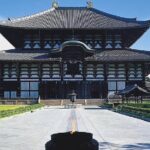
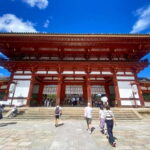
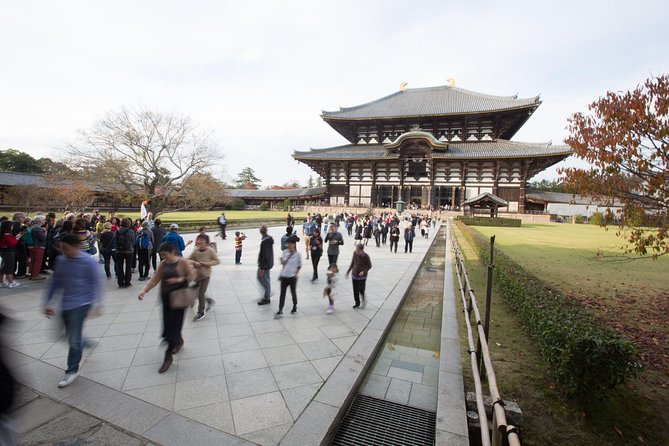
Todai-ji is the symbol of the Nara period, and it hits you physically as much as visually. It’s known as one of the world’s largest wooden structures, and it houses the massive bronze Great Buddha in the main hall (often called the Great Buddha Hall).
This is where the tour pays off for people who want the “why it mattered” angle. Kyoto can feel like court and refinement. Todai-ji puts the emphasis on early Buddhist state-level power—how architecture and religion worked together to signal authority.
You’ll usually want to pause in a couple of spots rather than rush through. Even with a time limit, Todai-ji rewards “stop, look up, then look around.”
Kasuga Grand Shrine lanterns and the deer park finish
Nara doesn’t end at the Buddha. The tour adds atmosphere and a classic ending you can’t fake.
Kasuga Grand Shrine (about 1 hour, admission included)
Kasuga Grand Shrine is famous for lanterns—more than 3,000 lining the interior. This makes it feel different from many temples you’ll see that focus on stone or open courtyards. Here, the lantern walls add a gentle glow effect even in daylight, and it turns the shrine visit into a mood more than a checklist.
The tour also mentions a special visit area at the Main Sanctuary. If it can’t be entered due to events or operations, the alternative stops are Kasuga Taisha Museum or Todaiji Museum. Either way, you’ll still get context, but the “lantern room” feeling may vary by date.
Nara Park and the deer (end of day)
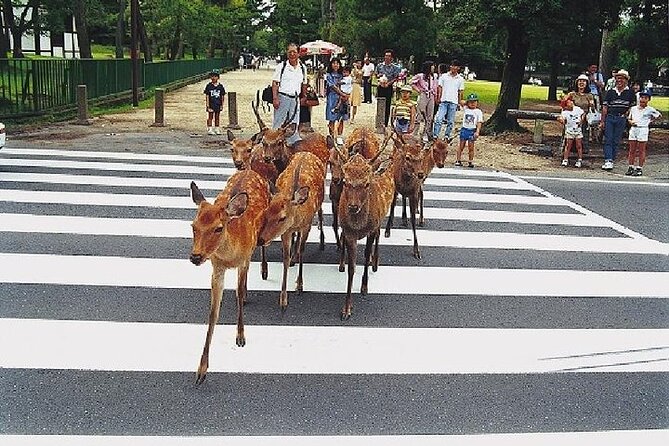
Then you finish near deer territory—part of Nara Park—where deer roam freely. This isn’t just cute background. It changes how you move and where you look, because the deer are bold.
A practical note from real-world feedback: some deer can be aggressive, especially if they think you have food. Keep your hands free, don’t feed unless you’re sure what the rules are, and treat deer like you would treat wildlife: calm movements, no sudden lunges, and give them space when they come close.
Price and value: is $194.85 worth it for your time?
At about $194.85 per person, this tour isn’t bargain-bin. But it’s also not “just a bus ride.”
Here’s what you’re paying for that you don’t always get on cheaper DIY days:
- Admission fees and transport costs are included, so you’re not playing the ticket-bingo game across five major stops.
- You get a national government licensed English guide, which helps you turn “big temple” into “big meaning.”
- The schedule is tightly built around time windows, which is real value if you’re only in Kyoto for a short stay.
Where the value calculation becomes personal is your travel style. If you enjoy moving fast and learning in short bursts, the price makes sense because you’re buying guidance and coordination. If you prefer slow wandering, this may feel expensive for how much “alone time” you lose.
There’s also the lunch option. If you choose with lunch, you’ll get a set meal (Western-style or Indian thali, depending on your selection). The tour notes that halal, gluten-free, and other meal requests aren’t available, and lunch isn’t flexible on the day. If food timing is a big deal for you, pick your lunch option carefully—or book no lunch and use the Kyoto Station area for freedom.
Pacing, walking, and how to avoid feeling rushed
This itinerary is packed. You’ll cover Kyoto and Nara highlights with stops scheduled to keep the group moving. Some people love this. Others wish for more time in Nara.
If you’re worried about pace, plan your expectations like this:
- You’ll get a guided “hit list” tour, not a slow cultural day.
- Photo opportunities are real, but you may not get the luxury of chasing the perfect angle for 20 minutes at every stop.
- The end of the day can include more walking than you expect. There’s feedback about a longer walk near the finish as people move from the last area back toward transport.
My advice: bring comfortable shoes, keep your daypack light, and treat each stop like a “main course.” If you want dessert (extra wandering), save it for your next morning or evening.
Your guide makes a difference: what to listen for on this tour
This route is only half history and half human translation. Past departures have had guides such as KC, Momo, Yuki, Yoshito, Keicy, Etsuko, and Tammy, all showing up in participant feedback for their humor and their ability to explain what you’re seeing in plain English.
What you’ll want to do during the tour:
- Ask one good question early. You’ll get better answers later because the guide can tailor explanations to your interests.
- Watch for the “why” links—how Nijo’s political role connects to Kyoto’s court power, and how Todai-ji’s scale connects to early Buddhist state influence.
- Use the guide for practical tips, like what to expect at each stop and how to handle time pressure without stressing.
Who should book this Kyoto and Nara day trip?
This is a strong fit if you:
- Have limited time in Kansai and want major sights in one day.
- Want an English-speaking guide to connect Kyoto politics and Nara Buddhism.
- Prefer included transport and admission details over DIY planning.
It’s also a decent choice if you’re traveling with a group where you need shared timing. The bus comfort and air-conditioning help if the weather turns on you.
This may be less ideal if you:
- Want to spend long, quiet stretches inside temples and gardens.
- Don’t like walking or don’t handle schedules well.
- Expect lots of free time at each destination.
Should you book this Kyoto and Nara day trip?
If you’re doing a first visit and want maximum “see the icons” value, I’d book it. This tour is built for efficient sequencing: Kyoto’s big UNESCO hits in the morning, Nara’s Great Buddha and lantern shrine as the emotional center, and deer park as the memorable landing.
Skip or reconsider if you’re the type who needs breathing room at each site. The schedule is tight, so you’ll enjoy it most if you can switch your brain from wandering to experiencing.
If you do book, show up on time, confirm where the start desk is (JTB Sunrise Tours desk at Avanti B1F near Kyoto Station), and wear shoes you can manage with quick shoe-off moments.
FAQ
How long is the Kyoto and Nara day trip?
The tour runs about 10 to 11 hours.
What major sights are included in the day?
The tour includes Nijo Castle, Kinkaku-ji, Kyoto Imperial Palace grounds, Kasuga Grand Shrine, and Todai-ji Temple, plus time around Nara Park.
Is transportation included?
Yes. Air-conditioned transport between sites is included.
Is lunch provided?
Lunch is included only if you select a With Lunch option. Western-style set menu or Indian thali set menu options are listed, and you can choose vegetarian options through reservation. Halal and gluten-free requests are not available.
What if Kyoto Imperial Palace is closed?
If the Imperial Palace is closed on your day, the tour will visit Kitano Tenmangu Shrine instead. If the closed day falls on the 25th, it visits Nishi Hongan-ji Temple.
What if Nijo Castle is closed?
If Nijo Castle is closed on the tour day, the tour visits Ryoan-ji Temple instead.
Where does the tour end?
It ends at Kyoto Station around 6:30pm. There’s no hotel drop-off service, so you’ll need to make your own way back.
More 1-Day Tours in Kyoto


More Tour Reviews in Kyoto




More Nara Day Trips

Just added: more Kyoto tours to browse








Nara Day Trips from Kyoto, compared.
 ★ 4.7Kyoto/Osaka: Nara, Fushimi Inari Taisha, Arashiyama Bus TourFrom $521,275 reviews
 ★ 4.4Osaka/Kyoto: Arashiyama, Nara & Fushimi Inari Shrine w/LunchFrom $61754 reviews
 ★ 5.0Full Day Guided Tour to Kyoto and Nara from Osaka by VanFrom $106420 reviews
 ★ 4.5Nara Afternoon Tour from Kyoto or OsakaFrom $102390 reviews
 ★ 4.6From Kyoto: Nara Guided Morning TourFrom $77335 reviews
 ★ 4.6Kyoto/Osaka: Kyoto and Nara Customized Private Guided TourFrom $477258 reviews
 ★ 5.0Nara Park, Osaka & Kobe from Kyoto Full Day tourFrom $90207 reviews
 ★ 4.9Nara & Traditional Matcha Experience Bus TourFrom $122185 reviews
Browse the lists this tour appears in