
Reviewed · GION & GEISHA DISTRICT TOURS
Kyoto Geisha Show Cultural Hour with an apprentice geisha, Maiko
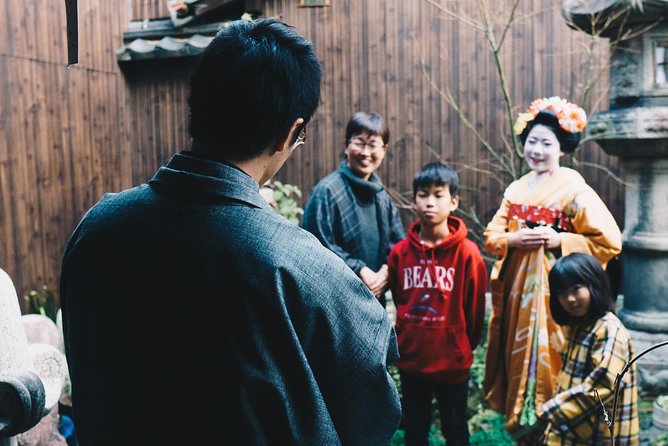
Want backstage access to Kyoto geisha culture? This 90-minute, small-group show gives you a reliable chance to see a maiko perform, plus a guided Q&A that helps you understand what training and daily life really look like. I love that the format focuses on conversation and translation, so you’re not just watching in silence. I also like that it’s designed to avoid the crush of big, generic shows. One thing to keep in mind: it’s weather-dependent and the experience is short—think 1 hour of performance with one or two songs, not a long evening.
Kyoto’s street sightings of geisha and maiko are rare now, so this is less about chasing a random glimpse and more about getting a guaranteed, staged moment of dance and tradition. You’ll have an English-speaking guide with you, and the whole session is built for people who don’t read Japanese (no awkward guesswork required).
The experience starts in Kyoto’s Honmachi area (5-chōme-182 Honmachi) and runs with a maximum group size of 14. If you want a clear, respectful look at how the geiko-world works—without feeling lost—this is a strong bet.
In This Review
- Key things I’d circle on your Kyoto plan
- Why a Kyoto maiko show is harder to find than it looks
- The 5-chōme-182 Honmachi meeting point and how the timing works
- What happens during the 1-hour performance and Q&A
- Meeting a maiko up close: questions you’ll actually want to ask
- Skip the crowds, keep the value: group size and real-world comfort
- Tea-house atmosphere and what to expect around it
- Practical tips: what to bring and how to plan your afternoon
- Who should book this Kyoto Geisha Show with Maiko
- Should you book this Kyoto Geisha Show with a Maiko?
- FAQ
- What is the duration of the Kyoto Geisha Show with an apprentice geisha?
- Where does the experience start?
- How big is the group?
- Does the tour include English translation?
- Is coffee or tea included?
- How many songs are performed?
- Is this a good option if I don’t know Japanese?
- What happens if the weather is bad?
- Is the ticket mobile?
- What’s the cancellation policy?
Key things I’d circle on your Kyoto plan
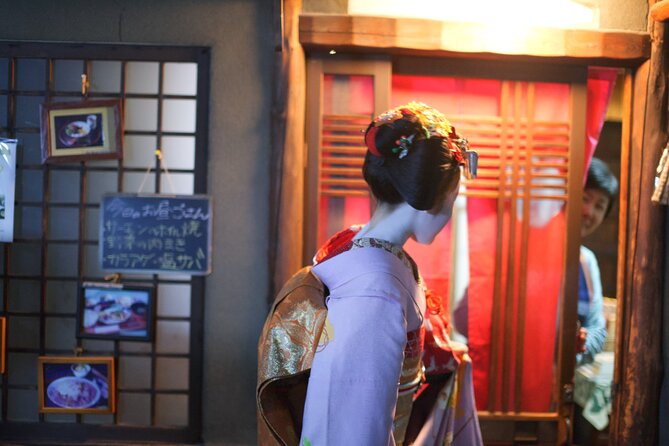
- Guaranteed on-stage performance by a maiko, even when street sightings are hard to catch
- English translation during the Q&A, so you can actually ask follow-up questions
- Maximum 14 people, which usually means more time to talk than crowded shows
- Guided context before and during the show, focused on training, customs, and how things work
- A short, focused 1.5-hour slot, easier to fit than an all-evening commitment
Why a Kyoto maiko show is harder to find than it looks
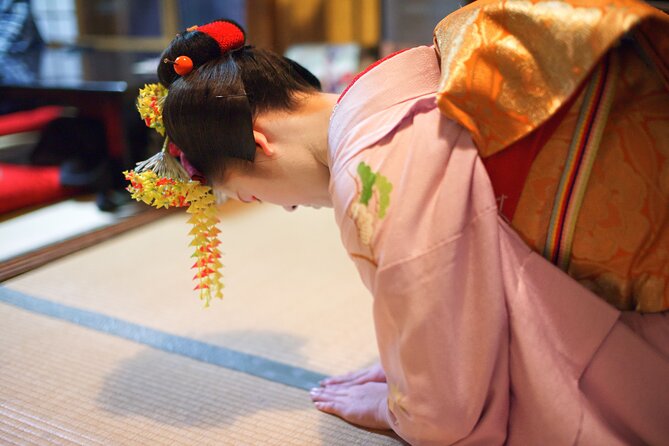
Kyoto is famous for geisha culture, but day-to-day reality is different from what movies make you expect. These days, you’re more likely to admire districts from the sidewalk than to catch a maiko in motion on the street.
That’s exactly why a scheduled performance matters. Instead of hoping for a chance encounter, you get a planned setting where the dance can happen on cue—and you get enough time for questions to make the experience feel personal, not just observational.
More evenings along the lantern-lit lanes of Gion


The 5-chōme-182 Honmachi meeting point and how the timing works
You meet at 5-chōme-182 Honmachi, and the whole experience is about 1 hour 30 minutes total. The performance itself takes about 1 hour, with the rest of the time typically used for meeting the performer, guided context, and a structured Q&A.
This kind of timing is smart if you’re touring Kyoto and want something culturally meaningful without sacrificing your whole afternoon. It also helps you avoid the common Kyoto problem: one “must-do” takes longer than you planned, then the rest of your route starts sliding.
The location is described as near public transportation, which matters a lot in Kyoto. When you’re juggling trains, buses, and walking, being close to transit is the difference between a smooth start and a rushed one.
What happens during the 1-hour performance and Q&A
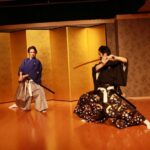
The core of the experience is simple: you’ll watch a geisha-style performance by an apprentice geisha, a maiko, then you’ll have time for questions and answers.
Performance-wise, it’s typically one or two songs. That’s not a complaint—it’s part of the value. You’re getting a high-signal, respectful introduction to the art without padding it into something that eats your evening.
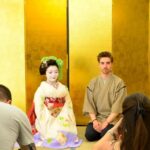
The Q&A is where this show becomes more than a nice dance. You’ll get guided help understanding what you’re seeing and hearing, and you’ll also get a better grasp of training and customs—things that are hard to guess at on your own. The English-speaking guide acts as a bridge, so you can focus on the meanings instead of decoding Japanese in real time.
Meeting a maiko up close: questions you’ll actually want to ask
A maiko’s role is built on training and discipline, and that’s what makes these conversations so interesting. When the Q&A is guided, you’re not left with vague prompts like What is your favorite color? Instead, you can ask about how training works, what daily routine looks like, and what the role requires socially and professionally.
This is also one of the best ways to get past stereotypes. You’ll learn the practical side of the craft—skills, habits, and customs—so the performance lands as something lived, not just performed.
From the way the experience is described and how it’s commonly experienced, the guide keeps the interaction respectful and comfortable. That’s important. You want the maiko to feel treated as a professional, not a novelty, and you want you to feel like your questions are welcome.
Skip the crowds, keep the value: group size and real-world comfort
This isn’t a massive venue show. It caps at 14 travelers, which usually means you can hear the guide better and ask questions without shouting.
There’s a practical upside here: smaller groups also help you keep your expectations realistic. When everyone fits into the same format—same timing, same translation support—the experience stays focused, and the performer isn’t dealing with chaos.
Now, about cost. At $105.42 per person, it’s not “cheap,” but it’s also not in the realm of random private-performer extravagance. What you’re paying for is a full package: the ticketed performance, the maiko meeting, and the English-speaking guide who handles translation and context. For Kyoto, where many cultural experiences are either highly scripted without explanation or hard to confirm, that bundled value matters.
If you’re traveling as a small group, also keep an eye out for group discounts mentioned for this experience. Even a modest discount can shift the math toward yes.
Other Kyoto tours and experiences to compare




Tea-house atmosphere and what to expect around it

Even though coffee or tea aren’t included, the overall experience still leans into a traditional-feeling setting. The show format includes a walk/transition that’s meant to feel like part of the culture, not just an instant performance and goodbye.
That tea-house vibe shows up in the pacing: meet first, learn and ask questions, then enjoy the dances. It’s structured enough that you don’t feel rushed, but short enough that you can still plan dinner after.
If you’re the type who likes to slow down and absorb details, this format fits your style. If you’re expecting a casual hangout with endless chatting, it may feel more formal and time-bound.
Practical tips: what to bring and how to plan your afternoon
Because the experience is about 90 minutes, you don’t need to build a whole day around it—but you do want to protect that time block.
A few practical ideas that fit the facts you’re given:
- Bring your mobile ticket (it’s listed as a feature) and keep it easy to access.
- Wear comfortable shoes. You’ll be in Kyoto, and even short walks add up.
- Since coffee and/or tea aren’t included, plan for a drink before or after if you like to schedule food around comfort.
Also, consider your expectations around what you’ll see. The show includes one or two songs, so the focus is quality and interpretation, not a long marathon.
Who should book this Kyoto Geisha Show with Maiko

I’d point you toward this experience if you want:
- A guaranteed chance to see a maiko perform in Kyoto (not a “maybe I’ll spot one” plan)
- An opportunity to ask questions with English translation
- A smaller group setting that feels respectful rather than chaotic
- A short, high-impact cultural activity you can fit between other Kyoto stops
It may not be for you if:
- You need a very long event window (this is about 1.5 hours total)
- You’re counting on included drinks (they aren’t)
- Your schedule can’t handle the fact that the experience requires good weather and can be rescheduled or refunded depending on conditions
If you’re a couple, this is also a great “shared memory” format. If you’re a family group, it can work well because the guidance is set up for most travelers and the session stays structured.
Should you book this Kyoto Geisha Show with a Maiko?
If your goal is to understand Kyoto’s geisha culture beyond photos, I think this is one of the better bets in town. You’re getting the key ingredients together: a live maiko performance, an English-speaking guide, and a Q&A that focuses on training and daily life—not just a scripted lecture.
Book it if you value conversation and you want a smaller, more controlled experience. Skip it only if you’re trying to squeeze in too much and can’t risk weather timing, or if you’d be happier with a longer, less structured evening.
FAQ
What is the duration of the Kyoto Geisha Show with an apprentice geisha?
The experience lasts about 1 hour 30 minutes total, including the 1-hour geisha show and Q&A.
Where does the experience start?
The meeting point is listed as 5-chōme-182 Honmachi, Kyoto.
How big is the group?
The experience has a maximum of 14 travelers.
Does the tour include English translation?
Yes. An English-speaking guide is included, and the guide translates for you during the session.
Is coffee or tea included?
No. Coffee and/or tea are not included.
How many songs are performed?
The show includes a performance with one or two songs.
Is this a good option if I don’t know Japanese?
Yes. The format is set up to have no language barriers because your guide translates.
What happens if the weather is bad?
This experience requires good weather. If it’s canceled due to poor weather, you’ll be offered a different date or a full refund.
Is the ticket mobile?
Yes. Mobile ticket is listed as a feature.
What’s the cancellation policy?
It’s described as non-refundable and cannot be changed for any reason.
More Show in Kyoto
More Tour Reviews in Kyoto




Still in Gion? Keep Going



Just added: more Kyoto tours to browse








Gion & Geisha District Tours, compared.
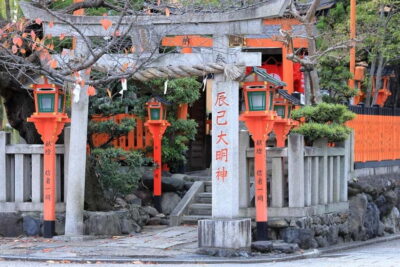 ★ 4.7Kyoto Geisha Walking Tour: Gion District & Hidden GemsFrom $253,273 reviews
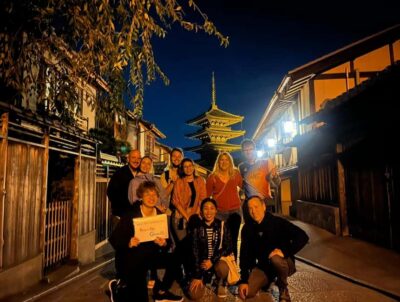 ★ 4.9Gion Magical Night Walking Tour with Geisha TriviaFrom $242,393 reviews
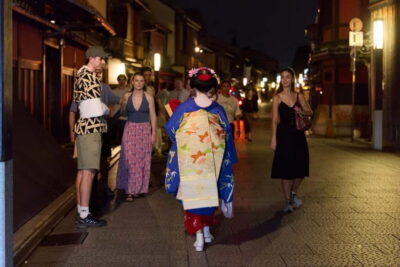 ★ 4.7Gion Geisha District Walking Tour – Stories of GeishaFrom $202,187 reviews
 ★ 4.9Best of Kyoto: Gion, Geisha, Pagodas & CobblestonesFrom $242,058 reviews
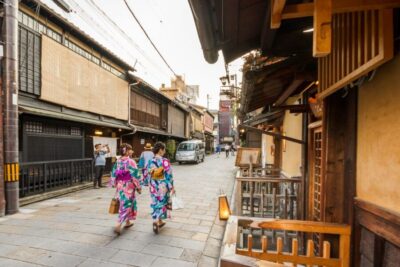 ★ 4.5Night Walk in Gion: Kyoto’s Geisha DistrictFrom $212,003 reviews
 ★ 5.0Kyoto Night Foodie Tour in Gion (9+ dishes + 6 Sake tastings)From $1631,762 reviews
 ★ 5.0Kyoto Gion Geisha District Walking Tour – The Stories of GeishaFrom $251,441 reviews
 ★ 5.0Kyoto Gion: 2-Hour Geisha Culture & History Walking TourFrom $231,186 reviews
Browse the lists this tour appears in