
Reviewed · KYOTO SAMURAI & NINJA EXPERIENCES
Kyoto : Family-Friendly Sword Lesson at Samurai Ninja Museum
Kyoto turns fantasy into muscle memory. In just 2 hours, you dress like a samurai and learn basic sword movements, then snap photos in front of themed backdrops. It also includes a hands-on ninja weapons moment, so this isn’t only a costume-and-camera stop.
I especially like that the class is built for real participation, not just watching. You’ll get instructor-led guidance in English, and reviews specifically name teachers like Raito and Maestro Ken for teaching kata sequences, with other instructors such as Nobu and Jukia also mentioned in feedback.
One consideration: this is not a long training program. If your goal is serious martial-arts skill, the lesson is short, and children under 3 can’t enter the samurai venue.
In This Review
- Key things you’ll notice right away
- A 2-Hour Samurai Glow-Up in Kyoto
- Getting Dressed: Hakama, Helmet, and Armor (Yes, It’s Part of the Skill)
- The Katana Lesson: From Proper Swing to Kata Sequences
- The Photo Studio Moment: How to Turn Poses Into Memorable Shots
- Ninja Weapons Trial: Shuriken Target Time That Keeps Kids Engaged
- The Samurai Ninja Museum Visit: What It Adds to the Lesson
- Who This Fits Best in Your Family Plan
- Price and Value: Is $66 Worth It?
- Logistics in Kyoto: Timing It Without Stress
- The Bottom Line: Should You Book This Samurai Sword Lesson?
- FAQ
- How long is the Kyoto family-friendly sword lesson?
- How much does it cost?
- Is the instructor English-speaking?
- What’s included in the experience?
- Are children under 3 allowed?
- Is it accessible for wheelchairs and strollers?
- Does the price include transportation?
- FAQ
- What is the group size like?
- Is there free cancellation?
- Can I reserve now and pay later?
Key things you’ll notice right away
- Small group feel (limited to 10) means you’re more likely to get hands-on correction than in a big crowd
- Dress-up kit included with hakama, helmet, and armor so you look the part before you move
- Katana demo then practice with proper swinging guidance first, then your turn
- Kata practice taught by the instructor (one review mentions learning 2 kata sequences)
- Ninja shuriken target trial adds variety beyond swordwork
- Skip-the-line access so you spend less time stuck at check-in
A 2-Hour Samurai Glow-Up in Kyoto
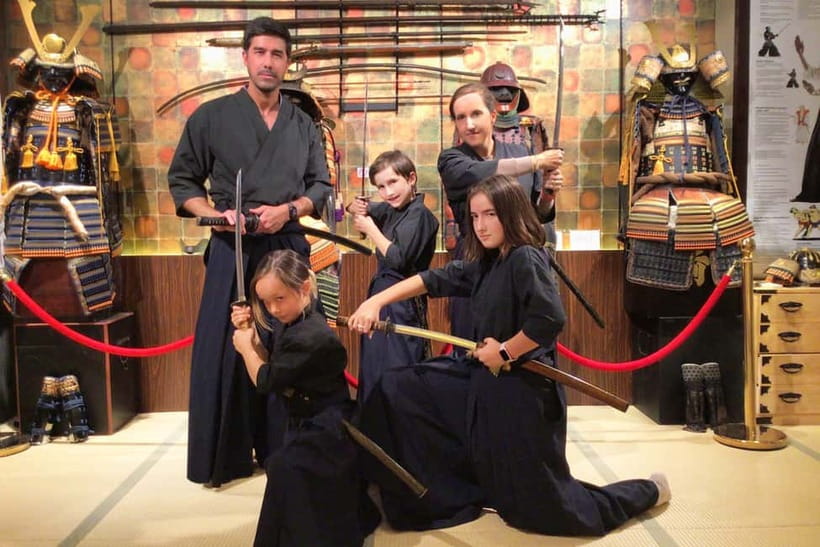
This experience is simple in the best way: you show up, get geared up, learn the basics, and leave with photos that actually look like you stepped out of a period drama.
The time box matters. With only 2 hours, you’re not asked to endure a long lecture. You’ll move through the full arc: history context, sword basics, practice, and themed photo time, all paced for families and first-timers.
And yes, it’s playful. The outfit portion is a big reason people book in the first place, but it’s not just for show. When you’re wearing hakama and armor, you naturally slow down, pay attention to posture, and that makes the sword lesson sink in faster.
Pick up the blade again with these Kyoto sessions
Getting Dressed: Hakama, Helmet, and Armor (Yes, It’s Part of the Skill)
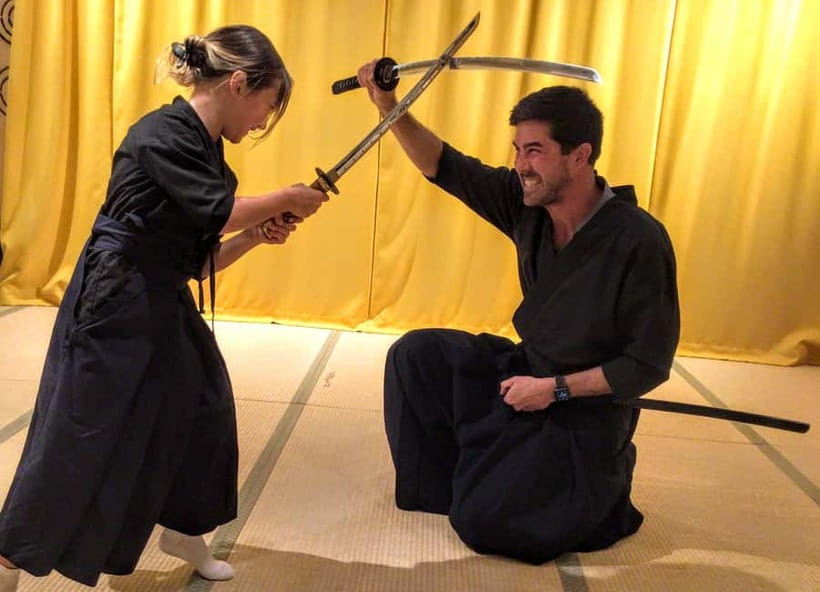
In a lot of Kyoto activities, you change clothes somewhere on the side and the “real” experience starts later. Here, the transformation is a core step.
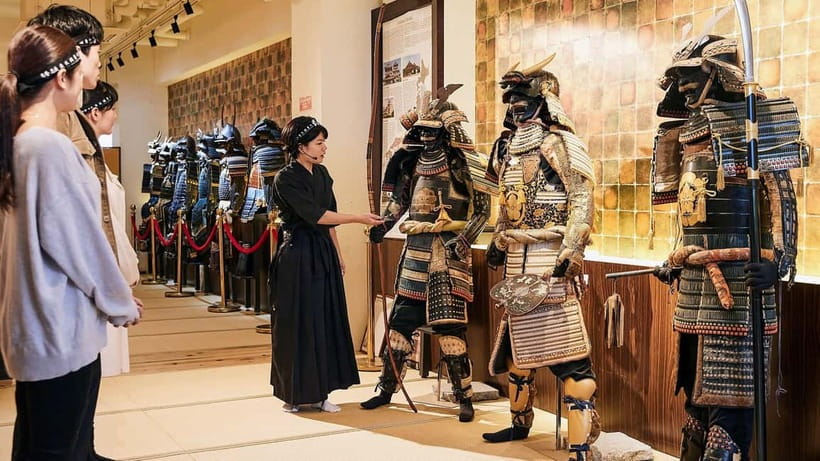
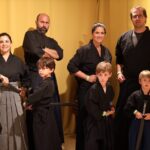
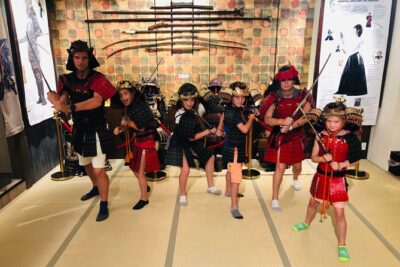
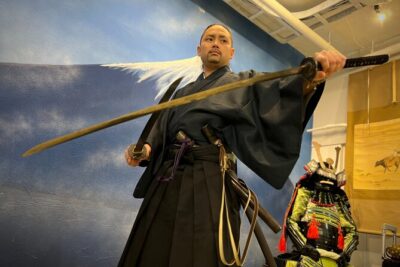
You’ll use a full kit that includes hakam a as part of the traditional look, plus a samurai helmet and armor. It instantly reframes how you hold your body. You stand differently. You move with more intent. Even if you’re not a sword person, the costuming helps you understand why samurai gear wasn’t just for drama.
There’s also a useful side effect: the photos aren’t an afterthought. The themed background areas are set up so you’re not scrambling for poses while wearing everything awkwardly for the first time.
Practical note: because kids under 3 can’t enter the samurai venue, you’ll want to plan around that if you’re traveling with very young children. Stroller access is listed, but the samurai area has its own age limits.
The Katana Lesson: From Proper Swing to Kata Sequences
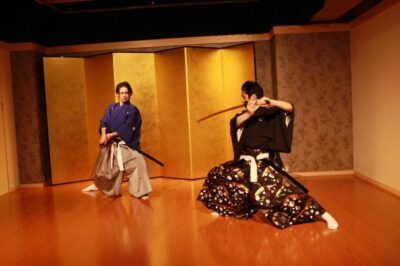
The sword portion follows a clear teaching rhythm. First, you watch a demonstration on how to properly swing the sword. Then you try it yourself with instructor guidance.
That order is smart. If you start swinging immediately, you’ll form bad habits right away. Here, the demo gives you a baseline for what “correct” looks like, even if your technique is still wobbly.
You’ll also learn some samurai history, not in a dry way. The point is to give context for what you’re doing with the sword—why stances and movement mattered—so the lesson feels connected to the culture instead of feeling like a novelty.
One of the best details from feedback: Maestro Ken is credited with teaching 2 kata sequences (kata means preset movement patterns). Even if you only learn a couple, kata training is a great way to turn practice into something structured. You’re not just waving a sword—you’re learning a repeatable sequence you can remember.
Don’t expect Olympic-level fencing skills. Do expect to leave knowing the difference between sloppy flailing and controlled movement, and that’s a win in a short 2-hour format.
The Photo Studio Moment: How to Turn Poses Into Memorable Shots
The themed photo opportunities aren’t separate from the experience—they’re woven into it. You’ll pose with swords in front of a studio-like area or samurai-themed backgrounds.
This is where the “family-friendly” angle really shines. Kids get the thrill of looking like a samurai. Adults get a break from traditional sightseeing pressure. Everyone gets a keepsake that looks more fun than a standard temple selfie.
Here’s how to make the photos work for you:
- Go a bit slower with your posing. With the armor and helmet, small adjustments make a big difference.
- If there’s a choice of angles, pick one where you can keep your shoulders relaxed. Sword poses look better when your posture isn’t tense.
- Treat the instructor as your styling coach for a minute. Since they’re already correcting movement, ask for a quick suggestion on how to hold your stance for photos.
Also, the experience is described as skipping the ticket line. That kind of small time-saver matters here, because the photo moment will feel less rushed when you aren’t squeezed by a long check-in process.
Ninja Weapons Trial: Shuriken Target Time That Keeps Kids Engaged
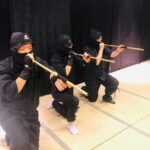
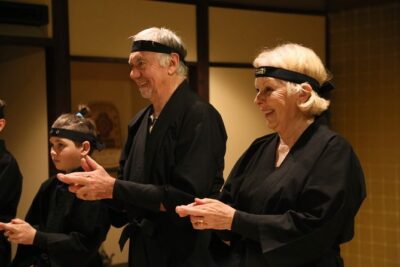
After swordwork, you get a ninja weapons trial. The most specific detail from feedback is shuriken target practice—aiming ninja throwing stars at a target.
This is a clever shift. Sword lessons can be exciting, but they’re also physically focused. Shuriken practice flips the energy into a quick skill challenge that’s easier for kids (and many adults) to understand right away.
It also adds variety without adding complexity. You’re not expected to master a full throwing technique history lesson. You’re given a chance to try, learn the basic idea, and experience the fun of “I did the thing.”
In the comments, people highlight that this is the most entertaining part for many families. That checks out for a simple reason: targets create instant feedback. You get the satisfaction of improvement in minutes.
If you’re traveling with different ages, this is also the practical part. Even if someone isn’t thrilled about sword posing, the target trial gives them a new entry point into the experience.
Other Kyoto tours and experiences to compare


The Samurai Ninja Museum Visit: What It Adds to the Lesson
This happens at the Samurai Ninja Museum, and the experience can include a guided tour element around the collections.
The value of that added context is that it turns your costume-and-carryout practice into something you can place in the larger story. You can point at items and relate them to what you just learned: posture, equipment, and the idea that both samurai and ninja worlds had rules—even if the popular imagination paints them as pure fantasy.
From feedback, the museum guidance is described as interesting, with the photo and ninja trial still stealing the show. That’s a great balance. You get the learning component, but you don’t lose the fun.
One thing to consider: because the main lesson is only 2 hours, the museum portion will likely be focused rather than a deep slow walk through every display. If you want a full museum day, you might plan a longer revisit on your own later.
Who This Fits Best in Your Family Plan
This experience is set up for “most travelers” to participate, and it’s built as a small group. That matters in Kyoto because many activities either run too fast or feel too rigid for families.
It’s also designed with accessibility in mind: wheelchair access and stroller access are listed, and it’s near public transportation. So you can think of it as a practical add-on even if you don’t want to spend your whole day crossing Kyoto by taxi.
A few matching points for different types of visitors:
- Families with kids who like hands-on activities and costumes
- Adults who want a memorable cultural activity without needing prior knowledge
- Groups who want photos that look good and feel earned, not staged from far away
One firm limit: children under 3 can’t enter the samurai venue. That doesn’t mean the whole activity is unsafe for young kids, but it does mean you’ll need a plan if you’re traveling with a toddler.
Price and Value: Is $66 Worth It?
At $66 per person for a 2-hour experience, the question isn’t whether you can find cheaper entertainment in Kyoto. You can. The real question is whether you’re getting a bundle.
Here, you are. You’re paying for an English instructor, guided sword practice, and included gear: hakama, helmet, and armor. You also get themed photo opportunities and a ninja weapons trial. That’s not just a lesson; it’s a complete “you participate” experience.
The small group size helps justify the cost. Limited to 10 participants, you’ll generally get more personal attention than in a large group demo. That attention is what makes safety feel real and learning feel possible, even for beginners.
Also, skipping the ticket line is a quiet value-add. In a short activity window, shaving off waiting time keeps the experience from feeling like a schedule squeeze.
If your travel style is mostly museums with quiet reading time, this might feel too “hands-on show.” If you want a lively cultural activity with a strong photo payoff and real movement practice, it’s a strong match.
Logistics in Kyoto: Timing It Without Stress
Because the experience is 2 hours, you can fit it into many Kyoto days without losing half a day.
It’s near public transportation, which helps if you’re already planning to ride buses or trains between neighborhoods. That convenience is important in Kyoto, where distances add up faster than you expect.
One more practical point: transportation to and from activities is not included. That means you’ll want to factor in your own route time. The good news is that being near transit makes it easier to self-manage.
If you’re doing Kyoto with kids, consider scheduling this earlier in the day while everyone is still fresh. It’s not a marathon, but it does involve changing into outfits, learning movement patterns, and focusing during instruction.
The Bottom Line: Should You Book This Samurai Sword Lesson?
I’d book this if you want a Kyoto activity that mixes culture with action and gives you a real keepsake.
This works especially well when:
- you want hands-on instruction in English
- you value a small group setting
- you’re traveling with kids who will enjoy both swordwork and ninja-style target fun
- you want included gear and photo opportunities instead of paying for them separately
I’d think twice if:
- you’re expecting a deep, multi-session martial arts course
- you’re traveling with a child under 3 who needs samurai venue access
- you’d rather spend your limited time on quiet temple and museum exploring instead of costume-and-practice
If you want a high-energy “I can’t believe that was me” memory in just 2 hours, this one is built for that.
FAQ
How long is the Kyoto family-friendly sword lesson?
The experience lasts 2 hours.
How much does it cost?
It costs $66 per person.
Is the instructor English-speaking?
Yes, the instructor provides instruction in English.
What’s included in the experience?
Included items and activities are the samurai sword lesson, use of hakama, use of a samurai helmet and armor, themed photo opportunities, and a ninja weapons trial.
Are children under 3 allowed?
No. Children under 3 years cannot enter the samurai venue.
Is it accessible for wheelchairs and strollers?
Wheelchair accessible and stroller accessible are listed.
Does the price include transportation?
No. Transportation to and from the activities is not included.
FAQ
What is the group size like?
It’s described as a small group limited to 10 participants, with a maximum of 22 travelers for the activity.
Is there free cancellation?
Yes. You can cancel up to 24 hours in advance for a full refund.
Can I reserve now and pay later?
Yes. Reserve now & pay later is offered to keep your travel plans flexible.
More Museums in Kyoto
More Tour Reviews in Kyoto






More Samurai and Ninja Sessions
Just added: more Kyoto tours to browse








Kyoto Samurai & Ninja Experiences, compared.
 ★ 5.0Kyoto Samurai ExperienceFrom $1191,294 reviews
 ★ 4.9Kendo and Samurai Experience with Uniform and GearFrom $103815 reviews
 ★ 4.9Samurai Sword Class by Experts in Traditional ArtsFrom $64657 reviews
 ★ 4.5Skip the lines Basic Ticket at SAMURAI NINJA MUSEUM KYOTOFrom $28632 reviews
 ★ 5.0Ninja 1-hour Hands-on Lesson by Japanese master in Kyoto -EntryFrom $80489 reviews
 ★ 4.8Ninja Weapon Forging ExperienceFrom $148478 reviews
 ★ 4.5Samurai Kenbu Traditional Sword Dancing ShowFrom $32426 reviews
 ★ 5.0Samurai Training with Modern day Musashi in KyotoFrom $132256 reviews
Browse the lists this tour appears in