
Reviewed · ARASHIYAMA & BAMBOO GROVE TOURS
Half Day Kyoto Sagano Bamboo Grove & Arashiyama Walking Tour
Sagano bamboo turns mornings into gold. This half-day walk in Arashiyama/Sagano pairs Kyoto’s most famous bamboo scenery with temple gardens you actually understand, then finishes with Togetsukyo Bridge views plus a yakatabune river moment.
I especially love the guide-led flow—seeing how people like Sachiko, Donna, and Michiharu turn art, Zen, and legend into plain, useful stories. I also like the pacing: about 3 km of walking in roughly 4 hours, with time set aside for temple gardens and photos.
One drawback to plan around: the trip uses public transport with non-reserved seats, and crowds (especially in peak seasons or rain) can make the “quiet grove” vibe feel more busy than peaceful.
In This Review
- Key highlights worth your time
- Why Sagano feels calmer than central Kyoto
- Getting oriented: Kyoto Station to Saga-Arashiyama by local train
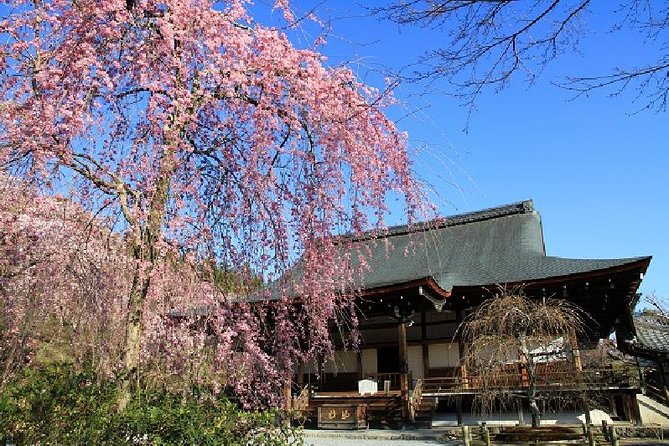
- Jojakko-ji Temple: a hillside temple with Heike legend
- Sagano Bamboo Grove walk: the famous 2-mile stretch on foot
- Tenryu-ji Temple: Kyoto’s best Zen-style garden stop
- Togetsukyo Bridge and the yakatabune ride: views that reset your legs
- Group size, pace, and what to bring for comfort
- Price and value: what $79.26 covers (and why it can be worth it)
- Seasonal notes: July–September itinerary swaps you should know
- Who should book this tour (and who should skip it)
- Should you book this Sagano Bamboo & Arashiyama tour?
- FAQ
- Is the admission fee included for the temples?
- How long is the tour, and how much walking is involved?
- How does the group travel from Kyoto Station to Arashiyama?
- Do you still visit Jojakko-ji Temple in summer?
- Where does the tour start and where does it end?
- Can I cancel for a full refund?
Key highlights worth your time
- Tenryu-ji Temple garden with real Zen context (World Heritage status and a garden designed to last)
- Jojakko-ji Temple on a wooded hillside with Heike legend and standout statuary and pagoda
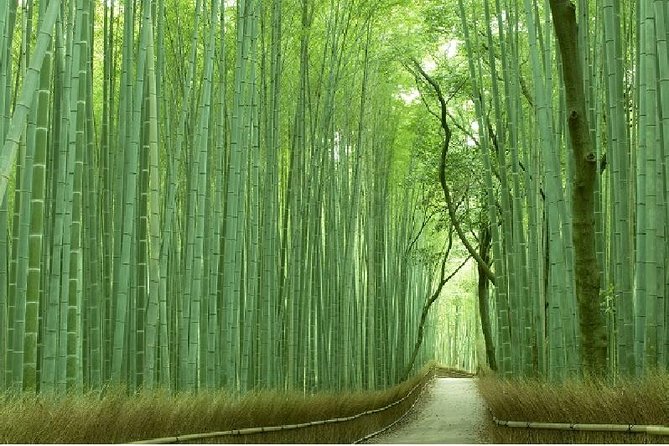
- Sagano Bamboo Grove on foot for about 2 miles through bamboo lined with mountain views
- Togetsukyo Bridge + yakatabune for Hozu River scenery without feeling like you only stand for photos
- Small-group feel capped at 25 people so you can hear guidance while you move
- Seasonal switch in July–September when Jojakko-ji is replaced by Okochi Sanso Villa Garden
Why Sagano feels calmer than central Kyoto
Arashiyama and Sagano sit just outside the core Kyoto grid. That small distance matters. You trade some of the city noise for wooded hills, temple grounds, and river views that feel slower even when there are crowds.
The big hook is bamboo—but not the way people sometimes expect. The bamboo grove is stunning, yes, but the best part is how the walk connects nature to temples. You move from grove to gardens to a secluded hillside site, so the area feels like one continuous place instead of three separate stops.
Deeper into Arashiyama, past the bamboo and the Hozu river

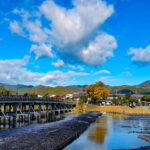
Getting oriented: Kyoto Station to Saga-Arashiyama by local train
The tour starts at the JTB Sunrise Tours desk near Kyoto Station. From there, you travel by public transport with non-reserved seats to Saga-Arashiyama Station, which is part of what keeps the itinerary tight and affordable.
Practical tip: non-reserved seats mean you should expect a possible stand. If you get motion-sick or you’re traveling with lots of luggage, keep your day light and your plans flexible. A small “buffer mindset” helps—like accepting that the local train will be busy, because it is.
Once you’re in the Arashiyama/Sagano area, everything runs on foot. The total walking distance is about 3 km. It’s not a marathon, but it’s also not a totally flat stroll, and you’ll want shoes that can handle uneven paths and temple steps.
Jojakko-ji Temple: a hillside temple with Heike legend
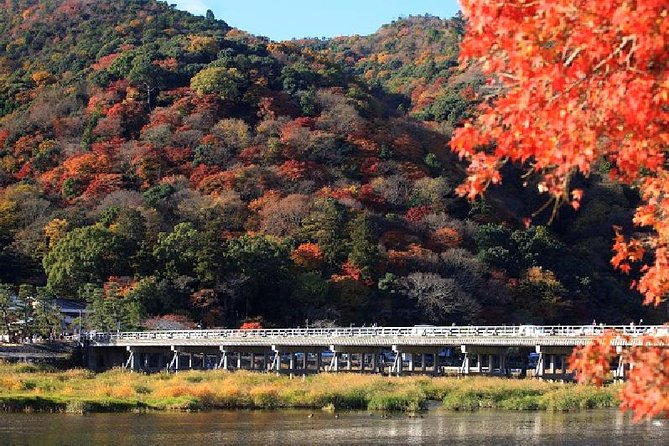
Jojakko-ji Temple is the first major stop, and it sets the tone. You’re going up into the wooded hills, and the views open to Sagano and Kyoto in a way that feels more “Kyoto outskirts” than “tourist district.”
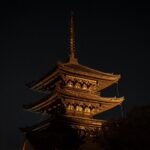
This temple is tied to the Tale of the Heike, and it’s associated with Empress Dowager Kenrei-mon-in—part history, part storytelling tradition that’s still tied to the site. The tour also points out key visual anchors like Jizo statues and a hidden pagoda tucked among maple trees.
What I like about this stop: it’s scenic, but it’s not just a viewpoint. Jojakko-ji helps you see how religion, landscape, and narrative all share the same space here.
What to watch: you only have about 30 minutes. If you’re the type who loves lingering for 45–60 minutes per temple garden, you’ll want to save extra time for a second visit after the tour ends.
Sagano Bamboo Grove walk: the famous 2-mile stretch on foot
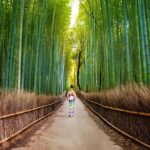
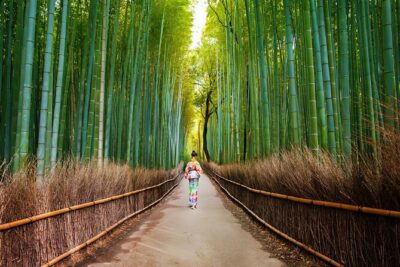
Then comes the Sagano bamboo grove, where you walk through a dense, green corridor for about 2 miles (3 km mentioned for the overall movement through the day). The bamboo is the star, but the mountain peaks and valleys you glimpse through the greenery are what keep it from feeling repetitive.
Here’s a practical way to enjoy it:
- Slow down for photos, but don’t stop dead in the flow. Bamboo paths get crowded fast.
- Look up as well as ahead. You’ll notice the light changes when you turn slightly, and it makes your pictures less “flat.”
The grove is popular, so yes, it can feel busy during peak times. Still, doing it on a guided route is helpful. A guide can point out what to notice so you spend your brainpower on the place instead of just navigating foot traffic.
Tenryu-ji Temple: Kyoto’s best Zen-style garden stop
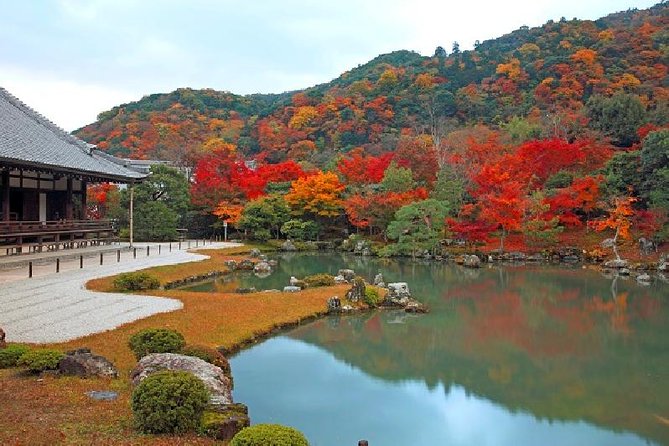
Tenryu-ji Temple is the next anchor, and it’s a big one. It’s a World Heritage site, and the temple was established in 1339 by Takauji of the Ashikaga Shogunate as part of the Rinzai Zen tradition.
The real payoff is the garden. This is where you see how Japanese temple design aims for a balanced view—how the terrain, plant choices, and sight lines are meant to work together. The garden design is described as surviving in its original layout, which is a big deal because it means you’re not just seeing a “nice landscaped area.” You’re seeing a designed space meant to be read slowly.
Your time here is about 30 minutes, and that’s both a plus and a limitation. It’s a plus because it keeps the whole day moving and prevents you from burning your energy on one stop. It’s a limitation because Tenryu-ji rewards calm, unhurried observation.
So here’s the strategy I’d use if you want the best experience: pick one or two garden angles to focus on. Don’t try to cover everything. Spend your time where the guide’s explanations make the most sense.
Other Kyoto tours and experiences to compare
Togetsukyo Bridge and the yakatabune ride: views that reset your legs
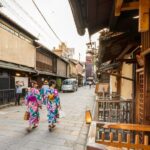
The tour finishes at Togetsukyo Bridge—famous for seasonal beauty, including cherry blossoms and autumn colors. The bridge is about 250 meters long, and the current structure is a reproduction of the earlier bridge, reconstructed in 1934.
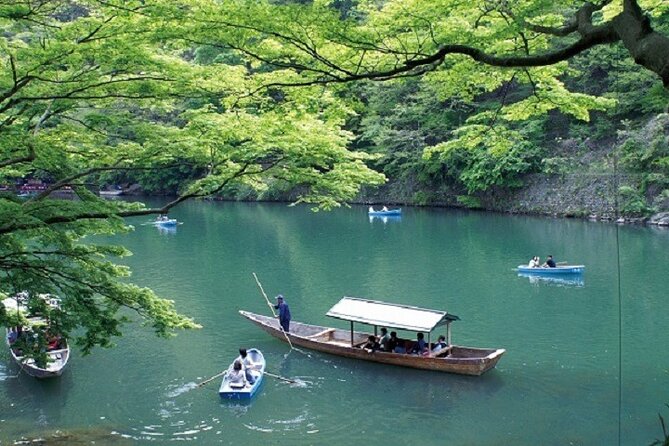
You also get one of the smarter “half-day” tricks: you see the river scenery from aboard a yakatabune. This is where the day stops being only walking and waiting for photos. You get to sit, breathe, and watch the Hozu River and the forested hills from a distance.
This matters because Arashiyama can be physically tiring even when the walk distance is moderate. Review feedback also praises the boat segment as a chance to rest and take in the river views. You feel the difference—your legs calm down, and you come away with more than temple-and-photos fatigue.
If it’s raining: bring a compact umbrella or a light rain layer. You’ll be out near the river and bridge area, and wet weather is one of the times you’ll want to move efficiently through crowds.
Group size, pace, and what to bring for comfort
This is a small-group walking tour with a maximum of 25 people. That doesn’t automatically guarantee quiet, but it does help with coordination—especially when you’re using public transit and moving between temple entrances and viewpoints.
Physical notes:
- Total walking is around 3 km
- A moderate fitness level is recommended
- Temple areas can involve stairs and uneven footing
What you should pack:
- Comfortable shoes with grip
- Weather-appropriate layers (Kyoto mornings can feel cool early, then warm up)
- A small bag for water, since you’ll be on the move most of the morning
- Sun protection if it’s a clear day, because bamboo paths and bridges can leave you little shade
Also, pay attention to the tour time of year. In summer (July and September, with a specific earlier-start variation), the itinerary shifts to avoid peak heat. You’ll want to be ready for a different rhythm, not just a different location.
Price and value: what $79.26 covers (and why it can be worth it)
At $79.26 per person for about 4 hours, the value depends on how you travel. If you like self-guided days, you might wonder why pay for a guide at all. But the math gets better when you factor in what’s included.
Your ticket includes:
- A licensed English guide interpreter
- Entrance fees
- Transportation costs tied to the tour
That matters in Kyoto because temple admissions add up, and moving efficiently across neighborhoods takes time and mental energy. A guide helps you use your limited half-day time well, instead of spending it figuring out what’s worth your attention inside the gates.
Another value angle: the tour includes a planned rhythm—Jojakko-ji, bamboo grove walking, Tenryu-ji, and then Togetsukyo Bridge with the yakatabune scenery. If you were doing it solo, you could design a similar route, but you’d likely lose time and sometimes miss the “what to look for” part.
Where self-guiding still wins: if you want to linger longer in the bamboo grove, or you want to build an extra stop schedule tightly around your own interests. This tour ends back at Kyoto Station on its own schedule, so it’s best when you accept that structure.
Seasonal notes: July–September itinerary swaps you should know
In July–September (and especially noted for the July and September timing), Jojakko-ji Temple is not included, and the itinerary change swaps in Okochi Sanso Villa Garden instead. The tour also starts earlier in summer to avoid the hottest hours.
So if you’re planning a trip in those months, don’t assume the first temple stop will be exactly the same. Use the seasonal swap as a feature, not a surprise—because it means you’re getting something different while still keeping the “temple + scenery” shape of the day.
Who should book this tour (and who should skip it)
Book this tour if you want:
- A guided Arashiyama/Sagano day that’s short, structured, and not exhausting
- Temple garden time that comes with context, not just entry stamps
- Bamboo grove scenery plus a river-side finale
- A day that works well even when your Kyoto time is limited
Skip this tour if:
- You hate crowds and prefer empty, slow wandering (this area can get busy)
- You want deep exploration at each temple without time pressure
- You strongly need reserved seating on transit and don’t want the non-reserved train risk
Should you book this Sagano Bamboo & Arashiyama tour?
If you’re the kind of traveler who likes seeing the highlights while still understanding what you’re seeing, this is a strong half-day choice. The included entrance fees, the licensed English guidance, and the planned finishing sequence at Togetsukyo Bridge make it feel like a complete experience, not just a ticket to a pretty area.
My advice: book it if you want a smooth start-to-finish morning with a guide who helps you notice what matters. Then, if you still have energy afterward, use the fact that you end back at Kyoto Station to build a longer personal day elsewhere.
FAQ
Is the admission fee included for the temples?
Yes. Entrance fees for the stops on the tour are included, along with the licensed English guide interpreter fee and transportation costs tied to the experience.
How long is the tour, and how much walking is involved?
The tour runs about 4 hours. You should expect moderate walking with a total distance of approximately 3 km, including temple-area steps.
How does the group travel from Kyoto Station to Arashiyama?
You ride public transport from Kyoto Station to Saga-Arashiyama Station using non-reserved seats. Seating is not guaranteed and you may need to stand during busy hours.
Do you still visit Jojakko-ji Temple in summer?
For July and September, Jojakko-ji Temple is not included. The itinerary changes, and Okochi Sanso Villa Garden replaces the Jojakko-ji visit.
Where does the tour start and where does it end?
The tour starts at the JTB Sunrise Tours desk Kyoto near Kyoto Station. It ends back at Kyoto Station, and you continue to your next plans independently.
Can I cancel for a full refund?
Yes. Free cancellation is available up to 24 hours in advance for a full refund. If you cancel less than 24 hours before the start time, the amount paid is not refunded.
More Tours in Kyoto



More Tour Reviews in Kyoto


More of Arashiyama and Sagano
Just added: more Kyoto tours to browse








Arashiyama & Bamboo Grove Tours, compared.
 ★ 4.8Fushimi Inari, Kinkakuji, Bamboo Grove 1 Day Bus TourFrom $1224,316 reviews
 ★ 4.1Osaka/Kyoto:Kinkakuji,Arashiyama,FushimiInariShrine,NaraParkFrom $661,596 reviews
 ★ 4.7Kyoto/Osaka: Nara, Fushimi Inari Taisha, Arashiyama Bus TourFrom $521,275 reviews
 ★ 5.0Kyoto Arashiyama Walking Tour: Bamboo, Monkeys, Gardens & SecretsFrom $651,216 reviews
 ★ 4.8Arashiyama Bamboo, Temple, Monkeys, or Secret Sake BreweryFrom $87886 reviews
 ★ 5.0Arashiyama Bamboo Forest, Monkeys, Matcha & Temple TourFrom $53759 reviews
 ★ 4.4Osaka/Kyoto: Arashiyama, Nara & Fushimi Inari Shrine w/LunchFrom $61754 reviews
 ★ 5.0Nijo, Kinkaku-ji, Arashiyama, Kiyomizu & Fushimi InariFrom $51699 reviews
Browse the lists this tour appears in