
Reviewed · KIYOMIZU-DERA & HIGASHIYAMA TOURS
Kyoto Sushi & Takoyaki Cooking Class near Gion and Kiyomizu-dera!
Kyoto tastes better when you make it. This hands-on Kyoto sushi and takoyaki cooking class happens in a classic machiya in Higashiyama, led by local instructor HANA, with stories that explain the food’s role in daily life. You’ll learn two signature dishes in one 2-hour session, not just watch from the sidelines.
My favorite part is how the class turns cooking into a full meal: you eat what you make, with a drink (sake, beer, or juice) and a sweet finish of matcha mochi ice cream. One thing to plan for: there’s no hotel pickup, so you’ll need to get yourself to the meeting spot near public transportation (at Hanakiya Inn in Higashiyama).
In This Review
- Key highlights worth showing up for
- A machiya kitchen near Gion and Kiyomizu-dera
- Rolled sushi: the technique you’ll actually use again
- Takoyaki at the stove: turning street-food into a real skill
- Your meal: what you cook, plus sake, beer, or juice
- Matcha mochi ice cream: the sweet ending that fits Kyoto
- What you take home: recipes and confidence in your kitchen
- Price and value: why $96.19 can make sense
- How to fit it into your Kyoto day without stress
- Who this class is best for
- Should you book Kyoto Sushi & Takoyaki near Gion and Kiyomizu-dera?
- FAQ
- How long is the cooking class?
- What dishes will I learn to make?
- What’s included in the price?
- Is hotel pickup included?
- Where does the tour start?
- Are children allowed?
Key highlights worth showing up for
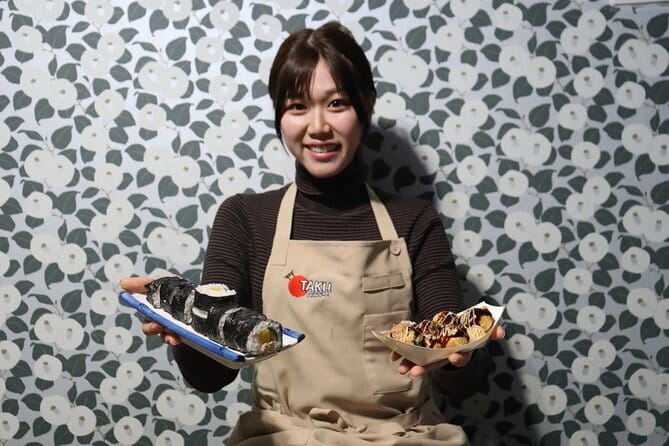
- Rolled sushi and takoyaki in one class so you get both hands-on skills and variety
- Instructor-led cultural context from HANA, tied to everyday Japanese food life
- All ingredients and tools included which keeps the class stress-free
- Small group size (max 6) so you can ask questions and move at a good pace
- Drink + dessert included with local sake and creamy matcha mochi ice cream
- Take-home recipes so you can recreate the dishes later
A machiya kitchen near Gion and Kiyomizu-dera
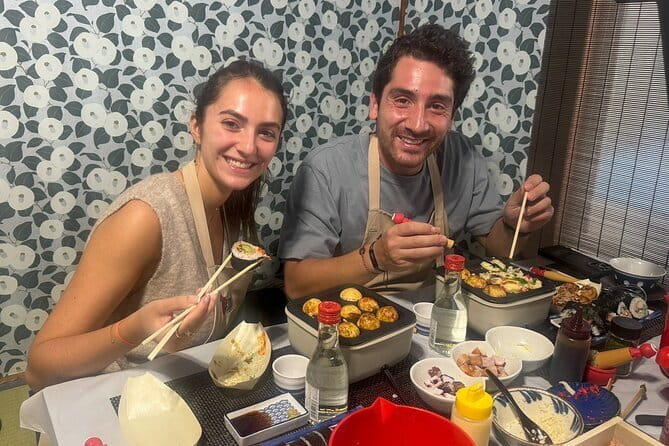
This class is built around setting: a traditional Kyoto machiya in the Higashiyama area. It’s the kind of place that instantly changes how you experience food, because you’re cooking in a space that feels rooted in the city rather than a staged kitchen. Even if you only know Kyoto for temples and streets, you’ll see another side here: food as craft, not just sightseeing food stops.
The instructor, HANA, is part of the appeal. The way the lesson is described, she doesn’t only give directions—she ties techniques to Japanese food culture and daily habits, so the dishes feel more meaningful as you make them. That matters because sushi and takoyaki can look simple from a distance, but they have specific textures and rhythms that you only get by practicing.
The group stays small (up to 6), which is a big deal in a cooking setting. You’re not waiting for a screen demo while your hands sit idle—you can work, check in, and keep your momentum.
More evenings along the lantern-lit lanes of Gion


Rolled sushi: the technique you’ll actually use again
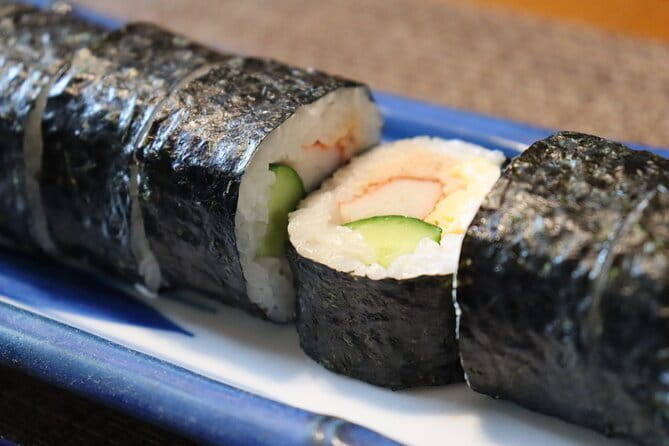
Rolled sushi is the “welcome” dish here, and it’s a smart choice because once you understand the basic balance—rice, filling, rolling pressure—you can adapt it later. In a 2-hour class, you won’t become a sushi master, but you will come away with a repeatable method for making a proper roll at home.
What makes this part valuable is the hands-on pace. You’re learning how to form the roll and manage the texture so it holds together when you cut and eat it. Sushi rice can be a sticking point for home cooks—too dry, too sticky, too loose—and this kind of class format helps you connect the feel with the steps.
Another plus: you aren’t just making something to snack on. You’ll sit down afterward and taste your own rolled sushi as part of the meal. That turns the lesson into feedback, which is the fastest way to understand what you did right and what you’d fine-tune next time.
Takoyaki at the stove: turning street-food into a real skill
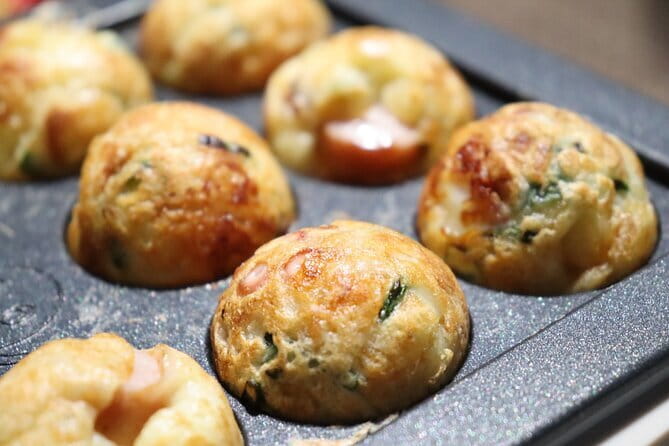
Takoyaki is where the class gets playful. These little octopus dumplings are famous for their shape and crisp edges, and you can’t fake that structure with guesswork. In this class, you make takoyaki yourself, which means you get trained on how the batter cooks and how you work with the fillings while the dumplings set.
Takoyaki also teaches patience in a practical way. The timing has to be close, and you’ll learn how to adjust your attention as they cook. That’s useful far beyond takoyaki, because it builds your confidence in how Japanese home-style cooking often works: watch the texture, then act.
And because you’re making it in Kyoto with everything provided, you don’t have to hunt down the exact tools or ingredients to get started. If you’ve ever tried takoyaki at home and ended up with flat, sad balls, this is the kind of class that helps you understand what to target visually and by feel.
Your meal: what you cook, plus sake, beer, or juice
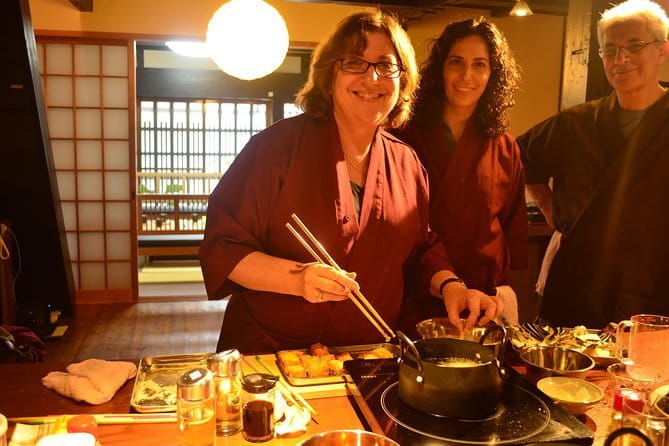
After both dishes are made, you eat what you prepared—rolled sushi and takoyaki—so the class works as a real lunch, not a short demo meal. The food is described as plentiful, and in practice that matters because you’ll actually feel satisfied, not just lightly fed between attractions.
You also get a drink with the meal: local sake, beer, or juice. If you’re the type who likes to taste alcohol but doesn’t want it to take over the experience, this is a good middle ground. The class structure keeps it simple: you’re cooking, eating, and sipping as part of the meal flow.
A practical note for hungry people: if you can’t finish everything, the experience includes the possibility of taking some food away. That’s helpful when you’re combining this with a day of temple stops, shopping streets, or a long walk from Gion.
Matcha mochi ice cream: the sweet ending that fits Kyoto
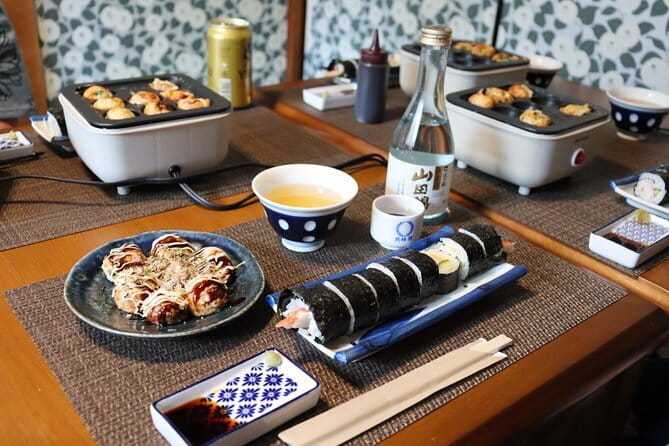
The dessert is matcha mochi ice cream, which is a tidy and very Kyoto-style finale. Matcha is one of those flavors that can go from earthy to bitter if it’s not balanced, but in a dessert format like this, it usually lands as creamy and comforting rather than sharp.
What I like about this ending is that it closes the loop on the “culture” angle. You’re learning about Japanese food traditions, then tasting a dessert that reflects how matcha shows up in everyday sweets—something you’ll see across Kyoto if you know where to look.
If you’re a matcha fan, you’ll likely get extra enjoyment here because you’re not just buying dessert. You’ve just worked with Japanese ingredients and technique, so the sweetness reads as part of the same food world.
Keep climbing the Higashiyama slopes toward Kiyomizu-dera

What you take home: recipes and confidence in your kitchen
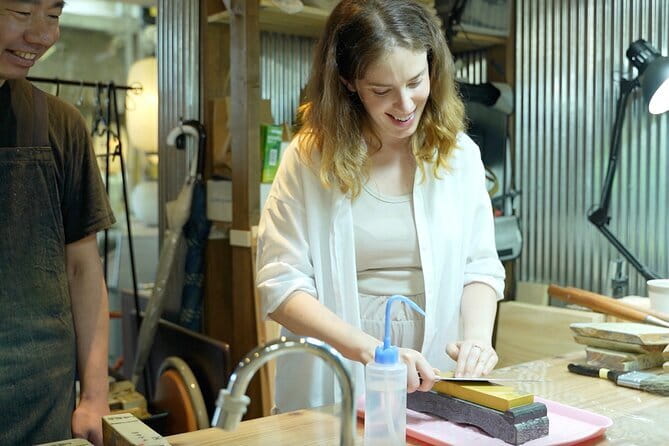
You don’t leave empty-handed. The experience includes take-home recipes and tips, and that’s where the real value shows up if you cook at home.
A class like this can be fun, but the best ones also reduce the “what do I do next time?” gap. By collecting a written method, you can try again without guessing which step mattered most—rice texture for the roll, timing for the dumplings, or how the filling is treated.
This is also helpful if you travel with friends or family. You can turn the class into an at-home group activity later, using the recipes as your guide. That’s how a one-off experience turns into a lasting memory you can recreate.
Price and value: why $96.19 can make sense
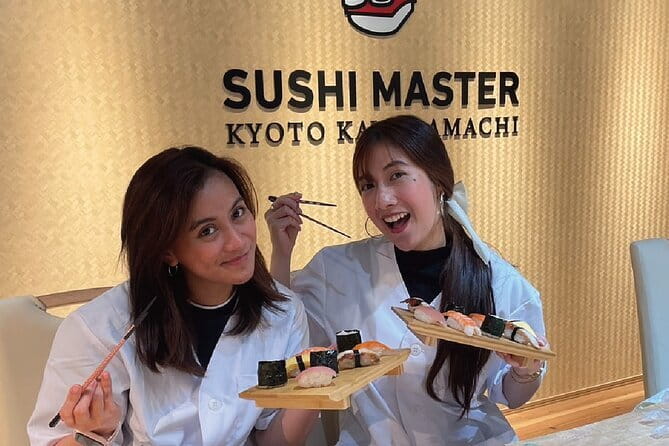
Let’s talk numbers honestly. At $96.19 per person for about 2 hours, you might wonder if it’s “worth it” compared to eating street food on your own. Here’s the value logic: this price covers an English-speaking local instructor, all ingredients and cooking tools, lunch (rolled sushi and takoyaki), dessert (matcha mochi ice cream), and a drink (sake, beer, or juice).
So you’re not paying just for a meal. You’re paying for instruction plus everything you’d otherwise have to buy or figure out—tools, ingredients, and the technique. If you’ve ever tried to recreate sushi rolls or takoyaki at home from random online instructions, you know how fast costs and frustration add up.
The small group size (max 6) also protects your time. When you’re actively cooking, you get more hands-on minutes per person than in bigger classes where the instructor has to circulate constantly.
How to fit it into your Kyoto day without stress
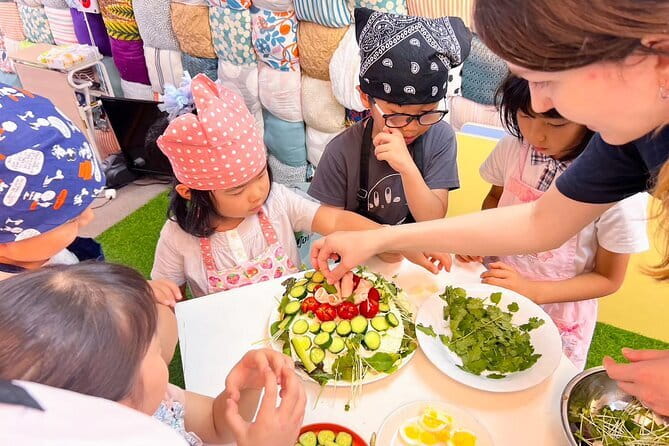
This class is near public transportation, but it’s also in the Higashiyama area—meaning you’ll likely do best with good footwear and a plan for short walks. Since there’s no hotel pickup, treat it like a destination stop, not something you can tack on casually.
If you’re already planning time around Gion and Kiyomizu-dera, think of this as your “food break that becomes a highlight.” You’ll spend part of your day indoors in a traditional machiya, then head back out with your sushi and takoyaki knowledge for the rest of Kyoto.
Timing-wise, because the session is about 2 hours and starts at a specific meeting point (Hanakiya Inn, 6-chōme-583-101 Gojōbashihigashi, Higashiyama Ward), you’ll want to avoid stacking too many long transfers right before it. Build in a buffer so you can arrive calm, not rushed.
Who this class is best for
This experience is ideal if you want Kyoto flavor with real technique. It suits:
- Food lovers who enjoy learning how things are made, not just eating them
- People who want a break from temple lines and crowded streets
- Small groups or couples who prefer a more personal class pace
- Anyone planning to cook again later and wants practical recipes
It’s also a good match for families with older kids, but there’s a clear limit: children under 6 aren’t permitted. So if you’re traveling with very young children, you’ll need a different activity.
Should you book Kyoto Sushi & Takoyaki near Gion and Kiyomizu-dera?
If you like hands-on cooking, this is an easy yes. The combination of two iconic dishes, a small group, and the full meal setup (lunch, drink, dessert) makes the pricing feel grounded. You also get the cultural explanation from HANA, so the class doesn’t stop at food-making—it connects to Japanese eating habits.
Skip it only if you strongly prefer self-guided experiences and don’t want to follow a set lesson structure. Also, if you dislike walking to meeting points, the lack of hotel pickup is a real consideration.
FAQ
How long is the cooking class?
The class runs for about 2 hours.
What dishes will I learn to make?
You’ll make rolled sushi and takoyaki.
What’s included in the price?
The class includes an English-speaking local instructor, all ingredients and cooking tools, lunch (rolled sushi and takoyaki), dessert (matcha mochi ice-cream), and a drink (sake, beer, or juice).
Is hotel pickup included?
No, hotel pickup is not included.
Where does the tour start?
It starts at Hanakiya Inn, 6-chōme-583-101 Gojōbashihigashi, Higashiyama Ward, Kyoto, 605-0846, Japan.
Are children allowed?
Children under age 6 are not permitted to participate.
More Kyoto Cooking Classes
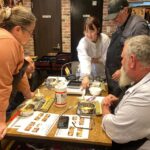
More Along the Higashiyama Slopes
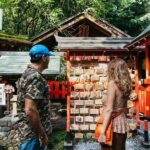
Still in Gion? Keep Going

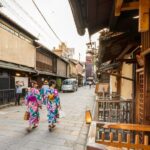
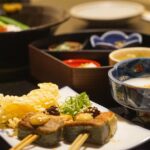
Just added: more Kyoto tours to browse








Kiyomizu-dera & Higashiyama Tours, compared.
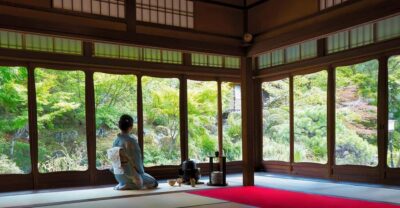 ★ 4.9Tea Ceremony in a Traditional Tea House in KiyomizuFrom $493,519 reviews
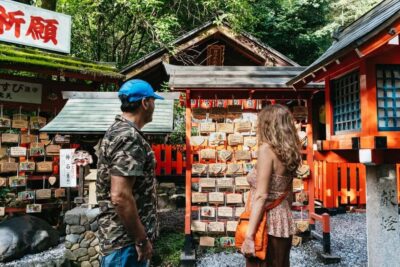 ★ 4.7Nijo Castle, Kiyomizu & Fushimi Inari Guided TourFrom $54700 reviews
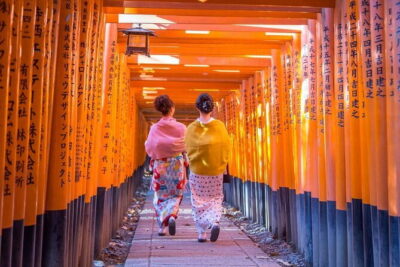 ★ 5.0Nijo, Kinkaku-ji, Arashiyama, Kiyomizu & Fushimi InariFrom $51699 reviews
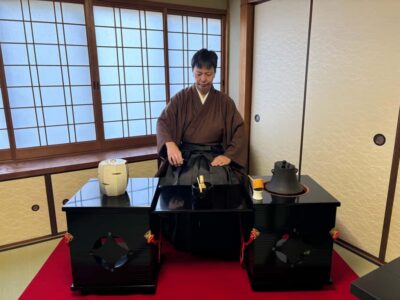 ★ 4.8Kyoto Ninenzaka: Tea Ceremony in Old Townhouse with ChairsFrom $21215 reviews
 ★ 5.0Private Rickshaw Tour of Gion and Higashiyama AreaFrom $51144 reviews
 ★ 5.0Kyoto Tea Ceremony & Kiyomizu-dera Temple Walking TourFrom $109115 reviews
 ★ 5.0Kyoto Kiyomizu Tea Ceremony with Scenic Garden ViewsFrom $50101 reviews
 ★ 4.7Kimono/Yukata Rental 5 Minute from Kiyomizu-deraFrom $1989 reviews
Browse the lists this tour appears in