
Reviewed · KYOTO TEMPLE & SHRINE TOURS
Kyoto Philosophy Walk with Philosopher (Private/6.5 hour)
Kyoto can be stunning, but this tour is smarter than sightseeing. With a nationally licensed guide and trained philosophy researcher (Hiroki), you walk Kyoto while talking about Zen Buddhism and wider Japanese thought. The day is built around questions you can actually discuss, not just facts you quickly forget.
I love the way each stop comes with a clear philosophy theme (Pure Land, Shintoism, Zen simplicity), so temple time feels purposeful. I also like the personal pace: it’s private, and Hiroki uses conversation and dialogue to connect the ideas to what you’re seeing.
One consideration: this is a walking day. You’ll cover about one mile and there’s a two-story building with only stairs, so plan comfortable shoes and pace yourself if you’re sensitive to stairs.
In This Review
- Quick hits before you go
- What makes this tour a Kyoto experience, not just a walk
- Morning start: Pure Land ideas at Higashi Hongan-ji and Shintoism at Yoshida Shrine
- Higashi Hongan-ji Temple (about 30 minutes, admission free)
- Yoshida Shrine (about 30 minutes, admission free)
- Ginkaku-ji and the Zen lens: simple is the best
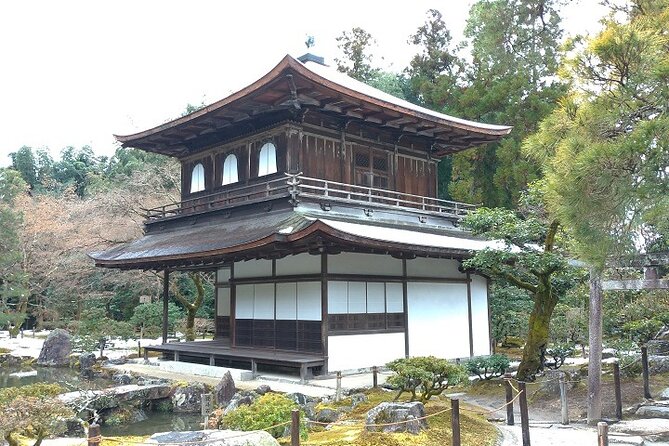
- Ginkakuji Temple (about 45 minutes, temple admission not included)
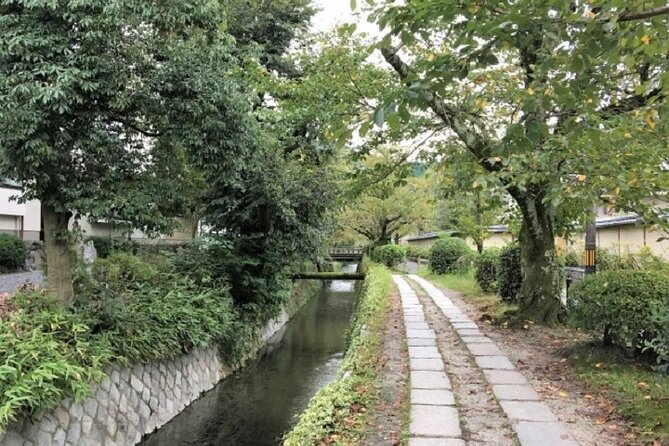
- The Philosopher’s Walk (about 1 hour): Japanese thinkers in conversation with Western philosophy
- Nanzenji Suirokaku aqueduct: thinking about protection and an ideal setting
- Nanzenji Suirokaku (about 15 minutes, admission free)
- Sanmon Gate and Konchi-in: three steps to liberation and an authentic Zen garden
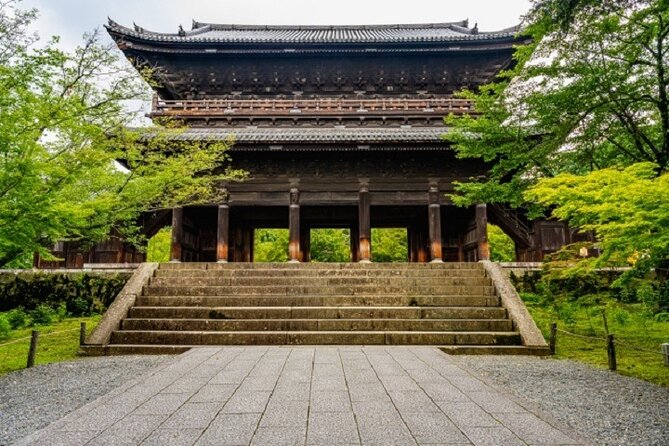
- Sanmon Gate (about 15 minutes, temple admission not included)
- Konchi-in (about 30 minutes, temple admission not included)
- Value and price: what your $230 buys (and what it doesn’t)
- How the day runs: timing, lunch, and pacing that doesn’t feel rushed
- Who this Kyoto philosophy walk is best for
- What you’ll remember after the last gate
- Should you book Kyoto Philosophy Walk with Philosopher (Private/6.5 hour)?
- FAQ
- How long is the Kyoto Philosophy Walk with Philosopher?
- Is this tour private?
- What is included in the price?
- What temple and transit costs should I plan for?
- Do I need to pay for all temples?
- How much walking is involved?
- Is it wheelchair-friendly or mostly stairs?
- Where do we meet, and what time does it start?
- Can I cancel for free if my plans change?
Quick hits before you go
- Philosophy-led temple stops: every location is tied to a specific concept, like Pure Land and the three steps for liberation.
- A guide who can explain the ideas in plain language: Hiroki leads with both religious context and modern philosophical thinking.
- Philosopher’s Path with a question, not a script: you’ll contrast Japanese thinkers with Western philosophy along the way.
- Time for backstreet walking: you get space to move beyond the main tourist flow around key points.
- Temple fees and transit are extra: bring cash for temple admissions (¥1,600 per person) and budget for transit (¥750 per person).
What makes this tour a Kyoto experience, not just a walk
Kyoto has temples everywhere. The trick is getting beyond the postcard version. This private walk is designed to make you see what you’re standing in front of, using philosophy as the translation layer.
Hiroki’s background matters here. He’s not only a licensed guide; he’s also trained as a philosophy researcher. That means your questions come with context—what the idea meant, how Japanese traditions shape the way people ask those questions, and why it still shows up in daily life.
You’re also not stuck in a lecture. The format is more like guided conversation while you move: you’ll talk through concepts as the scenery changes from temple gates to gardens and temple pathways. If you like thinking on your feet (or you just enjoy good questions), this is a strong match.
More temples and shrines to slow down in across Kyoto
Morning start: Pure Land ideas at Higashi Hongan-ji and Shintoism at Yoshida Shrine
You begin at the Bus Ticket Centre / Information Centre at 902 Higashishiokōjichō, Shimogyo Ward at 9:00am, and you’ll end back at the same meeting point. From there, you head into an early stretch where the tour themes start broad and human.
Higashi Hongan-ji Temple (about 30 minutes, admission free)
The focus here is the question: what is the Pure Land in Japanese Buddhism? That topic can sound abstract until you’re standing in a major temple space where Pure Land ideas historically mattered to how people understood practice, hope, and spiritual direction.
Even if you know nothing about Buddhism, this stop is set up to be approachable. You’re given a concept to carry with you, so your attention sharpens: you notice what feels connected to belief and devotion, not just architecture.
Yoshida Shrine (about 30 minutes, admission free)
Next comes Shintoism, tackled at Yoshida Shrine, one of the oldest shrines in Kyoto. The tour highlights how Shinto can connect to a kind of pantheism-style worldview—how people can experience the sacred in the living world and in nature’s presence.
This stop is useful if you’re trying to understand Japan as more than one religion. Shinto and Buddhism interact in real life in Kyoto, so walking from Higashi Hongan-ji to Yoshida Shrine helps you see the contrast without turning it into a debate.
Practical note: both of these are relatively quick stops, which keeps the morning lively and sets up momentum for the longer “thinking walk” later.
Ginkaku-ji and the Zen lens: simple is the best
After the shrine-and-temple contrast, the tour shifts into Zen territory.
Other Kyoto tours and experiences to compare

Ginkakuji Temple (about 45 minutes, temple admission not included)
Here the theme is Zen simplicity—the idea that simple can be best. Ginkakuji is a Zen temple and a UNESCO-listed cultural heritage site, so it’s also a place where the “Zen look” is part of the education: you learn to notice restraint, proportion, and quiet detail rather than treating it like a museum.
This is a good stop for travelers who feel overwhelmed by Kyoto’s volume. Instead of cramming more sites, the tour slows down how you interpret what you see.
Drawback to consider: the Ginkakuji admission isn’t included in the tour price, and cash is required for temple admissions. So budget time for payment and keep some yen ready.
The Philosopher’s Walk (about 1 hour): Japanese thinkers in conversation with Western philosophy
This is the part many people come for—the Philosopher’s Path—but here it’s not just a scenic stroll.
The guiding question is how Japanese philosophers tackled the Western tradition of philosophy. That changes the feel of the walk. Rather than treating the path as a linear highlight, you move along it while thinking about how ideas travel, transform, and get localized.
You’ll also get a sense of how Zen and Buddhist concepts influenced how Japanese thinkers formed arguments and approaches to life. Even if you’re not a philosophy person, you’ll likely enjoy this segment because it has a human tone: questions, comparisons, and conversation.
Tip for comfort: the overall tour includes walking on the path for about one mile, and there’s also time allotted for backstreet walking around the spots. Comfortable shoes matter more than fashion here.
Nanzenji Suirokaku aqueduct: thinking about protection and an ideal setting
After the “big ideas” portion of the path, the tour briefly shifts style while staying thematic.
Nanzenji Suirokaku (about 15 minutes, admission free)
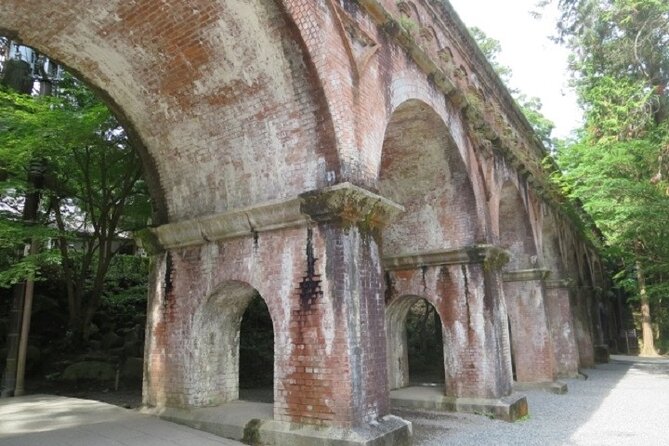
You’ll see the Suirokaku Aqueduct, described as Western-style brick architecture located within a traditional Buddhist temple setting. That mix—Western design elements inside an older religious landscape—makes a strong point in philosophy terms: environments reflect values, and protection matters.
The theme used in the tour is the ideal of landscape protection, which is especially relevant in Kyoto. It’s not only about beauty; it’s also about preserving the setting where meaning lives.
This stop is short by design. You get an idea checkpoint, then you move on before your attention fades.
Sanmon Gate and Konchi-in: three steps to liberation and an authentic Zen garden
The final stretch brings you back to Buddhism’s internal logic and visual practice—what “awakening” can mean in steps, and how a Zen garden can communicate that without words.
Sanmon Gate (about 15 minutes, temple admission not included)
At the Sanmon Gate, the tour frames enlightenment through the idea of three steps for liberation. The gate is called a gate representing those three steps, and you’ll see it as a physical symbol: architecture used as instruction.
This quick stop works well near the end of a walking tour because it’s focused. You get meaning fast, and you’re not stuck trying to interpret everything on your own.
Konchi-in (about 30 minutes, temple admission not included)
Konchi-in is where the tour turns contemplative. The theme is what an authentic Zen garden looks like, and it’s also described as famous mainly among history-geek Japanese—so it’s a calmer, more niche experience than the biggest headline temples.
This stop is a great “slow down” moment. If you enjoy quietly observing shapes, stones, and the way a garden frames thought, you’ll probably leave with a different kind of memory of Kyoto than you’d get from a fast photo loop.
One more practical note: the tour includes time in a two-story building with only stairs. If stairs are a problem for you, mention it early to Hiroki so he can help you manage pace and breaks.
Value and price: what your $230 buys (and what it doesn’t)
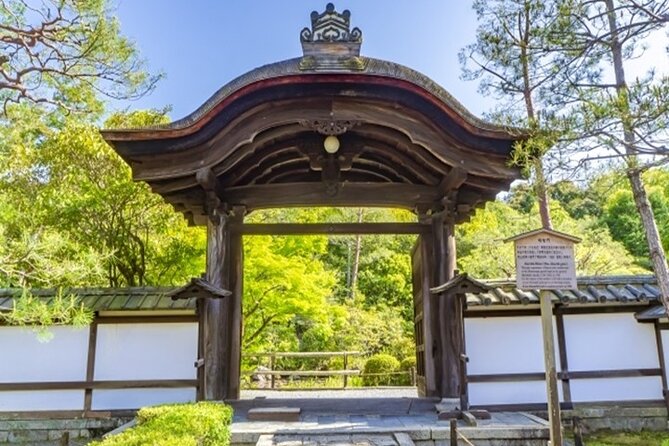
The listed price is $230 per person for a private 6.5-hour experience. That’s not cheap for Kyoto, but it’s not random either. The value comes from a very specific kind of guide: Hiroki isn’t just showing you where to go—he’s guiding how to think while you’re there.
Here’s the part you should plan for:
- Not included: lunch, temple admissions (cash ¥1,600 per person), and public transportation (¥750 per person).
- Included: guide fee, and you should receive a mobile ticket.
So your real budget is usually: the tour price plus temple cash plus transit, plus whatever you choose to eat. If you’re comparing to typical guided tours that are mostly “see the highlights,” this one is different. You’re paying for a specialized interpretive approach and the time to ask questions with a trained researcher-guide.
If you can come with a friend or family member, look into the stated group discounts feature. Even without knowing exact mechanics, it’s usually the best way to spread the cost of private guiding.
How the day runs: timing, lunch, and pacing that doesn’t feel rushed
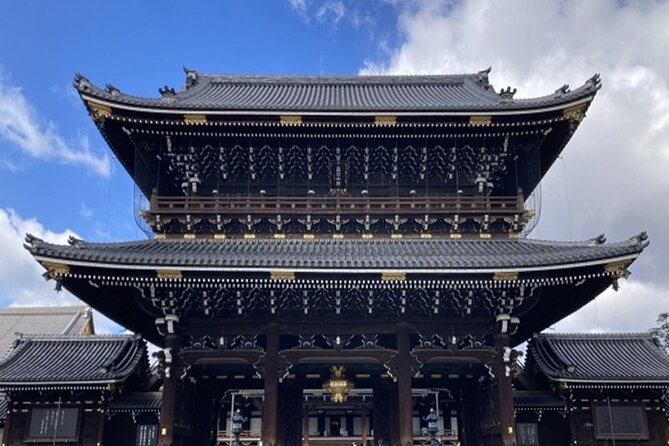
The tour runs about 6 hours 30 minutes total. You’ll have a built-in lunch break of 1 hour (lunch is on you). Then you’ll get about 1 hour 45 minutes for backstreet walking around the spots and for public transportation.
This matters because private tours can either feel too fast or too slow. This one seems designed to keep movement steady while still protecting time to process the philosophical themes.
You’ll also be near public transportation during the day, and the meeting point is easy to access. The tour ends where it starts, which saves you from figuring out logistics after you’re tired.
My practical advice: eat something simple during the lunch hour and don’t try to “save” your energy by skipping breaks. The philosophy part is easiest to enjoy when you’re not physically drained.
Who this Kyoto philosophy walk is best for
This is a good match if:
- you want Kyoto to mean more than photos
- you enjoy religion and philosophy as living ideas (not trivia)
- you like thoughtful dialogue and are okay with questions
- you prefer a private guide who can adjust to your interests
It’s also a strong fit for professionals, students, and anyone who likes ideas that connect across cultures—especially because the Philosopher’s Path segment focuses on Japanese vs Western philosophy.
If you want only quick sightseeing and zero discussion, you might find it slower than a conventional temple hop. But if you’re curious and want your brain engaged, it’s a great day.
What you’ll remember after the last gate
The biggest value here is not that you “learn facts about Zen.” It’s that you learn a way to read Kyoto.
Pure Land ideas give you a spiritual lens for what people seek. Shintoism adds the sense of sacred presence in the world around you. Zen simplicity changes how you notice gardens and structures. Then the Philosopher’s Walk adds the modern intellectual layer—how Japanese thinkers shaped and responded to Western philosophy.
And since it’s private, Hiroki can keep the conversation moving in the direction you care about. In past experiences, he’s been praised for both time management and flexibility, plus a gentle, friendly style that makes the philosophical portion feel like conversation instead of a test.
Should you book Kyoto Philosophy Walk with Philosopher (Private/6.5 hour)?
I’d book this if you want Kyoto with a brain attached. The guide focus—nationally licensed and trained in philosophy research—makes the day feel like more than a route. You get a structured sequence of temples and gardens, but the real product is the thinking and dialogue.
I’d skip it (or at least rethink) if:
- you dislike walking and stairs
- you only want casual sightseeing
- you don’t want to pay extra cash for temple admissions and transit
If you’re on the fence, here’s the simplest decision rule: if you’d enjoy a guided conversation about Pure Land, Shintoism, Zen simplicity, and philosophical comparisons while you stroll Kyoto’s key paths, this is a smart use of your time. If that sounds like work, you’ll probably be happier with a more classic highlights tour.
FAQ
How long is the Kyoto Philosophy Walk with Philosopher?
It runs about 6 hours 30 minutes.
Is this tour private?
Yes. It’s listed as a private activity for your group only.
What is included in the price?
The guide fee is included. You’ll also receive a mobile ticket. Lunch is not included.
What temple and transit costs should I plan for?
Temple admissions are not included, and you should prepare cash ¥1,600 per person. Public transportation is listed as ¥750 per person.
Do I need to pay for all temples?
Some stops are marked admission free, while others are not included. The tour notes that you should prepare cash for temple admissions to cover the places that require it.
How much walking is involved?
The itinerary includes walking on the path for about one mile, plus additional backstreet walking time.
Is it wheelchair-friendly or mostly stairs?
The tour includes a two-story building with only stairs, so you’ll want to be comfortable with stairs.
Where do we meet, and what time does it start?
Meet at the Bus Ticket Centre / Information Centre, 902 Higashishiokōjichō, Shimogyo Ward, Kyoto, 600-8216, Japan. Start time is 9:00am, and it ends back at the meeting point.
Can I cancel for free if my plans change?
Free cancellation is available up to 24 hours in advance for a full refund. Changes within 24 hours aren’t accepted, and late cancellations aren’t refunded.
More Walking Tours in Kyoto
More Tour Reviews in Kyoto
More Kyoto Temples and Shrines

Just added: more Kyoto tours to browse





Kyoto Temple & Shrine Tours, compared.
 ★ 4.9Tea Ceremony Ju-An at Jotokuji TempleFrom $293,207 reviews
 ★ 4.8Arashiyama Bamboo, Temple, Monkeys, or Secret Sake BreweryFrom $87886 reviews
 ★ 5.0Arashiyama Bamboo Forest, Monkeys, Matcha & Temple TourFrom $53759 reviews
 ★ 4.4Osaka/Kyoto: Arashiyama, Nara & Fushimi Inari Shrine w/LunchFrom $61754 reviews
 ★ 4.7Imperial Palace & Nijo Castle Guided Walking TourFrom $49453 reviews
 ★ 5.0Kyoto Zen Meditation & Garden Tour at a Zen Temple with LunchFrom $110441 reviews
 ★ 5.0Zen Experience in a Hidden TempleFrom $109437 reviews
 ★ 5.0KYOTO Tea Ceremony with kimono near by Imamiya Jinjya ShrineFrom $99343 reviews
Browse the lists this tour appears in