
Reviewed · KYOTO TEMPLE & SHRINE TOURS
KYOTO Tea Ceremony with kimono near by Imamiya Jinjya Shrine
Kyoto can feel like a postcard. This one feels like you stepped inside the paper. I love the authentic kimono dressing process and the way you learn tea ceremony manners step-by-step from a real tea master. The one thing to weigh is that the kimono is a multi-layer, structured outfit, so it’s not the most comfy option if you’re sensitive to tight clothing or heat.
I also like that the experience doesn’t stop at watching. You practice making tea yourself, and the guide adds context on kimono patterns and tea ceremony meaning so it lands as culture, not cosplay. If you want the cheapest matcha possible, this won’t be that kind of deal.
In This Review
- Key Things You’ll Notice Right Away
- Kimono Dressing at Caren: Your 90-Minute Head Start
- Nishijin Kimono Patterns: Why the Design Choice Matters
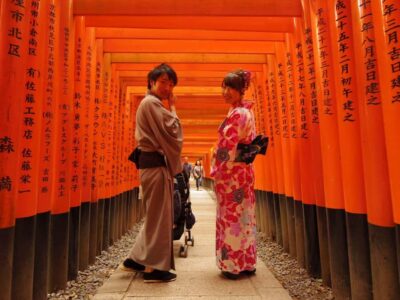
- Photo Moment and Temple-World Atmosphere Near Daitoku-ji
- The Tea Master Demonstration: Etiquette You Can Actually Use
- You Brew Your Own Tea: The Part That Makes It Stick
- Price and Value: Is $99.49 a Good Deal?
- Group Size, Timing, and What to Do Before You Go
- Who This Kyoto Kimono Tea Ceremony Suits (and Who Should Skip It)
- Should You Book? My Bottom Line
- FAQ
- How long is the Kyoto tea ceremony with kimono?
- Where do we meet for the tea ceremony?
- Is the ticket mobile?
- What’s included in the price?
- Is private transportation provided?
- Is it near public transportation?
- How many people are in the group?
- Do I get help putting on the kimono and preparing my hair?
- What happens if weather is bad?
- Can I cancel for a full refund?
Key Things You’ll Notice Right Away
- Kimono selection from Nishijin: pick a color and pattern first, then get help putting it on
- A tea room used for three generations: the setting feels lived-in, not staged
- Tea master instruction: you watch the ritual, learn etiquette, then try a brew yourself
- Photo help built into the experience: simple photo shoot plus staff guidance on posing
- Small group format: max 12 people for a more personal feel
Kimono Dressing at Caren: Your 90-Minute Head Start
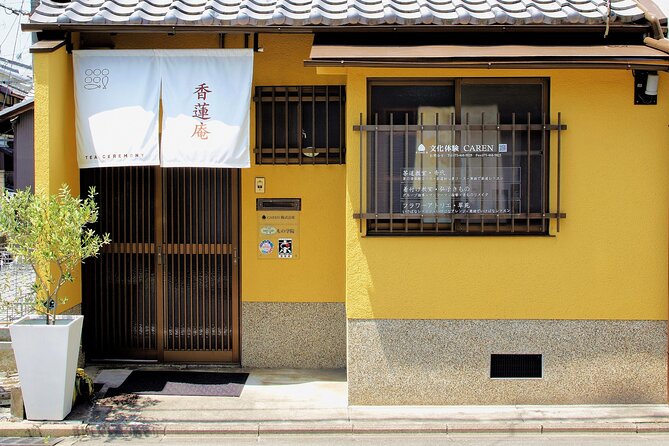
This experience starts with clothing first, not tea. You meet at Tea Ceremony – Caren, 74-4 Murasakino Daitokujichō, Kita Ward. It’s near public transportation, which matters in Kyoto, where you can lose half a day to train-to-bus-to-walk logistics. Since your ticket is mobile, you can keep everything simple in your phone.
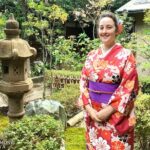
Then comes the part that turns a normal tea break into a Kyoto moment: kimono assistance and hair setting. You’re not just handed a costume. You choose from a collection of kimonos in the Nishijin area, then the staff helps with the full outfit process. That includes hair prep before you’re dressed. Even if you’ve never worn a kimono before, the step-by-step help takes the pressure off.
One practical tip: show up with a clear idea of what you want to wear. Some people are indecisive in the moment. When you’re deciding on color and pattern, you’ll have a better time if you already know what you like. Want calm tones, bold contrast, or something in between? Pick it before you arrive.
More temples and shrines to slow down in across Kyoto

Nishijin Kimono Patterns: Why the Design Choice Matters
The ceremony isn’t just performance. It’s tied to symbolism, and you’ll hear that from your guide. You learn the meaning behind different kimono patterns, plus what the patterns communicate in the broader tea-culture context. Even if you don’t remember every detail, you’ll notice that the outfit choice feels intentional, not random.
This is one reason I think this format has value. A lot of Kyoto “tea ceremony” experiences are basically a tasting with a quick demo. Here, the guide connects the kimono to the story. You’re learning how people dressed for a setting where manners and ritual are part of the tea.
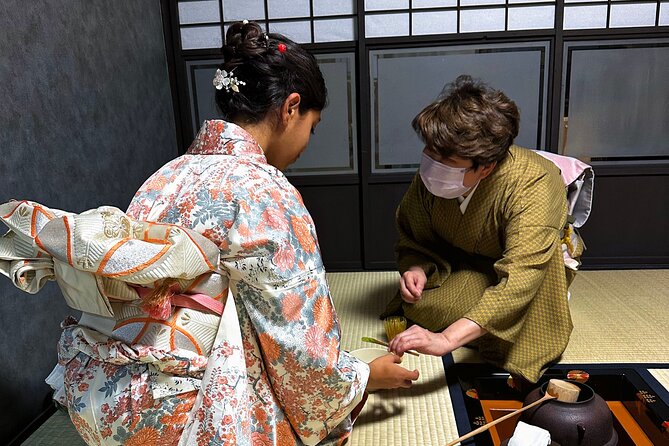
Also, the kimono is multi-layered. That sounds like fluff until you actually see how it’s put together. The layers are structured, and the staff takes time to get you into the right shape. It gives you a deeper respect for how much craft goes into traditional clothing. If you’re curious about Japanese aesthetics, this is the best entry point.
Photo Moment and Temple-World Atmosphere Near Daitoku-ji
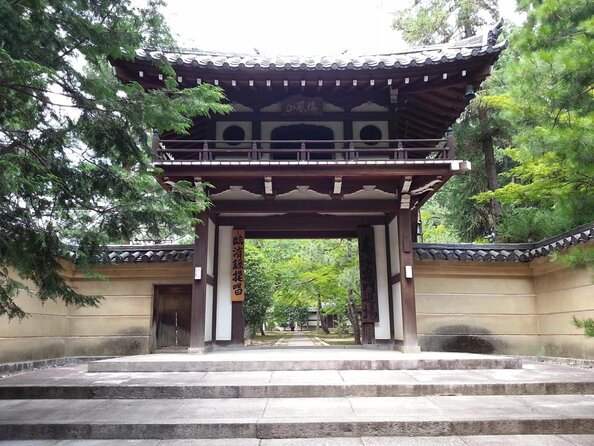
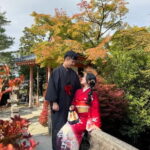
After you’re dressed and your hair is set, the schedule includes a simple photo shoot. Staff help with posing and making sure you’re comfortable in the outfit. This matters more than it sounds. Kimono sleeves and collar placement can change how your photos look, and the staff keeps you from feeling awkward.
The location is also part of the mood. The tea room is described as being near Daitoku-ji, a place rooted in Japanese tea culture. One review also ties the day to the Imamiya Jinja Shrine area, and the overall feel is that you’re in the neighborhood of tea traditions, not just a studio pretending to be one. In other words: the setting helps your brain buy into the experience.
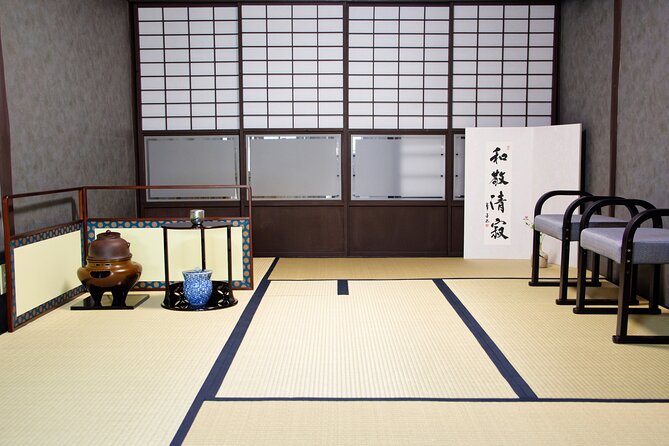
There’s a note to keep in mind: the tea room is a bit old. That can be charming for some people, but it might matter if you’re expecting modern comfort. The staff does try to help alleviate fatigue from your trip, so you’re not left to suffer in silence. Still, plan for a small amount of “traditional space” reality.
The Tea Master Demonstration: Etiquette You Can Actually Use
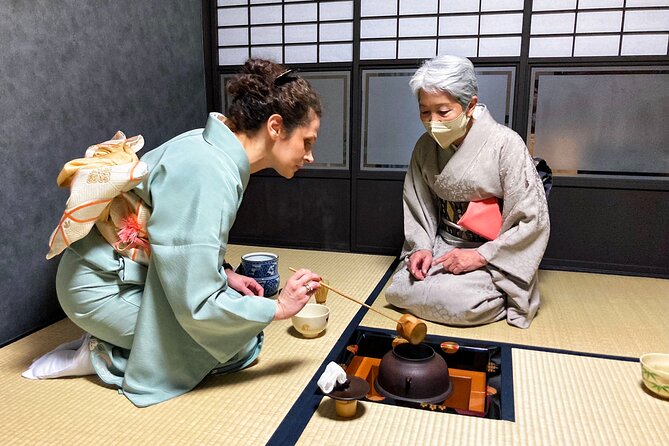
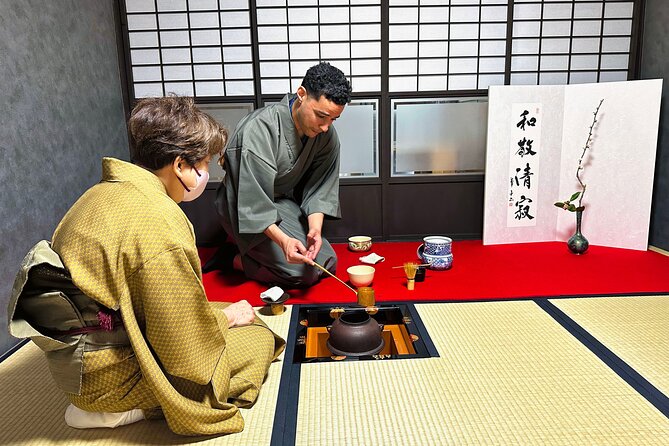
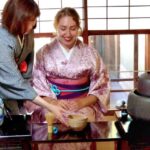
Now you get to the heart of it: the tea ceremony itself. A tea master—described as having studied tea ceremonies for about 30 years—leads the presentation. You watch how the ritual works, from movement to sequence. And you’re not stuck guessing what you’re seeing. The guide provides commentary on the history and meaning of tea ceremonies, so the steps aren’t just choreography.
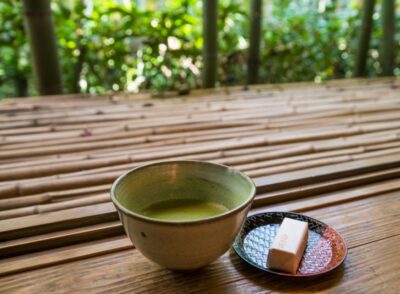
A big part of what you learn is etiquette. That includes how to hold yourself, how to receive the tea, and how the ceremony creates calm. You also get seasonal sweets with your cup of tea. That matters, because it sets a rhythm: you taste something seasonal, then you slow down for matcha-style tea, rather than treating it like a quick souvenir stop.
In at least some sessions, the ceremony may be conducted in Japanese with interpretation, so you can follow along. That’s a helpful detail if you’re worried about language barriers. You’ll likely catch the major points even if your Japanese is limited.
You Brew Your Own Tea: The Part That Makes It Stick
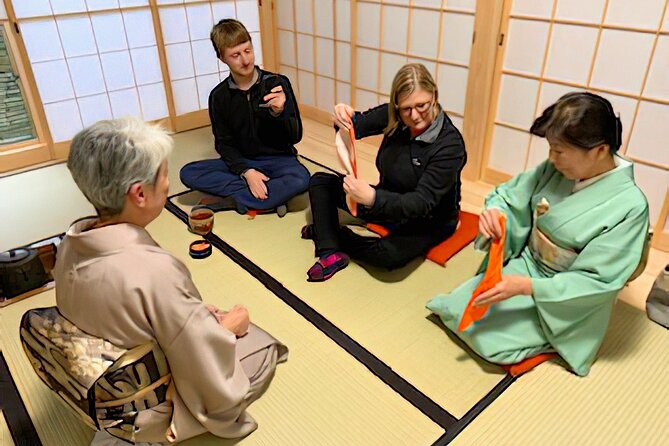
Watching the tea master is impressive. Brewing your own is where it becomes memorable.
After you sip and learn the etiquette, you get the chance to prepare your tea yourself. The staff guides you through the steps, so it’s not a “good luck” moment. If you’re the type who learns by doing—this is your lane. You’ll see how small details change the result.
This practical piece is why the experience feels worth the money. You’re not just buying a photo and a drink. You’re getting hands-on instruction in a ritual that has clear logic behind it. Even if your first attempt isn’t perfect, you’ll understand the method—and you’ll know why people treat it as more than caffeine.
One extra detail you might hear in the explanation: discussion of items and tools used in ceremony. For example, some sessions include extra info about the tea ceremony fan’s history. That kind of detail is exactly what turns “I tried matcha” into “I learned something.”
And yes, you’ll still have a chance to enjoy the moment. Some people expect the most intense part to be the outfit. In practice, the ceremony itself can feel calming and focused. The tone is deliberate.
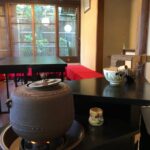
Sit for another bowl of matcha in a Kyoto tea house
Price and Value: Is $99.49 a Good Deal?
At $99.49 per person for about 1 hour 30 minutes, the price is higher than a simple tea tasting. But it includes several things that add up fast:
- Kimono use plus help getting dressed
- Hair set as part of the process
- Instruction from a professional instructor / tea master
- Tea (and coffee and/or tea) plus seasonal sweets
- A small-group setup (max 12 people)
- A built-in photo opportunity with staff support
So the value depends on your priorities. If your main goal is just matcha, you might find cheaper. But if you want the full Kyoto cultural package—kimono, etiquette lessons, and a chance to brew your own—this price starts to make sense.
It’s also a time-efficient choice. Kyoto day plans can get packed. This is a contained experience with a clear start and end point, and it loops back to the meeting location at the end.
Group Size, Timing, and What to Do Before You Go
With a max of 12, you’re not squeezed into a mega-group. That helps the guide move at a human pace, and it makes it easier to ask questions about what you’re doing.
Timing wise, this is about 90 minutes. Plan your Kyoto day with a little buffer. If you schedule it right before something else, you may feel rushed once you’re in kimono. Also, you’ll likely take a few minutes at the beginning to get settled. In the short window you have, arriving a bit early can help you avoid a rushed dressing experience when everyone shows up at once.
Another planning tip: kimono is structured clothing. It looks gorgeous and feels special, but it’s not designed for a long walking marathon in the middle of your day. If you can, do this as a central activity rather than squeezing it between distant stops.
Finally, the experience requires good weather. If weather cancels it, you’ll be offered a different date or a full refund. That matters because Kyoto seasons can change quickly.
Who This Kyoto Kimono Tea Ceremony Suits (and Who Should Skip It)
This fits best if you:
- want a hands-on tea ceremony, not just a tasting
- care about how traditional clothing connects to cultural meaning
- like photo moments, but also want real instruction
- travel with teens or family members who might need a more engaging format
- appreciate calm, ritual, and guided etiquette
You might skip it if:
- you hate the idea of getting dressed in layers
- you’re only after a quick matcha drink with no etiquette or pattern context
- you’re trying to keep Kyoto costs ultra-low
The ceremony is serious in tone. If you expect a casual coffee-shop vibe, you might find it more formal than you anticipated. But that formality is also what makes it different.
Should You Book? My Bottom Line
I’d book this if you want Kyoto culture you can feel in your hands. The best part isn’t only the kimono. It’s how the day connects clothing, etiquette, and tea into one coherent ritual. The tea master demonstration gives you the right baseline, and practicing your own brew helps it become a real memory instead of a quick stop.
If you’re debating, ask yourself one question: do you want to learn the ceremony and try it yourself, or do you just want the taste? If it’s the first one, the price is easier to justify. If it’s the second one, you can probably find a cheaper matcha moment elsewhere.
If you do book, go in with an idea of your preferred kimono color and be ready for a small amount of old-room charm. Then slow down. The whole point of tea ceremony is that you don’t rush it.
FAQ
How long is the Kyoto tea ceremony with kimono?
It runs for about 1 hour 30 minutes.
Where do we meet for the tea ceremony?
The meeting point is Tea Ceremony – Caren, located at 74-4 Murasakino Daitokujichō, Kita Ward, Kyoto, 603-8231, Japan.
Is the ticket mobile?
Yes. This experience uses a mobile ticket.
What’s included in the price?
The experience includes coffee and/or tea and a professional instructor.
Is private transportation provided?
No. Private transportation is not included.
Is it near public transportation?
Yes. The meeting point is near public transportation.
How many people are in the group?
The group size is capped at a maximum of 12 travelers.
Do I get help putting on the kimono and preparing my hair?
Yes. You’ll receive assistance putting on an authentic kimono, and you can also have your hair set before getting dressed.
What happens if weather is bad?
This experience requires good weather. If it’s canceled due to poor weather, you’ll be offered a different date or a full refund.
Can I cancel for a full refund?
You can cancel up to 24 hours in advance for a full refund. If you cancel less than 24 hours before the start time, the amount paid is not refunded.
More Kimono Days in Kyoto
One More Bowl of Matcha
More Kyoto Temples and Shrines


Just added: more Kyoto tours to browse






Kyoto Temple & Shrine Tours, compared.
 ★ 4.9Tea Ceremony Ju-An at Jotokuji TempleFrom $293,207 reviews
 ★ 4.8Arashiyama Bamboo, Temple, Monkeys, or Secret Sake BreweryFrom $87886 reviews
 ★ 5.0Arashiyama Bamboo Forest, Monkeys, Matcha & Temple TourFrom $53759 reviews
 ★ 4.4Osaka/Kyoto: Arashiyama, Nara & Fushimi Inari Shrine w/LunchFrom $61754 reviews
 ★ 4.7Imperial Palace & Nijo Castle Guided Walking TourFrom $49453 reviews
 ★ 5.0Kyoto Zen Meditation & Garden Tour at a Zen Temple with LunchFrom $110441 reviews
 ★ 5.0Zen Experience in a Hidden TempleFrom $109437 reviews
Arashiyama Bamboo, Matcha, Monkeys & Temple TourFrom $51291 reviews
★ 5.0Zen Experience in a Hidden TempleFrom $109437 reviews
Arashiyama Bamboo, Matcha, Monkeys & Temple TourFrom $51291 reviews
Browse the lists this tour appears in