

Reviewed · KYOTO COOKING CLASSES
Kyoto Michelin Ramen Workshop or Painting Ramen Essentials
Ramen making in Kyoto beats just eating ramen. This Musoshin workshop is hands-on, recipe-driven, and tied to a team that has earned Michelin attention. I love that you learn the real workflow, from noodles to broth, not just a quick demo, and I also love the option to decorate your own bowl.
You’ll get close to the process in a small, intensively run space, and the instructors keep things moving step by step. One possible drawback: if your group is on the bigger side, the room can feel tight, so you might want to choose your timing and group size carefully.
If you want a family activity that ends with a meal you helped build, this is a strong bet—especially with vegetarian, vegan, and gluten-free options available.
In This Review
- Key things to know before you go
- Why Musoshin’s Kyoto workshop feels different from a typical cooking class
- The hands-on part: noodles, broth rhythm, and what you’ll actually do
- Decorating your ramen: painting spoons and designing a kiln-baked bowl
- The ramen meal right after class: why it tastes better when you make it
- Family-friendly teaching: how this works for kids and adults
- Value and price: what $54 really covers
- How to plan your timing in Kyoto (and not stress about it)
- Should you book Musoshin’s Kyoto ramen workshop
- FAQ
- What’s the price for the Kyoto ramen workshop?
- Where does the experience take place?
- How long is the ramen workshop part?
- Are vegetarian or vegan ramen options available?
- Can the class handle gluten-free needs?
- What’s included with the class?
- Is there an option to bake and take home a decorated bowl?
- What languages are offered?
- What’s the booking and cancellation situation?
Key things to know before you go
- Musoshin’s Michelin-nominated connection: the Toronto location has been nominated for Michelin three straight years.
- Real in-house ramen production: noodles made each morning, then rested overnight; broth cooked for 12 hours.
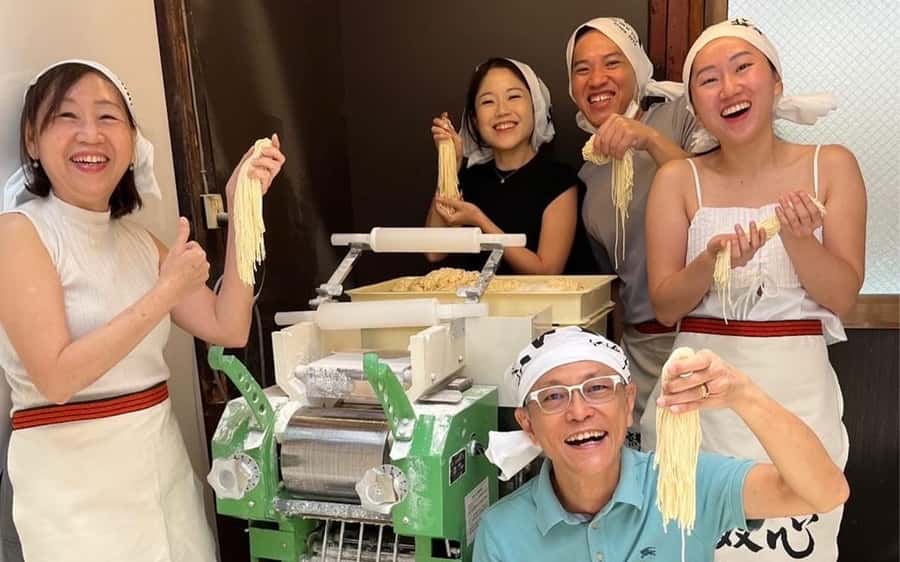
- Hands-on noodle work for about an hour: you’ll mix, roll, and handle the dough using a noodle machine.
- Optional bowl/spoon decoration: you can design a bowl and have it baked in a kiln for free (pick it up the next day).
- Family-friendly teaching style: instructors are patient, supportive, and used to working with kids.
- Dietary flexibility: vegetarian and vegan ramen options exist, and gluten-free support is possible (including celiac needs).
Why Musoshin’s Kyoto workshop feels different from a typical cooking class
Kyoto has no shortage of ramen places, but this is built as a ramen workshop first, restaurant second. Musoshin Ramen started in Kyoto in 2022 and now runs multiple restaurants in Kyoto and Toronto. The story matters because the workshop isn’t a detached craft project. It’s tied to a real ramen shop that cooks the same core method across locations.
Here’s what I like: the class is connected to a Michelin-nominated track record. Musoshin’s Toronto restaurant has been nominated for Michelin for three consecutive years, and the workshop uses the same basic ramen recipe. That turns ramen-making from a novelty into something closer to what you’d learn if you worked in the kitchen.
The other reason this feels special is ingredient discipline. Musoshin’s approach is hands-on from start to finish: noodles are made in-house every morning and rested overnight, broth runs for 12 hours, and key components like ramen soy sauce and roast pork are handmade. When a kitchen commits to that kind of schedule, your workshop outcome feels more like ramen culture than cooking theater.
Roll up your sleeves for another Kyoto cooking class

The hands-on part: noodles, broth rhythm, and what you’ll actually do
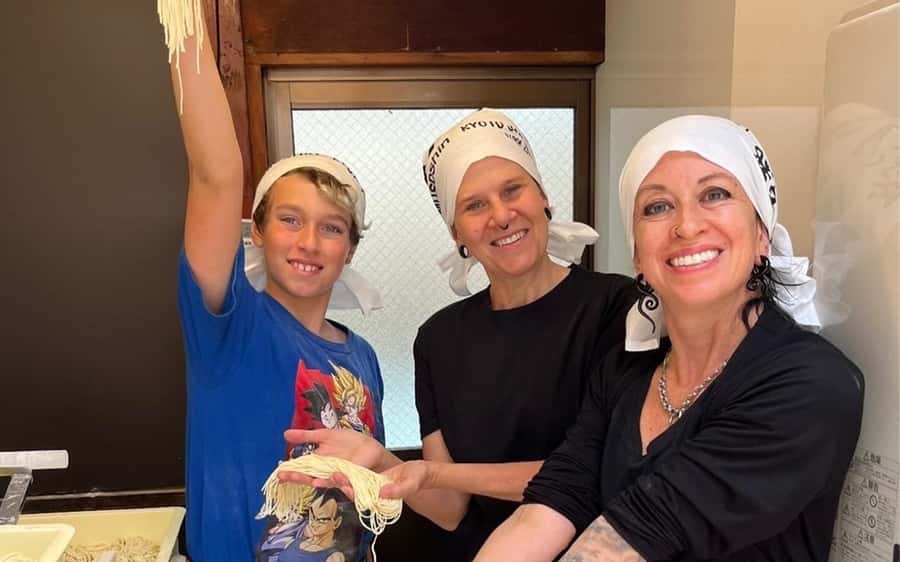
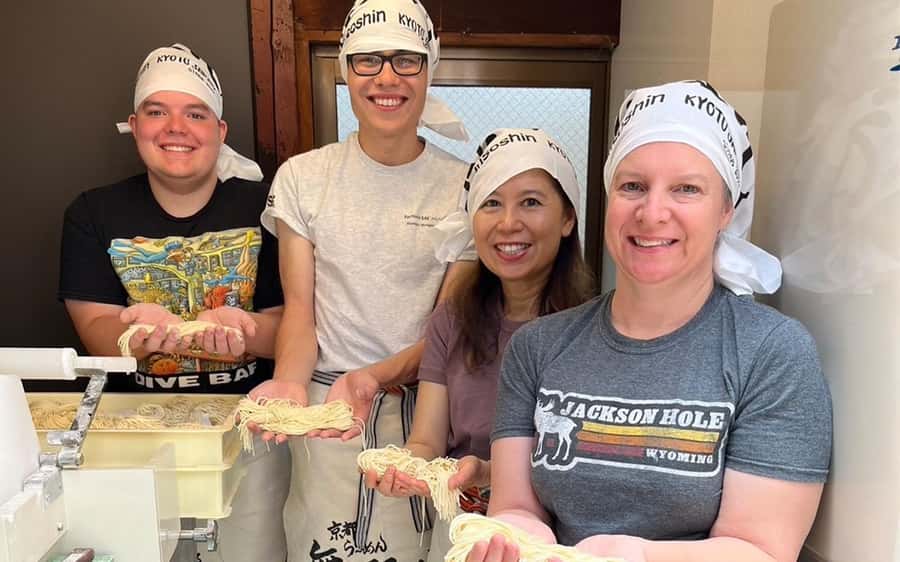
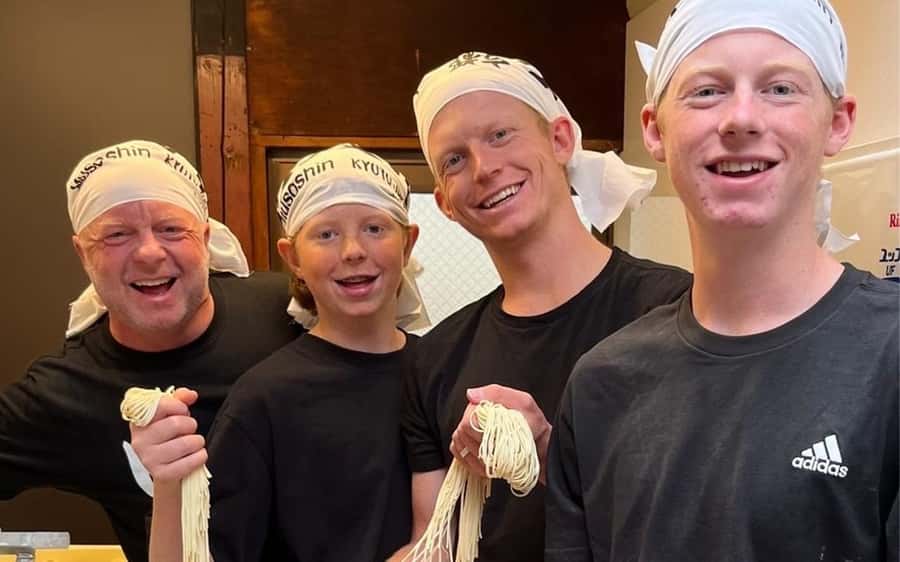
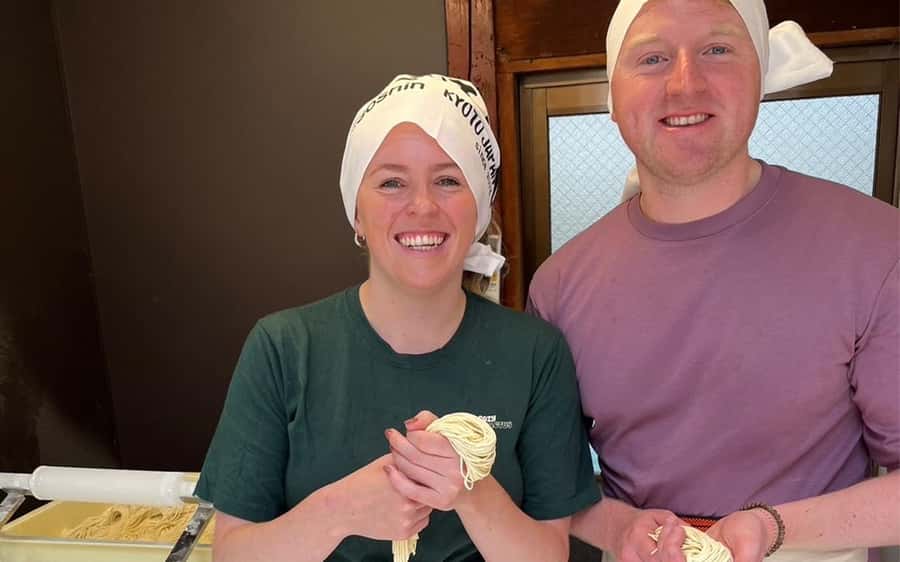
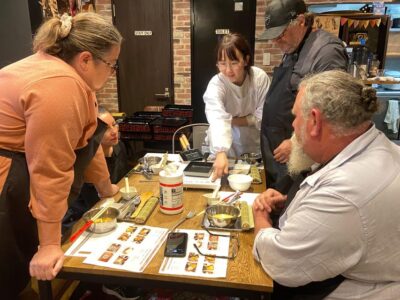
Your experience centers on making ramen noodles, with clear guidance from the instructors. The class is family friendly and focused for about one hour of noodle making, and it’s designed so you can participate rather than just watch from a seat.
In practical terms, you’ll move through the noodle steps with support. You mix the dough, work it through the noodle machine, and handle the stages with your hands. The goal is to give you muscle memory for ramen texture—how the dough stretches and how the finished noodles look before they’re cooked later at the restaurant.
Even if you don’t become a ramen chef by the end of the day, you’ll walk away understanding why good ramen isn’t magic. It’s timing plus technique. Musoshin lets you see that rhythm: noodles are made fresh in the morning, rested overnight, and broth is cooked for 12 hours. Those details explain why homemade noodles can taste flat if you shortcut the rest time, and why broth depth comes from long, patient cooking.
Also, the workshop is set up as a real ramen workflow. One review mentioned that the space is small and meticulously kept, and you’ll feel that “shop energy” while you work. The instructors do a lot of guiding in a short window, which is why the class is so often praised as fun and relaxing, not stressful.
Decorating your ramen: painting spoons and designing a kiln-baked bowl

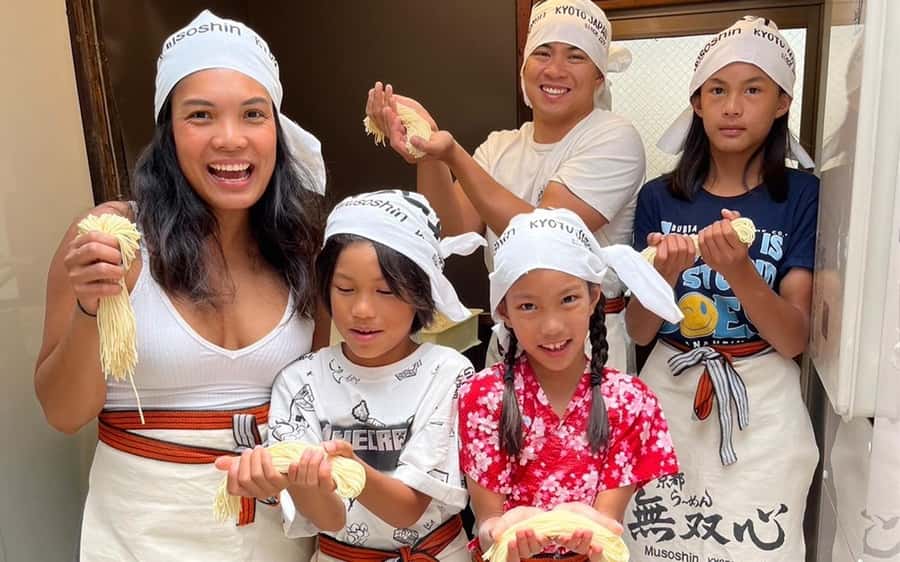
If you choose the painting-focused option (or if your schedule includes decoration time), you’ll get hands-on with the fun part: customizing your own ramen items. Many people start with painting a spoon, and others paint a bowl. The class includes Musoshin’s bandana used in the workshop, which adds to the whole ramen-person vibe without feeling gimmicky.
One thing you should know if you go for decoration: pink can be tricky. A guest tip stood out—if you use pink, apply it thicker so it shows properly on the final piece. That’s the kind of practical detail that helps your bowl look good instead of looking like a rushed craft.
The best souvenir payoff is the bowl baking option. If you design a bowl, you can have it baked in a kiln for free, then pick it up the next day. That’s a big value point because it turns your art into a usable keepsake tied to the experience. It’s also the kind of souvenir that feels Kyoto because it’s a real process, not just a sticker.
If you want extra branded pieces—like a bowl, spoon, or apron—those are listed as optional add-ons. I’d treat them as nice-to-have if you love the workshop, not as the reason to book.
The ramen meal right after class: why it tastes better when you make it
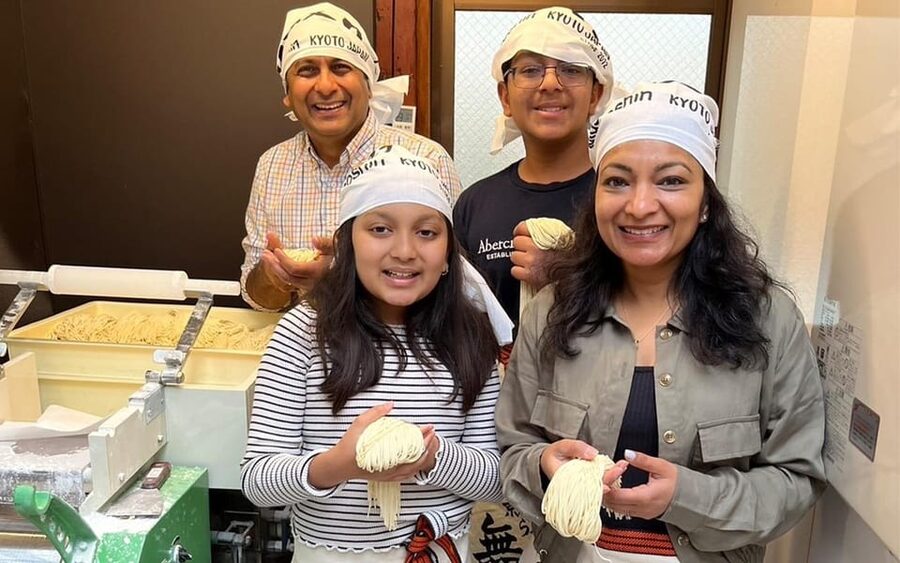
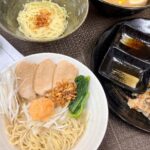
You don’t just learn; you eat. The experience ends back at the meeting point, and you’ll have a drink at the Musoshin restaurant as part of what’s included. Then you sit down for ramen made with Musoshin’s system—broth, soy sauce, and roast pork handled in-house.
This is where the workshop pays off. When you’ve handled the dough, you notice details in the finished bowl. I find you start paying attention to texture and timing—how the noodles hold shape, how broth coats your mouth, and how the flavor balance lands. That’s exactly what guests repeatedly describe: the ramen is hands down the best they tried on their trip, and the taste feels deeper after arranging it yourself.
Musoshin’s broth is cooked for 12 hours, and that alone changes the baseline. Long simmering isn’t just marketing. It creates a smoother, more rounded flavor that doesn’t feel sharp or thin. Add handmade soy sauce and roast pork, and you get a profile that tastes like a kitchen committed to consistency.
Dietary options are part of the pitch. Vegetarian and vegan ramen options are available, so you’re not stuck translating ingredients in your head. And if you need gluten-free support, there’s at least one specific example from a guest with celiac disease: the team arranged special gluten-free noodles and cooked the child’s soup separately so they could enjoy their meal. That’s a meaningful signal that they take dietary restrictions seriously—still, if you have a major allergy or medical requirement, you should confirm details when you book.
Family-friendly teaching: how this works for kids and adults
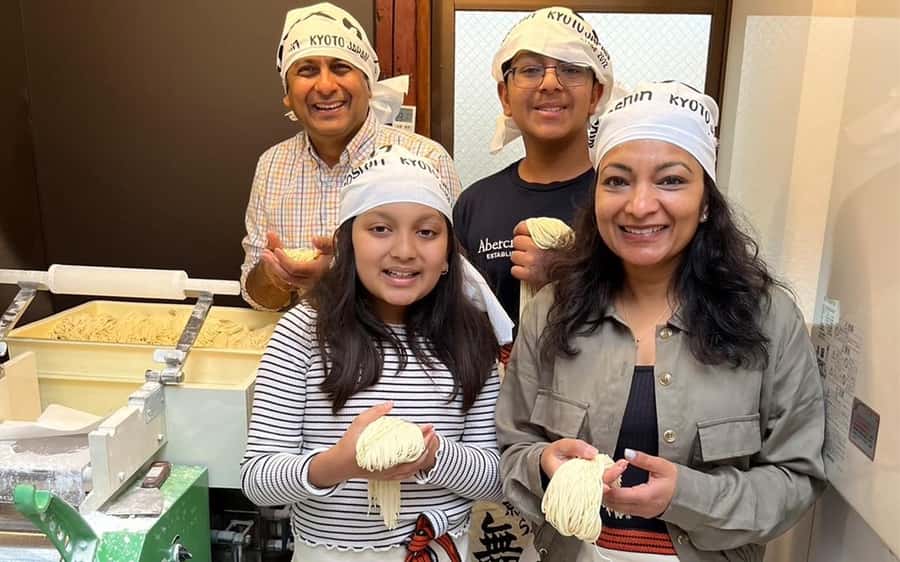
Kyoto cooking classes can be hit-or-miss with kids. This one is designed for families, with instructors who guide you carefully and keep participation high. Guests mention everything from toddlers to teens getting involved: children use their hands, explore the noodle machine process, and get support without being rushed.
Several names come up in the teaching style in different sessions—Koki, Makoto, Shin, and also assistants like Yaya and Patti. Even when the host changes, the pattern stays consistent: step-by-step instruction plus patience. That matters because noodle dough is physical, and kids learn by doing, not by listening.
One real-life consideration: the space can be small. A guest noted the room felt cramped when the group grew, and another implied they’d prefer a class cap around four due to the layout. Translation: if you want the most comfortable experience, pick a time slot with a smaller group, or go on a day you expect lower turnout.
Also, if you’re traveling with multiple generations, this format helps. Adults often appreciate learning the method behind broth and noodles, while kids get a tangible activity that ends in a reward bowl. It’s not all screen-based and it doesn’t require advanced knife skills. That’s a huge win in Kyoto, where cooking classes can easily become more about performance than education.
Other Kyoto tours and experiences to compare

Value and price: what $54 really covers
At about $54 per person, the value is strong when you consider what’s included. You’re paying for a structured ramen-making workshop, instruction, and access to the Musoshin ramen restaurant meal. The experience also includes a drink at the restaurant, which keeps the class from feeling like a separate add-on you need to budget for later.
The bigger value story is that the cooking isn’t generic. Musoshin emphasizes making key ingredients in-house—noodles daily, broth for 12 hours, soy sauce and roast pork handmade. You’re getting a hands-on view of a system that’s tied to a restaurant operation with Michelin recognition on its side (via the Toronto nomination).
Then there’s the souvenir option. If you decorate a bowl and choose the kiln bake, the baking is listed as free, with pick-up the next day. That’s a rare perk because pottery firing and kiln work usually costs real money. For many people, that shifts the class from a fun day activity into something you’ll actually keep.
So, ask yourself what you want from Kyoto: a meal only, or a story you can repeat at home. If you want both—learning plus eating—this price makes sense.
How to plan your timing in Kyoto (and not stress about it)
Because the meeting point may vary depending on the option booked, I’d keep your morning schedule flexible. Plan to build your day around the class start time rather than squeezing it between tight sightseeing windows.
If you choose the kiln-baked bowl, plan for next-day pickup. That means you’ll either want to stay near the area or you’ll want a simple plan for returning. It’s not hard, but it does affect how you move through Kyoto after the class.
For what to bring, you really just need the basics: comfortable clothes you don’t mind getting a little messy (you’ll be handling dough), and an appetite. You’ll also want to come ready to participate, not just observe, because the workshop earns its reputation through hands-on involvement.
If you’re booking with kids, consider a snack and water strategy before you start. The class ends with ramen, so you’re not starving, but having a little buffer helps keep kids happy while the noodles work through their steps.
Should you book Musoshin’s Kyoto ramen workshop
Book it if you want a ramen experience that feels like you’re learning the craft, not just eating the product. It’s especially worth it for families, couples, and small groups who enjoy interactive cooking and don’t mind a small workspace in exchange for real participation.
Choose carefully if you’re very space-sensitive. The room can feel tight when groups are larger, and if you’re traveling with someone who needs lots of personal breathing room, you’ll want to plan your day around smaller group sizes.
And book sooner rather than later if you care about dietary fit. Vegetarian and vegan options exist, and gluten-free support has been handled for at least one celiac case, but you’ll get the smoothest experience if you communicate needs during booking.
If your goal is Kyoto ramen with a meaningful twist—make-your-own noodles, decorate a bowl or spoon, then eat what you helped create—this is the kind of class that earns its place on a short Kyoto list.
FAQ
What’s the price for the Kyoto ramen workshop?
The price is $54 per person.
Where does the experience take place?
It takes place in Kyoto on Honshu, Japan, run by Musoshin Ramen.
How long is the ramen workshop part?
The workshops are family friendly and focused for about an hour on noodle making.
Are vegetarian or vegan ramen options available?
Yes. Vegetarian and vegan ramen options are available.
Can the class handle gluten-free needs?
Gluten-free support is mentioned for celiac disease, with special gluten-free noodles and separate soup prepared for the child.
What’s included with the class?
Inclusions include Musoshin Ramen (including the Michelin-nominated connection), a Musoshin bandana used in the workshop, and a drink at the Musoshin restaurant. The experience includes ramen at the restaurant as part of the overall program.
Is there an option to bake and take home a decorated bowl?
Yes. If you design a bowl, you can have it baked in a kiln for free and pick it up the next day.
What languages are offered?
The class is available in English and Japanese.
What’s the booking and cancellation situation?
You can reserve and pay later. Cancellation is free up to 24 hours in advance for a full refund.
More Workshops in Kyoto
More Tour Reviews in Kyoto





More Kyoto Cooking Classes

Just added: more Kyoto tours to browse








Kyoto Cooking Classes, compared.
 ★ 5.0Ramen Cooking Class at Ramen Factory in KyotoFrom $1311,937 reviews
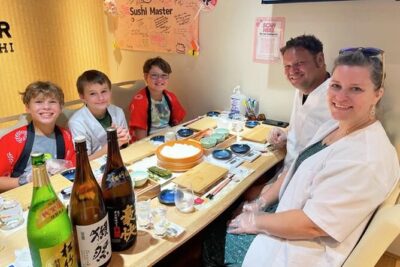 ★ 5.0Sushi Making in Kyoto! Same-day bookings welcome!From $53713 reviews
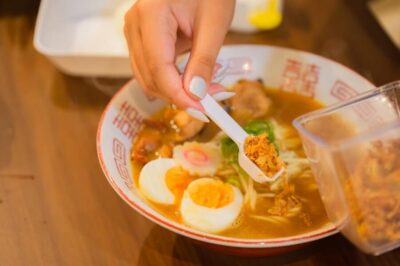 ★ 4.9Ramen Cooking Class at a Ramen Factory with SouvenirFrom $127532 reviews
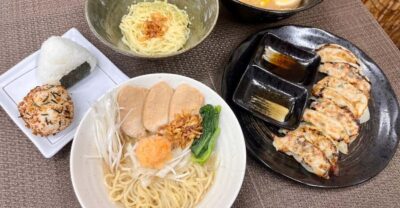 ★ 5.0Ramen, Gyoza, and Onigiri Cooking ClassFrom $90445 reviews
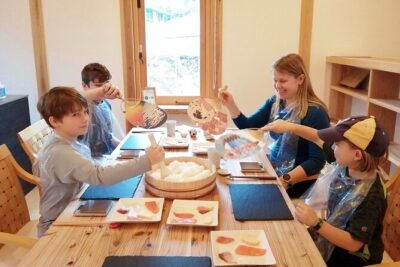 ★ 5.0The Original Small-Group Sushi Making Class in KyotoFrom $69436 reviews
 ★ 5.0Japanese Washoku Bento Small Group Cooking ClassFrom $58380 reviews
 ★ 5.0Kyoto Ramen and Gyoza Cooking Class with Professional ChefsFrom $86282 reviews
 ★ 4.9Afternoon Japanese Izakaya Cooking ClassFrom $67241 reviews
Browse the lists this tour appears in