
Reviewed · GION & GEISHA DISTRICT TOURS
Kyoto: Gion Highlights & Hidden Treasures Guided Tour
Kyoto can feel like a movie set, but Gion looks real enough to make you slow down. This Gion highlights and hidden treasures tour strings together the places you actually came for, plus calmer stops that help you understand what you’re seeing. I love the way the walk starts in Gion’s old-street atmosphere and keeps moving through Shinto and Buddhist sites in a logical rhythm. I also like that the guide handles the details so you’re not stuck figuring out temple ticket lines all day. One possible drawback: it’s a long, on-your-feet day (450 minutes), and lunch isn’t included, so you’ll want to plan food and energy.
The route keeps a good pace without turning into a speedrun. You’ll pass key streets like Hanamikoji, then step into the mood shift of Yasaka Shrine before heading to temples with real viewpoint payoff. The wish-ball stops and the relationship-and-habit blessings at Yasui Kompira-gū add a playful, human side to the day. If you’re sensitive to crowds at major sites like Kiyomizu-dera, go into it expecting busy moments and you’ll handle it better.
I also like that the tour can be flexible when needed. In one past booking, the guide Yoshi adjusted timing by about two hours without making it a problem, and even helped add an extra temple when time allowed. Another guide, Saya, worked around what you already saw and helped shape a different itinerary, plus recommended a restaurant and shopping area for after the tour.
In This Review
- Key points worth knowing before you go
- Starting at Izumo no Okuni: getting your bearings fast
- Gion Shirakawa Street and Hanamikoji: old streets, real etiquette
- Yasaka Shrine and Kōdaiji: Shinto mood, then Buddhist garden time
- Entoku-in: the calmer pause that adds meaning
- Lunch in Gion: plan your refuel, then keep moving
- Kiyomizu-dera: UNESCO views, stairs, and the payoff moment
- Yasaka Koushindo: colorful wish balls with a practical twist
- Yasui Kompira-gū: blessings for habits and relationships
- Price and value: $102 for a long day with real inclusions
- Tour pacing and group size: why it feels relaxed instead of frantic
- Who should book this Kyoto Gion tour
- Should you book it?
- FAQ
- How long is the Kyoto Gion highlights and hidden treasures guided tour?
- Where is the meeting point?
- What’s included in the price?
- Is lunch included?
- Which languages are available for the guide?
- Which sites are part of the guided itinerary?
- Can I get a refund if my plans change?
Key points worth knowing before you go
- Start at Izumo no Okuni on Shijo Ohashi, so you’re on the right track from minute one
- Gion Shirakawa + Hanamikoji give you classic street views and a sense of how the district flows
- Kiyomizu-dera with UNESCO views is the big visual payoff, with time to actually look
- Included temple tickets cover Kōdai-ji, Entoku-in, and Kiyomizu-dera
- Wish balls and habit blessings make the day feel personal, not just sightseeing
Starting at Izumo no Okuni: getting your bearings fast
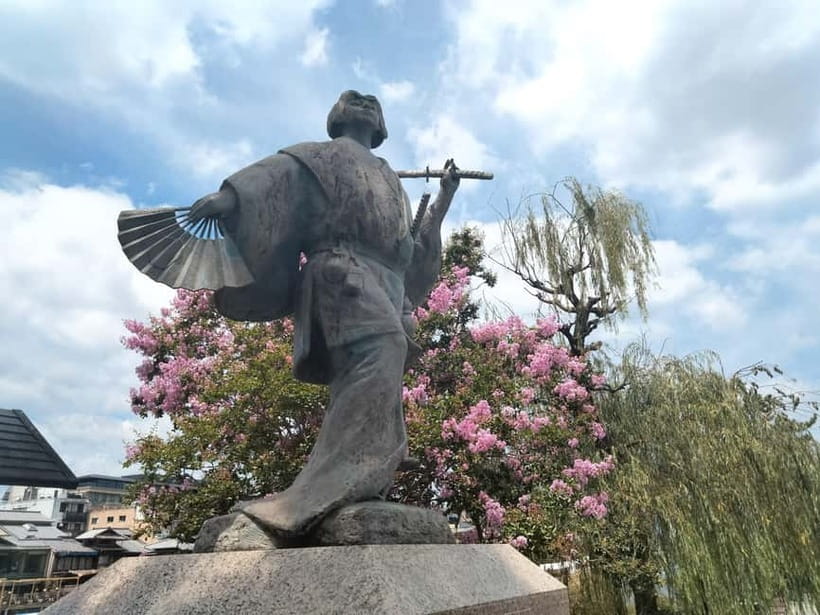
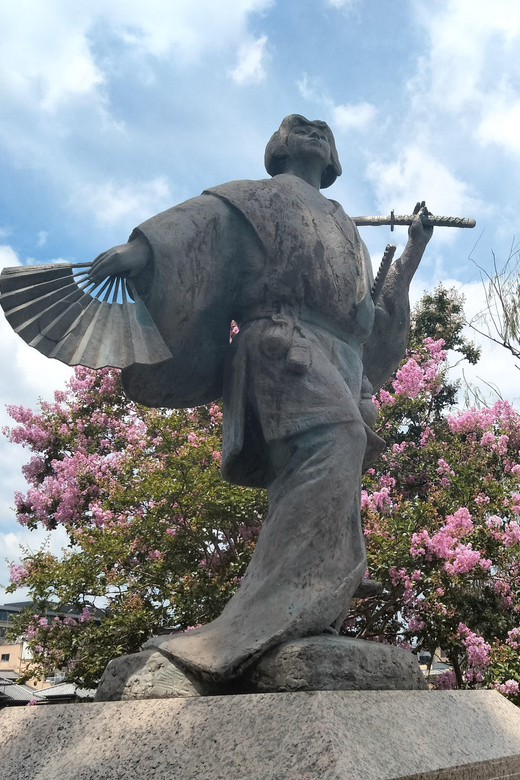
The tour begins in a spot that makes sense once you’re there: in front of the statue of Izumo no Okuni at the east end of Shijo Ohashi bridge. From that starting point, Gion isn’t just a name on a map. It becomes a walkable neighborhood with a clear sense of direction.
This matters because Kyoto’s historic districts can be confusing for first-timers. If you show up without a plan, it’s easy to wander in circles between streets that look similar. Meeting here helps you lock in the geography early. It also sets the tone: Izumo no Okuni is tied to the performing arts origin story of the area, which is a nice mental hook before you start seeing tea houses, shrines, and temple architecture.
You’ll then move on foot through the area, including short passing segments before you hit the main shrine and temple stops. That first transfer time is typically where you can take a breath, check the weather, and make sure you’re comfortable walking for hours.
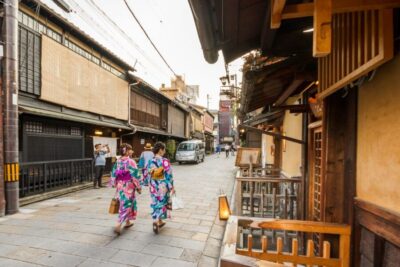
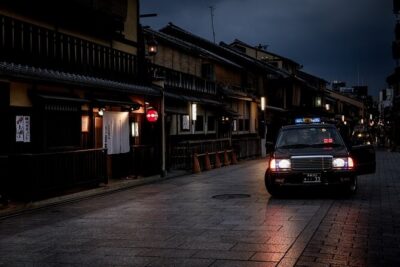
More evenings along the lantern-lit lanes of Gion


Gion Shirakawa Street and Hanamikoji: old streets, real etiquette
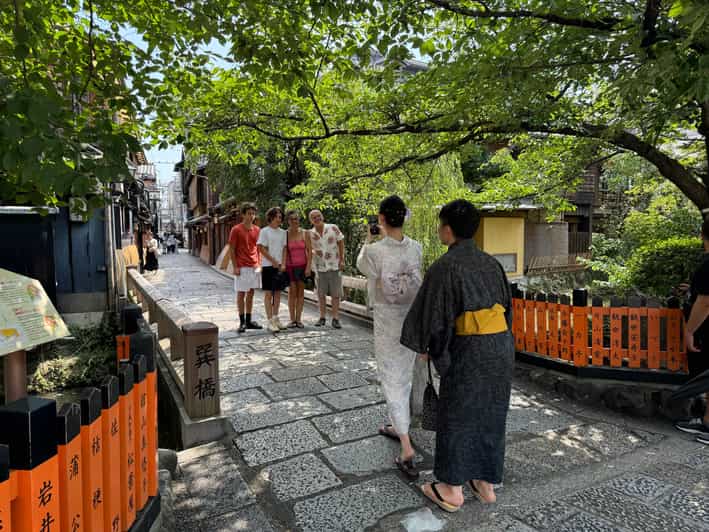
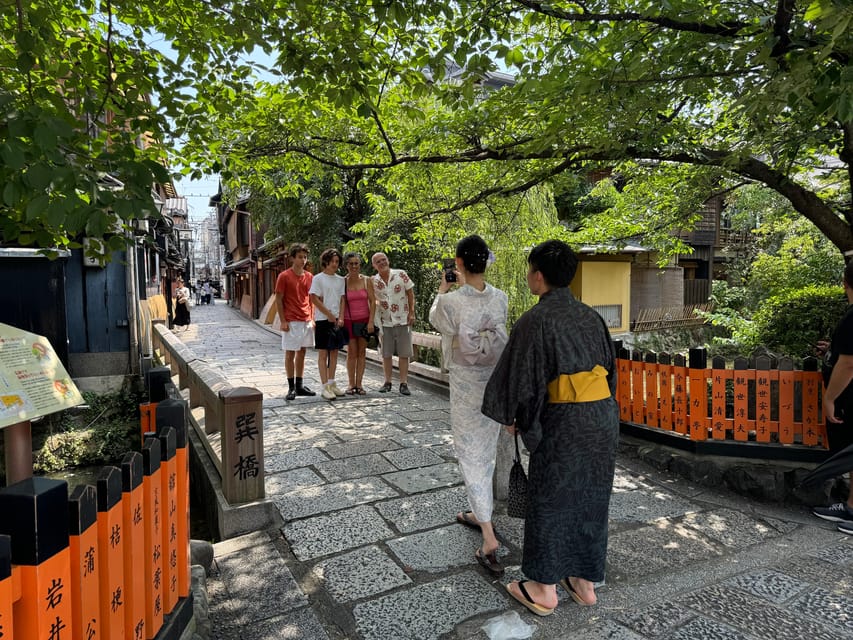
Your day kicks off with Gion Shirakawa Street, known for its scenic walkways and traditional tea house atmosphere. The key to enjoying this part is staying aware of your pace. The street looks photogenic, but it’s also a living neighborhood. Keep your camera ready, but don’t pause in the middle of the sidewalk where others need to pass.
Next comes Hanamikoji Street, which is famous for historic architecture and the possibility of spotting geisha in the area. Even if you don’t see anyone, the street itself gives you the visual rhythm of Gion. Narrow lanes, old facades, and that slight sense of Kyoto moving on a different clock.
A practical tip: when you’re on these streets, aim your photos at storefront details and sightlines rather than trying to capture crowd-perfect portraits. You’ll get better images, and you’ll keep things smooth for everyone around you.
This is also a good moment to learn the difference between what you’re seeing and what you’re allowed to do. You might be tempted to treat every doorway like a museum entrance. Don’t. Just look, walk, and follow your guide’s lead.
Yasaka Shrine and Kōdaiji: Shinto mood, then Buddhist garden time
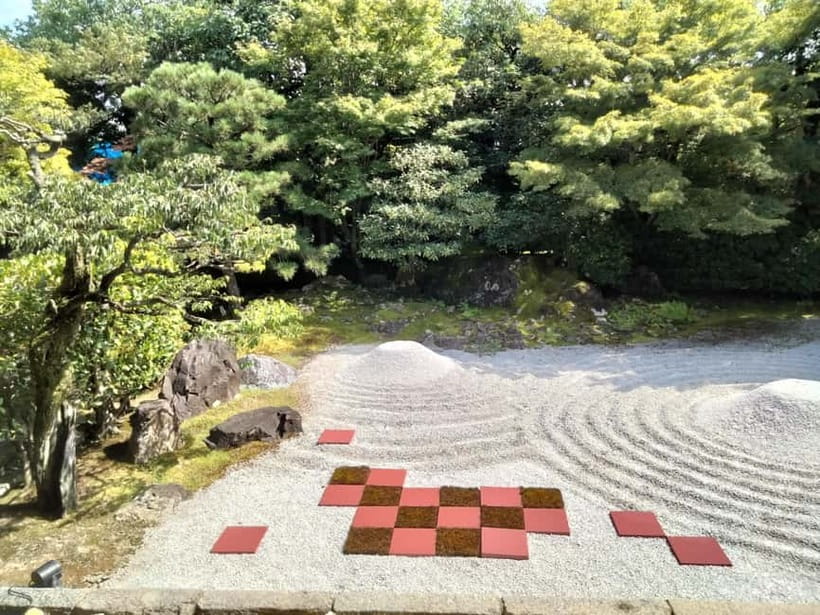
After the Gion streets, the tour shifts into Shinto with Yasaka Shrine. This stop gives you a quick, readable introduction to Kyoto’s religious landscape. The important thing isn’t just the buildings. It’s the feel: a space designed for worship and community practice, not just photo ops.
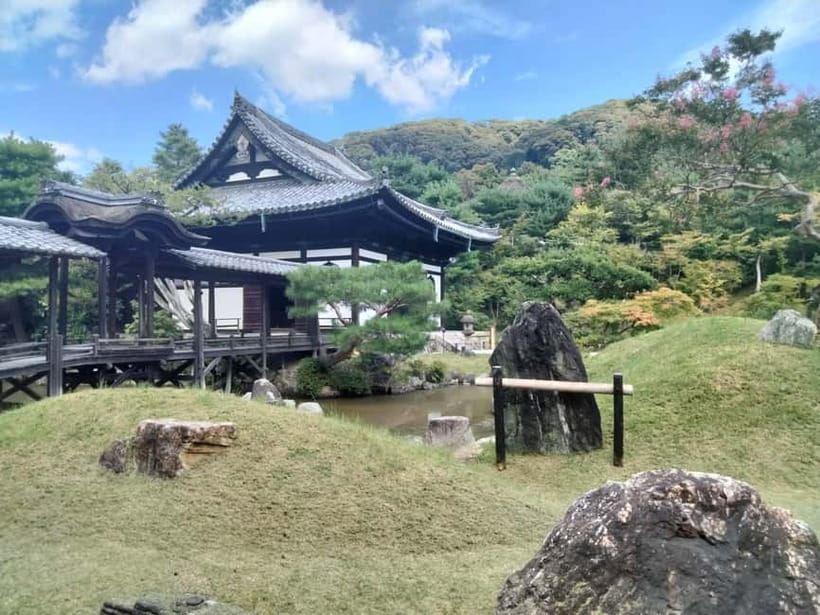
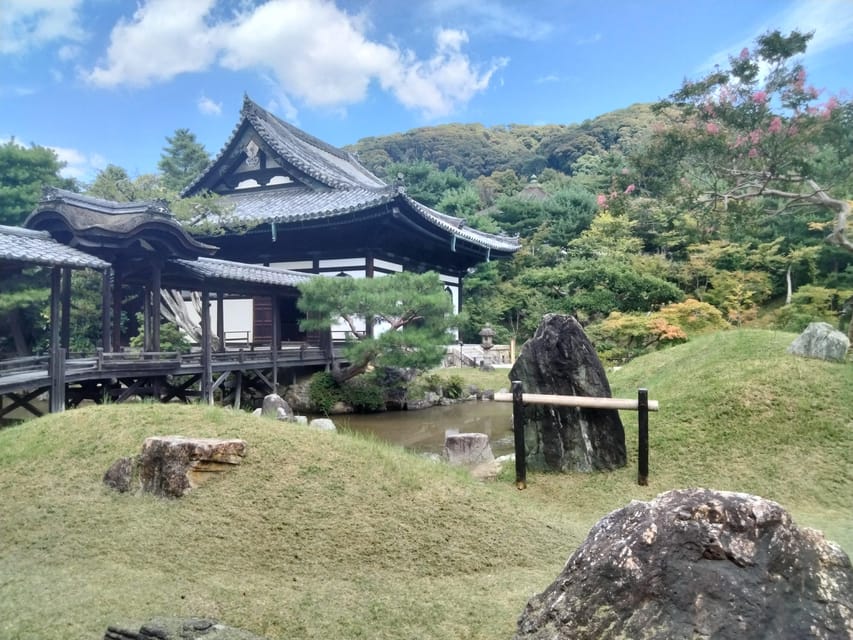
From there you head to Kōdaiji Temple, with about an hour here. That length is the sweet spot. Too short, and you only skim. Too long, and you lose the thread. With a focused visit window, you can actually slow down for architecture and temple grounds instead of treating it like a checklist.
Kōdaiji is also a bridge stop in the day: it helps you connect what you saw at Yasaka Shrine with what comes next. Kyoto’s temples and shrines aren’t interchangeable, and the guide can help you notice the differences in purpose and design as you move.
One thing to keep in mind: temples can be popular, and Kyoto has its own “everyone wants to see the view” moments. If you want quieter time for looking, go when your guide suggests, not when you feel like stopping for photos.
Entoku-in: the calmer pause that adds meaning
The tour then brings you to Entoku-in, a shorter visit (about 25 minutes). This is exactly the kind of stop that makes a guided day feel smarter. If you only hit the biggest headline attractions, your day can feel like a series of highlights with no connective tissue.
Entoku-in’s value is pacing. You get a breather and a change of tone. It’s long enough to notice details, but not long enough to burn you out before Kiyomizu-dera. Think of it as a “reset button” for your brain between major stops.
When you’re choosing how to spend time at smaller temple locations, your instinct might be to see everything fast. Resist that. Spend your attention on the most important visual features your guide points out, then step back and take in the space as a whole. That’s when Kyoto stops being a list and starts becoming a place.
Lunch in Gion: plan your refuel, then keep moving
You’ll have about an hour for lunch in Gion. Lunch isn’t included, so you’ll want to make a decision quickly once your guide gives you options.
Since this is a walking-heavy route, avoid the trap of a super-long sit-down meal unless you’re confident you won’t lose time. You want food that’s satisfying and doesn’t drag. If you have dietary restrictions, tell the provider in advance so your guide can steer you toward workable choices.
Also, if you can, eat slightly earlier than later. Big viewpoints later on can mean lines and slower foot traffic. A calm meal sets you up to enjoy Kiyomizu-dera instead of rushing through it.
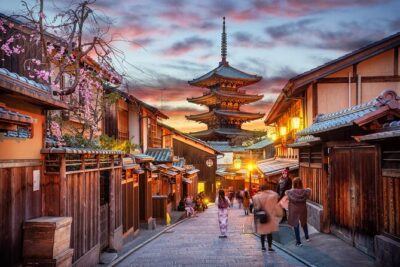
Loop the big Kyoto sights in one run



Kiyomizu-dera: UNESCO views, stairs, and the payoff moment
Kiyomizu-dera is the big star on this tour, with about 1.5 hours. It’s a UNESCO World Heritage site, and you’ll feel that importance as soon as you see the approach. The place is built for attention: big structures, dramatic sightlines, and that classic Kyoto mix of reverence and spectacle.
What I love about giving this site time on a tour like this is that it lets you do more than stare from one angle. You can move through key areas, slow down where it matters, and actually absorb the scale and historic architecture rather than just passing through.
That said, be realistic. Kiyomizu-dera is popular. You’ll likely encounter crowds and lines, especially at peak hours. Your best move is to follow your guide’s timing and focus on one or two viewpoints before trying to chase the perfect photo. The crowd density can shift quickly as people move, and your guide knows how to keep things flowing.
Comfort tip: wear shoes that forgive long walking and uneven stone. You’ll spend time on foot throughout the day, and major temples add extra steps.
Yasaka Koushindo: colorful wish balls with a practical twist
Next is Yasaka Kōshin-dō, known for colorful wishes balls. This is one of those stops that feels fun without turning into a gimmick. The ritual gives you something hands-on and personal—like a small moment of intention in the middle of a big sightseeing day.
What makes this worth your time is the way it breaks up the heavier tone of temples. Instead of only looking at old wood, stone, and sacred space, you participate in a tradition that people still treat as meaningful today.
If you’re the type who likes to understand what you’re doing, use this stop to ask your guide about how these rituals fit into daily life and beliefs in Kyoto. Even a short explanation can change how you remember the experience.
Yasui Kompira-gū: blessings for habits and relationships
The final shrine on the route is Yasui Kompira-gū, a distinctive shrine where visitors can seek blessings for breaking bad habits and ensuring good relationships. This is where the tour becomes more than a visual tour. It turns into a day with a theme: self-improvement and connection, expressed through a religious framework that people take seriously.
You’ll spend about 20 minutes here, which is enough time to experience the space respectfully and still stay on schedule for the return to the meeting point.
This stop also works well as a “close out” moment. After Kiyomizu-dera and all the architectural awe, you get a calmer, more reflective end. It’s the kind of finish that helps the day feel coherent, not just busy.
Price and value: $102 for a long day with real inclusions
At $102 per person for 450 minutes, this tour is priced like a full guided day in Kyoto. What makes it feel fair is what’s included: entry tickets to Kōdaiji Temple, Entoku-in, and Kiyomizu-dera, plus the guide.
If you were to do these stops on your own, you’d still spend time figuring out ticketing, timing, and how to stitch together efficient routes across Gion and the temple circuit. The guide is what turns separate locations into a plan you can follow without stress.
Lunch is not included, so budget that separately. Still, one un-included meal is manageable when the ticketed attractions are already covered. With a walking day, your biggest “hidden cost” is energy—so treat the included guidance as a way to buy convenience.
Tour pacing and group size: why it feels relaxed instead of frantic
This is offered as private or small groups, and it shows in how you experience the stops. Small-group tours tend to move with less friction. You’re less likely to feel swept along, and your guide can help you slow down at the right moments.
Two guide behaviors that really elevate the experience: adapting if you’ve already seen some sights, and adjusting timing if needed. In one booking, the guide Yoshi handled a two-hour shift and even worked to add an extra temple when possible. Another guide, Saya built an itinerary different from the standard approach when the group had prior knowledge, and she also pointed people toward a good restaurant and shopping area afterward.
Even if you don’t ask for changes, that mindset matters. It usually means you’ll get clearer explanations, and you’ll spend more time looking instead of wondering.
Who should book this Kyoto Gion tour
You’ll be happiest on this tour if you want:
- A guided walking day that hits the major Kyoto sights in a sensible order
- Time allocated to Kiyomizu-dera rather than a quick stop
- A mix of shrines and temples, plus rituals like wish balls and habit/relationship blessings
- A plan that includes some quieter stops, like Entoku-in, so the day feels thoughtful
You might reconsider if:
- You hate crowds and prefer very early or very late temple visits
- You want lunch included
- You’re expecting a short tour with minimal walking
Should you book it?
If you want a practical, well-paced Kyoto sampler that still leaves room to actually see and understand, this is a strong choice. The included tickets are a real cost saver, and the itinerary balances big-name stops with quieter moments that give the day meaning. The only serious planning you’ll need is bringing energy for a long walking day and budgeting for lunch.
If that fits your style, book it and use the guide time well. Ask questions at the shrines, follow their timing at Kiyomizu-dera, and don’t rush the wish-ball and blessing moments. Those are the parts you remember.
FAQ
How long is the Kyoto Gion highlights and hidden treasures guided tour?
The tour duration is 450 minutes (about 7.5 hours).
Where is the meeting point?
Meet your guide in front of the statue of Izumo no Okuni, located at the east end of Shijo Ohashi bridge.
What’s included in the price?
Included are entry tickets to Kōdaiji Temple, Entoku-in, and Kiyomizu-dera, plus a live guide.
Is lunch included?
No. Lunch is not included in the price, though you do get about an hour for lunch during the tour.
Which languages are available for the guide?
The tour offers a live guide in English and Japanese.
Which sites are part of the guided itinerary?
The tour includes stops at Gion (including Gion Shirakawa Street and Hanamikoji Street), Yasaka Shrine, Kōdaiji Temple, Entoku-in, Kiyomizu-dera, Yasaka Kōshin-dō, and Yasui Kompira-gū.
Can I get a refund if my plans change?
Yes. There is free cancellation up to 24 hours in advance for a full refund.
More Tour Reviews in Kyoto


More Kyoto Sightseeing Loops

Still in Gion? Keep Going
Just added: more Kyoto tours to browse








Gion & Geisha District Tours, compared.
 ★ 4.7Kyoto Geisha Walking Tour: Gion District & Hidden GemsFrom $253,273 reviews
 ★ 4.9Gion Magical Night Walking Tour with Geisha TriviaFrom $242,393 reviews
 ★ 4.7Gion Geisha District Walking Tour – Stories of GeishaFrom $202,187 reviews
 ★ 4.9Best of Kyoto: Gion, Geisha, Pagodas & CobblestonesFrom $242,058 reviews
 ★ 4.5Night Walk in Gion: Kyoto’s Geisha DistrictFrom $212,003 reviews
 ★ 5.0Kyoto Night Foodie Tour in Gion (9+ dishes + 6 Sake tastings)From $1631,762 reviews
 ★ 5.0Kyoto Gion Geisha District Walking Tour – The Stories of GeishaFrom $251,441 reviews
 ★ 5.0Kyoto Gion: 2-Hour Geisha Culture & History Walking TourFrom $231,186 reviews
Browse the lists this tour appears in