
Reviewed · KYOTO PRIVATE GUIDED TOURS
Kyoto Food & Culture 6hr Private Tour with Licensed Guide
Kyoto eats get easier when someone else maps the day. What I like most is the private, licensed-guide format, which helps you zero in on great food spots and read what you’re seeing. I also love the way the route mixes Nishiki Market with Kyoto’s older neighborhoods, so it feels like culture and cravings at the same time. One possible drawback: the tour includes guidance, but food, drinks, and many entrance fees are not included, so your total spend will depend on what you eat.
This is the kind of day that works best when you’re flexible. You can steer the route based on your interests, and you’re not stuck herding with strangers through narrow streets and long lines. A guide I saw named Lily stood out for how she explained the meaning behind religion and tradition, not just the postcard facts, and that style can be great if you’re traveling with mixed ages.
Before you book, think about one more reality: Kyoto is big. With temples spread across the city and a possible trip toward Uji (for Byodoin), you’ll want comfy shoes and patience.
In This Review
- Key things that make this Kyoto food and culture tour worth your time
- A 6-hour Kyoto private tour: how the pacing actually feels
- Picking 3 to 4 stops: customizing without losing the big Kyoto hits
- Nishiki Market: Kyoto’s Kitchen in a narrow five-block walk
- Gion and Pontocho alleys: geisha district without the getting-lost feeling
- The sweet stop at the Site of Kitaza
- Kennin-ji Temple: dry gardens right near the city’s motion
- Temple-heavy Kyoto: Imperial Palace, Nijo Castle, and entrance-fee reality
- Uji’s Byodoin detour: Phoenix Hall is the headliner
- Fushimi Inari-taisha: shrine visit with a guide-led angle
- Arashiyama-class temples and the long-hike worry (yes, be prepared)
- Logistics that matter: pickup, mobile ticket, and walking reality
- Price and value: paying for guidance, not just sightseeing
- Should you book this Kyoto Food & Culture private tour?
- FAQ
- How long is the Kyoto Food & Culture private tour?
- Is this a private tour or a group tour?
- Does the tour include lunch or food?
- Are entrance tickets included for temples and castles?
- Can I customize the stops?
- Is pickup provided?
- Can I cancel for a full refund?
Key things that make this Kyoto food and culture tour worth your time
- A private, licensed local guide helps you navigate food stalls, temple etiquette, and neighborhood details without stress
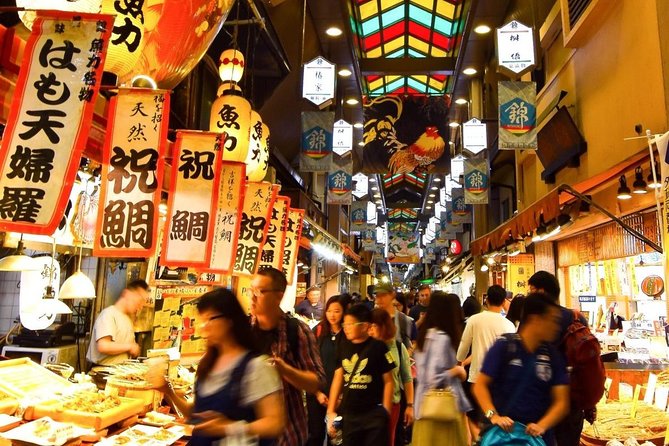
- Nishiki Market, Kyoto’s Kitchen style: over 130 food shops along a tight, five-block strip
- Gion and Pontocho strolling: narrow alleys where you learn what’s around you instead of just passing through
- You pick 3–4 sites from the options, so the day can match your interests (food-heavy, temple-heavy, or balanced)
- A mix of free and paid-entry stops means you can manage costs if you plan your expectations
- A route that can reach Uji for Byodoin Temple’s Phoenix Hall, but with extra travel time
A 6-hour Kyoto private tour: how the pacing actually feels
A 6-hour window in Kyoto can be either perfect or punishing, depending on how you plan. Here, the private format matters because you’re not locked into one pace for one big group. You can slow down for snacks, speed up when you’re walking through a covered market lane, and ask quick questions as they come up.
The guide also changes how you experience places. Kyoto has lots of “look but don’t touch” moments, plus small etiquette rules that aren’t always obvious. A licensed local guide helps you avoid awkward confusion, like when you’re at shrines and temples where the flow of visitors matters.
Cost-wise, I’d call this a guidance-and-access value deal. At $153.11 per person, you’re paying for a private professional instead of just hopping between stops yourself. But you should mentally budget extra for what you choose to eat and the entrance tickets where they apply.
Have a local lead the way on more Kyoto tours

Picking 3 to 4 stops: customizing without losing the big Kyoto hits
The included part you’re choosing is smart: you can customize a tour around 3–4 sites from the set of highlights. That’s a good fit if you’re the type who wants control, or if your travel party has different priorities (one person wants street food, another wants temples and architecture).
At the same time, the overall program has a lot of famous places baked in—Nishiki Market, Gion, Pontocho, plus several major temple and heritage stops. So the practical move is to confirm which 3–4 stops will be emphasized on your day. If you try to do everything, it can turn into a photo sprint. If you choose well, you’ll get time to actually taste and understand what you’re seeing.
A helpful strategy: decide your “food hour” and your “culture hour.” Nishiki Market and the nearby neighborhoods tend to deliver the best food density. Then use your remaining selected stops for temples/castles where the guide can help you appreciate the story and layout.
Nishiki Market: Kyoto’s Kitchen in a narrow five-block walk
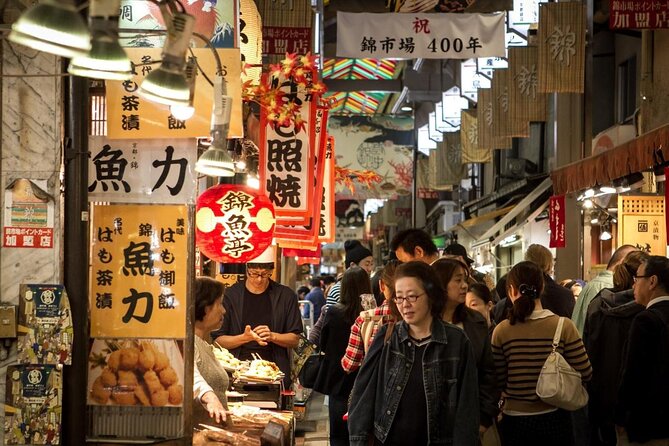
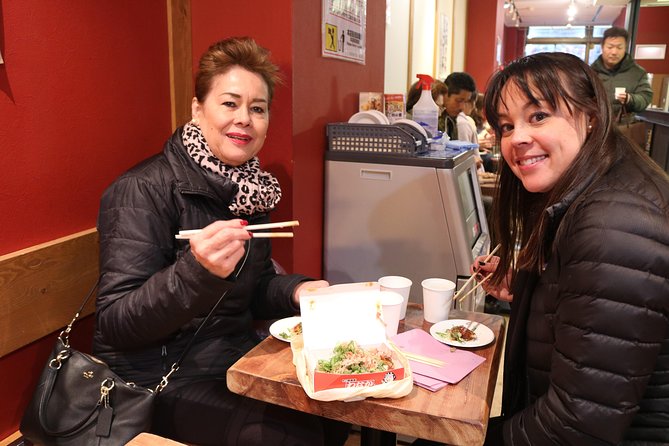
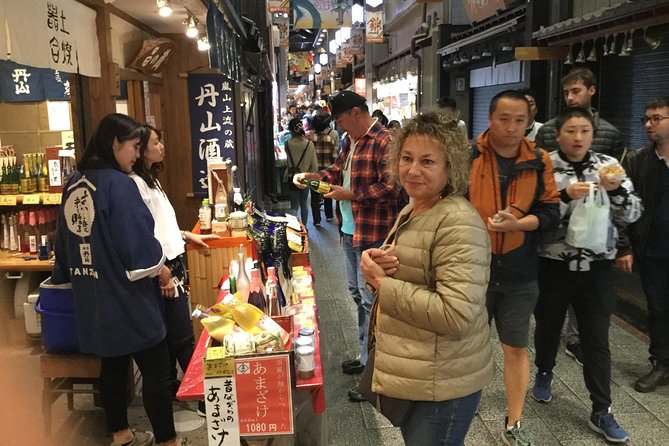
Nishiki Market is the start I love for this kind of tour, because it compresses a lot into a small area. Expect a tight, lively shopping strip about five blocks long, lined with 100+ shops and restaurants and often described as having over 130 food shops. Translation: you can graze your way through Kyoto without needing a car or a long commute.
This is where street food and “food culture” meet. You’ll likely see items you’ve never tried—small bites, packaged snacks, and stalls that feel designed for sampling. The guide’s value here isn’t just pointing at food. It’s explaining what to look for and how to make sensible choices when you’re standing in front of a wall of options.
Time on the market stop is brief—about 30 minutes—so I’d treat it as a taste-and-learn moment. If you’re the type who can’t resist eating everything in sight, plan to keep walking after your guided time, or budget for more food later at Pontocho.
Gion and Pontocho alleys: geisha district without the getting-lost feeling
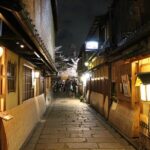
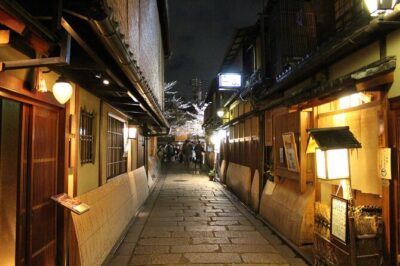
Gion can be intimidating if it’s your first time. The streets are narrow and the sights are layered, so it’s easy to wander in circles. With a guided walk, you get reassurance and context, plus a smoother path through alleyways that you might otherwise treat like random scenery.
You’ll spend about 1 hour in Gion territory, and that time matters. It’s enough to notice the transitions in the streetscape and understand why certain areas feel more formal or more residential. It’s also a great chance to ask questions about what you’re seeing in the district.
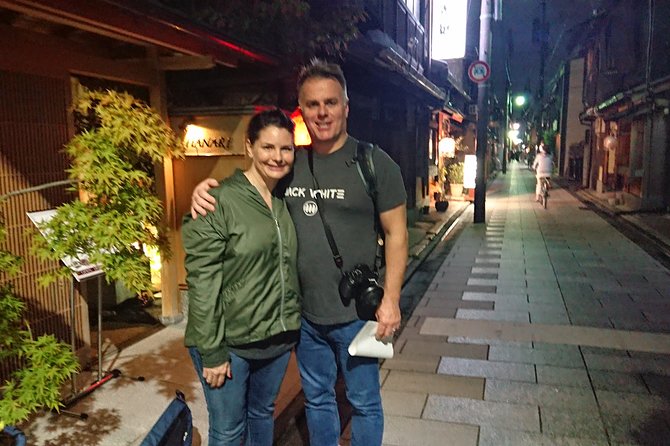
Then comes Pontocho, one block west of the Kamogawa River, running from Shijo-dori to Sanjo-dori. Expect a 30-minute stroll in a tight dining alley packed with restaurants. Even if you’re not eating immediately, this is where Kyoto’s restaurant culture feels physical—wood facades, lantern-lit mood, and the sense that food and place are the whole point.
If you’re planning your day around eating, I’d treat Pontocho as your “choose-your-next-stop” area. Many of the best meals happen when you use your guided knowledge to pick the right kind of restaurant for your tastes.
The sweet stop at the Site of Kitaza
Kyoto has a real talent for turning food into a story. The short stop at the Site of Kitaza is built around traditional sweets inside a building that was renovated from a kabuki theater. That link between theater culture and sweets makes the stop feel more than just a snack break.
You’ll have about 15 minutes here, with the focus on enjoying those sweets in that specific setting. The advantage of a quick, focused stop is that it doesn’t eat your whole day, but it still adds something Kyoto-specific. If your group is food-first, this is a nice palate-and-culture boost between the busier neighborhoods and the temples.
Other Kyoto tours and experiences to compare



Kennin-ji Temple: dry gardens right near the city’s motion
Kenninji Temple is close to major streets like Hanamikoji and Shijo, so it’s not the kind of place that feels cut off from the world. That’s actually a plus. You’re in the middle of Kyoto, and then you step onto temple grounds that feel more open and calm.
Expect a very short time here—about 1 minute in the program—but the site is notable for its two karesansui dry landscape gardens. Even with limited time, a guide can help you see what you’re looking at, because these gardens aren’t just decoration. They’re designed landscapes with meaning in the way stones, lines, and negative space are arranged.
Since admission isn’t included for this stop, keep an eye on costs. If you’re trying to stay lean, ask the guide what parts are most worth your time during a short visit.
Temple-heavy Kyoto: Imperial Palace, Nijo Castle, and entrance-fee reality
This part of the day shifts from neighborhoods to heritage sites. Here’s what you can expect:
- Byodoin Temple (Phoenix Hall): known for the Phoenix Hall, a National Treasure of Japan and a UNESCO World Heritage Site. This is in Uji city, and extra travel time is expected, so it can feel like a bigger time commitment.
- Kyoto Imperial Palace: the former residence of Japan’s Imperial family until 1868, after the emperor and capital moved to Tokyo.
- Nijo Castle: a UNESCO World Heritage site built in 1603 as the Kyoto residence of Tokugawa Ieyasu, the first shogun of the Edo period.
For Kyoto Imperial Palace and Nijo Castle, the program lists about 30 minutes each. That’s enough time to walk the key areas and understand the big picture with help from your guide, but it’s not long enough to “study” every corner. Think of it as a guided orientation that sets you up to appreciate what you see.
Entrance fees for these sites aren’t included for you, so your final spending depends on which paid entries you choose and what the guide includes on your day.
Uji’s Byodoin detour: Phoenix Hall is the headliner
If your route includes Byodoin Temple, this is a highlight worth taking seriously. The reason is the Phoenix Hall itself—famous, historic, and officially recognized as a major cultural asset, not just a pretty building.
The key planning note is the timing. Uji is in Kyoto prefecture, but it’s not “next door,” and the program flags that extra travel time is expected. That means this stop can change the feel of your day from neighborhood-hopping to a more structured outing.
If you’re picking 3–4 sites and you’re deciding between one heritage temple and multiple smaller stops, Byodoin is a strong candidate for people who want one “big ticket” moment with clear cultural weight.
Fushimi Inari-taisha: shrine visit with a guide-led angle
Fushimi Inari-taisha is one of those places where the best experience often depends on how you approach it. With a guided visit (about 15 minutes in the program), you’re not just walking through the iconic torii corridor. You also get help understanding the shrine’s background and what’s typically off the standard tourist path.
The program description even hints at parts that are off-limits to ordinary tourists after the tour. Since the details are not fully spelled out here, I’d treat this as an extra reason to go with a licensed guide and ask directly what access or insights you’ll get for your specific date.
If you’re sensitive to crowds or you don’t love doing long hikes, the short guided stop can be a good way to still get the essence without turning your day into a stamina test.
Arashiyama-class temples and the long-hike worry (yes, be prepared)
The program includes Tenryuji Temple in the Arashiyama district, plus a later temple run. Tenryuji is described as the most important temple in Arashiyama, ranked first among Kyoto’s five great Zen temples, and listed as a world heritage site. Time is very short—about 1 minute—so your guide’s explanations matter more than your walking stamina.
Then you have major classics:
- Kiyomizu-dera Temple: known as one of Kyoto’s most popular temples, with a comprehensive 1-hour guided tour style included in the program description.
- Sanjusangendo Temple: famous for 1001 statues of Kannon (Rengeo-in), a detail that makes this stop feel specific and memorable.
These two are the kind of sites that can eat time. The advantage of having a guide is that you’re not just trying to decide where to go inside once you’re there. You get a path that matches the time you have.
Logistics that matter: pickup, mobile ticket, and walking reality
This tour offers pickup, and you’ll have a mobile ticket. It’s also described as near public transportation, which matters because Kyoto can be easier on foot and transit than by taxi, depending on where you’re staying.
What isn’t included is your transport cost for you and the guide, plus entrance fees (where applicable) and food/drink purchases. So even with pickup, you should be ready for some walking between stops—especially around Nishiki Market, Gion, and Pontocho, where the streets are naturally narrow.
Also, this is a private tour, so it’s only your group. That’s a big deal if you’re traveling with family, older folks, or anyone who gets tired fast. You can set the pace instead of negotiating it with strangers.
Price and value: paying for guidance, not just sightseeing
At $153.11 per person for about 6 hours, the value depends on what you would do alone.
If you self-tour, you might spend less on the guide but more on confusion. Kyoto’s food culture isn’t just “where to eat.” It’s what to order, when to snack, and how to read menus and stalls without wasting time. A private licensed guide brings efficiency. You get a route, context, and the ability to customize your selected sites.
The other side of value is that you’re not paying for entrance fees, lunch, or the cost of food and drinks. Those are separate. If you’re already planning to graze heavily (which Nishiki Market encourages), your overall trip cost can rise quickly. But that’s also part of the experience—this tour is built around eating and understanding what you’re eating.
If you like food and cultural context more than chasing every famous temple photo, this price can feel fair. If you want to minimize spending and prefer to eat wherever you stumble upon, a self-guided day might be cheaper.
Should you book this Kyoto Food & Culture private tour?
I’d book it if you want a Kyoto day that mixes food with meaning, and you don’t want to plan every turn. The private licensed-guide setup is especially helpful if your group includes different ages or different interests, because a good guide can adjust the pacing and explanations on the fly.
I wouldn’t book it as-is if you’re purely budget-maxing and determined to skip guides, since entrance fees and what you eat aren’t included. Also, if you dislike travel time, pay attention to whether your day includes Byodoin in Uji, because that adds time beyond the city center.
FAQ
How long is the Kyoto Food & Culture private tour?
The tour is about 6 hours (approx.).
Is this a private tour or a group tour?
It’s a private tour. Only your group participates.
Does the tour include lunch or food?
Lunch is not included, and the cost of food and drinks is not included.
Are entrance tickets included for temples and castles?
Entrance fees are not included for you. Some stops are listed as free, but other sites have admission not included.
Can I customize the stops?
Yes. The route can be customized, and the included portion is a customizable tour of your choice of 3–4 sites.
Is pickup provided?
Pickup is offered, and the meeting area is near public transportation.
Can I cancel for a full refund?
Yes. You can cancel up to 24 hours in advance for a full refund.
More Tours in Kyoto
More Tour Reviews in Kyoto
More Private Tours of Kyoto

Just added: more Kyoto tours to browse




Kyoto Private Guided Tours, compared.
 ★ 5.0Private Kyoto Tour with a Local, Highlights & Hidden Gems, PersonalisedFrom $1021,543 reviews
 ★ 5.0Kyoto 6hr Private Tour with Government-Licensed GuideFrom $1551,369 reviews
 ★ 5.010 Must-see Spots in Kyoto One Day Private Tour (up to 7 people)From $1791,108 reviews
 ★ 5.0Kyoto 4hr Private Tour with Government-Licensed GuideFrom $109629 reviews
 ★ 4.8Private Tour with Local Licensed GuideFrom $106463 reviews
 ★ 5.0Private Kyoto Tour with Licensed Guide & Vehicle (Max 15 persons)From $634417 reviews
 ★ 5.0Kyoto Customized Private Tour: See Top Attractions in 1 DayFrom $132342 reviews
 ★ 4.6Kyoto/Osaka: Kyoto and Nara Customized Private Guided TourFrom $477258 reviews
Browse the lists this tour appears in