
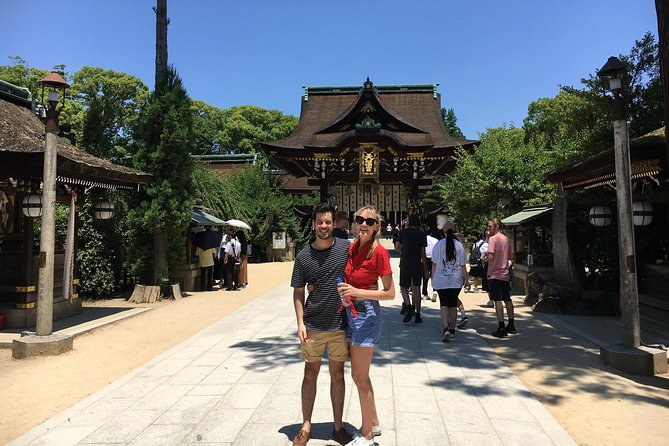
Reviewed · KYOTO BIKE & E-BIKE TOURS
Full Day Biking Tour Exploring the Best of Kyoto
Kyoto is best seen at bike speed. This small-group ride blends major sights with quieter side streets, so you cover real distance without feeling herded, and guides like Paul, Karl, Juan, Jay, Jamie, and Indra tend to turn stops into stories you can actually use later. I especially love the easy-to-follow route and the fact that lunch plus bottled water are built in. One thing to consider: it’s a long day (about 7–8 hours) and you’ll need to be comfortable riding for stretches, even if the course is generally manageable.
You start with a real bike fit, helmet on, and a plan that keeps you moving through Kyoto’s temples, shrines, and neighborhoods. The Golden Pavilion and Fushimi Inari are the headliners, but the stops around them matter too—think less-crowded spiritual sites and a Gion look that feels timed instead of random. My only heads-up is that a couple riders note the day can mean some fatigue by the end, so plan for sweating and bring the right clothing.
In This Review
- Key things to know before you pedal through Kyoto
- Why a Kyoto bicycle tour is the smart move
- Starting out at Cycle Kyoto near Kyoto Station
- Nishi Honganji: a big wooden building without the usual pressure
- Kitano Tenmangu: shrine calm before the big hits
- Kinkaku-ji (Golden Pavilion): the photo stop with real context
- Riding past the former imperial seat: a Kyoto grandeur move
- Gion: geisha district views with a guide’s sense of timing
- Tofuku-ji: the quieter temple-view break
- Fushimi Inari-taisha: torii gates, but with a smarter route
- How hard is the biking, really?
- What’s included: the value math makes this easier
- The small-group vibe: why group size changes everything
- What you’ll likely remember most
- Who should book this full-day Kyoto cycling tour
- Should you book it? My decision guide
- FAQ
- How long is the Kyoto full-day biking tour?
- What’s included in the price?
- How many people are in the group?
- How physically demanding is the ride?
- What sites do we visit?
- Do I need to worry about food or dietary requirements?
- Is the tour dependent on weather?
- What age is required to join?
Key things to know before you pedal through Kyoto
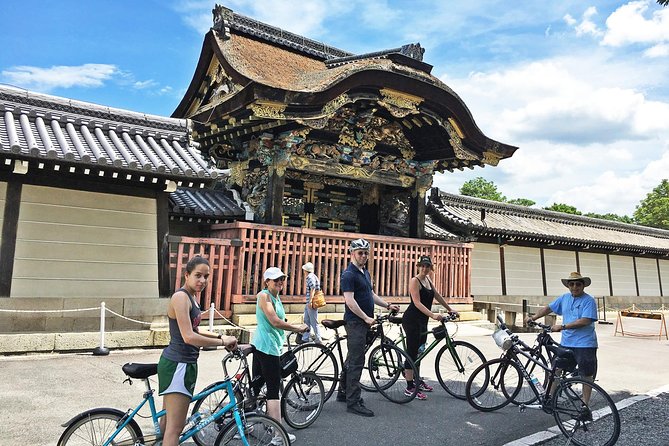
- Small group size (up to 8) means you’re not fighting for attention at photo stops
- Bike + helmet + water + lunch included, so you’re not doing mini-budget math all day
- Kinkaku-ji entry included, while several other major stops are free to visit on this route
- Imperial Palace-area riding gives you Kyoto’s grandeur from a new angle, not just on foot
- Fushimi Inari with crowd-smart routing, so the torii gates don’t feel like one long bottleneck
Why a Kyoto bicycle tour is the smart move
Kyoto can be slow—walking between places adds up fast, and buses don’t always get you onto the lanes where the city feels real. A bike tour solves the main problem: you get motion, views, and context without spending your whole day in transit.
I like that this tour keeps things active but not stunt-like. You’re sightseeing from the seat of a bicycle, so streets, storefronts, river edges, and temple approaches all become part of the experience, not just the destinations.
More of Kyoto at handlebar pace
Starting out at Cycle Kyoto near Kyoto Station
You meet at Cycle Kyoto at 7 Higashikujō Nishisannōchō in Minami Ward, and the day starts with a quick meet-and-greet before you get your bike fitted. This part matters more than it sounds. A good fit reduces numb hands and sore posture later, especially on a full-day ride.
The shop is very convenient to reach, and once you’re mounted you’re not wasting time. You also get your helmet right away, which sets the tone: this is organized cycling, not a free-for-all.
Nishi Honganji: a big wooden building without the usual pressure
One of the first stops is Nishi Honganji, described as both one of Kyoto’s less-visited religious sites and one of the world’s largest wooden buildings. That combination is why it works early in the day: you get scale and atmosphere without arriving after the crowds have fully formed.
You’ll spend enough time to look around, take in the religious setting, and absorb what makes the place important—then you move on before the whole day turns into one long queue.
Kitano Tenmangu: shrine calm before the big hits
Next up is Kitano Tenmangu, where you join local shrine-goers and enjoy the tranquil mood. This stop is valuable because it shifts the day from purely sightseeing to something closer to how locals experience places: they’re not treating it as a checklist.
If you like learning how Japanese shrine life fits into daily routines, this is the moment. You get time to watch, look, and connect the dots before you hit Kinkaku-ji’s fireworks.
Kinkaku-ji (Golden Pavilion): the photo stop with real context
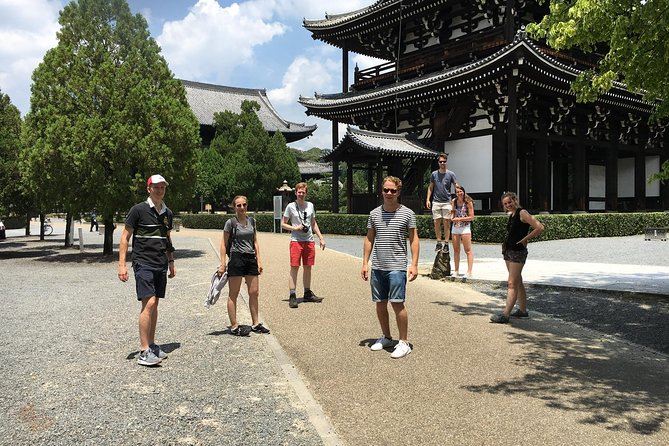
Then comes Kinkaku-ji, the Golden Pavilion. It’s one of Japan’s most visited attractions, so it can be intense if you arrive alone and wing it. Here, you get commentary along the way and a set window to enjoy the temple and its grounds.
You also get time to grab an ice cream and relax, which is a small detail that makes the stop more human. And because Kinkaku-ji admission is included, you’re not juggling tickets while trying to see everything.
If you care about more than just photos, the guided explanation helps you notice the parts that typically fly by: why it’s famous, what you’re looking at, and how it fits into Kyoto’s spiritual map.
Loop the big Kyoto sights in one run


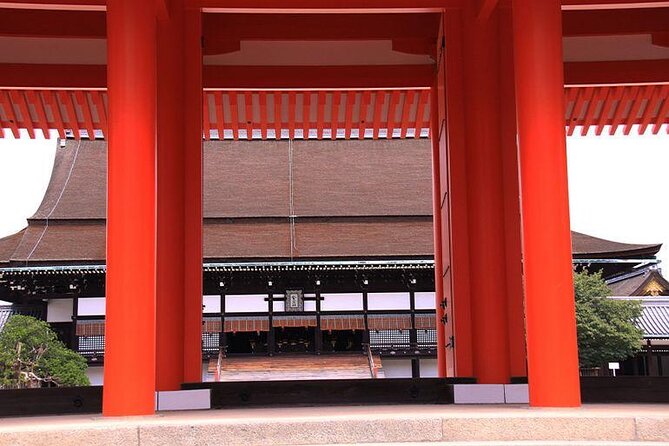
Riding past the former imperial seat: a Kyoto grandeur move
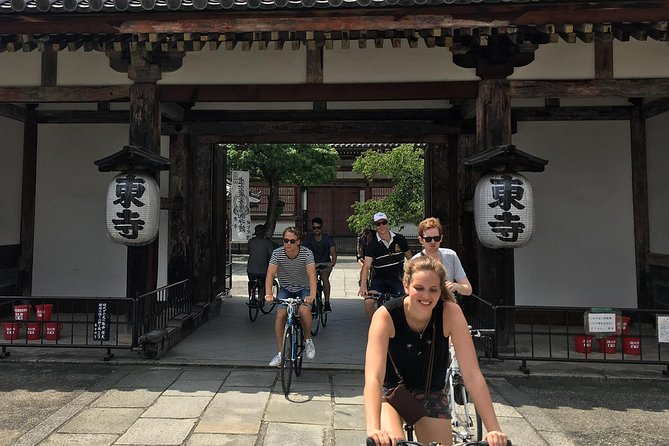
Between the major temple and neighborhood moments, there’s a ride through the grounds of the former seat of Japan’s imperial family. Seeing palace-adjacent space from a bike changes the feel. You get distance, edges, and layout cues you can’t pick up as quickly on foot.
This is also one of those “bridge moments” in the day—less time spent in lines, more time moving with purpose. You’ll learn about the past as you ride, which helps the area connect to everything else you’ve seen so far.
Gion: geisha district views with a guide’s sense of timing
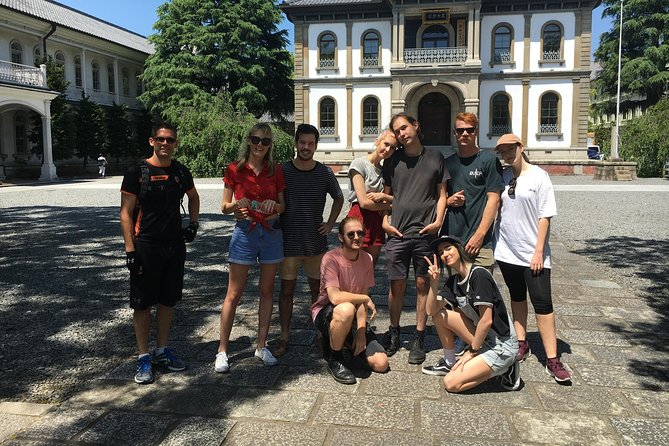
Gion is next, and this stop is about more than walking the famous lanes. You’ll have time to discover the secrets of this hidden world and, yes, you might catch a glimpse of geisha entertainers.
What makes this work on a bike is that you can get oriented faster. You see what’s nearby, how the streets connect, and which corners are worth lingering at—without feeling like you’re blocking everyone else.
You’re also given a focused window (so you’re not stuck there all day). That helps keep the day balanced, because Gion is usually where people burn time.
Tofuku-ji: the quieter temple-view break
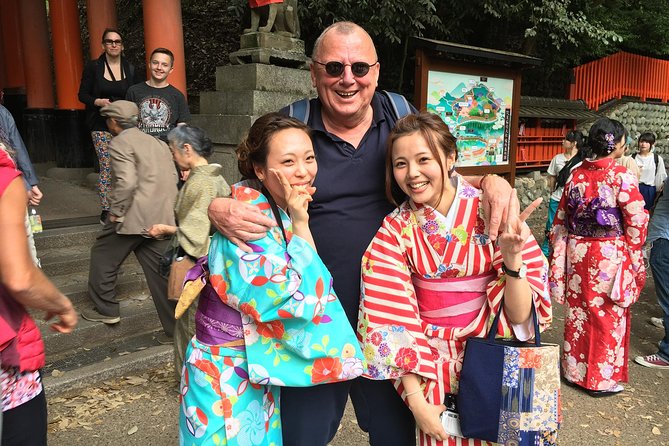
Tofuku-ji is a quick stop, but it’s designed like a breather. You swing by to enjoy stunning views from a bridge and admire spacious surroundings at one of Japan’s oldest and largest Zen temples.
This is a good “reset” moment mid-tour. You get scenery and architectural interest without the heavy time commitment of a full temple exploration. If your legs are starting to feel it, this stop gives you a chance to slow down and just watch.
Fushimi Inari-taisha: torii gates, but with a smarter route
Fushimi Inari-taisha is the most visited attraction in Kyoto, and it can be tough to navigate on your own. The key advantage here is that your guides pick a path between crowds so you can enjoy the experience rather than constantly stopping and starting.
You get a set window to take it in, and you don’t have to plan your own route through a maze of torii gates. That’s not just convenient—it changes your mood. When you’re not constantly fighting congestion, you can actually read the place.
This is also where the guide’s storytelling becomes extra useful. You end up understanding what you’re seeing instead of just walking under repeating shapes.
How hard is the biking, really?
This tour is built for active travelers with moderate physical fitness, and riders must be at least 13 years old and comfortable biking. In practice, many people describe the ride as generally flat, safe, and easy to follow.
Still, it’s an all-day effort. A bike tour can be deceptive: even on easy roads, you’re working for hours. If you’re the type who gets tired late in the day, wear moisture-wicking clothes and consider how you’ll manage heat. Cloudy or not, Kyoto can still be sweaty in warmer months.
Also pay attention to bike setup. One rider noted the bikes feel comfortable for many people, but if you upgrade to a different bike model, you might feel a firmer seat after a while. Bring a bottle mindset, not a marathon mindset.
What’s included: the value math makes this easier
At $119.38 per person, the obvious question is whether you’re paying for a bike—or for a whole day of planning.
Here’s what you actually get:
- A high-quality Cannondale bicycle and helmet
- Bottled water
- Lunch (included)
- Admission at Kinkaku-ji (included)
And you do multiple major stops, some of which are listed with free admission windows. When you add up the costs of bike rental, a full day of transport, and the hassle of arranging lunch and tickets, the price starts to look less random and more like paying for smooth execution.
The lunch is also not just filler. Multiple people highlight that it’s delicious and filling. You get a hearty Japanese meal, which matters because cycling burns energy and you don’t want to spend the last third of your day hunting for food.
The small-group vibe: why group size changes everything
With a maximum of 8 travelers, this feels closer to a guided day with friends than a bus tour. You’re more likely to get clearer directions, quicker help with bikes, and attention when you’re at a stop for photos or questions.
Group size also impacts your pace. If the day gets busy, your route can adjust so you’re not stalled for ages. You get commentary at stops, and it doesn’t feel like someone is talking over you while everyone else stands in silence.
What you’ll likely remember most
People tend to leave with two kinds of memories: the big postcard hits, and the contextual moments that make the postcard hits make sense. Expect a mix of both, especially around:
- Kinkaku-ji, where the story helps you look longer than you planned
- Fushimi Inari, where crowd-aware routing changes the whole tone
- Neighborhood time around Gion, where timing and bike mobility help you orient fast
And because you cover more ground than a walking plan, you get a strong overview of Kyoto’s geography. That makes it easier to come back later and explore on your own with better instincts.
Who should book this full-day Kyoto cycling tour
This is a strong fit if you:
- Want Kyoto highlights in one day without spending the whole day on foot
- Like history and culture explanations, not just sightseeing stamps
- Are comfortable riding a bike for a long stretch
- Prefer small groups and a guide who keeps the day moving
It’s less ideal if you hate long days of physical effort or if you’re not confident biking in traffic-adjacent conditions, even if routes are planned to be safe and manageable.
Should you book it? My decision guide
If your goal is to see Kyoto’s top sites with real context and you’re okay with a full day on a bicycle, I’d book this. The combination of bike + helmet + lunch + water, plus structured stops at Kinkaku-ji, Gion, and Fushimi Inari, makes it feel like you’re paying for time saved and friction avoided.
If you’re on the fence, use one test: can you comfortably ride for several hours and still enjoy walking through temples and shrines? If yes, this tour is a great value. If not, you may prefer a shorter cycling option or a mostly walking day.
FAQ
How long is the Kyoto full-day biking tour?
It runs about 7 to 8 hours.
What’s included in the price?
The tour includes a bicycle and helmet, bottled water, and lunch. Kinkaku-ji admission is also included.
How many people are in the group?
The tour has a maximum of 8 travelers.
How physically demanding is the ride?
It’s designed for travelers with moderate physical fitness, and you should be comfortable riding a bike for a full day.
What sites do we visit?
You’ll visit places including Nishi Honganji, Kitano Tenmangu Shrine, Kinkaku-ji (the Golden Pavilion), Gion, Tofuku-ji, and Fushimi Inari-taisha Shrine, plus you’ll ride through the grounds of the former imperial family seat.
Do I need to worry about food or dietary requirements?
Yes. Dietary requirements need to be known ahead of time, so let the provider know before the tour.
Is the tour dependent on weather?
Yes. It requires good weather, and if it’s canceled due to poor weather you’ll be offered a different date or a full refund.
What age is required to join?
Riders must be at least 13 years old and comfortable riding a bike.
More Tour Reviews in Kyoto


More Kyoto Sightseeing Loops

More of Kyoto by Bike
Just added: more Kyoto tours to browse








Kyoto Bike & E-Bike Tours, compared.
 ★ 5.0Hidden Kyoto E-Biking tourFrom $1161,843 reviews
 ★ 5.0Bike Tour Exploring North Kyoto plus LunchFrom $1061,087 reviews
 ★ 5.0Arashiyama Bamboo Forest & Hidden Gems Bike Tour (Early Bird)From $106613 reviews
 ★ 5.05 Top Highlights of Kyoto Full Day Bike Tour (E-bike option)From $172511 reviews
 ★ 4.8Memory Kyoto E-Bike TourFrom $91297 reviews
 ★ 5.0E-Bike Tours of the highlights of Kyoto!!!From $109291 reviews
 ★ 5.0Afternoon Kyoto Bike Tour: Bamboo Forest, Monkeys & Hidden SpotsFrom $106283 reviews
 ★ 5.0South Kyoto in a Nutshell: Gentle Backstreet Bike Tour!From $79225 reviews
Browse the lists this tour appears in