
Reviewed · KYOTO BIKE & E-BIKE TOURS
Bike Tour Exploring North Kyoto plus Lunch
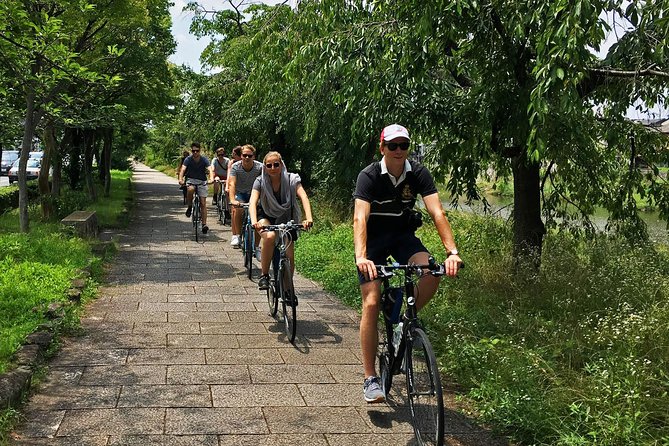
Kyoto feels different when you pedal it. This North Kyoto bike tour stitches together temples and neighborhoods in about 5–6 hours, with all cycling equipment included and temple entrance fees covered. I also like the way the route favors back streets and quieter corners, so the day feels personal rather than checklist-y. One consideration: you’ll need moderate comfort on a bike, since you ride for a meaningful chunk of the time.
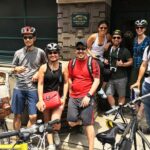
Meet your guide at Cycle Kyoto around 10:00am, get your bike fitted, and roll out with a small group capped at 8. Guides such as Mayco, Julian, Indra, Jay, Karl, Jamie, and Quinn are consistently praised for thoughtful pacing, keeping things safe, and connecting the dots between Buddhism, Shinto, and even how geisha culture fits into Kyoto today.
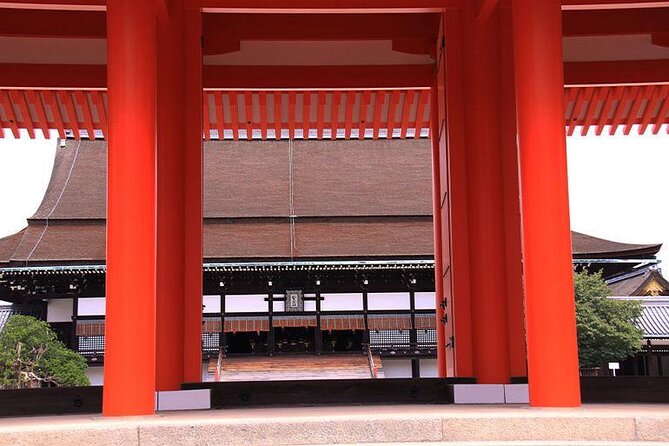
The stops mix big-name Kyoto with less frantic vibes: Nishi Honganji, Kitano Tenmangu, and Kinkakuji (the Golden Pavilion), then a ride through the former imperial family grounds and a short Gion look. Lunch is included, and dietary requirements need to be shared ahead of time.
In This Review
- Key reasons this North Kyoto bike tour works
- Why North Kyoto by bike beats a hop-on hop-off day
- Cycle Kyoto start: bike fitting, helmets, and that first smooth roll
- Nishi Honganji: big, wood-heavy, and quieter than you expect
- Kitano Tenmangu: shrine atmosphere with real local rhythm
- Kinkakuji Golden Pavilion: the classic stop, handled with breathing room
- The former imperial family grounds ride: when Kyoto slows down
- Gion: a quick taste of geisha district life
- Lunch that actually fuels the ride
- How hard is the cycling, really
- Small group and guide style: why the day feels personal
- Value check: is $106.12 a smart buy?
- Practical tips so your day stays smooth
- Should you book this North Kyoto bike tour?
- FAQ
- How long does the North Kyoto bike tour last?
- Where do I meet the tour?
- What time does the tour start?
- Is the tour suitable for beginners?
- Are bikes and safety gear included?
- What’s included in the price?
- What about food restrictions or dietary needs?
- What stops are included?
- What’s the group size?
- What happens if weather is bad?
Key reasons this North Kyoto bike tour works
- All-in bike setup: Cannondale bikes, guidance, bottled water, and lunch are included.
- Temple fees included: You pay less out of pocket and spend more time actually visiting.
- A tight group (max 8): Easier chatting with your guide and less waiting around.
- North Kyoto, not just the postcard circuit: You get side streets, calmer stops, and smarter routing.
- Kinkakuji plus a breather: Golden Pavilion time with commentary and an ice-cream break.
- Gion without the full chaos: A brief taste of the geisha district atmosphere.
Why North Kyoto by bike beats a hop-on hop-off day
Kyoto is one of those cities where you can cover a lot, but you can also miss the best parts by rushing. This is a bike day designed to slow you down just enough: you glide through neighborhoods, stop for shrine and temple context, then move on before the crowds turn into a moving wall.
I like that it’s not only sightseeing. It’s also city riding. You feel the rhythm of Kyoto streets—narrow lanes, quick turns, and calm stretches—so the day sticks in your head. And since the route stays focused on the northern side, you don’t end up doing the same central-temple loop every first-timer does.
One more practical upside: if you’re trying to plan your trip around time slots for popular places, a guided flow helps. Your guide handles the order and the timing so you spend less time guessing.
More of Kyoto at handlebar pace
Cycle Kyoto start: bike fitting, helmets, and that first smooth roll
You meet at Cycle Kyoto (7 Higashikujō Nishisannōchō) and start at 10:00am. It’s near public transportation, which matters because arriving without stress is half the win.
After you meet your guide and the rest of the group, you get fitted with your bike and get oriented for the ride. The bikes are high-quality Cannondales, and multiple guests noted added comfort like seat padding and bike selection based on height. In hot weather, people also reported that guides stay on top of hydration, which lines up well with the included bottled water.
Helmets aren’t listed as a definite “always provided” item in the basic tour description, but riders did mention that helmets were available as an option. If you like extra safety padding on long city days, it’s worth choosing the helmet at fitting time.
This part feels small, but it’s crucial. When your bike fits right, the whole experience gets easier fast.
Nishi Honganji: big, wood-heavy, and quieter than you expect
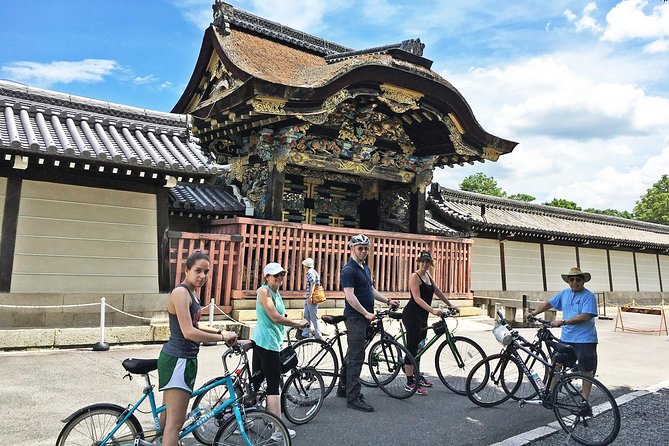
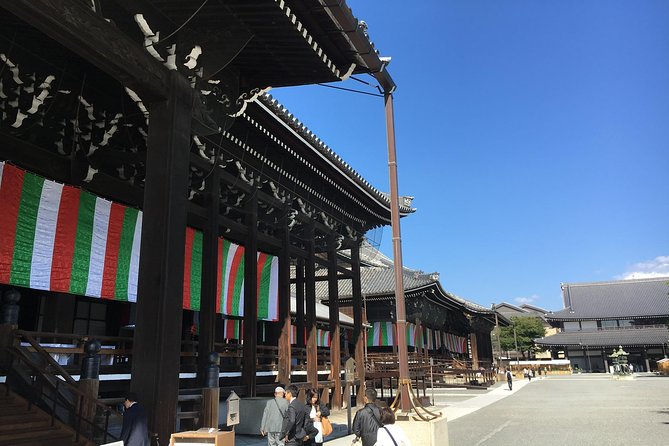
Nishi Honganji is one of those Kyoto sites that doesn’t always get the same attention as the headline temples, which is exactly why it makes sense early in the day. You’ll enter and spend about 15 minutes there, enough time to see what makes it special without feeling trapped.
The tour highlights this stop as one of the least visited religious sites in the city, and also one of the largest wooden buildings in the world. That combination is rare: huge scale with more space around you. When you’re on a bike day, having one quieter stop early gives your brain a chance to reset.
This is also a good place to start thinking about context. Kyoto’s sacred spaces aren’t just pretty buildings; they reflect the way faith, power, and community changed over time. Guides tend to frame what you’re looking at, so you’re not just counting structures—you understand what they signify.
Kitano Tenmangu: shrine atmosphere with real local rhythm
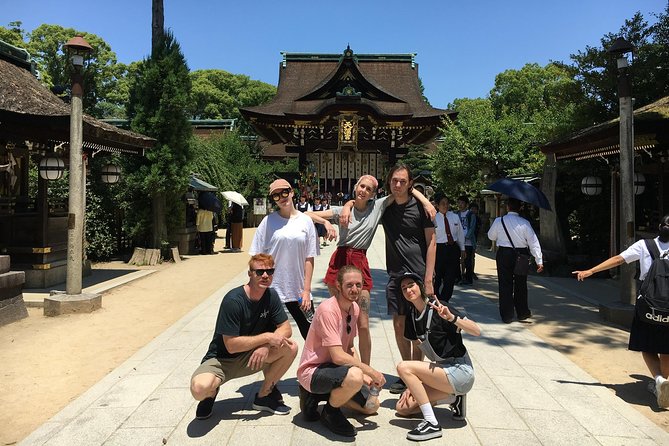
Next up is Kitano Tenmangu Shrine, about a 20-minute stop. The mood here is different: shrine-goers are present, and you get that everyday Kyoto feeling rather than only tourist photo energy.
This stop is known in the tour as a chance to join local shrine goers, learn the shrine’s past, and soak in the calmer atmosphere. When you’re cycling, you also notice how these locations sit into the city fabric—how quickly life continues around sacred spaces.
A nice bonus of guided stops is pacing. You don’t have to wonder how long to stay. You just follow the flow and take time when the guide tells you something important to notice.
Kinkakuji Golden Pavilion: the classic stop, handled with breathing room
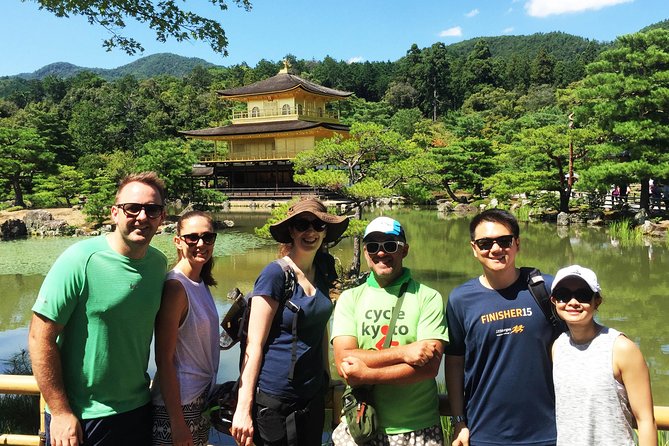
Then you reach Kinkakuji Temple, the Golden Pavilion. It’s one of Japan’s most visited attractions, and on a bike tour you still get a structured visit (around 30 minutes) rather than drifting in a crowd with no plan.
What I like here is the built-in pause: you get an interesting commentary, time to relax, and even a moment to grab an ice cream. That matters. Kinkakuji can be visually intense, and a short break helps you actually process what you’re seeing instead of speed-scrolling your way through.
You should also expect at least some physical effort. One review noted a slight incline on the way to the Golden Pavilion, and then smoother riding after. So if you’re worried about hills, plan to work at a steady, comfortable pace—not a sprint.
Other Kyoto tours and experiences to compare
The former imperial family grounds ride: when Kyoto slows down
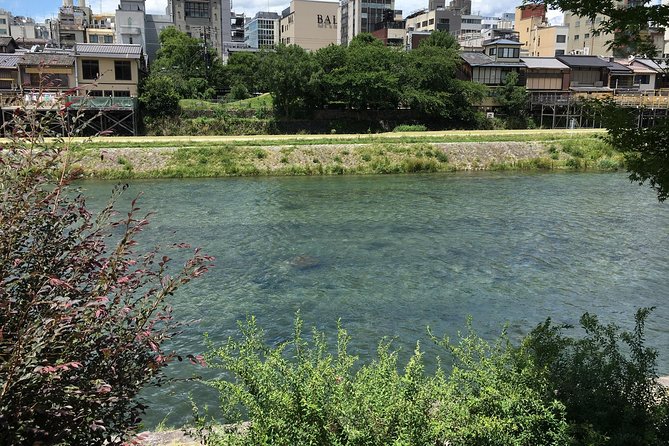
One of the stops is described as a ride through the grounds of the former seat of Japan’s imperial family. Even without a name in the basic description, the purpose is clear: it’s a historical context moment, offered as a ride-through segment that keeps momentum while still letting you learn.
This kind of stop is smart on a bike day. You get the setting and the meaning without losing your entire afternoon to a single site. It also breaks up the emotional tempo. After a major visual landmark like the Golden Pavilion, it’s refreshing to shift into something quieter and more spacious.
Look at it as a “between chapters” pause: a chance to connect the day’s story—Kyoto as a place of shifting power and spiritual meaning—with what you’ll see next.
Gion: a quick taste of geisha district life
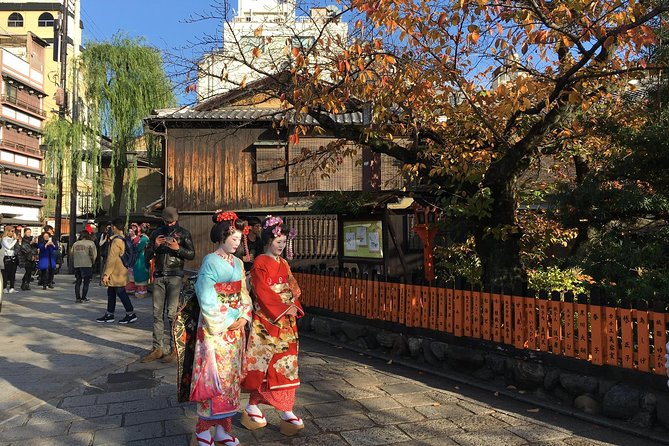
Finally, the tour heads to Gion for a short stop (about 10 minutes). This is timed for atmosphere rather than a long wander. You’ll discover the geisha district’s vibe and, if you’re lucky, you might catch a glimpse of entertainers.
Even when you don’t see anyone, Gion still works as a cultural contrast. The day moves from shrines and temples into a neighborhood where history lives differently—through streets, craft, and the choreography of everyday movement.
A quick stop also keeps you from getting stuck in the most crowded behavior patterns. You get the idea, then you’re free to decide how you want to explore the area later on your own.
Lunch that actually fuels the ride
Lunch is included and is part of why this tour feels like more than just a transport service. Multiple guests reported enjoying sushi at the lunch stop, and some mentioned a noodle restaurant experience that was described as centuries old. On one occasion when the original lunch option was closed, the group went to a sushi bar instead, and people still considered the meal a win.
I love that this lunch isn’t treated like an afterthought. You bike, you learn, you move, then you eat. That simple cycle keeps energy up for the afternoon.
Dietary requirements do matter here. The tour asks you to share those ahead of time, and guests reported vegetarian options were available when requested. If food needs are part of your plan, send them in early so the team can handle it without scrambling.
Also note: extra drinks aren’t included. You’ll get bottled water during the day, but if you want something beyond that, budget for it.
How hard is the cycling, really
The tour is listed for travelers with moderate physical fitness, and you must be comfortable riding a bike. It also requires riders to be at least 13 years old.
From the riding-style feedback you can actually plan your effort: one review described the cycling portion as about 2.5 hours, roughly 24 km (around 13 miles) total, spread across a 6-hour day with frequent sightseeing breaks. Another rider said it felt easy to moderate, with steady pace and not many hills, aside from a small incline toward Kinkakuji.
So here’s the practical takeaway: this isn’t a back-country mountain challenge, but it’s also not a casual stroll disguised as cycling. You should be ready for continuous city riding with stops that reset your legs.
If you ride a bike occasionally, you’ll likely be fine. If you haven’t ridden in years, the safest move is to go easy at the start, keep your cadence steady, and rely on your guide’s pace.
Small group and guide style: why the day feels personal
The tour caps the group at 8, which changes the vibe fast. With fewer people, your guide can adjust breaks, answer questions, and watch for comfort issues without turning the day into a factory line.
A pattern in the guide feedback: they tend to talk like people who actually care about the city, not just people who read facts off a screen. Guests singled out guides like Mayco, Julian, Indra, Jamie, Karl, Quinn, and Jay for mixing humor with real context. One person even mentioned a guide adding extra explanations time, which can make the difference between seeing a place and understanding it.
That also affects safety. City riding is smooth when you’re confident in where to position yourself, when to stop, and how to move as a group. Multiple riders described the route as safe and well-paced, even for people who didn’t bike often.
Value check: is $106.12 a smart buy?
At $106.12 per person, you’re paying for a guided bike day with several key costs handled for you. The big value items included are:
- a high-quality Cannondale bike
- guidance
- bottled water
- lunch
- temple entrance fees
If you’ve ever added up the hidden extras on tours in Kyoto—transport, attraction tickets, and meals—the math can flip quickly. Here, a chunk of those costs is bundled.
You’re also buying time. Instead of figuring out how to reach every stop efficiently while managing parking and ticket lines, you follow a route built to keep you moving and informed.
The only reason to hesitate is if you already plan to bike independently and you’re comfortable building your own stop order. If you want a structured first day in Kyoto and don’t want to stress about navigation, this is good value.
Practical tips so your day stays smooth
A few things I’d do if this were my first Kyoto week.
First, dress for heat and sun as if you’re sightseeing, because you are. Even though the ride is structured with stops, midday sun still hits hard in Kyoto.
Second, plan to bring the right small basics. The tour includes bottled water, but you’ll still want your own comfort items for the rest of the day.
Third, if you have dietary needs, tell the operator ahead of time. It’s explicitly requested, and it’s how vegetarian needs get handled smoothly.
Finally, keep expectations realistic. This is a 5–6 hour active day with multiple stops. The payoff is that you see more of Kyoto than a slow walking loop, and you see it in a way that makes sense.
Weather matters too. The experience requires good weather, and if it’s canceled for poor conditions you should expect a different date or a full refund.
Should you book this North Kyoto bike tour?
I’d book it if:
- you want an easy-to-follow way to see north Kyoto without getting lost
- you like the idea of cycling between shrines and neighborhoods, not just standing in lines
- you care about having lunch handled and temple fees covered
- you’re open to moderate biking for a couple of hours spread across the day
I’d skip it or think twice if:
- you can’t comfortably ride in traffic-like urban conditions
- you’re looking for an extremely low-effort day
- weather in your dates is unpredictable and you’d rather keep a completely flexible itinerary
If your goal is a strong first or second day in Kyoto—where you get orientation, context, and a fun way to move—that $106.12 buys you a lot of structure and a lot of time on the road.
FAQ
How long does the North Kyoto bike tour last?
It runs about 5 to 6 hours.
Where do I meet the tour?
You meet at Cycle Kyoto at 7 Higashikujō Nishisannōchō, Minami Ward, Kyoto. The tour ends back at the meeting point.
What time does the tour start?
The start time is 10:00am.
Is the tour suitable for beginners?
It’s listed for people with moderate physical fitness and who are comfortable riding a bike, and it’s described as having an easy-to-moderate pace with frequent breaks.
Are bikes and safety gear included?
All cycling equipment is included, and helmets were mentioned as being available as an option by riders.
What’s included in the price?
The price includes guidance, a high-quality Cannondale bike, bottled water, lunch, and temple entrance fees.
What about food restrictions or dietary needs?
Dietary requirements need to be shared ahead of time. Vegetarian options were reported when requested.
What stops are included?
You’ll visit Nishi Honganji, Kitano Tenmangu Shrine, Kinkakuji Temple, and Gion, plus a ride through the grounds of the former seat of Japan’s imperial family.
What’s the group size?
The maximum group size is 8 travelers.
What happens if weather is bad?
This experience requires good weather. If it’s canceled due to poor weather, you’ll be offered a different date or a full refund.
More Tours in Kyoto




More Tour Reviews in Kyoto


More of Kyoto by Bike
Just added: more Kyoto tours to browse








Kyoto Bike & E-Bike Tours, compared.
 ★ 5.0Hidden Kyoto E-Biking tourFrom $1161,843 reviews
 ★ 5.0Arashiyama Bamboo Forest & Hidden Gems Bike Tour (Early Bird)From $106613 reviews
 ★ 5.05 Top Highlights of Kyoto Full Day Bike Tour (E-bike option)From $172511 reviews
 ★ 5.0Full Day Biking Tour Exploring the Best of KyotoFrom $119498 reviews
 ★ 4.8Memory Kyoto E-Bike TourFrom $91297 reviews
 ★ 5.0E-Bike Tours of the highlights of Kyoto!!!From $109291 reviews
 ★ 5.0Afternoon Kyoto Bike Tour: Bamboo Forest, Monkeys & Hidden SpotsFrom $106283 reviews
 ★ 5.0South Kyoto in a Nutshell: Gentle Backstreet Bike Tour!From $79225 reviews
Browse the lists this tour appears in