
Reviewed · KYOTO BIKE & E-BIKE TOURS
South Kyoto in a Nutshell: Gentle Backstreet Bike Tour!
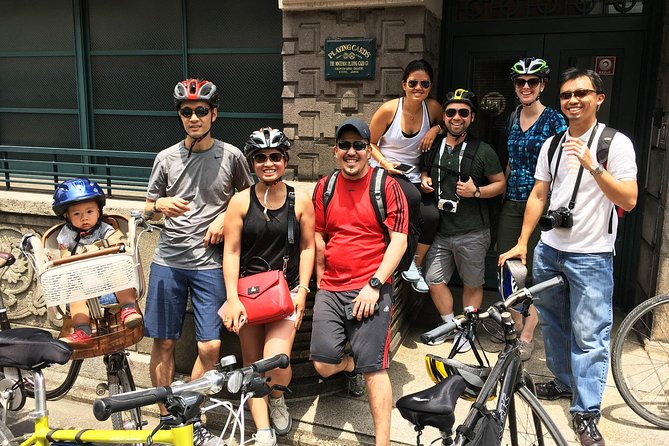
Torii lines are no match for a bike. This South Kyoto ride is a smart, scenic way to cover top sights without staring at a map all morning. I especially like having bike and helmet rental included and getting a guided route that threads together famous stops plus calmer side streets.
The only real catch: you need to feel comfortable on a bike and you won’t get unlimited time at every photo spot. If you love lingering for long stretches, plan to treat this as a high-quality highlight tour, not a slow crawl.
In This Review
- Key Things I’d Put First on Your List
- Why a Gentle South Kyoto Bike Loop Works So Well
- Price and What You’re Really Getting for About $79
- Starting at Cycle Kyoto: The Part That Sets the Whole Tone
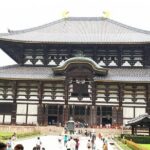
- Nishi Honganji: A Big Wooden Presence in a Quieter Mood
- Takase Canal by Bike: Where Photo Time Feels Natural
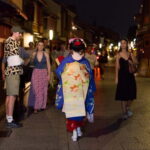
- Gion on Two Wheels: Geisha District Views Without the Chaos
- Tofuku-ji Temple: Quick Stop, Strong Views from the Bridge
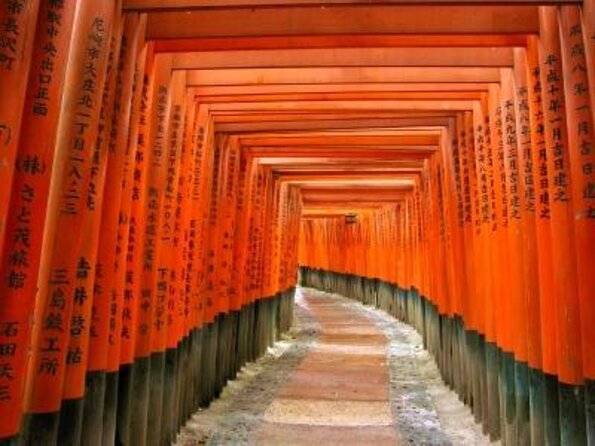
- Fushimi Inari-taisha: The Torii Maze, Managed
- How Guides Can Change the Quality of Your Day
- What a 3–4 Hour Day Feels Like in Real Terms
- Who Should Book This Bike Tour (and Who Should Skip It)
- Practical Tips So Your Ride Feels Smooth
- Final Call: Should You Book South Kyoto by Bike?
- FAQ
- How long is the South Kyoto bike tour?
- What is the price per person?
- What’s included with the tour?
- What sights are included?
- Do I need admission tickets for the stops?
- Where do we meet?
- What time does the tour start?
- Do I need to know how to ride a bike?
- What if the weather is bad?
- Is free cancellation available?
Key Things I’d Put First on Your List
- Small group size (max 8) means easier pacing and more attention from the guide.
- Backstreet routing helps you see Kyoto at street level, not just from a bus window.
- Fushimi Inari-taisha with crowd-aware path choices keeps your visit smoother.
- Bikes (Cannondale) + helmet + water take away a lot of planning stress.
- A tight 3–4 hour loop hits major landmarks without chewing up your whole day.
- Multiple free stops makes budgeting simpler once you’re in Kyoto.
Why a Gentle South Kyoto Bike Loop Works So Well
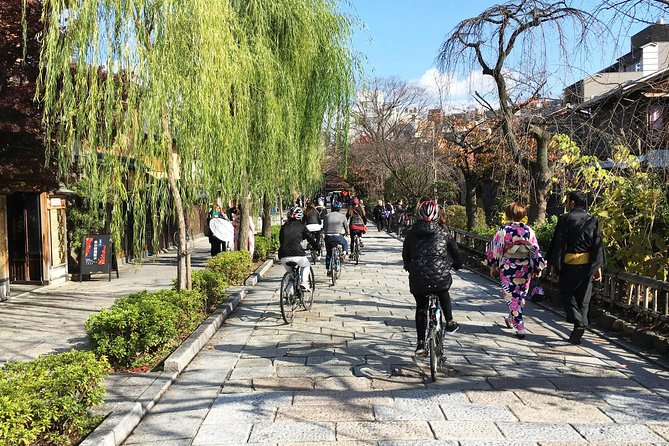
South Kyoto is where Kyoto starts to feel human. The streets are narrow, the scenery is close, and you can pick up little moments that you’d miss if you were stuck on foot or in a larger group bus. This tour is built for that vibe: calm riding, enough structure to keep things easy, and a route that strings together big-name sights with quieter stretches in between.
I like that the ride stays gentle. You’re moving faster than walking, but you’re not sprinting from stop to stop. That balance matters in Kyoto, where heat, crowds, and long walking routes can turn a “quick sightseeing day” into a slog.
Also, the guide’s job isn’t just to point. You get clear instructions for riding in traffic and around pedestrians, which makes a huge difference when you’re weaving through city streets that don’t feel built for tourists on bikes.
More of Kyoto at handlebar pace
Price and What You’re Really Getting for About $79
At around $79.59 per person, this isn’t a budget “just rent a bike” deal. It’s priced more like a half-day guided experience with gear and logistics handled. And you do get tangible value right away: bike use is included, a helmet is included, and you get bottled water. You also don’t have to spend time figuring out how to connect multiple landmarks across the city.
The free admission for every listed stop also helps the math. When you’re paying for transport + entry tickets separately, Kyoto can get expensive fast. Here, you mainly pay for time, route planning, and a guide who knows how to keep the day running smoothly.
If you want to spend your Kyoto day actually looking at things, not mapping things, the value feels fair.
Starting at Cycle Kyoto: The Part That Sets the Whole Tone
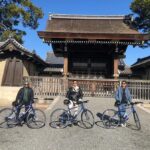
Your tour begins at the Cycle Kyoto shop in Minami Ward (7 Higashikujō Nishisannōchō). Meet your guide and the group, get your bike fitted, and you’re rolling shortly after. The meeting-and-fitting window is about 15 minutes, which is just long enough to get comfortable without dragging the start.
The bikes are described as high quality Cannondale, and that matters more than people think. If your bike is stable and feels right, the tour feels relaxed. If the bike doesn’t fit or shifts in an awkward way, the whole day becomes work.
The tour starts at 9:00 am, which is a nice time to get ahead of crowds at the big-ticket sites later in the loop.
Nishi Honganji: A Big Wooden Presence in a Quieter Mood
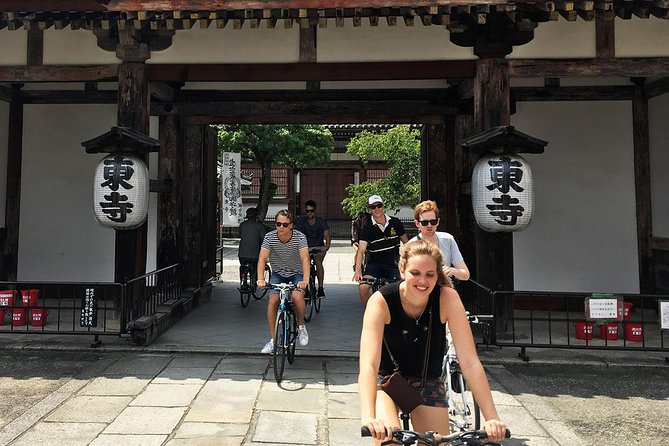
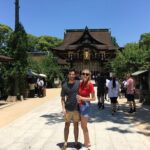
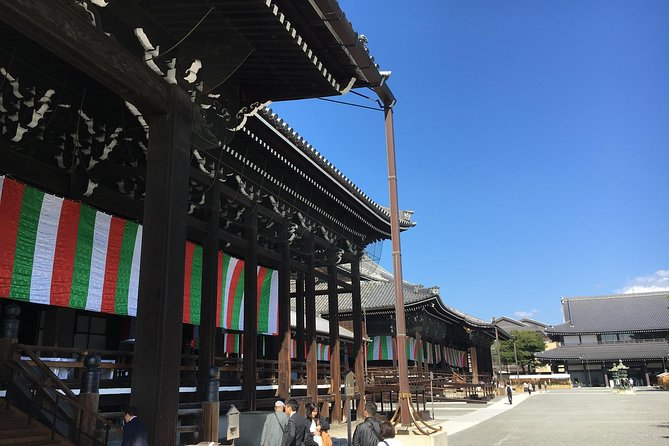
One of your first sightseeing stops is Nishi Honganji, a religious site that’s noted for being less visited than many other places in Kyoto. You’ll have around 15 minutes here, which is perfect for soaking in the setting without feeling rushed through it.
What makes Nishi Honganji interesting is scale. It’s listed as one of the largest wooden buildings in the world, so even if you’re not a “temple architecture” person, the size lands. It also gives you a calmer start to the day before the famous crowds later on.
Practical tip: take a minute at the beginning to look at the overall structure first. When you only focus on details right away, you can miss the wow effect of just how large the building is.
Takase Canal by Bike: Where Photo Time Feels Natural
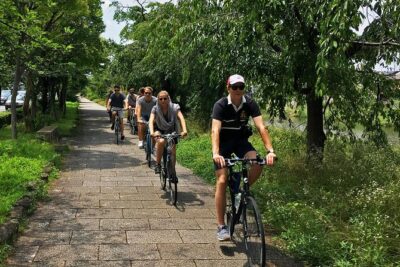
After you leave the religious stop area, you’ll ride along Takase Canal. This is the part that helps the tour feel like a bike experience, not just a sequence of entries into places.
You’ll follow the canal for a stretch and get some context on its place in Kyoto’s history, plus time for photos. The canal area is especially good for pictures because the waterline creates a natural frame, and you’re not constantly dodging big intersections.
Why this stop works: it breaks up the day. It’s scenic, it’s readable, and it doesn’t feel like a chaotic tourist funnel. You get to ride, not just “arrive.”
If you’re the type who likes to stop for photos whenever something catches your eye, this is one of the easiest places to do that without derailing the whole schedule.
Other Kyoto tours and experiences to compare
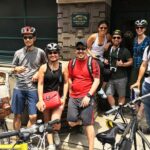
Gion on Two Wheels: Geisha District Views Without the Chaos
Next comes Gion, Kyoto’s famous geisha district. You’ll have about 15 minutes here, and your guide will help you understand what you’re seeing—plus what to watch for as you pass through.
The tour approach is key. Instead of forcing you to fight crowds for landmark spots, the ride gives you a way to see the district at a slower, more personal street pace. You also get reminders on how to behave respectfully around pedestrians, shops, and other visitors.
Will you get time to fully explore Gion like you would on a dedicated walking afternoon? Not really. The focus here is on getting the feel of the district and capturing a few solid moments.
That said, a lot of people love this stop because it’s one of Kyoto’s most iconic neighborhoods, and the bike lets you cover more angles than you’d get from a single curb spot.
Tofuku-ji Temple: Quick Stop, Strong Views from the Bridge
Your fourth stop is Tofuku-ji Temple, with only about 5 minutes scheduled. That sounds short, but it’s designed for a specific payoff: the bridge views and the openness of the temple surroundings.
Tofuku-ji is described as one of the oldest and largest Zen temples in the country, and that reputation shows up in the spacious feel of the grounds. The bridge vantage is the highlight, so you’re set up to see something memorable fast.
How to make the most of a short stop:
- Focus on the view from the bridge area first.
- If you want photos, aim for one or two good angles rather than trying to cover every corner.
- Use your guide’s pointers to avoid wasting time walking in circles.
Fushimi Inari-taisha: The Torii Maze, Managed
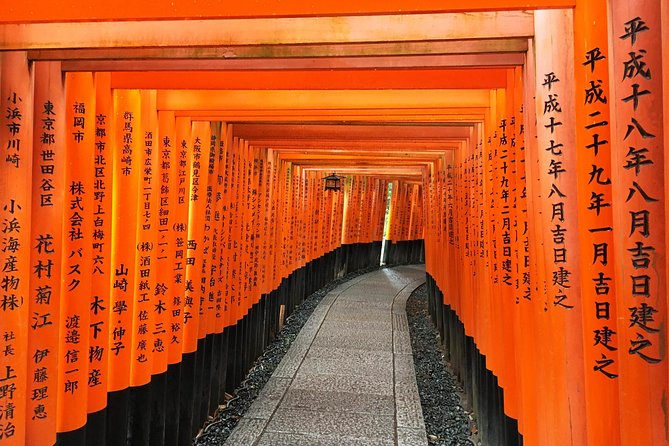
By far the most famous stop is Fushimi Inari-taisha Shrine. You’ll have around 25 minutes here, and the tour specifically addresses the reality of visiting it: it can be tough to navigate and crowd-heavy.
The big advantage is that your guide helps you pick an efficient path between crowded areas so you can enjoy the shrine without losing time. When you’re in Fushimi Inari, minutes matter. If you get stuck waiting or repeatedly turning back, you burn your limited time fast.
The “fast but not frantic” approach is what makes this work. You still get the torii-photography experience, but you’re not spending the whole visit stuck behind other people moving at the pace of a slow line.
Photo tip: shoot while you’re moving through the torii areas. Then slow down briefly for one or two more “stop and frame” shots once you find a good spacing. This keeps your photos varied instead of repeating the same tight composition.
How Guides Can Change the Quality of Your Day
The guides are a major part of the value. The day is structured, but the difference is in how smoothly the ride flows and how clearly you understand what you’re seeing.
I’ve seen guides called out by name across different departures—people like Kevin, Sam, Jay, Jaime, Julian, Indra, Juan, Thierry, Paul, Carl, and Shaun. A few reviews also mention guides who bring extra depth through religious or cultural expertise, including at least one guide described as an ordained Shinto priest.
Even without “extra-special” background, what you want from your guide is simple:
- Clear riding instructions
- Good crowd sense
- Short, useful explanations at each stop
This tour’s format is perfect for that. It’s enough structure to keep you from getting lost, but it’s not so rigid that you’re trapped in a script.
What a 3–4 Hour Day Feels Like in Real Terms
This is a half-day tour in practice—about 3 to 4 hours from start to finish. That’s long enough to cover key Kyoto sights and still short enough to keep the rest of your day open for dinner plans.
It’s also a good fit for first-time Kyoto visits. If you’re arriving with limited time, this gives you a strong “map in your head” effect. You’ll come away knowing where things are and what patterns Kyoto follows: temples, neighborhood streets, canals, then shrine peaks.
For a lot of people, this turns into the foundation for later wandering. Once you’ve seen the major landmarks from a route lens, you tend to navigate with more confidence on your own.
Who Should Book This Bike Tour (and Who Should Skip It)
This tour makes the most sense if you:
- Want a calmer sightseeing pace than walking
- Like photos but still want a plan
- Want to see both big sights and quieter street moments
- Prefer a structured group day without it feeling like a bus tour
It’s best for people who are comfortable riding and can handle city riding basics. The minimum age is 13, and the tour is described as suitable for most participants as long as you’re confident on a bike.
You might skip this if:
- You’re not comfortable riding bikes or you’re anxious about traffic
- You want lots of long, slow time inside each stop
- You prefer to fully explore a neighborhood on your own schedule
Practical Tips So Your Ride Feels Smooth
The tour includes the essentials—bike, helmet, and water—so you don’t need to budget time for rentals or gear shopping. Your main prep is comfort.
Bring or wear:
- Comfortable clothes you can ride in
- Shoes you can walk in too (you’ll be stopping at temples and viewpoints)
- A phone with enough battery for photos and maps during breaks
Since this depends on good weather, have a flexible mindset if conditions aren’t great. When weather is poor, the plan can be adjusted (or you can reschedule).
And one more thing: Kyoto streets are full of pedestrians. Your guide’s instructions matter, so follow them closely, especially when you’re turning or stopping for photos.
Final Call: Should You Book South Kyoto by Bike?
I’d book this tour if you want the easiest way to get a strong South Kyoto overview without burning hours on transit planning. It’s well priced for a guided half-day with bikes included, it covers major landmarks, and it gives you street-level views that buses just can’t.
It’s not a “linger forever” style tour, and the bike requirement is real. If you’re comfortable riding and you want smart routing (especially at Fushimi Inari-taisha), this is one of the better ways to spend a morning or early afternoon in Kyoto.
If you want maximum freedom and maximum time at fewer places, consider mixing this with your own walking time elsewhere. But as an efficient, scenic orientation to South Kyoto, it’s a strong yes.
FAQ
How long is the South Kyoto bike tour?
The tour runs about 3 to 4 hours.
What is the price per person?
It costs $79.59 per person.
What’s included with the tour?
You get a high quality Cannondale bike, a helmet, bottled water, and use of the bicycle.
What sights are included?
The stops include Nishi Honganji, Takase Canal, Gion, Tofuku-ji Temple, and Fushimi Inari-taisha Shrine.
Do I need admission tickets for the stops?
The listed admission tickets are free for the stops included.
Where do we meet?
The meeting point is Cycle Kyoto, 7 Higashikujō Nishisannōchō, Minami Ward, Kyoto, 601-8003, Japan. The tour ends back at the meeting point.
What time does the tour start?
It starts at 9:00 am.
Do I need to know how to ride a bike?
You must be comfortable riding a bike. Riders must be at least 13 years old.
What if the weather is bad?
The experience requires good weather. If it’s canceled due to poor weather, you’ll be offered a different date or a full refund.
Is free cancellation available?
Yes. You can cancel up to 24 hours in advance for a full refund.
More Tours in Kyoto
More Tour Reviews in Kyoto
More of Kyoto by Bike
Just added: more Kyoto tours to browse





Kyoto Bike & E-Bike Tours, compared.
 ★ 5.0Hidden Kyoto E-Biking tourFrom $1161,843 reviews
 ★ 5.0Bike Tour Exploring North Kyoto plus LunchFrom $1061,087 reviews
 ★ 5.0Arashiyama Bamboo Forest & Hidden Gems Bike Tour (Early Bird)From $106613 reviews
 ★ 5.05 Top Highlights of Kyoto Full Day Bike Tour (E-bike option)From $172511 reviews
 ★ 5.0Full Day Biking Tour Exploring the Best of KyotoFrom $119498 reviews
 ★ 4.8Memory Kyoto E-Bike TourFrom $91297 reviews
 ★ 5.0E-Bike Tours of the highlights of Kyoto!!!From $109291 reviews
 ★ 5.0Afternoon Kyoto Bike Tour: Bamboo Forest, Monkeys & Hidden SpotsFrom $106283 reviews
Browse the lists this tour appears in