
Reviewed · ARASHIYAMA & BAMBOO GROVE TOURS
Arashiyama Bamboo Forest & Hidden Gems Bike Tour (Early Bird)
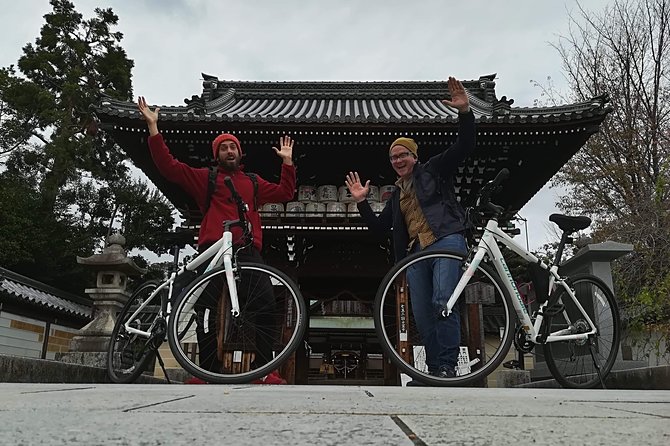
Bikes before the bamboo crowds. This 8:00am Arashiyama bike tour helps you catch the bamboo forest at its calmest, when photos are actually possible. You’ll pedal between temples and scenic corners without spending the whole morning shoulder-to-shoulder with tour groups.
What I really like is the human side: you’re not just riding, you’re learning. Guides such as Rob, Milo, Yuki, and Ray are praised for making the history and temple culture feel clear, practical, and fun, not like a lecture.
One consideration: there’s no hotel pickup, and you’ll be using standard city bikes (not e-bikes). If you’re expecting an effortless cruise with someone hauling you from the hotel door, you’ll want to plan your way to Saga-Arashiyama Station.
In This Review
- Key highlights you’ll feel right away
- How the early 8:00am start changes Arashiyama
- Meeting at Saga-Arashiyama Station: fast start, simple plan
- Private bilingual guide: more than a bike rental
- Bike comfort and how hard this really is
- Stop 1: Bamboo Forest Street (about 20 minutes)
- Stop 2: Tenryu-ji Temple and the Sogenchi Teien Zen garden (about 30 minutes)
- Stop 3: Cycling through Arashiyama backstreets and quieter temples (about 2 hours)
- Stop 4: Togetsukyo Bridge (about 10 minutes)
- The cultural value: learning temple meaning without getting lost
- Photos and small extras that make the morning feel special
- What’s included, and why that affects value
- Food, water, and comfort: your checklist for a smooth ride
- Who should book this Arashiyama early bird
- Price and logistics: is $106 worth it?
- Should you book the Early Bird Arashiyama Bamboo Forest Bike Tour?
- FAQ
- What time does the Early Bird tour start?
- How long does the tour last?
- Is this a private tour?
- What’s included in the price?
- Are e-bikes included?
- What places do we visit during the tour?
- Is it family-friendly for kids?
- Do I need to provide anything when booking?
- Where do we meet?
- What happens if weather is bad or I need to cancel?
Key highlights you’ll feel right away
- Early start (8:00am) to beat the Arashiyama crowd wave
- Private, small-group experience so you can ask questions and move at your pace
- Bamboo + Zen garden tickets included for a smooth, low-stress morning
- Guides who take lots of photos and share them after the ride
- Mostly easy riding with short walking segments around temples and bamboo areas
How the early 8:00am start changes Arashiyama
Arashiyama is famous, which means it gets busy. The smart move here is timing. Starting at 8:00am puts you in front of the biggest crowd surge, so the bamboo forest feels eerie in a good way instead of chaotic.
You also get softer morning light for photos. With fewer strangers cutting through your frame, you can actually slow down and look up at the stalks. That matters, because the bamboo forest is not just scenery. It’s sound, shadow, and rhythm, and it’s easier to notice all of that when the area isn’t packed.
And yes, you’ll be up early. Kyoto doesn’t care about your sleep schedule. But if you want the serene Arashiyama experience people picture, this is the way to get it.
Deeper into Arashiyama, past the bamboo and the Hozu river
Meeting at Saga-Arashiyama Station: fast start, simple plan
You meet at Saga-Arashiyama Station, near the station address listed as 11-1 Sagatenryūji Kurumamichichō, Ukyo Ward, Kyoto. The tour ends back at the same meeting point, so you don’t have to worry about transport after.
This setup is practical: you can take public transit into Arashiyama, grab your helmet, and roll. It’s also a good option if you’re staying somewhere without an easy hotel pickup route.
The only real friction is that hotel pickup and drop-off aren’t included. If you’re relying on someone else to get you there, you’ll want to double-check your transit time.
Private bilingual guide: more than a bike rental
The tour is private, meaning it’s just your group. That changes everything about how the morning feels. You’re not waiting behind slow walkers, and you don’t have to listen to a guide “at full volume” for a crowd.
What you get is a native English speaking bilingual guide who connects the dots between what you see and what it means. From guide reports in past groups, the strongest praise goes to storytelling that explains Japanese culture and religion in plain language. Guides like Rob and Milo are specifically called out for being funny and caring while still being safety-minded.
You’ll also have a built-in pacing partner. Because you’re cycling, you cover ground faster than walking. Because you’re with a guide, you know what to look for and how to behave at sacred sites.
Bike comfort and how hard this really is
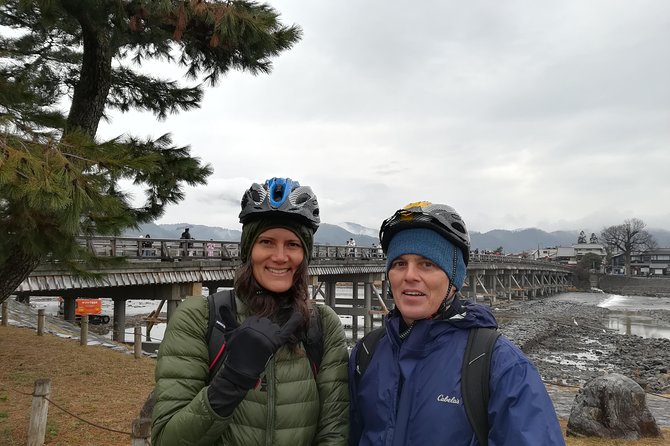
You ride standard Cannondale city bikes with helmets provided. The tour explicitly notes that e-bikes are not used. In plain terms: if you can manage a relaxed bike ride, you’ll be fine.
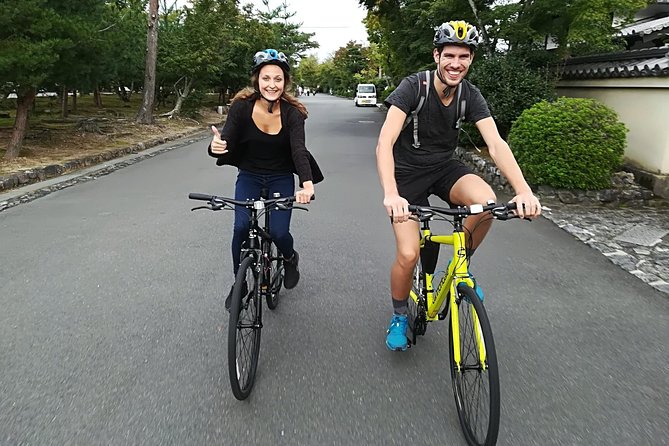
Multiple reviews mention that the route is mostly flat, with a few moments where you park the bike and walk for temple or bamboo areas. That’s normal for Arashiyama. The bamboo forest experience is about being there, not racing through it.
Also, the bikes are repeatedly described as in excellent condition, with one review calling out front and back disc brakes. That’s reassuring if you’re not used to city bikes or if you’re riding in the morning.
Stop 1: Bamboo Forest Street (about 20 minutes)
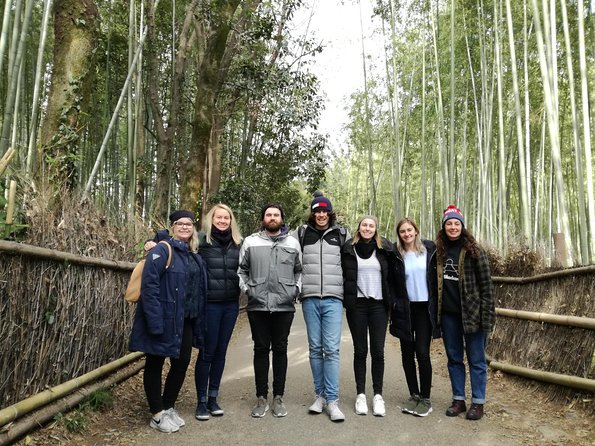
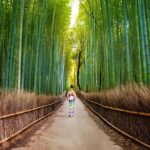
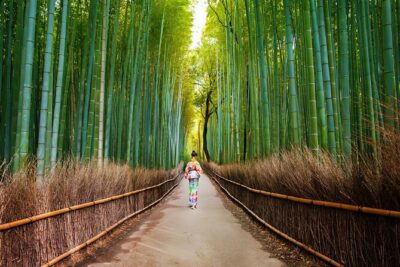
The bamboo forest is why you’re here. Bamboo Forest Street is the first stop, and your time is designed to let you take photos without feeling rushed.
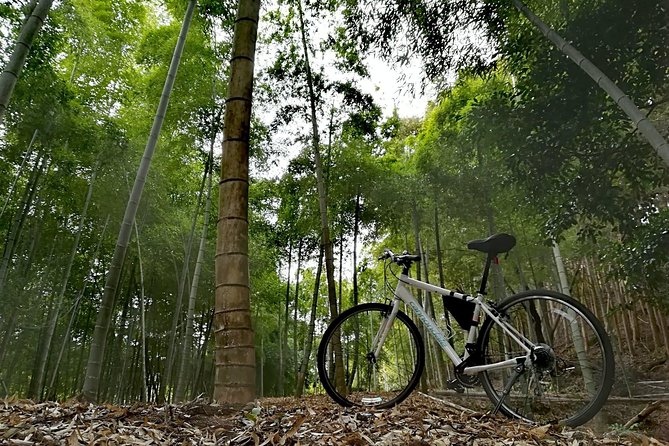
Expect the bamboo to do what bamboo does best: narrow your attention. Tall stalks create repeating vertical lines, and the sound can feel different from what you expect in a busy tourist zone. Past tour feedback highlights the bamboo atmosphere as a top soundscape moment in Japan, which makes sense once you’re under the stalks and hear the airflow.
What’s valuable isn’t just the photo. It’s the chance to notice small things: how light hits different sections, how the path funnels your eye, and how the forest changes when the crowd thins out.
Practical tip: wear clothes you’re comfortable moving in. You’ll want to stop, adjust angles, and look around. This is not a drive-by stop.
More of Kyoto at handlebar pace
Stop 2: Tenryu-ji Temple and the Sogenchi Teien Zen garden (about 30 minutes)
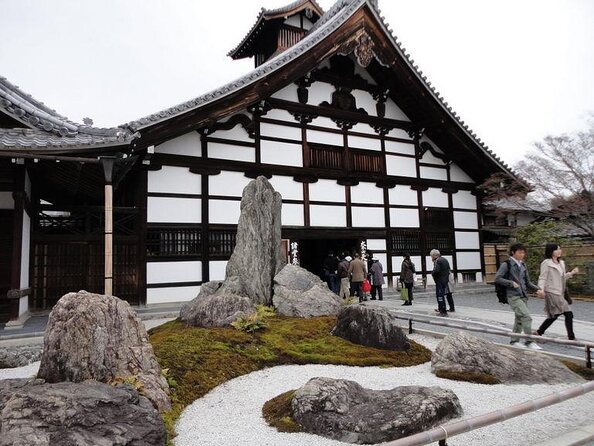
Next you’ll go to Tenryu-ji Temple, specifically Sogenchi Teien, known for one of Kyoto’s most beautiful Zen garden styles. You’ll have about 30 minutes, which is long enough to get the big layout and short enough that you won’t feel stuck in one spot.
Here’s the value of having a guide: Zen gardens can look simple until someone points out what to watch for—how the view is framed, how the space is arranged, and how the atmosphere is meant to be read.
Past groups also praise guides for explaining temple etiquette and the idea of different Buddhist cultures. You won’t need a religious studies degree. You just need a few pointers so you can interpret what you’re seeing instead of treating it like a backdrop.
The drawback of any garden stop is that it can be quiet, which can feel slow if you’re expecting constant motion. But on a bike tour, that pause is what makes the morning feel balanced.
Stop 3: Cycling through Arashiyama backstreets and quieter temples (about 2 hours)
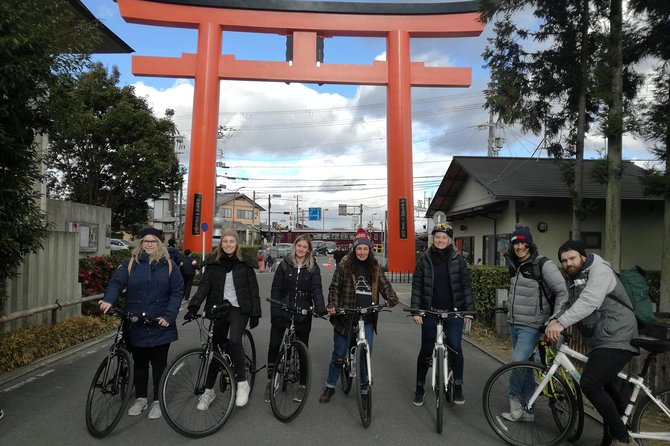
After the garden, you’ll spend about two hours cycling through Arashiyama. This is where the bike makes the most difference. Walking would take you forever to reach the same variety of corners.
You’ll move through scenic backstreets with a mix of temples and smaller, quirky shrines. Reviews repeatedly mention that this is the part people like most: you feel like you’re traveling like a local, not just checking off major landmarks.
Some groups have even reported extra scenic moments along the way, such as passing by rice fields, and occasionally a short stop for a treat like ice cream. Those details aren’t guaranteed for every group, but they fit the overall style of the tour: quiet side paths, not just the headline sites.
This stop also tends to be educational in a practical way. Guides often explain what you’re looking at and why it matters, including how temple spaces are approached and discussed. If you like asking questions, this is when your guide will happily turn the morning into a conversation.
Stop 4: Togetsukyo Bridge (about 10 minutes)
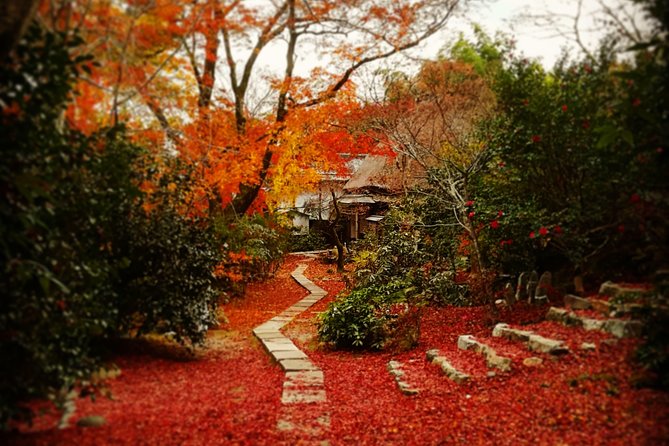
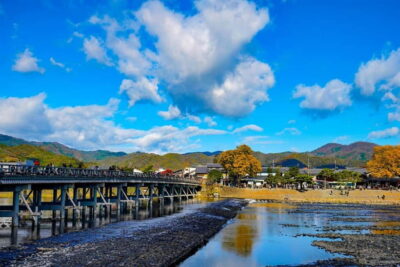
Your final major visual moment is Togetsukyo Bridge, with a quick window of about 10 minutes. The payoff is the view: mountains in the background, the bend of the river area, and that classic Arashiyama composition.
Ten minutes sounds short until you’re actually there. People underestimate how much time it takes to find a good photo angle when you want a clean shot. With the early timing, you’re more likely to get a viewpoint without constant interruptions.
Think of this as your “wrap the morning” stop. You’ll get your iconic Arashiyama photo, then head back to the meeting point.
The cultural value: learning temple meaning without getting lost
The most praised aspect across guide reports isn’t the route alone. It’s the way the guide translates Japanese culture and religion into something you can understand while you’re standing in the place.
For example, reviews mention guides covering:
- temple entry protocols and expected behavior
- differences in Buddhist cultures and how to think about them
- the stories behind what you’re seeing, tied to the specific sites you visit
Guides such as Yuki and Ray are especially noted for being easy to follow and patient with questions. Rob and Milo get praise for being witty and caring while sharing thoughtful insights.
If you’re the type of traveler who loves a little context but doesn’t want a long classroom session, this tour hits a sweet spot. The explanations are short, tied to a real location, and you keep moving.
Photos and small extras that make the morning feel special
One surprise that shows up again and again in feedback: many guides take a lot of photos and videos during the stops, and share them after the ride.
That’s not just convenience. It’s how you get better group photos on a bike tour. You won’t be juggling your phone while trying to line up your friends under bamboo.
Some groups also mention receiving a list of Kyoto restaurant recommendations after the tour. That can be handy if you’re eating nearby in the same general time window.
What’s included, and why that affects value
For $106.12 per person, you get:
- a native English speaking bilingual guide
- a bicycle
- a helmet
- bottled water
- admission tickets for the stops listed (bamboo forest area, Tenryu-ji/Sogenchi garden, Arashiyama highlights, Togetsukyo Bridge)
That matters because Kyoto admission costs and guided time add up quickly if you try to DIY it. Here, your bike and guide are bundled with the entry costs, so you’re not doing mental math at every stop.
It’s also a good value for families. The tour is designed to be family-friendly for kids aged 10 and above, and multiple reviews mention it works well for teens too.
Food, water, and comfort: your checklist for a smooth ride
The tour includes bottled water, which helps on warmer mornings. Still, you’ll want to come prepared to move and stop often.
A few practical things I’d pack or wear:
- sunglasses and sunscreen, especially in open bamboo paths
- comfy shoes for short walking segments
- a light layer, because mornings can feel cooler near rivers and temples
- a phone with enough battery for photos
If you’re sensitive to heat, remember this is early morning, but it can still be warm. Reviews specifically praise guides for keeping an eye on comfort and hydration, including offering electrolyte support in at least one account.
Who should book this Arashiyama early bird
This tour is a strong fit if:
- you want Arashiyama without the worst crowd crush
- you enjoy cycling but don’t want a strenuous fitness challenge
- you like history and religion explained while you’re actually seeing it
- you’re traveling as a family with kids 10+
It also works well for teens. One reason is the pace: bikes let them rest from constant walking, but they still get to see real sites.
If your group prefers a slow, sit-and-stare museum style day, you might feel the bike segments. But if you want a morning that feels like you moved through Kyoto, not just around it, this fits well.
Price and logistics: is $106 worth it?
For many people, the best test is simple: does the package solve problems for you?
Here it solves three big ones:
- Timing: early access makes your experience feel calmer.
- Transportation: you cover more ground than walking in a short time window.
- Context and entries: guide explanations plus included tickets reduce friction.
Could you DIY Arashiyama on your own? Sure. But the early morning crowd benefit is harder to replicate without planning, and entry+tickets+guided interpretation is time you don’t have to manage.
If you’re comfortable with early mornings and you can get to Saga-Arashiyama Station on your own, this price lands in a reasonable zone for what you receive.
Should you book the Early Bird Arashiyama Bamboo Forest Bike Tour?
Yes, if you want a calmer bamboo forest, a guided Zen garden visit, and a way to reach multiple Arashiyama highlights in one morning without running a marathon.
Book it if:
- you care about avoiding crowds and getting photos without constant interruptions
- you value a guide who explains temple culture in plain language
- you’re okay with no hotel pickup and standard bikes
Skip it (or rethink it) if:
- your group needs a late start or you hate early mornings
- you were expecting e-bike help
- you want a fully hands-off transport plan from hotel to hotel
If you can meet at Saga-Arashiyama Station at 8:00am and you’re ready for easy-to-moderate riding with short walks, you’ll likely end the morning feeling like you got the real Arashiyama experience, not just the postcard version.
FAQ
What time does the Early Bird tour start?
The tour starts at 8:00am.
How long does the tour last?
It runs about 3 to 4 hours (approx.).
Is this a private tour?
Yes. It’s private, so only your group participates.
What’s included in the price?
You get a native English speaking bilingual guide, bicycle, helmet, bottled water, and admission tickets for the listed stops.
Are e-bikes included?
No. The tour uses standard Cannondale city bikes, not e-bikes.
What places do we visit during the tour?
The tour includes Bamboo Forest Street, Tenryu-ji Temple Sogenchi Teien, cycling through Arashiyama highlights, and a stop at Togetsukyo Bridge.
Is it family-friendly for kids?
Yes. It’s suitable for kids aged 10 and above.
Do I need to provide anything when booking?
You’ll need to provide the heights of all guests at time of booking, and you’ll sign a liability release waiver before the tour.
Where do we meet?
You meet at Saga-Arashiyama Station (address listed in the meeting-point details). The tour ends back at the same meeting point.
What happens if weather is bad or I need to cancel?
The experience requires good weather. If it’s canceled due to poor weather, you’ll be offered a different date or a full refund. Free cancellation is available up to 24 hours in advance for a full refund.
More Tour Reviews in Kyoto
More of Kyoto by Bike
More of Arashiyama and Sagano
Just added: more Kyoto tours to browse


Arashiyama & Bamboo Grove Tours, compared.
 ★ 4.8Fushimi Inari, Kinkakuji, Bamboo Grove 1 Day Bus TourFrom $1224,316 reviews
 ★ 4.1Osaka/Kyoto:Kinkakuji,Arashiyama,FushimiInariShrine,NaraParkFrom $661,596 reviews
 ★ 4.7Kyoto/Osaka: Nara, Fushimi Inari Taisha, Arashiyama Bus TourFrom $521,275 reviews
 ★ 5.0Kyoto Arashiyama Walking Tour: Bamboo, Monkeys, Gardens & SecretsFrom $651,216 reviews
 ★ 4.8Arashiyama Bamboo, Temple, Monkeys, or Secret Sake BreweryFrom $87886 reviews
 ★ 5.0Arashiyama Bamboo Forest, Monkeys, Matcha & Temple TourFrom $53759 reviews
 ★ 4.4Osaka/Kyoto: Arashiyama, Nara & Fushimi Inari Shrine w/LunchFrom $61754 reviews
 ★ 5.0Nijo, Kinkaku-ji, Arashiyama, Kiyomizu & Fushimi InariFrom $51699 reviews
Browse the lists this tour appears in