
Reviewed · GION & GEISHA DISTRICT TOURS
Cycle Kyoto’s Hidden Gems & Gion Stroll
Kyoto by bike makes you feel unhurried. I love the off-the-beaten-path neighborhoods you roll through, and I like how the day pairs major landmarks (Imperial Palace and a Zen temple) with a UNESCO shrine stop that feels calmer than the usual tourist circuit. The only real catch is simple: this isn’t for kids under 9, and you’ll need to be comfortable riding a bike for the full 3.5-hour ride.
Meet point is easy to find, and the whole format is built for families. You start at the #Location Kneeling man statue at the south-east corner of Sanjo Ohashi intersection, and you end back there. It’s also a good value for the money because you’re not just passing sights—you get snack and tea time, plus a Gion/Pontocho walk where the guide explains the geisha system and helps with restaurant choices as you go.
In This Review
- Key things that make this bike-and-walk combo work
- Starting at Sanjo Ohashi: where the ride really begins
- Riversides, spring water, and the quiet Kyoto between the headlines
- Imperial Palace grounds and a Zen temple: big sites, human pacing
- Shimo-gamo Shrine UNESCO: primitive forest and beautiful buildings
- The river junction and the lighted return ride
- Gion or Pontocho on foot: geisha culture with practical context
- Where to eat during the walk
- Price and value at about $73 per person
- Who should book this bike-and-walk day
- Practical tips so the ride feels easy (not stressful)
- Should you book Cycle Kyoto’s Hidden Gems & Gion Stroll?
- FAQ
- How long is the tour?
- Where do we meet for the tour?
- Does the tour run in bad weather?
- What’s included in the price?
- Is there an extra cost for an electric bike?
- What should I bring?
- What age is this tour for?
- Are pets, smoking, or luggage allowed?
Key things that make this bike-and-walk combo work
- Sanjo Ohashi meet-up and a bike-first rhythm that keeps the day moving without rushing
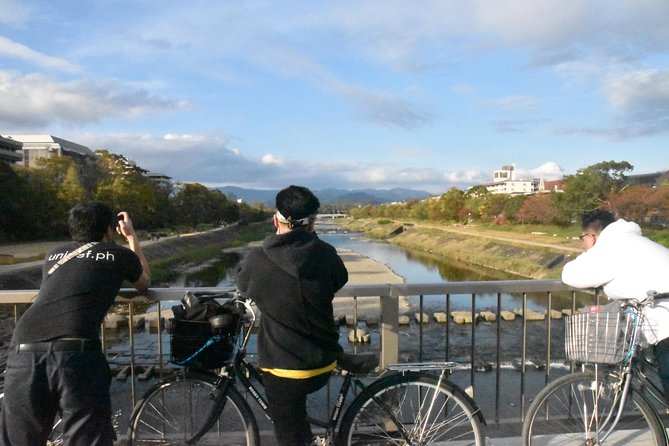
- Riverside riding and open-air views, with a cooler pace than walking the whole route
- A spring-water stop at a small, tucked-away shrine (worth the detour)
- Shimo-gamo Shrine UNESCO visit, including the forest setting and photo-friendly buildings
- A walk through Gion or Pontocho with practical context about geisha culture
- Flexible rain planning, with alternative temple/shrine entrance fees covered when needed
Starting at Sanjo Ohashi: where the ride really begins
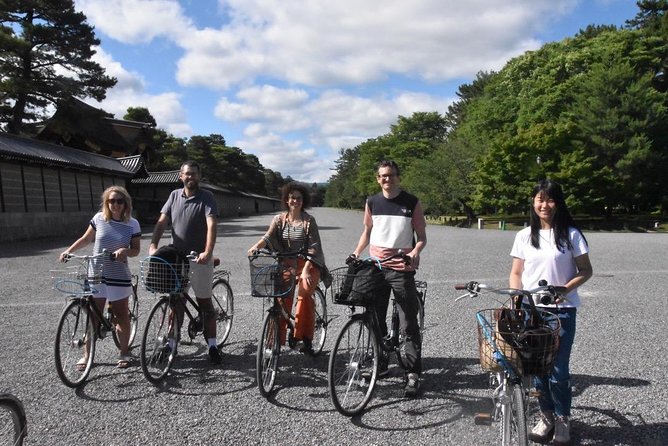
The tour kicks off at the Kneeling man statue on the south-east corner of Sanjo Ohashi intersection. If you’re coming by subway, it’s often faster to exit to street level first, then look for the statue from there. The meeting point matters because the whole day is timed around getting you out on two wheels quickly—less waiting, more riding.
One reason this start feels smart: you’re not immediately thrown into major traffic chaos. You begin with a peaceful riverside road, which is a nice way to get your legs, find your balance, and reset your brain after travel.
You’ll roll as a group with an English-speaking guide, and the pace is designed so you can actually see things, not just pedal past them. Guides you might get include Benjamin, Ko, Claire, and Mr. Go—and the consistent theme is patience, especially with families.
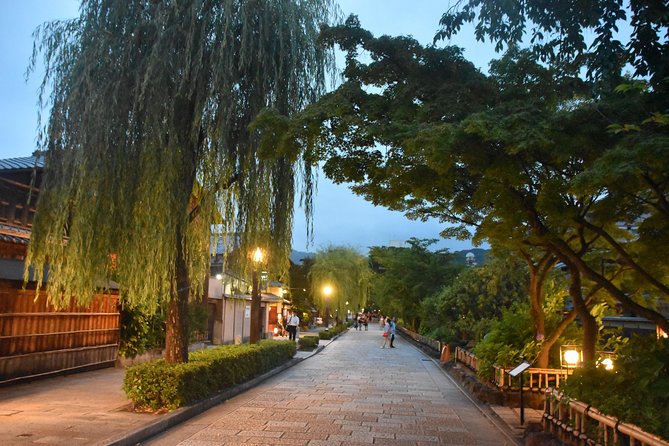
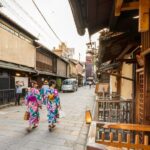
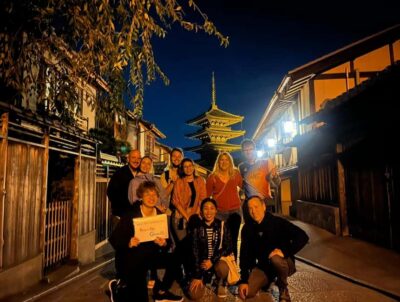
More evenings along the lantern-lit lanes of Gion


Riversides, spring water, and the quiet Kyoto between the headlines
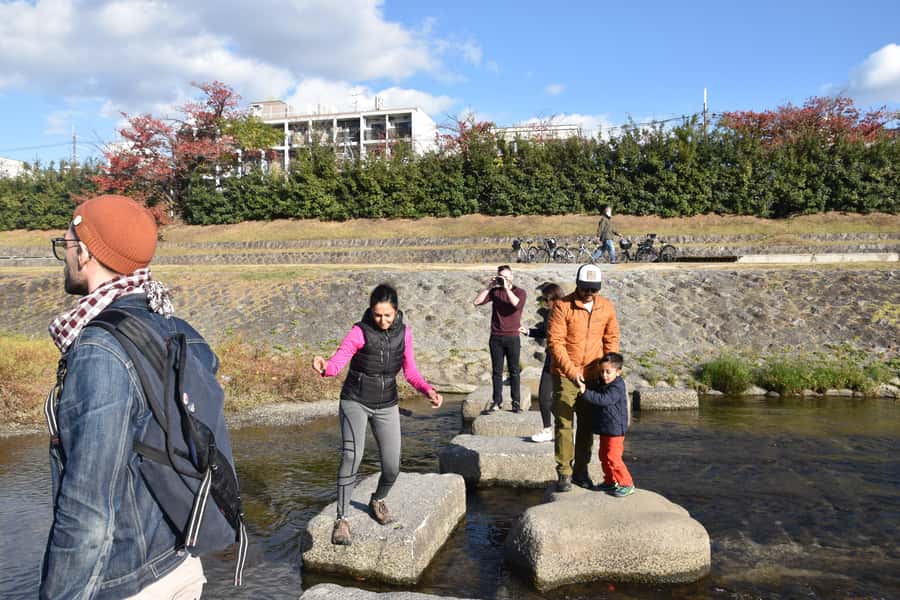
The first “wow” on this tour is how Kyoto feels when you’re moving at bike speed. You get that wind-in-your-hair sensation, but you also get the ability to slow down at street corners and glance into spots most people never bother to look at.
Early on, you’ll stop at a hidden shrine to try pure natural spring water. It’s a small moment, but it sets the tone: this ride isn’t just sightseeing from a checklist. It’s about the texture of the city—local paths, calm corners, and everyday Kyoto that doesn’t demand a reservation.
As you continue, you pass through university campuses and residential areas. That section is valuable because it breaks up the day. Instead of bouncing from landmark to landmark, you experience how Kyoto breathes beyond the big names. The route also helps on hot or humid days, since the riverside segments and frequent stops give you chances to cool off and regroup.
And yes, this is a family-friendly format in real life terms, not marketing terms. Guides tend to keep kids engaged by timing stops and explaining what you’re seeing in a way that’s easy to follow.
Imperial Palace grounds and a Zen temple: big sites, human pacing
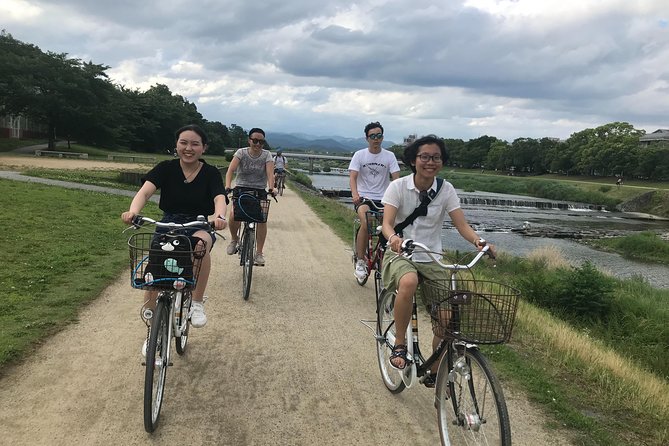
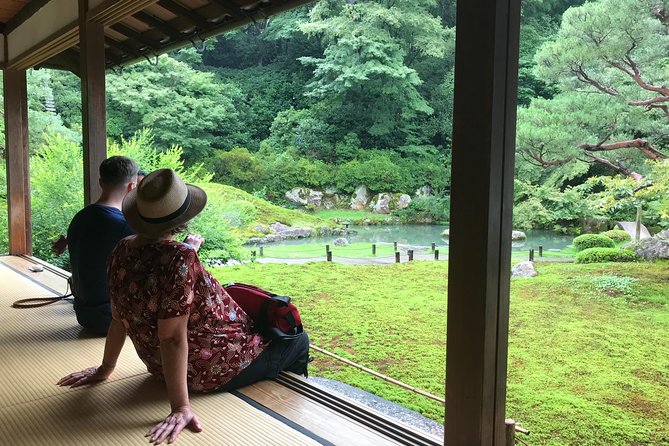
You’ll make a stop at the Imperial Palace—the “huge” kind of scale that you really feel once you’re there. On foot, palace areas can feel like you’re always dodging crowds or walking long distances with no clear rhythm. On a bike tour, the spacing feels more natural: you arrive, see, rest your feet, then keep going.
After that, you’ll visit a famous Zen temple. The tour format helps here too. You get time to look without the usual rush, and the guide can point out what to notice so the temple doesn’t just blur into general pretty scenery.
A thoughtful detail: entrance fees for temples/shrines you visit are included, but there’s also a rain plan. If weather changes, you’ll use alternative temple/shrine stops, and entrance fees for those are covered as well. In other words, you’re not paying extra just to keep the day on track if it pours.
Shimo-gamo Shrine UNESCO: primitive forest and beautiful buildings
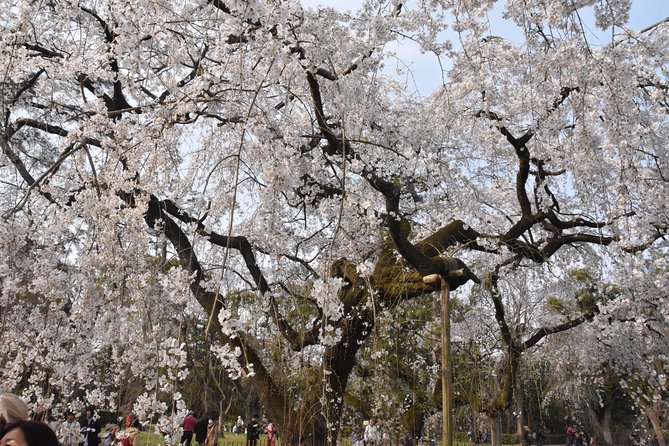
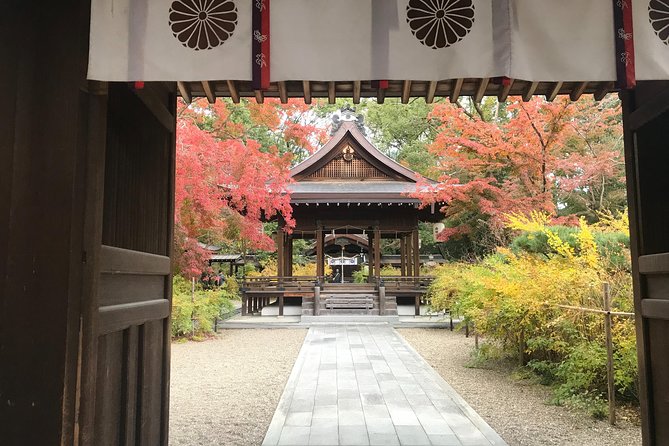
Next comes Shimo-gamo Shrine, a UNESCO World Heritage site. This is the emotional center of the cycling part. The setting includes a primitive forest feel—cooler air under trees and a sense that you’ve stepped away from traffic noise. Even if you’ve seen temple photos before, the forest context changes the experience.
You’ll also have a chance to admire the beautiful buildings within the shrine complex. This is the kind of place where angles matter. From a bike tour, you can get to the right spots without turning it into a long “walk and guess where to go” problem.
This stop is also one of the most “keep it calm” moments on the schedule. The tour slows down enough that you can take photos, read the vibe, and just enjoy how Kyoto looks when it’s not all about crowds.
One note to plan around: the tour includes a lot of moving, so bring comfortable shoes even though you’ll be on a bike for the bulk of it. You’ll still be on foot during shrine and temple stops.
The river junction and the lighted return ride
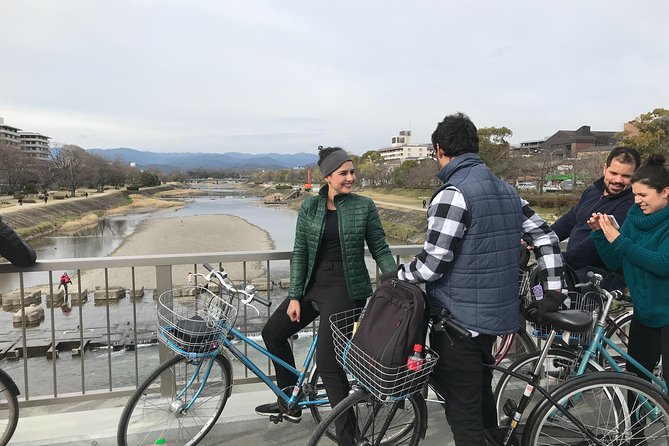
After Shimo-gamo, you’ll ride down toward a unique river junction point. Then you follow a scenic riverside route back that’s described as lighted-up. That “lighted river” part can make a big difference. It’s not just pretty—changing light and reflections can make the same river corridor feel different from earlier in the day.
Cycling back along the river is a nice payoff for the first half. You get to regain momentum, and you’re not stuck in one place. The guide keeps the flow going so you’re not thinking about turns or where you’ll park. You just ride.
If you’re traveling with kids, this section often lands well because it feels like the day is still fun, not just “more stops.”
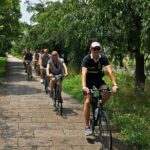
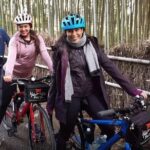
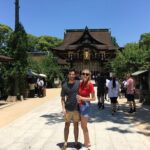
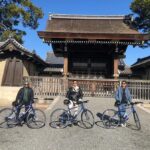
More of Kyoto at handlebar pace
Gion or Pontocho on foot: geisha culture with practical context
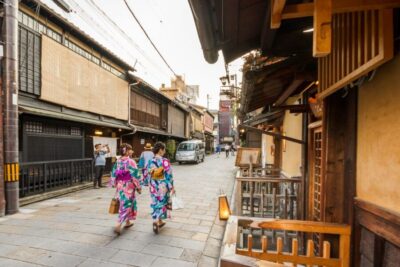
Once the bikes are done, you shift to a leisurely walk through Gion (or Pontocho, depending on the group plan). This is where the tour becomes culture-first instead of geography-first.
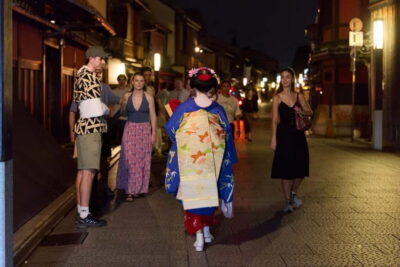
You’ll see the main flower town areas (the places associated with geisha), and the streets are extremely photogenic. But the best part isn’t just the camera angles. The guide explains the unique culture and system of geisha, so what you’re seeing makes more sense than a vague, “pretty tradition” impression.
If you’re lucky, you might spot a geisha. Even when you don’t, you still walk away with a clearer sense of how the neighborhood works and what to be respectful about.
Where to eat during the walk
During the walking portion, your guide will introduce good restaurants and bars based on your requests. That’s practical in a way guidebooks can’t always match. You’ll get suggestions that fit your mood and your timing—helpful when you want dinner without spending an hour searching for a place that’s actually open.
One small planning thought: bring your camera, but also keep one hand free. Narrow streets and crosswalk timing can make it annoying to stop constantly if you’re juggling gear.
Price and value at about $73 per person
At $73 per person, you’re paying for more than a ride. You’re getting:
- Rental bikes
- Japanese sweet snacks and tea at a traditional snack shop
- Temple/shrine entrance fees included for the sites you go to (or alternative ones in rain)
- An English-speaking guide who manages pacing, stops, and explanations
- A second half with a culture-focused walk through Gion/Pontocho
That value lands best if you want both sides of Kyoto: the moving, airy parts (cycling) and the slower, interpretive parts (the walk and cultural context). If you only care about one thing—say, temples only—this might feel like extra. But if you want a balanced afternoon and you like having someone else handle route logic, this price starts to look very reasonable.
Also, you can optionally request an electric bike for an extra 1,000 yen. If your group includes someone who’s less confident on hills or endurance, that option can keep the whole trip enjoyable rather than stressful.
Who should book this bike-and-walk day
This tour fits best if you:
- Have at least one family member who can ride steadily on a bike
- Want to see Kyoto beyond the most obvious lanes
- Like a schedule with varied pacing—bike time, shrine time, then neighborhood walking
- Prefer small “stop-and-look” moments over long, straight-line sightseeing
It’s not suitable for:
- Children under 9
- People who can’t ride a bike
Also, you’ll want to travel light. Luggage or large bags aren’t allowed, and pets aren’t allowed either. Smoking is not allowed.
If you’re the type who gets tired fast from walking temple-to-temple, this format can be a relief. You do still walk some, but the bike does the heavy lifting.
Practical tips so the ride feels easy (not stressful)
- Wear comfortable shoes. You’ll be on foot for shrine/temple areas and for the Gion/Pontocho walk.
- Bring water. Kyoto heat and humidity can sneak up, and you’ll appreciate having it.
- Dress for the weather. The tour runs rain or shine, and you’ll use temple/shrine alternatives if it’s wet.
- Bring your camera, but plan to move with it. Frequent stops are part of the experience—just don’t let photo stops derail the group flow.
- If you’re tempted by an electric bike, decide early based on your group’s comfort. The 1,000 yen option is available on request.
Should you book Cycle Kyoto’s Hidden Gems & Gion Stroll?
Yes, if you want a Kyoto afternoon that feels like you’re using the city correctly—by bike when you can, on foot when it matters. The best reasons to book are the combination of riverside riding, the Shimo-gamo Shrine UNESCO experience, and the Gion/Pontocho walk where the guide explains what you’re actually looking at (not just where it is).
Skip it if your group can’t ride a bike or if you’re traveling with kids younger than 9. Also consider alternatives if you’re hoping for a totally hands-off day with minimal stops; this one is structured around guided pacing, and you’ll want to follow along.
If your goal is a well-paced, family-friendly way to see real Kyoto, this tour has the ingredients.
FAQ
How long is the tour?
The experience runs about 3.5 hours of cycling plus a 30-minute town walk.
Where do we meet for the tour?
Meet at the Kneeling man statue at the south-east corner of Sanjo Ohashi intersection. If you’re coming by subway, it’s quicker to exit to the surface and then look for the statue.
Does the tour run in bad weather?
Yes, it’s a rain or shine experience. If it’s raining, the tour includes alternative temple or shrine options.
What’s included in the price?
You get rental bike, Japanese sweet snacks, Japanese tea at a traditional snack shop, and entrance fees for temples or shrines you visit (including rain alternatives).
Is there an extra cost for an electric bike?
Yes. If you request an electric bike, there’s an extra 1,000 yen fee, payable on the spot.
What should I bring?
Bring comfortable shoes, a camera, water, and weather-appropriate clothing.
What age is this tour for?
It’s not suitable for children under 9.
Are pets, smoking, or luggage allowed?
Pets are not allowed, smoking is not allowed, and luggage or large bags are not allowed.
More Tour Reviews in Kyoto




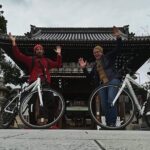
More of Kyoto by Bike
Still in Gion? Keep Going

Just added: more Kyoto tours to browse








Gion & Geisha District Tours, compared.
 ★ 4.7Kyoto Geisha Walking Tour: Gion District & Hidden GemsFrom $253,273 reviews
 ★ 4.9Gion Magical Night Walking Tour with Geisha TriviaFrom $242,393 reviews
 ★ 4.7Gion Geisha District Walking Tour – Stories of GeishaFrom $202,187 reviews
 ★ 4.9Best of Kyoto: Gion, Geisha, Pagodas & CobblestonesFrom $242,058 reviews
 ★ 4.5Night Walk in Gion: Kyoto’s Geisha DistrictFrom $212,003 reviews
 ★ 5.0Kyoto Night Foodie Tour in Gion (9+ dishes + 6 Sake tastings)From $1631,762 reviews
 ★ 5.0Kyoto Gion Geisha District Walking Tour – The Stories of GeishaFrom $251,441 reviews
 ★ 5.0Kyoto Gion: 2-Hour Geisha Culture & History Walking TourFrom $231,186 reviews
Browse the lists this tour appears in