
Reviewed · GION & GEISHA DISTRICT TOURS
Cycle Kyoto’s Hidden Gems & Gion Stroll
Riding Kyoto riverside beats the crowds. This small-group outing pairs riverside cycling with a guided Gion night walk, letting you see shrines, temples, and calm backstreets in one half-day. I like how efficient it feels without being rushed, and I love that the route avoids the busiest roads whenever possible.
This is also the kind of tour where the guide’s details matter. One recent group called out Honoka’s great English and the way she explained what you were looking at in plain, human terms.
One thing to consider: you need to be comfortable riding a bike for several hours. Also, the Gion portion is a night stroll, not a long sit-in; if you want hours of Gion on your own, you’ll likely want to add extra time after the tour.
In This Review
- Key Things to Know Before You Ride Kyoto After Dark
- Why This Kyoto Bike + Gion Night Walk Makes Sense
- The Kamogawa River Start: Peaceful Cycling and Shrine Moments
- Imperial Palace Grounds, a Zen Temple, and the Parts of Kyoto Most People Skip
- Shimo-gamo Shrine: UNESCO Forest, Buildings, and a Slower Feeling
- Heading Back Along the Lit Kamogawa
- Gion After Dark: Maiko Culture, Geisha Chances, and a Guided Sense of Place
- Sanjo Bridge Snack and Tea: A Small Stop That Pulls You Back to Earth
- Price and Value: Getting More Than Just a Bike Rental
- Practical Tips: Make This Tour Feel Effortless
- Should You Book This Kyoto Bike + Gion Night Walk?
- FAQ
- How long is the Cycle Kyoto bike and Gion night walk?
- What’s the starting point for the tour?
- Is bicycle rental included in the price?
- What’s included for food and drinks?
- Does the tour include any admission tickets?
- Is an electric bike available?
- How long is the Gion night walk?
- What is the cancellation policy?
Key Things to Know Before You Ride Kyoto After Dark
- Tiny group size: the tour runs with a maximum of 5 travelers, so questions and pacing stay manageable.
- Bike time first, then atmosphere: you cycle about 3 hours, then do a short guided walk in Gion.
- Quiet riverside roads: the bike route is planned to keep you away from heavy traffic.
- Iconic sights plus UNESCO forest: Shimo-gamo Shrine (World Heritage) is part of the plan, along with Imperial Palace grounds when your date lines up.
- Snack + tea stop: you get Japanese sweets and tea at a traditional shop near Sanjo Bridge.
- Optional electric bike: if you ask for an electric bike on the spot, plan for an extra 1,000 yen.
Why This Kyoto Bike + Gion Night Walk Makes Sense
Kyoto has a lot of things you want to see, but walking everywhere can turn your day into a stamina contest. This tour solves the basic problem with a simple combo: bike time in the morning/early afternoon, then a focused look at Gion at night. You end up seeing far more than you would if you tried to hop between temples and bridges on foot.
The best value here is how the route is built for movement. You’re not just ticking off famous names; you’re moving along calm riverside stretches where you can actually feel the city’s rhythm. The tour also keeps groups small, so the guide can steer you through residential areas and quieter approach roads without turning it into a frantic line-watching exercise.
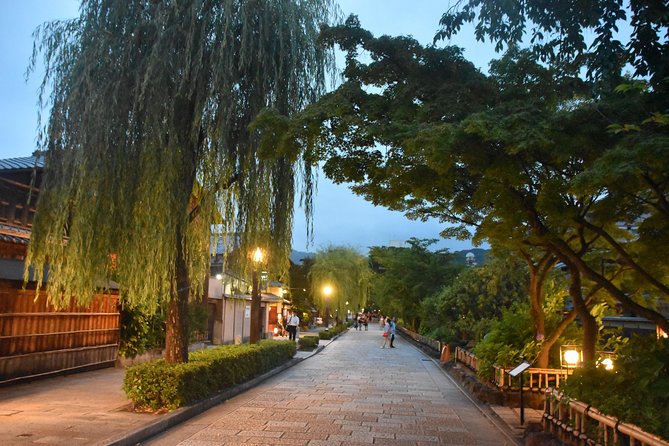
And the timing helps. Gion feels different after sunset. During the night walk, you’re there for the mood—lantern-lit streets and the sense of how the entertainment district works—without needing to guess your way through it.
More evenings along the lantern-lit lanes of Gion


The Kamogawa River Start: Peaceful Cycling and Shrine Moments
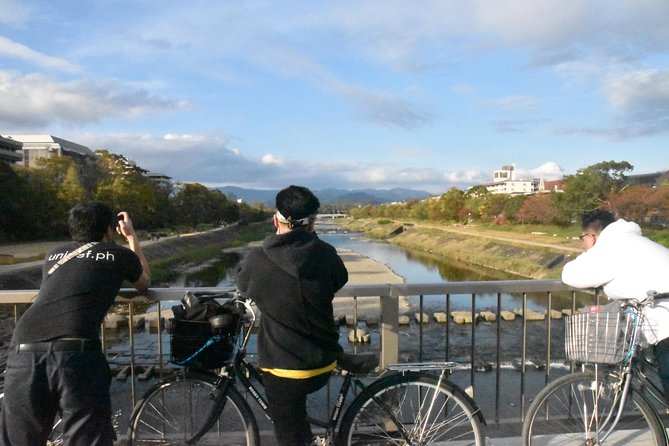
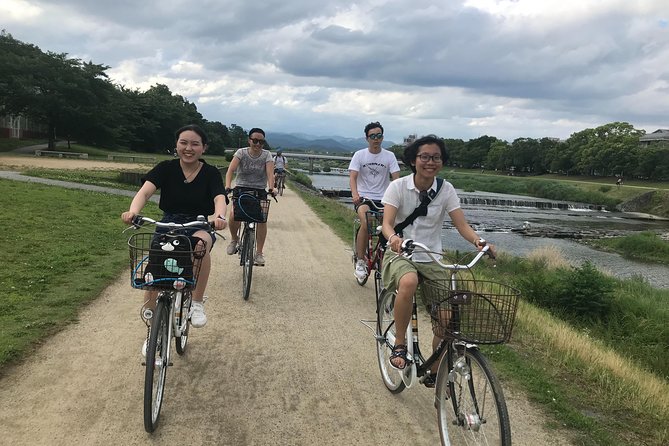
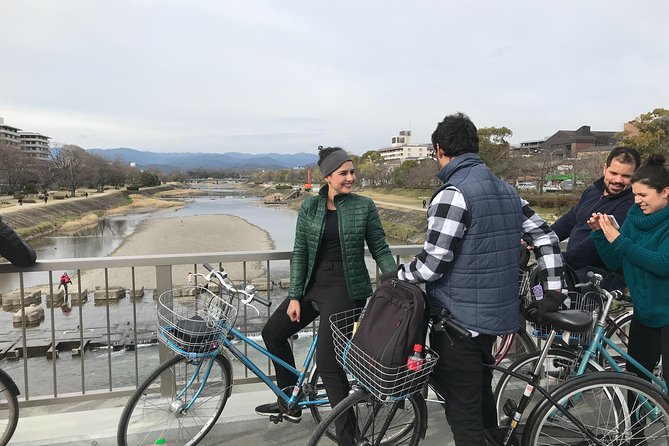
You begin back at the meeting point by the statue of Takayama Hikokurō at 三条 (Sanjo), in Higashiyama Ward. From there, the tour starts with a riverside cycling road that’s designed to be relaxing right from the first minutes. You get a 3–5 speed gear bike, which is a nice detail: it’s not trying to be complicated or sporty. It’s about comfortable control, especially if you’re not used to riding in a city.
This bike section lasts about 3 hours, and it’s packed with variety. Early on, you’ll follow a peaceful path where the open sky and river air make the whole experience feel less like “touring” and more like moving through real Kyoto. The guide may also point out smaller details as you ride, including a stop to drop by a shrine and try spring water described as natural.
Imperial Palace Grounds, a Zen Temple, and the Parts of Kyoto Most People Skip
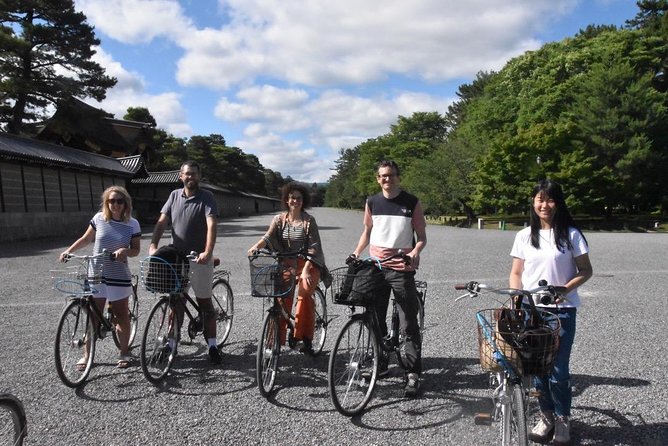
The route doesn’t only stick to postcard sights. It threads in several major “Kyoto names,” but in a way that still feels smooth because you’re cycling between them.
You’ll pass by the huge Imperial Palace area and also visit a famous Zen temple. If you’re there during the rare window when parts of the Imperial Palace grounds are open, that can be a standout. One group highlighted how special it was to catch the Imperial Palace view because it’s only open a few days a year, and the fall colors were simply incredible for that timing.
What I like is that the tour doesn’t treat you like you’re only there for the obvious. You also ride through university campuses and peaceful residential areas. That matters because Kyoto is not just temples and photo stops—it’s also students, daily life, and neighborhoods that don’t advertise themselves to visitors.
The bike route also includes a “river junction point” moment before you head back. Even if you’re not staring at the water the whole time, these are the spots where the route feels like it’s giving you access to the city’s structure.
Shimo-gamo Shrine: UNESCO Forest, Buildings, and a Slower Feeling
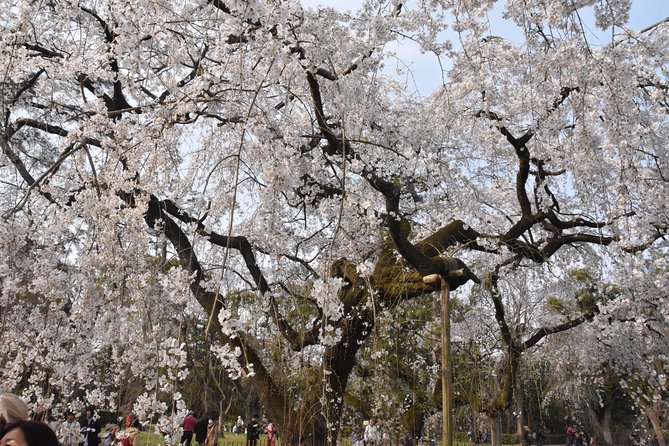
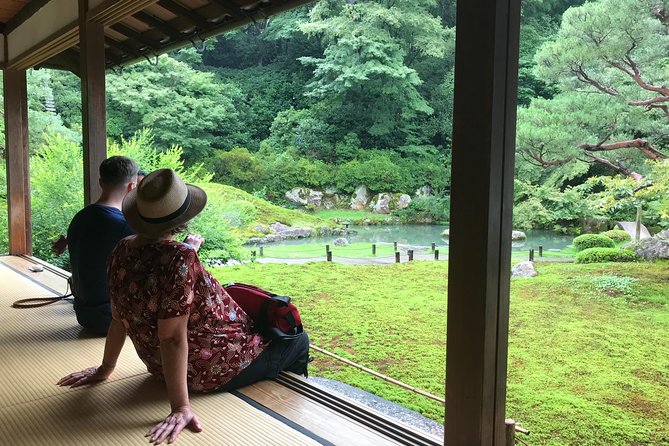
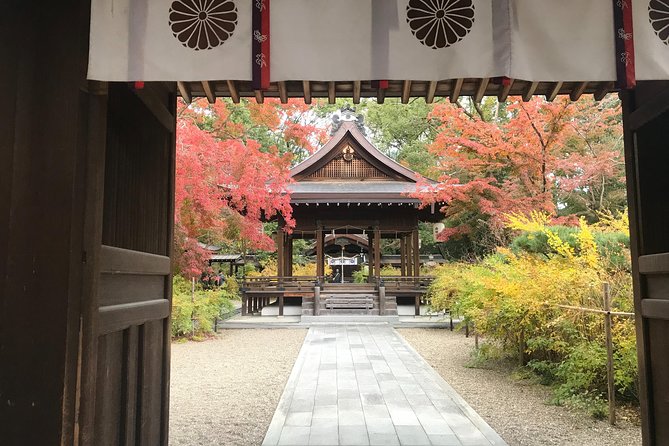
One of the anchor stops is Shimo-gamo Shrine, a UNESCO World Heritage site. This is where the tour shifts from “riding and seeing” to “pausing and paying attention.”
Shimo-gamo is known for a primitive forest feel and beautiful shrine buildings. Even if you’ve seen other shrines in Kyoto, the forested atmosphere here has a different texture. You’re not just walking through an open grounds layout; you’re feeling the way the site sits inside its setting.
A useful detail from the experience: you may also learn how shrine offerings work. One past participant mentioned learning how to make an offering at a Shinto shrine stop, which is exactly the kind of small cultural skill that makes your visit more respectful and more meaningful. You don’t need to perform anything perfectly—just understanding the steps helps you notice what people are doing around you.
If you want great photos, look for shaded angles among the trees. If it’s sunny, bring a hat and water because shrine grounds can still feel warm even when you’re in forested areas.
Heading Back Along the Lit Kamogawa
After Shimo-gamo, the tour steers you back along the riverside as the route becomes more scenic at night. The plan includes cycling along lighted-up sections of the river path to return.
This part is more than pretty. It’s a chance to regroup mentally—especially if you spent the first half of the tour focused on temples, gates, and walking. On the ride back, you can simply experience Kyoto moving past you: the river line, the streetlights, the sense of the city settling in.
Also, if you’re a person who enjoys small visual details, keep an eye out for stepping-stone style river edges. One group specifically called out loving the stepping stones along the route. It’s not the main headline of the tour, but it’s the sort of Kyoto detail that makes the day feel lived-in.
More of Kyoto at handlebar pace


Gion After Dark: Maiko Culture, Geisha Chances, and a Guided Sense of Place
Once the bike is returned, the tour moves into its second act: a short night walk in Gion. This part is about 30 minutes, and it’s structured as a cultural explanation while you stroll.
The guide explains the unique culture and system of Gion, including how Maiko fit into the bigger picture. If you’re lucky, you may spot geisha in the area, but it’s best to treat sightings as a bonus rather than a guarantee. The real value is the context—knowing what you’re seeing and why certain streets and rhythms feel the way they do.
Also, Gion’s night layout is easier to understand with a guide than with a map. You get the feeling of how the district works without needing to memorize backstreets. And because this is paired with the bike tour, you’re not arriving in Gion all tired and frazzled from trying to race between sights.
Sanjo Bridge Snack and Tea: A Small Stop That Pulls You Back to Earth
The day wraps with a quick stop at Sanjo Bridge. You’ll get Japanese sweet snacks and Japanese tea from a traditional snack shop. This is brief (about 10 minutes), but it hits an important travel need: a gentle pause between walking and whatever you do next.
I like that the snack shop piece is built into the flow rather than something you have to hunt down yourself. If you’ve been cycling through bigger sites earlier, this is a calmer, more local-feeling transition.
Price and Value: Getting More Than Just a Bike Rental
The tour costs $65 and runs about 4 hours. For that price, you’re paying for more than equipment. You’re also paying for route planning, guided interpretation, and the snacks/tea included with the Sanjo Bridge stop.
Here’s what’s included:
- bicycle use
- Japanese sweet snacks at a traditional snack shop
- Japanese tea (and/or coffee) at that shop
- temple or shrine entrance fees for the sights you visit as an alternative plan in rain
What’s not included:
- an extra fee of 1,000 yen if you request an electric bike
That optional electric bike can matter if you’re worried about stamina. Still, the base bike option is a 3–5 speed gear bike, which suggests the tour is meant to be doable for typical riders.
When I judge value, I look at three things: time, access, and effort saved. This tour checks all three. You get a packed itinerary without needing to figure out transit between dispersed locations. You also avoid the busy road factor, which is real in Kyoto. And because the group is small, the guide’s attention can improve how much you actually understand during those stops.
Practical Tips: Make This Tour Feel Effortless
A bike tour can be great, or it can be stressful—depends on preparation. Here’s how to make it smoother.
First, only book if you’re genuinely comfortable riding. The tour requires guests who can ride a bike, and there’s no point in forcing it. If you’re unsure, ask about the electric bike option in advance—or at least know it’s available on the spot for 1,000 yen.
Second, think about your energy for the split day. The bike portion is about 3 hours, and the Gion walk is about 30 minutes. That means you’re not getting a long afternoon roaming Gion. If your heart is set on extra wandering around Gion, plan to add that time yourself after the tour ends back at the meeting point near Sanjo.
Third, plan for good weather. The experience is described as weather-dependent. If poor weather cancels it, you’ll be offered a different date or a full refund. And when rain forces changes, temple and shrine entrance fees for alternative plans are included.
Finally, bring your curiosity. The tour includes cultural explanations—especially during the Gion night walk—and it may include practical shrine etiquette like offering steps. That kind of guidance is what turns Kyoto from a checklist into something you can actually read.
Should You Book This Kyoto Bike + Gion Night Walk?
I’d book this if you want an efficient Kyoto day that still feels personal. The small-group size, the riverside cycling on quieter roads, and the combination of shrines plus a guided Gion night stroll make it a strong fit for first-time visitors and repeat visitors who want a smarter route.
Skip it if you’re looking for a long, free-form Gion wandering session, or if you’re not comfortable riding a bike for a few hours. Also, if you only want the biggest famous sites with minimal walking, this may feel like more “moving around” than you planned.
If you match the basics—comfortable rider, open to guidance, and you like the idea of Kyoto by bike—you’ll likely appreciate how this tour gives you context along the way, not just photos at the end.
FAQ
How long is the Cycle Kyoto bike and Gion night walk?
The tour lasts about 4 hours.
What’s the starting point for the tour?
The meeting point is the statue of Takayama Hikokurō in Kyoto, at 〒605-0009 Kyoto, Higashiyama Ward, Ōhashichō, 三条.
Is bicycle rental included in the price?
Yes. Bicycle use is included.
What’s included for food and drinks?
You get Japanese sweet snacks and Japanese tea (and/or coffee) at a traditional snack shop.
Does the tour include any admission tickets?
Yes. Entrance fees for temples or shrines you go to as an alternative plan in rain are included. The first stop also lists an admission ticket included.
Is an electric bike available?
An electric bike costs an extra 1,000 yen if you request it on the spot.
How long is the Gion night walk?
The Gion walk portion is about 30 minutes.
What is the cancellation policy?
Cancellation is free up to 24 hours in advance for a full refund.
More Tour Reviews in Kyoto




More of Kyoto by Bike
Still in Gion? Keep Going

Just added: more Kyoto tours to browse








Gion & Geisha District Tours, compared.
 ★ 4.7Kyoto Geisha Walking Tour: Gion District & Hidden GemsFrom $253,273 reviews
 ★ 4.9Gion Magical Night Walking Tour with Geisha TriviaFrom $242,393 reviews
 ★ 4.7Gion Geisha District Walking Tour – Stories of GeishaFrom $202,187 reviews
 ★ 4.9Best of Kyoto: Gion, Geisha, Pagodas & CobblestonesFrom $242,058 reviews
 ★ 4.5Night Walk in Gion: Kyoto’s Geisha DistrictFrom $212,003 reviews
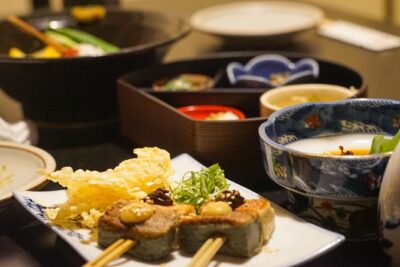 ★ 5.0Kyoto Night Foodie Tour in Gion (9+ dishes + 6 Sake tastings)From $1631,762 reviews
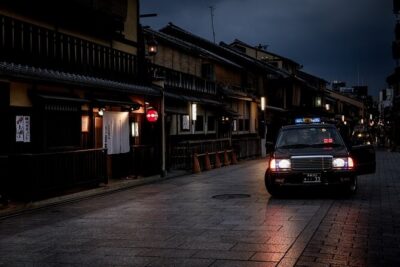 ★ 5.0Kyoto Gion Geisha District Walking Tour – The Stories of GeishaFrom $251,441 reviews
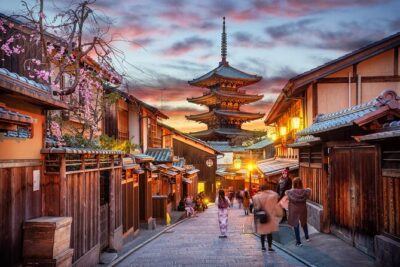 ★ 5.0Kyoto Gion: 2-Hour Geisha Culture & History Walking TourFrom $231,186 reviews
Browse the lists this tour appears in