
Reviewed · GION & GEISHA DISTRICT TOURS
Authentic Maiko Experience&Kyoto Lunch (Free drink) at Noh Stage
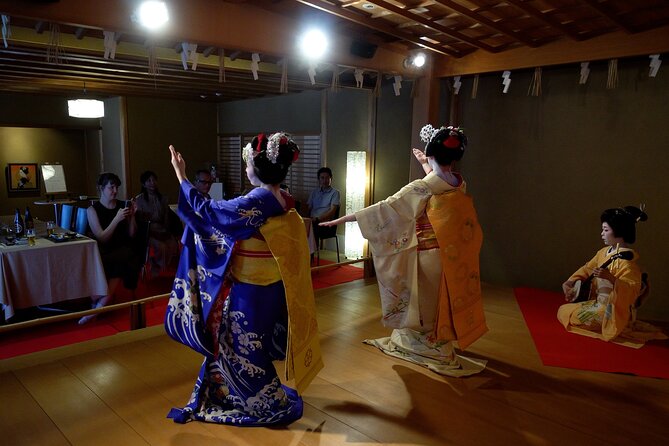
Maiko dance, right on a Noh stage. This Kyoto experience brings maiko close to you, with dinner, a costume-and-dance lecture, Q&A, and Ozashiki parlor games staged on a Noh platform.
I really like two things about this format: you get unlimited drinks for the full session, and you also play games (not just watch), including Ozashiki Asobi on the Noh stage.
One drawback to factor in: it’s only about 2 hours, so the pacing is tight and you’ll need to use the conversation time efficiently if you have lots of questions.
In This Review
- Key highlights you should care about
- Kyoto Maiko on a Noh Stage: What Makes This Lunch Different
- Entering Okazaki-an: Timing and the Way the Session Flows
- The Maiko Dance Show and Costume Lecture (12:45–13:10)
- Ozashiki Asobi on the Noh Stage (13:40–14:20)
- Kyoto Lunch, Free Drinks, and Why the Meal Is Part of the Culture
- Price and Value: Is $149.85 Worth It?
- Who Should Book This Maiko and Ozashiki Experience
- Small Etiquette Notes That Actually Help
- Should You Book This Kyoto Maiko Experience at Okazaki-an?
- FAQ
- What time does the experience start?
- How long is the Kyoto maiko experience?
- Where does it take place?
- What’s included with the ticket?
- Are drinks included?
- Is there an interpreter?
- What happens during the maiko dance portion?
- Do you play games, or is it only watching?
- Are there any restrictions on footwear or luggage?
- Can I cancel, and how late?
- How big is the group?
Key highlights you should care about
- Noh stage seating for the parlor games, which gives the whole night a very Kyoto feel
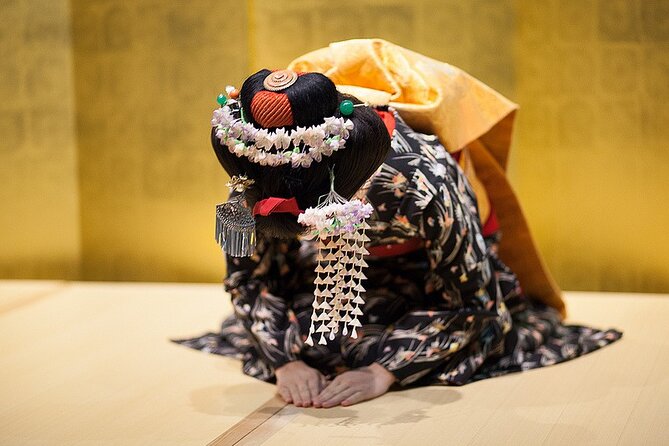
- Maiko dance + costume explanation, with a lecture and Q&A so you understand what you’re seeing
- Multiple communication windows with the maiko, plus a Q&A segment
- Two-shot photo included, so you leave with a clear keepsake
- Unlimited drinks for 2 hours alongside the meal, which makes the experience feel more relaxed
Kyoto Maiko on a Noh Stage: What Makes This Lunch Different
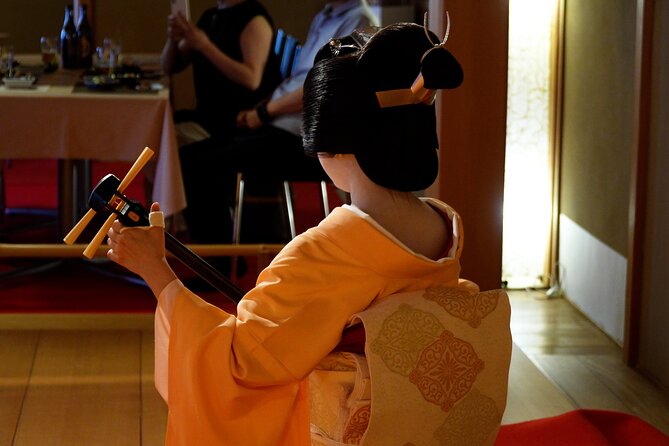
If your idea of a Kyoto cultural night is always going to the same temples or shrines, this is a good change of pace. You’re stepping into Kyoto’s traditional performance world where the setting matters: the actions happen on a Noh stage at Okazaki-an in Sakyo Ward.
The program is designed around real interaction, not just a short show. You start with a meal, then the maiko dance show kicks off with a lecture explaining the dance and costumes. After that, you get structured chances for Q&A and conversation, and later you take part in Ozashiki-style parlor games right in the performance space.
That combination is the value. You get context (what you’re watching), access (time to ask questions), and participation (the games). For first-time visitors, it’s one of the clearest ways to understand the geisha culture customs without turning it into a rushed photo line.
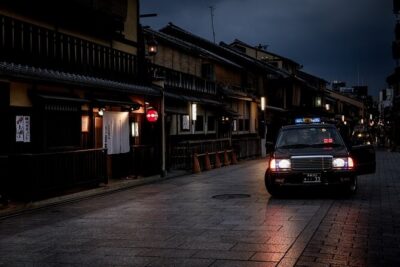
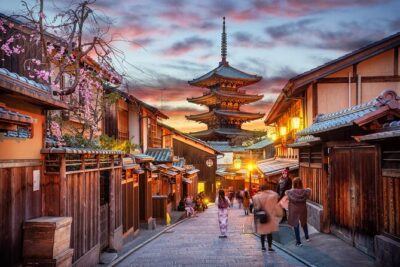
More evenings along the lantern-lit lanes of Gion

Entering Okazaki-an: Timing and the Way the Session Flows
This experience runs in one concentrated block, about 2 hours total. You’re scheduled to arrive at the meeting point at 12:20 pm, and the start time listed is 12:30 pm.
Here’s the practical flow:
- 12:20 doors open. If you show up early, you can relax in the 1st-floor café space.
- 12:30 dinner begins.
- 12:45 maiko dance show starts.
- 13:10 communication time with the maiko.
- 13:40 Ozashiki Asobi games on the Noh stage.
- 13:55 another communication time window.
- 14:20 last dance show.
- 14:30 end, back at the meeting point.
I like this kind of schedule because it avoids the most common problem with cultural performances: seeing something beautiful and then having no chance to ask even one real question. Here, the conversation and Q&A are built in after you’ve learned a bit about the dance and costume.
One small planning note: the group limit is up to 24 people. That’s big enough for a lively room, but small enough that the event still feels personal rather than anonymous.
The Maiko Dance Show and Costume Lecture (12:45–13:10)
The most visually memorable part is the maiko dance itself, with the performance happening close enough that you’re not just watching from afar. What makes it more than a pretty show is the structure around it.
At 12:45, the dance show starts. Then there’s a lecture where the geiko and maiko explain details about the dance and the costumes. After the lecture, you get a Q&A session where you can ask questions directly.
This matters because maiko performance isn’t random movement. Costumes, posture, and timing carry meaning, and having someone explain what you’re seeing helps you leave with understanding, not just photos.
Then you shift into communication time at 13:10. This is where the experience turns from spectator to participant. If you’ve ever wondered what to say in that moment, here’s a useful strategy: ask one question you genuinely care about, then be ready with one follow-up. The interpreter guide is there to support the conversation, so you can keep it flowing.
Ozashiki Asobi on the Noh Stage (13:40–14:20)
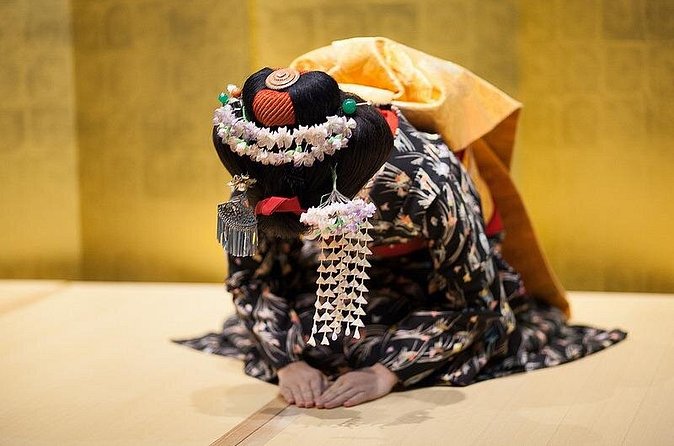
The Ozashiki part is the reason I’d call this experience more than a dance viewing. At 13:40, you move into Ozashiki Asobi (parlor games) on the Noh stage.
Why this is special: the stage is the same kind of space used for traditional performance, so playing games there makes it feel like you’re joining the cultural setting instead of sitting outside it. You’ll also likely notice how the room’s layout encourages attention—people aren’t scattered; everyone stays connected to what’s happening in front.
After the games, there’s another communication time at 13:55, followed by the last dance show at 14:20. That sequence is smart. You get a first performance, then interaction through games, and then a final dance finish. It helps you build a fuller picture of the evening instead of ending right after you’ve played.
If you want to maximize your time, use the Ozashiki as a way to talk casually too. Even small conversation moments can become the real memory, especially if you’re nervous about speaking in a new language. The interpreter guide helps smooth things out.
Kyoto Lunch, Free Drinks, and Why the Meal Is Part of the Culture
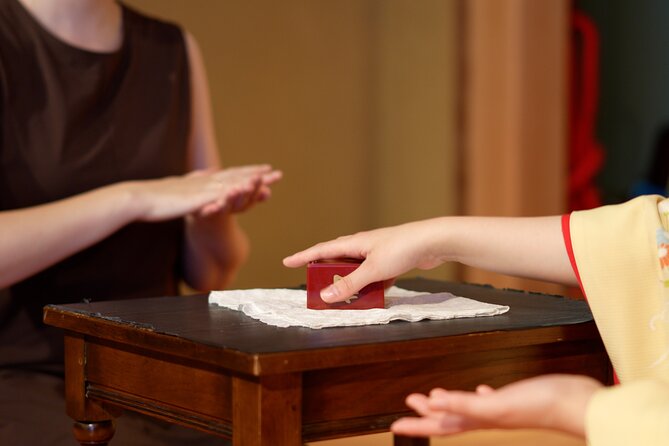
This is a Kyoto lunch experience, not a quick snack before a show. Dinner begins at 12:30, and you also get meals and free drinks.
One standout benefit is that you have unlimited drinks for 2 hours. That does two things for you:
- It makes the room feel more comfortable while you’re eating and waiting between segments.
- It lowers the pressure to rush. You can focus on the conversation and the performance without constantly thinking about timing.
The meal is described simply as included, and one practical detail from the overall feedback pattern is that people found it filling and enjoyable. You shouldn’t count on a light bite. Plan for a real meal so the later dance and games don’t feel like you’re running on empty.
If you’re pairing this with other Kyoto sightseeing, consider slotting it early in the day. The session ends around 14:30, which can give you time to continue exploring afterward.
Other Kyoto tours and experiences to compare




Price and Value: Is $149.85 Worth It?
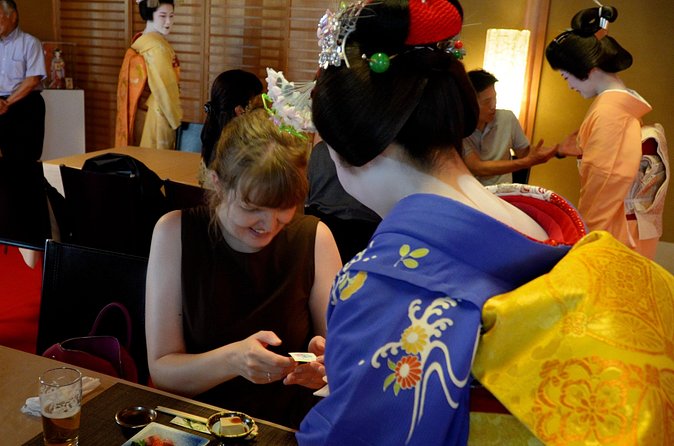
At $149.85 per person (for about 2 hours), this isn’t a budget activity. But it also isn’t a generic performance ticket, and that’s where the value comes from.
You’re paying for several bundled components:
- Maiko dance performance up close
- A lecture on dance and costume details
- Q&A and conversation time with the maiko
- Ozashiki Asobi games on a Noh stage
- A two-shot photo included
- Meals plus free/unlimited drinks for the session
- A Kyoto-certified interpreter guide
In other words, the price is covering access and structure. A lot of cheaper options in Kyoto are either strictly viewing events or strictly photo-only meet-and-greets. This one tries to do both, while also giving you time to ask questions and play.
For me, the strongest value signal is that you’re not just watching. The schedule keeps returning to interaction: conversation before games, conversation after games, plus the Q&A segment.
If you’re the kind of visitor who hates feeling like you paid to stand in a line, this format can feel more worth it. It’s also limited in size (max 24), which helps keep the experience from turning into a crowded shuffle.
Who Should Book This Maiko and Ozashiki Experience
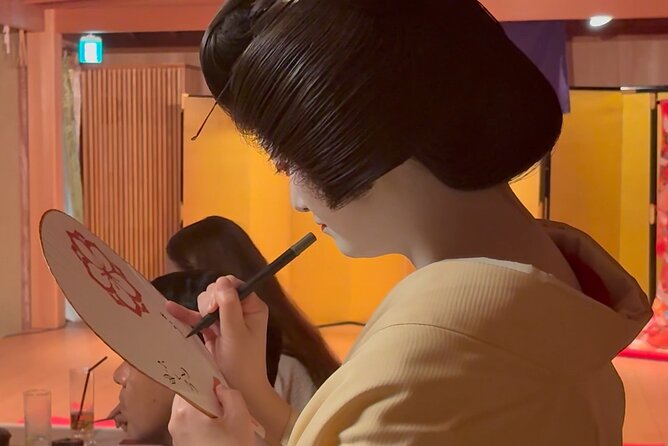
This is a great fit if:
- You’re a first-time Kyoto visitor and want a clear, guided introduction to the maiko world.
- You want more than photos and want real time for questions and conversation.
- You like structured cultural activities where the event explains what you’re seeing.
It can also work well for people traveling with family or younger companions, since the games and the close-up performance setup tend to land well. One thing to keep in mind, though: because it’s only about 2 hours, you’ll want to stay engaged and not treat it like an open-ended hangout.
If you already know a lot about geisha arts and you crave deep, academic history, you might still enjoy it for the interaction, but you may find the time slice tight. The experience is more about meaningful participation than a full masterclass.
Small Etiquette Notes That Actually Help
The rules are simple, and following them helps the event run smoothly for everyone.
Two specific restrictions are listed:
- No bare feet
- No oversize luggage
So wear something appropriate for sitting and moving inside the venue. If you’re wearing sandals or shoes that come on and off easily, that can help, but don’t plan to go barefoot.
Also, bring patience about the schedule. Doors open at 12:20, and the program begins at 12:30. If you arrive close to start time, you’ll lose part of your pre-event settle-in window at the 1st-floor café space.
And because the group is small but not tiny (up to 24), keep your phone use respectful. You’ll likely get photo time included, so it’s better to avoid treating every second as a camera moment.
Should You Book This Kyoto Maiko Experience at Okazaki-an?
Book it if you want a Kyoto evening that combines maiko dance, an interpreter-supported Q&A, and hands-on Ozashiki games on a Noh stage, with lunch and unlimited drinks included. The structure is what makes it work: you get context, then access, then participation.
Skip it (or consider whether you’d prefer something else) if your main goal is a longer, more open-ended cultural immersion. This one is tight by design, and the value is in the packed schedule doing multiple things well.
If you’re visiting Kyoto and you only have time for one authentic, interaction-heavy geiko/maiko experience, this is one of the more straightforward picks.
FAQ
What time does the experience start?
The experience starts at 12:30 pm, with doors opening at 12:20 pm.
How long is the Kyoto maiko experience?
It lasts about 2 hours.
Where does it take place?
The meeting point is Okazaki-an, Sakyo Ward, Kyoto: 606-8344, Okazaki Enshōjichō, 9165.
What’s included with the ticket?
The ticket includes the meal, free drinks, a maiko dance show, Ozashiki games, conversation time, Q&A, and a two-shot photo.
Are drinks included?
Yes. Free drinks are included, and the listing describes unlimited drinks for 2 hours.
Is there an interpreter?
Yes. You’ll have a Kyoto-certified interpreter guide.
What happens during the maiko dance portion?
You’ll watch the maiko dance performance, then there’s a lecture explaining the dance and costumes, followed by a Q&A session where you can ask questions.
Do you play games, or is it only watching?
You play Ozashiki Asobi (parlor games) on the Noh stage, with interaction time with the maiko built around it.
Are there any restrictions on footwear or luggage?
Yes. Bare feet are not included/allowed, and oversize luggage is not permitted.
Can I cancel, and how late?
Free cancellation is available up to 24 hours in advance for a full refund.
How big is the group?
The maximum group size is up to 24 travelers/participants, and the experience requires a minimum of two participants.
More Lunch Experiences in Kyoto
More Tour Reviews in Kyoto

Still in Gion? Keep Going


Just added: more Kyoto tours to browse





Gion & Geisha District Tours, compared.
 ★ 4.7Kyoto Geisha Walking Tour: Gion District & Hidden GemsFrom $253,273 reviews
 ★ 4.9Gion Magical Night Walking Tour with Geisha TriviaFrom $242,393 reviews
 ★ 4.7Gion Geisha District Walking Tour – Stories of GeishaFrom $202,187 reviews
 ★ 4.9Best of Kyoto: Gion, Geisha, Pagodas & CobblestonesFrom $242,058 reviews
 ★ 4.5Night Walk in Gion: Kyoto’s Geisha DistrictFrom $212,003 reviews
 ★ 5.0Kyoto Night Foodie Tour in Gion (9+ dishes + 6 Sake tastings)From $1631,762 reviews
 ★ 5.0Kyoto Gion Geisha District Walking Tour – The Stories of GeishaFrom $251,441 reviews
 ★ 5.0Kyoto Gion: 2-Hour Geisha Culture & History Walking TourFrom $231,186 reviews
Browse the lists this tour appears in