
Reviewed · KYOTO BUS & SIGHTSEEING TOURS
From Kyoto: Nara History Guided Half Day Bus Tour with Lunch
Deer, Buddha, and shrine stories in one ride. This Kyoto-to-Nara tour is a tight, well-paced way to hit the big sights—Kasuga Taisha, Tōdai-ji, and Nara Park—without you hunting trains and routes all morning. I especially like how the guide frames each stop as a living part of Japanese culture, not just photo ops.
Two things I really like: first, the English-guided storytelling (guides such as Tammy, Yuko, Emiko-san, Aki, and Sachi come up in past groups) makes the temples and customs click. Second, you get Japanese-style lunch built into the schedule, so you’re not scrambling for food between crowds.
One consideration: this is walking-heavy, and it isn’t set up for wheelchair access. If your legs don’t love temple steps and park paths, you’ll feel it.
In This Review
- Key highlights you’ll actually care about
- A 6-hour Kyoto-to-Nara day that stays focused
- Meeting Kyoto Station Hachijo Exit: start where the day is easy
- Kasuga Taisha guided visit: lanterns, worship etiquette, and what’s included
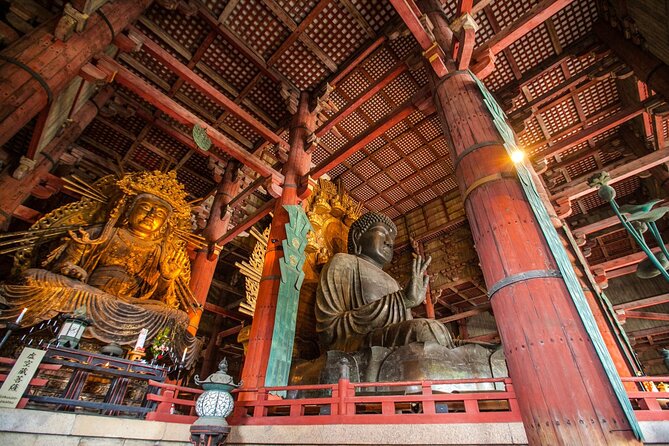
- Tōdai-ji Temple and the Great Buddha: why the scale hits different
- Nara Park: deer time without turning it into a circus
- Lunch in Nara: Japanese-style meal plus a built-in shopping pause
- The transport plan: AC bus comfort, timed transfers, and why it saves energy
- Price and value: $77 for a guided Nara hit
- Who this Nara history half-day tour fits best
- Should you book this tour? My quick decision guide
- FAQ
- How long is the Nara history guided half-day tour from Kyoto?
- Where do I meet the tour in Kyoto?
- What are the main stops during the tour?
- Is lunch included?
- Are beverages included with lunch?
- Is there an entrance fee included for the temples?
- Do I also get to visit the Kasugataisha Museum or Botanical Garden?
- Is the tour wheelchair accessible?
- Can I bring pets on the tour?
- Is this tour private or group-based?
Key highlights you’ll actually care about
- Todaiji’s Great Buddha scale: you’ll see the famous Buddha statue (about 15 meters tall) and hear why the temple is such a big deal.
- Kasuga Taisha, main-sanctuary focus: you visit the main sanctuary area for general worship, with guidance on what you’re seeing.
- Nara Park deer time: get close to the deer, including chances to feed them depending on conditions.
- Lunch that stops the day feeling rushed: Japanese-style meal included, with a shop on-site for small souvenirs.
- Air-conditioned transport: the ride from Kyoto is handled for you, so you can focus on the sights.
A 6-hour Kyoto-to-Nara day that stays focused
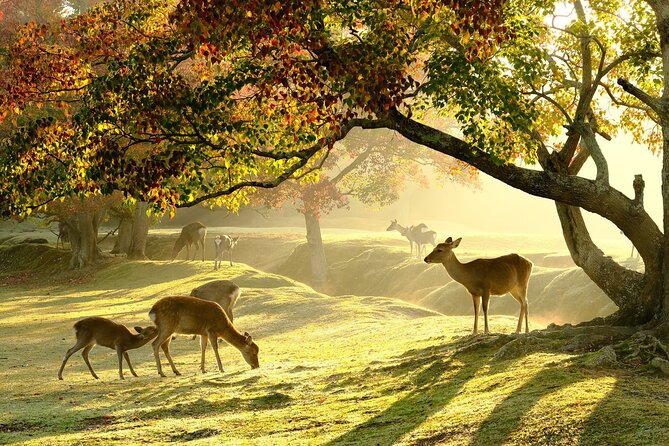
This tour is built around the idea that you don’t need an entire day in Nara to appreciate what makes it famous. You leave Kyoto on an air-conditioned bus, spend the morning in the core historic zone, then circle back with enough time to feel like the trip was worth the money.
The pacing is intentionally “guided-first.” You’re not left to wander and guess what matters. Instead, you get set walking blocks with a guide explaining customs at each stop, then you’re released for short, manageable strolls. That matters in Nara, where crowds can spike in the park and around temple entrances.
The group format can also work in your favor. It’s not a private tour, but the structure is clear: transport in, stops with timed guidance, and lunch slotted so you don’t waste energy deciding where to eat.
Loop the big Kyoto sights in one run



Meeting Kyoto Station Hachijo Exit: start where the day is easy
Your day begins at Kyoto Station, Hachijo Exit Tourist Bus Parking Area (in front of KYOTO AVANTI). The operator notes that the exact meeting place is sent by email about a week ahead, so build a little buffer time to find it without stress.
This matters because Kyoto Station is huge. If you show up late or try to “wing it,” you risk missing the first bus window and starting the day annoyed—exactly what you don’t want before temples.
Good shoes matter here too. Even though this is only half a day, you’ll be doing multiple short walks: from the shrine area toward the temple zone, then later through Nara Park paths.
Kasuga Taisha guided visit: lanterns, worship etiquette, and what’s included
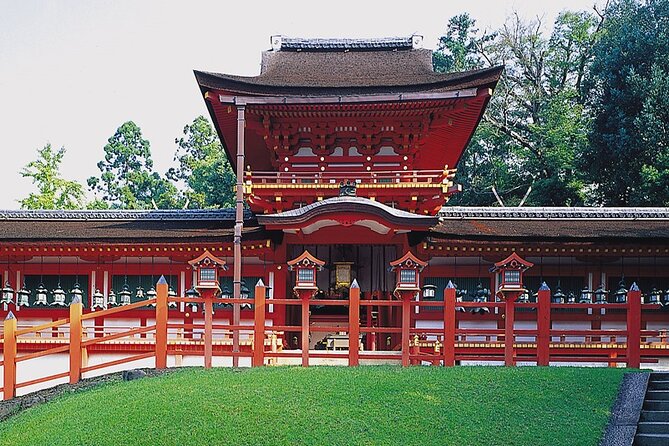
Kasuga Taisha is one of the key spiritual sites in ancient Nara, and this tour takes you there with a focused visit time. You’ll get a guided 45-minute stop, which is long enough for context and short enough to keep momentum.
A smart detail: the visit centers on the main sanctuary for general worship. The tour notes that special worship of the main sanctuary, plus the Kasugataisha Museum and the Botanical Garden, are not included. So if you were hoping for a museum deep dive or extra ritual spaces, you’ll want a different option.
What you’re doing in this segment is learning how to read the place while you’re standing there. Guides on this route are often praised for explaining shrine and temple customs, not just repeating dates. That turns the visit from I took a picture into I understand the pattern behind what I’m seeing.
Tōdai-ji Temple and the Great Buddha: why the scale hits different

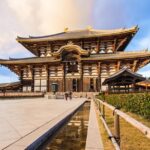
After Kasuga Taisha, you walk about 15 minutes (on foot) as part of the route toward Tōdai-ji. Then the tour shifts into another guided block: 45 minutes at the temple, with the entrance fee included.
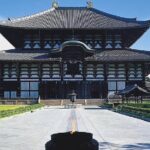
Here’s the reason this stop is usually the anchor of the whole experience: the Great Buddha is around 15 meters tall, and the temple is known for having the largest wooden structure in the world. Even if you’ve seen photos, being there changes the feel. The statue isn’t just a sight—it’s the scale of the building and the layout that makes the history feel physical.
You should also expect that what you see can vary slightly. The tour notes that some buildings or statues may look different or be partly obscured due to construction. That’s normal in Japan, and it’s not a reason to skip—but it is a reason to arrive with flexible expectations.
Nara Park: deer time without turning it into a circus
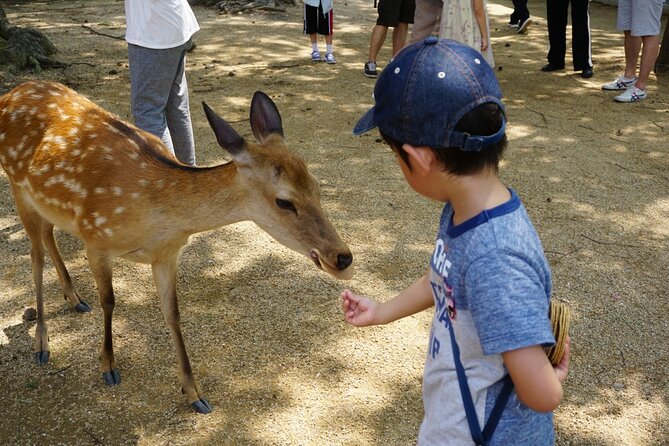
Nara Park is where the city becomes instantly memorable. You’ll spend 30 minutes with guidance, then you also have a short transfer stage afterward to keep the schedule running smoothly.
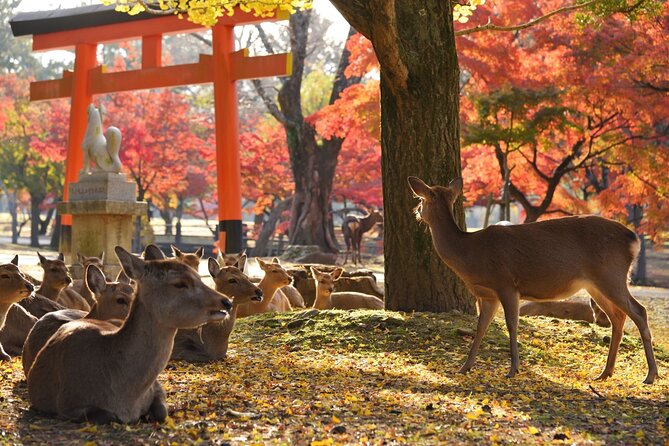
The deer here are friendly and charming, and the tour’s highlights point straight at that. Multiple past participants specifically mention feeding the deer, which is exactly the kind of thing that makes the park feel like more than a walkway of souvenirs.
Still, keep your expectations grounded. Deer are unpredictable. If a deer is nearby, it’s best to stay calm, follow the guide’s lead, and avoid grabbing at snacks or backing people into a corner. You’ll get the best photos (and the least chaos) by staying respectful and letting the moment play out.
Because this is a timed stop, you’ll also feel less pressure to “do everything” at once. That helps you enjoy the setting—the paths, the open space—without losing your whole afternoon to crowd management.
More day trips out to Nara and its bowing deer

Lunch in Nara: Japanese-style meal plus a built-in shopping pause
Lunch is included and scheduled for 50 minutes. The meal is described as Japanese-style, and the restaurant also has a shop where you can pick up local souvenirs.
This is a practical advantage of the tour format. Nara’s most convenient food spots can get crowded when you’re choosing last-minute. Having lunch planned means you spend less time deciding and more time eating, resting your feet, and then getting back into the day with energy.
Beverages are not included, so plan on paying for your drinks separately. If you have dietary restrictions or allergies, the tour asks you to inform them when booking, and it notes that day-of menu changes can’t be accommodated. In plain terms: if food matters for you, handle it early.
A small extra tip: use the shop time wisely. Buy the small, easy-to-carry items while you’re already there, not after you’ve returned to Kyoto and realized your last station convenience store doesn’t have Nara-specific goods.
The transport plan: AC bus comfort, timed transfers, and why it saves energy
One reason this tour works well for many visitors is that you’re not constantly calculating how to move between spots. You use air-conditioned bus transportation, with a route that starts from Kyoto and gets you into Nara efficiently.
The schedule is built around travel blocks too. After Kasuga Taisha and Tōdai-ji, there’s time to adjust before the lunch and the final return to Kyoto (the overall day is 6 hours). Even when the park and temples get busy, your travel timing isn’t fully dependent on you.
One note to keep expectations realistic: the operator says the tour may involve a bus or train or a combination. In your day-to-day planning, you should treat this as a transit-managed experience rather than a single-ride affair.
Also, the tour warns that bringing large luggage isn’t allowed. If you’re traveling with a bigger suitcase, you’ll want to keep it at home base (or stored) before you go.
Price and value: $77 for a guided Nara hit
At $77 per person for a 6-hour half-day, the value depends on what you would do on your own. If you were planning to go independently from Kyoto, you’d still pay for transportation, temple entry, and a guided explanation (or you’d spend time researching what to prioritize).
Here’s what you’re getting for the price:
- Guided time at Kasuga Taisha and Tōdai-ji
- Entrance fee for Tōdai-ji
- Lunch included (Japanese-style)
- Air-conditioned bus transport
- An English live guide
What you’re not getting:
- Beverages with lunch
- Extras at Kasuga Taisha like the museum/botanical garden options
- Any menu swaps on the day of the tour
When you add it up, the tour feels most fair if you want structured guidance and you don’t want to spend your energy figuring out the order. If your goal is just to see deer and take photos fast, you might feel it’s more expensive than a self-guided plan. If your goal is to understand what you’re seeing while staying efficient, it’s a solid deal.
Who this Nara history half-day tour fits best
This is a good match if you want Nara’s highlights without committing a full day. You get the main trio: Kasuga Taisha, Tōdai-ji, and Nara Park. You also get the cultural context—how shrine and temple customs work—delivered by an English guide.
It’s also a nice option for travelers who like their days organized. Past participant notes often praise guides for staying patient and clear, and for keeping the timing smooth even when the weather isn’t ideal. One person even described the day as educational and comforting when conditions were rough, which tells me the tour is built to handle real travel days, not just postcard weather.
Who should skip it:
- Wheelchair users, since it’s not wheelchair accessible
- Anyone who struggles with lots of walking
- Anyone expecting a private, custom itinerary (this is a group tour, and the day’s plan doesn’t expand)
For families, it can work well because lunch is included and the visit blocks are timed. Just note that day-of menu changes aren’t handled, so communicate needs ahead of time.
Should you book this tour? My quick decision guide
Book it if you want a guided, efficient Nara overview from Kyoto with lunch included and minimal planning on your part. I’d especially recommend it if your trip is short and you’re trying to hit the must-sees—Great Buddha at Tōdai-ji, the Kasuga Taisha worship area, and deer time in Nara Park—without turning the day into logistics homework.
Skip it if you’re the type who likes to roam slowly with no schedule, or if walking long temple-and-park routes is hard for you. Also skip if you specifically want the Kasuga Taisha museum, botanical garden, or special worship experiences, because this tour doesn’t include those extras.
If you do book, come prepared: comfortable shoes, a flexible attitude about construction changes, and a plan for beverages at lunch. Then you’ll likely leave feeling like you actually understood Nara, not just collected stamps.
FAQ
How long is the Nara history guided half-day tour from Kyoto?
The tour duration is 6 hours.
Where do I meet the tour in Kyoto?
Meet at Kyoto Station Hachijo Exit Tourist Bus Parking Area (in front of KYOTO AVANTI). The meeting place details are sent by email about 7 days before.
What are the main stops during the tour?
You’ll visit Kasuga Taisha, then walk to Tōdai-ji, and spend time in Nara Park. Lunch is included as part of the schedule.
Is lunch included?
Yes. The tour includes a Japanese-style lunch.
Are beverages included with lunch?
No. Beverages are not included.
Is there an entrance fee included for the temples?
Yes. The entrance fee for Tōdai-ji is included.
Do I also get to visit the Kasugataisha Museum or Botanical Garden?
No. The special worship of the main sanctuary, Kasugataisha Museum, and the Botanical Garden are not included.
Is the tour wheelchair accessible?
No. The tour is not wheelchair accessible.
Can I bring pets on the tour?
No. Pets are not allowed.
Is this tour private or group-based?
It’s a group tour, not private. The operator also states they can’t add to the itinerary based on individual requests.
More Tour Reviews in Kyoto




More Nara Day Trips
More Kyoto Sightseeing Loops

Just added: more Kyoto tours to browse








Kyoto Bus & Sightseeing Tours, compared.
 ★ 5.0PERFECT KYOTO 1-Day Bus TourFrom $12913,518 reviews
 ★ 4.8Fushimi Inari, Kinkakuji, Bamboo Grove 1 Day Bus TourFrom $1224,316 reviews
 ★ 4.9Best of Kyoto: Gion, Geisha, Pagodas & CobblestonesFrom $242,058 reviews
 ★ 3.9Hop-on Hop-off Sightseeing Bus TicketFrom $272,034 reviews
 ★ 5.0Private Kyoto Tour with a Local, Highlights & Hidden Gems, PersonalisedFrom $1021,543 reviews
 ★ 4.7Kyoto/Osaka: Nara, Fushimi Inari Taisha, Arashiyama Bus TourFrom $521,275 reviews
 ★ 5.010 Must-see Spots in Kyoto One Day Private Tour (up to 7 people)From $1791,108 reviews
 ★ 4.5One-Day Tour of Kyoto’s Highlights from Osaka/KyotoFrom $661,092 reviews
Browse the lists this tour appears in