
Reviewed · KYOTO PRIVATE GUIDED TOURS
Treasures of Kyoto: Geishas & Traditions Private Tour
Kyoto’s Gion stories start with a quiet walk. This is a private 2.5-hour tour in Higashiyama that ties together geisha culture, religion, and theatre history while you move through Kyoto’s backstreets with a local host. I love the pace here: it’s short stops with time to look closely, ask questions, and take photos without feeling rushed. I also like that the route is built around places you can’t easily study on your own in a short time.
One thing to consider: it’s compact and walking-focused, and the sites are on and around slopes and temple steps, so you’ll want moderate fitness and comfortable shoes. Also, there’s no hotel pick-up or drop-off, so you’ll start and finish at set meeting points.
In This Review
- Key highlights worth your attention
- Why geisha culture works best on foot in Kyoto
- Price and time: what $135.45 per person buys you
- The opening start: Izumo no Okuni and Minamiza Theatre
- Gion on the ground: preservation streets and geisha-area cues
- Tatsumi Daimyojin and the Shinto–Buddhism mix
- Chion-in steps and Maruyama Park for a breather
- Yasaka Shrine viewpoints, Shijo Dori, and Nene-no-Michi
- How the guide makes (or breaks) the experience
- Practical tips to make the walk feel easy
- Should you book Treasures of Kyoto: Geishas & Traditions?
- FAQ
- How long is the Treasures of Kyoto: Geishas & Traditions Private Tour?
- Is this tour private?
- What’s included in the price?
- Are meals included?
- Where do I meet, and where does the tour end?
- Do I need to buy admission tickets for the stops?
- Is it easy to cancel if my plans change?
- Is the tour suitable for people who prefer less physical activity?
Key highlights worth your attention
- A private, door-to-your-group experience that lets you set the tempo instead of marching with strangers
- Theatre-to-geisha connection via Izumo no Okuni and Minamiza Theatre’s Edo-period roots
- Gion context in real streets like Shinbashi Dori, not just guidebook facts
- Shinto and Buddhist mix explained at Tatsumi Daimyojin Shrine in plain language
- Temple viewpoints + a park walk around Chion-in and Maruyama Park for a breather
- Finish near local food at a cafe nearby after Yasaka-area views
Why geisha culture works best on foot in Kyoto
Kyoto can feel like two cities at once: the big postcard sights everyone knows, and the smaller lanes where daily life still happens. This tour leans hard into the second one. You’re not just looking at landmarks. You’re walking the kind of streets where history still has fingerprints.
Geisha culture is also one of those topics that’s easy to get wrong. The names, the customs, the idea of entertainment versus performance—those can turn into stereotypes fast. What I like about this tour is that it uses specific places to anchor the story: Gion’s preservation zones, banquet-area streets, and the religious sites nearby that help explain why Kyoto looks the way it does.
And because it’s private, you’re not stuck with a rigid group pace. If you’re curious about how something works—like the difference between Shinto and Buddhism—or you want the story shaped for your interests, you’ll have a chance to ask on the spot. Many guides highlighted for this experience are praised for staying respectful toward the community and keeping the explanations clear and engaging, whether you’re traveling solo or with kids.
Have a local lead the way on more Kyoto tours

Price and time: what $135.45 per person buys you
At $135.45 per person for about 2 hours 30 minutes, you’re paying for three things: a local guide, a private format, and an efficient route. This isn’t a cheap-per-hour option compared with self-guided museum days, but it can be good value if you want understanding, not just photos.
Here’s the trade-off. In 2.5 hours, you can’t cover all of Kyoto. This tour focuses on a tightly linked zone in Higashiyama—Gion, temples, and nearby streets—so you get a coherent story arc instead of random stops.
You’ll also benefit from the practical setup:
- admission is listed as free at every stop on the route
- the tour is carbon neutral
- you receive a mobile ticket
- you have only your party, not a larger group to manage
The route is designed for time-tight visitors. If you have only one afternoon and you want to leave knowing how geisha-related traditions fit into Kyoto’s broader cultural world, this is the kind of tour that can save you hours of pre-planning.
The opening start: Izumo no Okuni and Minamiza Theatre
You begin at Izumo no Okuni—a statue tied to kabuki’s origins. It’s a smart first move because it reframes Kyoto’s performance culture. Kabuki isn’t usually the first connection people make when thinking of geisha districts, but theatre history is part of the larger arts tradition in Japan.
From there you head to Minamiza Theatre, where you get a look at the roots of the venue in the early Edo period (1596–1615). The timing is short—about 20 minutes—but the setting helps you understand how old entertainment spaces survive in a modern city. Even if you’re not a theatre person, the guide story helps you see the continuity. Kyoto doesn’t feel like a theme park; it feels like a long-running conversation.
If you’re the type who likes context before you hit the romance of the streets, this opening works well. It also gives you an early win: a free start that sets a cultural tone without needing to buy anything.
Gion on the ground: preservation streets and geisha-area cues
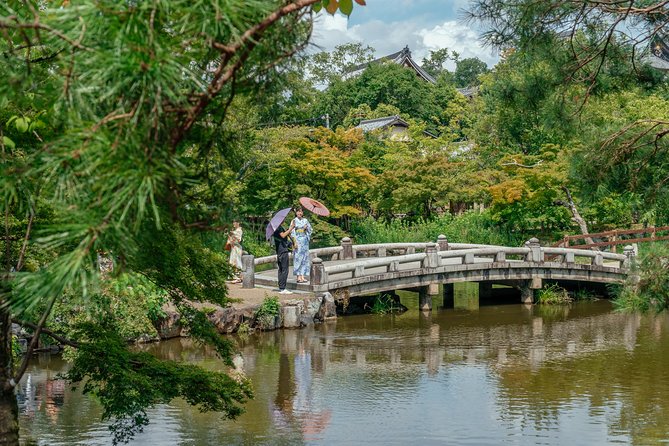
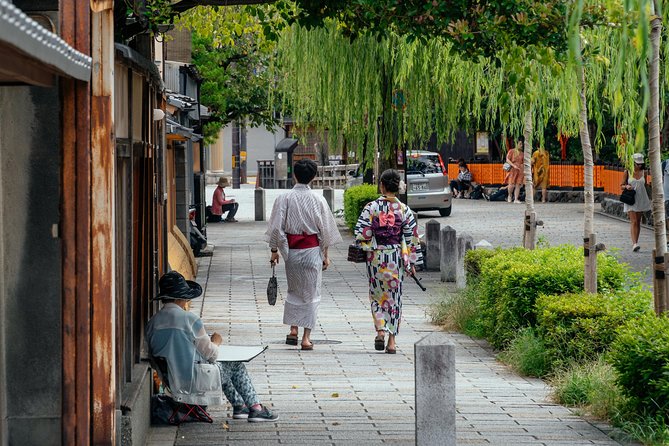
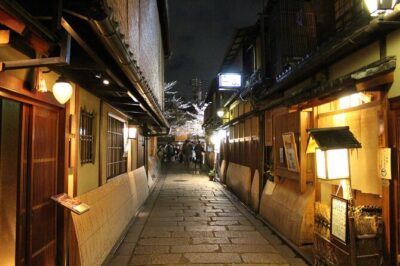
Then comes the heart of it: Gion. You spend time in the area around Gion Shinbashi (a traditional business preservation area), plus the historic scenery preservation zone south of Shijo Street. That detail matters. It’s not just “pretty streets.” It’s a city plan that tries to protect how the neighborhood looks and functions.
A key stop is Shinbashi Dori, where you stand outside traditional banquet buildings and learn what geisha entertainment looked like in practice—how customers were involved and how the culture operated around these spaces. This is the moment where a guide’s framing makes all the difference. You’re learning the social role, not chasing staged street scenes.
Also, don’t miss the chance to look respectfully at the details. In this part of Kyoto, small cues—street width, building style, signage, the way people move—help you understand why the area is protected.
One practical note: Gion can attract crowds, especially near iconic corners. The experience is built to include quieter angles and a calm walking pace, so you don’t feel constantly jostled for a photo.
Tatsumi Daimyojin and the Shinto–Buddhism mix
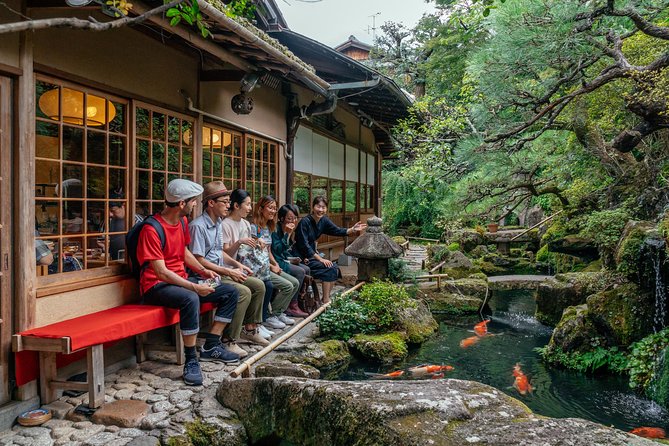
Next you visit Tatsumi Daimyojin Shrine, where you hear about Japanese religion as a mixture of Shinto and Buddhism. That combo is one reason Kyoto’s sacred places feel different from temples you might expect from Western categories. The meanings can overlap, and the architecture reflects that layered approach.
The stop is about 20 minutes, which is just enough time to:
- hear the basic story behind the shrine
- connect it to what you’ll see later in the day
- ask a question if religion is one of your main interests
If you’re traveling with kids, this kind of explanation often lands well because it turns abstract terms into clear, place-based stories. In past departures, guides for this tour have been praised for adapting their explanations for younger travelers and answering lots of questions without making it feel rushed.
Other Kyoto tours and experiences to compare

Chion-in steps and Maruyama Park for a breather
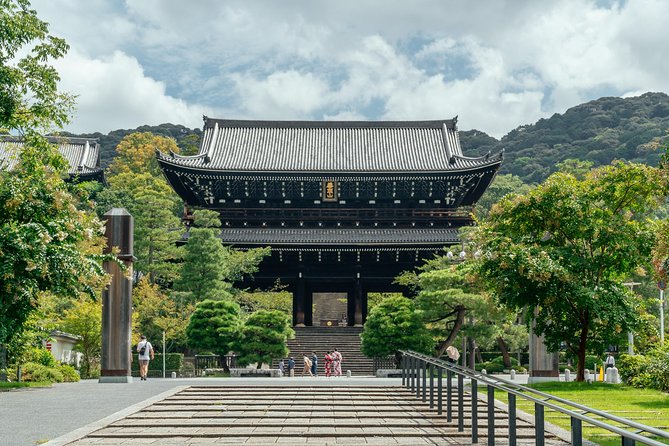
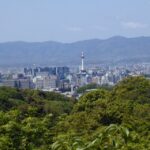
After the shrine focus, the tour shifts to temples and viewpoints. At Chion-in Temple, you walk up steps for a better view and to see the garden area. Even if you’ve seen other temple complexes in Japan, the best part here is how the guide’s timing keeps the experience from feeling like a checklist. It’s a short walk, then you pause to take in the view and learn what you’re looking at.
From there you head toward Maruyama Park. This part works as a natural reset: you’re out of the densest lanes and you get open space. It’s also a good moment to slow your pace, soak in the surroundings, and plan your photos for the final shrine area.
If your feet tend to get tired in temple-heavy days, this mid-tour break is the smart design piece you’ll appreciate.
Yasaka Shrine viewpoints, Shijo Dori, and Nene-no-Michi
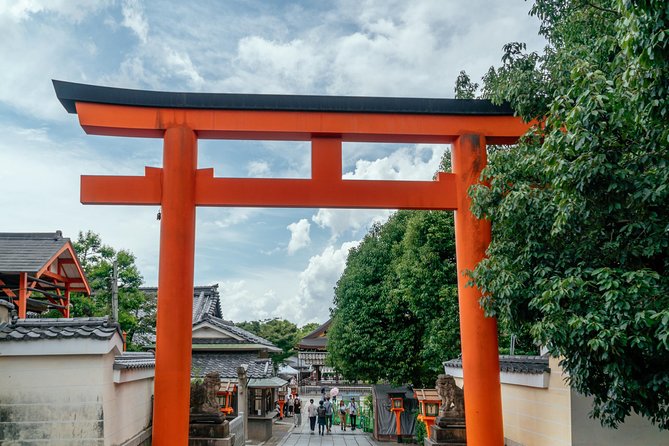
The last stretch brings you into the famous atmosphere around Yasaka Shrine. You learn the legend that its history may go back to around 656, earlier than the Heian era. Even if you don’t memorize dates, it helps you understand that this is a long-standing spiritual center, not a one-era attraction.
Then you walk along Shijo Dori—Shijō Street, literally the Fourth Avenue of Heian-kyō, the ancient capital. This is the kind of street naming detail that changes how you see the city. Kyoto’s geography isn’t random. It echoes an older layout.
You also pass through Nene-no-Michi, connected to Kodaiji Temple being built in 1605 at Nene’s request, and the later naming of the street. These are the small threads that turn Kyoto from “places I visited” into “a city with structure.”
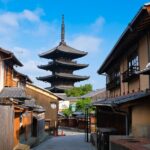
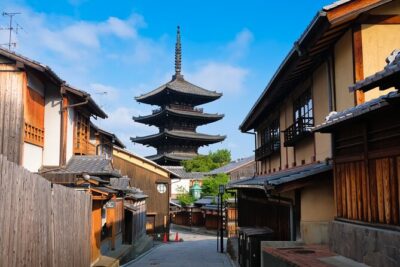
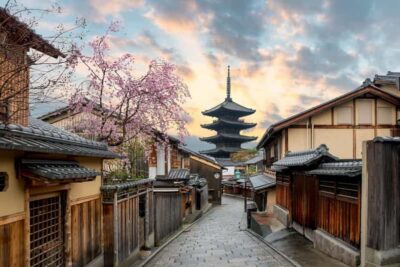
The tour wraps back at the Yasaka-area spiritual scene, including a picturesque five-story Buddhist pagoda temple with wide views from the top. If weather is clear, that view payoff is a big reason many people remember this tour as more than just walking through a pretty neighborhood.
Finally, the experience ends in a local cafe nearby. That’s practical. You’re not forced to find your own place while still mentally processing everything you just learned.
How the guide makes (or breaks) the experience
With any cultural walk, your results depend heavily on how the guide connects dots. What stands out here is the way guides are described as:
- respectful about the geiko/geisha culture and the community it comes from
- strong at explaining customs and religious ideas in plain language
- able to keep the stories engaging, even when it rains
You’ll also want to know that guides named for this tour include people like Ted, Maha, Kako, Shohei, and Ahmed. Different guides have different styles, but the consistent theme is storytelling with context—kabuki origins, religious mix, and the social role of entertainment districts—tied directly to where you are.
If you’re the kind of visitor who likes to ask questions, this format rewards you. And if you’re visiting with kids, the explanations can be adjusted so younger travelers feel included instead of stuck watching adults do sightseeing.
Practical tips to make the walk feel easy
Kyoto walking doesn’t forgive bad shoes, even on a “short” tour. Here are the small moves that help:
- Wear comfortable, grippy shoes for temple steps and uneven sidewalks.
- Keep your camera ready, but don’t block foot traffic near shrine and theatre entrances.
- Bring a small layer. Temple areas can feel cooler in the shade, and the route is walk-heavy.
- Plan to arrive a few minutes early at the start point so you don’t feel hurried.
Also, since there’s no hotel pick-up, you should factor in the time to get to Kawabatacho, Higashiyama Ward for the meeting. If you’re using public transit, the tour is listed as near public transportation, so it should be straightforward to link to your next stop.
If you want the most value, go in with one or two questions ready. For example: what’s the difference in how Shinto and Buddhism show up in everyday space? Or how did theatre arts influence social life in older Kyoto? A good guide will meet that curiosity with real answers.
Should you book Treasures of Kyoto: Geishas & Traditions?
I’d book this tour if:
- you have limited time in Kyoto and want a tight route with an understandable story
- geisha culture is a key interest, and you want respect and context instead of stereotypes
- you like guided walking where each stop teaches you something you can’t easily “figure out” alone
- you want a private experience that works for couples, friends, or a small family group
I would think twice if:
- you hate walking and stairs (temple steps are part of the day)
- you want a long, slow temple “wander” with minimal talking
- you’re looking for food included in the price (meals aren’t included, and the tour ends at a cafe nearby)
If your goal is to understand why Gion looks the way it does, why sacred sites cluster nearby, and how theatre and tradition connect, this is a strong use of your afternoon.
FAQ
How long is the Treasures of Kyoto: Geishas & Traditions Private Tour?
The tour lasts about 2 hours 30 minutes.
Is this tour private?
Yes. It’s a private tour exclusively for your group.
What’s included in the price?
The tour includes a private tour, a local guide, and it’s listed as carbon neutral.
Are meals included?
Food and beverages are not listed as included.
Where do I meet, and where does the tour end?
Start: Kawabatacho, Higashiyama Ward, Kyoto, 605-0076, Japan.
End: Yasaka Kamimachi, Higashiyama Ward, Kyoto, 605-0827, Japan.
Do I need to buy admission tickets for the stops?
Admission is listed as free for the stops included on the route.
Is it easy to cancel if my plans change?
Free cancellation is available. You can cancel up to 24 hours in advance for a full refund.
Is the tour suitable for people who prefer less physical activity?
The tour lists a moderate physical fitness level, and it involves walking and temple steps.
More Tours in Kyoto

More Tour Reviews in Kyoto
More Private Tours of Kyoto
Just added: more Kyoto tours to browse





Kyoto Private Guided Tours, compared.
 ★ 5.0Private Kyoto Tour with a Local, Highlights & Hidden Gems, PersonalisedFrom $1021,543 reviews
 ★ 5.0Kyoto 6hr Private Tour with Government-Licensed GuideFrom $1551,369 reviews
 ★ 5.010 Must-see Spots in Kyoto One Day Private Tour (up to 7 people)From $1791,108 reviews
 ★ 5.0Kyoto 4hr Private Tour with Government-Licensed GuideFrom $109629 reviews
 ★ 4.8Private Tour with Local Licensed GuideFrom $106463 reviews
 ★ 5.0Private Kyoto Tour with Licensed Guide & Vehicle (Max 15 persons)From $634417 reviews
 ★ 5.0Kyoto Customized Private Tour: See Top Attractions in 1 DayFrom $132342 reviews
 ★ 4.6Kyoto/Osaka: Kyoto and Nara Customized Private Guided TourFrom $477258 reviews
Browse the lists this tour appears in