
Reviewed · PRIVATE
Private Kyoto Tour: Explore the Most Iconic Sights
Kyoto feels smaller with the right driver. This private day tour strings together the biggest icons, with room for you to shape the route to your interests. I love the private, language-friendly guiding and the taxi-backed comfort that saves energy in a long day.
One watch-out: it’s still an 8–10 hour outing with real walking, and temple costs can be a little confusing. Some entries list admission as included for certain stops, while others mention extra temple fees, so it’s smart to confirm what your tickets cover before you go.
In This Review
- Key Highlights Worth Planning Around
- How a Private Kyoto Day Feels: Pickup, Taxis, and Time That Matters
- Stop 1: Kinkaku-ji (Golden Pavilion) Without the Photo Trap
- Stop 2: Kiyomizu-dera’s Views and the 1200-Year Backstory
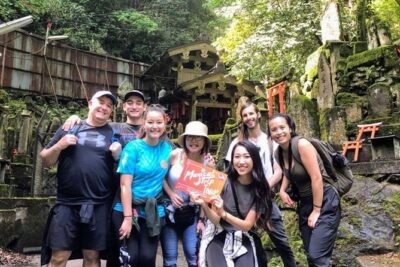
- Stop 3: Fushimi Inari Taisha and the Torii Trail Walk
- Stop 4: Arashiyama Bamboo Forest, Togetsukyo Bridge, and a Lake Boat Ride
- Price and Value: Is $200 Per Person Worth It?
- The Guide Factor: English Support and Real Help With Your Questions
- How to Fit This Into Your Kyoto Schedule (Booking and Crowds)
- What’s Included vs. What You’ll Still Need to Handle
- Who This Tour Suits Best
- Should You Book This Private Kyoto Sights Tour?
- FAQ
- How long is the private Kyoto tour?
- Which iconic Kyoto sights does this tour visit?
- Are temple and shrine entrance fees included?
- Is pickup available?
- Is this a private tour?
- What language will the guide speak?
- Is there free cancellation?
Key Highlights Worth Planning Around
- You call the shots: adjust the day for your interests and pace
- Guide support in English (and beyond): English is typical, with other languages possible for an extra fee
- Kinkaku-ji and Kiyomizu-dera include admission: you spend more time looking, less time negotiating lines
- Fushimi Inari’s torii trails are the main event: plan for a good walk up the paths
- Arashiyama pairs bamboo, Togetsukyo Bridge, and a lake boat ride: more than the photo stop
- Mobile ticket + pickup: helps you start smoothly and stay flexible
How a Private Kyoto Day Feels: Pickup, Taxis, and Time That Matters
This is a private tour, meaning it’s just you and your group. That matters in Kyoto because you’re constantly deciding between “walk a bit more” and “save energy for the next stop.” With pickup available and a driver handling transit, you can spend your attention on the sights instead of transportation math.
I also like how the logistics are set up for comfort. The tour uses an air-conditioned vehicle, and taxis are used as needed for comfort and efficiency. The price concept is practical: you don’t pay for a “car just because,” you pay for the transportation actually used, which can reduce waste when Kyoto traffic slows things down.
The rhythm is a full day, about 8 to 10 hours including travel time, and there’s no lunch provided. If you’re the type who gets cranky before coffee, plan on snacks you can grab quickly between stops.
Other Kyoto tours and experiences to compare

Stop 1: Kinkaku-ji (Golden Pavilion) Without the Photo Trap
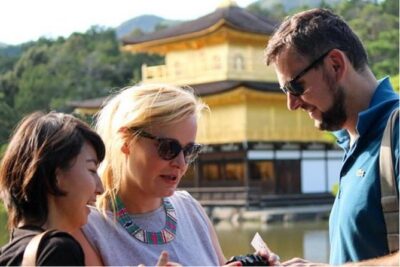
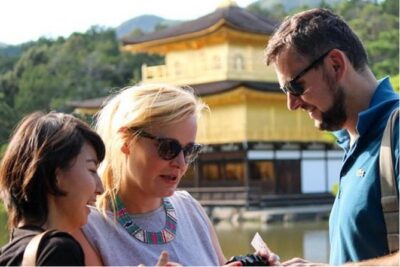
Kinkaku-ji, officially Rokuon-ji, is one of Kyoto’s most famous temples. Even if you’ve seen it a hundred times in photos, being there in person is different because of how the building sits and reflects in its pond setting.
What I’d focus on here is not only the main pavilion. Look at how the top floors draw your eyes upward, and notice how the temple’s setting frames the views. Your guide can help you understand what you’re looking at and how the Zen temple design shapes the experience.
This stop is listed as about 2 hours with admission included. That’s a good length: long enough to take in the pavilion from a couple angles, and not so long that you start feeling stuck inside the same loop of viewpoints.
Stop 2: Kiyomizu-dera’s Views and the 1200-Year Backstory
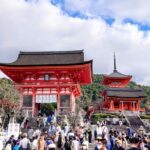
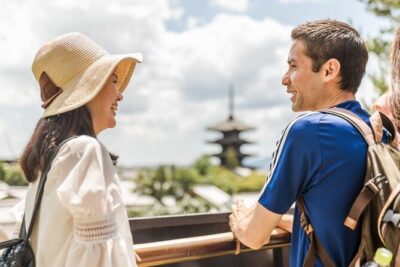
Kiyomizu-dera is the kind of place where you’ll immediately understand why it’s UNESCO World Heritage. The temple has a history reaching back 1200 years, and it’s one of Kyoto’s most iconic sights for good reason.
Here’s how I’d use your time: start by taking in the main view, then slow down and watch how people move. Kiyomizu-dera has a bit of a “you’re watching the scene as much as the temple” feel, especially as you work through viewpoints. If you want photos, aim for a couple of angles rather than chasing just one.
Your entry fee is included, and the plan gives you about 2 hours. That’s a sweet spot for seeing the core areas without turning the day into a marathon.
Stop 3: Fushimi Inari Taisha and the Torii Trail Walk
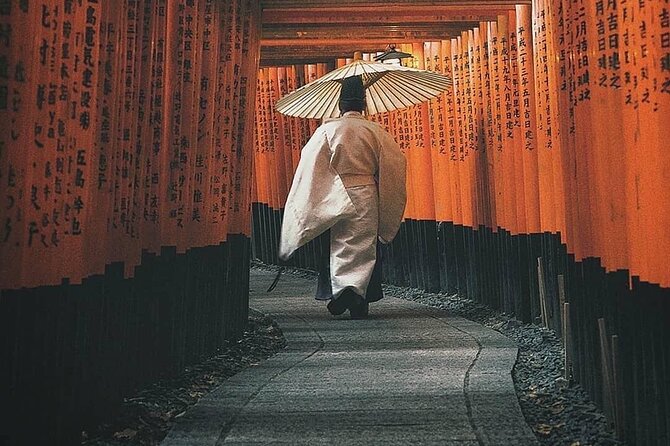
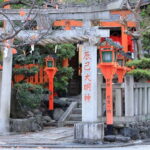
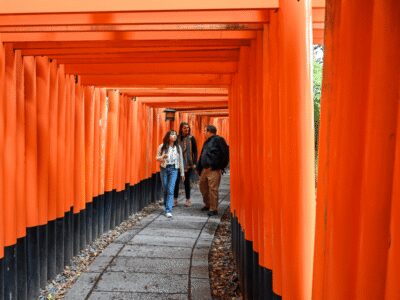
Fushimi Inari Taisha is famous for its thousands of vermilion torii gates. It’s dedicated to Inari, the Shinto god of rice, and the meaning helps you appreciate why the gates keep going.
Unlike the other stops, this is more about the path than a single building. You’ll likely spend a chunk of time walking and choosing where to turn back. Two practical tips: wear comfortable shoes, and decide ahead of time how far up the trail you want to go so you don’t end up feeling rushed on the way back down.
This stop is set for about 2 hours. The tricky part is costs: one part of the plan says admission isn’t included here, while the tour details also mention entrance fee coverage for Fushimi Inari Taisha. Because of that mismatch, I recommend you confirm what your exact ticket includes when you book, so you don’t get surprised at the gate.
Stop 4: Arashiyama Bamboo Forest, Togetsukyo Bridge, and a Lake Boat Ride
Arashiyama is where Kyoto starts to feel like a movie set, in a good way. The bamboo forest is the obvious target, but the tour doesn’t treat it like a quick photo stop and run.
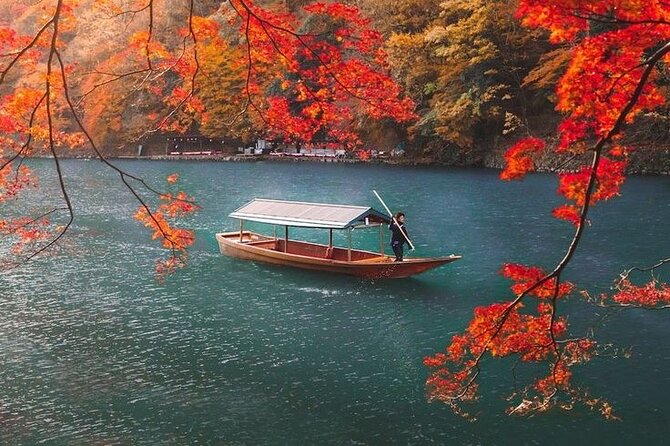
The route includes wandering through the bamboo forest, crossing the river on the famous Togetsukyo Bridge, and then taking a tranquil boat ride across the lake. That sequence matters because it breaks up the day: you get dense greenery, then open river views, then slower water movement.
Entry is listed as included for the bamboo forest portion, and the plan also gives you about 2 hours. If you’re sensitive to crowds or you want calm moments, use the boat ride and bridge crossing as your “reset time.” It’s also a nice way to end a long day feeling like you saw more than just another temple courtyard.

Price and Value: Is $200 Per Person Worth It?
At $200 per person, the value comes from the private format and the transport strategy. You’re not paying just for someone to point out landmarks. You’re paying for a guided plan across four major sites, plus a driver who handles movement between distant neighborhoods.
Where this can be a strong deal:
- If you want a personalized route rather than being stuck with the slowest pace in a group
- If your time in Kyoto is limited and you want to hit Kinkaku-ji, Kiyomizu-dera, Fushimi Inari, and Arashiyama in one day
- If taxi use saves you enough walking or confusion that you actually enjoy the day
Where it might not be the best fit:
- If you’re traveling solo, very fit, and comfortable building your own route, you could potentially do it cheaper on public transit
- If you have a strict budget for temple fees and snacks, you’ll want to double-check what’s covered, since the plan notes extra temple entrance costs in one place
The good news is that the tour includes parking fees and uses an air-conditioned vehicle, so you’re not stuck sweating through transit. That’s worth something on a long day.
The Guide Factor: English Support and Real Help With Your Questions
One of the clearest themes is that the guides make the day easier. In particular, the guide Riku stands out for being pleasant and for answering questions with real confidence. When you’re moving from temple to shrine to bamboo and back again, having someone explain what you’re seeing can turn a checklist into an actual experience.
Language-wise, tours are typically conducted in English. If you want a guide who speaks your native language, that can be arranged for an additional fee. If language is important to you, I’d treat that extra cost as part of the value, because it often determines how much you enjoy the details at each stop.
And since this is private, your guide can adapt if you want extra time somewhere or you’d rather skip a section to keep the day comfortable. You won’t have to negotiate with a big group.
How to Fit This Into Your Kyoto Schedule (Booking and Crowds)
Kyoto can feel busy, busy at many times of day. The tour’s setup helps because your driver can get you to each stop and keep you moving through the day in an organized way. Still, you’ll get the best experience if you’re realistic about timing and walking.
Booking matters, too. This tour tends to get booked about 79 days in advance on average. If you’re traveling in a peak season or on a weekend, I’d start planning early so you can lock in your preferred schedule and guide language option.
Also, since the itinerary is 8 to 10 hours and includes major walking, pick a day when you’re not arriving jet-lagged or planning anything intense afterward.
What’s Included vs. What You’ll Still Need to Handle
Here’s the practical breakdown based on what the tour provides:
- Pickup offered and a mobile ticket for convenience
- Air-conditioned vehicle and parking fees covered
- Entrance fees listed as included for the bamboo forest, plus admissions noted for Kinkaku-ji and Kiyomizu-dera
- Lunch is not included, so you’ll need to handle food on your own
- Temple entrance fees are mentioned as a possible additional cost in one part of the info, so confirm exactly what’s covered at Fushimi Inari and any other stop where fees apply
In practice, I’d plan to bring a small snack and water, even if you’re not sure where you’ll eat. Kyoto days can move faster than you think once you’re walking between major sights.
Who This Tour Suits Best
This works especially well if you:
- Want to see Kyoto’s top highlights in one full day without stress
- Prefer private guiding over following a group pace
- Appreciate explanations, not just sightseeing photos
- Have limited time and want a plan that covers Kinkaku-ji, Kiyomizu-dera, Fushimi Inari Taisha, and Arashiyama
It may feel less ideal if you:
- Want a super-cheap day and are happy DIY-ing everything
- Dislike longer walking days or multiple transfers
- Need crystal-clear fee inclusion and don’t want to confirm ticket coverage in advance
The private angle is the real strength. If you can handle a full itinerary day, you’ll likely leave feeling like you used your Kyoto time wisely.
Should You Book This Private Kyoto Sights Tour?
If you want a high-hit, guided day that connects Kyoto’s most iconic sights, this is a strong choice. The combination of private pacing, taxi-supported comfort, and the option to get English guidance (with other languages possible) is a practical way to enjoy Kyoto without turning it into a logistics test.
I’d book it if your priority is seeing Kinkaku-ji, Kiyomizu-dera, Fushimi Inari, and Arashiyama in one go, and you’re comfortable with an 8–10 hour day. I’d hesitate only if your main goal is saving money at all costs, or if you’re extremely sensitive to walking time and potential extra temple fees. Confirm the exact entrance coverage for your date, bring snacks, and you’ll set yourself up for a smoother, more satisfying Kyoto day.
FAQ
How long is the private Kyoto tour?
It runs about 8 to 10 hours, including travel time.
Which iconic Kyoto sights does this tour visit?
The tour includes Kinkaku-ji, Kiyomizu-dera, Fushimi Inari Taisha, and the Arashiyama Bamboo Forest (with Togetsukyo Bridge and a lake boat ride as part of the Arashiyama stop).
Are temple and shrine entrance fees included?
Some admission fees are listed as included (like Kinkaku-ji, Kiyomizu-dera, and the Arashiyama bamboo forest portion). Temple entrance costs are also mentioned as an additional item in the tour details, and Fushimi Inari has conflicting coverage details, so it’s smart to confirm what’s included for your booking.
Is pickup available?
Yes, pickup is offered, and the tour starts in Kyoto, Japan and ends back at the meeting point.
Is this a private tour?
Yes. It’s private, so only your group participates.
What language will the guide speak?
Tours are typically conducted in English. If you want a guide who speaks your native language, arrangements can be made for an additional fee.
Is there free cancellation?
Yes. You can cancel up to 24 hours in advance for a full refund.
More Private in Kyoto

More Tours in Kyoto

More Tour Reviews in Kyoto
Just added: more Kyoto tours to browse





Private, compared.
 ★ 5.0Fushimi Inari Hidden Hiking Tour (Private Option Available)From $631,750 reviews
 ★ 5.0Private Kyoto Tour with a Local, Highlights & Hidden Gems, PersonalisedFrom $1021,543 reviews
 ★ 5.0Kyoto 6hr Private Tour with Government-Licensed GuideFrom $1551,369 reviews
 ★ 5.010 Must-see Spots in Kyoto One Day Private Tour (up to 7 people)From $1791,108 reviews
 ★ 5.0Kyoto 4hr Private Tour with Government-Licensed GuideFrom $109629 reviews
 ★ 4.8Private Tour with Local Licensed GuideFrom $106463 reviews
 ★ 5.0Private Kyoto Tour with Licensed Guide & Vehicle (Max 15 persons)From $634417 reviews
 ★ 4.8Private Customized Walking Tour with a Local InsiderFrom $64383 reviews