
Reviewed · PRIVATE
Private Early Bird Tour of Kyoto!
Kyoto feels completely different before 8:00 am. This private early-bird tour gets you to Fushimi Inari and Kiyomizu-dera while the city is still quiet, and your guide adds the why behind what you’re seeing. I especially like the photo-friendly pacing through the torii gates and the way the morning atmosphere makes the views from Kiyomizu-dera feel calmer and more personal. The main downside is also the point: the 7:00 am start means you’ll have to commit to getting up early.
What makes this one practical is that it’s built as a focused, short outing (about 3 hours) with clear stops, free admission at the shrine and street area, and Kiyomizu-dera admission included. You’ll also get help understanding local customs and history as you walk, plus the guide can answer questions and help you plan the rest of your day.
In This Review
- Key Highlights You’ll Actually Feel in the Morning
- Why the 7:00 am Start Changes Kyoto
- Fushimi Inari Taisha: Torii Gates at a Photo-Friendly Pace
- Kiyomizu-dera Temple: Icon Views Without the Daytime Noise
- Sannenzaka Ninenzaka: Preserved Streets and a Slower Kyoto Moment
- The Private Guide Factor: Context, Customs, and Q&A on the Go
- Price and Value: What $156.37 Buys You
- Practical Tips for a Smooth Early Bird Morning
- Who This Tour Fits Best (and Who Might Prefer Something Else)
- Should You Book the Private Early Bird Tour of Kyoto?
- FAQ
- What time does the Private Early Bird Tour of Kyoto start, and how long is it?
- Where do I meet the guide for this Kyoto tour?
- Is this a private tour or a shared group tour?
- Which stops are included on the route?
- Are any admission tickets included?
- What happens if weather is poor?
- Will I get a ticket on my phone, and when do I receive confirmation?
Key Highlights You’ll Actually Feel in the Morning
- A true early start at 7:00 am to beat peak crowd crush
- Fushimi Inari’s torii gate trail with stops timed for photos
- Kiyomizu-dera with entry included and city views in the quiet hours
- Sannenzaka Ninenzaka preserved streets for a slower, old-Kyoto stroll
- Private, group-only experience with a friendly guide shaping the route
- Mobile ticket so you’re not scrambling on your phone-less morning
Why the 7:00 am Start Changes Kyoto
If you’ve only experienced Kyoto in the middle of the day, you’re missing half the story. Morning light hits stone, wood, and paper lanterns differently. More importantly, Kyoto’s biggest sites can turn into a moving sea of people fast—so arriving early isn’t a luxury. It’s the difference between standing in front of a view and standing in front of other people’s cameras.
This tour’s timing is the core value. You start at 7:00 am from Inari Station (the meeting point is in the Fushimi area). From there, you walk into the first and most chaotic-feeling sight at just the right moment, before groups pile in. Then you finish with a preserved district stroll at a time when you can still enjoy the streets instead of only trying to pass through them.
You’ll also have a guide in “explain mode” during the morning, when you’re not just trying to get through crowds. That’s when the background information actually lands: you’re calmer, your senses aren’t overloaded, and you can connect the dots between what’s spiritual, what’s historical, and what’s cultural.
Other Kyoto tours and experiences to compare

Fushimi Inari Taisha: Torii Gates at a Photo-Friendly Pace
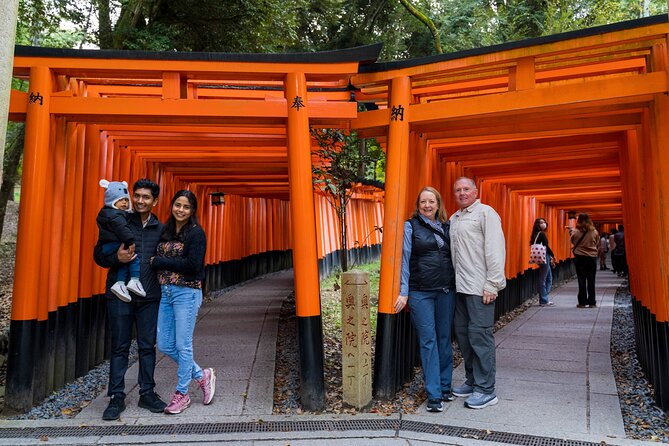
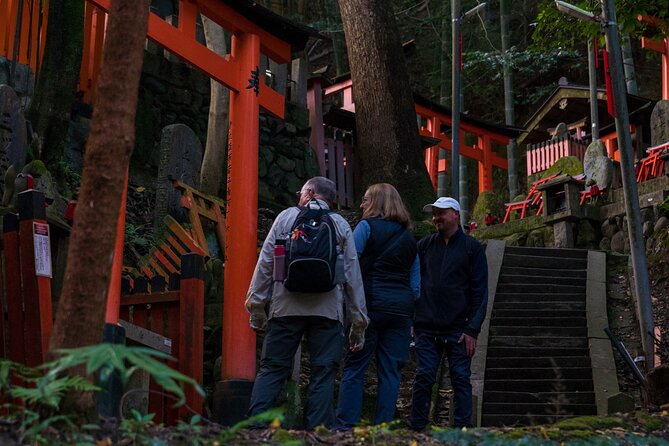
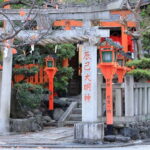
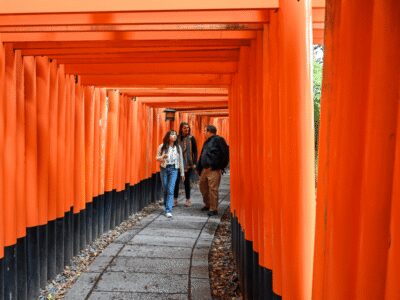
Your morning begins at Fushimi Inari-taisha Shrine, famous for its long series of torii gates climbing through the hillside. This is one of those places where most people rush, shoot a couple of pictures, and then feel like they never really “got” it.
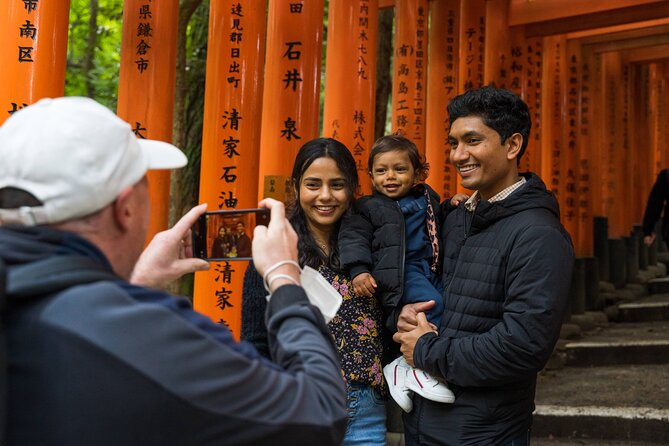
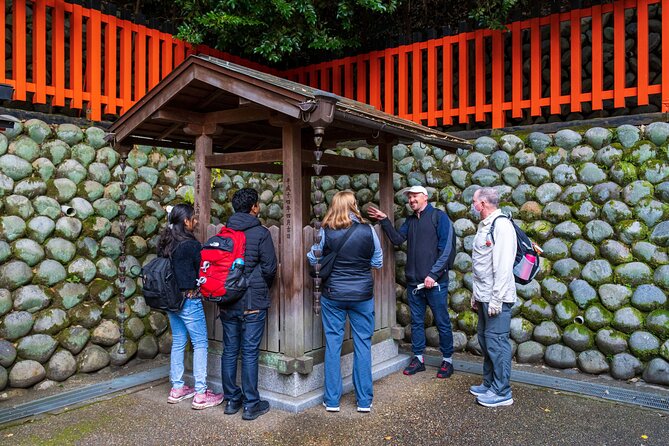
Here, you don’t just pass through. You move through the maze-like gate trail with the guide making purposeful stops—enough time to grab those epic angles without feeling like you’re constantly weaving around strangers. The tour includes about 45 minutes at this stop, which is a realistic window for the best stretches of the approach.
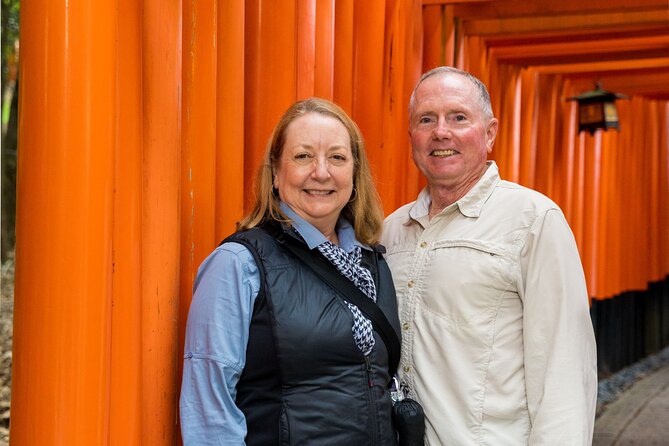
What I like about doing Fushimi Inari early is that the shrine’s mood becomes easier to read. The gates feel more like a journey and less like a queue. You also have a chance to hear the history behind what you’re seeing, rather than tuning out because it’s too crowded to think.
A practical note: this portion is part walking, part absorbing. If your goal is photos and context—not a speed-run—this is an especially good fit.
Kiyomizu-dera Temple: Icon Views Without the Daytime Noise
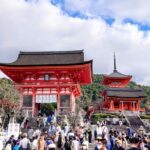
Next up is Kiyomizu-dera Temple, one of Kyoto’s most recognizable icons. It’s also one of the most popular, which means the timing of this visit matters a lot. The tour gives you about 1 hour here, and admission is included, so you’re not juggling tickets mid-morning.
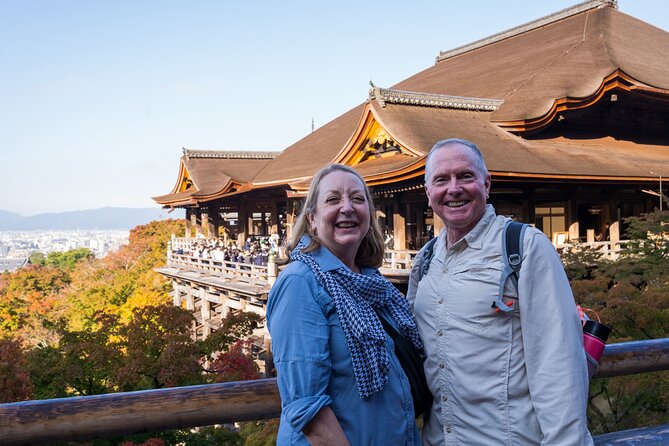
The best part of Kiyomizu-dera at this hour is the calm. You get the sweeping city views, but you’re not battling the full-wave crowds that show up later in the day. That change in atmosphere makes the viewpoints feel like a break instead of a workout.
Just as important, your guide doesn’t treat it like a postcard stop. The tour includes background on Buddhism and Japanese history, and Kiyomizu-dera is the kind of place where those explanations help you notice details you’d otherwise walk past. Even if you’re not looking for a lecture, this is the sort of information that makes the buildings and temple grounds feel less random.
One small consideration: Kiyomizu-dera is still a temple complex, so the walk and stairs are part of the experience. If you have mobility limits, you’ll want to keep an eye on your comfort level during this section, because the timing is fixed once you arrive.
Sannenzaka Ninenzaka: Preserved Streets and a Slower Kyoto Moment
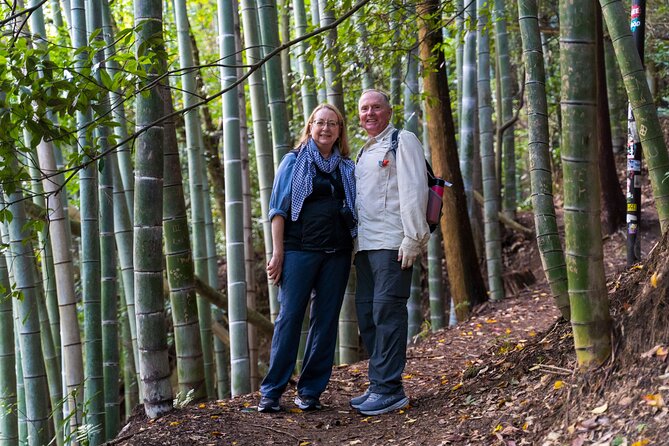
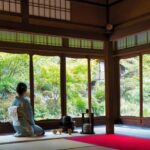
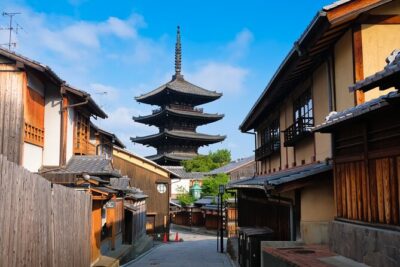
After the big temple hit, you shift into a different rhythm: Sannenzaka Ninenzaka, the preserved cobblestoned streets known for traditional townhouses and small shops. This stop is more about atmosphere than big-ticket landmarks.
You get to wander this area, typically on a relaxed pace, with no admission ticket required. The streets can be a highlight even if you don’t plan on shopping heavily. They’re a way to see how Kyoto looks when it’s not just temples and views—more like everyday heritage made walkable for visitors.
This part works well after the earlier sites because it gives you room to breathe. Your guide can still add context, but you’re not locked into a schedule of major monuments. You can linger on street corners, pause for photos, and reset before you end near a coffee stop.
The Private Guide Factor: Context, Customs, and Q&A on the Go
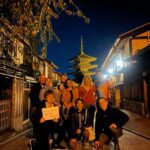
This is a private tour, meaning only your group participates. That matters more than people expect, especially on an early-bird plan. When you’re moving through famous sites at a smart time, you don’t want the group dynamic to slow you down or push you along too fast.
A good morning guide makes the “why” part feel simple. This tour is designed to add local customs and history as you go, so you learn while walking instead of trying to catch up later with a phone search. The tour also includes insights related to Japanese garden design (not every temple has it, but Kyoto’s aesthetics are deeply connected across sites), plus extra explanation about Buddhism and general history.
You also get practical help if you have questions about Kyoto or Japan. The tour description even notes that they can help plan your days ahead. In real terms, that’s useful when you’re trying to decide what to do after this 3-hour window—should you stay in the east, pivot to another district, or build in time for rest after jet lag?
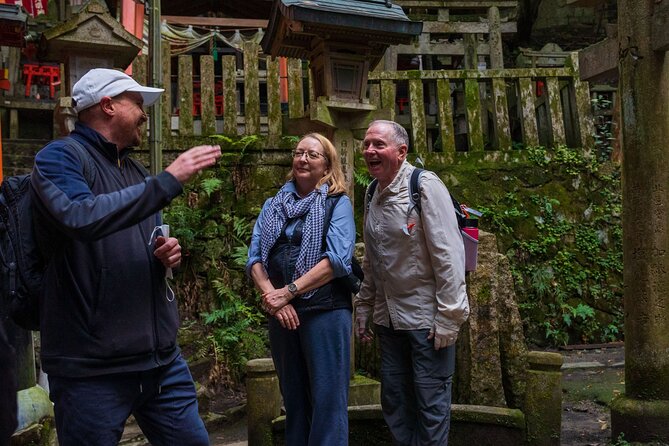
From the experience feedback, the guide tone is a recurring theme: friendly, responsive, and focused on keeping things moving while still allowing for meaningful stops. One named example you may hear is Shanda, who’s been praised for guiding the early morning route effectively and helping participants get solid solo photo moments before the crowds thicken.

Price and Value: What $156.37 Buys You
At $156.37 per person, this isn’t a bargain-basement option. But it also isn’t trying to be. The value comes from a few concrete things you get all at once:
- Private experience for your group (you’re not fighting the friction of large shared tours)
- Smart timing that reduces time spent waiting and squeezing
- Three high-impact stops packed into roughly 3 hours
- Included Kiyomizu-dera admission, plus free admission at the other two major components (Fushimi Inari and Sannenzaka Ninenzaka)
If you’ve ever done Kyoto “top sights only,” you know how quickly your day can turn into a crowd management exercise. This tour sells a different approach: buy time and buy smoother movement in exchange for getting up early.
There’s also a mention of group discounts, which can improve the cost picture if you’re traveling as more than one person and booking together. And because it uses a mobile ticket, you can keep things simple on travel day.
In short: this price makes more sense if you want comfort, pace, and context in a short window—especially if you only have a day or two in Kyoto.
Practical Tips for a Smooth Early Bird Morning
You’re starting at 7:00 am from Inari Station, and you’ll end near % ARABICA Kyoto Higashiyama. That means you can plan your rest and breakfast around real geography, not guesswork.
Here are the practical things I’d plan for based on how this tour runs:
- Arrive a little early. You’re catching the “empty gates” window, so the schedule is part of the magic.
- Wear comfortable walking shoes. You’re touring across temple and shrine grounds and then wandering preserved streets.
- Keep your morning flexible, weather-wise. This experience is noted as requiring good weather. If conditions are poor, it may be canceled and you’ll be offered a different date or a full refund.
- Use the end point strategically. Finishing near a popular coffee spot is handy when you want a calm second breakfast right after the temple intensity.
- Ask questions while it’s quiet. The guide is there for more than route guidance—use the early calm to ask about etiquette, history, or what you should prioritize next.
If you’re coming with jet lag, this tour can also work as an early-morning reset. Instead of fighting sleep schedules, you get moving during a time you’d normally just lie awake.
Who This Tour Fits Best (and Who Might Prefer Something Else)
This is a great match if:
- you naturally wake early or you can fake it
- you want a focused hits plan without spending all day bouncing between far-flung sites
- you prefer context and customs over raw sightseeing checklists
- you’re visiting Kyoto for a short time and want a smart route that respects crowds
It’s likely less ideal if:
- you hate early starts and don’t want to gamble on getting up at 7:00 am
- you’re traveling with very limited mobility and you’d rather avoid temple-stairs walking patterns
- you want a slow, unstructured day where timing doesn’t matter much
Should You Book the Private Early Bird Tour of Kyoto?
I’d book it if your priority is Kyoto at its most peaceful. This tour is built for people who understand a simple truth: the best experience often happens before the big wave arrives.
It’s especially worth it when you want both sides of Kyoto: the famous spiritual landmarks (Fushimi Inari and Kiyomizu-dera) and the more human-scale preserved streets of Sannenzaka Ninenzaka. The private format means your group gets a morning plan that’s paced for photos and comprehension, not just throughput.
If you’re thinking, I can sleep in and still enjoy the day, then this may not be your style. But if you’re willing to trade a bit of morning comfort for a calmer, more meaningful Kyoto, this is a strong choice.
FAQ
What time does the Private Early Bird Tour of Kyoto start, and how long is it?
The tour starts at 7:00 am and runs for about 3 hours.
Where do I meet the guide for this Kyoto tour?
You meet at Inari Station in Fushimi Ward, Kyoto (Fukakusa Inarionmaecho).
Is this a private tour or a shared group tour?
This is a private tour/activity, so only your group participates.
Which stops are included on the route?
The tour includes Fushimi Inari-taisha Shrine, Kiyomizu-dera Temple, and Sannenzaka Ninenzaka.
Are any admission tickets included?
Kiyomizu-dera Temple admission is included. Fushimi Inari and Sannenzaka Ninenzaka are listed as free for admission.
What happens if weather is poor?
This experience requires good weather. If it’s canceled due to poor weather, you’ll be offered a different date or a full refund.
Will I get a ticket on my phone, and when do I receive confirmation?
It uses a mobile ticket. You’ll receive confirmation at booking time unless you book within 1 day of travel, in which case confirmation is provided as soon as possible based on availability.
More Private in Kyoto

More Tours in Kyoto
More Tour Reviews in Kyoto
Just added: more Kyoto tours to browse





Private, compared.
 ★ 5.0Fushimi Inari Hidden Hiking Tour (Private Option Available)From $631,750 reviews
 ★ 5.0Private Kyoto Tour with a Local, Highlights & Hidden Gems, PersonalisedFrom $1021,543 reviews
 ★ 5.0Kyoto 6hr Private Tour with Government-Licensed GuideFrom $1551,369 reviews
 ★ 5.010 Must-see Spots in Kyoto One Day Private Tour (up to 7 people)From $1791,108 reviews
 ★ 5.0Kyoto 4hr Private Tour with Government-Licensed GuideFrom $109629 reviews
 ★ 4.8Private Tour with Local Licensed GuideFrom $106463 reviews
 ★ 5.0Private Kyoto Tour with Licensed Guide & Vehicle (Max 15 persons)From $634417 reviews
 ★ 4.8Private Customized Walking Tour with a Local InsiderFrom $64383 reviews