
Reviewed · KIYOMIZU-DERA & HIGASHIYAMA TOURS
Origami Workshop Near Kiyomizu Dera Temple in Kyoto
Paper cranes, minus the stress. This origami workshop near Kiyomizu-dera is a friendly, English-taught class for beginners, and I especially like the step-by-step coaching plus the fact you can pick your own colors and patterns. You’ll also get to take your finished pieces home in a mini envelope made from traditional paper, which makes it feel like more than just a craft stop. One thing to consider: it’s about one hour, so you’ll learn a handful of classic designs—not make an origami library.
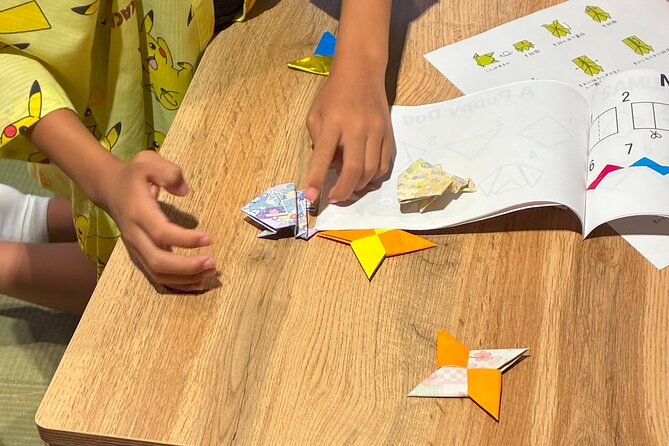
You’re not stuck with a stiff lecture either. You’ll get a quick intro to the tools and types of traditional origami, then you’re folding along with your instructor and building confidence fast. And since it’s a small group private activity, the pace is easier to handle (and yes, that helps if your fingers are still learning what a perfect crease feels like).
In This Review
- Key takeaways
- Kyoto Origami Workshop Near Kiyomizu-dera: The Real Appeal
- What Happens in the Workshop (Start to Finish)
- The Folds You’ll Make: Cranes, Frogs, Samurai Helmets, and Seasonal Themes
- Your Take-Home Envelope: A Better Souvenir Than Paper Stuff
- Price and Value: Is $19.51 Actually Fair?
- Meeting at 一念坂 362 Cafe: How to Plan Your Kyoto Day
- Who Should Book This Workshop (And Who Might Skip It)
- Should You Book This Kyoto Origami Workshop?
- FAQ
- Do I need any origami experience before I go?
- Is the origami class taught in English?
- What origami designs will I learn?
- How long does the workshop take?
- Is the origami paper provided?
- Is this workshop suitable for children?
- Where is the meeting point?
- Can I cancel for a full refund?
Key takeaways
- English instruction for total beginners, with clear, patient guidance
- Choose your own colors and patterns, so your cranes and helmets look like you
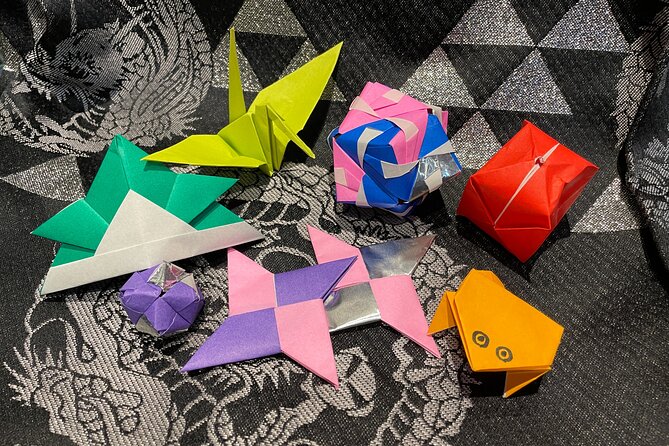
- Classic folds such as cranes, frogs, samurai/warrior helmets, plus seasonal themes
- Paper is provided, and you take home your creations in a mini envelope
- Small group, private setup, so you’re not competing for attention
Kyoto Origami Workshop Near Kiyomizu-dera: The Real Appeal
If you want a Japan experience that’s cultural but not complicated, this Kyoto origami workshop is a smart pick. It’s in Higashiyama, near Kiyomizu-dera, so it fits naturally into a day of temples and streets without demanding a museum level of stamina. You’re basically trading souvenir shopping for something you can hold, fold, and actually make yourself.
The biggest draw for me is that it’s built for beginners. You don’t need prior skill, and the class is taught in English. That matters, because origami can feel mysterious from afar—like you need secret hands to do it right. Here, the teaching is structured: you learn the basic tools and the kinds of folds you’ll use, then you go model by model.
Second, I like that you get agency in the look of your pieces. You’ll choose your favorite colors and patterns before you start folding, which means your finished crane (and other designs) won’t look like a generic kit. It’s still traditional Japanese paper craft, but it becomes personal.
The only real caution is time. At about one hour, you’ll focus on a set of classic designs, so you won’t have hours to slow your pace or perfect five variations of the same model. If you’re the type who wants to spend the whole day crafting, plan it as a short, satisfying cultural stop—not a full workshop marathon.
Keep climbing the Higashiyama slopes toward Kiyomizu-dera


What Happens in the Workshop (Start to Finish)
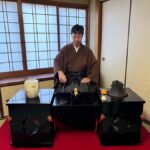
The experience runs about one hour, and it’s designed to feel calm and guided rather than rushed. You’ll meet at the start location: 一念坂 362 Cafe, 362-3 Masuyachō, Higashiyama Ward, Kyoto, 605-0826, Japan. From there, the activity ends back at the meeting point, which keeps your day simple.
Here’s the typical flow you can expect:
1) Welcome and tools basics
A staff member introduces the basic tools used for traditional origami, along with the types of folds you’ll run into. If you’ve only seen origami videos at 1.5x speed, this part is a relief. You get a baseline before paper starts flying everywhere.
2) Pick your paper colors and patterns
You choose colors and patterns you like. This is a small step, but it changes the whole vibe of the class. You’re not just following instructions; you’re selecting the style that feels right for you.
3) Step-by-step folding for classic models
The instructor guides you through folding classic origami designs. The emphasis is on doing it correctly with real guidance, not just watching someone else do it. If you miss a crease, you can adjust and keep moving.
4) Finish strong and prepare your take-home piece
When your folds are done, you’ll take your creations home. You’ll also use a mini envelope made from traditional paper to store and present them—perfect for gifting or for making one neat memory from your Kyoto day.
Because it’s a private activity for your group with small class sizes, the instructor’s attention is easier to get. That’s especially helpful when you’re learning something new and want quick corrections.
The Folds You’ll Make: Cranes, Frogs, Samurai Helmets, and Seasonal Themes

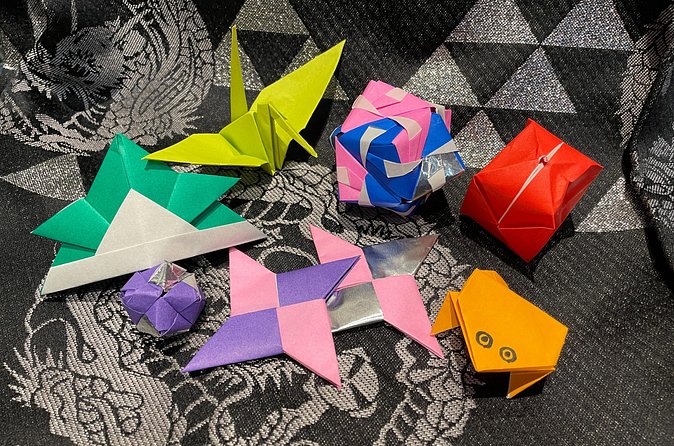
This workshop focuses on iconic, traditional designs. You can expect classic models such as:
- Crane: taught as a symbol of peace and good fortune
- Frog: a familiar, fun style with a different kind of folding challenge
- Samurai helmet / warrior helmets: especially great for kids and for photo ops
- Seasonal themes: designs tied to the time of year
The models matter because they each teach something different. The crane is often the first “wow” moment—simple in concept, but satisfying when your folds lock into shape. The frog adds variety and keeps the class from becoming repetitive. The samurai helmet is the most playful, and it’s the one you’re most likely to want to show off right away. And seasonal themes give you a souvenir that feels time-specific, not just a generic crane.
If you’re traveling with kids, the class is built with them in mind. The samurai helmet concept alone is a good signal: the designs are friendly to beginners and camera-friendly enough that you can turn the finished pieces into part of your family photo story.
Even if you’re an adult with a fine-arts brain, you’ll still appreciate the range. This isn’t one single design repeated until you’re a master. It’s multiple traditional styles, each with its own folding logic, and you get guided practice without needing to know the terminology ahead of time.
Your Take-Home Envelope: A Better Souvenir Than Paper Stuff
A lot of crafts leave you with a bag of materials and no lasting result. This one doesn’t. You take your creations home, and you’ll store them in a mini envelope made from traditional paper.
That detail changes how the experience lands. Your cranes and helmets become something you can keep on a desk, tuck into a journal, or send to someone later. It also means you can travel lighter than you would if you were buying pre-made origami paper and trying to replicate the instructions in your hotel.
Also, the mini envelope is practical. Origami can be delicate—creased paper wants to fold itself back if it’s mishandled. Having a proper envelope helps protect your work and keeps it looking neat, even after you’ve walked around Kyoto and dealt with the usual heat, sweat, and backpack shuffle.
Price and Value: Is $19.51 Actually Fair?
The price is $19.51 per person, and for an hour-long, English-taught workshop near one of Kyoto’s most popular temple areas, it’s pretty good value. Here’s why.
First, you’re not paying for materials you already have. Japanese origami paper is included, and you use it during the class while learning multiple models. If you’ve ever tried to buy paper in a hurry and then figure out folding instructions afterward, you know how often that turns into a sad stack of unused sheets.
Second, you’re paying for guidance. The workshop includes a step-by-step approach, plus an intro to tools and the types of folds. That’s what makes it work for beginners. Without instruction, many origami models take longer and feel discouraging. With instruction, you get traction quickly.
Third, it’s a private activity. That doesn’t automatically mean it’s more expensive than a group class in every case, but it usually means you’re getting a better attention-to-time ratio. For a one-hour experience, that matters.
The only time price might feel high is if you’re someone who wants maximum paper folding time or wants to master advanced models. But based on what this class is built to do—beginner-friendly classic origami with English support—$19.51 feels like a fair deal for a real cultural experience with take-home results.
More temples and shrines to slow down in across Kyoto



Meeting at 一念坂 362 Cafe: How to Plan Your Kyoto Day
Your meeting point is clearly listed at 一念坂 362 Cafe, 362-3 Masuyachō, Higashiyama Ward, Kyoto, 605-0826. Since the activity ends back at the meeting point, it’s easy to schedule as part of a temple-and-stroll day.
Because it’s near public transportation, you don’t need a complex route. Just give yourself enough buffer time to arrive calmly—Kyoto streets can slow you down, and you want to start the workshop without stress.
A practical tip: treat this as a decompression stop. After walking around Kiyomizu-dera and exploring Higashiyama lanes, your hands will enjoy the switch from sightseeing to making. Origami also gives you a built-in reason to sit down for a bit, which is great when your feet are ready to file a complaint.
It also helps with your overall day flow. If you schedule this right after a temple visit, you get two different kinds of Kyoto culture: visual and spiritual architecture on one side, and hands-on traditional craft on the other. Same neighborhood energy, totally different activity.
And yes, if you’re a photo person: the samurai helmet is a natural win. You’ll likely want a quick shot before you put everything into that mini envelope.
Who Should Book This Workshop (And Who Might Skip It)

This is a great fit if you want an authentic craft experience without gatekeeping.
Book it if you:
- want English guidance and beginner-friendly instruction
- are traveling as a couple, friends group, or family and want something interactive
- like taking home a physical memory that isn’t just a packaged trinket
- want a temple-area activity that doesn’t require a long time commitment
It’s also recommended for families with children. The class includes classic designs that work well for kids, and the focus on patient instruction makes it less intimidating than it sounds.
You might skip it if you:
- want a long, advanced workshop with lots of freestyle time
- already know multiple advanced models and want something more challenging
- dislike structured classes and prefer self-guided crafting
For most people, though, this hits a sweet spot: traditional Japanese paper craft, guided for beginners, and short enough to fit real travel days.
Should You Book This Kyoto Origami Workshop?

I think you should book it if you’re in Kyoto and want a hands-on activity that’s genuinely beginner-friendly. The English-taught, step-by-step format, the classic designs (cranes, frogs, samurai helmets, seasonal themes), and the take-home mini envelope make it feel like more than a quick lesson.
If you’re deciding between this and another “do-it-yourself” activity, this one wins on value. Materials are included, the teaching structure is built for novices, and you leave with finished pieces you can actually use or gift.
If you’re short on time, it’s also comforting to know it’s about one hour and you’ll return to the same meeting point. No complicated transit planning. Just fold, learn, and go back out into Kyoto feeling like you made something real.
FAQ
Do I need any origami experience before I go?
No. The workshop is designed for beginners, and no experience is needed.
Is the origami class taught in English?
Yes. The classes are offered in English.
What origami designs will I learn?
You can expect to fold classic designs like cranes, frogs, samurai or warrior helmets, and seasonal themes, with other figures depending on the session.
How long does the workshop take?
It runs for about 1 hour (approx.).
Is the origami paper provided?
Yes. Japanese origami paper is included.
Is this workshop suitable for children?
Yes. It’s recommended for families with children, and there are kid-friendly designs like the samurai helmet.
Where is the meeting point?
You’ll meet at 一念坂 362 Cafe, 362-3 Masuyachō, Higashiyama Ward, Kyoto, 605-0826, Japan.
Can I cancel for a full refund?
Yes. You can cancel up to 24 hours in advance of the experience start time for a full refund.
More Kyoto Workshops to Try




More Kyoto Temples and Shrines
More Along the Higashiyama Slopes


Just added: more Kyoto tours to browse








Kiyomizu-dera & Higashiyama Tours, compared.
 ★ 4.9Tea Ceremony in a Traditional Tea House in KiyomizuFrom $493,519 reviews
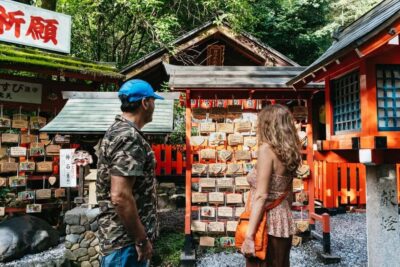 ★ 4.7Nijo Castle, Kiyomizu & Fushimi Inari Guided TourFrom $54700 reviews
 ★ 5.0Nijo, Kinkaku-ji, Arashiyama, Kiyomizu & Fushimi InariFrom $51699 reviews
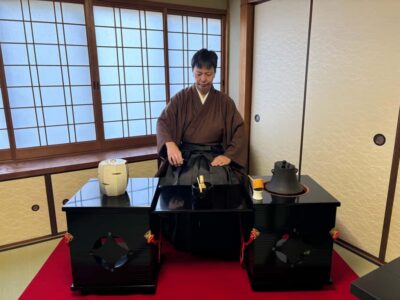 ★ 4.8Kyoto Ninenzaka: Tea Ceremony in Old Townhouse with ChairsFrom $21215 reviews
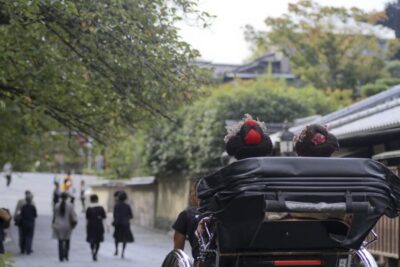 ★ 5.0Private Rickshaw Tour of Gion and Higashiyama AreaFrom $51144 reviews
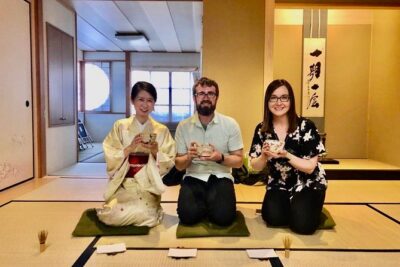 ★ 5.0Kyoto Tea Ceremony & Kiyomizu-dera Temple Walking TourFrom $109115 reviews
 ★ 5.0Kyoto Kiyomizu Tea Ceremony with Scenic Garden ViewsFrom $50101 reviews
 ★ 4.7Kimono/Yukata Rental 5 Minute from Kiyomizu-deraFrom $1989 reviews
Browse the lists this tour appears in