
Reviewed · KYOTO BIKE & E-BIKE TOURS
No. 1 E-Bike Tour for Up to 5 Guests in Kyoto with a Local!
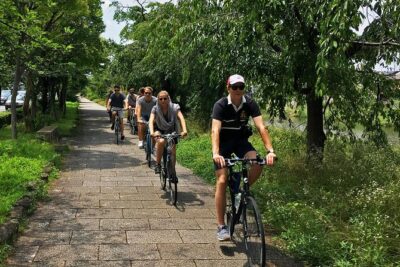
Kyoto by e-bike feels almost unfair. This small-group ride is a relaxed way to learn the stories behind famous places like Nishi Honganji and Gion while the electric assist keeps you fresh for photos. Two things I really like: you get a real guide who fills in context as you move, and the route stitches together temples plus everyday neighborhoods instead of doing a checklist. One consideration: it’s still a bike tour, so if you dislike cycling or feel uneasy in traffic-adjacent streets, you may want a more walking-heavy plan.
I also appreciate the tour’s practical rhythm. You start with a short safety briefing, then glide between big sights without the stop-and-start stress of trains and buses. The vibe is friendly and small, max 5 people, which makes it easier to ask questions and take breaks without turning the whole day into a sprint.
This is a solid value for the time you get. At $99.08 per person for about 4 hours, you’re paying for the bike + helmet + guide guidance, not just scenery, and the key stops on the route are marked as admission-free during the tour window.
In This Review
- Key reasons this Kyoto e-bike tour is worth your time
- Meeting point and how the tour starts smoothly
- Stop 1: Seikouin Wagatazizou area and the bike briefing
- Nishi Honganji: historic buildings and the Jodo Shinshu connection
- Kagiyachō pass-by: Nintendo’s old headquarters in Kyoto
- Gion and Shirakawa-feeling streets: old buildings, tea history, river atmosphere
- Nanzenji area waterworks: the Lake Biwa Canal stops
- Heian Shrine: the red torii gate and founding story
- Nanzen-ji Temple: why it’s special among Kyoto’s Five Mountains
- Kamo River: the easy reset at the end
- Returning the bike and what to do after
- Price and value: what $99.08 buys you in real terms
- Who this Kyoto e-bike tour fits best
- A quick planning note on weather and timing
- Should you book this Kyoto e-bike tour?
- FAQ
- How long is the Kyoto e-bike tour?
- How many people are in the group?
- What time does the tour start?
- Where do we meet?
- What places are included during the ride?
- Is the bike and helmet included?
- Are admission fees included for the stops?
- Can children join?
Key reasons this Kyoto e-bike tour is worth your time
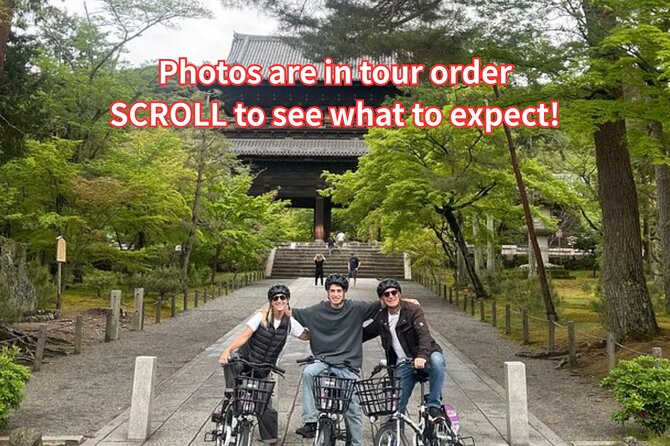
- Small group size (up to 5) makes the pace feel human, not rushed
- Electric assist helps you cover Kyoto’s distance without turning it into a leg day
- Temple-and-neighborhood mix takes you beyond the postcard version of Kyoto
- Kamo River cooling break is a simple, welcome reset during warmer months
- Local stories on the move are the difference between seeing sites and understanding them
Meeting point and how the tour starts smoothly
Your tour begins around 1:00 pm at the Times Car Rental area in Shimogyo Ward (680s Higashishiokōjichō). You’ll meet at a share-cycle Clew port located in front of Seikouin Wagatazizou, behind the hotel area near that address.
Plan on a quick start-up so you’re not fumbling. There’s a briefing period at the beginning (about 15 minutes) where the guide covers basic cycling hand-signs. Even if you’ve biked before, this matters. Kyoto streets can be busy, and hand signals keep everyone on the same page.
You’ll get an installed cycling helmet, plus bike rental and a guide. The tour uses a mobile ticket, so have your device ready and make sure you can show it. Also, before departure, your guide will message you through Viator (or via the same platform you booked through). Read it. These tours run on a tight schedule, and a missed message can turn a smooth start into a stressful one.
A small but helpful detail: depending on the guide, different languages may be available (German, Dutch, Bangladeshi, Hindu, Urdu). If language support matters to you, contact the operator before booking.
More of Kyoto at handlebar pace

Stop 1: Seikouin Wagatazizou area and the bike briefing
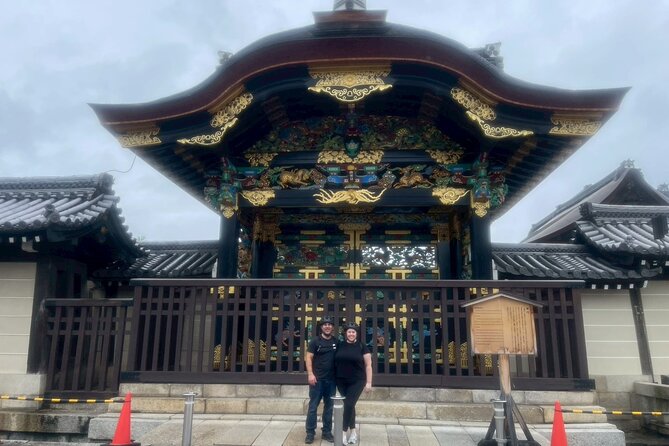
The first part is more than just meeting. You’re getting oriented to how the group will ride. The guide uses a hands-on approach for cycling hand-signs, which helps when you’re moving through streets where pedestrians, bicycles, and cars all share space.
This is also where the “local” tone starts. Instead of launching straight into photos, the guide sets expectations: where the group will regroup, how long you’ll pause, and how to keep the ride comfortable. With an e-bike, it’s easy to feel in control, but coordination is what keeps everyone relaxed.
This is also your first chance to get comfortable on the bike before the day’s more scenic segments. If you’re new to e-bikes, take a minute to feel how the pedal assist kicks in. Once it clicks, you’ll enjoy the rest of the tour more.
Nishi Honganji: historic buildings and the Jodo Shinshu connection
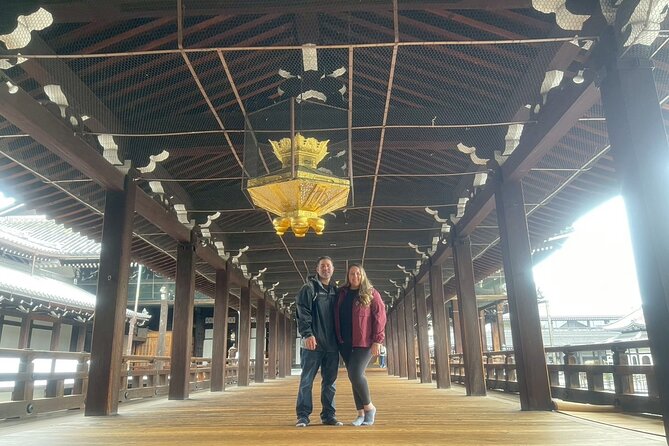
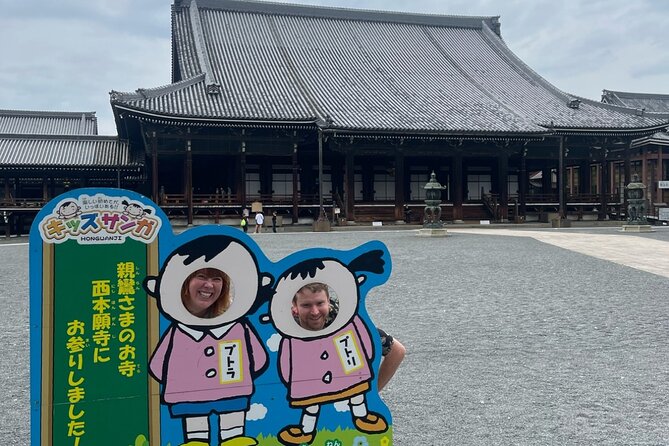
Next comes Nishi Honganji, the Western Honganji temple tied to the Jodo Shinshu Hongwanji-ha tradition. It’s a major place in Kyoto’s religious landscape, and the tour focuses on its historical buildings (including registered World Heritage structures).
Why this stop works on an e-bike tour: temples like this aren’t just scenic backdrops. They’re about ideas, community, and centuries of practice. Walking through the grounds at a relaxed pace gives you enough time to notice architectural details without feeling like you’re rushing between photo angles.
The tour gives you about 30 minutes here. That’s long enough to absorb the overall layout and to catch the parts you’ll want to remember later. If you’re the kind of traveler who reads signs and likes a sense of context, this is one of the most satisfying stops on the route.
Also, since admission for this stop is listed as free for the tour, you’re not paying extra to see it. That keeps the day’s value straightforward.
Kagiyachō pass-by: Nintendo’s old headquarters in Kyoto
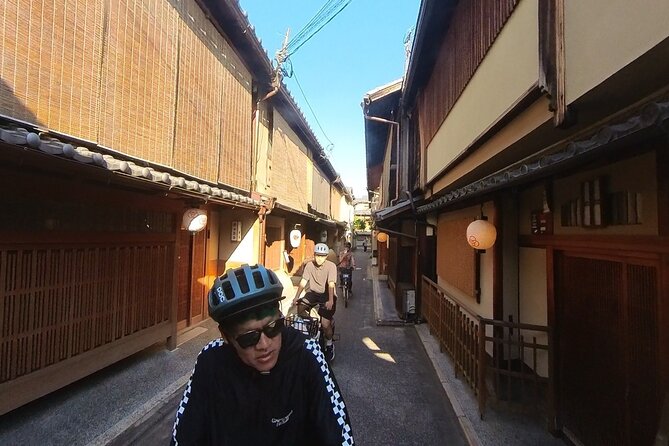
Then you ride through Kagiyachō, a neighborhood segment where the guide points out a huge building tied to Nintendo’s older headquarters. Even if you’re not a gamer, it’s a fascinating contrast: Kyoto holds long-standing traditions, but it also has companies and modern cultural powerhouses embedded in the city fabric.
The stop here is about 20 minutes, and it’s designed more for passing-through and quick interpretation than for long sightseeing. You’ll get the context, look at the building, and keep moving.
If you’re someone who likes Kyoto’s balance of old and new, you’ll probably enjoy this. If you only want deep temple time, this could feel like a shorter break.
Gion and Shirakawa-feeling streets: old buildings, tea history, river atmosphere
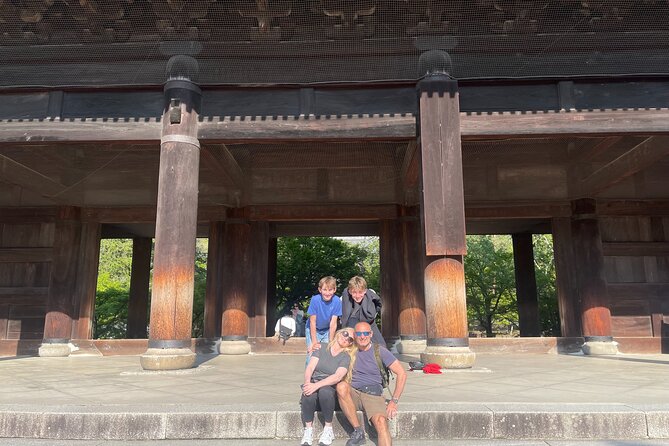
After that, you head into Gion, where the tour leans into the atmosphere of historic chaya-mati areas—places connected to tea culture—and the classic river-lined scenery.
This is one of the tour’s anchor zones. You get around 30 minutes, and the tour includes time for the feel of the streets plus a mention of Kiyamachi Street as part of the lively area experience. The guide helps you notice what makes these streets distinct: old-style buildings, seasonal plants that you might recognize in photos (like cherry blossoms), and the way the river area changes the mood of the walking space.
Important practical point: if you hate crowds, choose your viewing stance carefully. The tour is scheduled to keep things paced, but you can still encounter busy street moments since Gion is popular. Use the bike tour rhythm to your advantage—pause where you can see, then move on quickly when the street gets too tight.
Still, this is a great section for pictures. You’re not just snapping wide shots. You’re catching the textures: wood facades, street rhythm, and the way water nearby affects the vibe.
Other Kyoto tours and experiences to compare
Nanzenji area waterworks: the Lake Biwa Canal stops
Now the tour shifts into a quieter, more technical Kyoto story: the Lake Biwa Canal, a waterway system connecting Kyoto and Lake Biwa. The itinerary includes two Nanzenji-area points with time to appreciate how this engineering helped Kyoto function across history.
First, you visit 17 Nanzenji Kusakawachō (about 20 minutes). The guide frames the canal as a contributor to Kyoto’s development by supplying water. Even if you’re not a “history of infrastructure” person, this works because it’s visible. You’re looking at the waterways and seeing the city logic in real time.
Then you move to 13 Nanzenji Fukuchichō for a longer stretch (about 50 minutes). Here, the tour focuses on how the system manages elevation difference between levels. That’s the key idea: the canal wasn’t just dug and forgotten. It was designed to work with Kyoto’s terrain.
Why these canal stops are more than filler on an e-bike tour: they break up the temple time and give you a different kind of understanding. Kyoto isn’t only about shrines and gates. It’s about how people built systems to live well in a mountain-and-valley city.
If you prefer purely scenic moments over explanations, you might skim. But if you like learning how places actually work, this is a standout.
Heian Shrine: the red torii gate and founding story
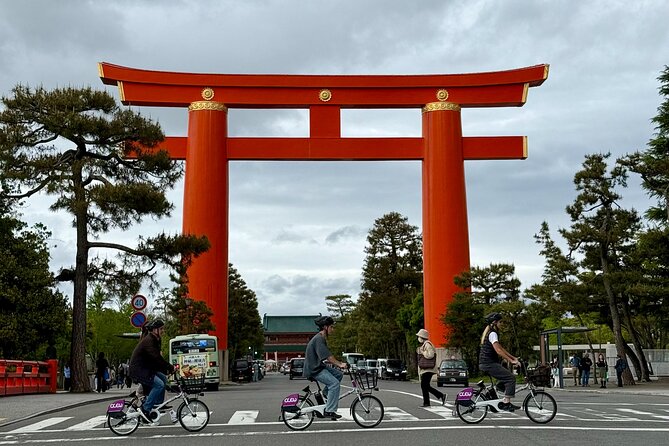
Next is Heian Shrine. The focus here is clear: the shrine commemorates the 1100th anniversary of the transfer of the capital to Heian-kyo, tied to Emperor Kanmu. You’ll also notice the large red torii gate, which is often the first visual detail people remember.
The itinerary excerpt we’re working from doesn’t list a precise time for this stop, but expect a proper pause to take in the main visual and to hear the founding context from your guide. This kind of stop benefits from an e-bike day because it lets you arrive without exhausting yourself, then spend the energy on looking closely once you’re there.
If your ideal Kyoto day is part heritage, part iconic sight, Heian Shrine is a strong fit. It also sets you up well for the next temple section at Nanzen-ji.
Nanzen-ji Temple: why it’s special among Kyoto’s Five Mountains
Then comes Nanzen-ji Temple, described as especially special among the Five Mountains of Kyoto. You’ll see the main temple and the gate presence that pulls your attention even before you get fully inside the grounds.
This stop is about 20 minutes, which is enough time for an overview and a few focused looks. The guide’s stories matter here because Nanzen-ji can feel big and important, but it’s easier to enjoy when you understand what makes it “special” in Kyoto’s temple network.
Admission for this stop is listed as free for the tour experience, so again, the value stays clean.
Kamo River: the easy reset at the end
Finally, the route winds down at the Kamogawa (Kamo) River. You get about 10 minutes for a break—either relaxing along the riverbed or cycling on the riverbank.
The tour also encourages cooling your feet in the water to beat the heat. Even if you don’t plan to do it, just having a short “downshift” near water helps your brain after temple time.
This part is one of the most enjoyable segments because it feels like Kyoto living rather than Kyoto sightseeing. It’s quieter, open, and it gives you a chance to notice the city from a different angle.
Returning the bike and what to do after
You’ll ride back to the meet area at 570 Higashishiokōjichō to return the bicycle and end the tour. After that, you’re free to continue exploring on your own.
This is a good format because you finish with energy still on board. You’ve had a guided day that covers major hits, but you’re not locked into a full day tour where you rush through everything. Use the rest of the afternoon to wander where you feel pulled—whether that means circling back for a second look at a place you loved, or heading toward dinner in the neighborhoods you passed.
Price and value: what $99.08 buys you in real terms
Let’s talk money. The price is $99.08 per person for about 4 hours, including a helmet, bike rental, and a cycling guide. There’s also mobile ticketing, and the itinerary marks key stops as admission ticket free for that portion of the day.
So what are you actually paying for?
- Time saved: you connect multiple areas in one ride without juggling transport.
- Energy saved: e-bikes mean you can keep a steady pace even with hills or longer distances.
- Interpretation: the guide turns locations into stories, including things like the Lake Biwa Canal’s purpose and how Kyoto’s development ties to that water system.
- Small-group advantage: max 5 people usually means you get more interaction and fewer awkward gaps.
Could you do some of these sites on your own? Sure. But the value here is the pacing plus the explanations, not just the map route. If you want a guided Kyoto day that still feels flexible, this price can make sense.
Who this Kyoto e-bike tour fits best
This tour is a strong match if you:
- Want a guided introduction to Kyoto that covers Nishi Honganji, Gion, Nanzen-ji, Heian Shrine, and the Kamo River
- Prefer “see and understand” over “only photos”
- Like small groups and an easy pace
- Are comfortable riding an e-bike and following simple group rules
It’s not ideal if you:
- Want a fully car-free, slow walking day only
- Hate biking or feel anxious around city traffic patterns
- Need very long museum-style time at each stop
If you’re traveling with friends or family up to 5 total people, the format makes it easy to be together while still keeping the tour experience personal.
A quick planning note on weather and timing
The experience requires good weather. If conditions are poor, you should expect options like rescheduling or a full refund. Kyoto weather can change fast, so check forecasts and dress for comfort even if the day looks sunny at breakfast.
Also, since the route hits multiple major areas, try not to over-schedule the morning right before. Give yourself time to eat, hydrate, and arrive ready to ride.
Should you book this Kyoto e-bike tour?
I’d book it if you want a guided Kyoto day that mixes top sights with real neighborhood feel—and you want to do it without tiring yourself out. The standout strengths are the small group pace, the e-bike help, and the guide-driven storytelling that makes the route click from stop to stop.
If you’re on the fence, ask yourself one question: do you want Kyoto mostly as a ride with context, or mostly as walking-only wandering? If the first sounds better, this tour is a great way to get oriented fast while still enjoying the calm moments by the river.
FAQ
How long is the Kyoto e-bike tour?
It’s about 4 hours long.
How many people are in the group?
The tour has a maximum of 5 travelers.
What time does the tour start?
The start time is 1:00 pm.
Where do we meet?
You meet at the Times Car Rental area in Shimogyo Ward, at the Clew share-cycle port near Seikouin Wagatazizou behind the hotel.
What places are included during the ride?
The route includes Nishi Honganji, Gion, Heian Shrine, Nanzen-ji, the Kamo River, and stops in the Nanzenji area related to the Lake Biwa Canal, plus a pass through Kagiyachō.
Is the bike and helmet included?
Yes. You get a helmet, bike rental, and use of the bicycle, along with a cycling guide.
Are admission fees included for the stops?
The tour lists major stops as admission ticket free for the experience.
Can children join?
Children under 10 can participate if they are taller than 140 cm, and they pay the same fee as an adult.
More Tours in Kyoto

More Tour Reviews in Kyoto
More of Kyoto by Bike

Just added: more Kyoto tours to browse





Kyoto Bike & E-Bike Tours, compared.
 ★ 5.0Hidden Kyoto E-Biking tourFrom $1161,843 reviews
 ★ 5.0Bike Tour Exploring North Kyoto plus LunchFrom $1061,087 reviews
 ★ 5.0Arashiyama Bamboo Forest & Hidden Gems Bike Tour (Early Bird)From $106613 reviews
 ★ 5.05 Top Highlights of Kyoto Full Day Bike Tour (E-bike option)From $172511 reviews
 ★ 5.0Full Day Biking Tour Exploring the Best of KyotoFrom $119498 reviews
 ★ 4.8Memory Kyoto E-Bike TourFrom $91297 reviews
 ★ 5.0E-Bike Tours of the highlights of Kyoto!!!From $109291 reviews
 ★ 5.0Afternoon Kyoto Bike Tour: Bamboo Forest, Monkeys & Hidden SpotsFrom $106283 reviews
Browse the lists this tour appears in