
Reviewed · KYOTO CRAFT & CALLIGRAPHY WORKSHOPS
Kyoto Urushi Lacquer Factory Tour and Chopstick Making Experience
Sap to lacquer in one tour. I love the way the guide explains how urushi sap is collected and refined into craft-ready lacquer, and I love finishing my own chopsticks with the traditional fuki-urushi technique. Plan on wearing clothes that can get dirty, since the workshop step involves lacquer application.
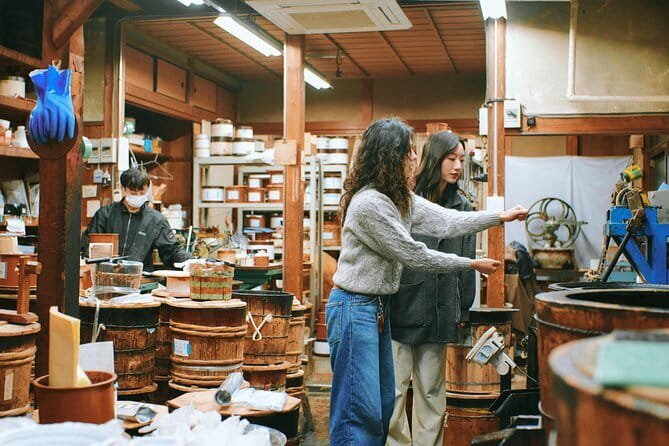
This is a rare look inside a working Kyoto urushi operation. You start at the factory store, walk through the refining process, then head upstairs to apply lacquer yourself. The tour runs about 90 minutes and is conducted entirely in English.
One thing to keep in mind: the group is small (maximum 5 people) and the tour needs a minimum of 2 people to run. Also, there is no large luggage storage, so pack light or plan to store your bags elsewhere before you arrive.
In This Review
- Key things that make this Kyoto urushi tour worth your time
- Tsutsumi Asakichi Urushi: why this Kyoto workshop feels real
- Price and value: what $97.55 buys (and why it’s fair)
- Before you go: meeting point, timing, and what to bring
- Start at the factory store: Und. sets the stage fast
- The factory tour: from Japanese lacquer tree to craft-ready lacquer
- Refinement and coloring: the craft behind quality (and safety)
- Upstairs workshop: making your chopsticks with fuki-urushi
- What the guide does well (and why the tour feels smooth)
- Who should book this Kyoto urushi experience
- Quick practical tips to help you enjoy it more
- Should you book? My take
- FAQ
- How long is the Kyoto Urushi lacquer factory and chopstick making tour?
- What does the price include?
- Where does the tour start?
- Is the tour in English?
- How big is the group?
- Is there luggage storage available?
- What should I wear?
- Is transportation included?
- FAQ
- Can the tour be canceled or changed after booking?
Key things that make this Kyoto urushi tour worth your time
- A factory that refines over 70% of Japan’s domestic urushi lacquer, not just a demonstration showroom
- A guided walkthrough of sap collection and refinement, from tree to usable lacquer
- Fuki-urushi chopstick making where you finish a take-home souvenir
- English-only guidance and a small group size that keeps questions flowing
- A shop-first start at Und., where lacquer tools and materials set the tone right away
Tsutsumi Asakichi Urushi: why this Kyoto workshop feels real
Kyoto can be full of crafts that look polished but feel packaged. This experience has a different energy because you’re stepping into a producer’s world, not a photo-op studio.
Tsutsumi Asakichi Urushi is part of the supply chain for lacquerware artisans across Japan. The factory refines over 70% of Japan’s domestic urushi lacquer—meaning you’re seeing the heavy-lifting side of lacquer making. That matters, because urushi is not just a decorative finish. It’s a carefully processed material that needs the right refinement before craftsmen can use it.
The company traces back to 1909, and it survived a long period where traditional urushi production and use declined during the 20th century. Now the current 4th generation owner is pushing urushi back into everyday life—promoting safe use of high-quality lacquer not only for traditional items, but also for modern goods. Even if you’re not a craft nerd, that philosophy gives the tour a sense of purpose.
Make something by hand in a Kyoto workshop

Price and value: what $97.55 buys (and why it’s fair)
At $97.55 per person for about 90 minutes, you might wonder if this is “just another class.” Here’s the difference.
You’re paying for three things bundled together:
1) A guided factory and store tour focused on how urushi is refined and colored for local craftsmen
2) English instruction throughout
3) Hands-on lacquer application on a pair of chopsticks, which you take home as your own finished piece
Most craft activities give you a sample and a quick story. This one connects the story to the supply process. You’re not only learning about urushi—you’re learning how the material becomes usable in the first place. That’s where the value hides.
Also, the group is capped at 5 people, so you’re not squeezed into a big queue. And the tour is designed for any group size, as long as the minimum of 2 participants is met. Small groups usually mean better pacing and more time for questions.
Before you go: meeting point, timing, and what to bring
The tour starts at 10:00 am and meets at Tsutsumi Asakichi Urushi, in Shimogyo Ward, Inarichō (Kyoto 600-8098, address is listed as 540番地). The activity ends back at the same meeting point.
It’s located in the center of Kyoto and is close to public transportation, so you shouldn’t need a private car to make it work. Private transportation isn’t included, so plan to arrive under your own steam.
Practical tip: there’s no large luggage storage. If you’re traveling with a big bag, handle storage before the tour. And since you’ll apply lacquer yourself, wear clothes that you’re okay with getting stained during the workshop step. In other words, don’t go in your “good for dinner” outfit.
You’ll receive a mobile ticket, which is handy if you’re already juggling multiple bookings.
Start at the factory store: Und. sets the stage fast
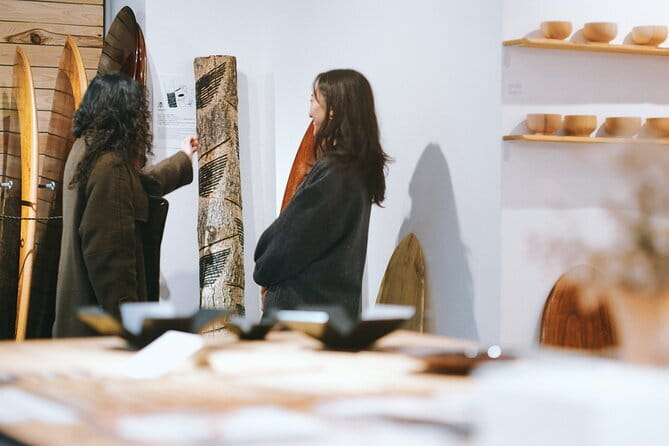
You begin inside the factory store named Und. As soon as you enter, the atmosphere gives you a sense that craftsmanship can feel current, not museum-only. The experience leans into a millennial-culture vibe, but it’s grounded by generations of artisans.
This store stop is more than a waiting area. It frames what you’ll see later in the factory. You’ll also hear explanations from your guide about the materials and the workflow behind lacquerware. For me, this matters because lacquer can sound abstract until you see that there’s a full system behind it.
Think of Und. as your warm-up. It helps you understand why the factory tour isn’t just about history. It’s about making a material that craftsmen can use day after day.
The factory tour: from Japanese lacquer tree to craft-ready lacquer
The main highlight is the guided walk through the refining side of urushi.
You’ll learn the process of collecting sap from the Japanese lacquer tree, and then how that sap gets refined until it can be used by craftsmen. The guide also points out what goes into refinement and coloring for the needs of local craftsmen. The idea is simple: lacquerware quality depends on what happens before the artisan ever touches a brush.
During the tour, you’ll see well-kept secrets of refining and coloring lacquer. The goal isn’t to give you a chemistry lesson. It’s to show you the careful steps that make urushi workable and consistent.
What I liked about this part is the way it links the old and the practical. Urushi has a traditional identity, but the factory’s current mission is also about safe use and modern relevance. You’re seeing a living material that still feeds real production.
One small drawback to keep in mind: because this is a working process, expect a tour that’s more informative than theatrical. If you want lots of action scenes and glitter, you might find yourself wishing for more spectacle. If you like process, this is exactly your lane.






Refinement and coloring: the craft behind quality (and safety)
Urushi is special, but it’s not magic. The tour emphasizes that it takes refining work to reach usable lacquer. That’s the heart of why a factory like Tsutsumi Asakichi matters.
You’ll hear that the company refined a huge share of domestic lacquer and that it supplies high-quality lacquer to craftsmen around Japan. That tells you something important about scale and standards: they’re not making tiny experimental batches for tourists. They’re making material for professionals.
The tour also connects quality to safe use. The current owner’s goal is to reestablish urushi in everyday life and promote safe, high-quality lacquer for both traditional and modern goods. Even if you don’t know much about lacquer, you can understand the point: when something is used widely, safety and consistency become part of the craft.
Upstairs workshop: making your chopsticks with fuki-urushi
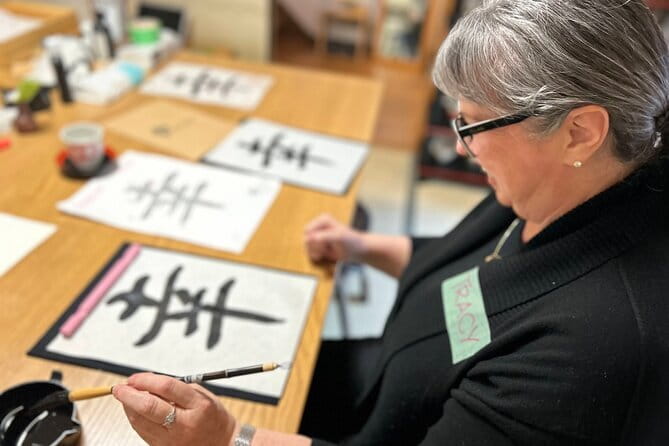
After the factory tour, you go to the workshop area on the top floor. This is where the experience turns from watching to doing.
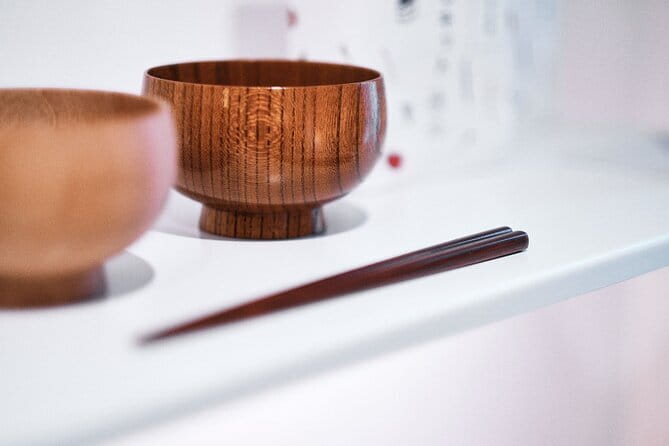
You apply lacquer on a pair of chopsticks using the traditional fuki-urushi technique. The workshop portion is included, and you take the chopsticks with you as a present and a memory from the factory visit.
This step is where you learn what the tour has been building toward: the work of lacquerware isn’t only about artistic taste. It’s about technique, material handling, and care.
Here’s the real-world consideration: you’ll be applying lacquer, so the earlier advice about clothes isn’t optional. Wear something you can live with if it gets marked. Also, don’t plan to immediately jump into a spotless itinerary right after. Give yourself a little buffer in your schedule.
What the guide does well (and why the tour feels smooth)
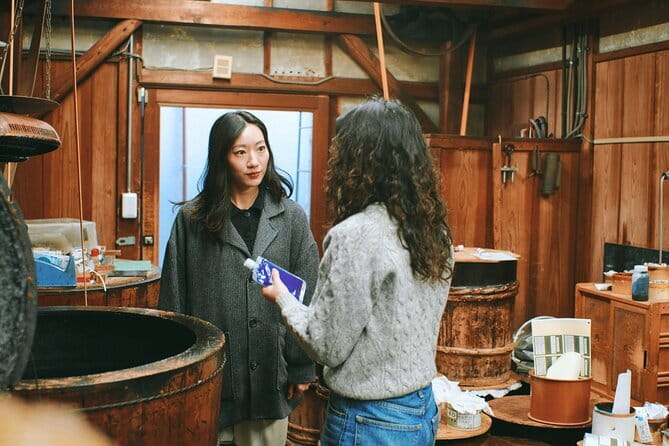
The tour is guided and runs like an efficient lesson plan. Your guide explains the full process from sap to refined lacquer, then shifts to the workshop step so the story makes sense.
Based on the feedback you’ll find around this experience, one theme comes up again and again: the guides are extremely informative and accommodating. That shows in how people leave feeling like they learned something real, not just watched a process and nodded.
English-only is a big plus too. Craft tours can get lost in translation when terms get technical. Here, the tour is conducted entirely in English, which keeps the material approachable.
And since the group is limited to a maximum of 5 people, you’re more likely to get personal attention when questions pop up.
Who should book this Kyoto urushi experience
This fits best if you want:
- a true Kyoto craft connection that’s tied to production, not just performance
- a small-group, English-guided experience
- a take-home item you make yourself (your lacquer chopsticks)
- hands-on learning paired with a material-focused factory tour
You might want to skip it if you hate getting messy, or if your schedule can’t handle a firm start time of 10:00 am.
Also, because the tour requires a minimum of 2 participants to operate, it’s easiest if you’re traveling with someone or you can join as part of a small group.
Quick practical tips to help you enjoy it more
- Dress for lacquer application. That’s the one thing you can control that will improve your comfort fast.
- Keep luggage minimal since there’s no large luggage storage.
- Plan on about 90 minutes from start to finish and arrive with time to get settled at the meeting point.
- If you’re booking close to your travel dates, remember the tour needs the minimum of 2 participants to run.
Should you book? My take
Book this tour if you want a Kyoto experience that actually explains how a famous material is made. The urushi story here isn’t generic. You see the process from sap collection through refinement, then you get to apply lacquer yourself using fuki-urushi.
The value is strong because you’re getting both sides: factory context and hands-on craft. And the small-group format makes the whole thing feel less rushed.
One caution: the experience is non-refundable and cannot be changed once booked. If your schedule is fragile, double-check your day and give yourself buffer time around the 10:00 am start.
FAQ
How long is the Kyoto Urushi lacquer factory and chopstick making tour?
It runs about 1 hour 30 minutes (approximately).
What does the price include?
The price includes a guide, a tour of the store and factory, and applying lacquer to a pair of chopsticks. You take the chopsticks with you.
Where does the tour start?
The tour starts at Tsutsumi Asakichi Urushi, Kyoto 600-8098, Shimogyo Ward, Inarichō, 540番地. The tour ends back at the meeting point.
Is the tour in English?
Yes. The tour is conducted entirely in English.
How big is the group?
The maximum group size is 5 people. The tour requires a minimum of 2 participants to operate.
Is there luggage storage available?
No large luggage storage is available.
What should I wear?
Wear clothes suitable for getting dirty, since you will apply lacquer during the workshop.
Is transportation included?
No. Private transportation is not included.
FAQ
Can the tour be canceled or changed after booking?
This experience is non-refundable and cannot be changed for any reason. If the minimum participant number is not met, you may be offered a different date/experience or receive a full refund. The provider may also cancel due to weather or unforeseen circumstances.
More Tours in Kyoto

More Tour Reviews in Kyoto
More Kyoto Workshops to Try
Just added: more Kyoto tours to browse








Kyoto Craft & Calligraphy Workshops, compared.
 ★ 5.0Chopsticks Making Workshop in Gion with Engraving OptionFrom $15958 reviews
 ★ 4.8Authentic knife making experience at a blacksmith in KyotoFrom $154350 reviews
 ★ 5.01-Hour Japanese Archery Experience in KyotoFrom $46176 reviews
 ★ 5.0Calligraphy class at Buddhist temple in city centerFrom $55167 reviews
 ★ 5.0Roketsu dyeing experience: M course Roketsu Dyeing ExperienceFrom $25163 reviews
 ★ 4.9Japanese Archery Workshop with Experienced InstructorFrom $38132 reviews
 ★ 4.8Japanese Calligraphy ClassFrom $5189 reviews
 ★ 5.0TAIKO, Japanese Drum Experience from KyotoFrom $11586 reviews
Browse the lists this tour appears in