
Reviewed · KYOTO TEMPLE & SHRINE TOURS
Kyoto: Shakyo & Matcha in Historic Temple Garden
One hour of quiet writing changes your pace. You’ll copy Buddhist sutras during shakyo at Sennyu-ji, then slow down with freshly prepared matcha while you look out over a designed temple garden. The trade-off: the experience involves sitting quietly for a while, so it’s not a great fit if you need frequent movement breaks or step-free access.
This is a 150-minute, small-group English tour (up to 10 people) that starts at Keihan Station and finishes back at Tofukuji Station. You get admission, a guided visit, and all the tools for your writing practice, which makes it one of those rare activities that feels both structured and genuinely restful.
In This Review
- Key things to know before you go
- Sennyu-ji’s garden-and-mindfulness setup
- How the walk and timing shape the experience
- Shakyo sutra copying: the calm, hands-on core
- Matcha and seasonal wagashi in the temple garden
- Guided temple visit: learning without turning it into a lecture
- Meeting logistics: skip-the-line and what to expect from the guide
- Price and value: what $35 buys you in Kyoto terms
- Who this tour suits best
- Practical etiquette and small gotchas
- Should you book this Kyoto shakyo and matcha experience?
- FAQ
- Where do I meet for the tour?
- What’s the total duration?
- How long is the shakyo session?
- What’s included in the price?
- Is the tour in English?
- Do I need to bring supplies for shakyo?
- Is skip-the-line access included?
- Is photography allowed everywhere?
- Is this tour suitable for kids and strollers?
Key things to know before you go
- Shakyo session includes supplies so you’re not hunting for brushes, paper, or ink
- Fresh matcha + seasonal wagashi right after your writing time
- Sennyu-ji temple garden photos and guided sightseeing for a calm change of rhythm
- Skip-the-line access through a separate entrance
- Small group of up to 10 with an English-speaking guide
- Photography may be limited indoors to protect the temple atmosphere
Sennyu-ji’s garden-and-mindfulness setup
Kyoto can feel like a sprint. This outing is a controlled slowdown, centered on Sennyu-ji, a historic temple you visit as part of a guided cultural experience. The emphasis isn’t on checking boxes fast. It’s on feeling the moment: scent of incense, soft sounds outside, and the steady focus of copying sutras.
What I like most is that the activity forces you into a skill that doesn’t require talent. You’re not judged on calligraphy. You’re doing something simple and repetitive that naturally quiets the brain. And then you get rewarded with a bowl of matcha and delicate seasonal sweets, taken at a calmer pace than most sightseeing stops.
More temples and shrines to slow down in across Kyoto
How the walk and timing shape the experience
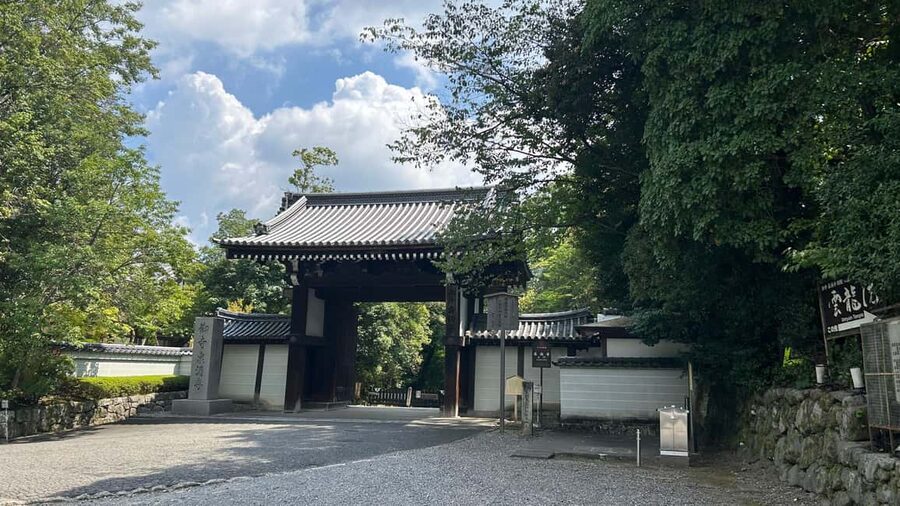
You meet at the East Gate of Keihan Station. Look for the guide wearing a yellow fluorescent band so you can spot them quickly. From there, you walk about 15 minutes to reach the temple area.
That walk matters more than it sounds. It helps you shift out of the station-and-streets pace and gives you time to settle in before the temple portion begins. The guided time at Sennyu-ji is about 2 hours, then you return on foot for another short walk (also about 15 minutes) back to Tofukuji Station.
One practical note: since the session includes a long quiet component later, wear comfortable clothing for sitting. You’ll have a better experience if you start out already ready to linger.
Shakyo sutra copying: the calm, hands-on core
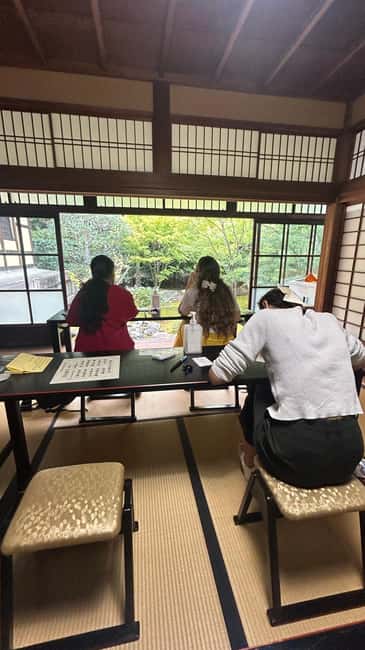
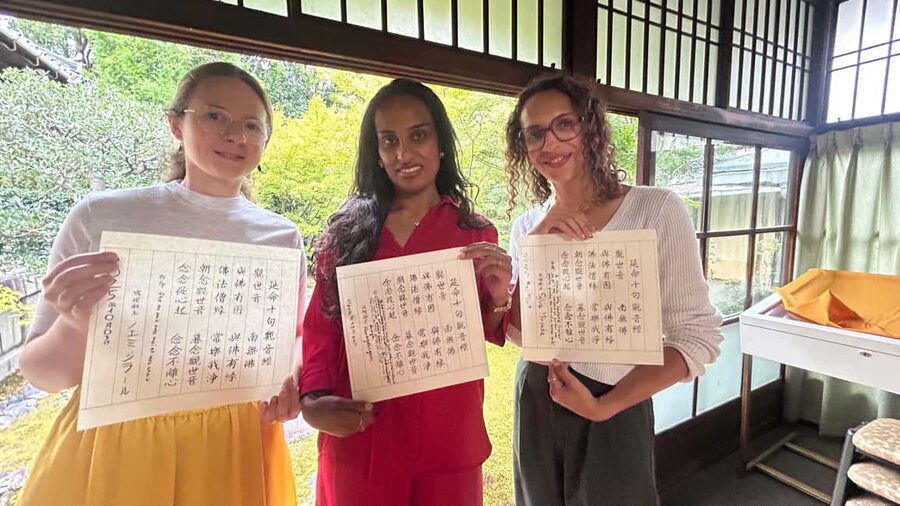
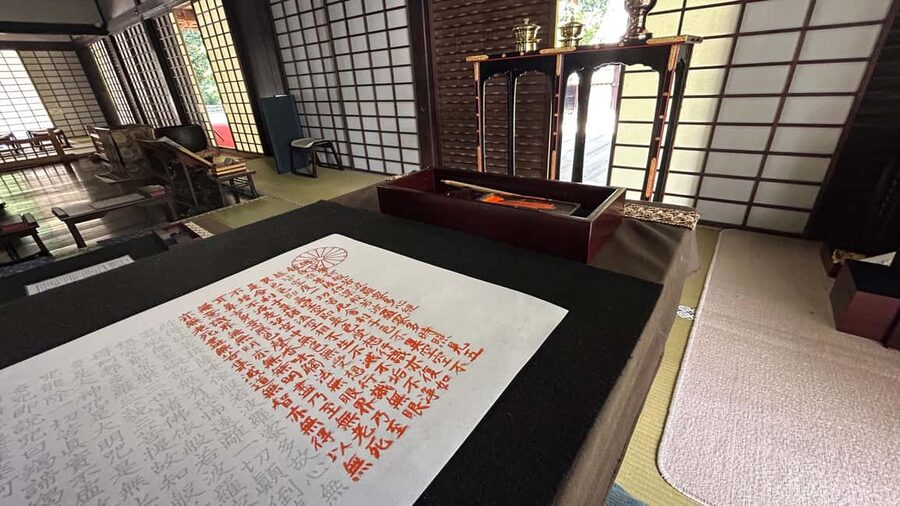
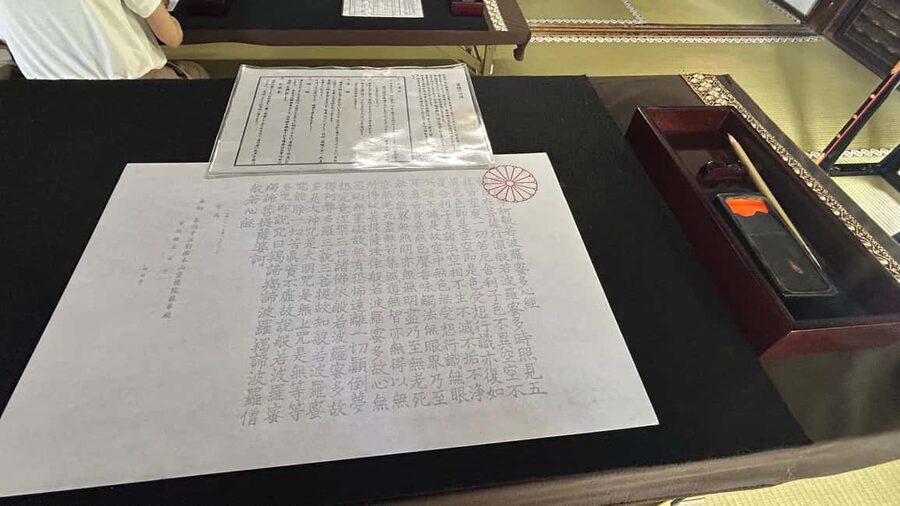
Shakyo is the heart of the tour. It’s a meditative practice where you copy sutras with a brush, using provided materials. The session typically takes about 60–90 minutes, depending on how quickly you write.
Here’s the best part: they take care of the setup for you. Brushes and paper are provided, and you also use ink as part of the practice (so you don’t need to bring anything except your attention span). That means the tour can focus on guidance and atmosphere, not on logistics.
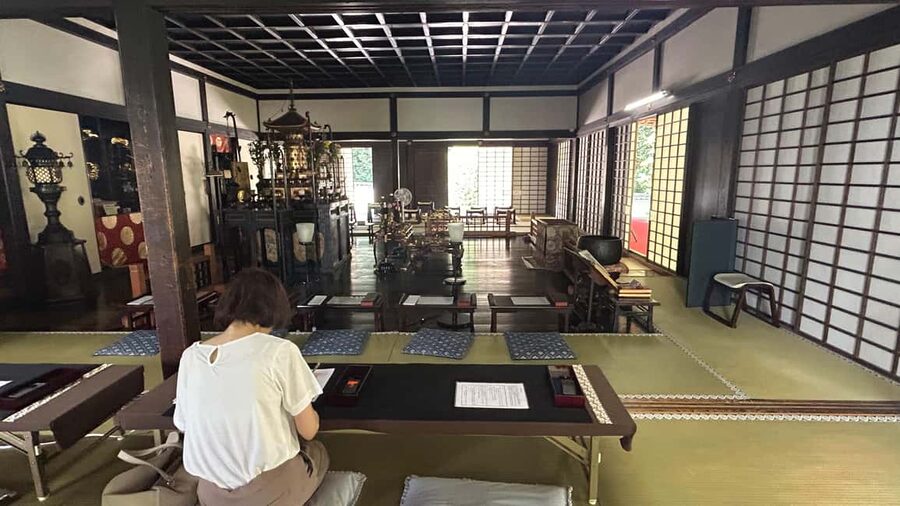
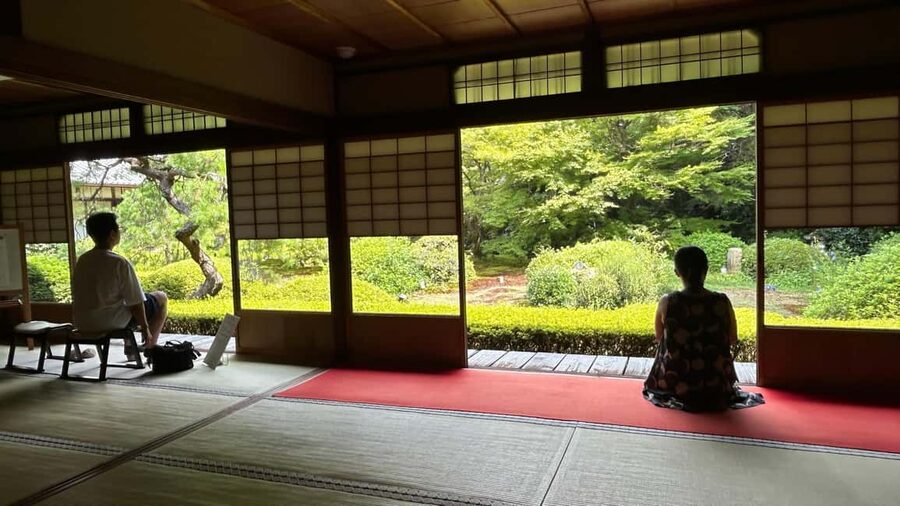
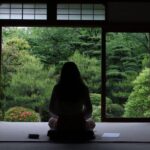
What it feels like in practice is concentration with a gentle rhythm. You sit in a cozy, peaceful space, with incense in the air and nature sounds drifting by—birdsong is one example mentioned as part of the setting. If your Kyoto itinerary has been packed with bright temples and loud crowds, shakyo gives you the opposite: a quieter kind of engagement.
What to wear and bring
- Wear something comfortable for sitting quietly.
- Skip bulky items; you can’t bring luggage or large bags.
- Leave pets, strollers, and baby carriages at home—those aren’t allowed.
Photography may be limited inside certain areas, so don’t plan on documenting every minute. Treat it more like time spent learning, not content collecting.
Matcha and seasonal wagashi in the temple garden
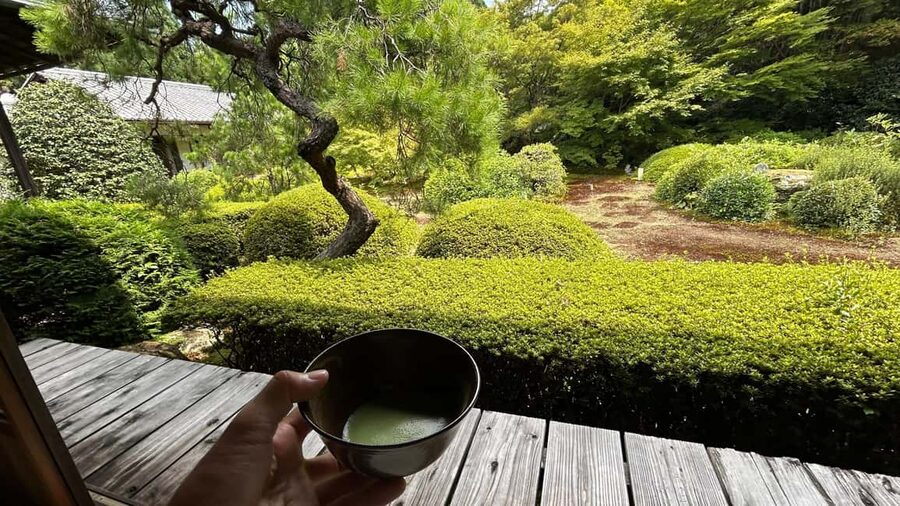
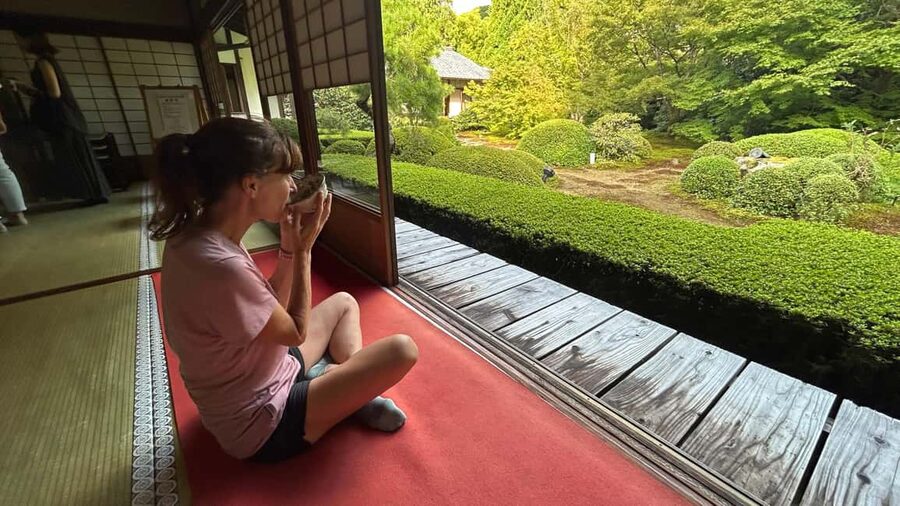
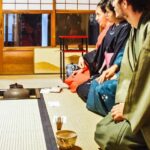
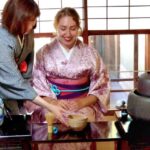
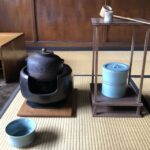
After shakyo, you transition from writing to tasting. You’ll get freshly prepared matcha green tea, paired with seasonal wagashi (Japanese sweets). The exact sweets can vary by season, but the idea stays the same: light, delicate sweetness after focused practice.
The matcha moment works because it’s timed right. If you’re wired from travel, the taste and warmth help bring your body back to the present. And since you’ll be enjoying it while looking out at the Japanese garden, you get a visual reset too.
This part is also a value win. A lot of tours toss you into a shop and call it culture. Here, the food and drink are part of the ritual flow: practice first, then tea and sweets, in a place designed for serenity.
Guided temple visit: learning without turning it into a lecture
Once you’re settled into the temple experience, you also get a guided tour of the historic site. That includes context about Kyoto’s Buddhist culture and the significance of the temple within Japan’s heritage.
The guide also brings the garden and surroundings into the story. You’ll have a photo stop and sightseeing time in connection with the temple visit, so it’s not only sitting indoors during your writing practice. The balance is useful: you get time to look, time to learn, and time to slow down.
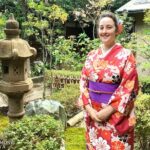
Sennyu-ji is also where the aesthetic matters. The garden is designed to create harmony and calm, and the guided commentary helps you see it as more than a pretty backdrop. Even if you don’t think you understand Japanese gardens yet, you’ll likely start noticing the choices—how the layout supports quiet viewing and reflection.
Sit for another bowl of matcha in a Kyoto tea house

Meeting logistics: skip-the-line and what to expect from the guide
This is a small group—limited to 10 people—which changes the feel immediately. It tends to make the guide’s attention more practical. Questions are easier to answer, and you’re not stuck waiting while a big crowd shuffles through.
You also get skip-the-line access through a separate entrance. In Kyoto, that can be a real sanity saver. Even a short delay can throw off your calm mood, especially right before a quiet activity. Here, the format is built to help you arrive in the right frame of mind.
Language is English, so you won’t be guessing what you’re supposed to do during shakyo. Just follow the cues, and remember: the goal is mindfulness through repetition, not performance.
Price and value: what $35 buys you in Kyoto terms
$35 per person is surprisingly solid here because it bundles multiple cost centers into one ticket:
- admission to the historic temple
- guided tour with cultural context
- shakyo session with provided materials (brushes, paper, and ink)
- matcha green tea
- seasonal wagashi
Many Kyoto experiences charge separately for entry fees and then add an activity fee on top. This one folds those pieces together. You’re paying for an experience that’s equal parts guided learning, hands-on practice, and a tea-and-sweet break in a calm setting.
The best way to think about value: you’re not just buying access to a temple. You’re buying time to slow down and do something you can’t easily replicate on your own during a busy day of sightseeing.
Who this tour suits best
This tour is ideal if you want a break from fast-paced temple hopping. If your Kyoto days include long walks and crowded highlights, shakyo and matcha is a nice counterweight.
It also suits you if you like structured calm. You don’t have to plan what to do once you’re at the temple. The activity has a start, a process, and a finish—writing first, then tea and sweets, then sightseeing with guidance.
Who should skip it?
- Children under 10 years (not suitable)
- People with mobility impairments and wheelchair users (not suitable)
- Anyone who needs lots of standing and moving breaks during the quiet portion
- If you rely on bringing a stroller, large luggage, or a pet, this won’t work
Practical etiquette and small gotchas
In sacred spaces, keep the tone respectful. You’re in a historic temple setting, so behave accordingly and keep your voice down. Also remember that photography may be limited in certain areas to preserve the atmosphere. Assume you’ll be able to take some photos, but don’t count on filming or shooting everywhere.
Also, plan your clothing like you’re going to sit. The shakyo session usually takes a full chunk of time (60–90 minutes), and you’ll be happier if you’re not fidgeting the whole time.
Finally, go in with a slightly patient mindset. Brushwork and copying take longer than you think, and that’s part of the point. If you fight the pace, you’ll miss the calm.
Should you book this Kyoto shakyo and matcha experience?
If you want one Kyoto activity that feels quieter, more personal, and more hands-on than standard sightseeing, I think you’ll like this. The combination of shakyo (with supplies provided) plus matcha and seasonal wagashi in a garden setting is a smart use of your time—especially if your itinerary has been heavy.
If you need accessibility support, you should look for another option since it’s not suitable for mobility impairments or wheelchair users. And if you hate sitting still, this experience will feel more like an obligation than a rest.
FAQ
Where do I meet for the tour?
Meet at the East Gate of Keihan Station. Look for the guide with a yellow fluorescent band on their bag for easy recognition.
What’s the total duration?
The experience runs about 150 minutes.
How long is the shakyo session?
Shakyo usually takes about 60–90 minutes, depending on your writing speed.
What’s included in the price?
You get the shakyo session (with brushes and paper provided), matcha green tea, seasonal wagashi, admission, and a guided tour with insights into Kyoto’s history and cultural heritage.
Is the tour in English?
Yes. The live tour guide speaks English.
Do I need to bring supplies for shakyo?
No. All materials for shakyo, including brushes and paper, are provided, and ink is used as part of the session.
Is skip-the-line access included?
Yes. You enter through a separate entrance to skip the line.
Is photography allowed everywhere?
Photography may be limited inside certain temple areas to preserve the atmosphere.
Is this tour suitable for kids and strollers?
It’s not suitable for children under 10. Baby strollers and baby carriages are also not allowed.
More Gardens and Quiet Corners

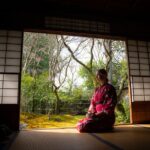
One More Bowl of Matcha

More Kyoto Temples and Shrines
Just added: more Kyoto tours to browse








Kyoto Temple & Shrine Tours, compared.
 ★ 4.9Tea Ceremony Ju-An at Jotokuji TempleFrom $293,207 reviews
 ★ 4.8Arashiyama Bamboo, Temple, Monkeys, or Secret Sake BreweryFrom $87886 reviews
 ★ 5.0Arashiyama Bamboo Forest, Monkeys, Matcha & Temple TourFrom $53759 reviews
 ★ 4.4Osaka/Kyoto: Arashiyama, Nara & Fushimi Inari Shrine w/LunchFrom $61754 reviews
 ★ 4.7Imperial Palace & Nijo Castle Guided Walking TourFrom $49453 reviews
 ★ 5.0Kyoto Zen Meditation & Garden Tour at a Zen Temple with LunchFrom $110441 reviews
 ★ 5.0Zen Experience in a Hidden TempleFrom $109437 reviews
 ★ 5.0KYOTO Tea Ceremony with kimono near by Imamiya Jinjya ShrineFrom $99343 reviews
Browse the lists this tour appears in