
Reviewed · KYOTO TEMPLE & SHRINE TOURS
Kyoto Off The Beaten Path: Hidden Zen Garden & Magical Shrine
Early Zen in Kyoto beats the crowd rush. This 4-hour route strings together Shimogamo Jinja, Sanjusangendo, and Tofuku-ji at a slower pace, so you can actually look instead of just check boxes. I love the early start that helps you enjoy quiet spaces, and I also like the tight group size (max 8) with an English-speaking local guide. The one thing to consider is that it’s an active walking tour, and the path can be tough if your legs and joints aren’t happy.
You’ll get more out of each site because your guide explains what you’re seeing in plain language—how sacred spaces work, what statues and temples are for, and how Zen thinking shows up in the buildings and gardens. It’s a good mix of spiritual atmosphere and real-world cultural context, the kind that makes Kyoto feel personal.
Because the tour is designed for moderate movement, wear shoes you trust. Plan on comfortable stamina, and keep some patience for the extra entrance fees at the two paid stops.
In This Review
- Key points to know before you go
- Shimogamo Jinja at morning: the UNESCO forest you can breathe in
- Sanjusangendo Temple: 1,001 Kannon statues plus garden calm
- Tofuku-ji and the Zen garden: Rinzai practice you can see
- How the 4-hour timing works (and why it feels worth it)
- Price and value: what the $97.55 covers, and what to budget
- Getting there: meeting at Shichijo Keihan and ending near Tofuku-ji Station
- Who this tour fits (and who should skip it)
- Should you book Kyoto Off The Beaten Path: Hidden Zen Garden & Magical Shrine?
- FAQ
- What’s the tour duration?
- How much does the tour cost?
- What’s included in the price?
- Are temple entrance fees included?
- How much are the entrance fees at the paid stops?
- When does the tour start, and where do I meet?
- Where does the tour end?
- Is the tour physically demanding?
- What if the weather is bad?
- Is there free cancellation?
Key points to know before you go
- 8:00 am start to dodge the worst of the crowds
- Small group size (max 8) for a calmer experience and more guide time
- Shimogamo Jinja is free and worth seeing through the sacred forest approach
- Sanjusangendo’s 1,001 Kannon statues are paired with time to slow down in gardens
- Tofuku-ji includes a paid Zen garden area and a temple built for Rinzai Zen practice
- Entrance fees and drinks aren’t included, so bring cash and plan your hydration
Shimogamo Jinja at morning: the UNESCO forest you can breathe in
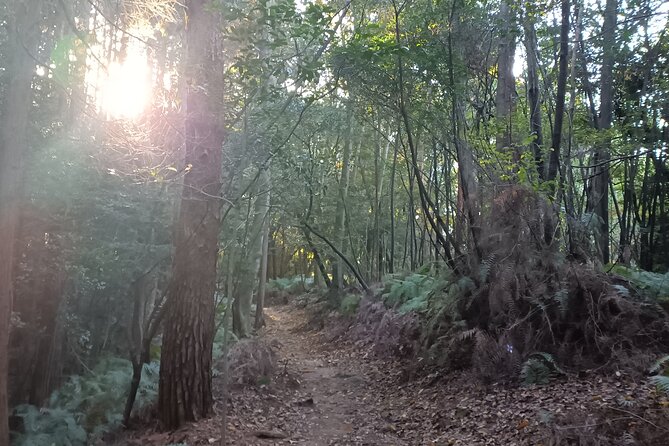
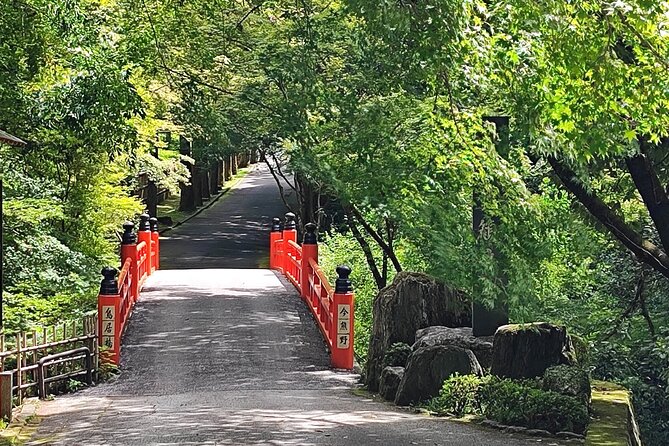
Shimogamo Jinja is a UNESCO World Heritage Site, and that matters less than how it feels when you arrive early. The approach takes you through an ancient sacred forest—cool shade, quiet sounds, and a sense that you’re walking into something protected rather than performing for a photo.
This is where I like the tour strategy the most. Starting here lets the space do its job. Instead of being rushed through a main entrance like a conveyor belt of visitors, you can walk at human speed and notice details: the rhythm of the path, the way the shrine grounds hold the attention, and how the guide connects the site to Japanese belief and tradition.
Also, this stop is free admission, so it’s a straight value win. You still get a full, guided hour here—enough time to absorb the atmosphere and ask questions without feeling late for the next place.
Quick note: This is a forested walk. If you’re sensitive to uneven ground or longer strolling, consider bringing shoes with good grip.
More temples and shrines to slow down in across Kyoto
Sanjusangendo Temple: 1,001 Kannon statues plus garden calm
Sanjusangendo is where Kyoto gets specific. You’re not just seeing temples—you’re seeing a carefully presented collection. The headline is the 1,001 statues of Kannon, the Buddhist goddess of mercy, plus other guardian deities. Even if you’re not a religion-history expert, the sheer scale gives you something to focus on: the uniformity, the repetition, and the way your attention shifts as you move.
Your guide helps you make sense of what you’re looking at while you’re inside. That makes a difference at Sanjusangendo, because the site can feel overwhelming if you don’t know what the images represent. With guidance, you start reading the collection instead of just staring at it.
Then you get a peaceful break outside the main viewing areas, with time in the East Garden Pond and Strolling Garden. I love that this tour doesn’t treat gardens like a decorative footnote. Here, you actually slow down and let your brain reset between big visual moments. It’s also a nice contrast to the dense concentration of statues.
Sanjusangendo’s entrance fee is not included—600 yen per person. The amount isn’t huge, but it’s worth budgeting so you don’t get stuck at the counter.
Tofuku-ji and the Zen garden: Rinzai practice you can see
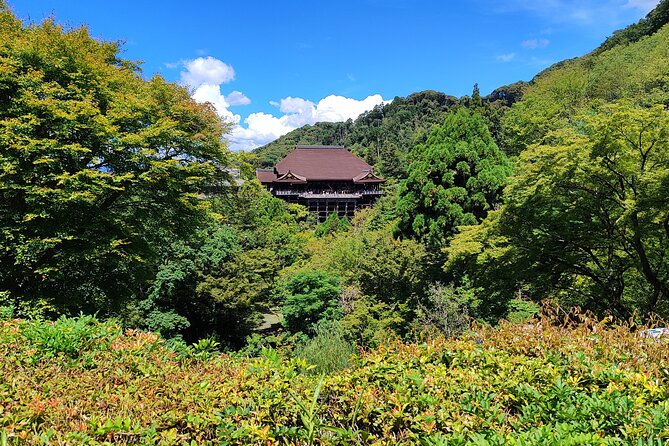
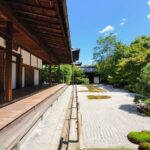
Tofuku-ji is a major Zen Buddhist temple in Kyoto, and it’s especially meaningful because it’s tied to Rinzai Zen. The temple was founded in 1236, and it serves as the head temple of Rinzai Zen Buddhism. That gives the buildings and gardens a purpose beyond decoration: this place has been built to support a long, continuing way of thinking and training.
Your time here is longer—about two hours—which helps. Tofuku-ji isn’t the kind of site where you can sprint through and still get the point. You’ll learn about temple architecture and what makes Zen space feel different: the emphasis on order, rhythm, and controlled views.
The tour also includes the Zen Garden Entrance, which has an extra fee of 500 yen. If you like gardens that are designed for observation—where you can stand, look, and watch how perspective changes—this is the moment. A Zen garden often works like a quiet visual lesson: not loud, not chaotic, and not meant for quick checking.
One practical consideration: this is still a walking tour. Even if the temple parts feel calm, you’ll be moving between areas and spending time standing and observing.
How the 4-hour timing works (and why it feels worth it)
The big win here is pacing. You’re out for roughly 4 hours, from an 8:00 am start, with stops paced so you don’t feel chased. That early departure matters in Kyoto. You’ll catch more stillness, and your guide can spend time on explanations instead of rushing everyone along.
The route is also structured to create a flow:
1) sacred forest at Shimogamo,
2) statue intensity and then garden quiet at Sanjusangendo,
3) temple architecture and Zen garden observation at Tofuku-ji.
That arc keeps the experience from feeling repetitive. You get different types of attention: atmosphere, detail, then considered calm.
Group size is capped at 8 travelers, and that’s not a minor detail. In small groups, your questions land better, and the experience stays less crowded. If you’ve ever been stuck behind someone who keeps moving, you’ll appreciate a format designed to be calmer and more conversational.
Price and value: what the $97.55 covers, and what to budget
The tour price is $97.55 per person, and you get an experienced local guide with good English command. That’s the core value: guided interpretation at multiple sites in a short timeframe.
But you’ll want to budget for entrance fees that are not included:
- Sanjusangendo Entrance: 600 yen
- Zen Garden Entrance (Tofuku-ji): 500 yen
Shimogamo Jinja is free.
So your real total is the base tour price plus about 1,100 yen for the paid entrances. Whether that’s a bargain or just fair depends on how you value time and context. I think it’s fair because the price buys more than access—it buys a guide who helps you understand what each place is and how to look.
If you’re traveling solo and want maximum independence, self-guiding can be cheaper. But if you want less guesswork and more meaning per hour, this price makes sense.
Find another quiet garden to sit with in Kyoto

Getting there: meeting at Shichijo Keihan and ending near Tofuku-ji Station
You start at McDonald’s – Shichijo Keihan, in Higashiyama Ward (229 Hiyoshichō). The end point is Tofukuji Station, with a meeting reference in front of Family Mart Tofukuji Station.
“Near public transportation” is exactly what you want in Kyoto. It makes the tour easier to plug into your day, especially if you’re not staying close to the older temple districts.
Practical tips that help:
- Bring cash for the entrance fees (600 yen and 500 yen).
- Bring water because drinks aren’t included, and the listing asks for no alcohol.
- Wear comfortable, supportive shoes. The tour is described as moderately physical, and walking through shrine/temple grounds can mean uneven surfaces and longer time on your feet.
Who this tour fits (and who should skip it)
This experience is best for you if you want:
- an early start that reduces crowd pressure,
- guided context for religion/temples/architecture in plain language,
- a smaller group pace that feels human, not rushed,
- a mix of sacred forest, statuary, and Zen garden observation.
It may not be for you if you have weak legs or joint problems. The tour is described as not recommended for travelers who struggle with legs and joints, so trust that. In Kyoto, temple paths can include lots of walking and standing.
It’s also a solid pick if you like meaningful cultural education, not just scenic photo stops. The guide is there to connect what you see to Japanese culture, history, and society.
Should you book Kyoto Off The Beaten Path: Hidden Zen Garden & Magical Shrine?
Book it if you want a calmer Kyoto morning with real guidance and a route that actually changes gears from forest to statues to Zen garden. The early start plus max-8 group size are the big reasons. You’ll pay extra for two entrances, but you’re not paying blindly—the route gives you a lot of “look closer” moments in a short window.
Skip or choose carefully if you’re worried about walking endurance. Also consider that drinks aren’t included, so plan your hydration before you start.
If you’re the type who likes to understand what you’re seeing—why Kannon statues matter, what Zen spaces are designed to do, why sacred forests are treated with respect—this is the kind of tour that turns Kyoto into something you remember, not just a checklist you finish.
FAQ
What’s the tour duration?
The tour lasts about 4 hours.
How much does the tour cost?
The price is $97.55 per person.
What’s included in the price?
An experienced local guide with good command in English is included.
Are temple entrance fees included?
No. Sanjusangendo and the Zen garden area have entrance fees that are not included.
How much are the entrance fees at the paid stops?
Sanjusangendo is 600 yen per person, and the Zen garden entrance fee is 500 yen per person.
When does the tour start, and where do I meet?
It starts at 8:00 am. You meet at McDonald’s – Shichijo Keihan.
Where does the tour end?
The tour ends at Tofukuji Station, near Family Mart.
Is the tour physically demanding?
It’s described as suitable for travelers with moderate physical fitness. It is not recommended for travelers with weak legs and joints.
What if the weather is bad?
The tour requires good weather. If it’s canceled due to poor weather, you’ll be offered a different date or a full refund.
Is there free cancellation?
Yes. You can cancel up to 24 hours in advance for a full refund.
More Tour Reviews in Kyoto






More Gardens and Quiet Corners
More Kyoto Temples and Shrines
Just added: more Kyoto tours to browse








Kyoto Temple & Shrine Tours, compared.
 ★ 4.9Tea Ceremony Ju-An at Jotokuji TempleFrom $293,207 reviews
 ★ 4.8Arashiyama Bamboo, Temple, Monkeys, or Secret Sake BreweryFrom $87886 reviews
 ★ 5.0Arashiyama Bamboo Forest, Monkeys, Matcha & Temple TourFrom $53759 reviews
 ★ 4.4Osaka/Kyoto: Arashiyama, Nara & Fushimi Inari Shrine w/LunchFrom $61754 reviews
 ★ 4.7Imperial Palace & Nijo Castle Guided Walking TourFrom $49453 reviews
 ★ 5.0Kyoto Zen Meditation & Garden Tour at a Zen Temple with LunchFrom $110441 reviews
 ★ 5.0Zen Experience in a Hidden TempleFrom $109437 reviews
 ★ 5.0KYOTO Tea Ceremony with kimono near by Imamiya Jinjya ShrineFrom $99343 reviews
Browse the lists this tour appears in