
Reviewed · KYOTO BIKE & E-BIKE TOURS
Kyoto: Night E-Bike Tour Hidden Gems & Backstreets
Kyoto looks different after dark. This Kyoto night e-bike tour takes you away from the brightest-day chaos and into softly lit lanes, temple steps, and backstreet corners on a small-group ride.
I especially like the way it combines Gion-area wandering with real evening calm. It’s not just sightseeing from a bus; it’s peddle-assisted cycling with a guide who threads the sights together. In the same tour, I’ve seen how guides like Ben and Jay can turn a quick stop into a story you actually remember.
One thing to consider: you do need to be comfortable riding an e-bike (and participants must be at least 12, with height over 145 cm). If you have back problems or can’t ride a bike, this tour probably won’t feel good.
In This Review
- Key reasons this night ride works
- Why a Kyoto night e-bike makes sense (especially on a short trip)
- Meet-up at Kyoto Tourist Lounge Gion: what to do before you roll
- Riding route, timing, and the group pace (what it feels like)
- Stop-by-stop: from Miyagawasuji to Gion at night
- Kyoto National Museum exterior: a quick pause with a big payoff
- Kiyomizuzaka and Kiyomizu-dera: the nighttime slope experience
- Yasaka Pagoda photo spot: the classic framing moment
- Maruyama Park break: resetting during the ride
- Toyokuni Shrine, Furukawacho, and the backstreet flavor
- Price and value: $64 for a two-hour Kyoto night circuit
- Who this tour is best for (and who should skip)
- The guides matter: how Ben and Jay set the tone
- Should you book this Kyoto Night E-Bike Tour?
- FAQ
- How long is the Kyoto night e-bike tour?
- Where is the meeting point?
- What’s included in the price?
- Does the tour run in light rain?
- Do I need to be able to ride a bike?
- What are the age and height requirements?
- Is cancellation possible if my plans change?
Key reasons this night ride works
- Small group (up to 6) means you’re not fighting for position at photo stops
- E-bike comfort helps you cover Kyoto’s hills without turning it into a workout contest
- Backstreet timing gives you calmer lanes, especially around classic areas like Gion
- Illuminated stops: Kiyomizuzaka/Ninenzaka slope vibes plus Yasaka Pagoda photo moments
- A break built in at Maruyama Park so your legs and camera gear can breathe
- English-guided history cues that make the sights easier to place as you ride
Why a Kyoto night e-bike makes sense (especially on a short trip)
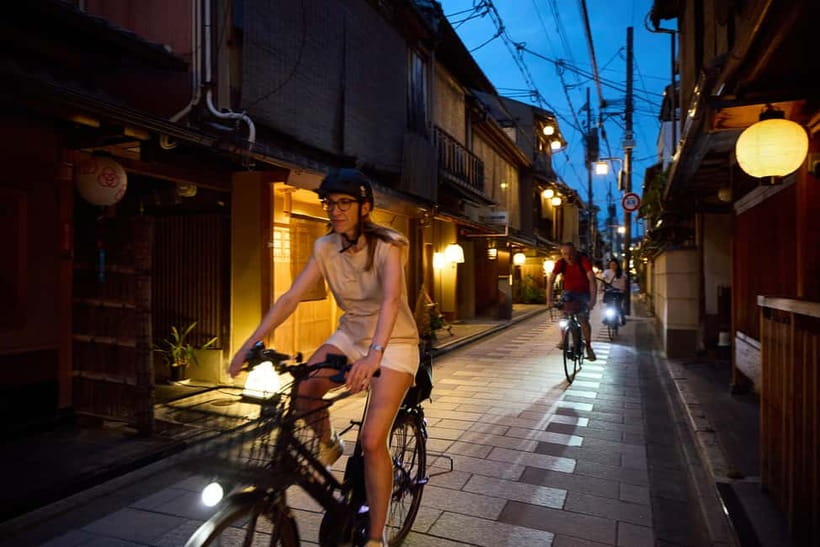
If your Kyoto plan is tight, you usually face a trade-off: either you see a lot during the day and get crowded, or you slow down at night and miss distance. This tour hits a sweet spot. In about two hours, you cover multiple iconic zones—Gion, the Kiyomizuzaka area, and the Maruyama Park side—while the city is cooler and quieter.
The e-bike part matters more than it sounds. Kyoto has slopes, stairs near viewpoints, and neighborhoods where walking all day can wear you out fast. With the electric assist and brief timed stops, you can keep moving without arriving with jelly legs. You’ll still need some pedaling, so it’s not a lazy ride—but it’s also not a bike race.
And night changes the mood. The temple lighting and lantern-like street glow make things feel slower and more human-sized. Instead of rushing from one daytime crowd hotspot to the next, you get that calmer Kyoto rhythm.
More of Kyoto at handlebar pace

Meet-up at Kyoto Tourist Lounge Gion: what to do before you roll
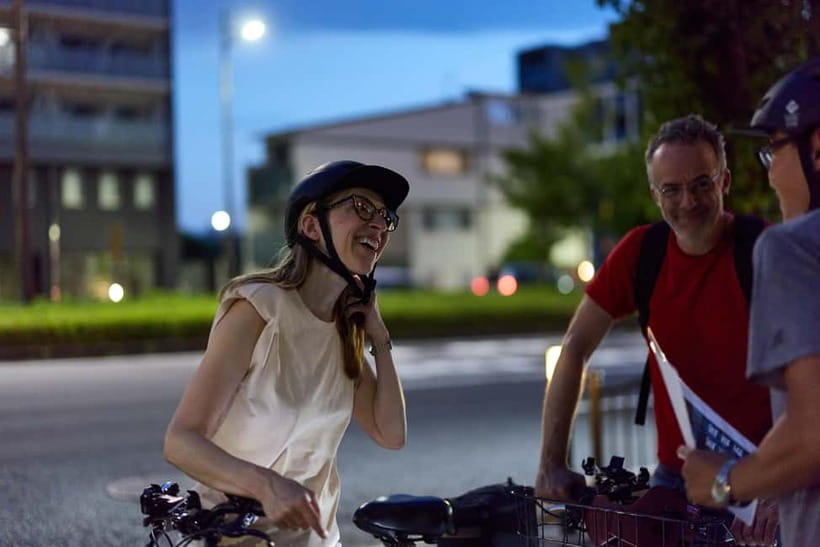
The meeting point is simple: in front of Kyoto Tourist Lounge Gion. Arrive about 10 minutes early so you can get your e-bike and helmet sorted without feeling rushed.
Here’s what I’d do to set yourself up:
- Wear comfortable shoes. Some stops include walking time on pedestrian lanes.
- Bring a calm, flexible mindset. This is a guided ride with brief photo and visit windows, not a slow roaming picnic.
- Plan for cool air. Even though the tour includes electric help, you’ll still be outside for a couple of hours.
If it rains lightly, the tour still goes. Ponchos are available, but you’ll want to be okay with damp streets and occasional slick patches around popular areas.
A fun practical note from the overall tone of the experience: people often find it’s easier than they expect. Even so, you should honestly assess your riding comfort first. The tour requires it, and you don’t want to spend the evening worried about balance.
Riding route, timing, and the group pace (what it feels like)
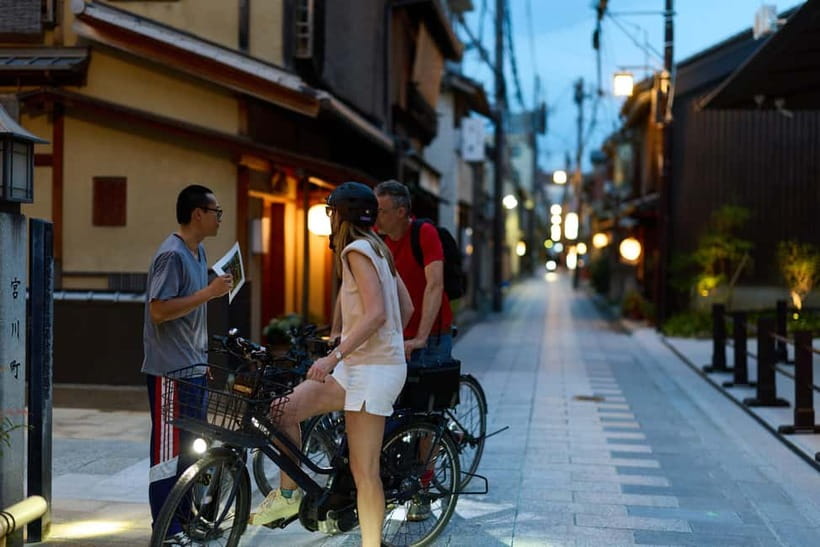
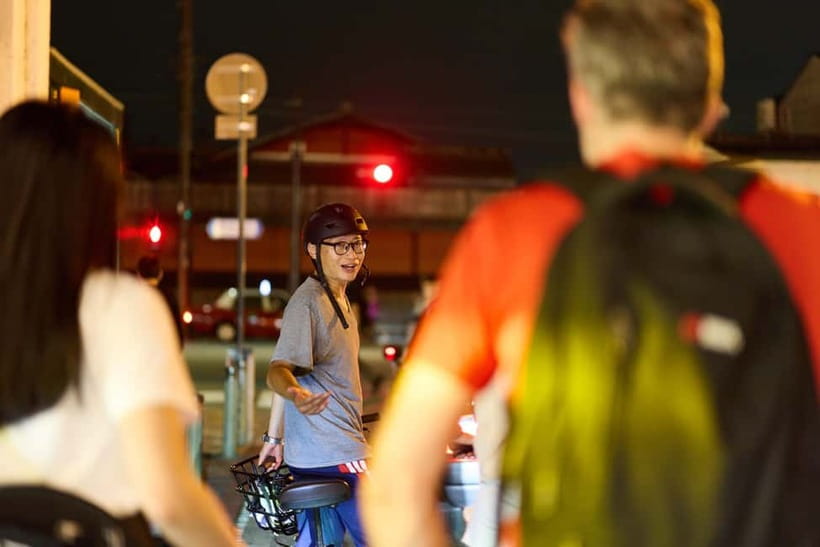
This is a small-group tour capped at 6 participants, which affects everything. You move as a group, but you’re not constantly stopping to let a crowd shuffle through. The guide keeps you together through the ride segments, then gives you short windows to look around, take photos, and get back on.
Because the tour runs about 2 hours, the pacing is tight but fair. You’re not stuck in long transit loops. The guide uses the ride time to point out what you’re seeing and why it matters, which helps you understand the neighborhoods as you pass through.
Also, expect a mix of:
- Cycling segments where you cover distance efficiently
- Photo stops where you park the bike and angle your camera
- Quick visits where you step in and out fast
If you want a tour that feels relaxed and unstructured, this may not be that. But if you want Kyoto at night without turning it into a transport puzzle, it’s a strong format.
Stop-by-stop: from Miyagawasuji to Gion at night
The tour begins right in the Gion orbit. From the start, you’re positioned to see how Kyoto’s classic districts look when the evening crowd softens. The ride includes a segment along Miyagawasuji (with guided orientation time), then a broader sightseeing portion that helps you connect the dots across neighborhoods.
This is where the guide’s style matters. Guides like Ben and Jay have a way of turning a few minutes on the bike into useful context—how areas connect, what to notice in temple lighting, and why certain lanes feel the way they do at night.
You’ll also pass through or near areas connected with Miyagawacho, a neighborhood that feels distinctly Kyoto rather than generic sightseeing. At night, the streets have more space to breathe, and that’s when you can actually notice small details: street rhythm, lighting angles, and how the atmosphere changes block to block.
Kyoto National Museum exterior: a quick pause with a big payoff
One of the scheduled moments is a stop at Kyoto National Museum (exterior). You’re not spending a long time inside here. Instead, you get a brief look that works well at night: you can see the building context and get your bearings without burning time.
Why I like this kind of stop: it gives you a “Kyoto landmark anchor” before you head into the slope-and-temple area. It helps you understand scale. You’re cycling through neighborhoods, but you’re also approaching a religious and cultural zone where the architecture and street layout matter.
If you’re the type who likes to know what you’re looking at—even when you’re only seeing an exterior—this moment pays off.
Other Kyoto tours and experiences to compare

Kiyomizuzaka and Kiyomizu-dera: the nighttime slope experience
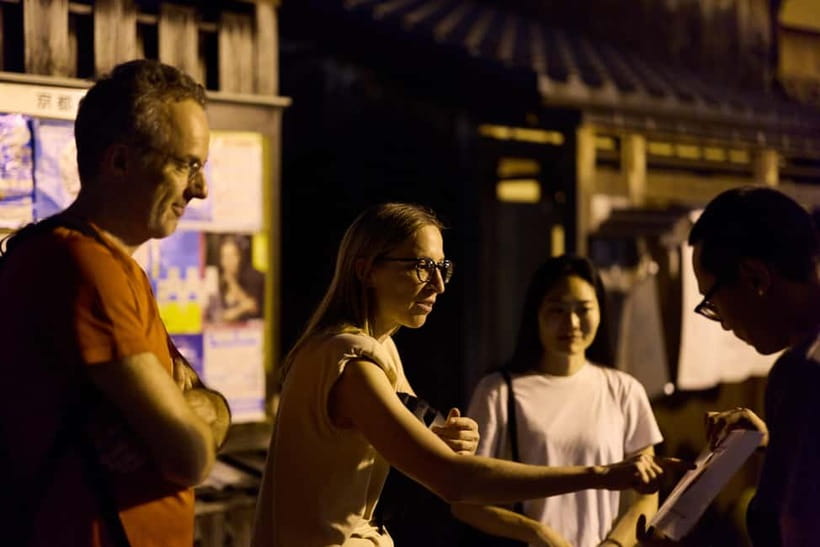
Next up is the Kiyomizu-dera area, including a photo stop and visit time. The timing here is smart. In daylight, the Kiyomizuzaka zone can feel crowded and fast. At night, it shifts. Street lights and temple illumination create a slower, more cinematic mood.
What you’re likely to do:
- Stop, take photos, and check out the approach area
- Get a short visit window that helps you see more than a quick glance
Then you spend time around the classic slope area, including Ninenzaka. Ninenzaka is known for its traditional street feel, and at night that visual identity becomes even clearer. The lanes feel more atmospheric, and you can get pictures that look less like a daytime crowd snapshot.
One consideration: you still need comfortable shoes. Even if you’re on an e-bike for most of the tour, these stops involve real walking on uneven or pedestrian-heavy areas.
Yasaka Pagoda photo spot: the classic framing moment
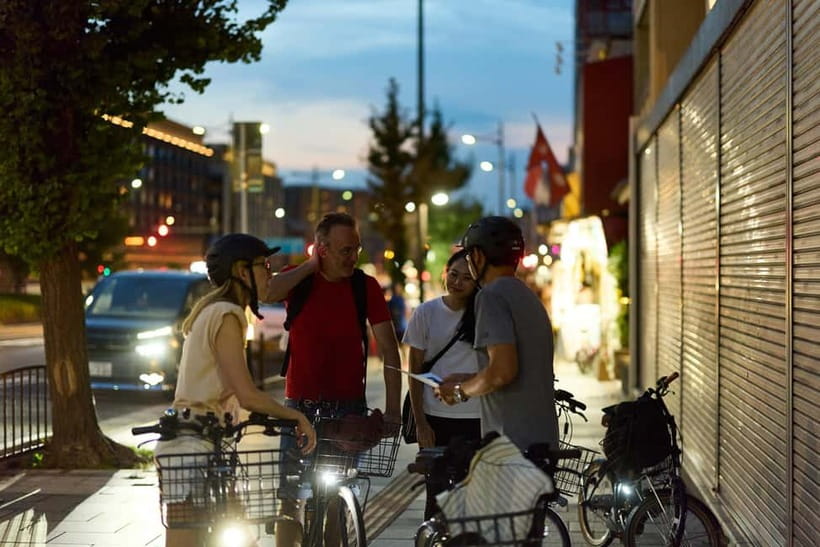
A separate stop is the Yasaka Pagoda photo spot, with time for photos and a short visit. This is one of those Kyoto “frame it and you’re done” moments. If you like taking pictures, this is a good use of your time because the lighting helps the pagoda silhouette stand out.
Practical tip: when you arrive at photo spots, take 30 seconds to scan for the best angle before you start shooting in bursts. Night photos reward calm positioning.
Even if photography isn’t your main goal, this stop is worth it because it’s a landmark you can recognize later when you’re walking around on your own.
Maruyama Park break: resetting during the ride
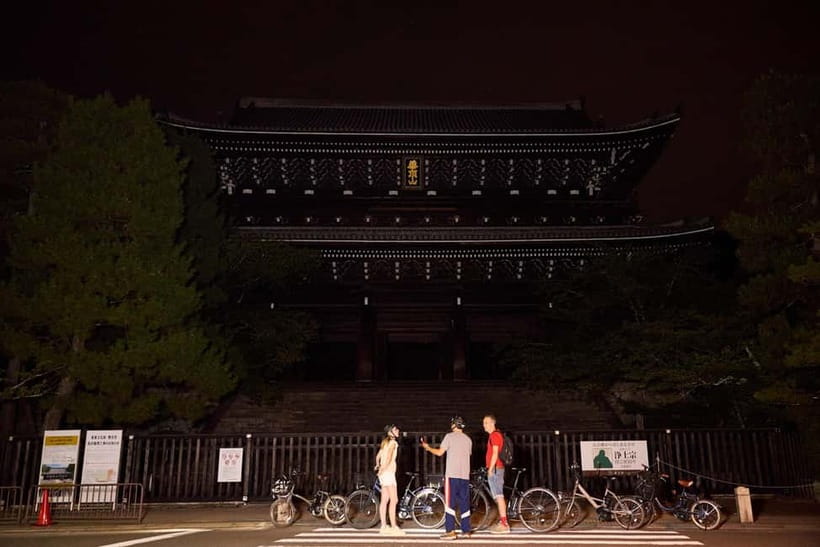
Mid-tour, you get a break time at Maruyama Park, plus a photo stop and additional visit time. This is a genuinely good design choice. After cycling and short stop-walks, a brief pause helps you reset your legs and energy.
Maruyama Park at night tends to feel less hectic than the most famous shrine-and-temple entrances nearby. You get a chance to enjoy Kyoto’s quieter outdoor spaces without constant traffic of tour groups.
This is also a nice moment to:
- Check your camera battery
- Re-adjust layers if you’re getting cool
- Take a breath and let the earlier temple intensity settle
Toyokuni Shrine, Furukawacho, and the backstreet flavor
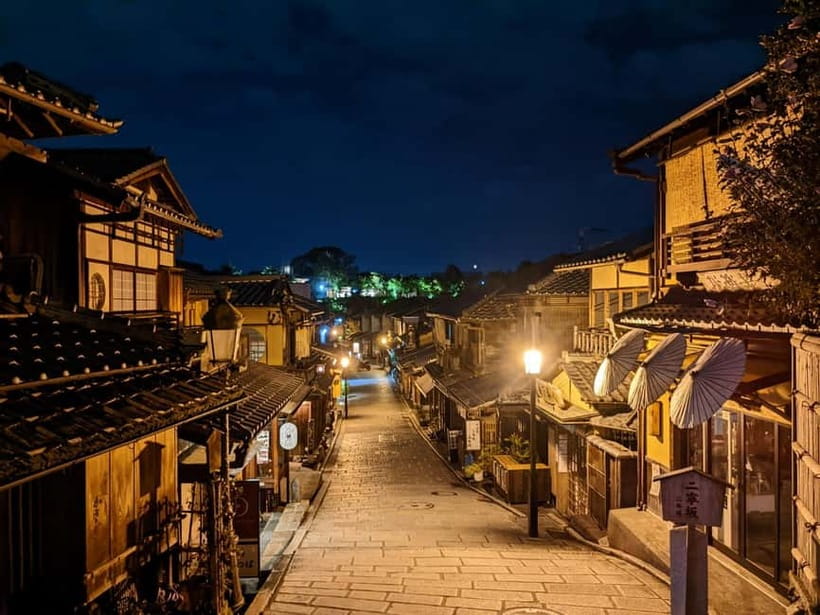
The later parts of the ride are where you feel the “backstreets” idea most clearly. You’ll spend time around Toyokuni Shrine and ride through areas such as Furukawacho Shopping Street, plus additional guided ride segments that tie everything together.
These stops aren’t just “we were nearby.” They’re used to show you Kyoto as a lived-in city, not only as a checklist. Furukawacho shopping streets, for example, feel different after dark—shops and street edges create a layered street scene you can’t always get during daytime crowds.
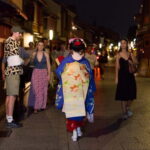
Also, the evening timing can throw up surprises. In the experience’s overall vibe, people sometimes spot geisha in the neighborhood atmosphere. Whether or not you see anything like that, the key is that the evening pace makes it easier to notice what’s going on around you.
Price and value: $64 for a two-hour Kyoto night circuit
At $64 per person for about two hours, this price makes sense because it’s not just “a guide walking with you.” You’re getting:
- E-bike rental
- Helmet
- A live English guide
- Multiple structured stops that would otherwise take planning on your own
If you tried to replicate this yourself, you’d still need to solve the bike rental question, figure out timing, and accept that you’ll probably waste time locating safe routes between all these zones—especially after dark. Here, the guide handles that flow, and the small group format keeps you from getting swallowed by crowds at each stop.
It’s also good value for a couple or solo traveler who wants a guided plan but hates rigid “see it all, no time to think” tours.
Who this tour is best for (and who should skip)
This night e-bike tour is a strong match if:
- You can comfortably ride an e-bike and don’t need a fully hands-free experience
- You want classic Kyoto sights but prefer them at night
- You like short, guided stops with time to take photos and ask questions
- You want a manageable activity with minimal planning for the evening
It’s not the right fit if:
- You have back problems
- You can’t ride a bike
- You don’t meet the basic requirements (minimum age 12, height over 145 cm)
- You’re expecting a slow, mostly on-foot tour with long museum-style pacing
One more real-world note: since there is some pedaling, dress for movement. Not everyone needs sporty gear, but a stiff outfit can feel annoying if you’re constantly adjusting your riding posture.
The guides matter: how Ben and Jay set the tone
The tour’s success hinges on the guide’s ability to balance movement and meaning. The overall experience has highlighted Ben and Jay for being engaging and attentive, with practical, Kyoto-specific explanations that help you understand why you’re stopping where you are.
English guidance also helps. When you know what you’re looking at—especially around temples, slopes, and landmark areas—you get more out of the short visit windows. You’re not just taking pictures; you’re learning enough to connect the sights later.
Should you book this Kyoto Night E-Bike Tour?
If you want Kyoto at night without spending your evening stuck in logistics, yes, this is a smart booking. It’s compact, guided, and designed for the kind of Kyoto experience that feels calmer after dark: Gion-area atmosphere, temple lighting moments, and a real sense of moving through the city instead of just standing at it.
Skip it if you’re not comfortable riding or if your body won’t tolerate bike posture and uneven stop-walks. And if you hate any form of effort at all, check your expectations—this isn’t a fully effortless glide.
If you’re a first-timer, a return visitor, or someone with limited time, this is one of those “you’ll be glad you did it” night activities.
FAQ
How long is the Kyoto night e-bike tour?
It lasts 2 hours.
Where is the meeting point?
Meet in front of Kyoto Tourist Lounge Gion.
What’s included in the price?
You get an e-bike rental, a helmet, and a live tour guide (English).
Does the tour run in light rain?
Yes. The tour proceeds in light rain, and ponchos are available.
Do I need to be able to ride a bike?
Yes. Participants must be comfortable riding an e-bike. The tour is not suitable for people who can’t ride a bike.
What are the age and height requirements?
Minimum age is 12 years old, and height must be over 145 cm.
Is cancellation possible if my plans change?
You can cancel up to 24 hours in advance for a full refund, and there’s also a reserve now & pay later option.
More Tours in Kyoto




More Tour Reviews in Kyoto


More of Kyoto by Bike

Just added: more Kyoto tours to browse








Kyoto Bike & E-Bike Tours, compared.
 ★ 5.0Hidden Kyoto E-Biking tourFrom $1161,843 reviews
 ★ 5.0Bike Tour Exploring North Kyoto plus LunchFrom $1061,087 reviews
 ★ 5.0Arashiyama Bamboo Forest & Hidden Gems Bike Tour (Early Bird)From $106613 reviews
 ★ 5.05 Top Highlights of Kyoto Full Day Bike Tour (E-bike option)From $172511 reviews
 ★ 5.0Full Day Biking Tour Exploring the Best of KyotoFrom $119498 reviews
 ★ 4.8Memory Kyoto E-Bike TourFrom $91297 reviews
 ★ 5.0E-Bike Tours of the highlights of Kyoto!!!From $109291 reviews
 ★ 5.0Afternoon Kyoto Bike Tour: Bamboo Forest, Monkeys & Hidden SpotsFrom $106283 reviews
Browse the lists this tour appears in