
Reviewed · GION & GEISHA DISTRICT TOURS
Kyoto: Maiko Happy Hour at a Historic Machiya
Kyoto’s maiko are hard to catch—this one’s different. You’ll tour a 140-year-old machiya at Tondaya, then watch a maiko lead a tea ceremony and a refined buyō dance, all in a setting that feels very Kyoto. The trade-off: it’s pricey, and if translation doesn’t land smoothly, you can lose some of the charm.
I like that the experience is structured, not random. You start with the townhouse itself (so the arts make sense), then you get performance time, then you get the rare part: friendly interaction, including games and photos with a maiko. One possible drawback to weigh: there’s a chance a geiko is arranged instead of a maiko, depending on availability.
This is a “short, focused, do-it-right” kind of outing. In 2 hours, you’ll go from heritage townhouse details to tea etiquette to dance and then into question time—so come with curiosity, not a big appetite for extras. If you’re mainly hoping for a long party vibe, call it what it is: a cultural happy-hour theme with tea, sweets, and performance.
In This Review
- Key things to know before you go
- Tondaya’s 140-Year-Old Machiya: The Setting Does Half the Work
- How the Maiko Time Works (Including the Rare Photo Window)
- Uji Matcha Tea Ceremony: Calm Etiquette, Real Flavor
- Buyō Dance in a Kyoto Townhouse: Where the Formal Style Fits
- Maiko Party Games and Q&A: The Part You Can Actually Talk Back To
- Price and Logistics: When Value Depends on the Day
- Practical Tips for a Smooth 2-Hour Evening
- Should You Book This Kyoto Maiko Happy Hour?
- FAQ
- FAQ
- How long is the Kyoto Maiko Happy Hour experience?
- Where do I meet for the tour?
- What is included in the ticket?
- Is alcohol included?
- Do I need to wear socks?
- Are wheelchair users able to participate?
- Are there language options for the guide?
- Can I choose a specific performer (maiko vs geiko)?
- Is this experience refundable?
- Are there holiday date restrictions for booking a maiko?
Key things to know before you go
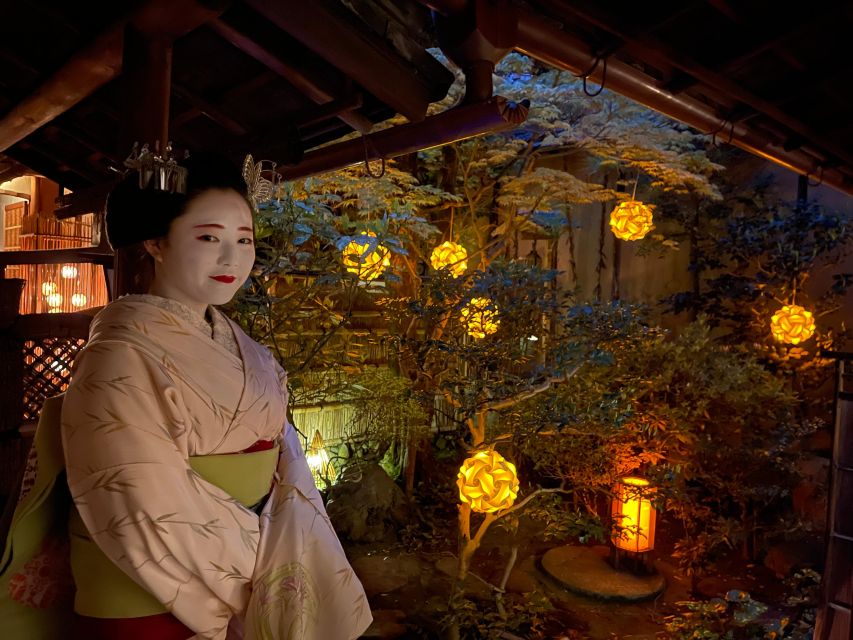
- A 140-year machiya guide first: You’re not just watching a show; you’re learning how the house and the traditions connect.
- Tea ceremony is Uji matcha with sweets: This isn’t a drink-and-go stop; it’s part of the hosted program.
- Buyō performance + classical music: The dance is detailed and formal, and the music matters.
- Rare maiko photo opportunity: Maiko usually can’t take photos with the public, so the photo time is the standout practical perk.
- Translation quality can make or break the experience: English support exists, but plan for the occasional slowdown.
- Geiko may replace maiko: If maiko availability changes, you’ll still get the core program.
Tondaya’s 140-Year-Old Machiya: The Setting Does Half the Work
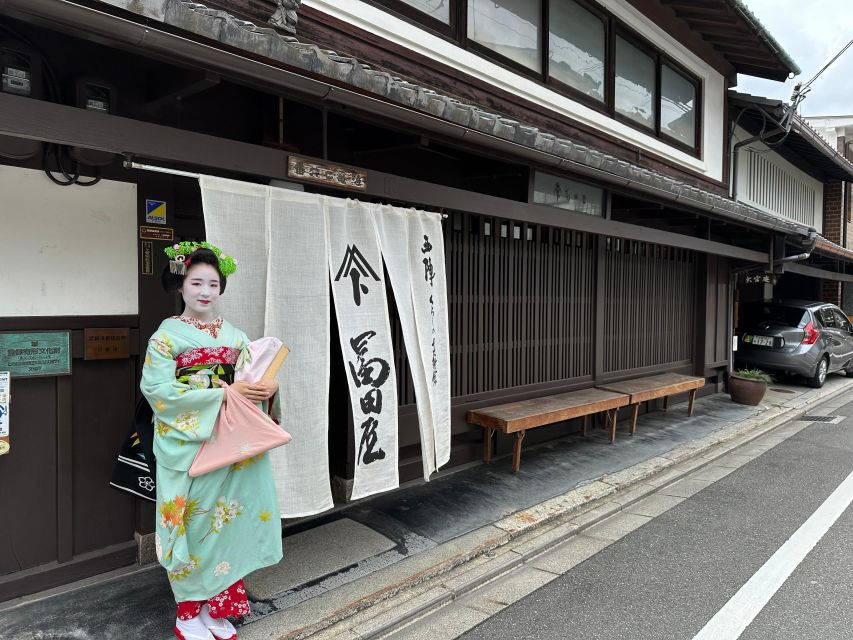
The experience begins at Tondaya, a 140-year-old machiya (a traditional Kyoto wooden townhouse) that’s been recognized as a culturally significant landmark. Your guide walks you through the place, sharing stories and pointing out historically valuable details. This matters because you’re not just trying to see maiko culture—you’re learning the physical background that shaped it.
Machiya aren’t theme-park buildings. They’re lived-in architecture in concept, with a layout built around light, movement, and privacy. Even if you’re not fluent in the design language, you can feel why arts like tea and dance fit so well here. The wood, the proportions, and the quieter pacing help you slow down for the ceremony and performance later.
Practical note: you’ll need socks (no stockings). That’s not a random dress code. It’s usually about clean floors and comfort on traditional surfaces. Wear socks you actually don’t mind walking in for the full 2 hours.
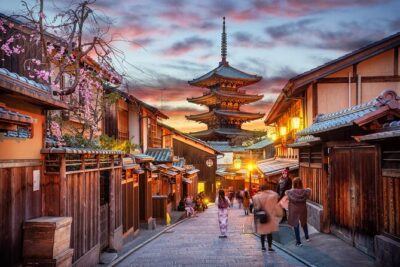
More evenings along the lantern-lit lanes of Gion

How the Maiko Time Works (Including the Rare Photo Window)
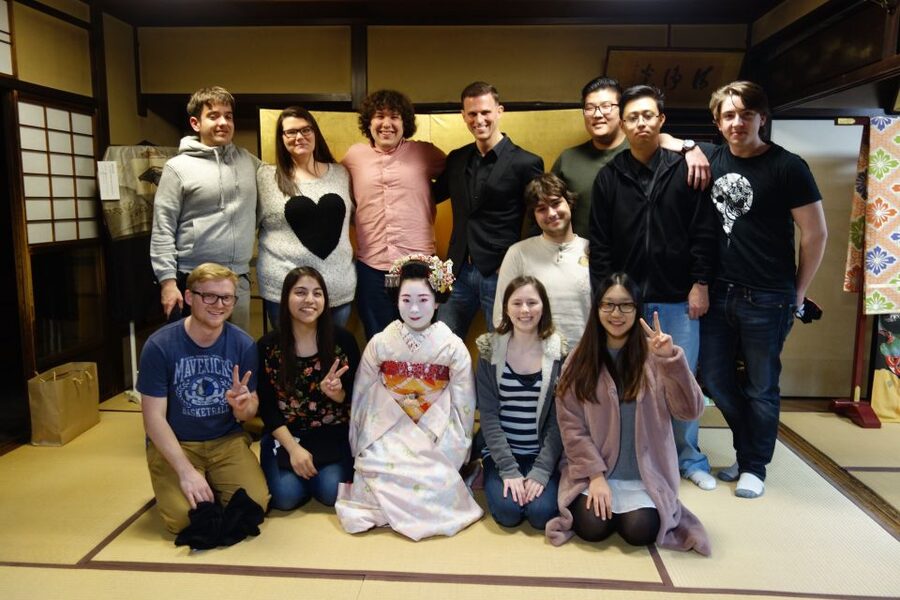
After the machiya tour, you meet the maiko who hosts the program. Maiko are in training and aren’t commonly available for casual public interaction. That makes this portion genuinely special: you get close, you get conversation, and you get commemorative photos.
The program builds this in steps. First, the maiko appears as the host for the tea ceremony. Later, after the buyō dance performance, you shift into maiko party games. That’s when the vibe usually turns most personal—because the maiko explains the games, you try them, and you can ask questions about maiko culture.
Then comes the part many people plan their whole trip around: photo time. Maiko are not normally permitted to take photographs with the public, so you shouldn’t treat this as a quick snapshot. If photos are important to you, make the most of it while you have the chance. It’s one of those rare cultural access moments where good timing is the difference between a nice memory and a missed opportunity.
One more caution: the experience says that depending on availability, a geiko may be arranged instead of a maiko. If you booked with a strict maiko-only expectation, you’ll want to keep that in mind before you go.
Uji Matcha Tea Ceremony: Calm Etiquette, Real Flavor
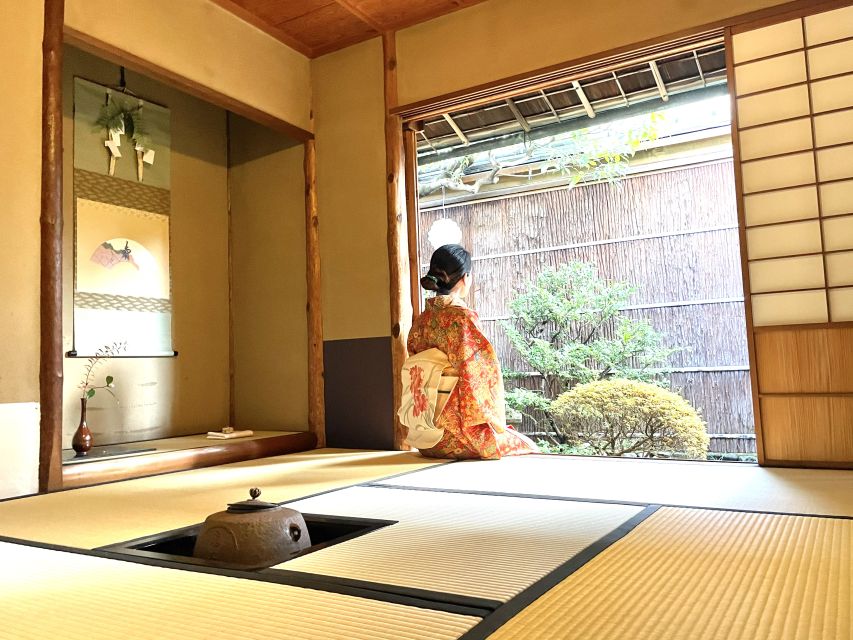
The tea ceremony is hosted by the maiko. You’ll be served Uji matcha along with Japanese sweets. That’s an important detail for value: you’re not just watching tea as a concept—you’re experiencing it as a hosted ritual.
Why this matters: matcha isn’t one-size-fits-all. Even within the same general category, the taste can differ based on grind and preparation, and Uji is one of the names Kyoto folks associate with quality. Pair that with sweets, and you get a practical “why Kyoto does this” moment. Tea becomes more than a beverage; it becomes a way to structure time and attention.
Also, the “happy hour” theme does not mean alcoholic drinks. Alcoholic drinks are listed as not included. So if you want a boozy night out, this isn’t that. What you’re buying is calm, craft, and culture—delivered on schedule.
Buyō Dance in a Kyoto Townhouse: Where the Formal Style Fits
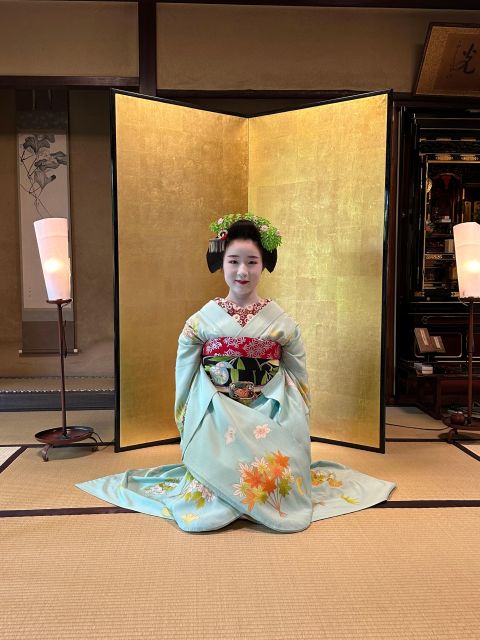
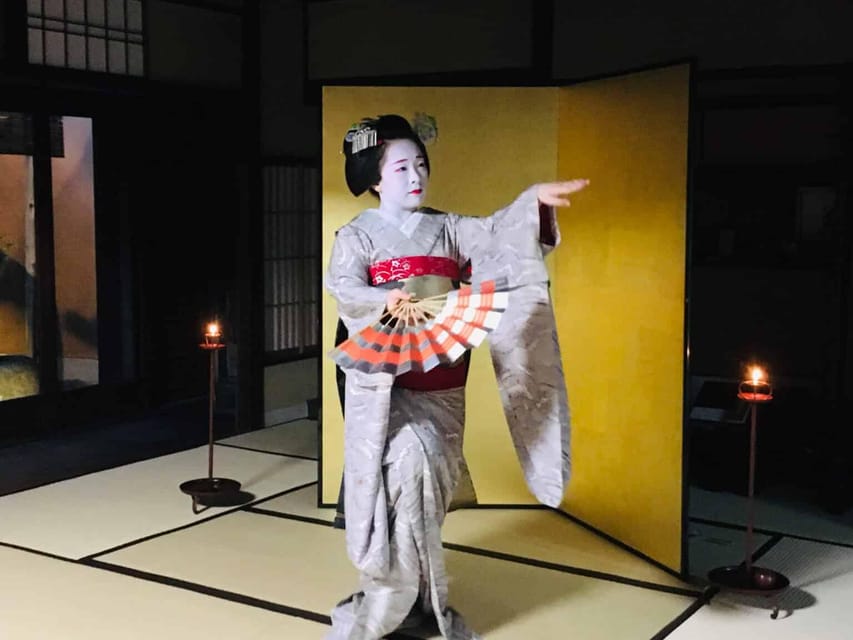
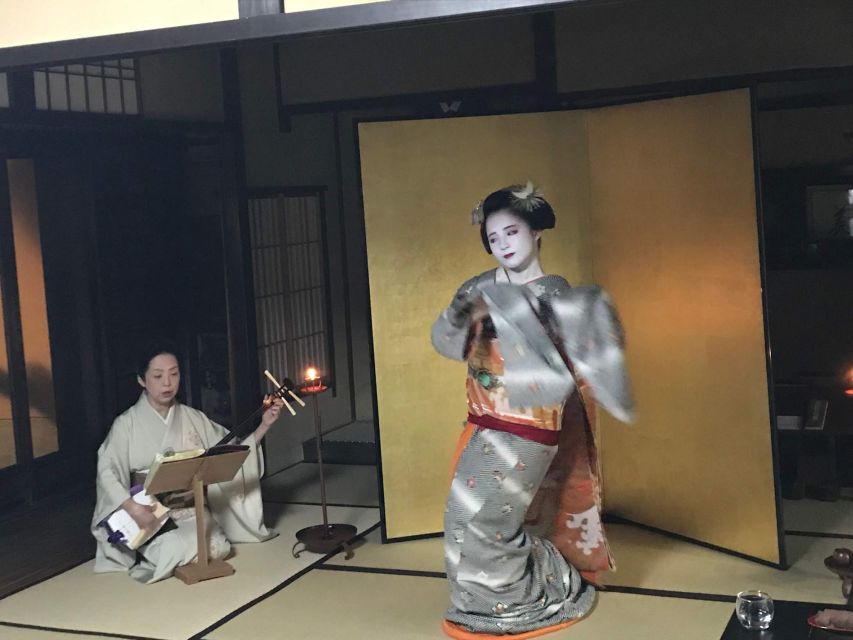
Next up is a buyō performance—a refined traditional Japanese dance—accompanied by classical music. Buyō is known for its controlled gestures and stylized movement. Watching it in a machiya changes how it lands. The room feels built for attention: close enough to see nuance, quiet enough that the performance doesn’t compete with a crowd-thrumming atmosphere.
If you’re wondering what to look for, watch how the dance uses pause and line. The still moments are part of the choreography, not dead time. And the classical music does more than provide background. It cues the rhythm of the dance so you can feel how the parts connect.
This is also where translation matters. The program includes lessons on Kyoto and maiko culture, and if you understand what the guide is explaining, you’ll get more out of the performance. If the English support isn’t smooth on the day, the dance still works, but the cultural “meaning layer” may be harder to catch.
Maiko Party Games and Q&A: The Part You Can Actually Talk Back To
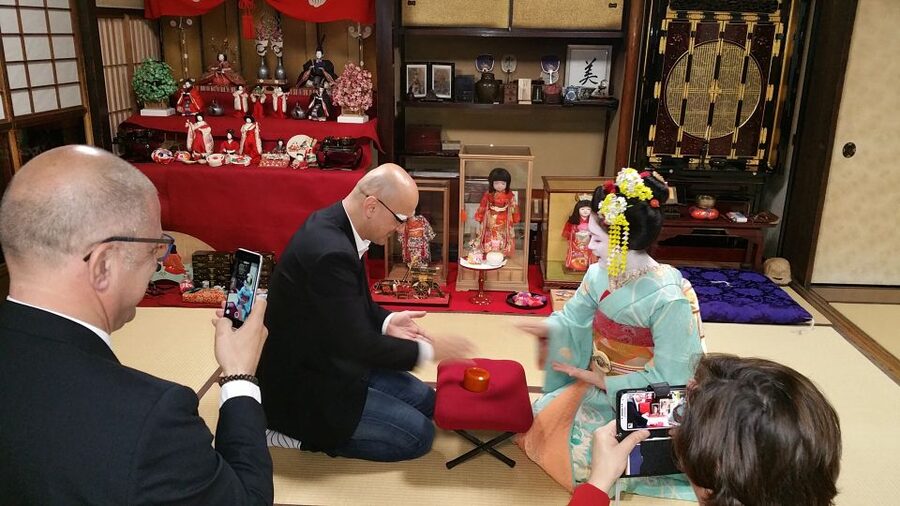
After the dance, you try traditional maiko party games. The maiko explains how each game is played, and you join in together. This is a great stretch of time because it turns you from observer into participant.
The best part here is the question time. You can ask about maiko culture, and the maiko and/or staff can answer based on what they’re comfortable sharing. For many people, the value isn’t just in learning facts. It’s in learning how the culture is described by someone currently living its details.
This is also where you’ll learn what parts of the experience are meant to be playful versus formal. Games sound casual, but in traditional contexts they often teach social rhythm, manners, and interaction style. When the explanation lands well, you’ll feel like you’re stepping into a small slice of Kyoto social life rather than attending a one-way show.
Other Kyoto tours and experiences to compare

Price and Logistics: When Value Depends on the Day
Let’s talk money honestly. The listed price is $709 per person for a 2-hour experience. That’s not cheap for Japan, and the reviews you’ll see online suggest people notice the same thing: some find it good value because you’re getting (1) the machiya tour, (2) tea ceremony with matcha and sweets, (3) buyō dance, (4) games, and (5) the rare photo access. Others feel it’s overpriced, especially if the experience feels fast or if they expected more food or longer time.
My practical take: compare what you’re paying for to what you’d get on your own.
- You’d need a guided machiya tour.
- You’d need a hosted tea ceremony.
- You’d need access to a maiko program with performance and interaction.
- You’re also paying for the “rare access” piece, especially photos.
Now the other factor is translation and pacing. The program notes that not all staff members speak English and an interpreter may be arranged, and a translation device may be used when necessary. Translation issues are the classic way a cultural event can feel awkward. If you want smooth understanding, consider this: go in with a friendly attitude, and don’t treat it like a lecture where every sentence must be perfect. The performances and ceremony still carry weight.
Booking rules also affect planning. Reservations require a minimum of two participants, and the cancellation policy is strict (non-refundable), with a cutoff that can change the refund outcome if you cancel far enough in advance. If dates are firm for your Kyoto trip, book confidently.
Practical Tips for a Smooth 2-Hour Evening
Here’s how to make it go smoothly without stress.
Plan to arrive on time. The experience expects you to be punctual, and it’s only 2 hours, so delays can compress the program.
Bring socks and avoid stockings. This is one of those Kyoto details that saves you from last-minute problems. If you’re used to visiting temples in shoes, you’ll want socks that feel comfortable once you’re inside.
The language support includes Japanese, English, and Chinese. English support is available, but depending on staffing that day, a translator may be arranged and a translation device may be used when necessary.
If you’re traveling in late December, pay attention to seasonal limits. Tondaya is closed from December 31st to January 1st, and appointments with a maiko can’t be reserved from December 29th to January 10th.
Accessibility matters too: the experience is not suitable for wheelchair users.
Meeting point is Tondaya-Nishijin Japanese Cultural Experience Museum. If you’re using a map app, double-check you’re at the right entrance—once you arrive, you don’t want to spend your short time hunting around.
Should You Book This Kyoto Maiko Happy Hour?
Book it if:
- You want maiko access that’s normally not available, especially the photo window.
- You like structured cultural experiences: townhouse tour, tea, dance, then games.
- You’re traveling with someone who’d enjoy matcha, performance, and learning in a compact time block.
Skip it (or at least soften expectations) if:
- You’re extremely sensitive to translation quality. If you need every detail explained flawlessly, you may be disappointed.
- You’re looking for a long meal experience or lots of extra food. The program includes tea and sweets, and alcoholic drinks aren’t part of it.
- The price feels hard to justify for a short evening. $709 per person is a serious spend in Kyoto, and the experience has to land well for it to feel worth it.
My final advice: if maiko culture is a must-do for your Kyoto trip and you can handle the fact that it’s a tight 2 hours, this is a very memorable way to do it—especially for the machiya setting and the rare chance to connect in person.
FAQ
FAQ
How long is the Kyoto Maiko Happy Hour experience?
It runs for 2 hours, and starting times depend on availability.
Where do I meet for the tour?
You meet at Tondaya-Nishijin Japanese Cultural Experience Museum.
What is included in the ticket?
You get a guided tour of the machiya, a maiko dance performance, party games, a tea ceremony, photography opportunities, and a lesson on Kyoto/maiko culture.
Is alcohol included?
No. Alcoholic drinks are not included.
Do I need to wear socks?
Yes. You must wear socks, and you should not wear stockings.
Are wheelchair users able to participate?
No. The experience is not suitable for wheelchair users.
Are there language options for the guide?
The experience offers Japanese, English, and Chinese. An interpreter may be arranged, and a translation device may be used when necessary.
Can I choose a specific performer (maiko vs geiko)?
You can’t guarantee it. Depending on availability, a geiko may be arranged instead of a maiko, and preferences cannot be accepted.
Is this experience refundable?
It’s non-refundable. There is a strict policy, with cancellations made at least ten days before the scheduled appointment having a better chance under the stated rules.
Are there holiday date restrictions for booking a maiko?
Yes. The site is closed from December 31st to January 1st, and you cannot reserve an appointment with a maiko from December 29th to January 10th.
More Historical Tours in Kyoto
More Tour Reviews in Kyoto

Still in Gion? Keep Going


Just added: more Kyoto tours to browse



Gion & Geisha District Tours, compared.
 ★ 4.7Kyoto Geisha Walking Tour: Gion District & Hidden GemsFrom $253,273 reviews
 ★ 4.9Gion Magical Night Walking Tour with Geisha TriviaFrom $242,393 reviews
 ★ 4.7Gion Geisha District Walking Tour – Stories of GeishaFrom $202,187 reviews
 ★ 4.9Best of Kyoto: Gion, Geisha, Pagodas & CobblestonesFrom $242,058 reviews
 ★ 4.5Night Walk in Gion: Kyoto’s Geisha DistrictFrom $212,003 reviews
 ★ 5.0Kyoto Night Foodie Tour in Gion (9+ dishes + 6 Sake tastings)From $1631,762 reviews
 ★ 5.0Kyoto Gion Geisha District Walking Tour – The Stories of GeishaFrom $251,441 reviews
 ★ 5.0Kyoto Gion: 2-Hour Geisha Culture & History Walking TourFrom $231,186 reviews
Browse the lists this tour appears in