
Reviewed · FUSHIMI INARI SHRINE TOURS
Kyoto Magical Night English Tour: Gion & Fushimi Inari Shrine
Torii gates glow long after sunset. This Kyoto night walking tour connects the iconic Fushimi Inari torii pathway with the quieter, lantern-lit lanes of Gion, guided in English with real context (not just stop-and-pose). I also like that you get professional photos taken during the walk, so your evening doesn’t turn into a camera scramble. The one tradeoff is simple: it’s a walking experience, so comfortable shoes and a moderate fitness level matter.
You’ll move at an evening-friendly pace for about 2 hours 30 minutes, using public transportation and then lots of on-foot time. Even better, the group is small and private, so your guide can explain things clearly and adapt if someone needs a breather.
In This Review
- Kyoto Night Highlights That Make This Tour Worth Your Time
- Entering The Glowing Torii: Fushimi Inari at Night
- Hanamikoji and Gion: How to See Old Kyoto Without the Daytime Crush
- Yasui-Konpiragu: Praying for Broken Relationships to End
- Yasaka Pagoda Area: The Scale of Hokanji (Yes, Without Nails)
- Sannenzaka and Ninenzaka: Stone Steps, Old Shops, and Time Travel Energy
- Nene-no-Michi: A Serene Named Path That Connects the Dots
- Yasaka Shrine: The Final Glow and the Meaning Behind It
- Price and Logistics: Is $26.43 Actually Good Value?
- The Guide Makes It Click: Explanations, Photo Timing, and Real Help
- Who This Kyoto Night Walk Fits Best
- Should You Book This Kyoto Magical Night Tour?
- FAQ
- How long is the Kyoto Magical Night English Tour?
- Where does the tour start and end?
- What is the price per person?
- What’s included in the tour price?
- Are temple and shrine admissions included?
- What’s not included?
- Is this a private tour?
- Do I need to use public transportation?
- What should I do if I’m late for the meeting point?
- Is free cancellation available?
- What kind of fitness level do I need?
Kyoto Night Highlights That Make This Tour Worth Your Time
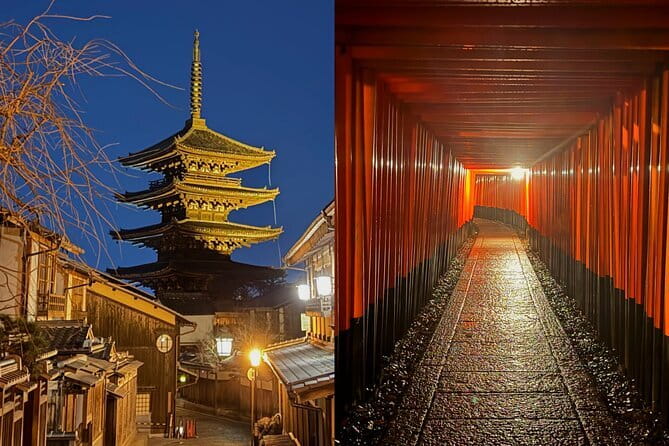
- Fushimi Inari after dark: those red torii feel calmer and more dramatic when the streets quiet down
- Gion at evening light: Hanamikoji and Gion streets give you a classic Kyoto scene with less daytime crowd pressure
- Hands-on shrine context: you’re coached on how to pay respects, not just what to see
- Photo help built in: professional shots during the tour means fewer awkward self-timer moments
- Key stops packed logically: Yasui-Kono-pira, the Yasaka area, and the old-street lanes connect in a smooth walking flow
Entering The Glowing Torii: Fushimi Inari at Night
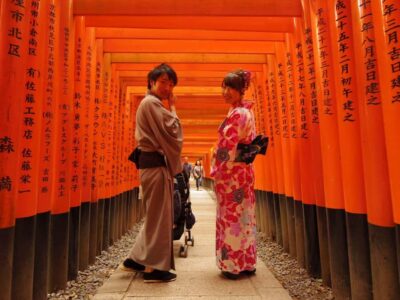
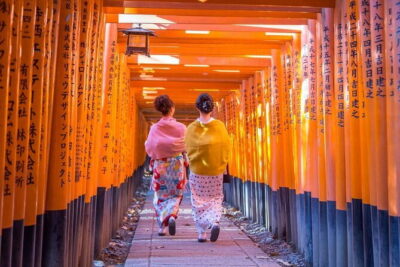
Fushimi Inari-taisha is the big one in Kyoto. You’ll walk in the evening beneath thousands of vivid red torii gates that form pathways up Mount Inari. The shrine is dedicated to Inari, the god of rice and prosperity, so it isn’t just pretty geometry. It’s a living religious space with a very specific atmosphere, especially when the day-trippers thin out.
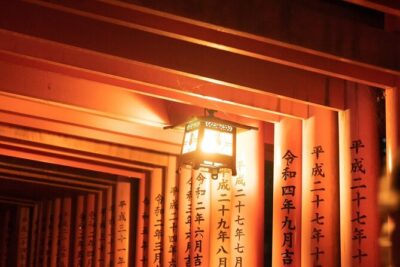
At night, the gates feel more like a corridor than a landmark. That matters because Fushimi Inari is famous for getting busy. When you come in with a guide, you’re not just trying to guess where the best photo angle is. You’re also learning the meaning behind what you’re seeing, and your guide helps you figure out how to behave respectfully as you move through the shrine.
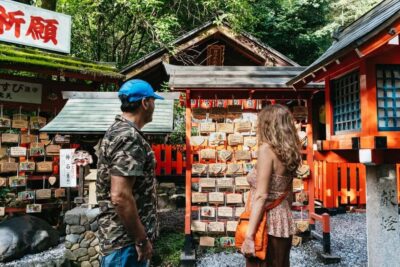
One practical tip I’d take from past guests: bring some coins for wishing. Not because it’s required, but because it’s a nice chance to participate in the shrine’s rituals in a low-pressure way while you’re there.
What to watch for: even though you’re walking, the ground can be uneven near shrine areas. If you’ve got arches that complain easily, plan to wear supportive shoes.
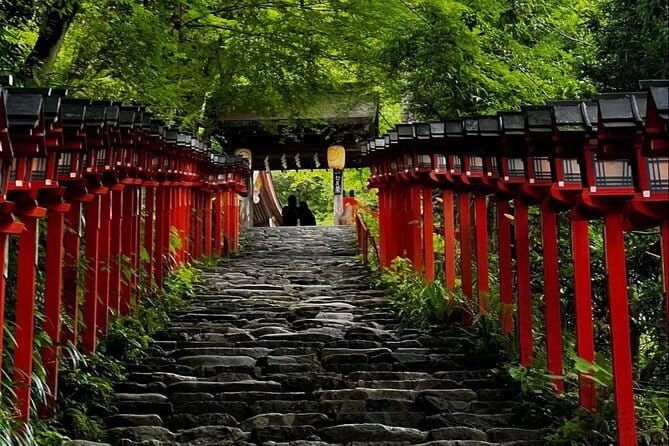
More walks up through the vermilion torii of Fushimi Inari


Hanamikoji and Gion: How to See Old Kyoto Without the Daytime Crush
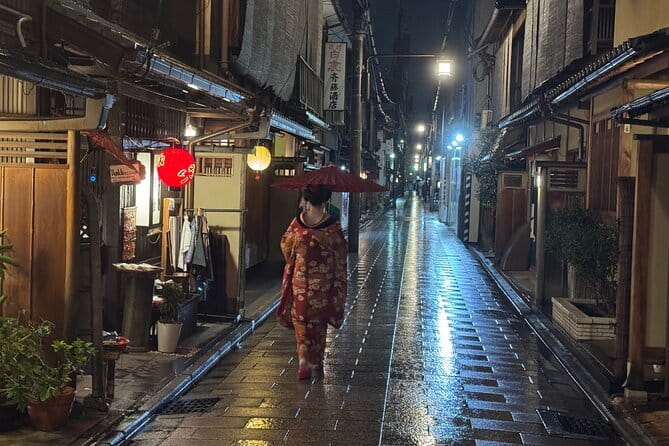
Then it’s into Gion, where Kyoto turns up the “old streets” vibe. Hanamikoji Street is one of the best-known lanes in the Gion district, lined with traditional wooden machiya houses and teahouses. This is also where you might spot geisha or maiko, though that’s never guaranteed.
Here’s why this stop works at night: the lighting changes everything. Wooden facades and narrow lanes look different after dark, and you get a better sense of scale and street rhythm. During the day, you can feel like you’re fighting a crowd for a clear line of sight. At night, the experience feels closer to a real stroll through a working neighborhood.
Gion is also about small details. You’ll notice the way buildings sit right up to the street, the way side alleys feed into bigger lanes, and how the district preserves its historic character. A guide helps you spot the difference between seeing the street and understanding what you’re looking at.
Good to know: the guide’s pace can be brisk, and the tour is designed for walking. If you want slower browsing, you’ll have to balance that with keeping up so you don’t get left behind.
Yasui-Konpiragu: Praying for Broken Relationships to End
Next up is Yasui-Konpiragu, known for being one of Kyoto’s most powerful shrines for breaking bad relationships. People come with the hope of ending negative ties and finding new, positive connections.
This is a different kind of stop from the “big postcard” locations. It’s more personal. You’ll slow down a bit, and the guide’s explanation helps you understand why this shrine has such a strong reputation. Instead of just ticking off another major shrine, you start to see how Kyoto’s spiritual culture works through very specific prayers and intentions.
How to get value here: listen for the meaning behind why the shrine is connected to relationships. If you treat it like a quick photo moment only, you’ll miss the point.
Yasaka Pagoda Area: The Scale of Hokanji (Yes, Without Nails)
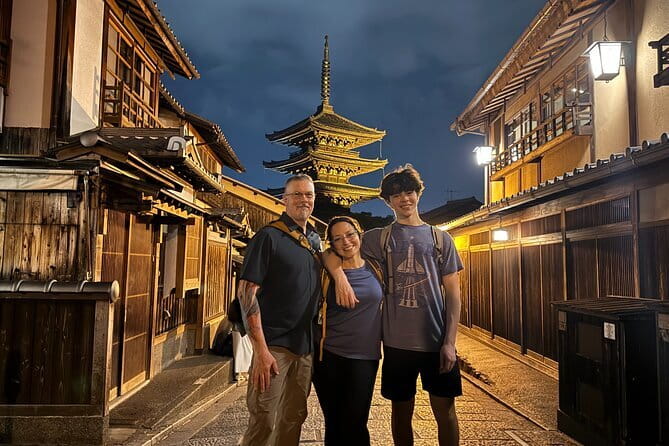
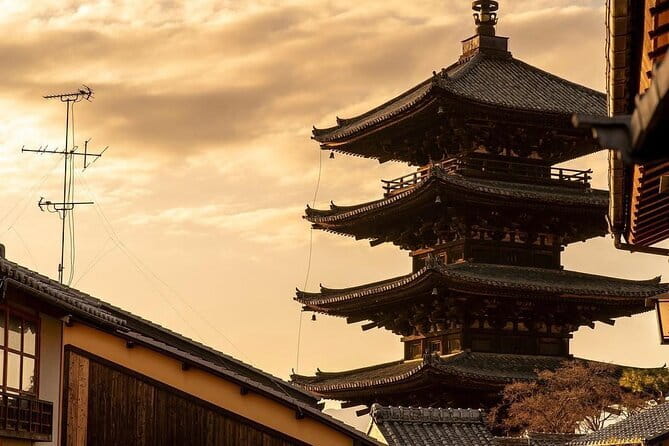
After Yasui-Konpiragu, you’ll reach Yasakanoto (Yasaka Pagoda / Hokanji temple). This stop is famous for one big fact: it’s one of the oldest wooden structures in Japan, and it was built without using nails.
That claim makes you look twice. When you stand there, the structure’s size lands differently than it does in pictures. The guide’s job is to help you see what makes this architecture special, and why Kyoto people still treat this as a landmark.
This part of the walk also helps you understand the broader Kyoto relationship between shrines and temples. One of the most praised aspects of this tour is that the guide explains the differences clearly as you go. Even if you’ve read about Japan before, having it pointed out in context makes it stick.
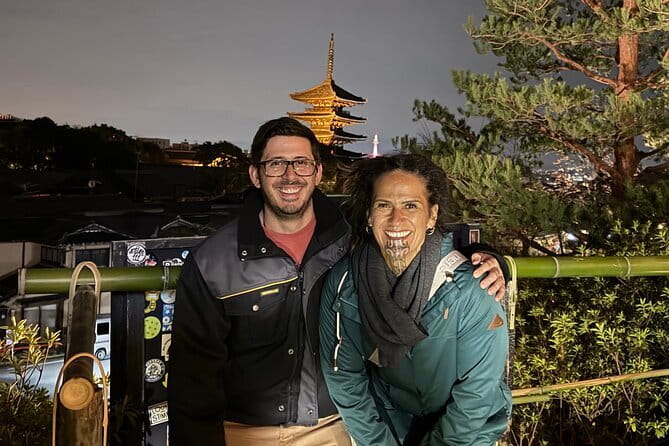
Photo note: if you like night photos, this is where you’ll want your camera ready. The lighting makes the pagoda area feel dramatic, and your guide knows where to stand for better results.
Sannenzaka and Ninenzaka: Stone Steps, Old Shops, and Time Travel Energy
Then comes the classic Higashiyama old-street experience: Sannenzaka and Ninenzaka. These are traditional stone-paved paths lined with souvenir shops and restaurants housed in historic wooden buildings. Walking them feels like stepping back in time, and it’s a nice change of pace after shrine stops.
These lanes are also practical for a nighttime tour. They’re atmospheric, photogenic, and easy to keep moving through. If you’ve never explored Kyoto’s preserved streets at night, this is the part that turns the evening from “tour stops” into a real walking story.
Small consideration: because it’s a walking route with shops, you may want to keep your hands free if you plan to buy anything. This tour isn’t designed as a long shopping session. You’ll browse, but you’ll also keep moving to the next stop.
More evenings along the lantern-lit lanes of Gion



Nene-no-Michi: A Serene Named Path That Connects the Dots

Nene-no-Michi is the route that adds calm. It’s named after Nene, the wife of a powerful Japanese shogun, and it’s described as a serene route that passes historic temples.
Even if you’re not into feudal-era names, this stretch matters because it changes your pace. Instead of standing at a single highlight, you walk through a quieter corridor that gives you a sense of Kyoto’s layout and layering. That’s how Kyoto feels different from many other cities: it’s not just one skyline view. It’s a sequence of small, meaningful spaces.
This stop also helps you appreciate why the tour order works. The night walk doesn’t jump randomly. It builds a chain: shrine meaning → Gion streets → relationship prayers → iconic wooden landmark → old-street lanes → temple corridor → final shrine.
Yasaka Shrine: The Final Glow and the Meaning Behind It
Your final destination is Yasaka Shrine. It’s the headquarters of around 2,300 related shrines throughout Japan, dedicated to the gods of prosperity and protection. In other words, this isn’t a one-off attraction. It’s a central node in a larger shrine network.
Yasaka at night is a fitting closer. You’ve already seen the glowing torii effect at Fushimi Inari, and now you get a different shrine atmosphere with its own visual language. The guide typically helps you understand how to pay respects respectfully, which can make your last stop feel more meaningful than just another photo target.
What makes this ending strong: by the time you arrive, you’ve had explanations all evening about how shrine culture works. The final stop feels like it “locks in” the theme of the tour: spirituality in daily life, not abstract sightseeing.
Price and Logistics: Is $26.43 Actually Good Value?
The tour price is about $26.43 per person, and that’s where the value math becomes interesting. The biggest reason this tends to feel worthwhile is that you’re not paying only for a walking route. You’re paying for:
- a passionate local English-speaking guide
- admission fees for the temples and shrines visited
- professional photos taken during the tour
On paper, some stops note admission is free, but that doesn’t mean you pay nothing overall. Where value shows up is in the guidance: knowing what to look for at night, how to behave respectfully, and how to move through Kyoto without wasting time.
Two costs to plan for:
- public transportation fare is ¥480 per person (not included)
- food and drinks are not included
If you already planned to do an evening stroll through Higashiyama anyway, the guide and photos often make this feel like a shortcut to a better experience. If you don’t care about photos or you hate walking, then it could feel expensive for what is, at heart, a 2.5-hour walk.
The Guide Makes It Click: Explanations, Photo Timing, and Real Help
Some of the highest praise in the tour experience centers on the guide’s ability to make Kyoto understandable fast. Guides such as Ikki, Yui, Yuri, Joi, Yuki, and Mariko have been highlighted for being friendly, clear in English, and helpful with the flow of the evening.
A standout theme is that you’re not just told where things are. You learn the difference between shrines and temples as the route unfolds. That matters because Kyoto is full of both, and if you don’t know what you’re looking at, the city can start to blur.
Another big perk: professional photos. Multiple guests mention getting their photos quickly and liking how the guide handled group pictures at night, including difficult lighting conditions. Even when your group is small, the guide still seems to know how to position people for good shots.
Finally, guides handle real-world moments. In one case, a guide adapted to frequent breaks for older guests, which is a big deal if you’re traveling with family members who might need to pause more often.
My advice: show up on time, communicate your comfort level early, and let the guide lead. You’ll get more out of the evening that way.
Who This Kyoto Night Walk Fits Best
This tour works especially well if you:
- are in Kyoto for the first time and want a fast, meaningful orientation to Higashiyama and Gion
- want Fushimi Inari at night plus shrine-focused explanations in one evening
- like the idea of having someone take photos so you can actually enjoy the scenery
- appreciate smaller crowds compared with daytime
It’s also a strong choice for families. Past guests have reported success with kids, because the guide engaged and answered questions patiently.
Where I’d pause and think twice:
- If you struggle with walking, stairs, or uneven ground, the tour may feel demanding. It’s designed for walking, and the route includes multiple stops packed into a short timeframe.
Should You Book This Kyoto Magical Night Tour?
Book this tour if you want an evening that feels like Kyoto instead of a checklist. The combo of Fushimi Inari’s torii glow, Gion’s preserved streets, and a guide who explains shrine meaning (plus professional photos) is the main reason it keeps earning top marks.
Skip it if you prefer to wander completely on your own, you’re not interested in photos, or you want a slow, no-pressure evening. This isn’t a long sit-down tour. It’s a well-paced walk designed to cover a lot while keeping the experience understandable and respectful.
If you’re the type who likes learning what you’re seeing and you’re comfortable with a brisk night walk, this is a smart way to spend your first Kyoto night.
FAQ
How long is the Kyoto Magical Night English Tour?
It runs about 2 hours 30 minutes (approx.).
Where does the tour start and end?
It starts at the Statue of Izumo-no-Okuni in Kawabatacho, Higashiyama Ward, Kyoto, and ends back at the meeting point.
What is the price per person?
The price is $26.43 per person.
What’s included in the tour price?
Included are a local English-speaking guide, admission fees for the sites visited, and professional photos taken during the tour.
Are temple and shrine admissions included?
Yes. Admission fees for the temples and shrines on the route are included.
What’s not included?
Public transportation fare is ¥480 per person, and food and drinks are not included.
Is this a private tour?
Yes. It’s private, meaning only your group participates.
Do I need to use public transportation?
Yes. The tour uses public transportation to reach the start area and moves between stops, then relies on walking.
What should I do if I’m late for the meeting point?
If you’re late, you won’t be able to join the tour and you won’t receive a refund.
Is free cancellation available?
Yes. You can cancel up to 24 hours in advance for a full refund.
What kind of fitness level do I need?
It’s designed as a walking experience, so you should have a moderate physical fitness level.
More Kyoto Temples and Shrines



Still in Gion? Keep Going
Fushimi Inari, a Few More Ways
Just added: more Kyoto tours to browse








Fushimi Inari Shrine Tours, compared.
 ★ 4.8Fushimi Inari, Kinkakuji, Bamboo Grove 1 Day Bus TourFrom $1224,316 reviews
 ★ 5.0Fushimi Inari Hidden Hiking Tour (Private Option Available)From $631,750 reviews
 ★ 4.7Kyoto/Osaka: Nara, Fushimi Inari Taisha, Arashiyama Bus TourFrom $521,275 reviews
 ★ 4.4Osaka/Kyoto: Arashiyama, Nara & Fushimi Inari Shrine w/LunchFrom $61754 reviews
 ★ 4.7Nijo Castle, Kiyomizu & Fushimi Inari Guided TourFrom $54700 reviews
 ★ 5.0Nijo, Kinkaku-ji, Arashiyama, Kiyomizu & Fushimi InariFrom $51699 reviews
 ★ 5.0Kyoto Fushimi-Inari Night Walking TourFrom $43320 reviews
 ★ 4.93-Hour Fushimi Inari Shrine Hidden Hiking TourFrom $72270 reviews
Browse the lists this tour appears in