
Reviewed · KYOTO BIKE & E-BIKE TOURS
Kyoto in a Day by eBike: The Best Bits Tour (East Course)
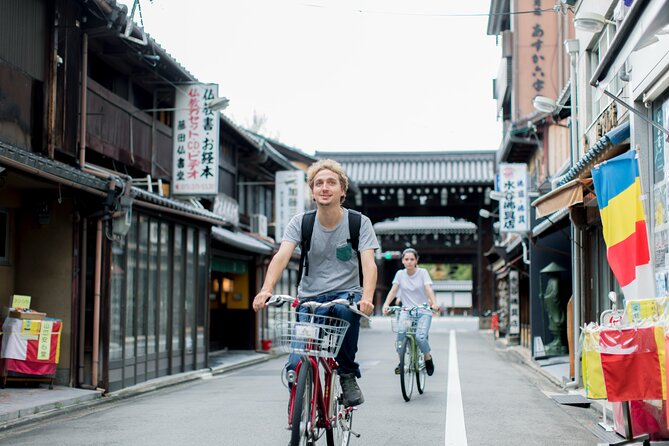
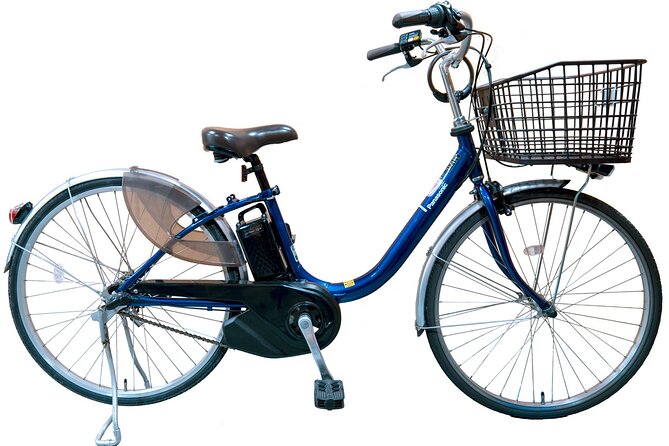
Kyoto by e-bike is a smooth way to beat the clock. This East Course strings together big-name landmarks and quieter backstreets, with an English-speaking guide helping you make sense of what the shoguns left behind. I love the way the e-bike keeps your legs fresh for an 8-hour day, and I also like that lunch and the listed entry fees are built in. One thing to consider: you’ll be cycling for much of the day, and while the tour runs in rain, the plan can shift to a walking option if weather is rough.
The route also does a smart job of mixing famous stops with calmer ones. You start at the temple complex area near Kyoto Station, then you get time at places like Nijo Castle and Ginkakuji, before finishing with the views from Kiyomizu-dera. The ride is especially pleasant when you hit the Philosopher’s Path, which you’ll enjoy most if you like slower, scenic streets rather than constant rush.
You meet at Kyoto Cycling Tour Project at Kyoto Station Cycle Terminal at 9:00am, and the tour ends back at the same meeting point. It’s private in the sense that only your group rides with your guide, and group sizes are kept small (minimum 2, maximum 6 per guide), which helps the pacing feel human instead of assembly-line.
In This Review
- Key highlights worth your attention
- Why an e-bike day in Kyoto actually works
- Meeting at Kyoto Station: start fast, stay organized
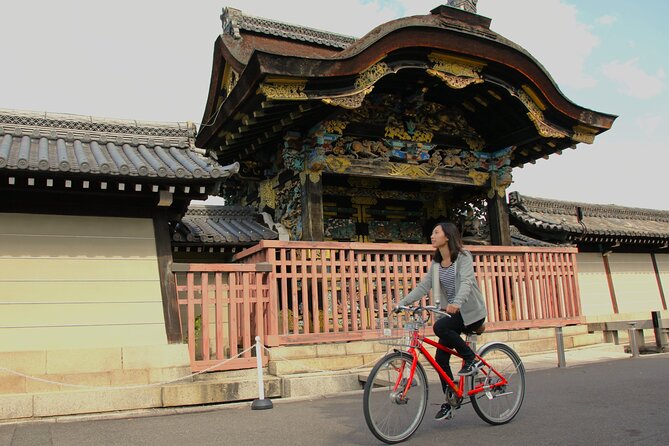
- Nishi Honganji: a calm temple start with fewer crowds
- Nijo Castle: architecture and interior art worth your one focused hour
- Kyoto Gyoen National Garden: cycling past the Imperial Palace area
- Ginkakuji (Silver Pavilion): gardens and a temple built with intent
- Philosopher’s Path by bike: the scenic stretch you’ll remember
- Kiyomizu-dera: Eastern mountain views and the final payoff
- Lunch and entry fees included: where the value actually shows up
- Rain plan and safety: what to expect if weather turns
- Guides who keep it fun: history talk plus real-world adjustments
- Who this e-bike East Course is for (and who should pass)
- Should you book this Kyoto in a Day e-bike tour?
- FAQ
- What’s included in the price?
- How long is the tour?
- Where do I meet the tour?
- When does the tour start?
- Is this a private tour?
- How many people are in a guide group?
- Does the tour run in rain?
- What age and height are required for children?
- How do I get my ticket?
- How soon will I get confirmation?
- What happens if I cancel?
Key highlights worth your attention
- Easy-to-hold pace with an e-bike: You cover a lot of ground without arriving wrecked.
- Big sights plus calmer moments: Nijo Castle and Ginkakuji are balanced with quieter gardens and streets.
- Philosopher’s Path is made for cycling: A standout stretch, especially in autumn maple season.
- Lunch and entry fees are included: Fewer surprise add-ons during the day.
- Rain plan that keeps you moving: Poncho rides on bikes, or switch to a walking tour using public transportation.
- Guides who adapt to your group: Some guides have been described as tailoring detours and photo breaks.
Why an e-bike day in Kyoto actually works
Kyoto in one day is always a juggling act. On foot, you can spend more time in transit than in temples and gardens. On an e-bike, you trade some walking for smoother movement, so you can spend your energy on seeing, photographing, and listening.
This tour is built around that idea. You’re not only going from A to B—you’re cycling through different zones of the city while your guide connects the dots between shogun-era legacy and what you still see today. For me, that’s the difference between a sightseeing checklist and a day that feels like a story.
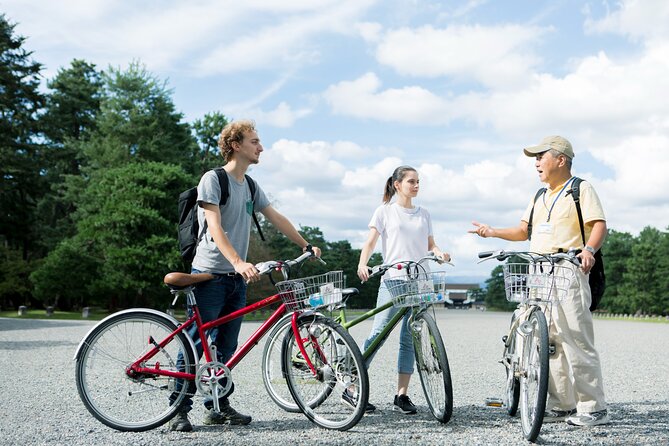
The added bonus is that the guide can control tempo better than you can on your own. When the day is timed for multiple stops, someone needs to decide when to slow down, when to group up, and when to move on. That matters a lot more than it sounds when you’re dealing with crowds, intersections, and a long ride.
More of Kyoto at handlebar pace
Meeting at Kyoto Station: start fast, stay organized
You’ll meet at Kyoto Cycling Tour Project at the Kyoto Station Cycle Terminal, located at 552-13 Higashiaburanokōjichō. The start time is 9:00am, which is early enough to get moving before the city fully warms up.
This is also one of those tours where being on time helps you enjoy it more. If you arrive late, you lose your early-bike window, and the whole rhythm of the day gets squeezed. The good news: the meeting point is near public transportation, so you’re not stuck figuring out how to get there in a stressful scramble.
Because it’s a private tour for your group, you’re less likely to feel like a tourist number. And with minimum 2 and maximum 6 guests per guide, you should get clearer guidance and more breathing room at stops.
Nishi Honganji: a calm temple start with fewer crowds
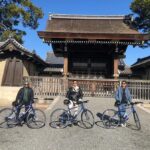
The day opens at Nishi Honganji, one of Kyoto’s impressive temple complexes. This stop is short—about 15 minutes—but it’s a smart way to ease in. You get your first taste of Kyoto’s temple atmosphere without jumping straight into the biggest-ticket sites.
One of the best things about starting here is the crowd level described by the tour setup: it’s noted as having relatively few crowds compared to other major sights. That makes it easier to look at details, notice architecture, and get a feel for how the guide frames what you’re seeing.
Since the admission is listed as free, you’re also not doing mental math or scanning tickets at the beginning. Just take it in, listen, and get ready for the longer stretches ahead.
Nijo Castle: architecture and interior art worth your one focused hour
Next comes Nijo Castle, scheduled for about 1 hour with admission included. This is the stop that feels most like a “main attraction,” and it earns that status. The interior is known for artworks, and the architecture is a big part of what makes the castle memorable.
A common mistake in Kyoto is spending too long outside and not enough time inside. Nijo Castle is one of those places where the payoff is in what you see up close, so your guide’s timing matters. You’ll be there long enough to learn what to look for, but not so long that you lose momentum for the later ride.
If you like history explained in plain language—how it connects to the shoguns and why these spaces were designed the way they were—this is a good match. If you prefer quiet photo time, don’t worry: the tour style includes breaks for photos when possible.
Kyoto Gyoen National Garden: cycling past the Imperial Palace area
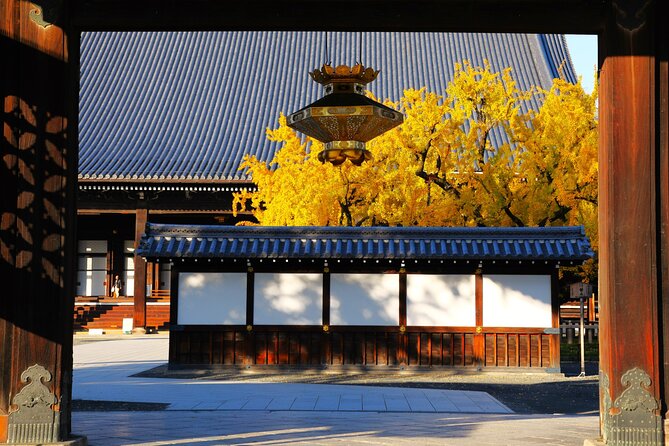
After Nijo Castle, you shift into garden mode with Kyoto Gyoen National Garden, near the Imperial Palace area. Your scheduled time here is about 15 minutes, and admission is listed as free.
This stop works because it gives your day a visual reset. Castles and pavilions can be mentally heavy, and gardens are Kyoto’s way of giving your senses a breather. Cycling through (instead of walking a long loop) also keeps your energy for the next temple stretch.
You’ll get a sense of the quiet scale of this area—less of a “wow, you’re in a postcard crowd” feeling and more of a “you’re moving through space that was planned” vibe. Even if you’ve seen photos online, you can usually appreciate the spacing more in person.
Other Kyoto tours and experiences to compare
Ginkakuji (Silver Pavilion): gardens and a temple built with intent
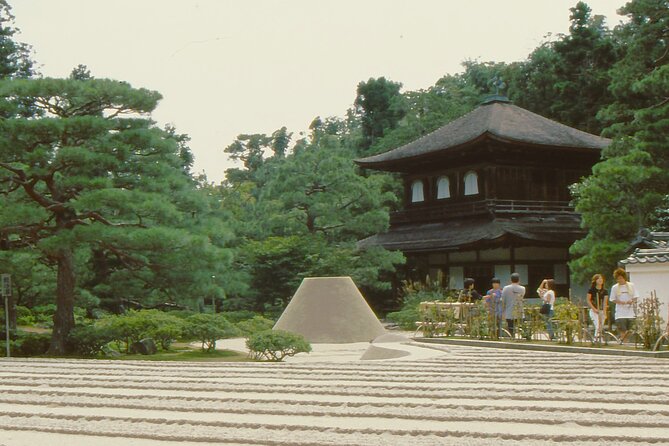
Then you head to Ginkakuji Temple, also known as the Silver Pavilion. Plan on 45 minutes, and admission is included.
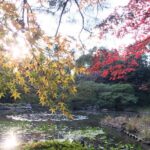
This is one of those stops where the surroundings matter as much as the main structure. The pavilion’s architecture and garden design are part of why it’s famous, and your guide helps you look beyond the single building. If you like garden lines, pond reflections, and the way temples use space to slow you down, you’ll get value from this time.
There’s also a practical advantage here: you’re not stuck only in dense streets. After the more structured castle stop, Ginkakuji offers a gentler pace, which makes it easier to keep your day enjoyable rather than rushed.
Philosopher’s Path by bike: the scenic stretch you’ll remember
Now for the ride segment everyone talks about: Philosopher’s Path. The route includes this wonderfully quaint street along Kyoto’s north-eastern corner, and it’s highlighted as particularly breath-taking during the autumn maple season.
Here’s why this matters for your day: this is the part where cycling starts to feel like sightseeing, not transportation. The path is described as perfect for cycling, which means it’s one of the easier stretches to enjoy instead of white-knuckling your way through traffic.
Also, it’s a street designed for strolling and lingering. On a bike, you can keep moving while still taking in the rhythm of the area—views, water, and the calm feel of Kyoto streets when they’re not clogged.
If you love photos, this is where you’ll want to pay attention to timing. Even with a guide, you’ll get better shots when you’re not constantly trying to stop at the exact moment you see something perfect.
Kiyomizu-dera: Eastern mountain views and the final payoff
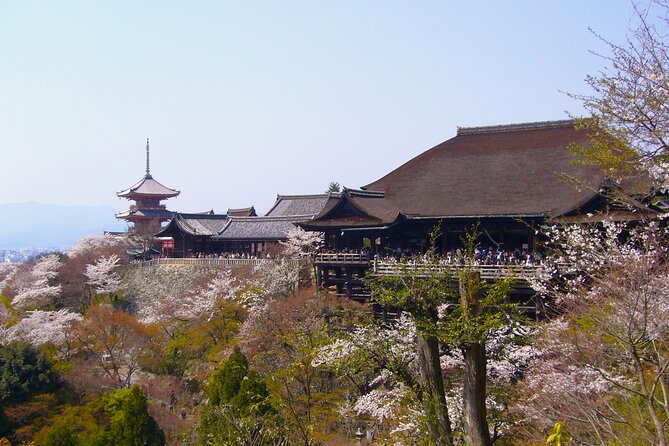
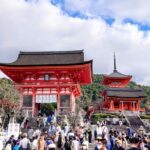
Your last major temple stop is Kiyomizu-dera, scheduled for about 30 minutes with admission included. The temple sits on the Eastern mountains, and you’re there for the big views over Kyoto.
This is the classic “finish strong” location. Early or late in the day, viewpoints change in character, and Kiyomizu-dera gives you that payoff after a long ride. Your guide explains the significance, including its connection to an early Shogun, which helps you understand why the site was placed here in the first place.
A practical note: because your time here is limited, prioritize what you care about most. If your focus is the view, plan your climb and viewing time early during the 30 minutes. If your focus is temple details, keep your attention moving rather than getting stuck in one spot while the group needs to regroup.
Lunch and entry fees included: where the value actually shows up
This tour includes lunch and all listed entry fees in the price. At $247.12 per person, it’s not a budget “just show up” activity. But it does remove the two things that usually make day tours feel expensive: unpredictable costs at each stop and wasted time hunting for the next payment or ticket.
The smarter way to think about the price is this: you’re paying for a guided route that strings together multiple ticketed sights without you doing the logistics. In a one-day visit, saving planning time is part of what you’re buying.
It also helps that the schedule includes several shorter stops—like Nishi Honganji and Kyoto Gyoen—so you’re not spending the whole day at one mega-attraction. That mix keeps the day from dragging.
Rain plan and safety: what to expect if weather turns
Kyoto weather can change fast, so it’s good that this tour has a defined rain approach. The tour will operate in rain, and you can choose between riding with rain poncho (free of charge) or switching to a walking tour using public transportation (bus or metro) with the cost included in the tour fee.
That flexibility is more than a comfort detail. With rain, the risk isn’t just getting wet—it’s slipping, visibility, and bike handling. Having an option to switch modes means you’re less likely to lose the whole day if the sky decides to open up.
Safety also matters because this is a road ride. Children must be at least 10 years old, at least 145 cm tall, and able to ride a bicycle safely on the road unassisted. Even if you’re an experienced rider, stick to the guide’s instructions. On a group e-bike day, consistency beats bravado.
Guides who keep it fun: history talk plus real-world adjustments
A big part of whether this type of tour feels great is your guide’s style. In the experience described for this tour, guides such as Makoto Yanai, Kay, Tad, and Tomoko are specifically noted for being kind and for sharing helpful history details.
One recurring strength is adaptability. Makoto Yanai is described as willing to adjust the tour to match the group’s wishes and to add suggestions for extra stops, including a detour along the Kamo river. That kind of flexibility can turn a planned day into something that feels tailored.
There’s also mention of keeping the tour fun and practical: guides have been described as ensuring safety, providing historical context, and allowing time for photos and refreshments, including during hot summer conditions. So if you care about taking your time for pictures rather than treating every stop like a photo sprint, this tour format seems built for that.
Who this e-bike East Course is for (and who should pass)
This tour makes a lot of sense if you want structure. You like knowing you’ll hit major sites like Nijo Castle and Kiyomizu-dera, but you also want a calmer route element like Philosopher’s Path and a garden pause at Kyoto Gyoen.
It’s also a strong fit if you have mixed interests. You’ll get temple architecture, castle interiors, garden design, and viewpoint time, all in a guided sequence. And the e-bike helps you maintain that pace without your day turning into a legs-only workout.
You might consider another option if you want a completely unstructured day. This is planned and timed, with stops that have set durations. Also, if you’re uncomfortable cycling or you prefer not to handle e-bikes on city routes, you should think carefully before booking.
Should you book this Kyoto in a Day e-bike tour?
I’d book it if you want a guided, efficient Kyoto day that still includes space to enjoy the ride. The best reasons are simple: the e-bike saves energy, the route mix feels balanced, and you’re not paying extra for lunch and entry tickets as you go.
I’d hesitate if your ideal Kyoto day is slow wandering only. This tour is about seeing a lot in one push, and even with short stops, you’ll be moving. If your comfort level with cycling is low, consider whether the rain switch to a walking-and-public-transport option would genuinely make you feel better.
If you do book, go in with a mindset of participation. Keep close to your guide, plan your photos during the scenic segments, and use the historical explanations to connect what you see—especially around Nijo Castle and the shogun legacy thread that ties the day together.
FAQ
What’s included in the price?
Lunch and all listed entry fees are included in the tour fee.
How long is the tour?
It runs for about 8 hours.
Where do I meet the tour?
You meet at Kyoto Cycling Tour Project (Kyoto Station Cycle Terminal), 552-13 Higashiaburanokōjichō, Shimogyo Ward, Kyoto.
When does the tour start?
The start time is 9:00am.
Is this a private tour?
Yes. Only your group participates.
How many people are in a guide group?
The minimum is 2 and the maximum is 6 guests per guide. For groups of 7–12 people, an extra guide can be arranged.
Does the tour run in rain?
Yes. You can choose to continue on bikes with a rain poncho, or switch to a walking tour using public transportation (bus or metro), with that option included in the tour fee.
What age and height are required for children?
Children must be at least 10 years old and at least 145 cm tall, and able to ride a bicycle safely on the road unassisted.
How do I get my ticket?
You’ll receive a mobile ticket.
How soon will I get confirmation?
Confirmation is received within 48 hours of booking, subject to availability.
What happens if I cancel?
The experience is non-refundable and cannot be changed for any reason. If it’s canceled because the minimum number of travelers isn’t met, you’ll be offered a different date/experience or a full refund.
More Tours in Kyoto
More Tour Reviews in Kyoto
More of Kyoto by Bike
Just added: more Kyoto tours to browse





Kyoto Bike & E-Bike Tours, compared.
 ★ 5.0Hidden Kyoto E-Biking tourFrom $1161,843 reviews
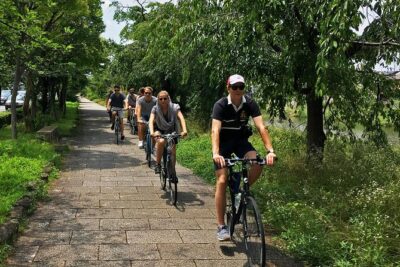 ★ 5.0Bike Tour Exploring North Kyoto plus LunchFrom $1061,087 reviews
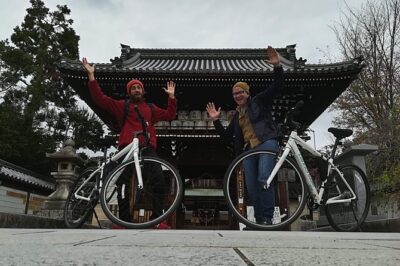 ★ 5.0Arashiyama Bamboo Forest & Hidden Gems Bike Tour (Early Bird)From $106613 reviews
 ★ 5.05 Top Highlights of Kyoto Full Day Bike Tour (E-bike option)From $172511 reviews
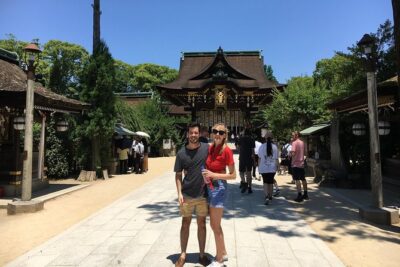 ★ 5.0Full Day Biking Tour Exploring the Best of KyotoFrom $119498 reviews
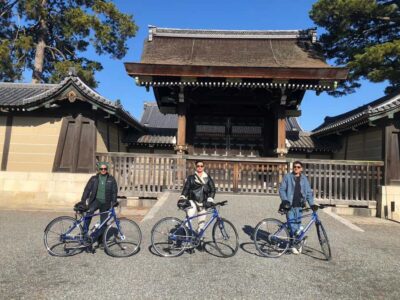 ★ 4.8Memory Kyoto E-Bike TourFrom $91297 reviews
 ★ 5.0E-Bike Tours of the highlights of Kyoto!!!From $109291 reviews
 ★ 5.0Afternoon Kyoto Bike Tour: Bamboo Forest, Monkeys & Hidden SpotsFrom $106283 reviews
Browse the lists this tour appears in