
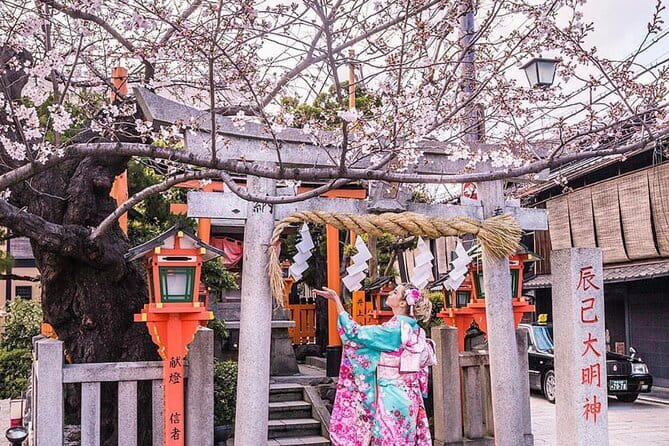
Reviewed · KYOTO PRIVATE GUIDED TOURS
Kyoto Highlight Private Tour with English Speaking Driver
Kyoto in one day without the crowd crush. This private car tour is built for efficiency and comfort, with an English-speaking driver who helps connect major sights without the hassle of constant transfers. What makes it especially appealing is the flexible, customizable itinerary, so you can slow down at the places you care about most.
I especially like the private setup: no jostling for trains, fewer walking sprints between stops, and a rhythm that feels more like a guided day trip than a checklist. I also like that the day runs on your pace, not a fixed timetable, so you can take breaks and spend the time you want at each temple or market.
One caution: the reviews include serious issues like a driver not showing up and poor communication. That’s rare, but it’s enough that you should confirm pickup details ahead of time and keep your booking confirmation handy the day of.
In This Review
- Quick hits before you go
- Why a private car day works in Kyoto
- English driver support: what you actually gain
- Stop 1: Fushimi Inari Taisha and the torii-gate maze
- Stop 2 and 3: Ginkaku-ji and Kiyomizudera’s famous stage views
- Ginkakuji (Silver Pavilion)
- Kiyomizudera (Pure Water Temple)
- Stop 4: Arashiyama—Togetsukyo Bridge plus bamboo grove time
- Stop 5: Kyoto Imperial Palace grounds for a calmer break
- Stop 6: Kinkaku-ji Golden Pavilion and the gold-leaf wow factor
- Stop 7: Gion after the temples—streets, teahouses, and machiya houses
- Stop 8: Sanjusangendo’s 1001 Kannon statues in a long wooden hall
- Stop 9: Nishiki Market—food shopping that feels like Kyoto’s kitchen
- Price and logistics: is $558.59 for up to 6 actually good value?
- Weather, pacing, and the art of not feeling rushed
- Should you book this Kyoto highlights private tour?
- FAQ
- How many people are included in a group?
- How long is the Kyoto highlight tour?
- Does the tour offer hotel pickup and drop-off?
- Is lunch included?
- Are temple and shrine admission tickets included?
- Is this a private tour or shared?
- What if the tour is canceled?
Quick hits before you go
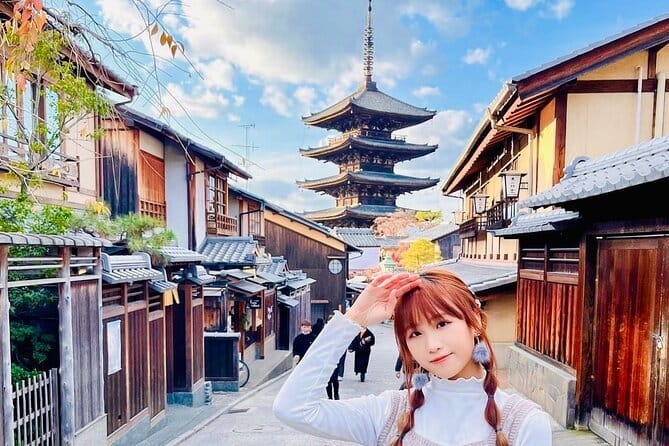
- Private car, air-conditioned comfort: Kyoto sightseeing can be long; this keeps the day manageable.
- English-speaking driver support: you get help navigating the day and the sites.
- Kinkaku-ji, Kiyomizudera, Fushimi Inari, Arashiyama: you cover the Kyoto essentials in one run.
- Flexible timing at every stop: spend less where you’re not feeling it; linger where you are.
- A strong set of variety stops: shrines, world-famous temples, a geisha district, and Nishiki Market food shopping.
- Review highlights on drivers: Basra, Hassan, and Mani are named in the best feedback for friendliness and ease.
Why a private car day works in Kyoto
Kyoto rewards slow travel. The problem is that most visitors try to do everything in one or two days, which turns the “slow” part into stairs, crowds, and last-minute sprinting.
This is a different approach. You’re in a private vehicle with pickup and drop-off arranged where you want, and that matters more than it sounds. Between Fushimi Inari, central Higashiyama, then onward to the northwest and west, you’re fighting traffic, train transfers, and platform waits. A car day smooths that out, so more energy goes into the sights, not the logistics.
The tour is also set up as a your day, your way experience. The time at each stop is not locked, which helps if you’re the type who wants photos (and enough time to get them), or if you just want to wander without a timer buzzing in your head.
Have a local lead the way on more Kyoto tours
English driver support: what you actually gain
A driver who speaks English is not just about translation. In Kyoto, the “small stuff” decides whether the day feels easy.
You should expect help with:
- getting to the right place at the right time
- keeping the day moving efficiently between stops
- adapting the route when your group wants more time somewhere
The strongest feedback in reviews praises drivers for being cooperative and polite, and for customizing the itinerary to the group. Some names showing up in the best experiences include Basra, Hassan, and Mani. That gives you a clue about what to look for in this kind of service: calm attitude, clear communication, and the ability to manage a full day without turning it into a rush-job.
Stop 1: Fushimi Inari Taisha and the torii-gate maze
Fushimi Inari Taisha is the shrine most people picture when they think of Kyoto’s red torii gates. The key detail is what you’re walking through: thousands of gates that lead along paths behind the main structures and onward toward Mount Inari’s forested area (Mount Inari rises to 233 meters).
The shrine’s Inari focus also adds meaning to the walk. Inari is the Shinto god of rice, and foxes are believed to be Inari’s messengers—so you’ll see fox statues scattered around the grounds.
How to make this stop work:
- Wear shoes you can stand in for a while. The “easy stroll” version is still a lot of steps.
- If you want the full mountain-path experience, plan to spend close to the hour and not treat it like a quick photo stop.
- If the day later feels rushed, you can intentionally dial it back here and still get the big visual payoff.
A drawback to consider: this is one of Kyoto’s busiest icons, so even with a private car, the shrine itself can feel crowded at certain times. Your driver’s pacing choices become extra important here.
Stop 2 and 3: Ginkaku-ji and Kiyomizudera’s famous stage views
This part of the day is about hillsides, temples, and those classic Kyoto scenes you’ve probably seen in photos—except you’re there, with time to slow down.
Ginkakuji (Silver Pavilion)
The tour includes Ginkakuji, often paired in your mind with its famous counterpart Kinkakuji. From the material provided, you can understand the link: Ashikaga Yoshimasa built Ginkakuji on the opposite side of Kyoto after seeing Kinkakuji. So when you visit Ginkakuji, you’re really walking through a story about rival visions of beauty in the Ashikaga period.
Practical tip: treat Ginkakuji as a quieter breather between heavier walking stops. You’ll likely get more out of it if you don’t rush straight past the grounds.
Other Kyoto tours and experiences to compare
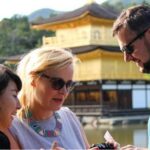
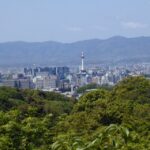
Kiyomizudera (Pure Water Temple)
Kiyomizudera is the showstopper for views and atmosphere. It’s associated with the Otowa Waterfall, and the wooden stage is one of its signature features. The stage protrudes 13 meters over the hillside, and from there you can look down at cherry and maple trees when they’re in season.
A few other facts worth knowing so the visit hits harder:
- The temple was established in 780.
- It’s recognized as a UNESCO World Heritage Site (listed in 1994).
- It has ties to older Buddhist schools, including the Kita Hosso sect (linked in the provided details).
How to handle the visit:
- Give yourself time on and around the stage area. That’s where Kiyomizudera becomes more than a photo.
- The tour lists about an hour here, so it helps to decide in advance if your priority is the stage views or more of the temple grounds.
Possible drawback: hillside temples often mean extra walking and stairs. If you’re doing a full-day itinerary, you’ll want to keep your energy for later stops like Arashiyama and Kinkakuji.
Stop 4: Arashiyama—Togetsukyo Bridge plus bamboo grove time
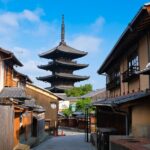
Arashiyama is where Kyoto switches from temple hills to riverside scenery and bamboo.
You’ll start with Togetsukyo Bridge, also called the Moon Crossing Bridge. It was created during the Heian Period (794–1185) and later rebuilt in the 1930s. The bridge is especially photogenic against the wooded slope. Nearby, there’s a riverbank park with cherry trees.
Then comes the bamboo component: the tour includes bamboo grove walking routes. When there’s a light wind, the bamboo stalks softly move, and the woods can feel wonderfully different from the stone-and-steps temples earlier in the day. Bamboo has also been used for generations in local workshops to make items like mats, cups, boxes, and baskets—so it’s not just a pretty backdrop, it connects to real local craft.
How to pace it:
- Use the 2 hours to split time between bridge photos and walking inside the bamboo areas.
- If you’re sensitive to crowds, choose your walking windows carefully; Arashiyama can get busy.
One consideration: bamboo areas and river-adjacent spots can be affected by weather. If it’s rainy, plan for slick paths and keep a light layer in your day bag.
Stop 5: Kyoto Imperial Palace grounds for a calmer break
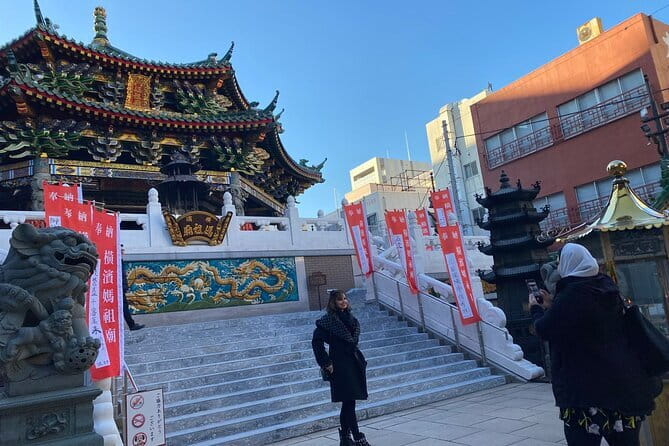
Kyoto Imperial Palace (Kyoto Gosho) is a nice counterbalance to the shrine-and-temple intensity. It used to be the residence of Japan’s Imperial Family until 1868, when the emperor and capital moved to Tokyo.
The palace today sits inside Kyoto Imperial Park (Kyōto Gyoen), a large park area. The provided details also note:
- The current palace was reconstructed in 1855 after a fire.
- The complex is enclosed by walls and includes gates, halls, and gardens.
- Ceremonies for emperors Taisho and Showa were held in the palace’s main hall.
Why this stop is valuable on a highlight day: it’s a big open-air reset. You can step out of the crush of narrow streets and switch to spacious, slower strolling.
Practical drawback: depending on the time of year and your energy level, palace grounds can feel less “dramatic” than the gold pavilion or the torii gates. If you love gardens and architecture, you’ll likely enjoy it a lot more.
Stop 6: Kinkaku-ji Golden Pavilion and the gold-leaf wow factor
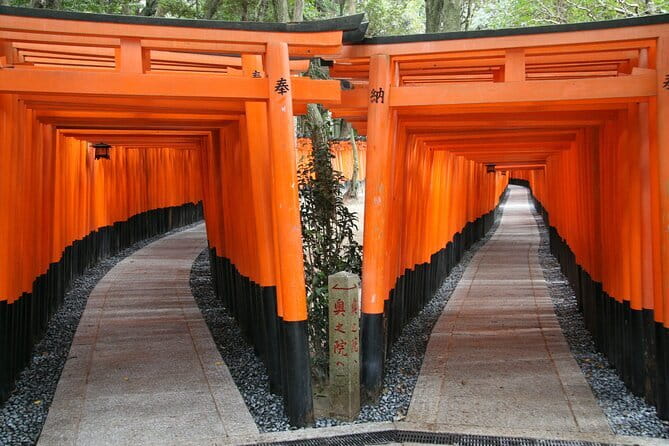
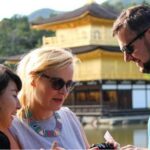
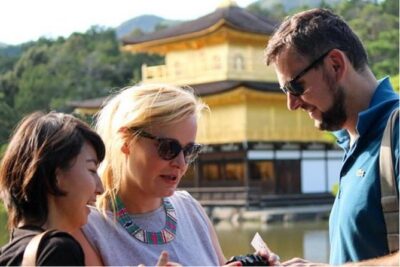
Kinkakuji (Golden Pavilion) is Kyoto’s clearest hit of “this city is famous for a reason.” The upper two floors of the Zen temple are coated with gold leaf, and the result is exactly what your photos promised—just with more depth when you see it in person.
The story behind it is also part of the appeal. The temple was originally called Rokuonji and served as retirement residence for Ashikaga Yoshimitsu. After his death in 1408, it became a Zen temple linked to the Rinzai sect.
A detail that adds texture: Kinkakuji has burned down multiple times, including twice during the Onin War, a civil war that devastated much of Kyoto.
How to get more out of your hour:
- Take in the pavilion, then look toward the pond area. Kinkakuji is designed for reflection—literal and visual.
- If you’re into architecture or symbolism, use the time to slow down rather than racing for shots.
Possible drawback: this is another “top of the list” site. Even with private transport, you’ll likely deal with some crowding at the most popular viewing areas.
Stop 7: Gion after the temples—streets, teahouses, and machiya houses
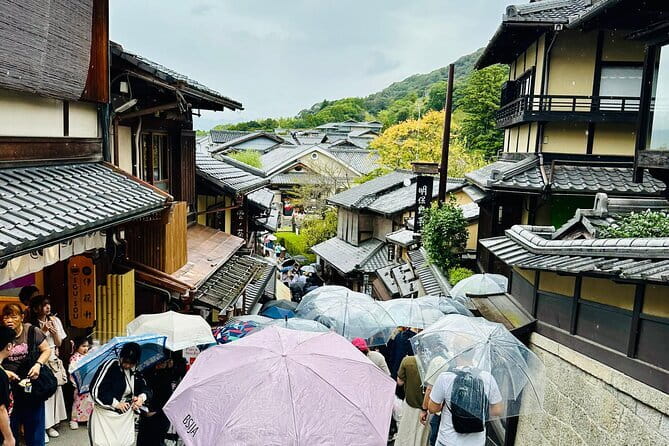
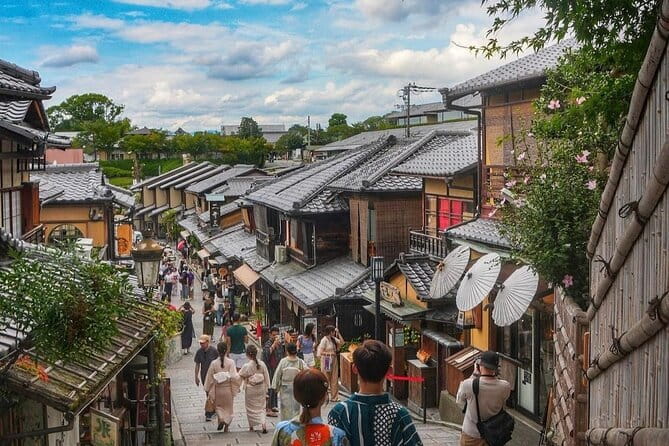
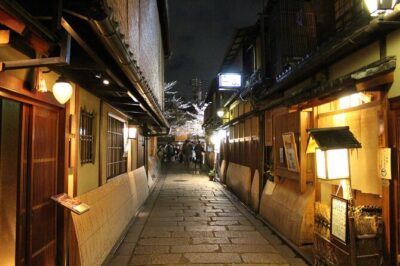
Gion is Kyoto’s best-known geisha neighborhood. It runs along Shijo Avenue between the Kamo River to the west and Yasaka Shrine to the east.
Here’s what you’ll see when your time is focused:
- shops and restaurants
- ochaya (teahouses)
- the classic machiya merchant houses with narrow facades (about 5 to 6 meters) stretching inward up to about 20 meters
You’ll also hear about geiko and maiko—Kyoto’s geisha and apprentices. The material provided also mentions Hanami-koji Street running from Shijo Avenue to Kenninji TemplRead more, which gives you a clue where to wander when you’re in the district.
How to make Gion feel real instead of touristic:
- Walk slowly and let the street layout guide you.
- Use it as a decompression break before dinner-free shopping time (your package doesn’t include lunch or dinner).
A consideration: Gion can feel like a stage at peak times. The upside is that it’s easy to step back into calmer side streets if you have a little freedom with time.
Stop 8: Sanjusangendo’s 1001 Kannon statues in a long wooden hall
Sanjusangendo is a temple stop that breaks the typical “one main hall, one main photo” pattern.
It’s known for its 1001 statues of Kannon, the goddess of leniency. The sanctuary was established in 1164 and later modified after the first structure was destroyed by fire. The lobby is Japan’s longest wooden structure in the provided info, at about 120 meters.
Even the name tells you how to think about the building. The title Sanjusangendo refers to the number of intervals between back columns, measured in a traditional building way.
Why this stop works in a full-day itinerary:
- It’s different from the torii gates and the pavilion reflection style.
- The sheer scale of the hall makes the interior experience memorable, even if you’re not a temple-spotting nerd.
Possible drawback: if you’re expecting something that looks like Kinkaku-ji from outside, Sanjusangendo’s impact is more about what’s inside and how the space feels.
Stop 9: Nishiki Market—food shopping that feels like Kyoto’s kitchen
Nishiki Market is a narrow shopping district about five blocks long, lined with more than one hundred shops and restaurants. It’s often called Kyoto’s Kitchen, and the focus here is food-related shopping.
You’ll find:
- fresh seafood and produce
- knives and cookware
- Japanese sweets, pickles, dried seafood, and sushi
The provided details also emphasize that the shops often specialize in specific products, and many items are locally produced.
How to use your hour well:
- Go with a short plan: one or two snacks you want to try and a small souvenir you can actually pack.
- If you’re hungry, this is where you can turn sightseeing into a reward—just know that lunch and dinner aren’t included, so budget for eating here.
Consideration: Nishiki can be busy. Wear comfortable shoes and keep your shopping pace steady.
Price and logistics: is $558.59 for up to 6 actually good value?
The price is $558.59 per group, up to 6 people, for about 8 to 10 hours. If you split it evenly, you’re looking at roughly $93 per person at full group size.
That’s where the value math gets interesting. You’re not paying only for “transport.” You’re paying for:
- private car time across multiple neighborhoods
- hotel pickup and drop-off where you want
- an English-speaking driver
- air-conditioned comfort (huge in hot weather)
Then there are the tradeoffs. Temple admission tickets are not included, and lunch and dinner are not included. So you’ll still spend extra on site entries and meals.
For me, this kind of pricing makes the most sense if:
- you have 3 to 6 people sharing costs
- you want to see a lot in one day without turning your legs into a torture device
- you care about the driver smoothing the route and helping you stay on track
If you’re traveling solo or as a couple, it can still be worth it, but the per-person price climbs quickly.
Weather, pacing, and the art of not feeling rushed
A private tour’s biggest superpower is control. The tour emphasizes you decide how long to spend at each stop and there’s no rush-fixed timetable.
Use that flexibility in smart ways:
- If the weather turns rainy or gray, you’ll naturally favor indoor-heavy stops like Sanjusangendo.
- If you’re more into views, you can lengthen time at Kiyomizudera’s 13-meter wooden stage and Kinkakuji’s pond-area reflections.
- If you want calmer walking, you can shorten the mountain-path segments at places like Fushimi Inari and keep the day enjoyable rather than exhausting.
One more practical thought based on the review issues: keep your pickup details tight. If drizzle or busy street conditions slow things down, you’ll want your driver to have a clear pickup point and your booking information ready.
Should you book this Kyoto highlights private tour?
Book it if you want a one-day hits list with real comfort, flexible timing, and English-speaking help. This is a strong fit for small groups who want Fushimi Inari, Kiyomizudera, Arashiyama, Kinkakuji, Gion, Sanjusangendo, and Nishiki Market without living on public transit for hours.
Skip it—or choose carefully—if you’re the type who needs a flawless operator record. The reviews include dramatic non-arrival and poor communication cases. That doesn’t mean your trip will go wrong, but it does mean you should confirm pickup details and keep your plan for day-of follow-up simple.
If you do book, I’d treat the day like a curated stroll you control: plan comfortable shoes, expect separate temple fees, and use the driver to keep the route smooth. When it works, it’s exactly the kind of Kyoto day that lets you see a lot and still feel human at the end.
FAQ
How many people are included in a group?
This is priced per group for up to 6 people.
How long is the Kyoto highlight tour?
The duration is about 8 to 10 hours.
Does the tour offer hotel pickup and drop-off?
Yes. Pickup and drop-off are offered to hotel and other locations where you want.
Is lunch included?
No, lunch is not included.
Are temple and shrine admission tickets included?
No. Admission tickets are not included for the listed stops.
Is this a private tour or shared?
It’s a private tour/activity. Only your group participates.
What if the tour is canceled?
There is free cancellation, and you can cancel up to 24 hours in advance for a full refund. The experience may also be canceled if the minimum number of travelers isn’t met, in which case you’ll be offered a different date/experience or a full refund.
More Tours in Kyoto


More Tour Reviews in Kyoto


More Private Tours of Kyoto
Just added: more Kyoto tours to browse








Kyoto Private Guided Tours, compared.
 ★ 5.0Private Kyoto Tour with a Local, Highlights & Hidden Gems, PersonalisedFrom $1021,543 reviews
 ★ 5.0Kyoto 6hr Private Tour with Government-Licensed GuideFrom $1551,369 reviews
 ★ 5.010 Must-see Spots in Kyoto One Day Private Tour (up to 7 people)From $1791,108 reviews
 ★ 5.0Kyoto 4hr Private Tour with Government-Licensed GuideFrom $109629 reviews
 ★ 4.8Private Tour with Local Licensed GuideFrom $106463 reviews
 ★ 5.0Private Kyoto Tour with Licensed Guide & Vehicle (Max 15 persons)From $634417 reviews
 ★ 5.0Kyoto Customized Private Tour: See Top Attractions in 1 DayFrom $132342 reviews
 ★ 4.6Kyoto/Osaka: Kyoto and Nara Customized Private Guided TourFrom $477258 reviews
Browse the lists this tour appears in