
Reviewed · FUSHIMI INARI SHRINE TOURS
Kyoto: Fushimi Inari Taisha Guided Walking Tour
Fushimi Inari is a lot more than red gates. With a small English-guided walk, you’ll move through Fushimi Inari Taisha and learn why the shrine matters, while the torii trail does its job and basically turns every turn into a photo moment. This is a great fit when you want a memorable Kyoto stop without surrendering half your day.
I especially like two things: the chance to see both the lower and upper shrine areas (with an optional hike), and the way the guide connects the scenery to the meaning of Inari worship and the fox connection. Even better, guides like Katz, Christiana, Raphael, and Nobumasa have earned standout notes for staying friendly, patient, and helpful—plus handling extra needs like kids and strollers.
One thing to consider: this is still a walking-focused tour. If you have mobility limits, heart or respiratory concerns, or you’re pregnant, it may not be the right day out, and you’ll want to be comfortable with shrine footwear and timing.
In This Review
- Key things I’d circle before you go
- Fushimi Inari Taisha: why the red torii trail works so well
- Meeting at Daily Yamazaki Fushimi Inari Shrine and getting oriented fast
- Lower vs. Upper Shrine: choose the torii hike level that fits you
- The route details: what happens during the walk
- What I learned (and what it means for you on-site)
- Guide quality in a small group: why that changes your day
- Price and value: why $24 makes sense for 2–3 hours
- Timing, shoes, and the simple rules that keep it enjoyable
- Who should book this Fushimi Inari walking tour (and who shouldn’t)
- Should you book? My practical recommendation
- FAQ
- How long is the Kyoto Fushimi Inari Taisha guided walking tour?
- Where do I meet the guide?
- Is the tour offered in English?
- What are the options for the upper and lower shrine areas?
- What is included in the tour price?
- Is there a street-food stop?
- How big is the group?
- Do I need to bring anything?
- What about flexible booking and cancellations?
Key things I’d circle before you go
- Small group (up to 9) so the pacing stays manageable.
- Lower vs. upper shrine choices so you can match your energy level.
- English guide storytelling about Inari, agriculture/commerce, and fox messengers.
- Iconic torii photo angles plus optional uphill city views.
- Street-food time built into the route for a tasty break.
- Real-world guide help like pictures, hydration reminders, and patience for slower walkers.
Fushimi Inari Taisha: why the red torii trail works so well
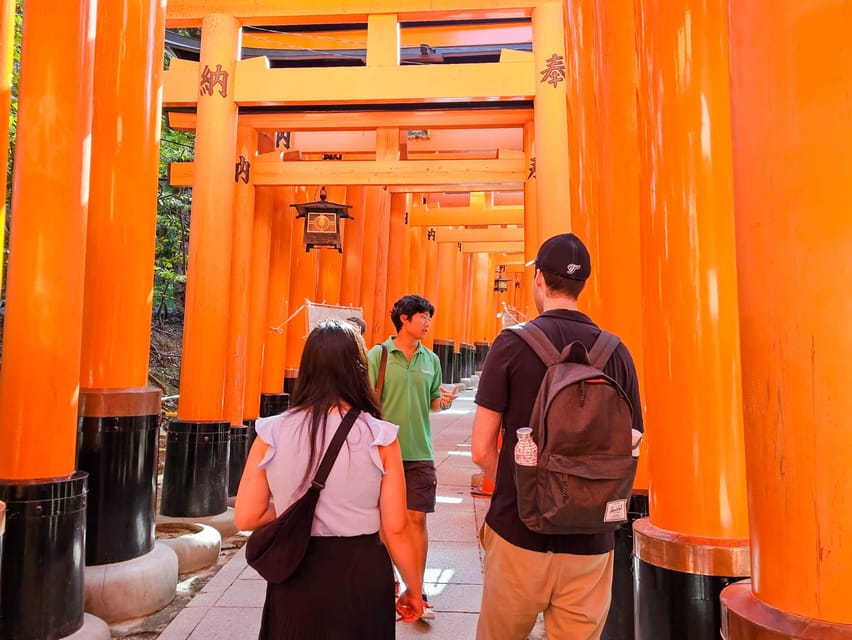
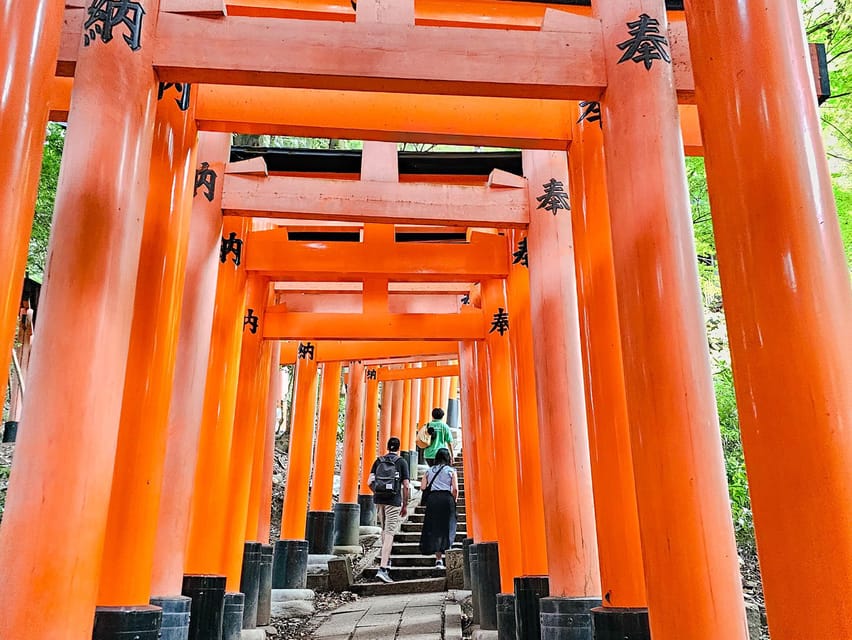
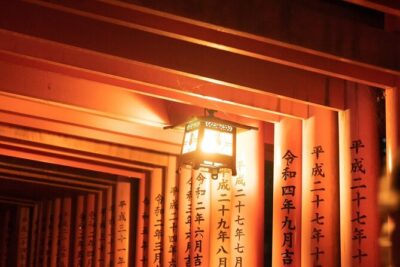
Fushimi Inari Taisha is one of those Kyoto experiences that feels instantly recognizable even if you’ve never been. The big reason is simple: the shrine’s torii gates don’t sit politely in one spot. They line up along trails on Mount Inari, turning your walk into a long, changing sequence of perspective and rhythm.
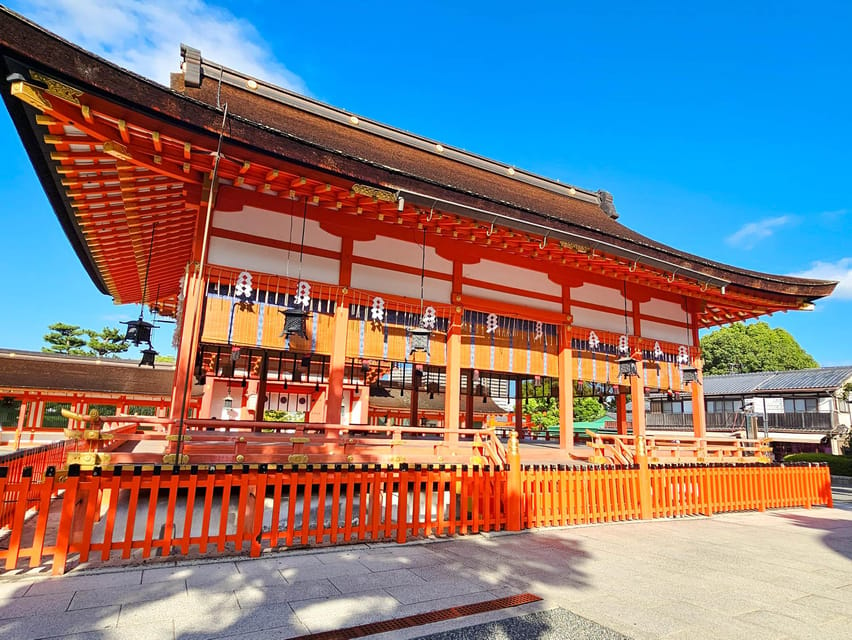
You start with the lower shrine area at the base—where the main entrance and an offering hall sit among smaller shrines. This is the part that’s easiest to reach and easiest to understand at a glance. Then, if you choose to keep going, the route climbs toward the upper shrine along the torii-lined hiking trails. That shift from flat shrine grounds to uphill trail is what makes the whole place feel like more than a quick stop.
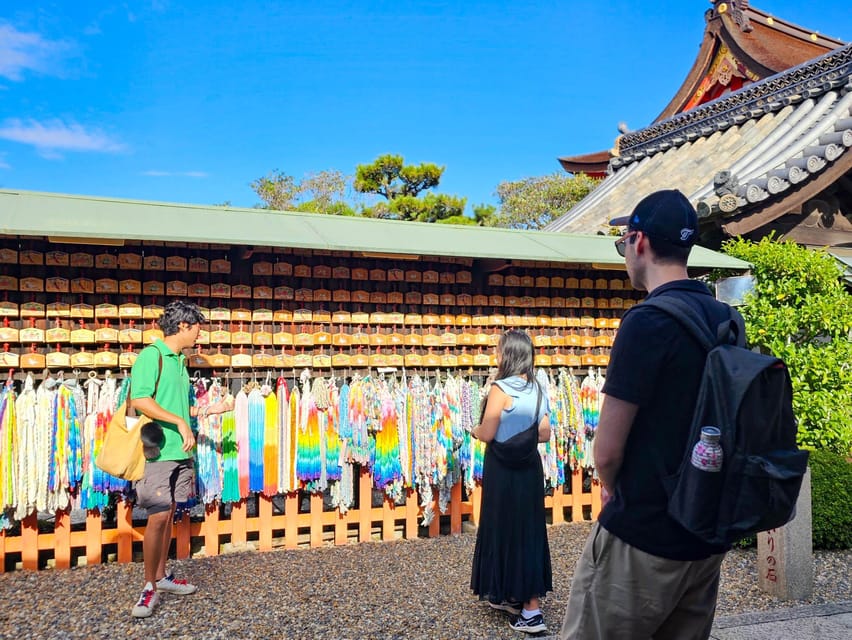
What I like most is that the tour doesn’t treat the gates like just a backdrop. You learn that Inari is worshipped as a patron of agriculture and commerce, and that the deity is associated with foxes as messengers. That background changes how you read what you’re seeing. You’re not just walking through red arches—you’re moving through a place that people approach with real religious meaning behind it.
More walks up through the vermilion torii of Fushimi Inari



Meeting at Daily Yamazaki Fushimi Inari Shrine and getting oriented fast
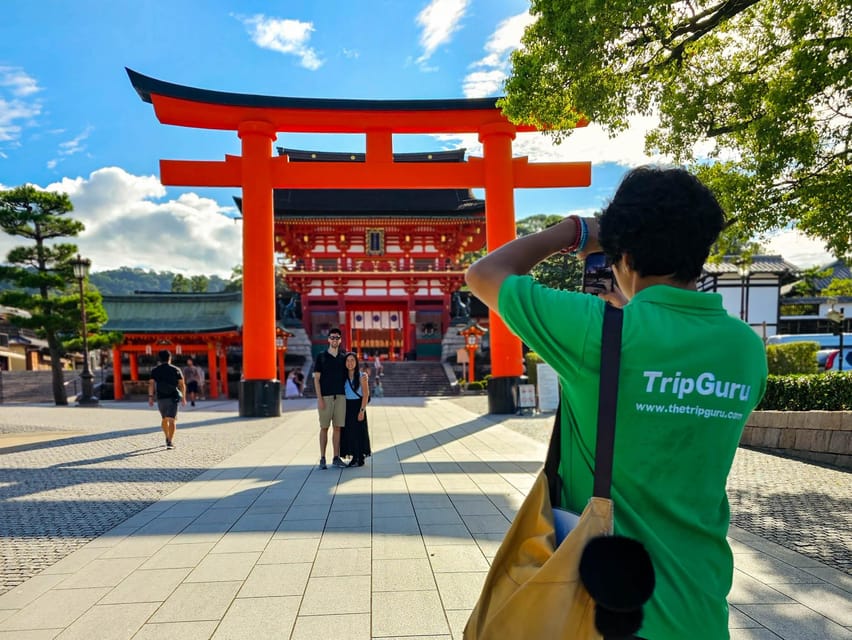
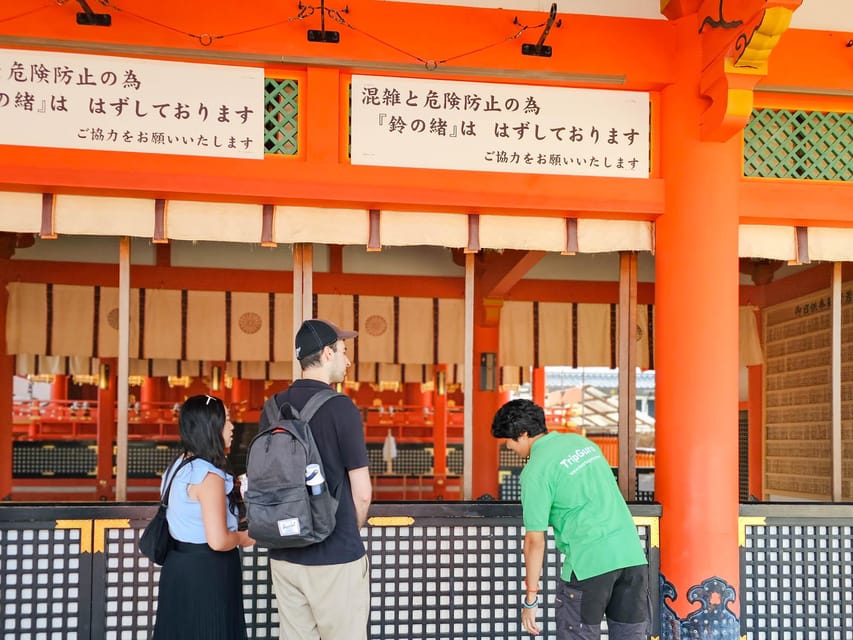
You’ll meet your guide at Daily Yamazaki Fushimi Inari Shrine. The guide will be wearing a TripGuru shirt or holding a TripGuru sign, so you should be able to spot them easily. This kind of meeting point matters because Fushimi Inari can get crowded, and you don’t want to waste your limited time in the area trying to locate your group.
The tour is listed as 2–3 hours, which is honestly a useful length for Kyoto. It’s long enough to experience the flow from lower shrine into the gate-lined trails (if you pick the hike option), but short enough that you can still plan a second activity the same day.
Two timing notes are worth your attention. First, your guide only waits up to 10 minutes before proceeding. Second, traffic to the meeting point can be heavier in the morning than navigation apps suggest. That’s not a reason to panic, but it is a reason to leave with extra buffer time—especially if you’re coming from somewhere farther in Kyoto.
Dress matters here too. Shrines ask for modest, respectful clothing, and that means avoiding items like shorts or tank tops. If you show up in casual travel clothes that are a little too exposed, you may feel awkward—or need to improvise.
Lower vs. Upper Shrine: choose the torii hike level that fits you
This tour gives you a choice, and it’s one of the best parts of the experience design.
Option A: do both lower and upper
If you want the full torii-trail feeling, you’ll hike along the mountain trails. This adds about an hour more of walking compared to lower-only. The upper shrine area includes smaller shrines along the way, and the big payoff is the chance to take in views of the city and surrounding mountains from higher up. If you like walking with a purpose—seeing the shrine deepen as you go—Option A is the one.
Option B: stick to the lower shrine for the gates
If your legs are not feeling it, or you’d rather get the highlights faster, the lower part gets you the main entrance area and the famous torii atmosphere without the uphill trail time. This is also the choice if you primarily want that classic torii look at a comfortable walking pace. You’ll skip the extra hike and still see a lot.
Either way, you get structure from a guide, and that’s important at Fushimi Inari because it’s easy to wander around without realizing what you’re actually looking at. The tour helps you connect where you are (base vs. trail vs. upper area) with what the place is doing culturally.
The route details: what happens during the walk
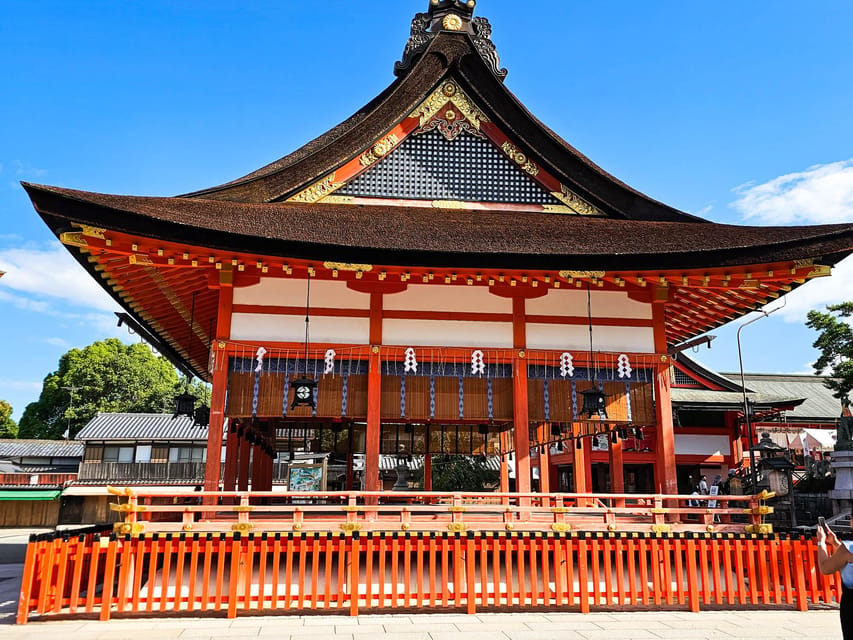
You’ll begin at the meeting point and then head into Fushimi Inari Taisha for the guided portion. The focus is on experiencing the shrine areas with context, not just following a map. Your guide points out key areas in the lower shrine zone and helps you understand what the shrine is dedicated to—Inari, and the fox messengers connection that ties into the shrine’s identity.
After that, there’s time for street food plus a walk segment of about 30 minutes. That blend is practical. It breaks up the shrine walking so you don’t burn through your energy only to feel hungry later. It also gives you a taste of the surrounding area rather than treating Fushimi Inari like a museum you sprint through.
One subtle benefit: a guide can help you manage flow when lines or crowds build up. The tour is short, so you want each chunk to count. A good guide keeps you moving at a pace that still allows stops to look, ask questions, and take photos without feeling like you’re being rushed.
What I learned (and what it means for you on-site)
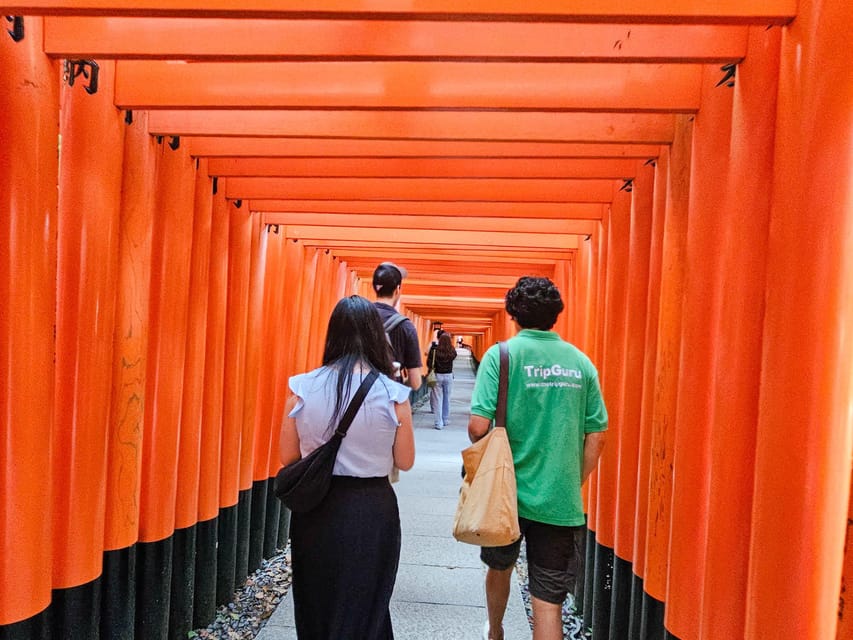
The best guided moments are the ones that make the physical details easier to understand. Here, the biggest story thread is Inari itself. You learn that Inari is worshipped as a patron of agriculture and commerce. That’s useful because it explains why people come here with devotion connected to livelihoods and daily life, not just tourism vibes.
You also connect Inari to foxes as messengers. That matters for how you interpret shrine symbolism and the presence of fox-related elements you might notice around the area. When you understand the relationship between deity and messengers, the shrine stops feeling like random décor and starts feeling like a coherent belief space.
From the guide notes in traveler feedback, the people leading the tour can make that type of information feel clear and human. For example, guides like Katz and Christiana are praised for being friendly while explaining what you’re seeing, not just reciting facts. Raphael earns extra points for practical help with groups that included kids and strollers, which is a reminder that the tour can stay thoughtful and flexible when circumstances call for it.
Other Kyoto tours and experiences to compare






Guide quality in a small group: why that changes your day
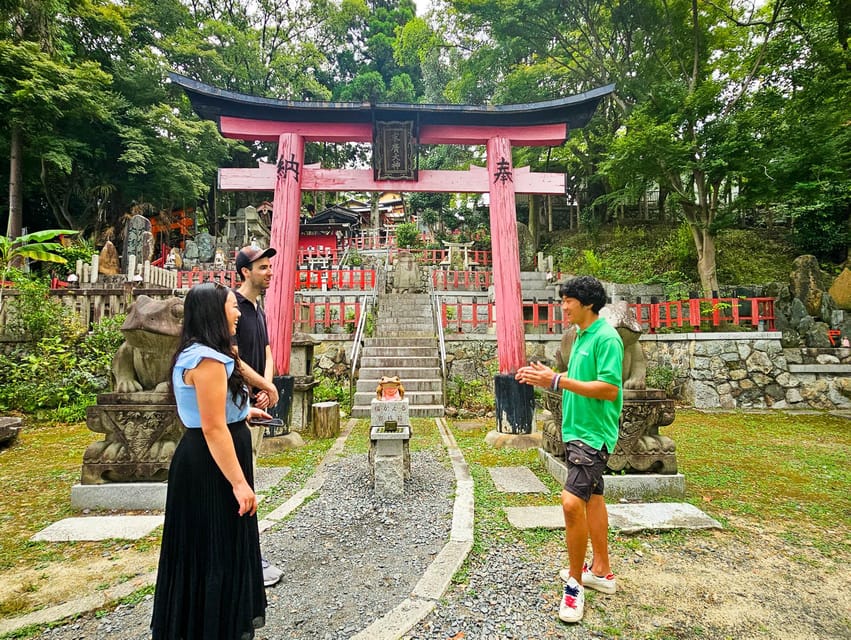
This is capped at 9 participants, and you can feel the difference with a group that small. You’re not stuck in a big shuffle, and you can ask questions without your guide having to juggle too many people.
The guide approach also shows up in real moments. One feedback highlight: a guide helped take pictures, checked in on comfort and hydration, and even provided water and mineral sweets to keep people going. That kind of attention is not glamorous, but it’s exactly what makes a walk tour feel smooth.
Another positive pattern: guides are described as patient with older members of a group and willing to accommodate different needs. That doesn’t mean the tour becomes easy for everyone, but it does mean your guide is likely thinking about how your group is doing—especially when the walking time and crowd levels fluctuate.
If you like getting your questions answered on the spot, this setup is a good match. You also get a more conversational experience than many strictly timed tours, which helps you enjoy the place instead of simply ticking it off.
Price and value: why $24 makes sense for 2–3 hours
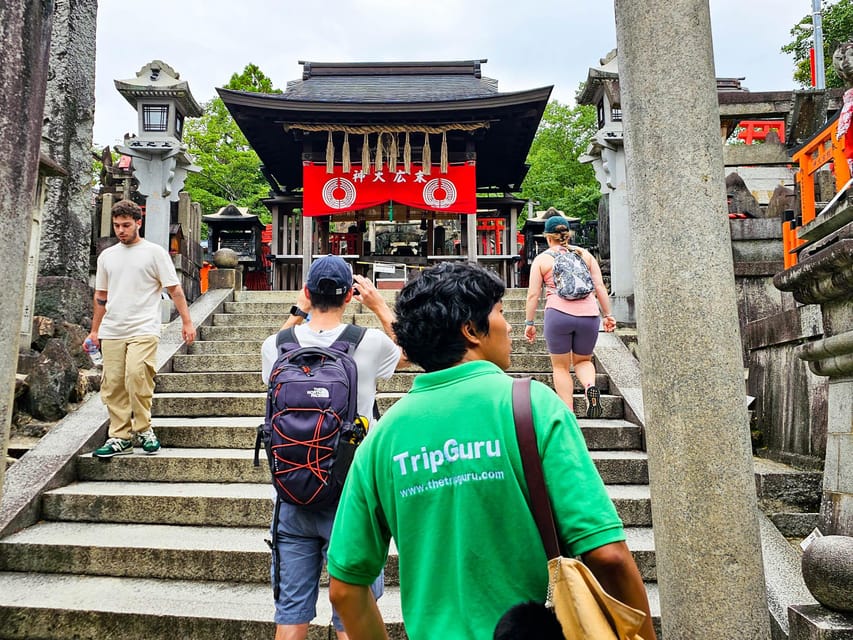
At $24 per person, the value comes from what’s included and how tightly the tour uses its time.
You get:
- an English-speaking guide
- entrance fees
- a walking tour
What’s not included includes meals and other drinks, and there’s no hotel pickup/drop-off. For most people, that’s fine. The meeting point is clearly identified, and you’re paying for interpretation and route guidance rather than transportation.
In Kyoto, entrance fees at major sites and the cost of a competent guide can add up fast. Here, because the tour is short (2–3 hours), you’re not paying for half a day of logistics. You’re paying for a focused window to see the core areas of Fushimi Inari with context—then you’re free to continue your day on your own.
If you’re trying to pack in highlights without turning the day into a moving train, this price and duration pairing is a strong deal.
Timing, shoes, and the simple rules that keep it enjoyable
This tour is straightforward, but tiny rules matter a lot at Fushimi Inari.
Bring comfortable shoes. The route involves walking through shrine grounds and, depending on option, a hike along the torii trails. Even if you’re not doing the upper portion, you’ll want footwear that can handle temple-area foot traffic.
You also need to be ready for modest dress expectations. Avoid clothes that are too revealing. This is not about fashion; it’s about showing respect in shrine spaces.
And be on time. Since your guide waits only up to 10 minutes, arriving late can cut your tour short. That’s especially important if you’re dealing with morning traffic.
Who should book this Fushimi Inari walking tour (and who shouldn’t)
This tour fits best if you:
- want a guided introduction to Fushimi Inari Taisha in a short window
- like photo-worthy walks but also want cultural context
- prefer small-group pacing and a real chance to ask questions in English
- are curious about Inari worship, agriculture/commerce connections, and fox messengers
Skip it (or choose another plan) if you:
- are pregnant
- have mobility impairments
- have heart problems
- have respiratory issues
That’s not discouragement—it’s simply a safety and comfort call, given the walking and optional hike.
Should you book? My practical recommendation
If your goal is to experience Fushimi Inari Taisha without wasting time figuring things out on your own, this is an easy yes. The $24 cost feels fair because it includes the guide and entrance fees, and the short 2–3 hour format keeps the day flexible.
I’d book it especially if you’re choosing a lower-and-upper plan (Option A) and want your hike to come with meaning, not just steps. If you’re short on energy or you want the classic torii atmosphere quickly, Option B still gives you a structured way to see the main shrine areas.
One caution: be honest about your walking comfort. The most beautiful views come with the uphill part, and you’ll enjoy the tour more if you go in with the right expectations for footwear and pace.
FAQ
How long is the Kyoto Fushimi Inari Taisha guided walking tour?
The tour lasts about 2–3 hours. Starting times depend on availability.
Where do I meet the guide?
Meet your guide at Daily Yamazaki Fushimi Inari Shrine. The guide will be wearing a TripGuru shirt or holding a TripGuru sign.
Is the tour offered in English?
Yes. The tour has an English-speaking guide.
What are the options for the upper and lower shrine areas?
You can choose to explore both the upper and lower shrine (Option A), which includes the hiking trail and about an extra hour of walking. Or you can skip the hike and focus on the lower shrine only (Option B).
What is included in the tour price?
The tour includes an English-speaking guide, entrance fees, and the walking tour.
Is there a street-food stop?
Yes. The plan includes a street-food stop and then a walking segment.
How big is the group?
The group is limited to 9 participants.
Do I need to bring anything?
Wear comfortable shoes. Also dress modestly and respectfully for the shrine grounds.
What about flexible booking and cancellations?
You can cancel up to 24 hours in advance for a full refund, and you can reserve now and pay later (you pay nothing today).
More Tours in Kyoto




More Tour Reviews in Kyoto


Fushimi Inari, a Few More Ways

Just added: more Kyoto tours to browse








Fushimi Inari Shrine Tours, compared.
 ★ 4.8Fushimi Inari, Kinkakuji, Bamboo Grove 1 Day Bus TourFrom $1224,316 reviews
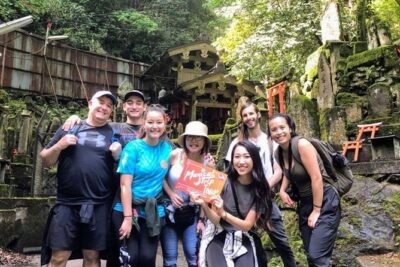 ★ 5.0Fushimi Inari Hidden Hiking Tour (Private Option Available)From $631,750 reviews
 ★ 4.7Kyoto/Osaka: Nara, Fushimi Inari Taisha, Arashiyama Bus TourFrom $521,275 reviews
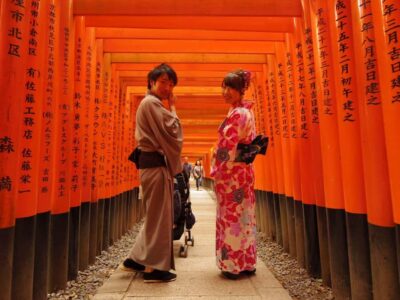 ★ 4.4Osaka/Kyoto: Arashiyama, Nara & Fushimi Inari Shrine w/LunchFrom $61754 reviews
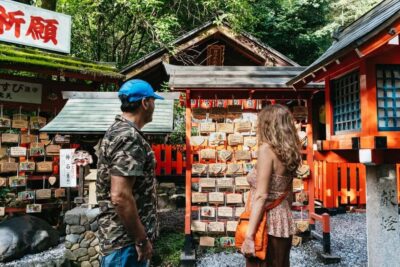 ★ 4.7Nijo Castle, Kiyomizu & Fushimi Inari Guided TourFrom $54700 reviews
 ★ 5.0Nijo, Kinkaku-ji, Arashiyama, Kiyomizu & Fushimi InariFrom $51699 reviews
 ★ 5.0Kyoto Fushimi-Inari Night Walking TourFrom $43320 reviews
 ★ 4.93-Hour Fushimi Inari Shrine Hidden Hiking TourFrom $72270 reviews
Browse the lists this tour appears in