
Reviewed · GION & GEISHA DISTRICT TOURS
Kyoto Evening Gion Food Tour Including Kaiseki Dinner
Gion after dark is not about rides and checklists. It’s about slow Kyoto: crossing the Kamogawa, drifting through lantern-lit streets, then ending with a proper 10-course kaiseki meal in the Pontocho area. I love that the tour pairs walking (so you actually understand the layout and mood) with food that’s built around seasonality and balance. I also like that the group stays small (up to 10), so your guide can actually answer questions. One drawback to consider: you’ll do real walking, and the timing is fixed for the 5:00 pm start—so you need to be ready to move.
This is a great fit if you want the Gion experience without trying to “figure it out” on your own. You’ll learn what to look for on main streets and back alleys, and you’ll get tasting moments along the way. I’d especially think of it as a first-timer shortcut: you get context first, then the meal.
In This Review
- Key highlights worth planning for
- Kaiseki + Gion after dark: why this 3-hour walk feels like a shortcut
- From Japan Kanji Museum to the Kamogawa terraces at 5:00 pm
- Pontocho and Gion’s maze: what you’ll actually learn as you walk
- Gion Shirakawa stops: shrines, bridges, and Hanamikoji Street details
- The 10-course kaiseki meal in Pontocho: how the evening really ends
- Price check: does $276 make sense for a kaiseki evening?
- Group size, guides, and why a good host changes everything
- Walking level and timing: what to bring for a 3-hour night loop
- Food options and included drinks: matcha, green tea, and smart expectations
- Who this Kyoto evening Gion food tour suits best
- Should you book Kyoto Evening Gion Food Tour with Kaiseki?
- FAQ
- What time does the tour start?
- How long is the Kyoto Evening Gion food tour?
- Where is the meeting point?
- Where does the tour end?
- What’s included in the dinner?
- Are there options for dietary restrictions?
- How many people are in the group?
- Is there an age limit for alcohol?
- What happens if the weather is bad?
Key highlights worth planning for
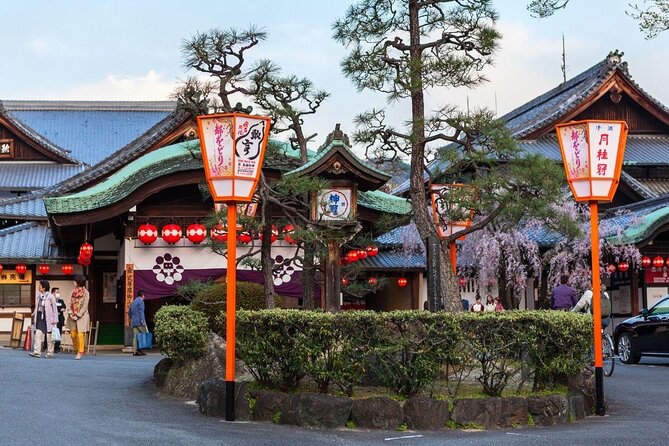
- Kamogawa river terraces at dusk: a classic local evening scene as you cross and wander.
- Gion and Pontocho orientation: you learn where things are and why they look the way they do.
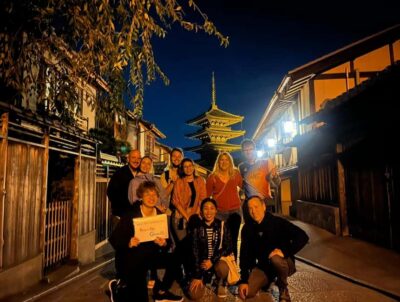
- Gion Shirakawa sights in the walking loop: shrine, temples, bridges, and Hanamikoji Street on foot.
- 10-course kaiseki ryōri dinner: built around seasonal ingredients and careful flavor pairing.
- Small group size: max 10 travelers, which makes the stroll feel less rushed.
- Included dessert + green tea: a complete end to the meal, not just “dinner and out.”
Kaiseki + Gion after dark: why this 3-hour walk feels like a shortcut
Kyoto at night has a different volume. Daytime crowds feel like a city. Evening crowds feel like a story you can follow—slow enough to notice details.
This tour is built around two things I really value: direction and dinner. The walk gives you a sense of where Gion begins, how Pontocho sits along the vibe of the river, and what alleyways actually connect. Then the kaiseki dinner gives you a reason to slow down even more, with a multi-course flow designed to highlight seasonal rhythm.
The price is not cheap on paper. But when you’re paying for a guided walk plus a 10-course kaiseki meal (with green tea and dessert, plus one drink), it stops looking like just “a stroll with snacks.”
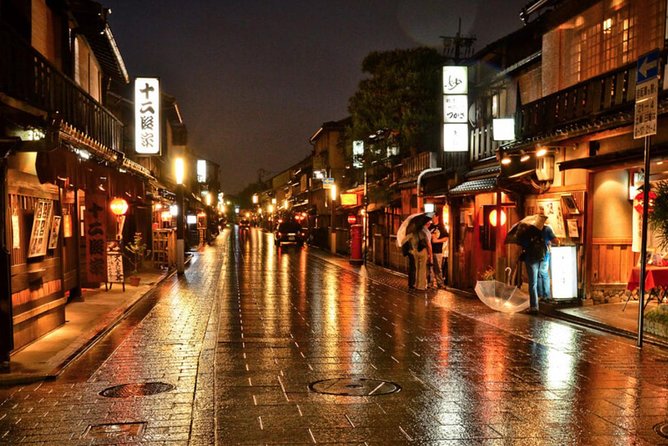
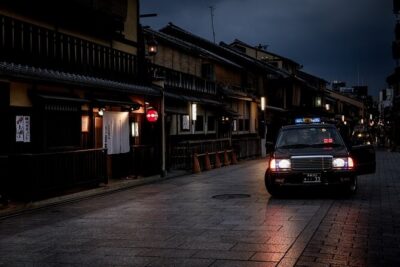
More evenings along the lantern-lit lanes of Gion


From Japan Kanji Museum to the Kamogawa terraces at 5:00 pm
You meet at Japan Kanji Museum & Library, located at 551 Gionmachi Minamigawa, Higashiyama Ward. The start time is 5:00 pm, and it’s a short first stop (about 5 minutes) where you’ll get your bearings before the main walk.
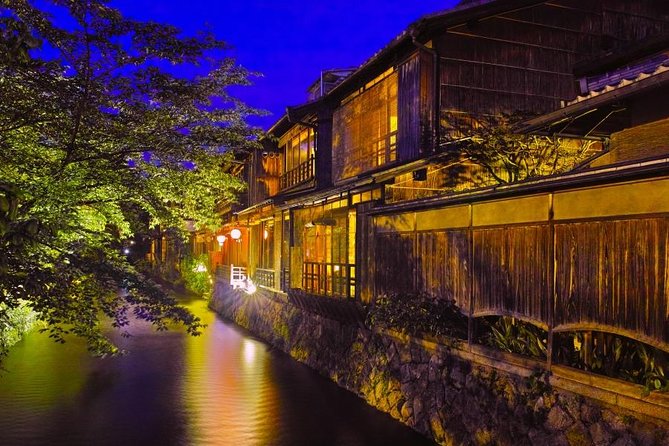
Then you head toward the Kamogawa River, crossing the bridge and moving along the river terraces. This part matters more than it sounds. Kyoto evenings often play out in outdoor layers—people sitting along the water, lantern glow reflecting off the dark, and the sense that the river is a social calendar.
If you’re the type who likes a city to “make sense,” this is where the tour works. You’re not just eating in Gion. You’re learning how Kyoto spaces itself: river, street, neighborhood.
Practical note: you’ll be walking early evening light into night light. Wear shoes you trust. The kaiseki portion can make you forget your ankles, but the streets won’t.
Pontocho and Gion’s maze: what you’ll actually learn as you walk
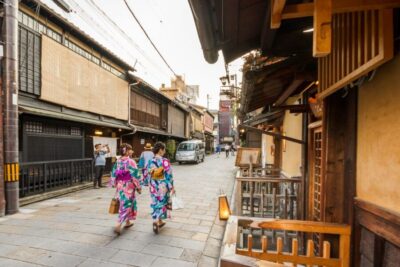
After the river, the route shifts toward Pontocho, which is traditionally known as a geisha area going back to the 16th century. The tour’s goal here isn’t to hunt for photos. It’s to help you understand what makes Pontocho and Gion distinct: narrow lanes, traditional wooden buildings, and the way the entertainment district works.
From there you enter Gion, Kyoto’s center of traditional arts and entertainment. The tour is designed as a guided orientation through both main roads and back alleys, so you can see how the neighborhood is laid out. That’s what turns a confusing maze into something you can navigate later on your own.
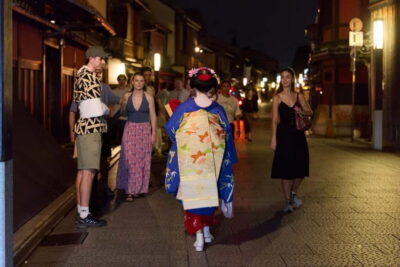
Here’s one of the best “in-the-moment” parts: the guide helps you spot what’s worth noticing, like how kimonos and teahouse movement signal that geisha and maiko activity is happening between venues. Even if you don’t see someone at exactly the right second, you’ll still learn how the district’s rhythm works.
A tip I’d give you: keep your eyes up and scan the street texture, not just storefronts. In Gion, what looks like “just an alley” can be the difference between a dead end and a perfect perspective line.
Gion Shirakawa stops: shrines, bridges, and Hanamikoji Street details
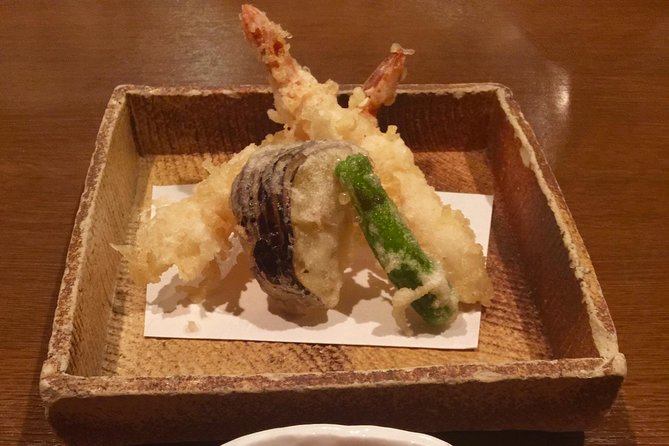
One of the tour strengths is that it doesn’t treat Gion as only one street. It brings you through Gion Shirakawa and layers in small, meaningful stops that give the neighborhood its texture.
You’ll wander through the Shirakawa area for about 15 minutes, with pauses that often include “whet your appetite” style tastings—plus the kind of context that makes the district feel lived-in rather than staged. You’ll also pass by several specific points on foot, including:
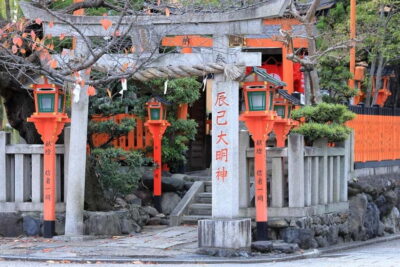
- Tatsumi Daimyojin Shrine
- Statue of Izumo-no-Okuni
- Kyomizu Temple
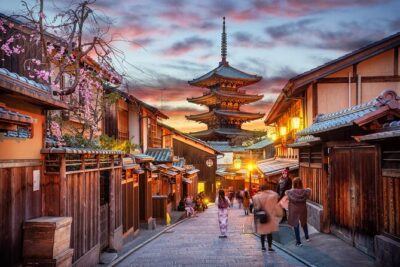
- Hōkanji Temple and Yasaka Pagoda
- Tatsumi Bridge
- Hanamikoji Street
- And you’ll also see Gionmachi as part of the walking loop
You don’t need to be a temple expert for this to work. The tour’s value is that someone points out what you’re seeing and why it matters in the local geography of entertainment and daily life.
If you care about authenticity, Shirakawa is where that feeling gets stronger. It’s less about the biggest postcard view and more about Kyoto’s old structure still shaping what you experience on the ground.
The 10-course kaiseki meal in Pontocho: how the evening really ends
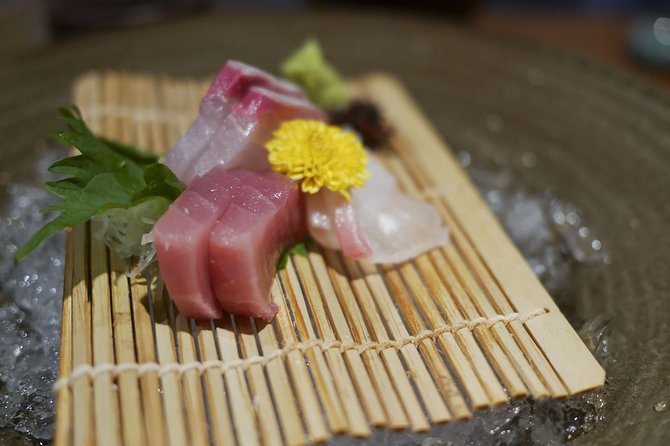
Dinner is where the tour justifies itself. You’ll finish at the Pontocho Idumoya area (your end point is Pontocho area, listed as 173-2 Kashiwayachō, Nakagyo Ward).
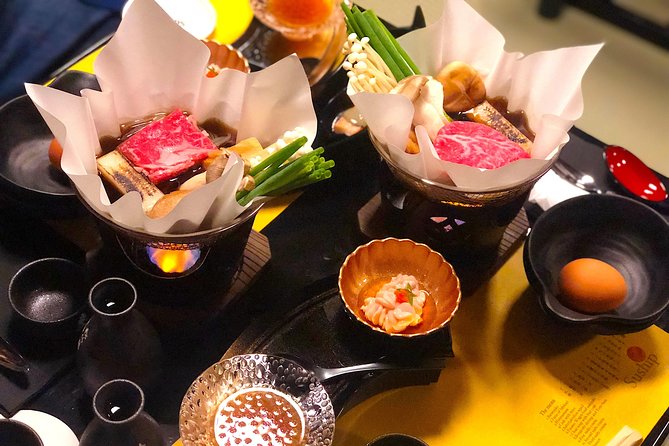
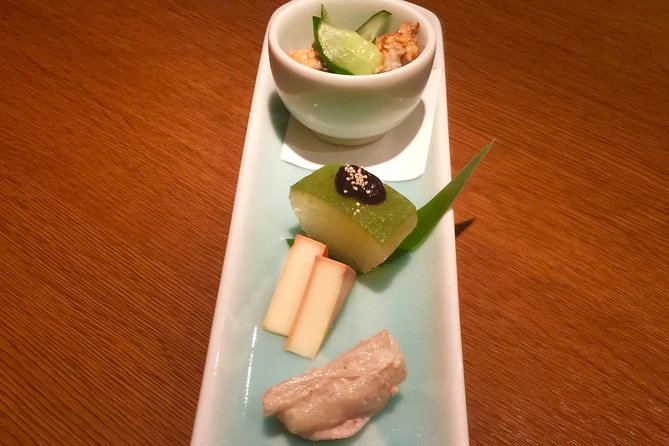
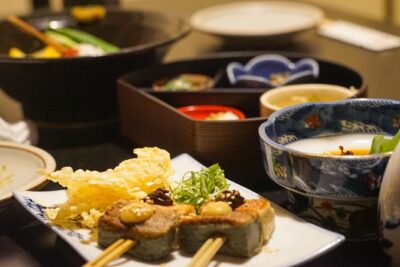
The meal is a 10-course kaiseki experience. Kaiseki is built around seasonal ingredients, arranged so flavors work together—like a planned conversation rather than a pile of dishes. You’ll also get green tea and dessert, plus one included drink.
What I think matters most for you: kaiseki pacing. Ten courses sounds intense, and it can be. The best way to enjoy it is to slow your eating and let the flow do the work. If you rush, you miss the point of the sequence.
Also, don’t treat dessert as an afterthought. It’s part of the final “shape” of the meal, and the tour includes it.
Diet note: the tour description says it’s vegetarian, pescatarian, and gluten-free friendly. That’s a big deal for kaiseki, because meals are usually planned around ingredients and timing. If you have dietary needs, confirm them when you book so the kitchen can prepare accordingly.
Still hungry? More tastes of Kyoto

Price check: does $276 make sense for a kaiseki evening?
At $276 per person, this is a mid-to-higher priced Kyoto experience. So the real question is: are you paying for convenience, or are you paying for value?
You’re paying for three things:
- a guided walk through Gion and the Kamogawa river area (with tastings along the way)
- a small-group format (max 10 travelers)
- a full 10-course kaiseki dinner with green tea, dessert, and one drink included
If you tried to do this on your own, the dinner alone is the big cost driver, and you’d still need to figure out where to go in the evening and how to interpret what you see. This tour compresses that learning into a set route, with a guide translating what the neighborhood is “saying.”
Where the value can feel weaker is if you’re expecting a larger volume of food than kaiseki typically provides. Kaiseki is about balance, not stuffing you. Some people prefer their food to be more filling, and this isn’t a “huge portions” kind of dinner by default.
Group size, guides, and why a good host changes everything
The tour caps at 10 travelers, and that’s a sweet spot. With a larger group, you get pulled along like luggage. Here, you’re more likely to ask questions and hear answers that actually fit the moment.
You may meet different guides, and the standout detail from past experiences is how strongly the best guides connect the dots between food, geisha culture, and what you see on the streets. Names that have shown up in guidance on this kind of itinerary include Thomas, Sae, Yoshiko, Zae, Rosalia, Bernard, and Akari. The common thread is clear communication and a warm, human way of walking you through the neighborhood without making it feel like a classroom.
If you’re going to spend money on a guided food tour, guide quality is the whole game. This one is built around that.
Walking level and timing: what to bring for a 3-hour night loop
The tour runs about 3 hours and starts at 5:00 pm. You should plan for evening temperatures and diminishing light once you leave the river and move into narrower streets.
The tour also calls for strong physical fitness. That doesn’t mean “athlete only,” but it does mean this is a real walking experience. There will be multiple stops, plus the transfer-like movement between areas on foot.
What to bring:
- Comfortable shoes with grip
- A light layer (Kyoto nights can feel cooler than you expect)
- Your curiosity. The best part of the evening is noticing what the guide points out.
If you’re traveling with kids, the tour allows children but says kids must be accompanied by an adult. For kids 10 and above, a passport information copy is required.
Also, if you’re counting on alcohol: the minimum drinking age is 21. You’ll still get tea and dessert, so the evening isn’t built only around drinking.
Food options and included drinks: matcha, green tea, and smart expectations
Food on this tour has two layers: tastings during the walk, then the full 10-course kaiseki dinner.
You should expect a traditional structure: multiple small courses, with green tea and dessert included. There’s also one drink included.
Dietary friendliness is listed as vegetarian, pescatarian, gluten-free friendly, which helps a lot if you’re avoiding certain ingredients. Still, I’d treat this as something to communicate clearly at booking, because kaiseki isn’t one-size-fits-all.
One more practical expectation: if you arrive hungry, pace yourself. People sometimes go into kaiseki expecting big hearty plates. You’ll likely feel satisfied by the end, but it’s a gradual satisfaction, not a sudden “I’m full” moment after one course.
Who this Kyoto evening Gion food tour suits best
This is best for you if:
- you’re visiting Kyoto for the first time and want a fast orientation through Gion and Pontocho
- you want to see the district on foot at night, with context as you go
- you care about food that’s seasonal and thoughtfully composed
- you like small groups and guides who answer questions
It’s not the best choice if:
- you hate walking
- you want a casual, quick dinner rather than a multi-course experience
- you’re mainly chasing the biggest geisha sighting and aren’t interested in the neighborhood explanations
Should you book Kyoto Evening Gion Food Tour with Kaiseki?
My take: yes, if kaiseki is on your Kyoto wishlist and you want the story behind it. This tour is strongest when you value guided interpretation. It turns “I’m in Gion” into “I understand the layout, the mood, and what I’m seeing.”
Book it if you want that evening rhythm: Kamogawa terraces, Pontocho/Gion streets, then a proper dinner with green tea and dessert. The small group size and the included 10-course meal are the big value anchors.
Skip or reconsider if you’re expecting a purely hands-on cooking class, if you dislike multi-course pacing, or if your schedule can’t handle a fixed 5:00 pm start and real walking for about 3 hours.
FAQ
What time does the tour start?
The tour starts at 5:00 pm.
How long is the Kyoto Evening Gion food tour?
It’s approximately 3 hours.
Where is the meeting point?
You meet at Japan Kanji Museum & Library, 551 Gionmachi Minamigawa, Higashiyama Ward, Kyoto.
Where does the tour end?
It ends in the Pontocho area (Pontocho Idumoya, 173-2 Kashiwayachō, Nakagyo Ward).
What’s included in the dinner?
The dinner includes a 10-course kaiseki meal plus green tea and dessert, and one drink is included.
Are there options for dietary restrictions?
The tour lists vegetarian, pescatarian, and gluten-free friendly options.
How many people are in the group?
The maximum group size is 10 travelers.
Is there an age limit for alcohol?
Yes. The minimum drinking age is 21.
What happens if the weather is bad?
This experience requires good weather. If it’s canceled due to poor weather, you’ll be offered a different date or a full refund.
More Tour Reviews in Kyoto




More Kyoto Food Tours
Still in Gion? Keep Going

Just added: more Kyoto tours to browse








Gion & Geisha District Tours, compared.
 ★ 4.7Kyoto Geisha Walking Tour: Gion District & Hidden GemsFrom $253,273 reviews
 ★ 4.9Gion Magical Night Walking Tour with Geisha TriviaFrom $242,393 reviews
 ★ 4.7Gion Geisha District Walking Tour – Stories of GeishaFrom $202,187 reviews
 ★ 4.9Best of Kyoto: Gion, Geisha, Pagodas & CobblestonesFrom $242,058 reviews
 ★ 4.5Night Walk in Gion: Kyoto’s Geisha DistrictFrom $212,003 reviews
 ★ 5.0Kyoto Night Foodie Tour in Gion (9+ dishes + 6 Sake tastings)From $1631,762 reviews
 ★ 5.0Kyoto Gion Geisha District Walking Tour – The Stories of GeishaFrom $251,441 reviews
 ★ 5.0Kyoto Gion: 2-Hour Geisha Culture & History Walking TourFrom $231,186 reviews
Browse the lists this tour appears in