
Reviewed · GION & GEISHA DISTRICT TOURS
Kyoto Nighttime All-Inclusive Eats and Streets, Gion and Beyond
Kyoto at night has a secret economy. This all-in-one evening walk through Gion and beyond pairs practical food stops with cultural context, so you’re not just eating—you’re understanding why the nighttime scene looks the way it does. Expect guidance on geiko culture, how “evening entertainment” changed over time, and then a paced route through Kyoto’s bar districts.
I particularly like that the tour keeps things human-scale: small group size, lots of conversation, and a guide who can explain the geography of Gion and the Kamogawa River areas without making it feel like a lecture. I also like the food plan, which mixes a few regional bites in the first restaurant and then another sit-and-snack moment later, often with guides like Hugo or Laura bringing energy and context to both.
One possible drawback: you’ll do a fair amount of walking (and Kyoto nights can be cold or wet), and there can be occasional tradeoffs depending on where the group eats—like the reality that smoking happens in some places in Japan, even if it’s rare.
In This Review
- Quick hits before you go
- Entering Gion’s nighttime world (and why it feels different)
- The geiko vs geisha lesson you’ll actually remember
- From storytelling to standing bars: how the food hour works
- Crossing the Kamogawa: Pontocho, Kiyamachi, and Kawaramachi after 8pm
- The second food stop: finishing strong without losing the plot
- Price and value: what $119 buys you in Kyoto at night
- Logistics that matter (and the few things to watch)
- Who this Kyoto night tour suits best
- Should you book this Kyoto nighttime eats walk?
- FAQ
- What time does the tour start and how long does it run?
- Where do we meet, and where does the tour end?
- What food and drinks are included?
- Is there an alcohol age requirement?
- Can vegetarians (and other dietary needs) be accommodated?
- How many people are in the group?
- Do I have to worry about walking a lot?
- What happens if the weather is bad?
Quick hits before you go
- Gion after dark: Learn why Kyoto uses geiko and how entertainment evolved, including today’s hostess-club world.
- Two beverage moments included: One drink at each of the two restaurant stops, alcoholic or non-alcoholic.
- Food that doesn’t overwhelm: Multiple small dishes first, then a second restaurant finish, with pacing that keeps you from feeling stuffed.
- Pontocho, Kiyamachi, Kawaramachi: East-to-west Kyoto street contrast, from narrow old lanes to younger night areas.
- Small groups (max 6): Easier conversation, faster questions, less crowd chaos.
Entering Gion’s nighttime world (and why it feels different)
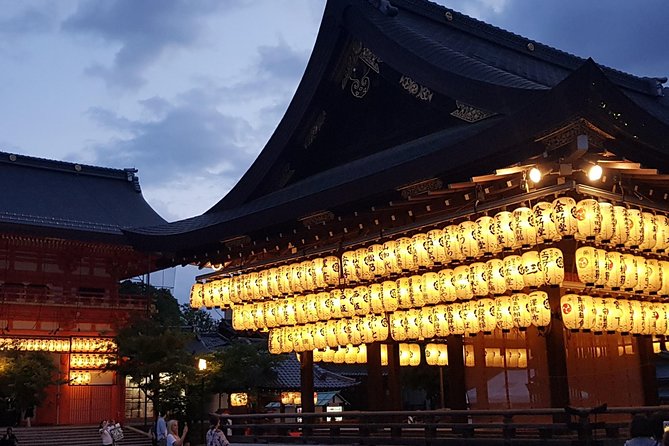
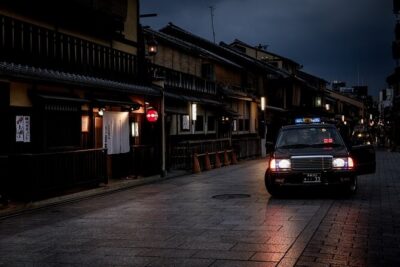
Kyoto’s daytime is all about temples, gardens, and slow beauty. Kyoto at night is about rhythm—doors opening, lantern light on wood, and the way people treat a meal as part of the evening. That’s why this tour starts when it actually matters: once you’ve had enough daytime sightseeing to be ready for something more lived-in.
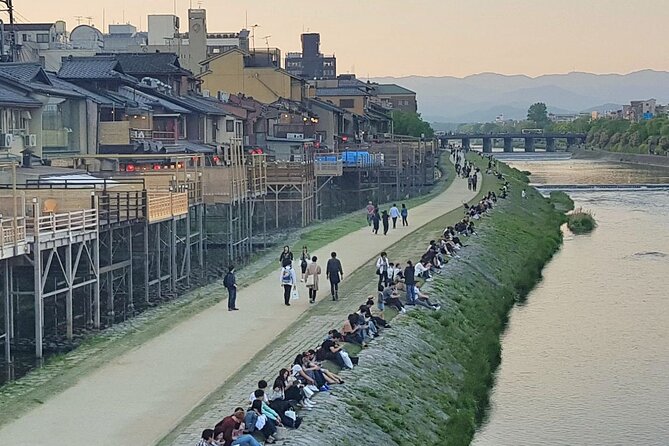
You meet at Minamiza Theater (松竹南座) near Gion, at 6:30pm. From there, you begin with a guided walk through Gion, which sits on the east side of the Kamogawa River. This is a key choice. The river area isn’t just a pretty postcard line on a map—it’s how the neighborhood flows and how evening life stacks up.
I like that the walk doesn’t only point at famous streets. It also explains the cultural rules people follow here—especially around geiko (and why you’ll hear geiko rather than geisha in Kyoto). It’s the kind of context that makes you look up at façades and lanterns and street layouts with more understanding, instead of just snapping photos and moving on.
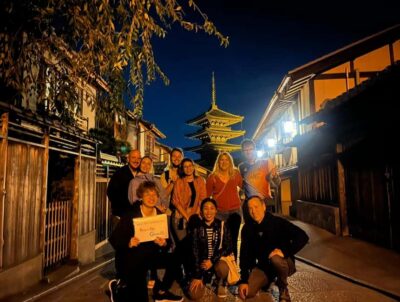
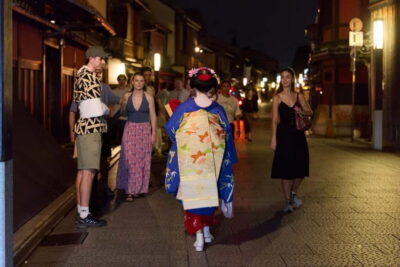
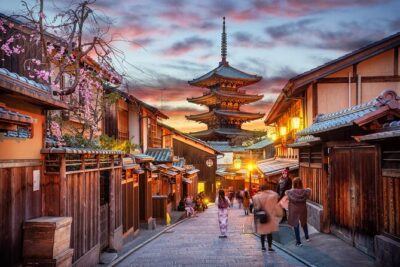
More evenings along the lantern-lit lanes of Gion
The geiko vs geisha lesson you’ll actually remember
Early in the evening, your guide gets into the “evening entertainment” story of Kyoto. That includes geiko culture and the distinction you’ll hear repeatedly: Kyoto uses geiko, not geisha. (The wording matters because it signals local nuance, not just English translation.)
You’ll also get a clear explanation of how this world has changed over time—how older traditions connect to today’s entertainment industry, including hostess clubs. This is where the tour earns its title as more than a food walk. Even if you don’t care about history in the classroom sense, you’ll leave with a better sense of what you’re seeing.
And yes, the tour is suitable for teens and up (13+ is required). That matters if you’re traveling with older kids who want the street-life angle without a sketchy vibe.
From storytelling to standing bars: how the food hour works
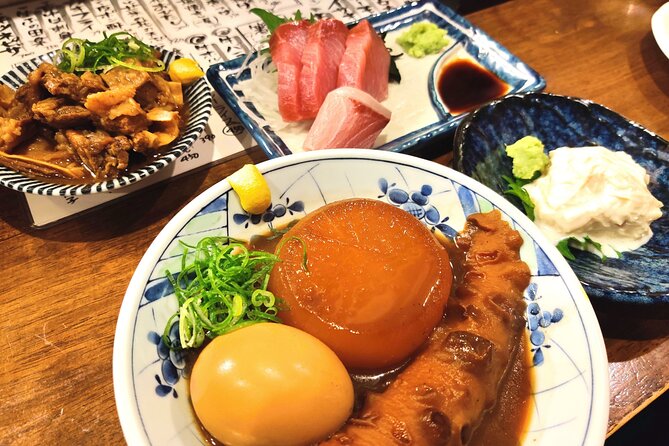
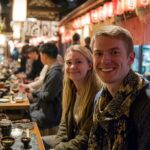
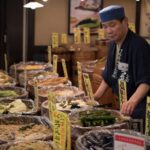
Around 7:30pm, the walk shifts gears. You head into a locally run place for an hour that’s part tasting, part cultural education through the act of ordering and eating. The plan is simple: you try a few regionally representative dishes, and you get a beer as the default option—though your guide can help you choose sake or shochu if you’d rather.
What’s smart here is pacing. You’re not asked to shovel huge portions in one go. The idea is to sample enough to get variety, but keep you feeling good for the rest of the evening. Some diners specifically highlight that the portions feel satisfying without tipping into too-full fatigue—exactly what you want on a night walk.
Dietary needs are handled too. Vegetarians are accommodated, and the tour also notes it will accommodate different restrictions, tastes, and comfort levels with bravery. If you’re traveling with someone who wants non-alcoholic options, you can still keep the schedule and the dining experience intact.
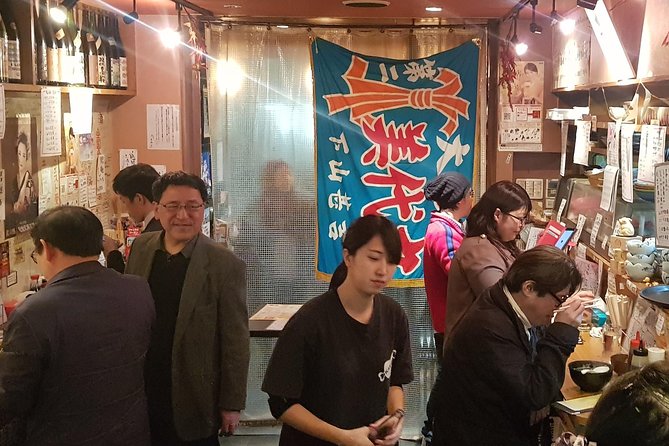
Practical note: you should expect Japanese “local bar” style. Even when you sit, the atmosphere can be lively, and sometimes seating is more communal or compact than a full-service restaurant. That’s part of the charm, but it’s also why good guides matter—someone like Bryan or Maya (names you may hear in past groups) tends to keep the experience smooth while you’re eating and learning.
Crossing the Kamogawa: Pontocho, Kiyamachi, and Kawaramachi after 8pm
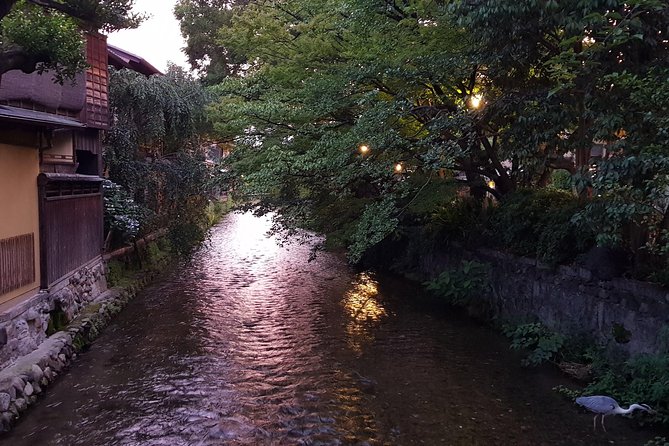
At 8:15pm, you switch neighborhoods—still following the river’s influence, but now moving toward the west side. This is where Kyoto night scenery changes character quickly, and your guide helps you notice it.
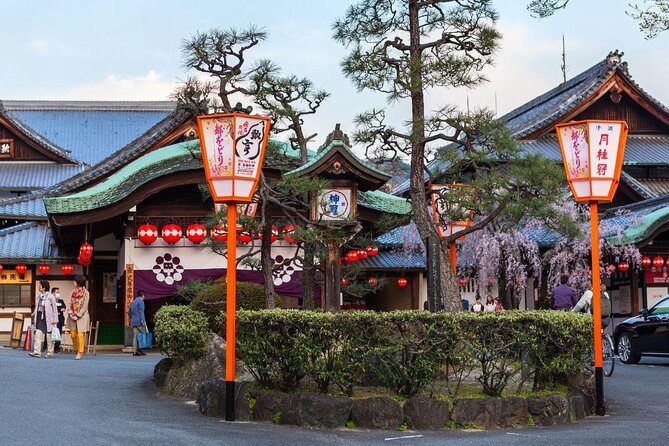
You’ll stroll through areas including Pontocho, Kiyamachi, and the Kawaramachi St. zone. The difference between these streets is the whole point. The older narrow lanes in Pontocho are the kind of streets where Kyoto seems determined to protect tradition—close, quiet, and visually detailed even when the crowd is small.
Then you walk a bit farther to districts a few streets away, where the energy feels more modern. The contrast is subtle enough to feel authentic, not like a theme park switch, but strong enough that you can tell Kyoto doesn’t treat night life as one thing.
I also like that this segment isn’t framed as nightlife for nightlife’s sake. The narration gives you a reason to pay attention: how people use these streets after dinner, how the city balances preservation with constant change, and how the atmosphere supports the food stops you’re about to make.
The second food stop: finishing strong without losing the plot
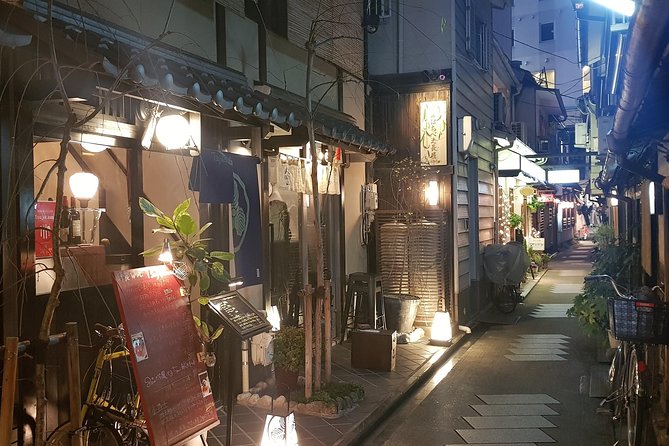
Around 9:00pm comes the second restaurant stop—another thoroughly vetted place that the guide expects you’ll enjoy. This is your “finish” meal moment, with more tasty dishes plus another included drink.
Here’s why this works: you don’t eat everything at once. The tour builds from lighter tastings into something more substantial, so your energy stays steady while you keep walking. That also helps if you’re not drinking much, because you still have plenty of food momentum to keep the night fun.
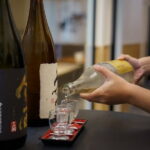
Your included drinks are part of the value. The tour includes two alcoholic or non-alcoholic beverages total, with one in each restaurant. If you’re drinking alcohol, Japan’s minimum drinking age is 20, so plan accordingly if anyone in your group is under that age.
Also remember: drinks beyond the included two are on you. The tour notes additional drinks can be purchased directly where you eat.
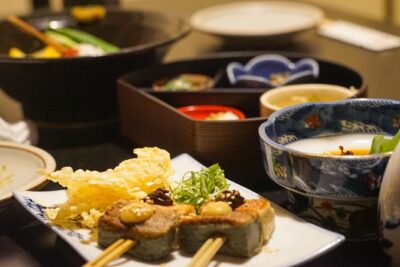
Still hungry? More tastes of Kyoto
Price and value: what $119 buys you in Kyoto at night
At $119 per person for about 3 hours, this isn’t a cheap snack-and-stroll. It’s not trying to be. You’re paying for three things that add up fast in Kyoto:
1) Local-guided navigation through specific neighborhoods at night
Getting from Gion to the bar districts isn’t hard on a map, but it’s hard to do without missing the small lanes and the places that feel truly local. The guide’s job is to reduce that stress and keep the evening flowing.
2) Two restaurant stops with included drinks
Dinner is included, plus two beverages total—so you’re not doing the “what should we order and will it be awkward” math at each place.
3) Cultural context that changes how you see the streets
The geiko explanation, the geiko vs geisha language detail, and the evolution of entertainment toward hostess clubs are the kinds of stories you’d otherwise have to piece together yourself.
One more value angle: the small group size. The tour caps at 6 travelers, with up to 8 allowed in certain cases if everyone is on the same reservation. That keeps it more personal than the big-bus, big-batch type of sightseeing.
In other words: for $119, you’re buying convenience, guidance, and an eating plan that feels designed rather than accidental.
Logistics that matter (and the few things to watch)
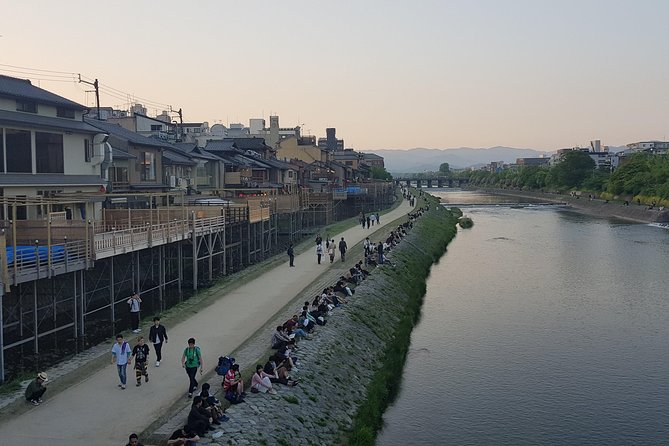
This experience runs for about 3 hours, starting at 6:30pm. Your end point is Kyoto-Kawaramachi Station, which is convenient if you want to continue exploring on your own afterward.
The meeting point is specific: Minamiza Theater (松竹南座) at the 2nd floor west lobby. That’s useful, but it also means you’ll want to arrive a little early and be ready to identify the group. One past issue people raised is that this area can be busy with multiple tours meeting near the same spot. So give yourself a few extra minutes.
Also note: the tour operates on good weather. If conditions are poor, it can be canceled with an offer of a different date or a full refund.
Finally, smoking can be a factor in some Japanese eateries. The tour info suggests that smoking is uncommon overall but can occasionally happen at a restaurant. If that’s a dealbreaker for you, consider messaging or choosing non-smoking seating if the restaurant offers it.
Who this Kyoto night tour suits best
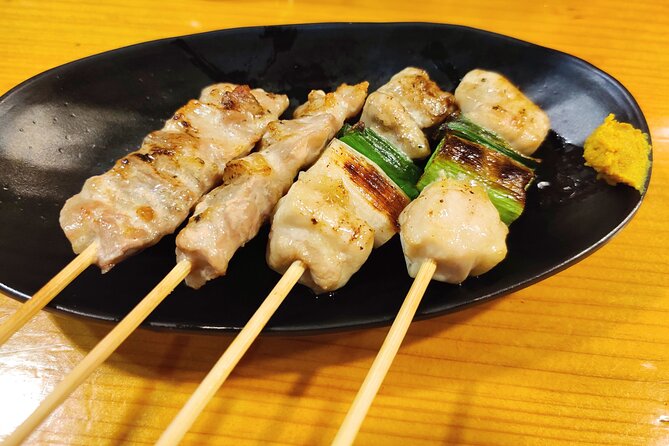
This is best for you if:
- You want Kyoto nightlife with context, not just food.
- You’re excited to walk Gion and then keep going through Pontocho and Kiyamachi.
- You like restaurants that feel local and a little informal (standing bars and small dining spaces).
- You value an itinerary with two built-in restaurant moments rather than a grab-and-go style hunt.
It may be less ideal if:
- You hate walking on uneven city streets, especially when it’s cold or wet.
- You’re very sensitive to the possibility of smoking in any eating venue.
- You want a perfectly flexible schedule with no structured stops (this tour is guided and paced).
If you’re traveling as a couple, this also works well because small groups make conversation and pacing feel friendly. If you’re traveling with teens (13+), it can be a smart way to show the cultural side of the city’s adult entertainment without turning it into a questionable scene.
Should you book this Kyoto nighttime eats walk?
If you want a night in Kyoto that feels guided but not stiff—where the food is part of a bigger story—this is a strong pick. The combination of Gion street storytelling, two restaurant stops with included drinks, and a route through the most interesting night districts makes it good value for your time.
I’d book it if your goal is to understand Kyoto’s nighttime economy: geiko culture, how entertainment evolved, and how the city uses food and drink to structure the evening. Skip it only if walking (or the chance of cigarette smoke in rare cases) would ruin your night.
If your first night in Kyoto is coming up, this tour is also a practical way to get your bearings fast and learn what areas feel special after dark—then you can choose how to spend the rest of your trip.
FAQ
What time does the tour start and how long does it run?
It starts at 6:30pm and runs for about 3 hours.
Where do we meet, and where does the tour end?
You meet at Minamiza Theater, Japan, at the 2F west lobby (Kyoto, Higashiyama Ward, Nakanochō). The tour ends at Kyoto-Kawaramachi Station (Kyoto, Shimogyo Ward, Otabichō).
What food and drinks are included?
The tour includes dinner, plus two alcoholic or non-alcoholic beverages, one in each restaurant.
Is there an alcohol age requirement?
Yes. The minimum drinking age in Japan is 20.
Can vegetarians (and other dietary needs) be accommodated?
Yes. Vegetarians are happily accommodated, and the tour states it can accommodate various dietary restrictions, tastes, and bravery levels.
How many people are in the group?
The maximum group size is 6. Groups up to 8 may be allowed in cases where the entire group is the same reservation.
Do I have to worry about walking a lot?
It is a walking tour. The schedule includes an extended stroll through Gion and multiple nightlife districts, so comfortable shoes help.
What happens if the weather is bad?
This experience requires good weather. If it’s canceled due to poor weather, you’ll be offered a different date or a full refund.
More Tour Reviews in Kyoto
More Kyoto Food Tours
Still in Gion? Keep Going

Just added: more Kyoto tours to browse




Gion & Geisha District Tours, compared.
 ★ 4.7Kyoto Geisha Walking Tour: Gion District & Hidden GemsFrom $253,273 reviews
 ★ 4.9Gion Magical Night Walking Tour with Geisha TriviaFrom $242,393 reviews
 ★ 4.7Gion Geisha District Walking Tour – Stories of GeishaFrom $202,187 reviews
 ★ 4.9Best of Kyoto: Gion, Geisha, Pagodas & CobblestonesFrom $242,058 reviews
 ★ 4.5Night Walk in Gion: Kyoto’s Geisha DistrictFrom $212,003 reviews
 ★ 5.0Kyoto Night Foodie Tour in Gion (9+ dishes + 6 Sake tastings)From $1631,762 reviews
 ★ 5.0Kyoto Gion Geisha District Walking Tour – The Stories of GeishaFrom $251,441 reviews
 ★ 5.0Kyoto Gion: 2-Hour Geisha Culture & History Walking TourFrom $231,186 reviews
Browse the lists this tour appears in