
Reviewed · KYOTO BIKE & E-BIKE TOURS
Kyoto: Early Bird E-Bike Tour with Lunch
The best part of this tour is how it tackles Kyoto’s big sights before the crowds with a comfy e-bike pace. You get an included morning coffee stop that feels like local life, not a rushed pit-stop, and you see Fushimi Inari in a way that’s much easier to enjoy. The main thing to think about is whether you’re genuinely able to ride a bike for most of the day, since the route includes temple areas and some uphill stretches.
What I like most is that the day mixes iconic Kyoto (Fushimi Inari, Gion) with UNESCO-listed stops (Ginkaku-ji and the Path of Philosophy) and then slows down in the calmer temple zones like Nanzenji. It’s a tight, thoughtful loop built for 7 hours of riding plus guided time at each major site, so you get a real sense of south and east Kyoto without spending hours on transfers.
In This Review
- Key highlights worth getting up for
- An early-bird Kyoto route that actually helps you see more
- Cycle Kyoto check-in, safety briefing, and staying comfortable on an e-bike
- Fushimi Inari Taisha and the Kamo River stretch before the day fills in
- Tofukuji area flavors, coffee at a local favorite, then Ginkaku-ji and the Path of Philosophy
- Nanzenji Temple gardens and the red brick aqueduct: where the day slows down
- Lunch, Heian Shrine, Gion streets, and finishing at Higashi Honganji
- Guides, pace, and the small-group advantage you’ll feel
- Price and value: what $135 buys you in a 7-hour Kyoto day
- Should you book this early-bird Kyoto e-bike tour?
- FAQ
- How long is the Kyoto early-bird e-bike tour with lunch?
- What’s included in the price?
- Where is the meeting point?
- Do I need to bring my own helmet?
- What should I wear or bring?
- Is the tour suitable for everyone?
- Can I cancel and get a refund?
Key highlights worth getting up for
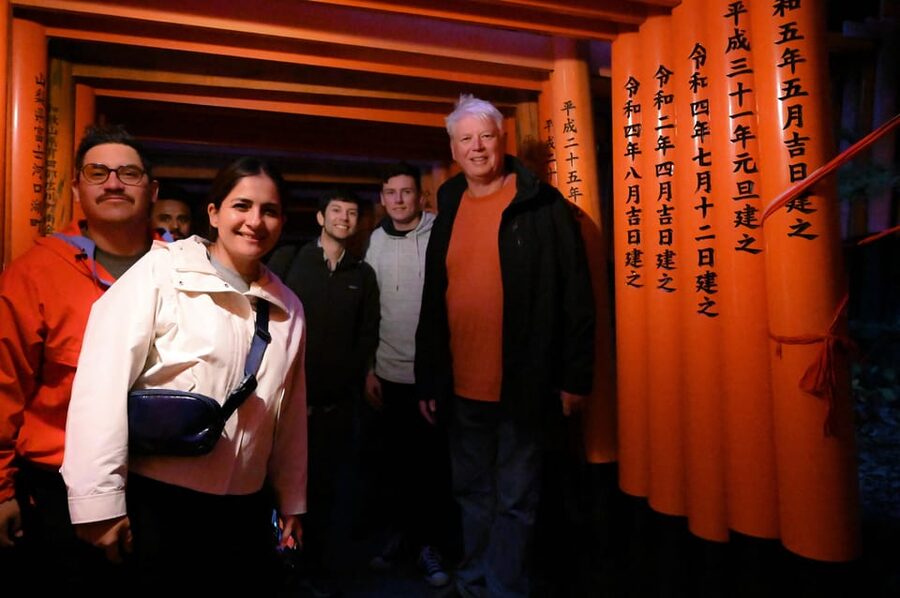
- Fushimi Inari before the crowds, with time to take photos without shoulder-to-shoulder chaos
- Ginkaku-ji and the UNESCO-listed Path of Philosophy, using a slow e-bike glide instead of just walking
- Nanzenji’s gardens and red brick aqueduct, a temple stop that feels bigger than the photos
- Sit-down lunch plus morning coffee, both included, so you’re not hunting meals
- Gion streets and Shirakawa Canal, great for an end-of-tour stroll mood
- Small group of up to 8, which makes it easier to hear your English-speaking guide
An early-bird Kyoto route that actually helps you see more
Kyoto’s problem isn’t a lack of sights. It’s that popular sights can feel like a long line with scenery. This early-bird e-bike format is designed to solve that. You start the day by heading straight south toward Fushimi Inari Taisha, aiming to catch it before the mass flow hits. That changes the vibe completely. You can focus on the orange torii path and the details around the shrine instead of constantly sidestepping groups.
The route then keeps you moving in the eastern/southern direction—so you’re not doing the classic sightseeing loop where you bounce back and forth across the city. You’ll cycle along big scenic stretches like the Kamo River area and later the Shirakawa Canal, which helps break up the temple time. This matters because Kyoto can feel emotionally “heavy” if every hour is another hall or garden. Here, you get variety: guided history time, then riding time that feels like travel instead of chores.
There’s also a practical rhythm to the day. You don’t just pedal from one “must-see” to the next and hope you can remember it all. You’re working with guided segments plus breaks: a morning coffee stop, a sit-down lunch, and built-in windows to recharge.
If you’re the type who likes structure but hates feeling boxed in, this fits. Small group size helps too. With only up to 8 people, the guide can keep the group together without shouting and can adjust how long you stay at key spots.
More of Kyoto at handlebar pace
Cycle Kyoto check-in, safety briefing, and staying comfortable on an e-bike
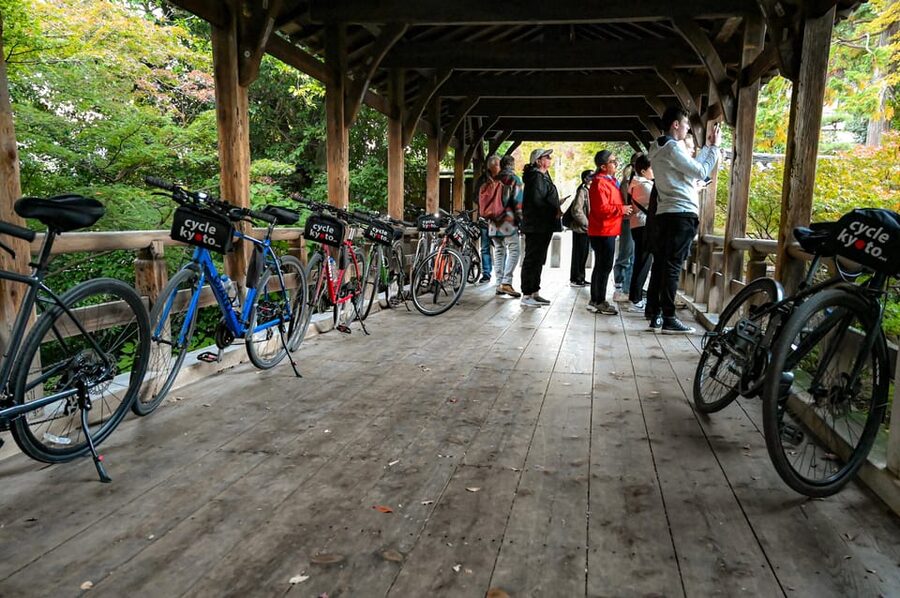
Your meeting point is Cycle Kyoto. From JR Kyoto Station, you walk past Avanti, cross at the traffic lights, then pass the Daily Yamazaki convenience store and take the next left. Plan to arrive 15 minutes early so you can get oriented without feeling rushed.
Before the main sightseeing, there’s a 15-minute safety briefing and you’re given an e-bike plus a helmet. That briefing is more than formality. It’s your chance to learn how the bike handles, how the group rides through narrower lanes, and how to handle basic stops and turns. This is also the point where you’ll find out how fast or slow your guide expects the pace to be.
Kyoto’s terrain can be sneaky. Even when the city doesn’t look like a mountain, temple areas and approaches often include slope. The good news: you’re on an e-bike, which makes a difference when your day includes places like Nanzenji and the Path of Philosophy area. The caution: e-bikes still require real control with your legs and balance. If you can’t confidently ride a bike, or if you have back problems, this tour is not suitable.
What to bring is simple but worth taking seriously. Pack comfortable shoes (not just “they’re okay”), warm clothing (Kyoto mornings can feel chilly), a hat, sunscreen, camera, and gloves. Water is included, but you’ll still want to drink consistently, especially after the coffee and before the lunch.
One more practical detail: smoking isn’t allowed, and alcohol/drugs aren’t allowed. That keeps the tour experience focused and safe.
Fushimi Inari Taisha and the Kamo River stretch before the day fills in
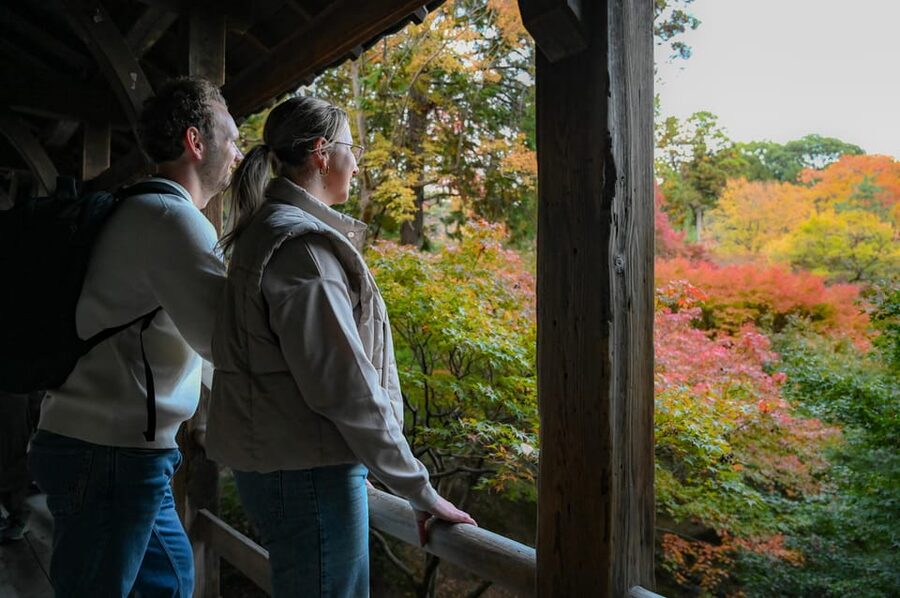
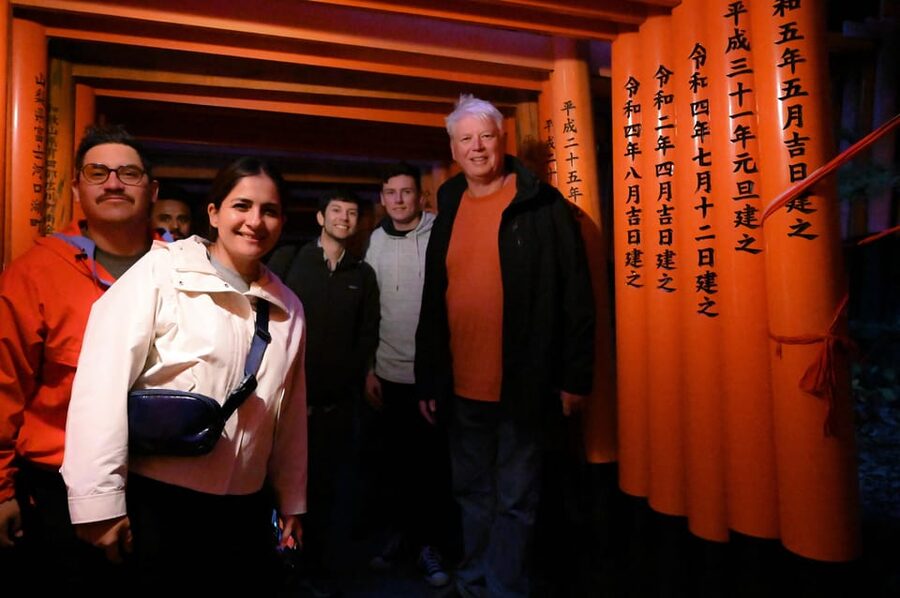
Fushimi Inari Taisha is the one everyone plans around, and this tour treats it like the centerpiece it is. You get a guided visit with dedicated time, plus the advantage of arriving early. That means you’re more likely to experience the torii corridor as a walk-through experience instead of a slow shuffle.
During your visit, you’re not just moving through the arches. You’re learning how to look at the shrine as a living place, not only a photo backdrop. With a guide, it also becomes easier to understand what you’re seeing as you pass by smaller shrine features along the route.
After Fushimi Inari, you head toward the Kamo River area and take in the city rhythm from the bike instead of only from sidewalks. This stretch is useful because it gives you a breather from continuous temple entrances. You can reset your legs, regroup your photos, and settle into the day’s pace.
Timing matters here. The tour plans about 40 minutes around the Kamo River stop, which is enough for a real break without turning into time wasted. If you’re the type who tends to rush photos, the structure helps: you know you’ll have a coffee stop next and you can save your most careful shots for the time that’s actually set aside.
Tofukuji area flavors, coffee at a local favorite, then Ginkaku-ji and the Path of Philosophy
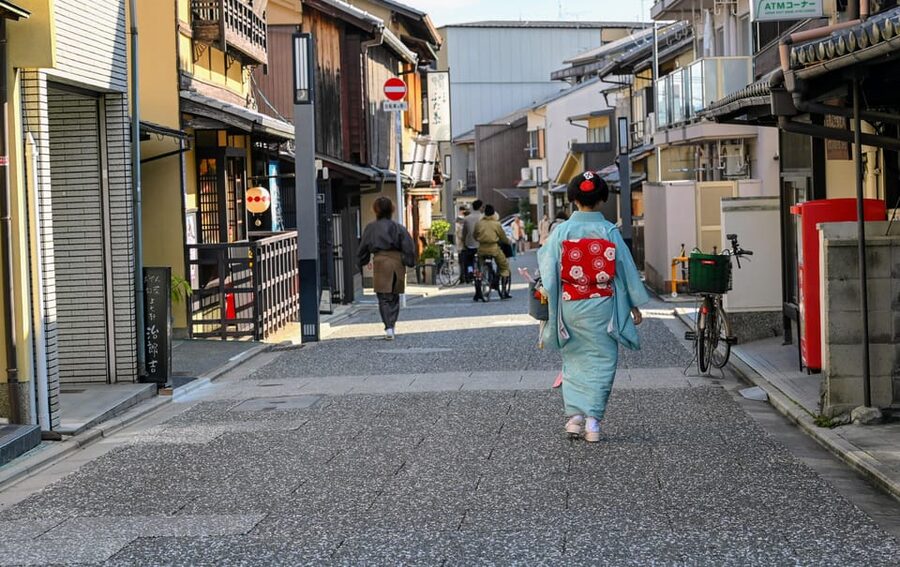
One of the smartest choices in this tour is the placement of the coffee. You’re not doing coffee as a fake “culture break.” You’re doing it when you’re warm from riding but still early enough that the day feels fresh. The tour includes a local café break of about 20 minutes, plus the guide’s favorite coffee spot approach. That’s a subtle perk: your coffee tastes like it belongs to Kyoto, not a generic café stop.
Right before that, the route includes the splendor of Tofukuji Temple. Even if you don’t spend an entire long block there, it adds depth. Kyoto isn’t just the big poster temples. Tofukuji helps round out the story of eastern/southern Kyoto’s temple world before you shift into the UNESCO-listed zone.
Then comes Ginkaku-ji, the UNESCO-listed stop that many people know as the Silver Pavilion area. You’ll have a guided visit with enough time to actually take it in, not just arrive, look, and go. The experience here works better with a guide because the key is learning what to notice: garden layout, architectural cues, and why this place is treated as special.
From Ginkaku-ji, you roll slowly down the Path of Philosophy. This is a highlight for a reason: the route supports a calmer walking tempo than a “speed through everything” approach. On an e-bike, you can keep your energy up and still arrive at the most photogenic moments without feeling exhausted. It’s also the kind of area where you’ll want your camera ready, because the scenery is built for lingering.
If you’re a planner, it’s worth noting that the tour intentionally keeps you moving between these points instead of letting you stall in crowds. This reduces wasted time and keeps the day feeling balanced: guided insight, then scenic breathing room.
Nanzenji Temple gardens and the red brick aqueduct: where the day slows down
After the Path of Philosophy area, the tour heads into the grounds of Nanzenji Temple. This is where Kyoto can feel more expansive. Nanzenji isn’t only about one building or one view. It’s a temple complex with traditional gardens, ornate religious buildings, and that famous red brick aqueduct that people photograph for a reason.
This stop is guided for about 35 minutes. That’s a good length: you have time to look around and understand what you’re seeing, but you’re not trapped inside for ages. The gardens and grounds tend to reward slower attention, and this pace helps. You can pause for a photo, walk a bit, and still feel like you understood the place—not just that you “arrived.”
If you’ve ever felt that Kyoto temples can blur together, Nanzenji is one of the stops that breaks the pattern. The mix of garden space, architectural variety, and the aqueduct makes it feel like a separate world. It also transitions you from the calm of the philosophical walkway into the more lively city-side neighborhoods later.
One small practical note: after Nanzenji, the day continues with lunch and then more sightseeing. If you tend to get tired mid-day, this is the point to slow your breathing and drink water. The e-bike helps, but your walking time around temple grounds still counts.
Other Kyoto tours and experiences to compare
Lunch, Heian Shrine, Gion streets, and finishing at Higashi Honganji
By now, you’ll likely feel that “okay, I’ve seen a lot” moment. The tour handles that with a sit-down lunch break (about 40 minutes). Having lunch built in and included is real value. You avoid the classic Kyoto trap: spending 30 minutes searching for somewhere decent, then paying too much because you’re hungry and tired.
After lunch, the day keeps you in east Kyoto with Heian Shrine and then onward to Gion. Gion is one of those places where the streets can look ordinary until you notice the details—lane shapes, traditional building fronts, and the way the neighborhood feels at human scale. Riding through helps, because you get to keep moving while still taking in what you see.
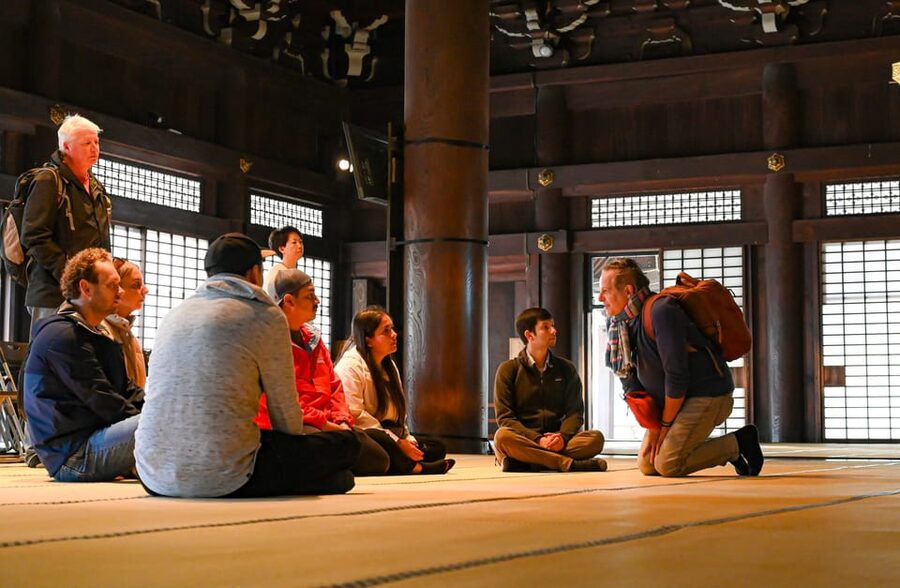
The tour includes guided time in Gion, and then you finish near Higashi Honganji. You’ll visit Higashi-Honganji Temple with guided time, then ride back to Cycle Kyoto.
Two things about the end of the day are worth knowing. First, it’s not only temple after temple. The route uses neighborhoods like Gion and canal areas like Shirakawa later to break the rhythm. Second, your day has a natural arc: start with the iconic early-bird shrine, move through UNESCO-listed highlights and major temple grounds, then shift toward “Kyoto as lived-in city” scenes.
The tour winds down with time along the Shirakawa Canal as well, plus a ride through streets in the Gion area. If you love quiet reflections and scenic walking moments, the canal stop pairs nicely with the end-of-tour energy: you’re tired, but you’re still curious.
Guides, pace, and the small-group advantage you’ll feel
This is a small-group tour limited to 8 participants, with an English live guide. That’s an ideal size for Kyoto e-biking because you want space to ride while still staying organized at stops. In groups that are larger than this, guides tend to spend their energy managing the crowd instead of teaching you how to see.
The guiding style also matters. The operator’s English guides you might encounter are described as upbeat and flexible, with names like Julian, Indra, Carl, and Karl appearing in guide experiences. The common thread: they explain what you’re looking at in a way that helps the day make sense, and they can adjust within reason based on what the group wants to linger on.
That flexibility shows up in two places: how long you spend at each site and how the group moves through photo stops. If you want better photos, you need micro-moments to stop and frame. If you want better understanding, you need explanations that fit into real time. The guide approach here seems built for both.
Also, the tour is designed to feel “full day” without feeling exhausting. That comes down to the e-bike itself plus the way the schedule spreads riding and walking. You’re not forced into one long grind. It’s a sequence of guided stops plus breaks that keep you functional.
Finally, the bicycles are kept in good shape, which matters more than people think. A bike that rides well is the difference between enjoying the tour and counting minutes until you’re off the saddle.
Price and value: what $135 buys you in a 7-hour Kyoto day
At $135 per person for a 7-hour experience, the value is mostly about what’s included. You get e-bike rental, a helmet, a morning coffee, a sit-down lunch, a live tour guide, and water. That’s not just transportation. It’s a guided, planned sightseeing day with food built in.
The cost comparison that makes sense isn’t only to other bike tours. It’s to a self-guided day where you’d still need to rent an e-bike, pay for museum/temple guidance separately (if you choose tours), and hunt down meals. In Kyoto, time is money. This tour spends your time efficiently.
What’s not included is also important: there are no snacks and no extra drinks included, and there’s no hotel pickup/drop-off. That means you’ll want a plan for what you might need beyond coffee and lunch. If you’re sensitive to low blood sugar, consider carrying small snack items outside the included meal, since the tour data explicitly lists snacks as not included.
If you’re someone who wants to see more than a couple of neighborhoods in a day, and you don’t want to deal with transit logistics, this pricing tends to feel fair. You’re paying for route planning, guiding, and included food, wrapped into one morning-to-afternoon flow.
Should you book this early-bird Kyoto e-bike tour?
Book it if you want a structured way to hit major Kyoto highlights without spending half your day commuting. It’s a great fit for active travelers who can ride a bike comfortably, enjoy temples and gardens, and appreciate getting to the big sights earlier rather than later. The small group size and the included food make it easier to keep the day smooth.
Skip it if you know you can’t handle riding, even with an e-bike. The tour isn’t suitable for people who can’t ride a bike, and it’s also not suitable for pregnant women or people with back problems. If you’re unsure, be honest about what you can physically do.
My practical recommendation is to treat it as a “high output” day. Wear the right shoes, bring warm layers, and don’t overpack with extra stops that aren’t planned. If you show up ready to ride and listen, you’ll likely come away feeling like you connected the dots between Fushimi Inari, UNESCO-listed Ginkaku-ji/Path of Philosophy, the garden-world of Nanzenji, and the neighborhood mood of Gion and the canal.
FAQ
How long is the Kyoto early-bird e-bike tour with lunch?
The tour lasts 7 hours.
What’s included in the price?
The tour includes an e-bike rental, helmet, morning coffee, sit-down lunch, a live English tour guide, and water.
Where is the meeting point?
It meets at Cycle Kyoto. From JR Kyoto station, walk past Avanti, cross over the traffic lights, walk past the Daily Yamazaki convenience store, and take the next left.
Do I need to bring my own helmet?
No. Helmets are provided as part of the tour.
What should I wear or bring?
Wear comfortable shoes suitable for biking and bring warm clothing, a hat, sunscreen, a camera, and gloves.
Is the tour suitable for everyone?
It’s not suitable for pregnant women, people with back problems, or people who can’t ride a bike.
Can I cancel and get a refund?
Yes. You can cancel up to 24 hours in advance for a full refund.
More Tours in Kyoto

More Tour Reviews in Kyoto


More of Kyoto by Bike
Just added: more Kyoto tours to browse








Kyoto Bike & E-Bike Tours, compared.
 ★ 5.0Hidden Kyoto E-Biking tourFrom $1161,843 reviews
 ★ 5.0Bike Tour Exploring North Kyoto plus LunchFrom $1061,087 reviews
 ★ 5.0Arashiyama Bamboo Forest & Hidden Gems Bike Tour (Early Bird)From $106613 reviews
 ★ 5.05 Top Highlights of Kyoto Full Day Bike Tour (E-bike option)From $172511 reviews
 ★ 5.0Full Day Biking Tour Exploring the Best of KyotoFrom $119498 reviews
 ★ 4.8Memory Kyoto E-Bike TourFrom $91297 reviews
 ★ 5.0E-Bike Tours of the highlights of Kyoto!!!From $109291 reviews
 ★ 5.0Afternoon Kyoto Bike Tour: Bamboo Forest, Monkeys & Hidden SpotsFrom $106283 reviews
Browse the lists this tour appears in