
Reviewed · KYOTO BUS & SIGHTSEEING TOURS
KIYOTO’s Kyoto Private Tour: Highlights & Hidden Gems
Kyoto on foot can feel like magic. This private 6–8 hour plan links Kyoto’s icons with a human pace and a guide who helps you see what most people miss.
I like that the tour is walking-led (not just bus windows), with breaks built in so you can actually enjoy each neighborhood. You’ll also get real context along the way, since the guides are trained as a small team and have shared their own Kyoto know-how (you might even meet guides like Kiyoto, Mana, Mariko, or Noda-san).
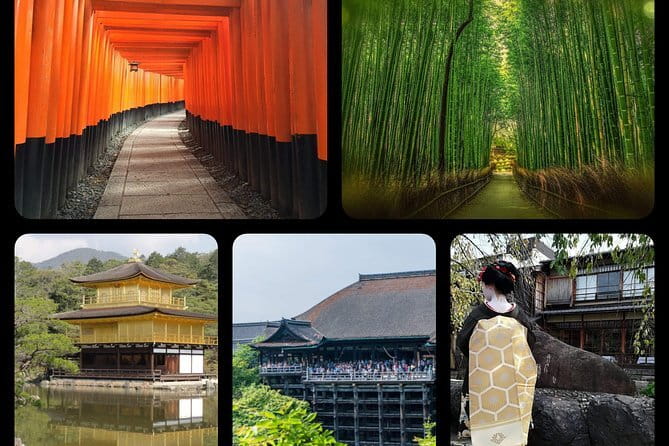
The biggest plus is how it balances must-sees with side streets—Fushimi Inari’s routes, Gion lanes, Nishiki Market, and then the gold glow of Kinkaku-ji and bamboo at Arashiyama. One thing to consider: paid sites and food aren’t included, and the day still involves a lot of walking and stairs in places like Sannenzaka and Ninenzaka.
In This Review
- Key highlights and why they matter
- Why this Kyoto private tour beats a DIY checklist
- The day’s rhythm: pickup in Kyoto and a walking-first plan
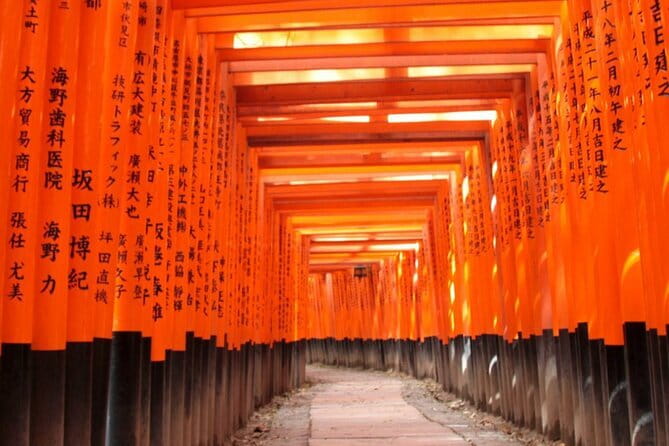
- Fushimi Inari Taisha: walking the shrine grounds the smart way
- Kiyomizu-dera and the view game: then you roll into Sannenzaka and Ninenzaka
- Yasaka Shrine, Hanamikoji-dori, and Gion: classic lanes with context
- Nishiki Market lunch break: where you feed the day (and keep your energy)
- Kinkaku-ji in guided time: the golden temple without the confusion
- Arashiyama Bamboo Forest: what 30 minutes should feel like
- Comfort, pacing, and the real cost picture (beyond the $116)
- Who this Kyoto private tour is perfect for (and who should reconsider)
- Should you book this Kyoto private tour?
Key highlights and why they matter
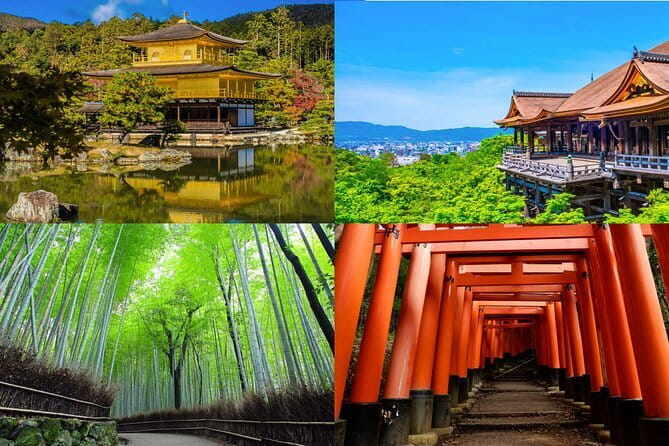
- Fushimi Inari Taisha grounds with a guide: more than selfies; you’ll learn how to read the shrine setting as you walk deeper.
- Kiyomizu-dera panoramic viewpoint time: you get time at the main stage, plus a route that sets you up for the surrounding streets.
- Sannenzaka + Ninenzaka snack streets: coffee, desserts, and street bites are part of the experience, not an afterthought.
- Gion photo-route with Yasaka Shrine: classic lanes with guided walking so you know what you’re seeing.
- Nishiki Market break for lunch and street food: a flexible food-focused stop that’s ideal for hungry travelers.
- Kinkaku-ji + Arashiyama Bamboo Forest: two heavy-hitters in one day, tied together by a route that keeps you moving at a manageable pace.
Why this Kyoto private tour beats a DIY checklist
This tour is built for people who want Kyoto without the usual stress: you still see the headline places, but you do it in the order that makes sense for walking time and sight lines. Instead of bouncing around on your own schedule, you follow a guided flow that connects shrine areas to historic streets to markets to the western Kyoto sights.
The private format matters here. You can ask questions as you go, and your guide can adjust the day based on what you care about most—views, food, shrine details, or quiet side streets. The result is more like spending time with a Kyoto friend who knows where to look, and less like collecting stops.
And yes, you’ll get photo moments like the famous ones on the route. But the point is what happens between the photos: learning how the neighborhoods work, why places feel the way they do, and what details are worth noticing as you walk.
Have a local lead the way on more Kyoto tours
The day’s rhythm: pickup in Kyoto and a walking-first plan
The tour starts with pickup included once you confirm your preferred location (hotel, station, or a landmark). After that, you’re mostly on foot. There are short transport rides between main clusters (train, taxi/black cab, and bus/coach segments appear in the route), but the backbone is walking.
A gentle pace is part of the design. You get breaks, and there are chances to rest in cafés while you’re in the historic districts. That’s not just comfort—it helps you actually take in Kyoto’s texture: incense drifting near smaller side halls, the look of wooden gates, and the everyday chatter of small shops you’d normally speed past.
Communication is also set up to reduce friction. You’ll coordinate with your guide through WhatsApp, which is useful in a city where meeting points can be tricky. If you want the day to run smoothly, confirm the pickup landmark clearly before you set out.
Fushimi Inari Taisha: walking the shrine grounds the smart way
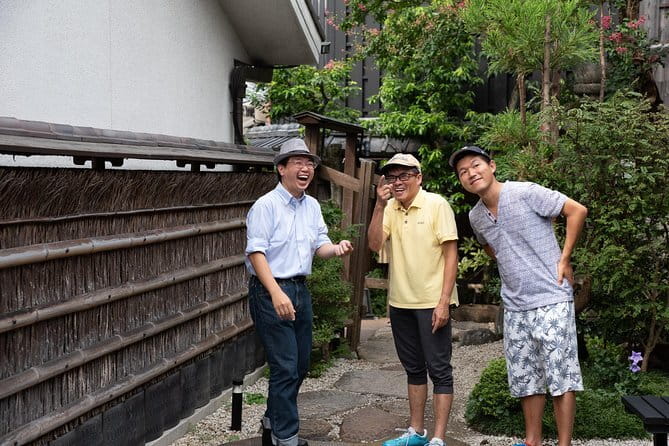
Fushimi Inari Taisha is the kind of place where crowds can turn your visit into a conveyor belt. This tour treats it as a guided walk rather than a quick loop. You spend about 40 minutes at the shrine grounds with your guide, which gives you time to move at a comfortable pace and pay attention to the shrine setting as you go.
What I like about this approach is that it helps you avoid the biggest mistake: rushing to the most famous stretch without understanding how the shrine space is structured. With guidance, you’re more likely to notice the patterns, the smaller details, and the way the area changes as you go deeper.
Footing matters too. The shrine steps and ground surfaces can be uneven, and you’ll likely be walking for longer than you expect once you start moving through the grounds. Bring comfortable shoes, and don’t plan any tight schedule right before this stop.
Practical tip: treat this as your main walking warm-up for the day. If you’re already tired, pace yourself here. The rest of Kyoto has plenty of stairs and uneven lanes.
Kiyomizu-dera and the view game: then you roll into Sannenzaka and Ninenzaka
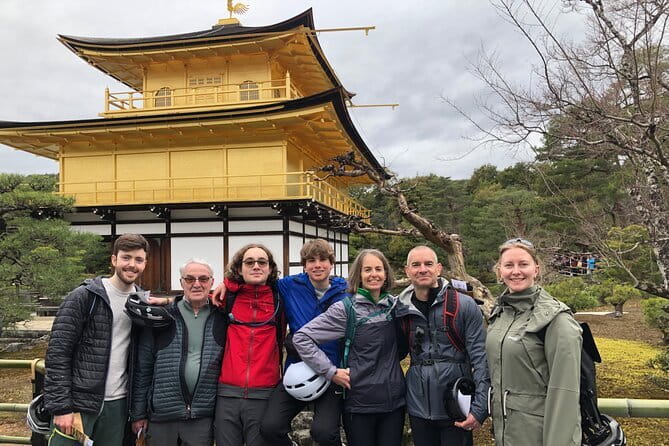
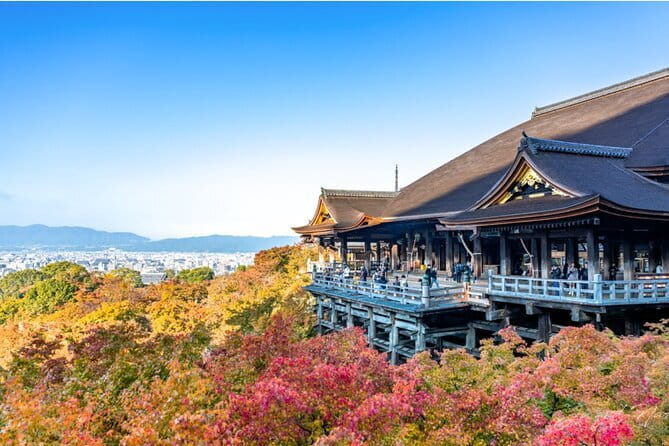
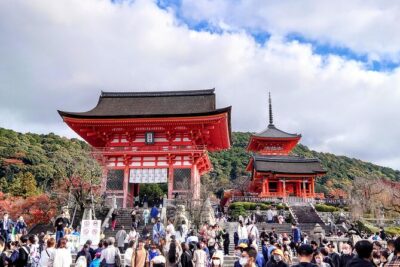
Next comes Kiyomizu-dera for about 1 hour guided time. This is your big viewpoint stop. The route is designed so you’re not just standing around—you’re given time to reach the grand stage area and take in the panorama of Kyoto from there.
After that, the tour flows into the famous historic lanes of Sannenzaka and Ninenzaka. You spend about 15 minutes in each area, with chances for coffee, street food, desserts, and guided walking. These streets are where Kyoto’s old-street look becomes real: wooden machiya-style surroundings, souvenir shops, and snack stops that feel integrated into the neighborhood.
Here’s the catch: these lanes are pretty and photogenic, but they can also be step-heavy and crowded at peak times. The tour’s whole point is crowd awareness and human pace, but you still should expect stairs. If you’re traveling with anyone who dislikes long uphill stretches, build in extra rest breaks.
One fun detail on the route: you’ll also have a brief photo stop at Starbucks Kyoto Nineizaka Yasaka Chaya. It’s quick, it’s optional in the sense that you’re not there to hang out for coffee for hours, and it can be a convenient landmark as you move through the district.
Yasaka Shrine, Hanamikoji-dori, and Gion: classic lanes with context
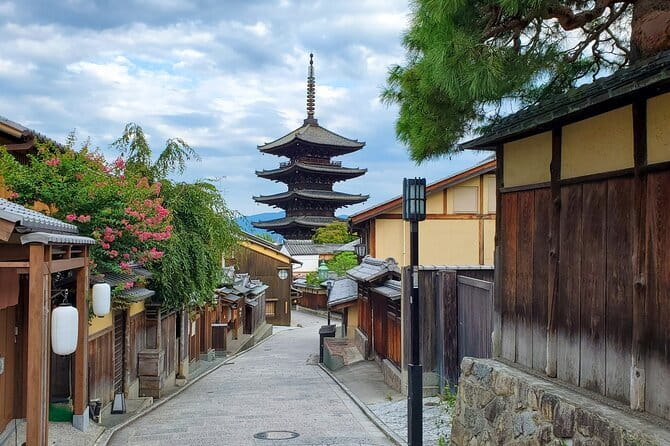
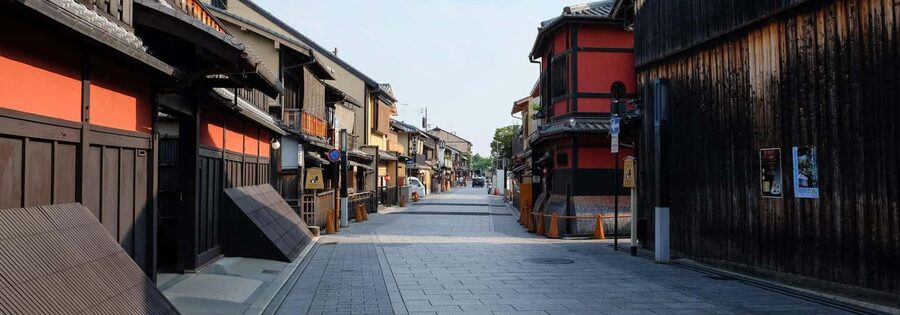
After Ninenzaka, you’ll visit Yasaka Shrine (about 10 minutes walking with guided time), then move through the Gion area with a combination of photo stops and guided walking. The route includes Hanamikoji-dori (about 10 minutes) and Gion itself (about 20 minutes).
This part works well because it connects places that visually overlap in people’s memories. A lot of first-time visitors only know Gion as an image. Guided time helps you understand the relationship between shrine spaces, the street layout, and why certain lanes feel the way they do.
You’ll also get scenic walking time. That matters because Gion isn’t just about a single spot—it’s about the street feeling: old architecture, storefront rhythm, and the way the neighborhood shifts as you walk.
Loop the big Kyoto sights in one run


Nishiki Market lunch break: where you feed the day (and keep your energy)
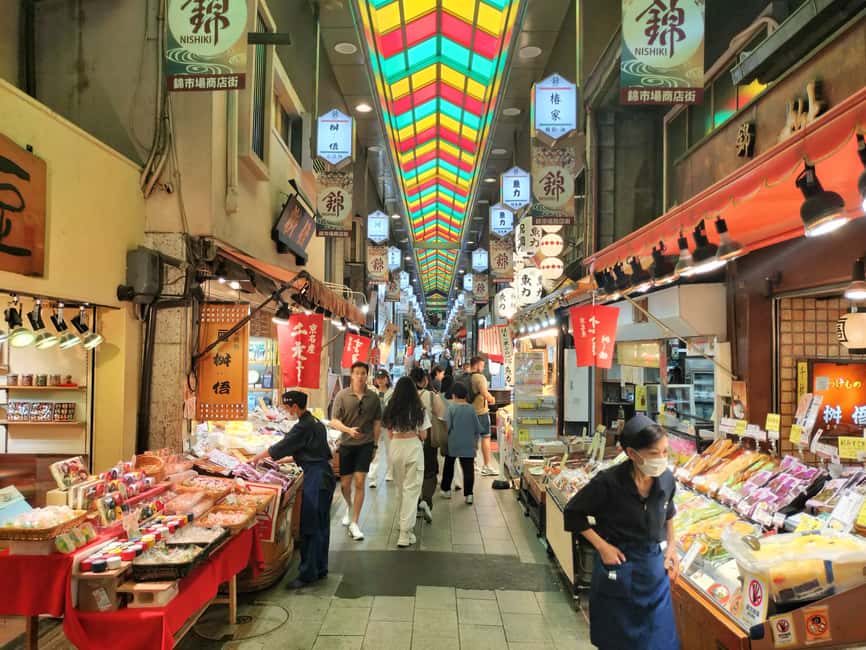
Nishiki Market is your 1-hour break for lunch and food shopping. It’s one of the most practical stops in the whole itinerary because it’s both sightseeing and fueling. You’ll have guided time, plus a chance to shop and sample street food.
This is where you should slow down a bit and choose deliberately. If you try everything, you’ll end up overfull and rushed. Pick a few bites you actually want, especially if you’re into Kyoto snacks and market culture. The rest is mostly about atmosphere.
Also, if you have any dietary needs, this is the easiest place to ask your guide for help. Market food options can be flexible, but only if you communicate early.
From a value angle: you’re paying for a guide, timing, and walking order. Nishiki is where that value turns into something you can taste.
Kinkaku-ji in guided time: the golden temple without the confusion
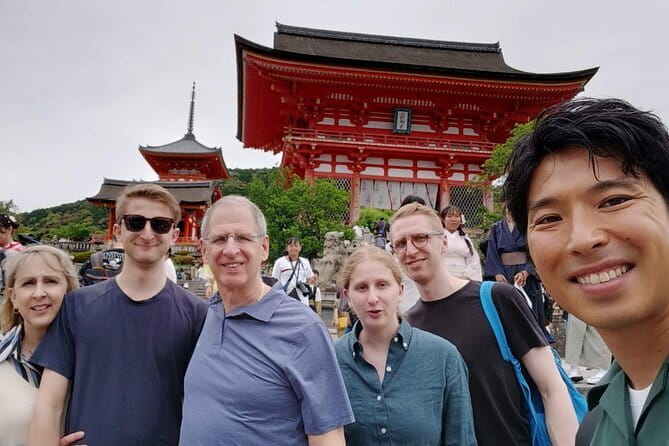
After Nishiki, you’ll travel by bus/coach (about 40 minutes in the route) to Kinkaku-ji. You’ll have around 50 minutes there with guided time and walking.
This stop matters because Kinkaku-ji can be visually overwhelming. Without context, you end up stuck near the most photographed angles and miss the way the temple is experienced in layers. With a guide, you’re more likely to understand what you’re looking at and why certain angles feel more meaningful than others.
You also get enough time to step back and re-enter your viewing mode. That’s important for the later Arashiyama segment—if you rush Kinkaku-ji, you’ll feel the day dragging near the bamboo.
Practical note: Kinkaku-ji and Arashiyama are the kinds of places where admission fees apply and where lines can matter. Bring cash so you’re not scrambling. The tour notes admission fees often fall in the ¥300 to ¥800 range per paid facility, and you should bring enough cash for the day.
Arashiyama Bamboo Forest: what 30 minutes should feel like
Arashiyama Bamboo Forest is next, with about 30 minutes guided time and walking. This is the classic Kyoto photo moment, but it’s also the spot where you can lose track if you treat it like a quick checkmark.
A guided pace helps you do something better: move through the bamboo thoughtfully, pause when it feels right, and notice how light and sound change as you walk. The tour also includes transportation out to Arashiyama (and then a train segment back toward Kyoto), so you’re not left juggling transit alone.
Keep expectations realistic: 30 minutes is enough for the main experience, but it’s not enough to wander forever. If you’re the type who wants to linger, tell your guide early and see if your timing can be adjusted.
Comfort, pacing, and the real cost picture (beyond the $116)
At $116 per person for about 6–8 hours, this is priced like a full private day with coordinated timing and guide support. The value is strongest if you want help with:
- keeping the route logical so you don’t waste time backtracking,
- understanding what you’re seeing,
- eating well in markets and historic streets,
- and getting a crowd-smart order of neighborhoods.
But there are extra costs to plan for. The tour specifically says:
- admission fees aren’t included, and paid facilities often range ¥300 to ¥800,
- and most places take cash only, so bring about ¥1,000 per person for a half-day style spend, or ¥1,000 to ¥1,500 for a full-day plan.
Food is also not included as part of the main price. There are food stops built into the route (coffee, desserts, street food, Nishiki Market), but you’ll cover what you eat. If you want a proper meal break, the tour notes you should cover the guide’s meal as well.
One more detail to sanity-check: the itinerary includes transport segments like train and black cab, but transportation costs are listed as not included. That usually means the price may not cover every ride the itinerary mentions, depending on the final arrangement. Before your day starts, ask your guide what’s already covered for your specific pickup and routing.
Finally, a note on accessibility: the activity is labeled as wheelchair accessible, but it also states it’s not suitable for wheelchair users and people with mobility impairments. Since the route includes walking and stairs in older streets, take that seriously and confirm directly with the provider what level of step-free movement is possible.
Who this Kyoto private tour is perfect for (and who should reconsider)
This tour is a great fit if you want:
- a private guide and the freedom to ask questions,
- English or Japanese guidance,
- classic Kyoto landmarks plus guided walking through neighborhoods like Gion and the Nishiki Market area,
- and a day structured enough that you don’t have to think about transit order.
It’s especially good for first-timers who want maximum results without turning Kyoto into a checklist. It also suits couples and small families, since walking at a human pace helps everyone stay engaged.
You might reconsider if:
- someone in your group has limited mobility or struggles with stairs,
- you dislike long walking days even with breaks,
- or you’re hoping the price covers every entrance and meal. It won’t. You’ll need cash and a food budget.
Should you book this Kyoto private tour?
Yes—if you like your Kyoto guided and your day planned, this tour is strong value. At $116 for a private, walking-first route, you’re paying for time saved, crowd-aware flow, and context you can’t get from a map.
Book it if you want to hit Fushimi Inari, Kiyomizu-dera, Gion/Yasaka Shrine lanes, Nishiki Market, Kinkaku-ji, and Arashiyama Bamboo Forest in one go, without feeling like you’re sprinting. Just come prepared with comfortable shoes, enough cash for admissions, and a willingness to spend your time on foot.
If you’re short on stamina or need step-free access, message the provider before booking and ask how the route will be handled for your exact needs.
More Tour Reviews in Kyoto


More Kyoto Sightseeing Loops

More Private Tours of Kyoto
Just added: more Kyoto tours to browse








Kyoto Bus & Sightseeing Tours, compared.
 ★ 5.0PERFECT KYOTO 1-Day Bus TourFrom $12913,518 reviews
 ★ 4.8Fushimi Inari, Kinkakuji, Bamboo Grove 1 Day Bus TourFrom $1224,316 reviews
 ★ 4.9Best of Kyoto: Gion, Geisha, Pagodas & CobblestonesFrom $242,058 reviews
 ★ 3.9Hop-on Hop-off Sightseeing Bus TicketFrom $272,034 reviews
 ★ 5.0Private Kyoto Tour with a Local, Highlights & Hidden Gems, PersonalisedFrom $1021,543 reviews
 ★ 4.7Kyoto/Osaka: Nara, Fushimi Inari Taisha, Arashiyama Bus TourFrom $521,275 reviews
 ★ 5.010 Must-see Spots in Kyoto One Day Private Tour (up to 7 people)From $1791,108 reviews
 ★ 4.5One-Day Tour of Kyoto’s Highlights from Osaka/KyotoFrom $661,092 reviews
Browse the lists this tour appears in