

Reviewed · FUSHIMI INARI SHRINE TOURS
Gion and Fushimi Inari Shrine Kyoto Highlights with Government-Licensed Guide
Your Kyoto evening starts with a plan.
This 6-hour, small-group walking tour strings together Fushimi Inari-taisha Shrine, Gion’s geisha districts, Pontocho, Miyagawacho, and stops at major temples and shrines—so you get oriented without wrestling a map.
I especially like the licensed English guidance and the way it makes geisha culture make sense fast, including the difference between Maiko and Geiko (and how it can show up in everyday street life). My other favorite is the small group size (max 10), which keeps the pace manageable and questions easy; the only watch-out is that entrance fees aren’t included for some big-name stops like Kiyomizu-dera and Kennin-ji, so budget a little extra.
In This Review
- Key Points You’ll Actually Care About
- A Smooth Evening Route Through Kyoto’s Most Famous Corners
- Why a Government-Licensed English Guide Changes Everything
- Fushimi Inari-taisha: Torii Gates, Trails, and the Real Feeling of Scale
- Gion’s Streets, Pontocho, and Miyagawacho: Where the City Looks Like It Should
- Yasaka Shrine and Tatsumi Daimyojin: Small Stops That Add Context
- Kiyomizu-dera: The Big Name Stop (And the Extra Ticket Cost)
- Kennin-ji Temple: Dry Gardens and a Breather From the Streets
- Walking Pace, Group Size, and Staying Comfortable
- Price and Value: Is $154.37 a Good Deal?
- Who This Tour Suits Best
- Should You Book This Gion and Fushimi Inari Guided Walk?
- FAQ
- How long is the tour?
- What does the price include?
- Is it a walking tour?
- Where does the tour start?
- How many people are in the group?
- Are entrance fees included for every stop?
Key Points You’ll Actually Care About
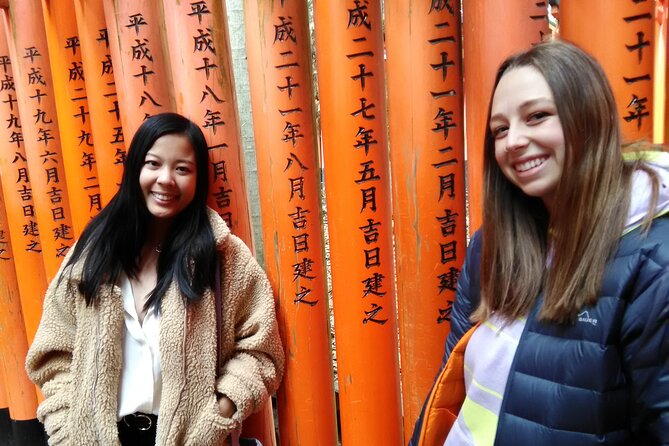
- A full evening loop: Fushimi Inari gates to Gion lanes to nearby historic sights in one outing
- Small group (up to 10): you’ll hear your guide and stay together in tight streets
- Geisha culture explained clearly: Maiko vs Geiko and the training path context
- Walks where cars can’t go: narrow alleys, canal-side areas, and shrine approaches
- Some temple tickets cost extra: Fushimi Inari and the shrines are free, but not all entrances are included
- Mobile ticket support: less time hunting for paper tickets
A Smooth Evening Route Through Kyoto’s Most Famous Corners
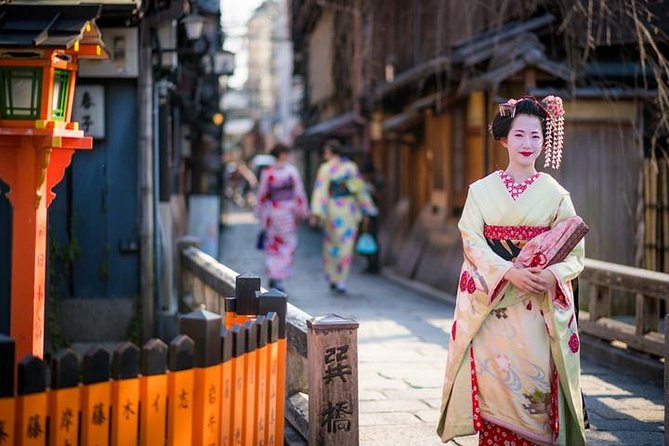
Kyoto at night has two modes: it can feel magical… or it can feel like you’re wandering in the dark with a bad plan. This tour does the planning part for you. You’re guided through the sights many people come for, but on foot and in a logical flow that helps the neighborhoods click.
It’s also an efficient mix. You’ll hit the Shinto landmark of Fushimi Inari-taisha Shrine, then shift into the geisha-district atmosphere of Gion and nearby areas like Pontocho and Miyagawacho. Along the way you get quick shrine stops that add meaning, not just photos.
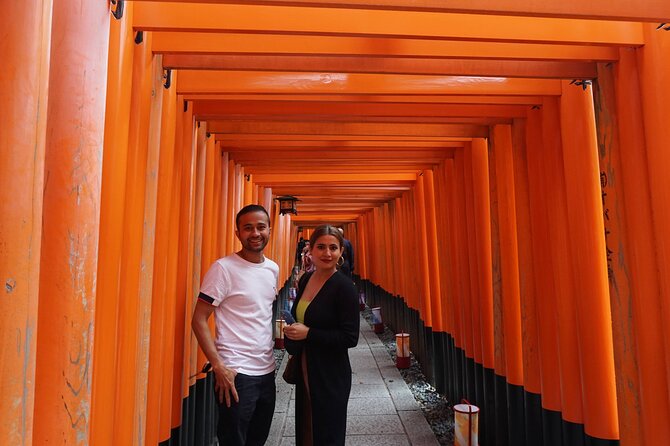
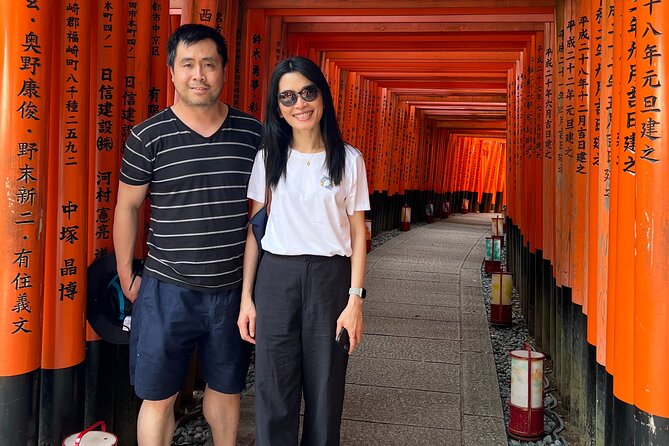
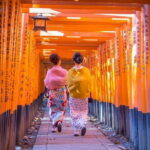
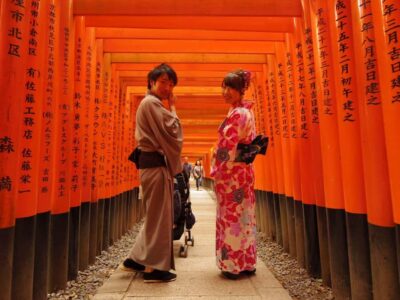
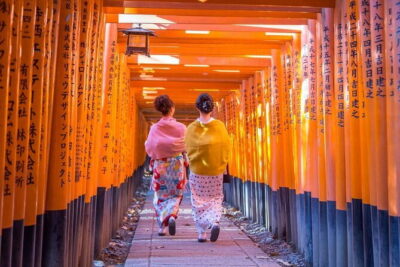
More walks up through the vermilion torii of Fushimi Inari


Why a Government-Licensed English Guide Changes Everything
Your guide isn’t just there to point. They translate the story. And in places like Gion, that matters because the street scene is pretty, but the details are what you’ll remember later.
One highlight from the experience is how your guide explains geisha-related history and roles in a way that’s easy to follow. I particularly like that it includes the practical difference between Maiko and Geiko, plus what to look for as you walk. Guides like Mari san (named in the feedback I saw) can make a real difference—people remember the explanations, not just the locations.
Fushimi Inari-taisha: Torii Gates, Trails, and the Real Feeling of Scale
If you’ve seen photos of thousands of vermilion torii gates, you already know the color. What you might not expect is how the place changes as you move along the trails. It’s not one view—it’s a changing sequence of gates, perspectives, and small shrine moments.
On this tour, you’ll spend about an hour at Fushimi Inari. The entrance is free, which is a nice win early in the evening. I like starting here because your brain quickly switches into sightseeing mode: you’re walking, you’re noticing, and you’re building a sense of Kyoto’s spiritual rhythm before you reach the street-heavy scenes of Gion.
Practical tip: wear comfortable shoes. Even if you don’t hike far up the trails, the ground underfoot and the repeated stair-and-sidewalk movements add up.
Gion’s Streets, Pontocho, and Miyagawacho: Where the City Looks Like It Should
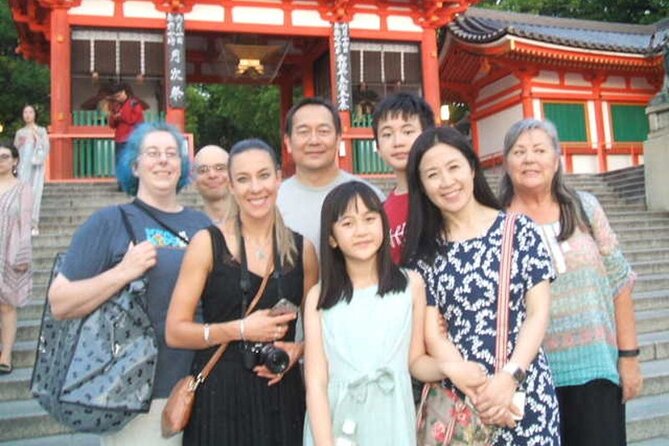
Gion is Kyoto’s most famous geisha district, and it’s easy to see why. The area runs around Shijo Avenue between Yasaka Shrine and the Kamo River. Expect shops, restaurants, and ochaya (traditional teahouses). It’s the kind of neighborhood where signage, alley widths, and the flow of pedestrians matter.
Then you’ll get a different angle in the Shirakawa area along the canal. This section runs parallel to Shijo Avenue and is lined with willows and high-class restaurants and ochaya. The canal-side geometry changes how the street feels—less “main road,” more intimate corridor. If you like photographing reflections and narrow lanes, you’ll enjoy this part.
And yes, there’s time for nearby areas beyond the core blocks. The tour is designed so you see Gion plus Pontocho and Miyagawacho in one evening, rather than hopping around town on your own with guesswork.
Yasaka Shrine and Tatsumi Daimyojin: Small Stops That Add Context

Not every stop is long, but shrine stops on foot work well because they act like punctuation. You pause, you absorb, and you keep moving with a clearer understanding of where you are.
You’ll have a short stop at Yasaka Shrine (Gion Shrine), a major shrine founded over 1350 years ago. Even a brief visit helps you connect the geisha-district scene with the religious setting around it. Another quick stop is Tatsumi Daimyojin Shrine, located near the Shirakawa area where ochaya and geisha activity are known. It’s brief, but it gives you a cultural anchor before you start scanning streets for details.
If you’re the kind of traveler who hates feeling rushed, these short pauses are a good compromise. You’re not forced to choose between “only long temple time” or “only street walking.” You get both.
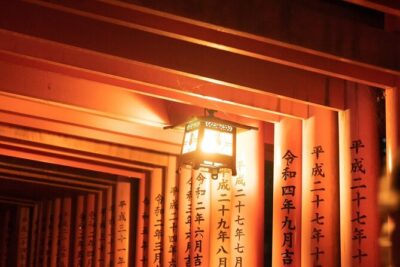
More evenings along the lantern-lit lanes of Gion






Kiyomizu-dera: The Big Name Stop (And the Extra Ticket Cost)
Kiyomizu-dera is one of Kyoto’s headline temples. It’s been around for over 1250 years, and it sits halfway up Mt. Otowa in the Higashiyama mountain range. This is the stop where the atmosphere shifts again—less neighborhood and more historic monument.
Your time here is about an hour. Admission is not included on this tour, so you’ll want to plan for that cost in advance. I think this is still good value because Kiyomizu-dera is the kind of place where having a guide helps you understand what you’re seeing and where to focus, even if the visit isn’t all day.
Practical note: if you’re sensitive to crowds, go with a calm mindset. This area is popular. You don’t need to sprint. You just need to stand in the right spots and let your eyes adjust.
Kennin-ji Temple: Dry Gardens and a Breather From the Streets
After the big visual pull of Kiyomizu-dera, Kennin-ji Temple offers a quieter reset. The grounds are described as expansive and pleasant to walk, close to the busy street intersections around Hanamikoji and Shijo.
You’ll have only a short window, and admission isn’t included. The reason this stop still matters is the setting: Kennin-ji is known for karesansui (dry landscape gardens), including two of them. Even with limited time, it’s the kind of pause that makes the whole evening feel balanced—architecture and calm after lanes and canal views.
Walking Pace, Group Size, and Staying Comfortable

This is a walking tour, and the tour is built for moving on foot. The experience notes the pick up/drop off is on foot, and the maximum group size is 10 travelers. In practice, that small number matters. Tight alleys don’t feel like you’re getting shoved along, and you can actually hear your guide without yelling over crowds.
The duration is about 6 hours, but that doesn’t mean it’s a nonstop march. There are shorter shrine stops and a couple of longer anchor points. Still, you’ll want comfortable shoes and a water plan.
One more thing: this is not a private-vehicle tour. There’s no combining multiple tour groups either, so it stays structured. That’s good for organization, but it also means you can’t expect last-minute route changes if you’re hoping to add something new.
Price and Value: Is $154.37 a Good Deal?
At $154.37 per person for a roughly 6-hour guided walk, the real value isn’t just the locations. It’s the combination of:
- a licensed English-speaking guide
- a tight, efficient route through multiple neighborhoods
- small-group pacing (up to 10)
- free admission at some stops (like Fushimi Inari and the shrines with free tickets)
The trade-off is that not all entrances are included. Kiyomizu-dera and Kennin-ji aren’t included, so you’ll pay those separately. If you’re traveling on a strict budget, do a quick mental add-on before you book.
Booked far in advance is common for Kyoto evenings, with an average booking window of around 89 days. That tells me demand is real, especially for guided geisha-district walks that help you not feel lost.
Overall, I see this as solid value if you want guidance and structure more than you want to wander alone with an app.
Who This Tour Suits Best
This tour fits best if you:
- want a guided introduction to Gion and surrounding districts without sorting logistics
- like understanding context (geisha culture, shrine setting, what you’re seeing)
- prefer small groups and walking-friendly routes
- want to see both a major shrine complex (Fushimi Inari) and top Kyoto temple areas (Kiyomizu-dera, Kennin-ji) in one evening
It may be less ideal if you’re looking for a long, slow temple-only day, or if you dislike paying extra for temple admission at key stops.
Should You Book This Gion and Fushimi Inari Guided Walk?
If your goal is to get your bearings fast and enjoy Kyoto’s geisha districts with real explanations, I’d book this. The biggest reason is simple: you get a guide who helps the street scene become understandable, and the small-group format keeps the experience from turning into a noisy shuffle.
Book it now if you can. The timing data suggests these tours sell ahead, and Kyoto evenings are where plans matter most. Just go in knowing that some temple entrances cost extra, and that this is a walking-and-sight tour, not a performance-focused outing.
FAQ
How long is the tour?
The tour runs for approximately 6 hours.
What does the price include?
The price includes a licensed local English-speaking guide and the tour’s mobile ticket. Admission fees are free for some sights, but not all entrance fees are included.
Is it a walking tour?
Yes. It’s a walking tour, and pickup/drop-off is on foot.
Where does the tour start?
It starts at Tatsumi-jinja Shrine (Tatsumi Dai-myojin) in Kyoto (Higashiyama Ward, Motoyoshichō, 元吉町5959) and ends back at the same meeting point.
How many people are in the group?
The tour has a maximum of 10 travelers.
Are entrance fees included for every stop?
No. The tour specifically notes that guide entry fees are covered only for sights listed in the itinerary, and it also indicates that admission is not included for Kiyomizu-dera and Kennin-ji.
More Kyoto Temples and Shrines



Still in Gion? Keep Going
Fushimi Inari, a Few More Ways
Just added: more Kyoto tours to browse








Fushimi Inari Shrine Tours, compared.
 ★ 4.8Fushimi Inari, Kinkakuji, Bamboo Grove 1 Day Bus TourFrom $1224,316 reviews
 ★ 5.0Fushimi Inari Hidden Hiking Tour (Private Option Available)From $631,750 reviews
 ★ 4.7Kyoto/Osaka: Nara, Fushimi Inari Taisha, Arashiyama Bus TourFrom $521,275 reviews
 ★ 4.4Osaka/Kyoto: Arashiyama, Nara & Fushimi Inari Shrine w/LunchFrom $61754 reviews
 ★ 4.7Nijo Castle, Kiyomizu & Fushimi Inari Guided TourFrom $54700 reviews
 ★ 5.0Nijo, Kinkaku-ji, Arashiyama, Kiyomizu & Fushimi InariFrom $51699 reviews
 ★ 5.0Kyoto Fushimi-Inari Night Walking TourFrom $43320 reviews
 ★ 4.93-Hour Fushimi Inari Shrine Hidden Hiking TourFrom $72270 reviews
Browse the lists this tour appears in