
Reviewed · KYOTO SAMURAI & NINJA EXPERIENCES
Train Katana with Real Dojo Students in Kyoto
Katana training in Kyoto, for real.
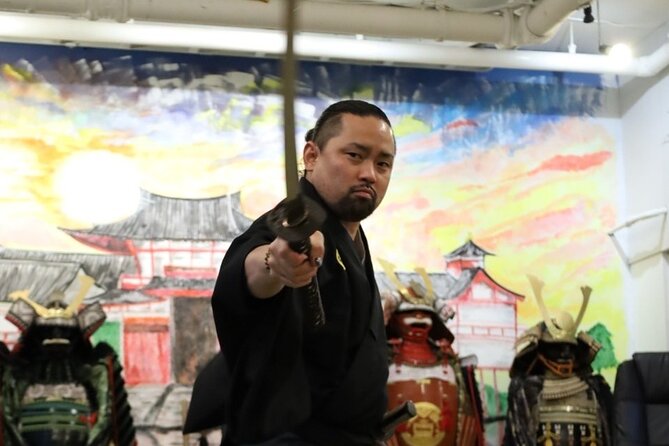
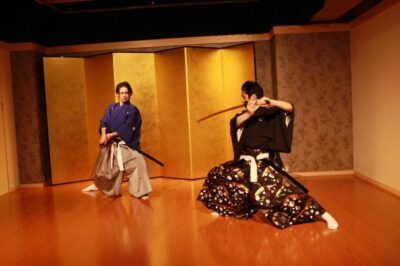
This is not a tourist show. It’s a hands-on session inside the dojo Yushinkan Kyoto, where you practice alongside local students under a headmaster with 20+ years’ experience, and you’ll also see a powerful two-katana performance.
What I like most is how practical it feels, not staged. I also like that you get to learn iai (drawing) and basic kenjutsu (sword fighting) techniques in a structured way, rather than just watching for photos.
One consideration: there’s no test cutting with a real katana as part of the experience, so if that’s your main goal, you’ll want to set expectations now.
In This Review
- Key highlights to know before you go
- What This Kyoto Katana Session Really Is (and Isn’t)
- Meeting Yushinkan Kyoto: Location, Timing, and Small-Group Feel
- Getting Dressed: Dōgi, Obi, Hakama, and Dojo Etiquette
- Training the Basics of Iai and Kenjutsu in 3 Hours
- Iai (katana drawing) techniques
- Kenjutsu (katana fighting) techniques
- What you’ll watch while you learn
- The Cut and the Two-Katana Performance You Actually Came For
- How Much Skill Do You Need? Physical Comfort and Expectations
- Price in Context: Why $195 for 3 Hours Can Be Good Value
- The Practical Stuff You’ll Be Glad You Know
- Should You Book This Tour?
- FAQ
- Is video recording allowed during the training?
- Do I get to do test cutting with a real katana?
- What’s the minimum age to participate?
- Where does the training start and end?
- How many travelers are allowed in a group?
- Do I need to have special martial arts experience?
- Can I cancel and get a full refund?
Key highlights to know before you go
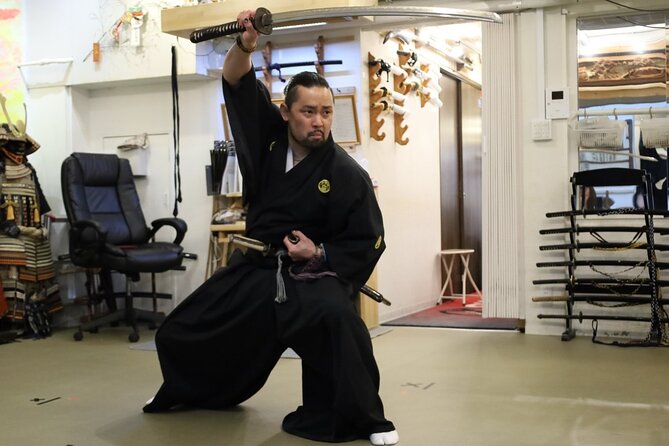
- Real dojo time with local students at Yushinkan Kyoto, not a performance-only experience
- Training gear included so you can step into the correct dōgi/obi/hakama setup
- Iai + kenjutsu instruction with clear drills during your ~3-hour session
- Live katana cutting on rolled tatami mats done by students and the master
- Two-katana performance that’s hard to find anywhere else in Kyoto
- Small group size (max 3 travelers), which makes the lesson feel more personal and controlled
What This Kyoto Katana Session Really Is (and Isn’t)
This experience earns its description by staying firmly in the dojo world. You’re not being “acted” at. You’re being trained—alongside dedicated students—by people who do this seriously.
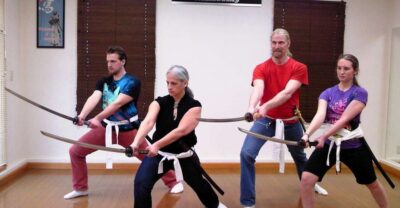
You’ll handle the fundamentals of iai, where the focus is on drawing the katana and moving with intent. You’ll also work on kenjutsu techniques, which are about how the sword moves in controlled combat practice. The room is set up for learning, not spectacle.
And then there’s the payoff: you’ll see cutting with a real katana, plus a two-katana performance by the master. That combo is what makes this more than a class and more than a show.
Pick up the blade again with these Kyoto sessions
Meeting Yushinkan Kyoto: Location, Timing, and Small-Group Feel
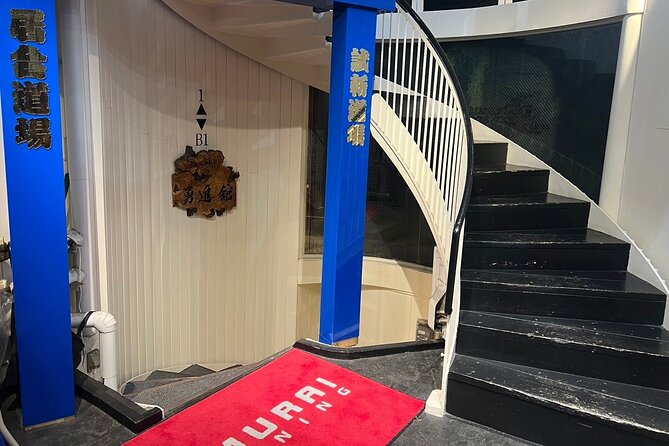
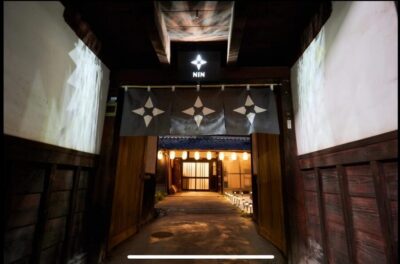
The training starts at 452-4 Matsugaechō, Nakagyo Ward, Kyoto. It ends back at the same meeting point, so you’re not juggling a complicated second location.
Expect a session of about 3 hours, and the group is capped at 3 travelers. In practice, that smaller number matters because a dojo-style lesson is detail-heavy. When there are fewer people, you’re less likely to feel rushed or lost while the master and students demonstrate the finer points.
The tour uses a mobile ticket, and the meeting spot is near public transportation. That’s a nice buffer in Kyoto, where getting around is easy but timing can still get tight if you’re hopping between temples.
One more thing to keep in mind: confirmation comes within 48 hours of booking, subject to availability, so plan your Kyoto days with a little flexibility.
Getting Dressed: Dōgi, Obi, Hakama, and Dojo Etiquette
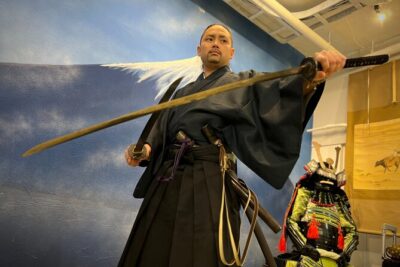
Step one is getting dressed in traditional training gear: dōgi, obi, and hakama. This isn’t just costume. In a dojo setting, the outfit signals training mode and keeps everyone moving in the correct way.
You’ll also be expected to follow dojo rules. Video recording is not allowed, and there’s a clear focus on respectful observation. Observing without paying is not allowed, which tells you they’re protecting the integrity of the class—no wandering, no free-floating spectator behavior.
This kind of etiquette matters because the whole experience is built around real practice. If you show up treating it like a quick attraction, you’ll feel the friction quickly. If you show up ready to behave like a trainee, the atmosphere feels smooth and welcoming.
Training the Basics of Iai and Kenjutsu in 3 Hours
Your lesson follows a logical progression. You start with the basics of iai, then move into kenjutsu technique practice, and you’ll finish by watching the students and master do real cutting and performance.
Iai (katana drawing) techniques
You’ll learn iai techniques through instruction and practice time. The draw isn’t just a movement; it’s connected to posture, timing, and how you control tension. Even if you’ve trained other martial arts, iai has its own rhythms, and you’ll feel that right away.
In a short session like this, the goal isn’t turning you into a swordsman. The goal is giving you a grounded feel for what the master is trying to teach: controlled movement, clean transitions, and consistent form.




Kenjutsu (katana fighting) techniques
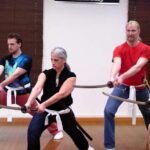
After iai, you’ll practice kenjutsu techniques. This is where footwork, distance, and the intent behind the cut start to matter more. Since this is dojo training alongside real students, you’re not just mimicking shapes—you’re learning why the shape exists.
If you have prior martial arts experience, you’ll probably pick up the structure faster. If you don’t, you can still do it, but expect it to be more physical and more technical than a casual sightseeing stop.
What you’ll watch while you learn
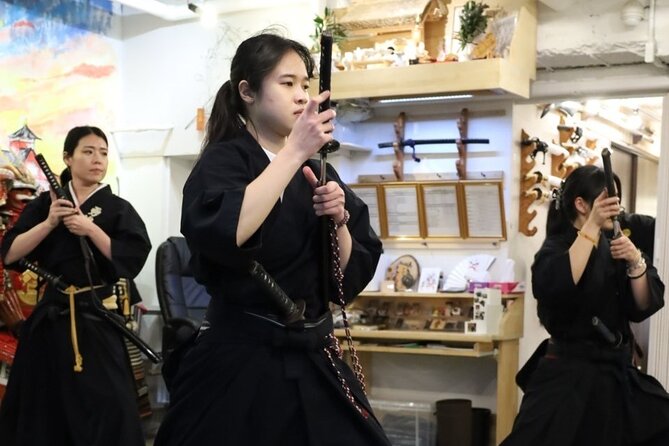
A key element here is how learning and observation overlap. You’ll watch the students and the headmaster while training happens around you. That gives you a clearer idea of what “good” looks like in this system, instead of trying to learn everything from explanation alone.
The Cut and the Two-Katana Performance You Actually Came For
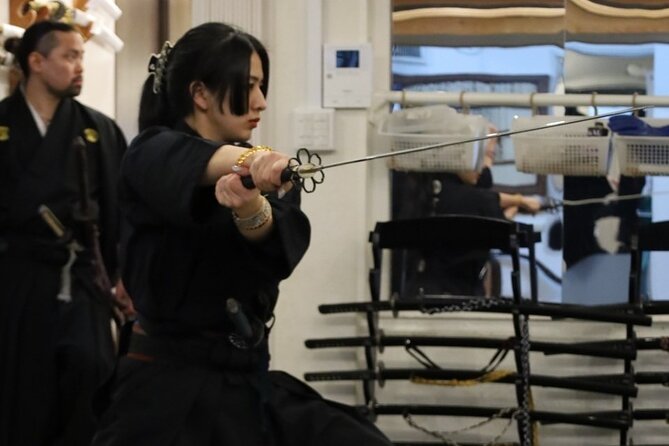
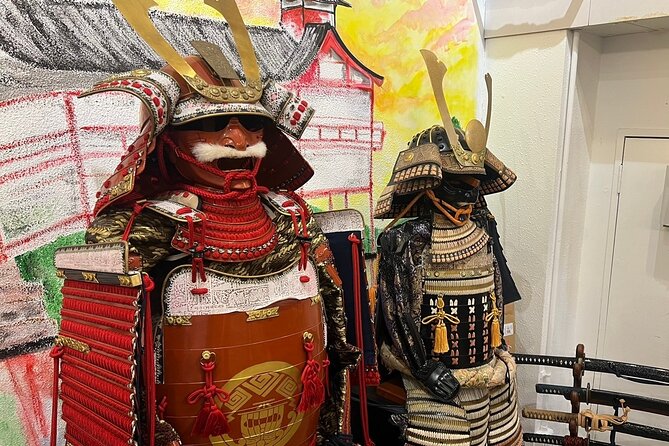
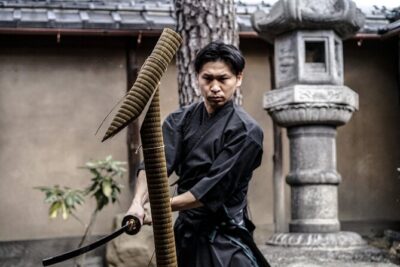
The part many people remember is the real-katana cutting segment. The students and master cut rolled tatami mats, and it’s done as part of training, not as a separate stage show.
That matters for two reasons:
- You see the result of the technique principles you were just taught.
- You understand how the dojo values control over theatrics.
You also get the master’s two-katana performance. It’s the kind of skill display you don’t typically get in standard samurai-themed experiences. Here it’s presented by someone with decades of experience, and it’s linked back to the dojo mindset: precision, discipline, and practice.
One important boundary: test cutting with a real katana is not offered. So while you’ll watch others cut with live steel, you’re not meant to perform the same cutting step yourself during the session.
How Much Skill Do You Need? Physical Comfort and Expectations
The experience calls for a moderate physical fitness level, which fits a dojo lesson that includes standing, moving, and repeating technique drills. You don’t need to be an athlete, but you should be comfortable with physical practice for the length of the session.
Also, the minimum age is 12+, so this isn’t designed for very young kids.
Skill-wise, there’s a big difference between martial arts experience and katana experience. Even people with a background in other martial arts can find katana work new, because the tool, stance, and timing are specific. Based on the overall tone of the experience (and the way the session is structured), you’ll likely get more out of it if you enjoy technique and don’t mind being corrected.
If your goal is pure entertainment—something quick, easy, and photo-friendly—you might find the rules and training focus feel strict. But if your goal is real instruction and real dojo atmosphere, this is exactly that.
Price in Context: Why $195 for 3 Hours Can Be Good Value
At $195.09 per person for about 3 hours, this isn’t a budget “thing to do.” But it’s also not a cheap-and-cheerful demo.
The value is in the combination of:
- a real dojo setting (Yushinkan Kyoto),
- instruction in iai and kenjutsu,
- active participation with a small group (max 3 travelers),
- live cutting by students,
- and a two-katana performance by the headmaster.
When you compare that to the more common Kyoto offerings that are mostly about photos, this is built like training. You’re paying for access to a real practice space and for the time of the master and students to work with you inside their normal routine.
One more practical point: the experience is often booked around 29 days in advance on average. That’s a hint that slots can fill, especially if you’re traveling in peak seasons.
The Practical Stuff You’ll Be Glad You Know
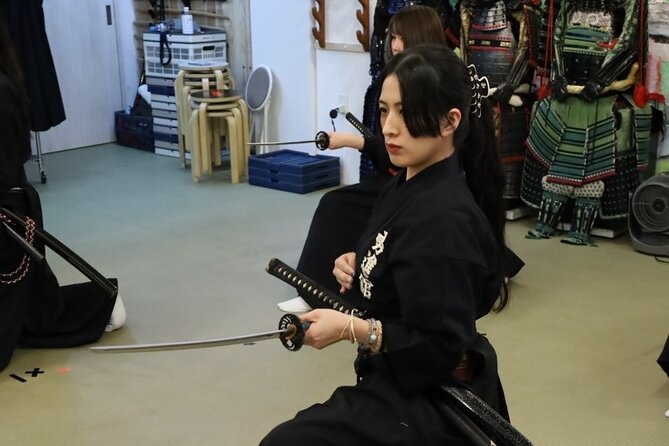
A few details will help you walk in prepared.
- No video recording. Bring your attention, not your camera.
- You must be 12+ to participate.
- Observing without paying isn’t allowed. Plan to take part or don’t count on watching for free.
- No test cutting with a real katana is included for participants. You’ll watch the cutting segment, but you’re not doing that yourself as part of the experience.
Also, since the session is dojo-based, follow instructions about movement and timing closely. If you’re unsure about anything—how to stand, when to practice, what to do with your hands—ask at the right moment. In a class like this, quick corrections are often the difference between learning something and just getting through it.
Should You Book This Tour?
Book it if you want the real deal. This is best for people who:
- enjoy martial arts and technique,
- want more than a performance,
- are okay with training rules (no video, no free observing),
- and understand that you’re participating in drills, not doing test cutting yourself.
Skip it if your main goal is hands-on katana cutting with live steel. The experience clearly doesn’t offer test cutting for participants, so you’d be paying for instruction and observation, not for the thrill of swinging at tatami yourself.
If you’re the type who likes authentic Kyoto experiences where locals take practice seriously, this is a strong choice. I also like that the group is small and the headmaster-led structure keeps things focused.
FAQ
Is video recording allowed during the training?
No. Video recording is not allowed during this experience.
Do I get to do test cutting with a real katana?
No. Test cutting with a real katana is not offered.
What’s the minimum age to participate?
Participants must be 12 years old or older.
Where does the training start and end?
It starts at 452-4 Matsugaechō, Nakagyo Ward, Kyoto, 604-8034, Japan, and ends back at the same meeting point.
How many travelers are allowed in a group?
This activity has a maximum of 3 travelers.
Do I need to have special martial arts experience?
The experience involves learning iai and kenjutsu techniques and requires a moderate physical fitness level. Prior martial arts experience can help you pick things up faster, but the key requirement in the information provided is physical readiness and following dojo instruction.
Can I cancel and get a full refund?
Yes, free cancellation is available. You can cancel up to 24 hours in advance for a full refund.
More Tour Reviews in Kyoto
More Samurai and Ninja Sessions

Just added: more Kyoto tours to browse







Kyoto Samurai & Ninja Experiences, compared.
 ★ 5.0Kyoto Samurai ExperienceFrom $1191,294 reviews
 ★ 4.9Kendo and Samurai Experience with Uniform and GearFrom $103815 reviews
 ★ 4.9Samurai Sword Class by Experts in Traditional ArtsFrom $64657 reviews
 ★ 4.5Skip the lines Basic Ticket at SAMURAI NINJA MUSEUM KYOTOFrom $28632 reviews
 ★ 5.0Ninja 1-hour Hands-on Lesson by Japanese master in Kyoto -EntryFrom $80489 reviews
 ★ 4.8Ninja Weapon Forging ExperienceFrom $148478 reviews
 ★ 4.5Samurai Kenbu Traditional Sword Dancing ShowFrom $32426 reviews
 ★ 5.0Samurai Training with Modern day Musashi in KyotoFrom $132256 reviews
Browse the lists this tour appears in