
Reviewed · SHOW
Traditional Japanese Music show & Experience Tour in Kyoto
Kyoto has a one-hour music lesson. This traditional Japanese music show turns into a hands-on instrument experience. I like that you get real stage time with performers and then switch gears to try instruments yourself, even if you have zero background.
Two things I really appreciate: the small group size (max 12) makes the teaching feel personal, and the format is practical. You’re not just sitting through a concert—you get expert advice during a hands-on session, then you even get time for photos with the instruments and performers at the end.
One thing to consider: it’s only about an hour total, so if you’re hoping for a long, deep practice session, this is more of a guided taste than a full workshop.
In This Review
- Key Highlights Worth Booking
- A One-Hour Kyoto Music Show That Lets You Play Back
- What Happens in the 60 Minutes: Concert, Instrument Try, Photos
- The first 25 minutes: a live concert
- The next 25 minutes: you try playing
- The last 10 minutes: photos with instruments and performers
- Which Instruments You Can Expect to Hold: Shamisen, Koto, Wadaiko
- Small-Group Learning: What Makes It Feel Personal
- Day and Time in Kyoto: 11:00 Sessions on Selected Days
- Where You Meet: The Exact Address and How It Fits Your Day
- Price and Value: What $46.24 Gets You (and Why It’s Not Just a Concert)
- Who This Is Best For in Kyoto
- When It Might Not Be Ideal
- Quick Practical Tips Before You Go
- FAQ
- FAQ
- How long is the Traditional Japanese Music show and experience in Kyoto?
- What’s included in the experience?
- Do I need prior experience to play the instruments?
- Which instruments can I try?
- What is the daily schedule for this tour?
- Where do I meet for the tour?
- Does it end back at the meeting point?
- Is there a limit on group size?
- What’s the cancellation policy?
- Should You Book This Kyoto Traditional Music Instrument Experience?
Key Highlights Worth Booking
- Concert + hands-on in one hour so you’re doing more than watching
- Small group limit (max 12) for better coaching and patience
- Try real instruments like shamisen, koto, and wadaiko
- Day-to-day set changes so different days can feel different
- Photos included with the instruments and performers
- Mobile ticket with a straightforward meet-and-return flow
A One-Hour Kyoto Music Show That Lets You Play Back
If you want a Kyoto experience that feels both cultural and interactive, this is a strong option. You start with a traditional Japanese music concert, then you move into a guided try-it-yourself segment. That rhythm matters. Watching music live gives you the sound and presence. Then playing—even briefly—helps you understand how the technique and instruments connect.
The fact that the tour is designed as a small-group session is a big part of the value. With a max of 12 people, you’re not lost in a crowd. You can ask questions, get corrections, and actually have enough time to participate during the instrument portion.
I also like the approach to learning. You’re not expected to already know the instruments. The experience is built so that beginners can take part with expert support, which makes it feel welcoming without turning it into a watered-down show.
Other Kyoto tours and experiences to compare


What Happens in the 60 Minutes: Concert, Instrument Try, Photos
This experience is planned around a simple, efficient timeline. Here’s how your hour unfolds:
The first 25 minutes: a live concert
You’ll enjoy an authentic Japanese music concert performed by the group. This isn’t background music—it’s meant to be heard as a performance, with performers putting energy into both the music and the presentation.
For you, this first part is the “tuning in” phase. You get the feel for the sound of traditional instruments in a live setting, which is often very different from recordings. If you’re the type who likes to understand what you’re about to do, this segment helps you connect before you touch anything.
The next 25 minutes: you try playing
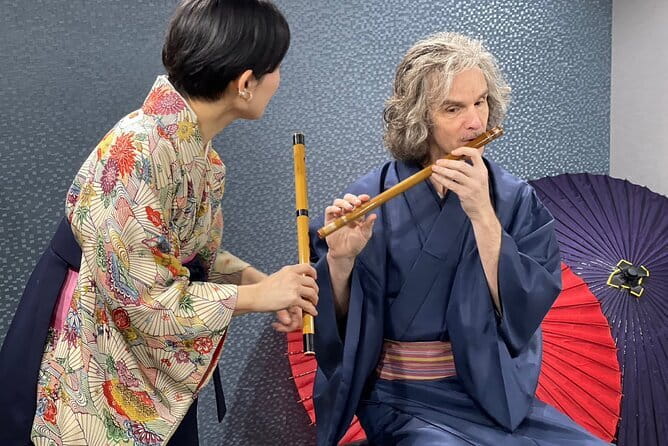
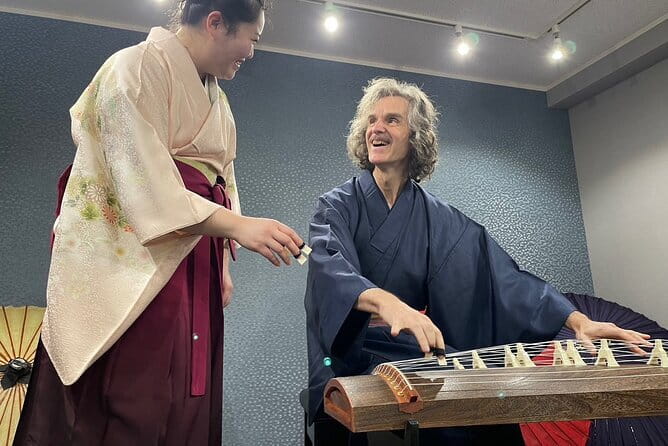
Then the session switches from watching to doing. You’ll get expert advice on how to play the traditional instruments during the hands-on portion. No prior experience is needed, but you will be guided on technique, so it doesn’t become random button-pressing.
This is also where the experience tends to win people over. One review highlighted how performers play, sing, and involve the group in songs, with organizers showing patience when the playing didn’t come out perfectly. That’s a good sign. It means the session is built for real participation, not just polite participation.
The last 10 minutes: photos with instruments and performers
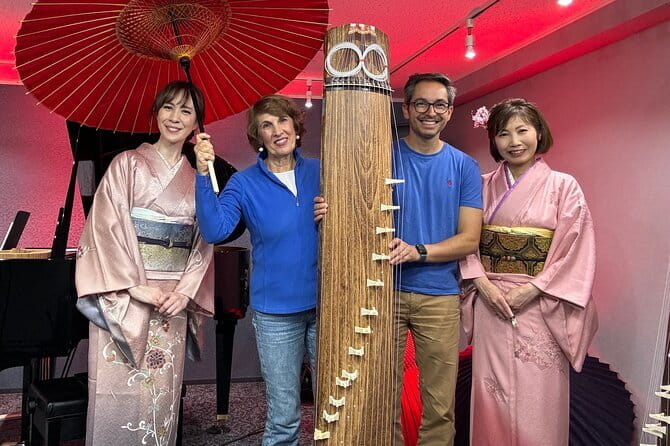
Finally, you take photos with the instruments and performers. That end-of-show photo time is more than a souvenir moment. It gives you a chance to look closely at what you played, and it turns your participation into something you can remember clearly.

Which Instruments You Can Expect to Hold: Shamisen, Koto, Wadaiko
The experience is built around multiple traditional instruments. Based on the program details, you can expect opportunities that include:
- Shamisen (Japanese lute)
- Koto (Japanese harp)
- Wadaiko (Japanese drum)
- And more traditional instruments
One key advantage: the experience is flexible. The description notes that you can choose the instruments that interest you most. So if you’re drawn to a certain sound—string instruments versus drums—you can focus your try-it time in a way that feels personal.
Also, the day-to-day concert content varies depending on the day. That means if you’re in Kyoto for several days, choosing another session on a different day can help you see a different set of material rather than repeating the exact same program.
Small-Group Learning: What Makes It Feel Personal
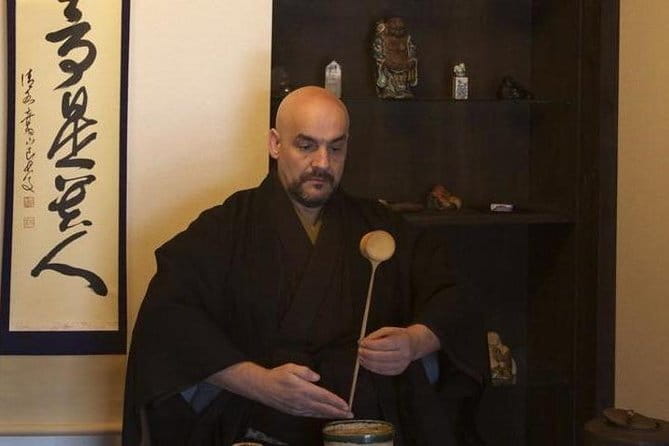
This is a lesson-style experience wrapped in a performance. With a maximum group size of 12, your participation doesn’t feel rushed. The format is also timed so each segment has a clear purpose: perform, then teach, then photo time.
The instrument portion works best if you treat it like a mini-class, not a pass/fail test. Your job is to show up ready to try. The instructors provide the guidance so even if your first sounds aren’t perfect, you still leave feeling like you understood something.
That “patient coaching” theme shows up in the feedback. One participant specifically noted that the organizers had a lot of patience during the playing segment. In practice, that’s what you want from a hands-on cultural activity: the confidence that you won’t be judged for being new.
Day and Time in Kyoto: 11:00 Sessions on Selected Days
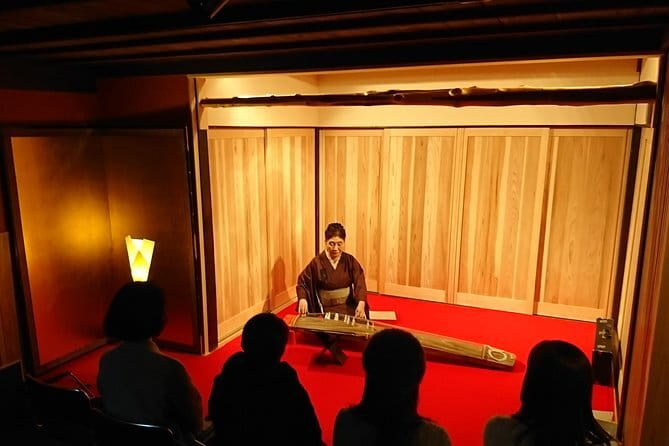
This tour runs on specific weekdays at 11:00 am. The listed days are:
- Monday (11:00)
- Tuesday (11:00)
- Thursday (11:00)
- Friday (11:00)
Because it’s only one hour, it’s easy to plug into a Kyoto day that already includes temples, neighborhoods, and food. It also helps you plan without worrying about late-night logistics.
Another practical point: since the concert content can vary by day, if your schedule allows it, you might pick the day that fits your itinerary best and still feel like you’re getting a unique session.
Where You Meet: The Exact Address and How It Fits Your Day
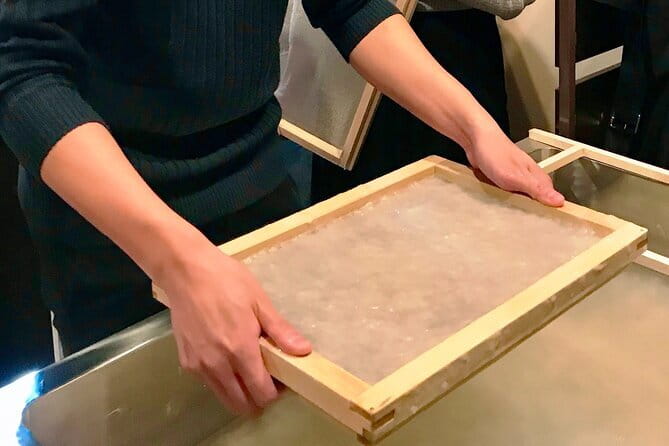
The meeting point is listed at:
5f, 306 Higashidaimonjichō, Nakagyo Ward, Kyoto, 604-8043, Japan
The activity ends back at the meeting point. That makes your timing simple. You can enjoy it as a self-contained block in your day without needing to reorganize transportation afterward.
The meeting location is described as near public transportation, which matters in Kyoto. Getting from one neighborhood to another can be a time puzzle, and being close to transit reduces stress.
Price and Value: What $46.24 Gets You (and Why It’s Not Just a Concert)
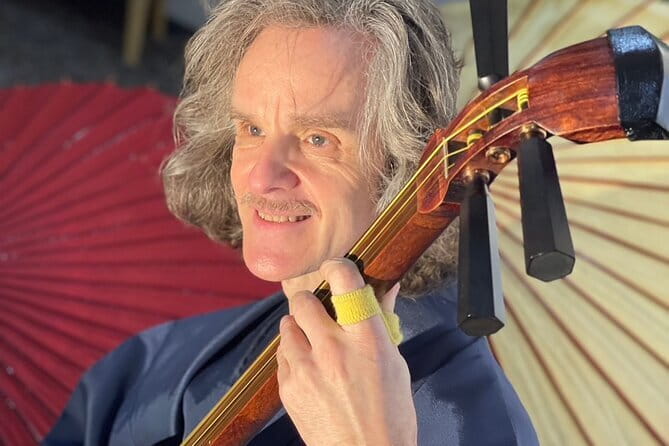
The price is $46.24 per person, and the experience runs about 60 minutes. You also receive a mobile ticket, and the program includes an instrument for experience.
So what’s the real value? You’re paying for three things in one:
- A live traditional music concert (25 minutes)
- A guided, hands-on instrument try session (25 minutes)
- A short photo time (10 minutes)
A standard concert often gives you the first part only. Here, the “watch-and-try” design is what makes the cost feel more justified. Even if you only play for part of the session, the fact that you get instruction and hands-on guidance changes the experience from passive to active.
Also, the small group limit (max 12) is part of the value math. If you’ve ever been to group workshops where you never get close enough to ask questions, you know how much that affects the experience. This format is designed to avoid that.
Who This Is Best For in Kyoto
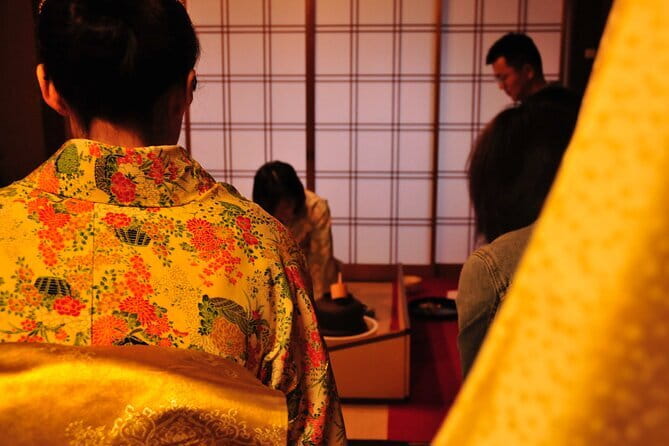
This is a great fit if you want:
- a hands-on cultural activity (not just sightseeing)
- a short, scheduled experience that’s easy to plan
- expert guidance for beginners
- a compact way to learn the feel of traditional instruments like shamisen, koto, and wadaiko
It’s also a good choice if you’re curious but not sure how you’d approach Japanese music on your own. The show provides the structure. You don’t need to research technique beforehand, and you don’t need to know what to ask for.
If you’re traveling with someone who enjoys live performances but also wants participation, this format tends to satisfy both sides. You watch, then you play.
When It Might Not Be Ideal
This won’t be perfect if your main goal is a long practice session, deep instruction, or a lengthy immersion with one instrument. The hands-on time is 25 minutes, so you’ll learn enough to understand the basics and create a memorable first attempt, but it’s not designed to turn you into a performer.
It’s also worth knowing the content can vary by day. That’s good for repeatability, but if you’re trying to match a specific instrument experience day-to-day, you’ll want to choose the date based on what fits your schedule.
Quick Practical Tips Before You Go
Based on how the session is structured, here are a few things that will help you get the most out of the hour:
- Go ready to participate, not just photograph. The best part is the instrument try time.
- If you have a preference—strings versus drums—think about it before the hands-on segment starts.
- Wear comfortable clothing and plan to move a bit during the participation portion.
- Bring your camera/phone for the final photo time, since photos are part of the program.
FAQ
FAQ
How long is the Traditional Japanese Music show and experience in Kyoto?
It’s about 60 minutes total.
What’s included in the experience?
You’ll receive a Japanese musical instrument for the hands-on experience.
Do I need prior experience to play the instruments?
No prior experience is needed, and you’ll get expert guidance.
Which instruments can I try?
You can expect opportunities to experience instruments including shamisen, koto, and wadaiko, and more may be included.
What is the daily schedule for this tour?
The listed start time is 11:00 am, and it runs on Monday, Tuesday, Thursday, and Friday.
Where do I meet for the tour?
The meeting point is 5f, 306 Higashidaimonjichō, Nakagyo Ward, Kyoto, 604-8043, Japan.
Does it end back at the meeting point?
Yes, the activity ends back at the meeting point.
Is there a limit on group size?
Yes. The maximum group size is 12 people.
What’s the cancellation policy?
You can cancel for a full refund if you cancel up to 24 hours before the experience’s start time. If you cancel less than 24 hours before, the amount you paid won’t be refunded.
Should You Book This Kyoto Traditional Music Instrument Experience?
If you want a short, scheduled Kyoto activity that teaches you something real and gives you time to participate, I’d book it. The mix of a live concert plus guided hands-on playing is the main reason this works. You’ll leave with a better sense of how shamisen, koto, wadaiko, and other traditional instruments feel in the hand, not just how they sound from a seat.
The only reason to hesitate is if you’re looking for a long training session or a deep, instrument-specific workshop. For a one-hour taste that turns into a personal experience, this format is a strong match.
More Show in Kyoto

More Tours in Kyoto
More Tour Reviews in Kyoto
Just added: more Kyoto tours to browse






Show, compared.
 ★ 5.0Kyoto Gion Cultural Walk & Geisha Show with Dining OptionsFrom $108518 reviews
★ 5.0Kyoto Gion Cultural Walk & Geisha Show with Dining OptionsFrom $121483 reviews
★ 5.0Kyoto Gion Cultural Walk & Geisha Show with Dining OptionsFrom $108518 reviews
★ 5.0Kyoto Gion Cultural Walk & Geisha Show with Dining OptionsFrom $121483 reviews
 ★ 5.01 Hour Geisha Show in KyotoFrom $79452 reviews
 ★ 4.5Samurai Kenbu Traditional Sword Dancing ShowFrom $32426 reviews
 ★ 4.8Meet-and-Greet, Maiko Show and ExperienceFrom $44286 reviews
 ★ 4.9Non-Verbal Theatre Show Tickets at GEARFrom $46198 reviews
 ★ 5.0Show Tickets at Non-Verbal Theatre GEARFrom $47133 reviews
 ★ 5.0The Art of Geisha: Exclusive Show & Gion Walking TourFrom $124129 reviews