
Reviewed · GION & GEISHA DISTRICT TOURS
The Art of Geisha: Exclusive Show & Gion Walking Tour
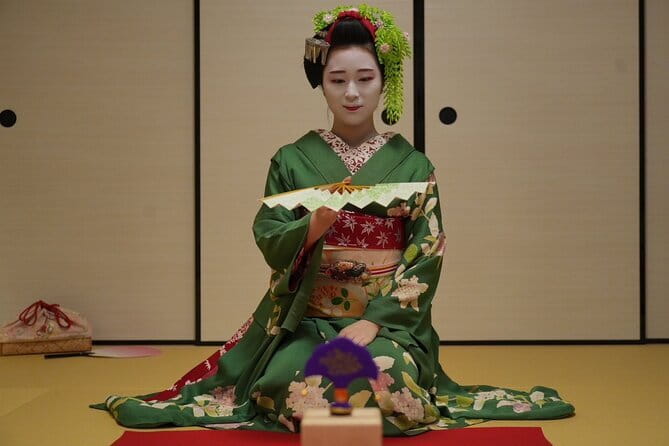
Gion gets personal on this small-group tour. You get into the usually guarded world of geisha culture in Kyoto’s Gion area, watching a maiko perform while you’re served tea and snacks.
I love the up-close format and the calm, sit-down feel. I also love the chance to chat and ask questions directly, with guides such as Ai or Yoshino helping translate what you’re seeing.
The one thing to consider: it’s timed for a 3:00 pm start, and children under 6 can’t join.
In This Review
- Key points that make this tour worth your time
- Kyoto’s Gion: Why this neighborhood matters
- Small-group format (max six) and what that changes
- The maiko show: the talent you’re actually meant to notice
- Tea, snacks, and the quiet comfort of sitting still
- Asking questions: how to get more out of the chat
- The traditional game challenge: fun, but still part of the culture
- Price and value: what you’re paying for at $124.21
- Where the tour fits in your Kyoto day
- Who should book this (and who should skip it)
- Practical tips for a 3:00 pm Gion experience
- Should you book The Art of Geisha: Exclusive Show & Gion Walking Tour?
- FAQ
- Where does the tour start?
- Where does the tour end?
- What time does the tour begin?
- How long is the tour?
- What’s the maximum group size?
- What is included in the price?
- Is there a maiko performance and time to interact?
- Do I get a mobile ticket?
- Can children join, and is cancellation free?
Key points that make this tour worth your time
- Maximum six people keeps the experience more personal than most shows
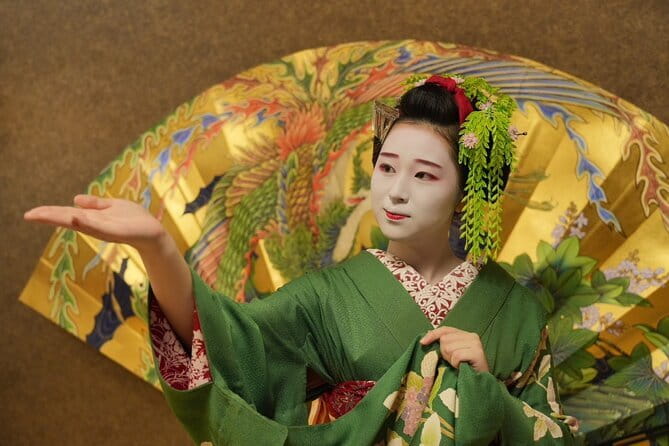
- Maiko performance plus tea and snacks means you’re not just watching, you’re sitting with it
- Q&A with the apprentice gives you real context on the art and training
- Gion walking segment helps you connect the performance to the neighborhood
- A traditional game challenge turns watching into hands-on participation
- Mobile ticket makes day-of entry simpler
Kyoto’s Gion: Why this neighborhood matters
Kyoto’s Gion is famous for its old-street atmosphere, but it can also feel like a maze of storefronts and photo stops. This tour helps you slow down. You spend time in Gion with an English-speaking guide, so you’re not just passing by dark doorways and hoping you guessed correctly.
The meeting point is easy to find: the Statue of Izumo-no-Okuni in Higashiyama Ward. The start time is 3:00 pm, and the tour ends at Hangesho 535 Morishitachō, also in Higashiyama Ward. That matters because Gion can be confusing at dusk—having a planned route helps you get your bearings fast.
Also, Gion isn’t only about geisha sightings. The streets, the pace, and the way people move all contribute to why this culture looks the way it does. Even in the short time you’re out there, you’ll start to see patterns: what’s public, what’s private, and what you’re meant to notice.
More evenings along the lantern-lit lanes of Gion

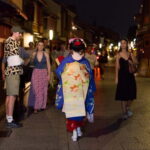
Small-group format (max six) and what that changes
A “small group” in Kyoto can still mean crowded seats. Here, the limit is six travelers, which is a huge difference for two reasons.
First, it keeps the maiko-focused moments from feeling staged for a crowd. When the group is tiny, there’s room to hear explanations clearly and ask follow-up questions instead of rushing through one generic answer.
Second, it changes the vibe of the tea-and-snack break. You’re not balancing a tray while elbowing past strangers. It’s set up to feel like a proper pause in the afternoon—something you can actually pay attention to.
The experience is also listed as about 1 to 2 hours total. One of the segments is about 1 hour centered on Gion and the performance. So if you’re trying to fit this into a packed Kyoto day, it’s the kind of activity that doesn’t swallow your whole schedule.
The maiko show: the talent you’re actually meant to notice
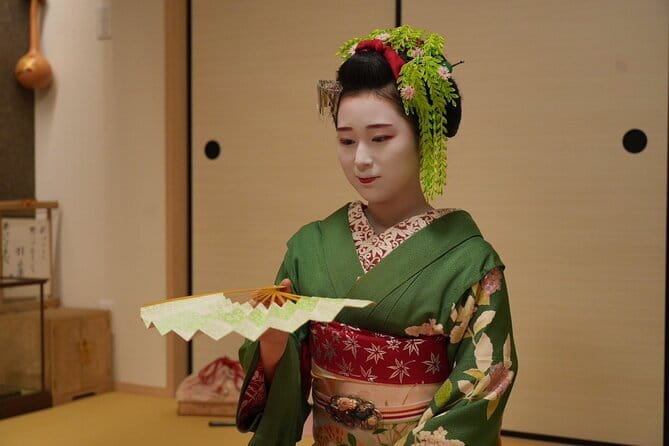
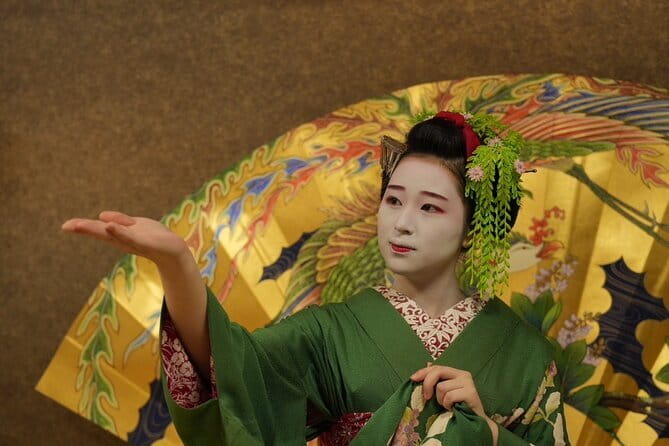
The centerpiece is the geisha apprentice (maiko) performance. This isn’t described as a background show you catch while walking past. It’s the point of the outing, and it’s set up so you can watch the arts closely.
In particular, you’ll see the kind of practiced poise and skill that takes years of training. That’s the part most people don’t grasp until they watch one live. The movements are controlled, timed, and intentional—not performative in the casual way street entertainers are.
And yes, it pairs the performance with tea and snacks, which makes the timing feel respectful. You’re not just there to be entertained. You’re there to understand the ritual of receiving tea, watching the art, and then learning what you just saw.
If you’re coming to Kyoto hoping to see a maiko up close but you’ve been disappointed by random street-spotting attempts, this is built for exactly that. Instead of chasing maybes, you get a scheduled, guided experience.
Tea, snacks, and the quiet comfort of sitting still
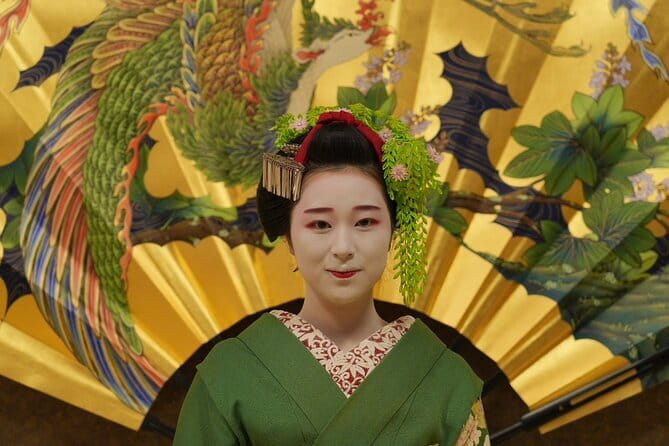
Tea and snacks might sound like a small add-on, but it changes the whole feel of the tour. In a district like Gion, everything can be fast—photos, walking, trying to catch glimpses. This format slows you down.
You’ll be served Japanese tea and snacks as part of the show time. That gives you two practical benefits:
- You’re comfortable while the performance happens, so you can focus on what matters.
- You get a more natural chance to talk with your guide and settle into the moment, instead of standing around waiting.
The setting also tends to feel special. In past experiences, people have mentioned how beautiful the tea setting felt. Even if you don’t know the etiquette details ahead of time, you’ll notice the atmosphere is designed for attention, not chaos.
Asking questions: how to get more out of the chat
One of the strongest reasons to book this tour is the chance to talk to the apprentice. You get time to chat with the maiko and ask questions. That’s rare in a lot of “see a performance” tours, where the audience stays passive.
When you’re given Q&A time, you’ll get more than facts. You’ll start understanding why certain traditions exist and what the apprenticeship is like in practical terms—how much training is involved, what dedication looks like, and how the arts connect to the culture of Gion.
A good approach for your questions is to keep them simple and focused. For example:
- What parts of the arts take the longest time to learn?
- How do the different traditional skills fit together?
- What would a visitor notice that most people miss?
If you want to make the most of this moment, come in with 2–3 questions ready. It’s the kind of exchange that goes best when you’re not flipping through your notes mid-conversation.
Other Kyoto tours and experiences to compare





The traditional game challenge: fun, but still part of the culture

After the performance and Q&A, there’s a playful challenge: you’ll take part in a traditional Japanese game where you test your skill against the maiko.
The exact game isn’t described in the tour details, but the intent is clear. It’s not just a gimmick. It’s a way to turn “watching” into “participating,” and it also gives you a more memorable story than another photo.
This is one of the most praised parts of the experience, because it feels respectful and joyful rather than cheesy. And it levels the playing field—suddenly you’re learning in real time instead of only observing.
If you’re nervous about performing in front of others, don’t worry too much. Think of it as a cultural interaction moment, not a test you can fail. The point is to try, laugh, and enjoy.
Price and value: what you’re paying for at $124.21
At $124.21 per person, this is not a budget activity. But the price makes sense when you look at what’s included:
- Geisha show focused on an apprentice performance
- Tea and snacks
- English-speaking tour guide
- Small group capped at six
- A mobile ticket for day-of entry convenience
Most of what you’re paying for is access and time. The guide time matters, because you’re not only getting a show—you’re getting the context to understand it. The small-group cap matters because it keeps you from feeling lost in a crowd during Q&A.
If your Kyoto itinerary includes a lot of “walk around and hope” experiences, this is the opposite. It’s scheduled. It’s structured. You know what you’re getting before you arrive.
One caution: the tour notes additional fees are not included. The amount isn’t specified in the information you provided, so you should plan on possible small extras and double-check what’s covered versus what’s optional when you book.
Where the tour fits in your Kyoto day
This tour starts at 3:00 pm. That placement is actually handy. It’s late enough to avoid the early-morning rush, but early enough that you’re not only dealing with nighttime crowds.
Because the total time is roughly 1 to 2 hours, you can pair it with:
- a daytime temple or museum earlier in the afternoon
- an early dinner after the tour ends in the Higashiyama area
Also, the meeting point and end point are both in the same broad neighborhood zone. That helps you avoid long cross-city transfers for a short experience.
The tour is listed as near public transportation, so you should have straightforward options to get there—no long trek required.
Who should book this (and who should skip it)
This tour is a good match if you want:
- a scheduled, realistic chance to see a maiko performance
- more than sightseeing—specifically Q&A and interaction
- a format that’s not packed with strangers
It’s also a solid pick for people who’ve tried to spot geisha or maiko the normal way and found it frustrating. Here, the experience is built around meeting the culture on purpose.
The clear skip case is age. Children under 6 can’t join, so if you’re traveling with younger kids, you’ll need a different Kyoto plan.
Most travelers can participate, so physical difficulty shouldn’t be the barrier. Still, you’ll want to be comfortable with walking in a neighborhood like Gion, since this is a walking tour component plus sitting time for tea and the show.
Practical tips for a 3:00 pm Gion experience
A few things will help you enjoy this more:
- Arrive a little early. Gion streets can look simple on a map and then feel tricky in person.
- Keep your questions short and ready. You’ll get more value from 2 good questions than 10 vague ones.
- Wear comfortable shoes. Even short walks in older neighborhoods add up.
- Be mentally ready to switch modes: walking outside, then sitting for the show, then chatting and playing a game.
If you’re also planning other Kyoto cultural activities, pace yourself. This tour is focused. Give it attention.
Should you book The Art of Geisha: Exclusive Show & Gion Walking Tour?
If your goal is to experience geisha culture in a way that’s structured, small-group, and interactive, this is a strong yes. The combination of maiko performance, tea and snacks, Q&A time, and a traditional game is exactly what turns a ticket into a memory.
I’d especially recommend it if you’re the type who likes to understand what you’re seeing, not just photograph it. The guide support and the small group size make that possible.
Skip it if you’re trying to do Kyoto on a strict budget or you can’t make the 3:00 pm start. And if you’re traveling with children under 6, this isn’t an option.
If you want one Kyoto experience where the culture shows up on schedule—this is one of the best ways to make that happen.
FAQ
Where does the tour start?
It starts at the Statue of Izumo-no-Okuni, Kawabatacho, Higashiyama Ward, Kyoto 605-0076, Japan.
Where does the tour end?
The tour ends at Hangesho 535 Morishitachō, Higashiyama Ward, Kyoto 605-0836, Japan.
What time does the tour begin?
The start time is 3:00 pm.
How long is the tour?
The tour is listed as approximately 1 to 2 hours.
What’s the maximum group size?
The experience has a maximum of 6 travelers.
What is included in the price?
Included: the geisha show, Japanese tea and snacks, and an English-speaking tour guide.
Is there a maiko performance and time to interact?
Yes. You watch a maiko perform, enjoy tea and snacks, and you get time to chat and ask questions. There’s also a traditional Japanese game.
Do I get a mobile ticket?
Yes, it’s listed as a mobile ticket.
Can children join, and is cancellation free?
Children under 6 and below cannot join. Cancellation is free: you can cancel up to 24 hours in advance for a full refund.
More Tours in Kyoto


More Tour Reviews in Kyoto


Still in Gion? Keep Going

Just added: more Kyoto tours to browse








Gion & Geisha District Tours, compared.
 ★ 4.7Kyoto Geisha Walking Tour: Gion District & Hidden GemsFrom $253,273 reviews
 ★ 4.9Gion Magical Night Walking Tour with Geisha TriviaFrom $242,393 reviews
 ★ 4.7Gion Geisha District Walking Tour – Stories of GeishaFrom $202,187 reviews
 ★ 4.9Best of Kyoto: Gion, Geisha, Pagodas & CobblestonesFrom $242,058 reviews
 ★ 4.5Night Walk in Gion: Kyoto’s Geisha DistrictFrom $212,003 reviews
 ★ 5.0Kyoto Night Foodie Tour in Gion (9+ dishes + 6 Sake tastings)From $1631,762 reviews
 ★ 5.0Kyoto Gion Geisha District Walking Tour – The Stories of GeishaFrom $251,441 reviews
 ★ 5.0Kyoto Gion: 2-Hour Geisha Culture & History Walking TourFrom $231,186 reviews
Browse the lists this tour appears in