
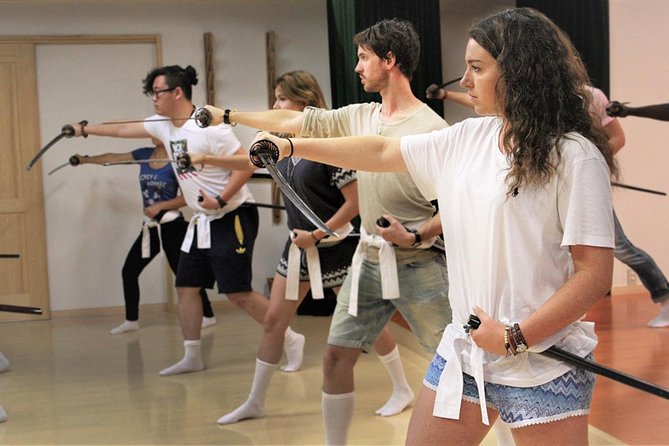
Reviewed · KYOTO SAMURAI & NINJA EXPERIENCES
Samurai School in Kyoto: Samurai for a Day
Kyoto turns you into a samurai, briefly. You learn sword-draw basics and bowing discipline in a hands-on kenbu class, then finish with costume photos and a completion certificate. One watch-out: the session can include a longer presentation and the photo time can be tighter than you’d hope.
I also like how the format stays practical, not just talk. You’re guided step-by-step by an English-speaking instructor, you get kitted out in a real uniform and socks, and you practice movements with a sword under safety rules. If you’re short on patience for performances at the start or you want lots of posing time, plan your expectations and you’ll be happier.
In This Review
- Key Things to Know Before You Train
- Samurai School in Kyoto: A Hands-On Kenbu Class, Not a Museum Stop
- Getting There: The Gozan Building Meeting Point in Higashiyama
- The Start of Class: A Short Film, Then Uniform Up
- Learning the Basics: Bow, Draw, Replace, Strike
- Costume Photos and Certificate: What You Actually Leave With
- The Longer Upgrade: Walking, Fan Skills, and Stage Kenbu
- Timing: How to Fit 1.5 Hours (and Avoid Feeling Rushed)
- Who This Works Best For (and Who Should Rethink It)
- Value for Money: Why $66.32 Feels Fair Here
- My Practical Tips So Your Class Goes Smoothly
- Should You Book Samurai School in Kyoto?
- FAQ
- FAQ
- How long is the Samurai School in Kyoto experience?
- Where does the class start in Kyoto?
- Is there an English-speaking instructor?
- Do I need a printed ticket?
- What do I learn during the class?
- Is there an optional longer practice session?
- What photos do I get?
- What souvenirs are included?
- Is hotel pickup or drop-off included?
- What is the cancellation policy?
Key Things to Know Before You Train
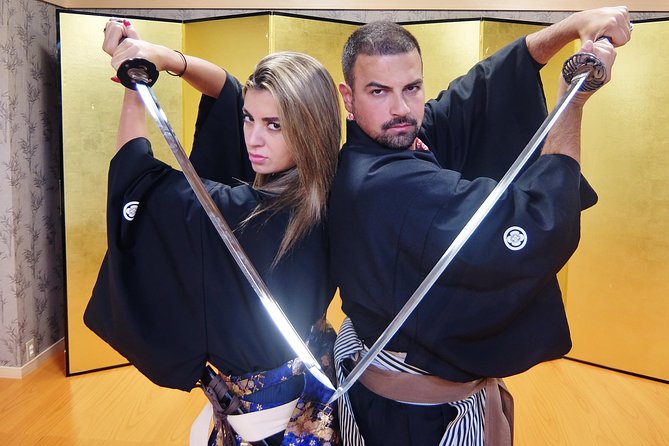
- Kenbu training (not just a demo): you practice choreographed samurai movements with a focus on form.
- Sword draw and scabbard control: you learn how to draw and replace your blade safely.
- Costume photo session included: you suit up in traditional samurai clothing for photos.
- Optional longer upgrade: you add stylized walking, folding fan skills, and stage choreography.
- Small group setting: the class caps at 10 people, so it stays personal.
- Safety-first instruction: you follow the instructor’s directions for handling a sword.
Samurai School in Kyoto: A Hands-On Kenbu Class, Not a Museum Stop
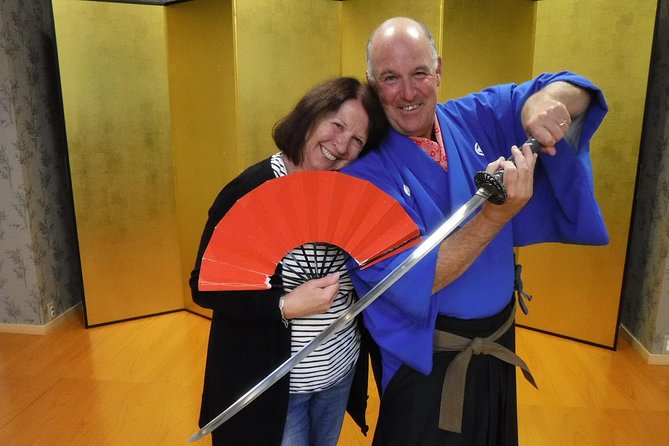
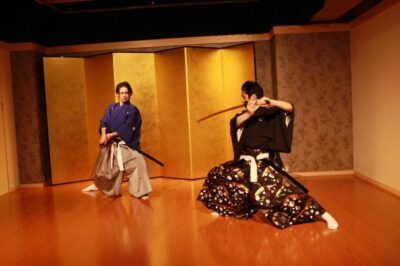
This is one of those Kyoto activities that’s hard to explain until you see it in action. You’re not just watching samurai history on a screen. You’re practicing the physical basics of kenbu, a samurai performing art, and you do it in a real dojo setting with a structured lesson.
I like that the training targets specific skills you can point to afterward: bowing, drawing from the scabbard, controlled strikes, and respectful movement. If you’re into martial arts or you just like how Japanese tradition shows up in everyday discipline, this hits the sweet spot between culture and action.
The vibe is friendly and orderly, too. You suit up, you learn, and you end with your certificate and souvenirs like a tenugui towel. Just remember: since it includes sword training, the instructor’s pace and safety rules come first.
Pick up the blade again with these Kyoto sessions
Getting There: The Gozan Building Meeting Point in Higashiyama
The meeting point is in Kyoto’s Higashiyama area, at the GOZAN building. You’ll start on the first basement floor, using the stairs on the right side of the building, and you’ll be directed where to go once you arrive.
This matters because you should arrive early. The guidance is to show up 10 minutes to 3 minutes prior to your start time, so you can check in and avoid rushing your outfit change. Kyoto mornings and afternoons can move fast, so I recommend you build in a little buffer.
The good news: it’s near public transportation. So you can fit this between temples without needing a taxi for every leg.
Also, it’s only about a 1.5-hour experience for the standard option. If you choose the longer upgrade, expect more time devoted to practice and stage choreography.
The Start of Class: A Short Film, Then Uniform Up
When you arrive, you meet your instructor and begin with a short 3-minute film covering the fundamentals of samurai practices and the style you’ll learn. It’s brief, which is helpful if you don’t want to spend the first chunk of your time sitting.
Next comes the fun practical part: dressing. You’ll put on a samurai-style uniform, including a white belt and Japanese-style socks, and you’ll handle the sword as part of the lesson. This is also where clothing choice matters. You’ll want exercise-friendly clothes that still work for a quick costume change.
The guidance is pretty clear: a single hoodie or tights alone won’t be suitable for costume changes. Wear something you can move in, and that won’t fight the dressing process.
Learning the Basics: Bow, Draw, Replace, Strike
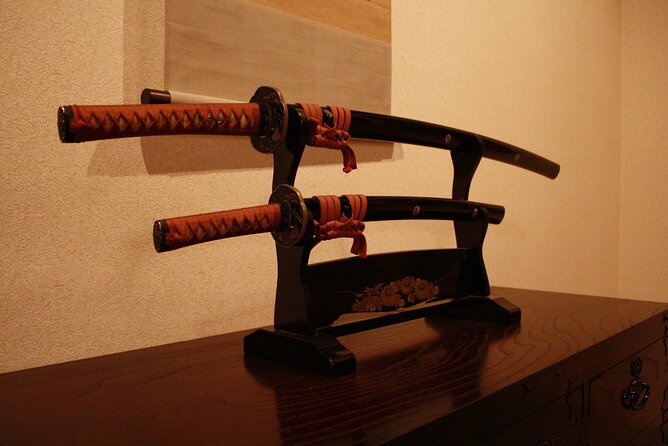
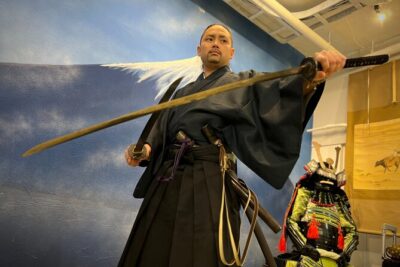
The core training focuses on disciplined movement. You start with proper bowing, which sounds simple until you realize it sets the tone for everything else. Then you move into sword work, learning how to draw from the scabbard and return it safely.
This is the part you’ll feel in your muscles right away. Drawing and replacing a sword correctly is tricky because you’re balancing timing, posture, and control. The lesson guides you through that sequence, and you practice it more than once so your body can figure it out.
After the draw and scabbard control, you test different striking motions. The goal isn’t to fight a real opponent. It’s to learn the stylized technique and the discipline behind it, so your movement looks correct and respectful.
Safety matters here, and the instructor is explicit about following their instructions. Keep your focus on what they’re showing, not on doing something faster than the group.
Costume Photos and Certificate: What You Actually Leave With
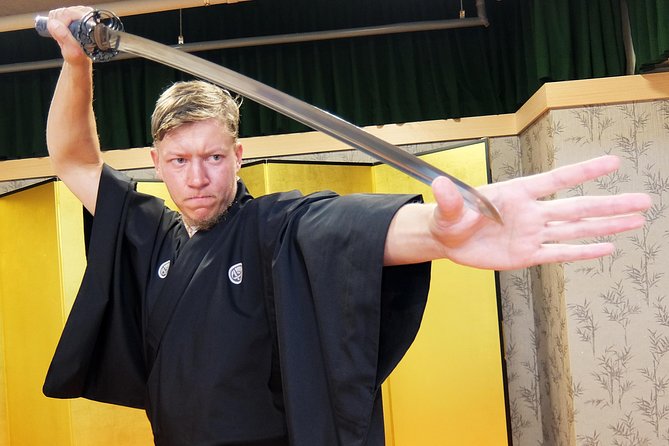
After sword training, you change into traditional samurai costume for a short photo session. This is one of the main reasons people book this activity, because the final look is dramatic without requiring a costume shop or extra planning.
You’ll also receive a lesson completion certificate and a souvenir towel (a tenugui). It’s a nice touch because it turns the experience into something you can keep, not just a memory on your camera roll.
One consideration: the photo segment is meant to be short and scheduled. If you want lots of posed shots with a sword, you may need to work quickly and communicate what you want during the time you’re given. If you have your own camera, come ready to shoot without fumbling with settings.
Also, bring a calm attitude. The session runs like a class, so the photos happen within the flow of the program.






The Longer Upgrade: Walking, Fan Skills, and Stage Kenbu
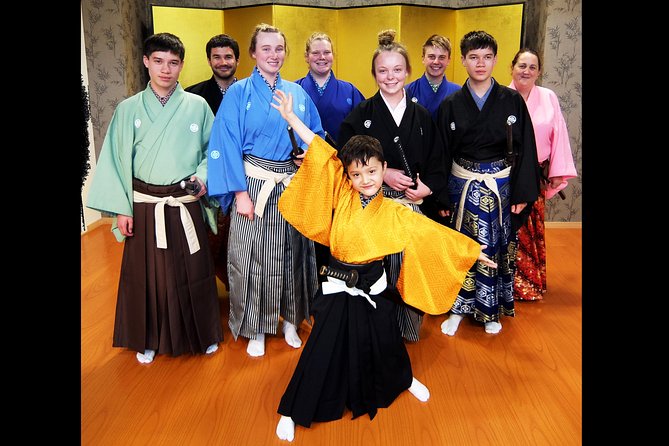
If you want more than the basics, the optional longer practice session adds depth and performance elements. Instead of stopping after the foundational draw and training, you continue learning stylized movements.
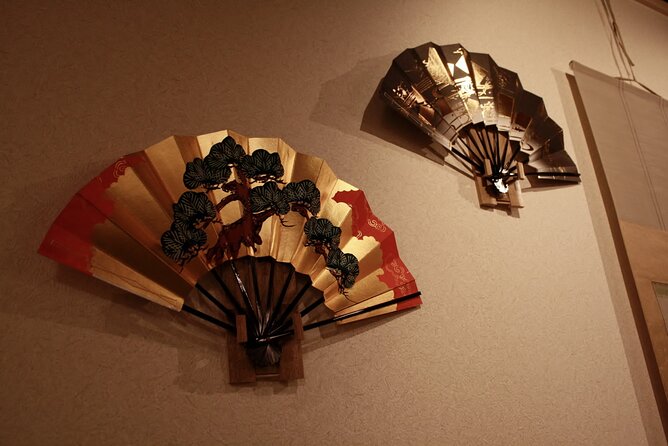
That includes how to walk in a samurai style, and how to use a folding fan as part of the choreography. Then you go into more challenging kenbu choreography, practicing a sequence you’ll perform on stage.
The stage performance is described as being accompanied by a poem and music. So it becomes a mix of physical technique and theatrical presentation, which is exactly what makes kenbu different from standard sword drills.
If you’re the kind of person who likes finishing a class with a clear moment of accomplishment, this upgrade is probably the one you’ll want. It gives your training a finish line, not just a stopping point.
Timing: How to Fit 1.5 Hours (and Avoid Feeling Rushed)
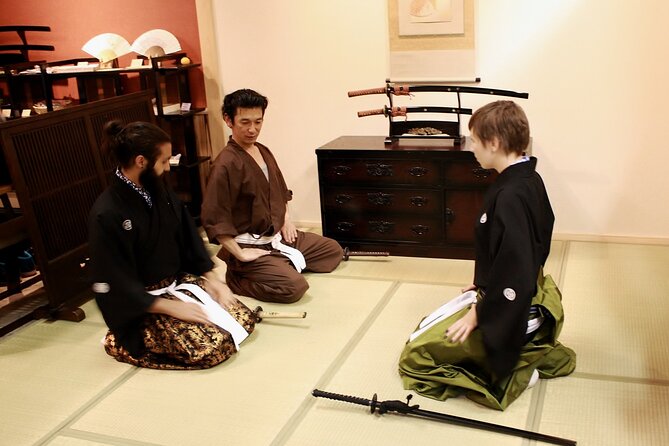
The standard experience is listed at about 1 hour 30 minutes. In practice, your time depends on which option you select and how the session flows that day. Some parts are fast (like the film), while other moments can expand if the instructor is tightening everyone’s technique.
There’s also a performance component in the overall program, and it can affect how the day feels. If you’re planning a temple-hopping route right after, give yourself a comfortable buffer rather than chaining it to a timed ticket.
My practical advice: treat it like a mini activity block. Don’t schedule a nearby reservation that you’d hate to miss.
Who This Works Best For (and Who Should Rethink It)
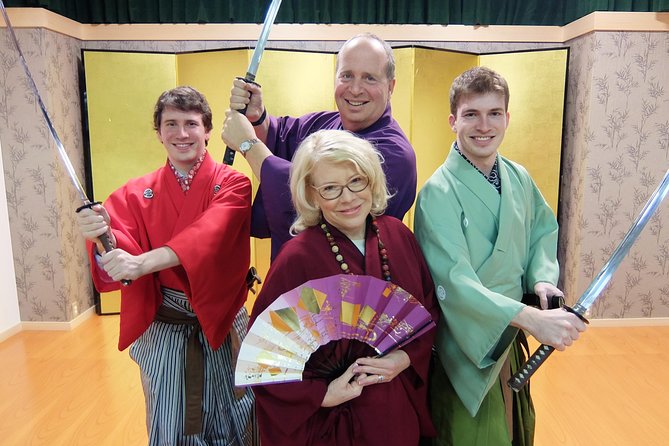
This is best for people who want physical participation. If you’re interested in samurai culture, martial arts form, or you simply like learning skills through doing, you’ll likely enjoy it more than a typical sightseeing stop.
It’s also a strong pick for people who don’t want hours of lecturing. The structure is built around short instructions and then practice.
For families, it can be a good choice because it’s hands-on and includes dressing up. That said, the guidance says for ages 5 to 11, it’s preferable that they attend some kind of class or martial arts school. The lesson includes sword handling, so maturity and listening matter.
If you’re extremely sensitive to tight schedules or you hate any kind of waiting, this may feel a bit structured. The program is designed to keep everyone coordinated.
Value for Money: Why $66.32 Feels Fair Here
At $66.32 per person, this is not a budget meal-and-mascot experience. It’s closer to paying for instruction time, costume elements, and a real learning outcome.
What you get is a full package:
- English-speaking instruction
- sword-draw and movement practice
- a photo session in samurai costume
- a certificate
- a tenugui towel
When you break it down, you’re paying for the instructor’s time and the safety-focused teaching of sword basics plus the production of the photos and ceremony elements. For many people, the sword training itself is the main value driver, and the photos are the bonus you’ll actually want to share.
If you’re comparing it to a quick show ticket, it’s a different category. This is interactive. You do things, not just watch them.
My Practical Tips So Your Class Goes Smoothly
Here are the small things that make a noticeable difference.
First, dress for movement and costume change. Wear clothes that you can layer and remove comfortably. Avoid outfits that you can’t change out of easily, especially if you’re expecting to go from regular clothes into samurai-style attire.
Second, go in with a learning mindset. Sword work is technical. Your goal is to match form, timing, and safety cues, not to “perform” on day one.
Third, bring good energy for photos. The costume time is short, so decide quickly what you want in your shots. If you have specific poses in mind, think about them before you get to the camera moment.
Finally, plan around timing. Arrive early to check in, and don’t schedule your next must-do attraction so tightly that you’ll feel stressed.
Should You Book Samurai School in Kyoto?
Book it if you want a hands-on samurai activity where you’ll practice real technique, not just observe. I think it’s especially worth it for people who like martial arts, Japanese tradition, or learning by doing.
Skip or reconsider if you strongly dislike structured classes, you’re very time-crunched, or you’re hoping for a long, slow photo shoot with tons of individual posing. The program is paced like training, and the photos follow the schedule.
If you’re choosing between the standard and the longer upgrade, my rule is simple: if you want more skills and a stage-style finish, choose the longer session. If you just want the core sword fundamentals plus the costume moment, the standard option gives you a complete experience in about 1.5 hours.
FAQ
FAQ
How long is the Samurai School in Kyoto experience?
The duration is approximately 1 hour 30 minutes for the standard option, and it varies based on the length you choose.
Where does the class start in Kyoto?
You meet at the GOZAN building in Higashiyama Ward, Kyoto. On the day of the event, go to the first basement floor from the stairs on the right side of the building.
Is there an English-speaking instructor?
Yes. The experience includes an English-speaking local guide/instructor.
Do I need a printed ticket?
No. A mobile ticket is available.
What do I learn during the class?
You learn how to bow and how to draw a samurai sword from its protective scabbard, including how to replace it. You also practice striking methods and, in the longer upgrade, additional stylized movements.
Is there an optional longer practice session?
Yes. You can upgrade for longer practice to learn more depth, including walking and how to use the folding fan, and you complete the session with kenbu choreography performed on stage with a poem and music.
What photos do I get?
The experience includes a photo session dressed up in samurai costume.
What souvenirs are included?
You receive a tenugui towel and a lesson completion certificate.
Is hotel pickup or drop-off included?
No. Hotel pickup and drop-off are not included.
What is the cancellation policy?
You can cancel for a full refund up to 24 hours before the experience’s start time. If you cancel less than 24 hours in advance, the amount paid is not refunded.
More Tour Reviews in Kyoto
More Samurai and Ninja Sessions

Just added: more Kyoto tours to browse








Kyoto Samurai & Ninja Experiences, compared.
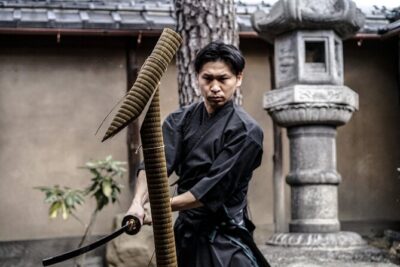 ★ 5.0Kyoto Samurai ExperienceFrom $1191,294 reviews
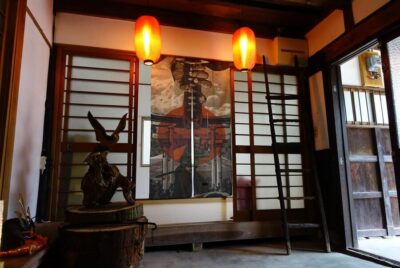 ★ 4.9Kendo and Samurai Experience with Uniform and GearFrom $103815 reviews
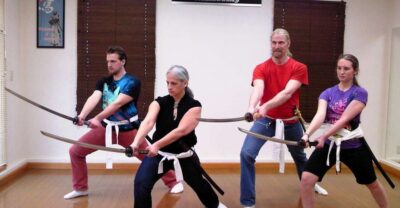 ★ 4.9Samurai Sword Class by Experts in Traditional ArtsFrom $64657 reviews
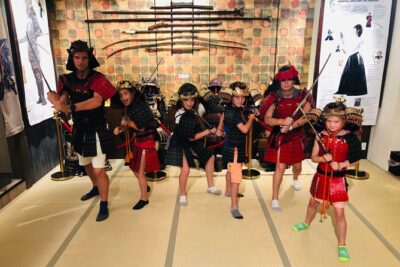 ★ 4.5Skip the lines Basic Ticket at SAMURAI NINJA MUSEUM KYOTOFrom $28632 reviews
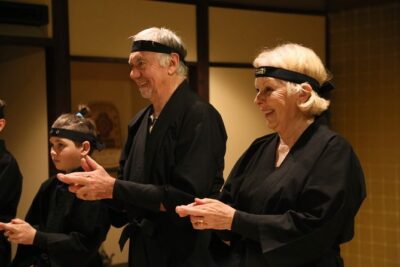 ★ 5.0Ninja 1-hour Hands-on Lesson by Japanese master in Kyoto -EntryFrom $80489 reviews
 ★ 4.8Ninja Weapon Forging ExperienceFrom $148478 reviews
 ★ 4.5Samurai Kenbu Traditional Sword Dancing ShowFrom $32426 reviews
 ★ 5.0Samurai Training with Modern day Musashi in KyotoFrom $132256 reviews
Browse the lists this tour appears in