
Reviewed · GION & GEISHA DISTRICT TOURS
Kyoto: Meet the Geisha Maiko with Gion Walking Tour
A maiko on a quiet second floor is unforgettable. I love the rare access to a private ochaya (tea house) where you meet a maiko and a former geiko, then hear their real stories. I also like the guided walk through Gion that gives you the street-level context before you go inside. One consideration: the performance happens on the 2nd floor with stairs, and you’ll be required to wear socks at the venue.
I’ve found that what makes this tour work best is the mix of learning and conversation, not just watching from the sidelines. Guides such as Takuma, Mika, Yuko, and Ellie are highlighted for clear English and respectful translation during Q&A, which matters when you’re asking personal questions about traditions.
In This Review
- Key Things to Know Before You Go
- Why This Gion Tour Feels Different Than Street Watching
- The Gion Walking Portion: Get Your Bearings First
- The Ochaya Moment: Private House Access (and the Rules That Matter)
- How to handle the kimono option (if you chose it)
- The Maiko Performance: A Short Dance With Big Meaning
- Photography during the performance
- Conversation With a Maiko and a Former Geiko: What You Actually Learn
- Gion Stops That Set Up the Story (and Don’t Feel Random)
- Photos and Respect: How to Get Great Images Without Getting Loud
- Price and Value: Is $106 Worth It?
- Who This Tour Fits Best (and Who Should Skip It)
- Final Call: Should You Book This Maiko and Geiko Experience?
- FAQ
- How long is the Kyoto Gion walking tour with a maiko meeting?
- Where does the tour start?
- Is there a kimono option included?
- Do I need to bring socks?
- Can I take photos and videos?
- What happens during the maiko meeting?
- Is the tour rain or shine?
- Are there stairs at the performance venue?
- Is this tour suitable for children or wheelchair users?
- Is the tour guide available in English?
Key Things to Know Before You Go
- Private ochaya access: You’re not just waiting outside Gion; you enter a tea-house-style setting for an intimate encounter.
- A maiko + a former geiko: You get two perspectives in one evening-like experience, not a single scripted talk.
- Short dance portion, long Q&A: Expect the performance and then a big share of stories and questions.
- Socks are mandatory: Bring socks and plan for how you’ll keep them dry in rain.
- Stairs to the 2nd floor: The venue access is limited, so mobility planning is important.
- Photography rules are strict: Photos/videos are controlled, and uploading online needs direct permission from the maiko.
Why This Gion Tour Feels Different Than Street Watching
Kyoto’s geisha culture is easy to misunderstand if all you do is wander the famous lanes and crane your neck for a glimpse. This tour is built around the idea that you should understand the space and the people, not just the aesthetic. You start with Gion context, then you move into an ochaya-like private venue for a live meeting and performance.
I especially like that you’re guided through the neighborhood first, so the places you see later make more sense. When you know why a street corner exists, or why certain areas matter to the community, the whole district starts to feel intentional instead of random.
The other reason this stands out is that the experience includes conversation, not only entertainment. You’ll have a Q&A where the maiko and the venue owner share firsthand insights into training, traditions, and day-to-day life in the hidden world around Gion.
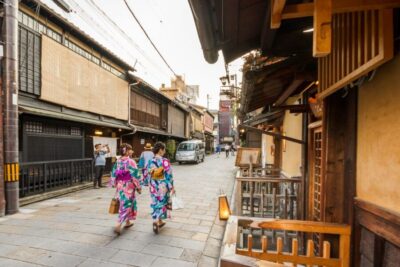
More evenings along the lantern-lit lanes of Gion


The Gion Walking Portion: Get Your Bearings First
The walking part is about 70–80 minutes, and it’s not a long slog. It’s designed to get you oriented and help you notice details you’d miss on your own. You’ll move through key Gion streets and landmark areas that connect the district’s past to how it functions today.
You’ll start at one of two options, depending on what you booked:
- Izumo-no-Okuni statue (a short walk from certain kimono rental locations)
- Shirakawa Canal
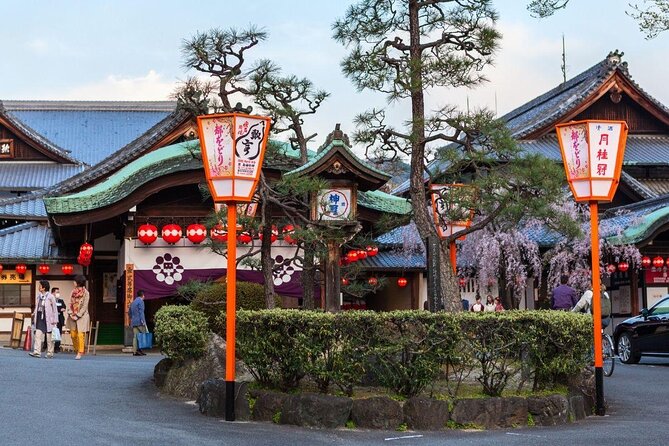
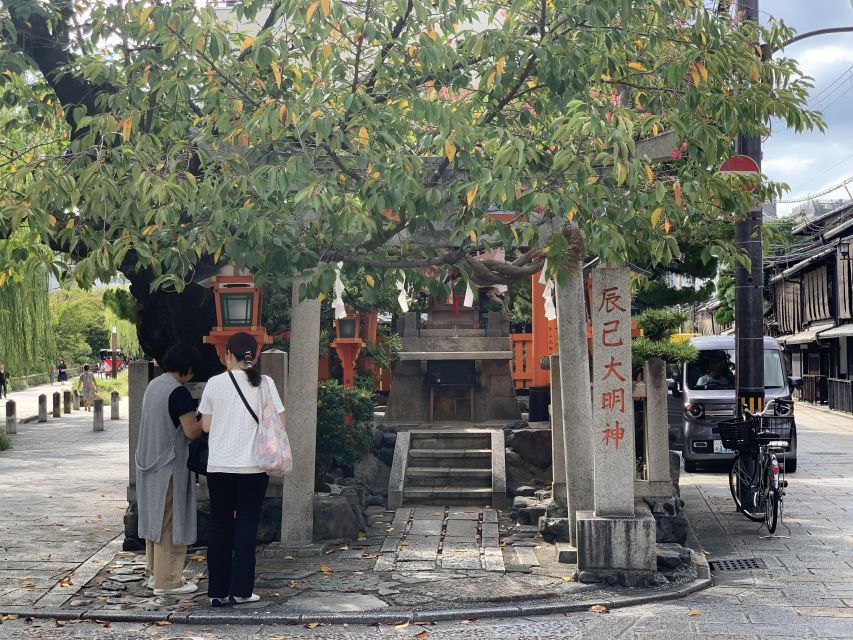
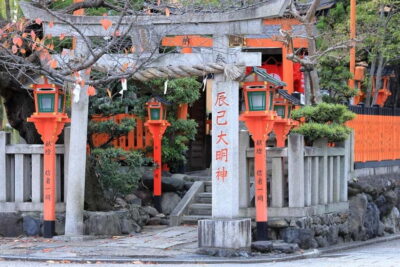
From there, the route typically threads together the scenery and the story. You may stop at places such as Tatsumi-jinja Shrine and spend time on Hanamikoji Street, one of the best-known Gion lanes for atmosphere and architecture. You’ll also have stops where the guide explains what you’re seeing and where practices used by geiko and maiko fit into the neighborhood.
Two practical notes for the walk:
- Dress for comfort. You’ll be moving through Gion streets and doing short guided stops, plus photo pauses.
- If it’s hot or rainy, plan for it. The tour happens rain or shine, and on rainy days you’ll need to keep socks and clothing dry for the venue.
If you’ve already done a Gion night stroll, you may notice some overlap in basic orientation, but the emphasis here is on context that supports what comes next inside the tea-house setting.
The Ochaya Moment: Private House Access (and the Rules That Matter)
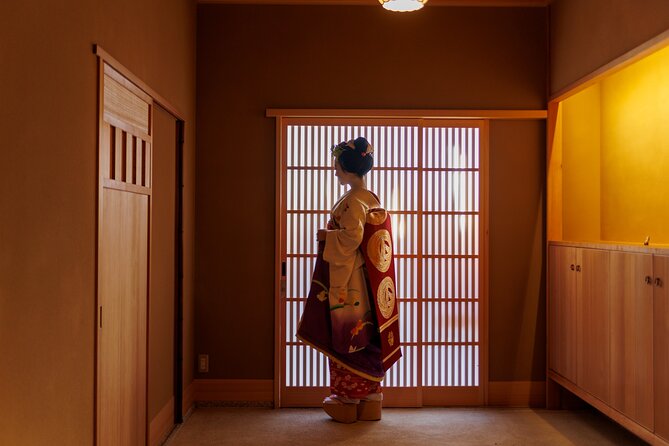
The heart of the experience is the meeting at a private venue described as an ochaya. This is where most visitors will never get access, because it’s not a public theater. You’re visiting a place that still functions on its own rhythm.
Expect the meeting on the 2nd floor, with stairs. This is not a tiny detail. If stairs are a challenge, this is one of the first things to weigh before you book. The tour is also noted as not suitable for children under 10, and it isn’t suited for wheelchair users or people with mobility impairments.
There’s also a clear footwear-and-comfort requirement. You should bring socks and you must wear socks at the performance venue. On rainy days, the guidance is specific: no wet clothes and no wet socks allowed at the venue. That means your umbrella is more than a convenience; it’s part of getting in smoothly.
How to handle the kimono option (if you chose it)
If your booking includes starting at a kimono rental store (like Wargo Kyoto Kimono Rental Gionshijo Store), you’ll change into your kimono and then go on your own to the Izumo-no-Okuni statue point, about a 3-minute walk. Your guide will be waiting there.
This is worth noting because it affects your timing. Kimono changes can add minutes, and the guide is waiting at the statue, not at the rental shop.
The Maiko Performance: A Short Dance With Big Meaning
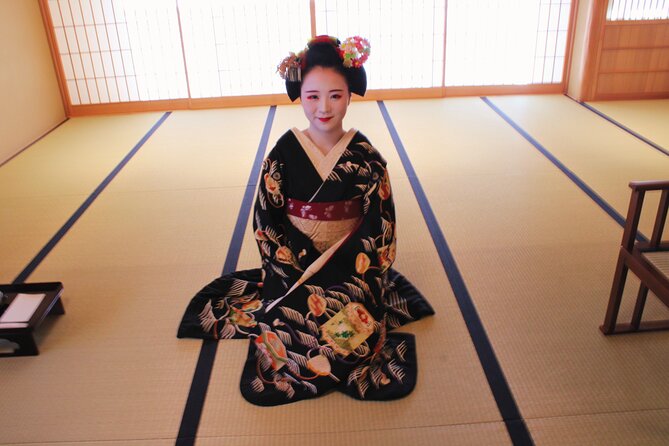
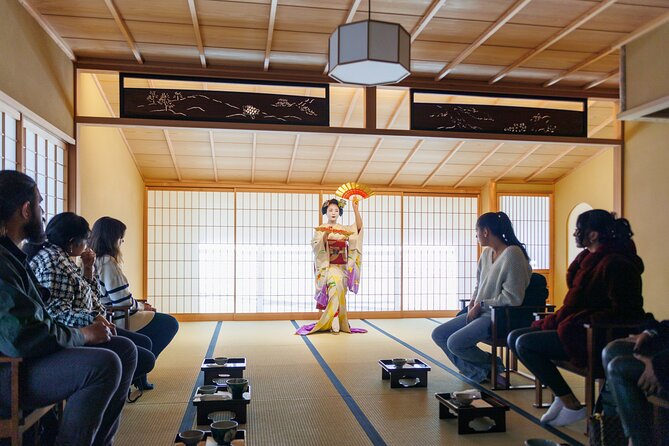
The performance is live and is described as 1–2 dances by the maiko. The dance portion isn’t a full stage show. Instead, it’s more like a focused art moment that shows the craft and then moves you into questions and conversation.
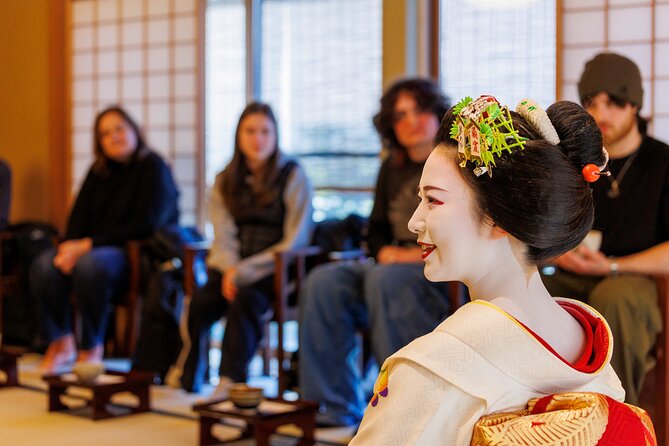
When the maiko arrives, the impact is visual and immediate: colorful kimono, traditional makeup, and detailed hair styling. That said, the tour’s real value isn’t just seeing the costume. It’s how the performance connects to the stories you hear afterward—why certain movements matter, how training shapes performance, and how young artists learn discipline through repetition.
There’s also a big practical point about timing and expectations. The performance is brief, and the rest of the time is built around Q&A and interaction. If you’re thinking you’ll get a long public-style show, adjust your mindset. Here, the dance is the beginning of the conversation, not the whole event.
Other Kyoto tours and experiences to compare






Photography during the performance
Photography and video recording are controlled. You can take photos during the performance and during the photo session. You can’t freely record video, and you can’t upload any video online.
For photos you want to post on the internet, you’ll need direct permission from the maiko beforehand. That rule matters. It’s part of showing respect for privacy and professional boundaries in a world that depends on careful consent.
Conversation With a Maiko and a Former Geiko: What You Actually Learn
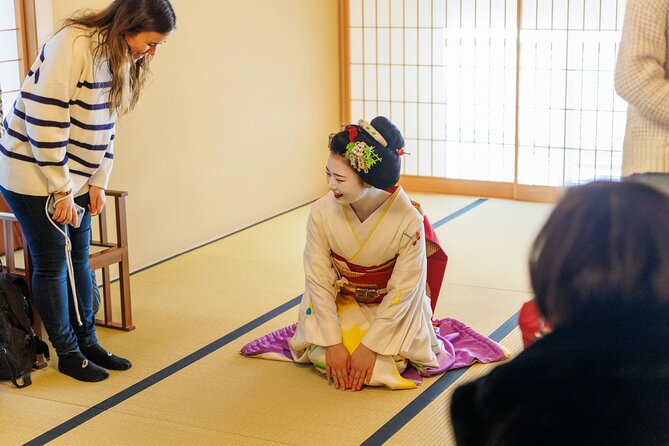
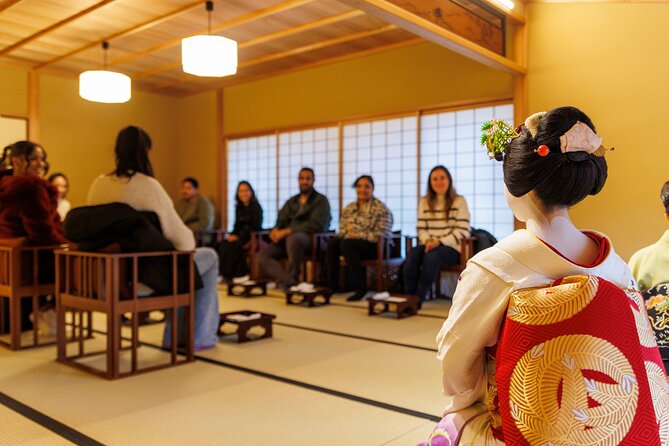
If you’re curious about geisha culture, you probably know the headlines. This tour gives you the stuff behind the headlines: training, tradition, and how the community works as a living system.
You’ll have a personal conversation with both:
- the maiko (apprentice geisha)
- a former geiko (an experienced performer sharing reflections after her career)
The venue owner is also part of the conversation, so you don’t just hear performance-side stories. You also hear how the tea-house world operates from the inside.
What tends to land hardest is how direct the questions can be. You get a Q&A session, which is where real cultural understanding happens. You’ll hear answers tied to discipline, etiquette, and what it takes to stay committed to an art form that still depends on tradition.
Guides such as Tom, Takuma, Ayako, and Eric are specifically noted for translating clearly and answering questions with patience. That translation quality matters a lot, because cultural terms can be tricky and it’s easy to mishear nuance when someone’s English is limited.
Gion Stops That Set Up the Story (and Don’t Feel Random)
As the walk progresses, the guide leads you through key areas that act like chapter headings. You’re not only looking at the famous lanes. You’re also learning why certain spots are relevant for daily life in Gion.
A few stops you may encounter include:
- Gion Corner, which helps explain traditional arts and how audiences experience them
- Kenninji Temple, where you’ll have a photo stop and guided sightseeing time
- Miyagawasuji, where you’ll spend a longer visit time before finishing near there
Some tours gloss over temples or push quickly through photo stops. This one uses those pauses to keep the story tied to places and practices, so when you step into the tea-house setting, you’re not starting from scratch.
Also, don’t be surprised if the total timing runs a bit long depending on the day. This is one of those tours where real interaction takes time.
Photos and Respect: How to Get Great Images Without Getting Loud
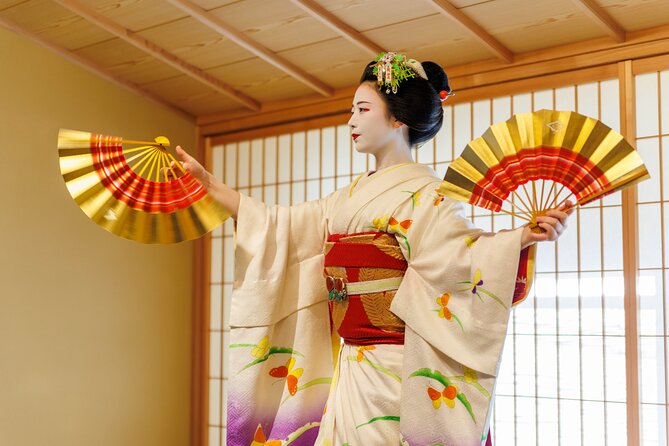
Because photography rules are strict, you’ll want to plan how you shoot. The tour allows photos during:
- the performance moment
- the designated photo session with the maiko
There’s no instruction that says you can roam around recording everything. So instead, treat it like a controlled art viewing:
- arrive ready, camera charged
- keep your phone away until the allowed moments
- be patient during transitions
The online-upload rule is the big one: you’ll need permission before posting photos of the maiko. That’s not just bureaucracy. In a community that’s built on discretion, consent protects the people behind the art.
Price and Value: Is $106 Worth It?
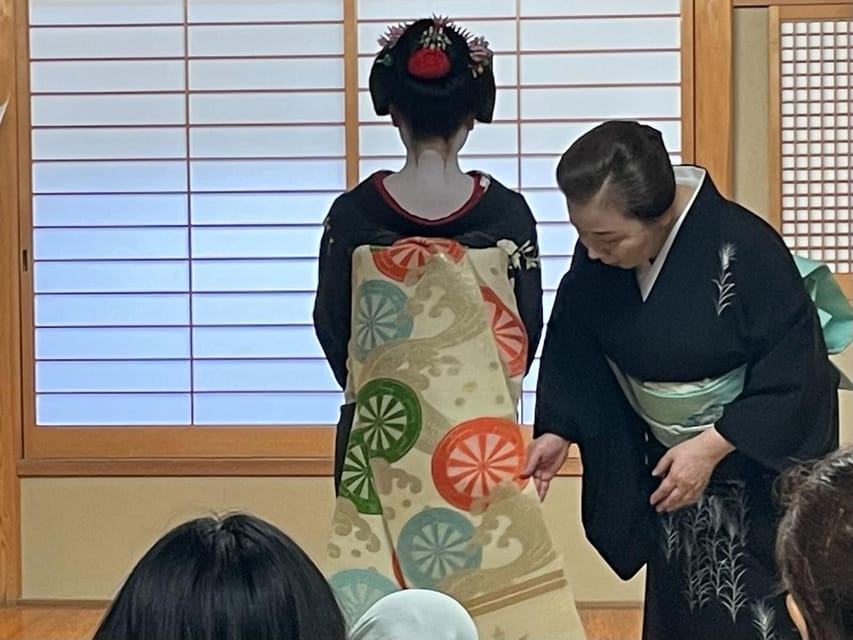
At $106 per person for 3–5 hours, this is not a cheap Gion activity. But value here isn’t about a long itinerary. It’s about access and conversation.
You’re paying for:
- a guided walk through Gion’s meaningful streets and landmarks
- a meeting experience in a private ochaya setting
- a live maiko performance
- conversation with both a maiko and a former geiko
- Q&A plus a photo session
Most Kyoto sightseeing can be done at street level for far less. But this isn’t street-level culture. It’s an inside look with rules, consent, and the chance to ask questions directly. That combination is hard to replicate independently.
If you want a “see a performance” experience only, you might decide this is pricier than you need. But if you want to understand the tradition through direct answers and real dialogue, the price starts to make more sense.
Who This Tour Fits Best (and Who Should Skip It)
This tour is a strong match for you if:
- you’re genuinely interested in geisha and maiko culture beyond costumes
- you want context from Gion streets before the private meeting
- you like Q&A and conversation over passive sightseeing
- you’re comfortable with basic rules about socks, rain gear, and photo permissions
- you want a small-group format, where questions feel more manageable
It’s not suitable for:
- children under 10
- people with mobility impairments or wheelchair users
- anyone who can’t handle stairs to a 2nd-floor venue
- anyone who would be upset by strict photography/video controls
And if you’re traveling with kids, you’ll have to look elsewhere. The restrictions are part of how this tour keeps the environment respectful and practical.
Final Call: Should You Book This Maiko and Geiko Experience?
I think you should book it if your Kyoto trip includes at least one “inside the tradition” moment. This tour works because it connects place to people: you learn Gion basics outside, then you move into a private tea-house setting where you meet a maiko and a former geiko.
You should reconsider if you’re expecting a long, public-style show, or if stairs and dry socks are deal-breakers. The venue rules matter, and the dance portion is only part of what’s offered.
If you’re the type who enjoys asking thoughtful questions and wants cultural context you can’t get from a quick street glance, this is one of the best ways to spend a few hours in Kyoto’s Gion.
FAQ
How long is the Kyoto Gion walking tour with a maiko meeting?
The experience runs about 3–5 hours, including the guided walk and the maiko meeting experience.
Where does the tour start?
The meeting point may vary by option. You’ll either meet around the Izumo-no-Okuni statue or at Shirakawa Canal, depending on the booked starting option.
Is there a kimono option included?
There is a kimono rental option tied to one of the starting locations. If you start at the kimono rental store, you’ll change into your kimono first and then go on your own to the Izumo-no-Okuni statue point about 3 minutes away, where your guide waits.
Do I need to bring socks?
Yes. You should bring socks, and you must wear socks at the performance venue.
Can I take photos and videos?
Photography and video recording are allowed only during the performance and the photo session. You can upload photos to the internet only with direct permission from the maiko beforehand, and you cannot upload any video online.
What happens during the maiko meeting?
You’ll have an intimate meeting experience at a private venue (ochaya/tea house). You’ll enjoy a live performance and then a personal conversation and Q&A with the maiko and a venue owner, plus a former geiko.
Is the tour rain or shine?
Yes. The tour takes place rain or shine. On rainy days, you must manage to keep clothes and socks dry for the venue.
Are there stairs at the performance venue?
Yes. The performance is held on the 2nd floor, and access is only via stairs.
Is this tour suitable for children or wheelchair users?
No. It is not suitable for children under 10, and it is also not suitable for wheelchair users or people with mobility impairments.
Is the tour guide available in English?
Yes. The tour is run by an English-speaking local guide, and small-group options are available.
More Tours in Kyoto


More Tour Reviews in Kyoto


Still in Gion? Keep Going

Just added: more Kyoto tours to browse








Gion & Geisha District Tours, compared.
 ★ 4.7Kyoto Geisha Walking Tour: Gion District & Hidden GemsFrom $253,273 reviews
 ★ 4.9Gion Magical Night Walking Tour with Geisha TriviaFrom $242,393 reviews
 ★ 4.7Gion Geisha District Walking Tour – Stories of GeishaFrom $202,187 reviews
 ★ 4.9Best of Kyoto: Gion, Geisha, Pagodas & CobblestonesFrom $242,058 reviews
 ★ 4.5Night Walk in Gion: Kyoto’s Geisha DistrictFrom $212,003 reviews
 ★ 5.0Kyoto Night Foodie Tour in Gion (9+ dishes + 6 Sake tastings)From $1631,762 reviews
 ★ 5.0Kyoto Gion Geisha District Walking Tour – The Stories of GeishaFrom $251,441 reviews
 ★ 5.0Kyoto Gion: 2-Hour Geisha Culture & History Walking TourFrom $231,186 reviews
Browse the lists this tour appears in