
Reviewed · FUSHIMI INARI SHRINE TOURS
Kyoto: Kiyomizu-dera, Fushimi Inari & Gion Geisha District
Three Kyoto icons in one run.
I like the way this tour pairs Fushimi Inari’s torii-gate walk with Kiyomizu-dera power spots and clear Shinto/Buddhist context, and I also like that your guide uses an iPad with images while helping with photos throughout. The main tradeoff: it’s active walking plus public transit, so it’s not a good fit if you have mobility or fitness limits.
You’ll start at JR Kyoto Station with a Kyoto City Certified Tourist Guide named Roberto, move quickly between sites by train, and end in Gion so you can easily continue on to dinner or your hotel. With English or Spanish, this is a private group format, and it’s designed to help you understand what you’re looking at, not just pass through it.
In This Review
- Key things you’ll remember from this Kyoto tour
- Meeting at Kyoto Station and the simple 4-hour rhythm
- Fushimi Inari Taisha: Shinto origins and the trail of torii gates
- Taking the train to Kiyomizu-dera: why this temple stop is more than a postcard
- Ninenzaka and Sannenzaka: walking Kyoto’s old-street style
- Gion and the geisha-maiko world: what you’ll learn while you walk
- Price and logistics: is $90 good value?
- Comfort, what to bring, and what to skip
- Who should book this Kyoto half-day route?
- Should you book this Kyoto: Kiyomizu-dera, Fushimi Inari & Gion tour?
- FAQ
- How long is the Kyoto Kiyomizu-dera, Fushimi Inari & Gion tour?
- Where do we meet the guide?
- What’s included in the tour price?
- Are entrance fees included for Kiyomizudera?
- Do we use public transportation?
- What languages are available for the live guide?
- Who is this tour not suitable for?
Key things you’ll remember from this Kyoto tour
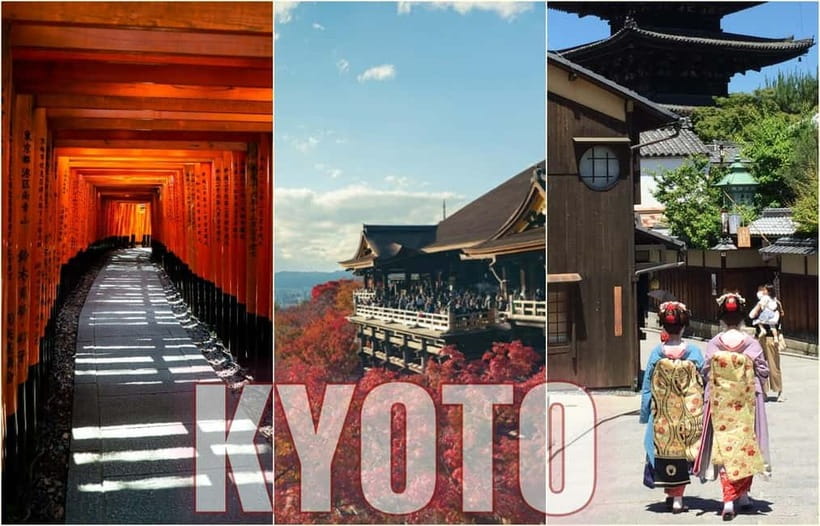
- A 75-minute guided visit at Fushimi Inari Taisha with context on Shinto and the shrine’s origins
- Kiyomizu-dera power spots tied to blessings for love, longevity, and academic success
- Ninenzaka and Sannenzaka old-street atmosphere, where wooden merchant buildings feel like time travel
- Geisha and maiko explanations in plain language, plus time in Gion’s traditional streets
- Photo-friendly guiding using an iPad with images, and Roberto can take as many pictures as you want
Meeting at Kyoto Station and the simple 4-hour rhythm
This is a half-day tour built for “hit the highlights” efficiency without feeling rushed. You meet in front of a 7-Eleven at JR Kyoto Station (Heart-In), on the Kyoto Tower side exit, at the central entrance. Roberto will be easy to spot holding an iPad and a red card with the words RBRT (Roberto).
Once you’re together, the plan is straightforward: you use public transportation (train and city transit), then walk through the most memorable temple and neighborhood areas. The pacing matters here. In just four hours, you’ll cover places that usually eat an entire morning or afternoon if you go on your own.
If you’re the type who likes to walk but also likes explanations, this format works well. The guide’s iPad images are meant to help you connect the visuals on-site with the meaning behind them, so you don’t feel like you’re guessing.
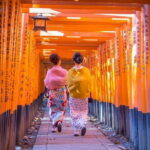
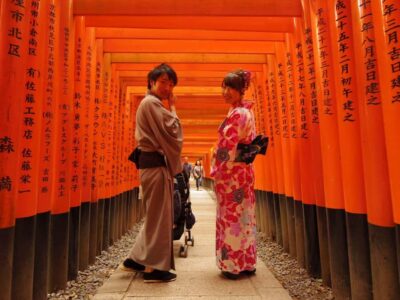
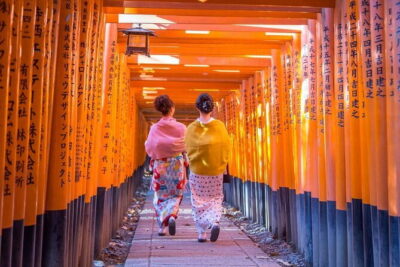
More walks up through the vermilion torii of Fushimi Inari

Fushimi Inari Taisha: Shinto origins and the trail of torii gates
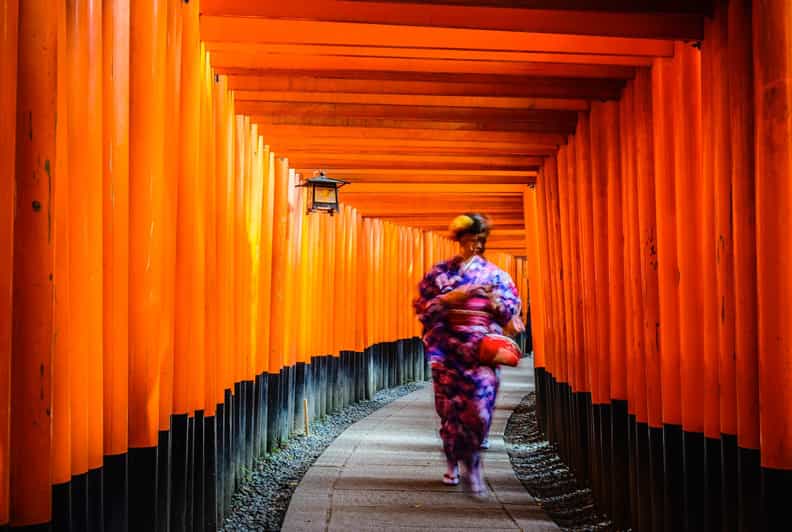
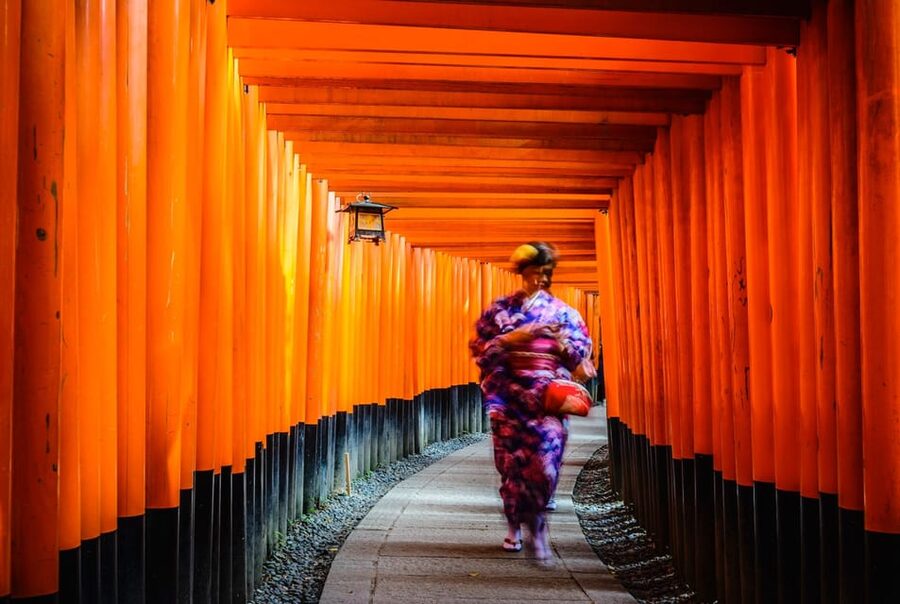
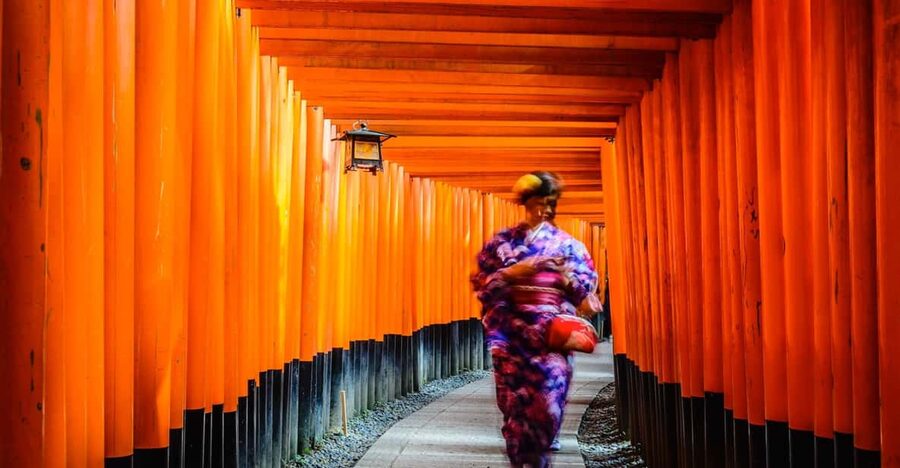
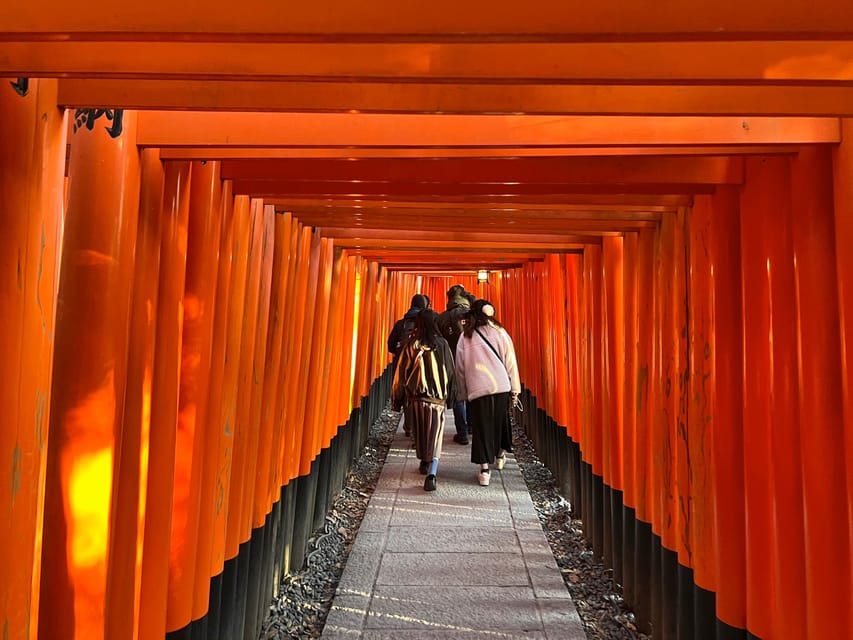
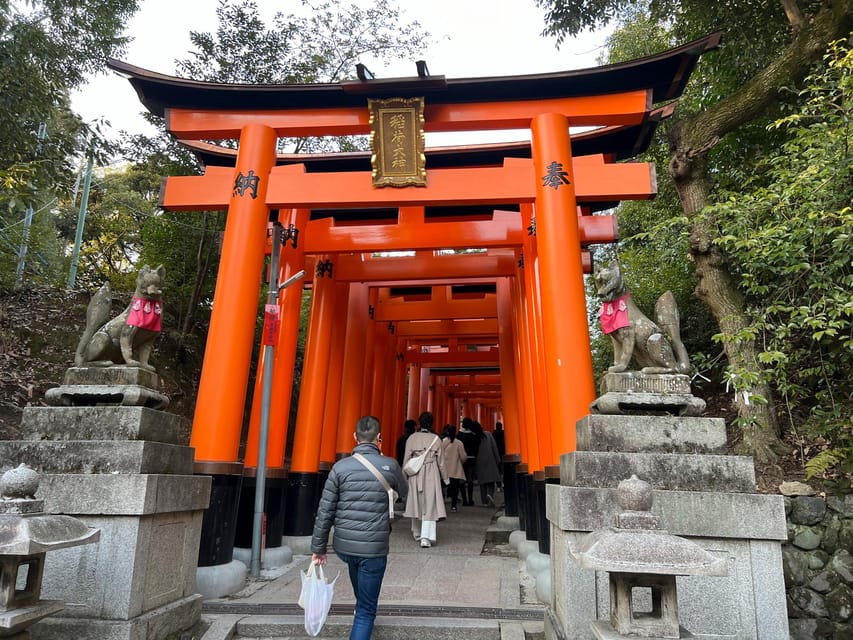
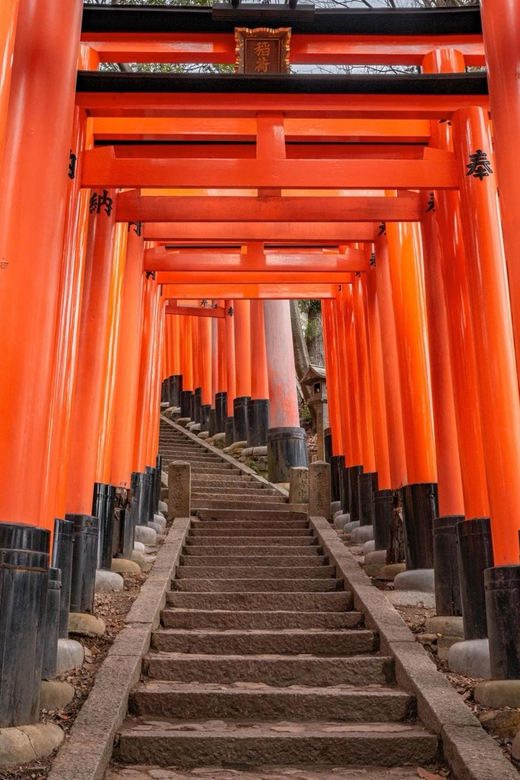
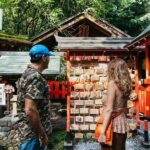
Fushimi Inari Taisha is famous for a reason. Even from the first steps into the shrine area, the scale hits you: a long trek along thousands of vermilion torii gates that creates a tunnel-like walking experience.
On this tour, you get a guided visit for about 75 minutes, so you’re not just following foot traffic. You’ll also get the story behind the shrine—its ancient origins and the basics of Shinto—so you can understand what you’re seeing rather than treating it like a photo backdrop.
A practical way to think about this stop: the gates are visually dramatic, but the real value is the way the guide helps you see the shrine as a working sacred place. If you care about learning while you travel, you’ll appreciate how the walk becomes more than sightseeing.
What to watch for: the route is a trek. Bring water and comfortable shoes, and expect to stay on your feet for a good chunk of time.
Taking the train to Kiyomizu-dera: why this temple stop is more than a postcard
After Fushimi Inari, the tour shifts by train (about 30 minutes) to Kiyomizu-dera. This part is important because Kiyomizu-dera is one of those Kyoto sites where you can easily lose time wandering, especially if you don’t know what to look for.
At Kiyomizu-dera, you get around 80 minutes with a guided visit. The key theme here is power spots—specific places visitors seek out for blessings connected to love, longevity, and academic success. I like this approach because it gives you a clear framework for the visit. Instead of absorbing everything at once, you can focus on the meaningful spots you’re guided to.
Also, the guide’s iPad visuals help you understand the layout and what you’re aiming for. That’s useful at Kiyomizu-dera, where the grounds can feel big and visually intense.
Consideration: this is another active temple stop. Even with a guide managing the flow, you’ll still need decent mobility to enjoy it comfortably.
Ninenzaka and Sannenzaka: walking Kyoto’s old-street style
Right after Kiyomizu-dera, the tour transitions into a neighborhood walk: Sannenzaka followed by Ninenzaka. These streets are known for wooden buildings and traditional merchant shops, and that matters because they create a different kind of Kyoto feeling.
In other words, you’re not only visiting sacred spaces. You’re also seeing how the old capital looked and functioned at street level. This is the part of the tour that often makes photos feel more than scenic. You’re walking through an atmosphere that looks intentionally preserved—especially the shopfront style and the sense of earlier street life.
You’ll spend short, guided walking time here (around 10 minutes in each area), which keeps it from dragging. If you want a deeper shopping stop, you can always add extra time after you finish in Gion, but this sequence gives you a taste without eating your whole afternoon.
My practical tip: go slow here even if you’re tempted to speed for the next stop. The streets reward small glances—materials, signage style, and the old-capital feel.
Gion and the geisha-maiko world: what you’ll learn while you walk
The tour ends in Gion (with about 15 minutes of walking in the district), and this is where the experience adds cultural context beyond temples.
Gion is Kyoto’s best-known geisha district. On this tour, you’ll learn facts about geishas and maiko—apprentice geishas—and how entertainment connects to traditional venues. You’ll also see the types of places that make Gion feel distinctly Kyoto: shops, restaurants, and ochaya (teahouses).
What I like about handling this with a guide is that it turns Gion from a “look and photograph” stop into a “understand what you’re seeing” stop. The neighborhood can feel confusing if you don’t know what terms mean or how the roles work. Even a short guided explanation helps you walk through more confidently.
You’ll also get time to notice the traditional machiya merchant houses. Those wooden townhouse facades are part of what makes Gion feel different from other tourist districts in Japan.
Practical note: after the tour, you can go onward by city bus or taxi to your hotel. Ending in Gion is smart because it’s an easy base for dinner plans.
More evenings along the lantern-lit lanes of Gion






Price and logistics: is $90 good value?
The price is listed as $90 per person for a 4-hour private tour. Whether that feels like a deal depends on what you value.
Here’s what you’re getting for the money, based on the included items:
- A Kyoto City Certified Tourist Guide (Roberto)
- Explanations with images on an iPad, which can really improve understanding at busy sites
- Help with photos: the guide can take as many pictures of you as you want
- Public transportation is used, but transportation fees are not included
- Kiyomizudera entrance fee is not included (500 yen, about US$3.10)
So the value question is really about the guide role. If you want context—Shinto basics at Fushimi Inari, the purpose of power spots at Kiyomizu-dera, and a clear, respectful view of geisha and maiko—then you’re paying for more than access. You’re paying for interpretation and time efficiency.
If you’re the type who only wants to wander and you’re comfortable learning everything from signs and apps, you might prefer a cheaper DIY route. But if you like getting your bearings fast while still seeing the big icons, this price is easier to justify.
Comfort, what to bring, and what to skip
This tour has some clear “know before you go” requirements.
Bring:
- Comfortable shoes (this matters most)
- Water
- Comfortable clothes
- Cash
Not allowed:
- Smoking
- Luggage or large bags
You’ll also use public transportation, so plan for quick transfers and walking between modes. The pace is designed to fit everything into a half day, which means you shouldn’t expect long sit-down breaks.
If you’re sensitive to walking: this one is likely more demanding than it looks on paper. It isn’t suitable for people with back problems, mobility impairments, wheelchair users, visually impaired people, people over 75, or anyone with low fitness.
Who should book this Kyoto half-day route?
This tour is a great match if:
- You want to see Fushimi Inari, Kiyomizu-dera, and Gion in one compact trip
- You enjoy guided cultural context instead of only taking photos
- You like having an easy photo setup so you’re not stuck asking strangers
- You’re traveling as a private group and want flexibility in a short time window
It’s probably not your best choice if:
- You need a fully accessible option (it’s not suitable for wheelchair users or for certain mobility/fitness needs)
- You prefer slow travel with long free time at each site
If you’re on your first Kyoto visit, this route gives you a useful “map in your mind.” You walk from sacred gates to temple blessings to traditional streets and then end in one of Kyoto’s most recognizable districts.
Should you book this Kyoto: Kiyomizu-dera, Fushimi Inari & Gion tour?
Book it if you want a guided half-day that hits the major visual icons—torii gates, a famous temple, old-street Kyoto, and Gion—while also explaining what those places mean. The iPad visuals and photo help make the time feel more useful, and the tour ends in Gion, which is convenient for dinner and easy onward transport.
Skip it if you’re limited on walking stamina or you’re seeking a very relaxed pace with minimal movement. Also budget for extra costs: transportation fees and Kiyomizudera entrance (500 yen), since they’re not included.
If your goal is a smart, culture-aware snapshot of Kyoto in just four hours, this one fits.
FAQ
How long is the Kyoto Kiyomizu-dera, Fushimi Inari & Gion tour?
It lasts 4 hours.
Where do we meet the guide?
Meet in front of the door of 7-Eleven at JR Kyoto Station Bldg. 1F, using the Kyoto Tower side Exit.
What’s included in the tour price?
You get a Kyoto City Certified Tourist Guide, explanations with images on an iPad, and photo help (the guide can take as many pictures of you as you wish). Transportation and entrance fees are not included.
Are entrance fees included for Kiyomizudera?
No. The Kiyomizudera entrance fee is 500 yen (about US$3.10).
Do we use public transportation?
Yes. The tour uses public transportation (city bus and train), and transportation costs are not included.
What languages are available for the live guide?
The guide offers English and Spanish.
Who is this tour not suitable for?
It is not suitable for people with back problems, mobility impairments, wheelchair users, visually impaired people, people over 75 years, or people with low level of fitness.
More Along the Higashiyama Slopes


Still in Gion? Keep Going
Fushimi Inari, a Few More Ways
Just added: more Kyoto tours to browse








Fushimi Inari Shrine Tours, compared.
 ★ 4.8Fushimi Inari, Kinkakuji, Bamboo Grove 1 Day Bus TourFrom $1224,316 reviews
 ★ 5.0Fushimi Inari Hidden Hiking Tour (Private Option Available)From $631,750 reviews
 ★ 4.7Kyoto/Osaka: Nara, Fushimi Inari Taisha, Arashiyama Bus TourFrom $521,275 reviews
 ★ 4.4Osaka/Kyoto: Arashiyama, Nara & Fushimi Inari Shrine w/LunchFrom $61754 reviews
 ★ 4.7Nijo Castle, Kiyomizu & Fushimi Inari Guided TourFrom $54700 reviews
 ★ 5.0Nijo, Kinkaku-ji, Arashiyama, Kiyomizu & Fushimi InariFrom $51699 reviews
 ★ 5.0Kyoto Fushimi-Inari Night Walking TourFrom $43320 reviews
 ★ 4.93-Hour Fushimi Inari Shrine Hidden Hiking TourFrom $72270 reviews
Browse the lists this tour appears in